Market Summary
Executive Summary and Market Analysis
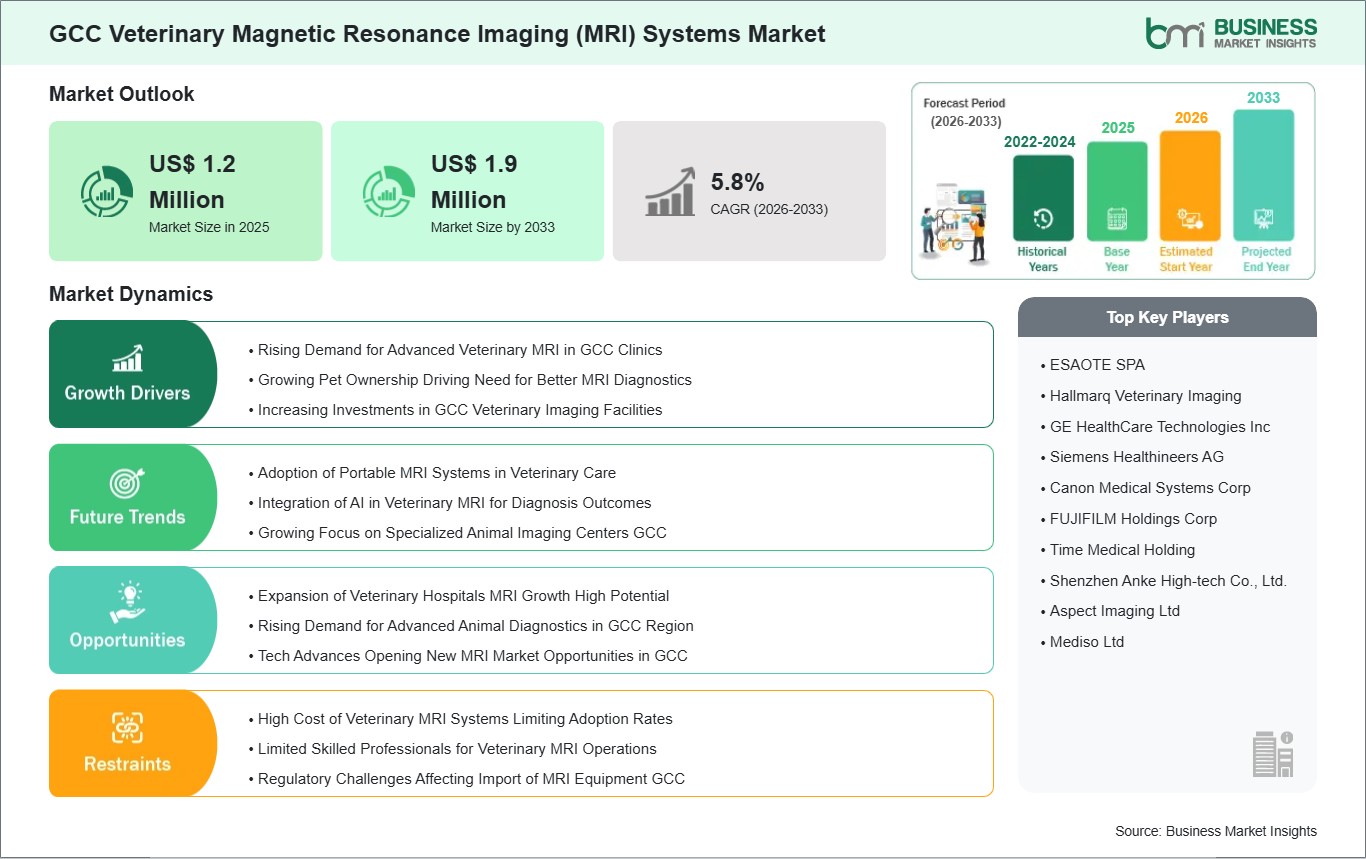
The GCC veterinary MRI systems market has developed into a distinct market segment that operates within the larger veterinary diagnostics market because of rising animal healthcare infrastructure investments and the adoption of modern diagnostic systems. The United Arab Emirates and Saudi Arabia function as crucial markets because their veterinary service networks operate efficiently, while their specialty clinics operate at higher rates and their customers require precise diagnostic solutions. Companion animal ownership is increasing throughout the region, especially in cities that now dedicate more resources to animal welfare protection, thus creating a demand for premium MRI imaging systems. The market exists because veterinarians require diagnostic solutions that provide precise identification of complicated medical conditions that affect companions and equine animals. The equine sports and breeding market in the UAE and Qatar strengthens the need for advanced imaging systems, which help with performance evaluation and injury recovery. The installation of MRI systems at multi-specialty veterinary hospitals and referral centers is growing because these facilities want to provide complete diagnostic services from a single location. Market growth depends on technological innovations, which drive the development of new products in this field. The introduction of smaller and more affordable MRI machines with decreased magnetic field strength has increased access to veterinary services in mid-sized practices, while the development of simpler installation methods has made this technology more usable in urban healthcare facilities. The veterinary field shows a slow but steady movement to use sophisticated imaging technology as a standard practice in veterinary medicine, which matches the industry trend toward preventive healthcare that uses scientific research methods. The market shows two positive developments, while two market restrictions create obstacles to its growth. The high upfront investment required for MRI systems, along with ongoing maintenance and operational costs, remains a significant barrier, particularly for smaller clinics. The limited number of qualified veterinary radiologists and technical staff members creates difficulties for organizations to run their systems at peak efficiency. The major cities remain the only areas where people adopt this technology, while it takes time to reach other parts of the market. The GCC veterinary MRI systems market shows continuous growth, which comes from rising product demand, better infrastructure, higher clinical needs and increasing technology access, but the market expansion process continues to be affected by cost and workforce challenges.
Segment Analysis
GCC Veterinary Magnetic Resonance Imaging (MRI) Systems Market Segmentation
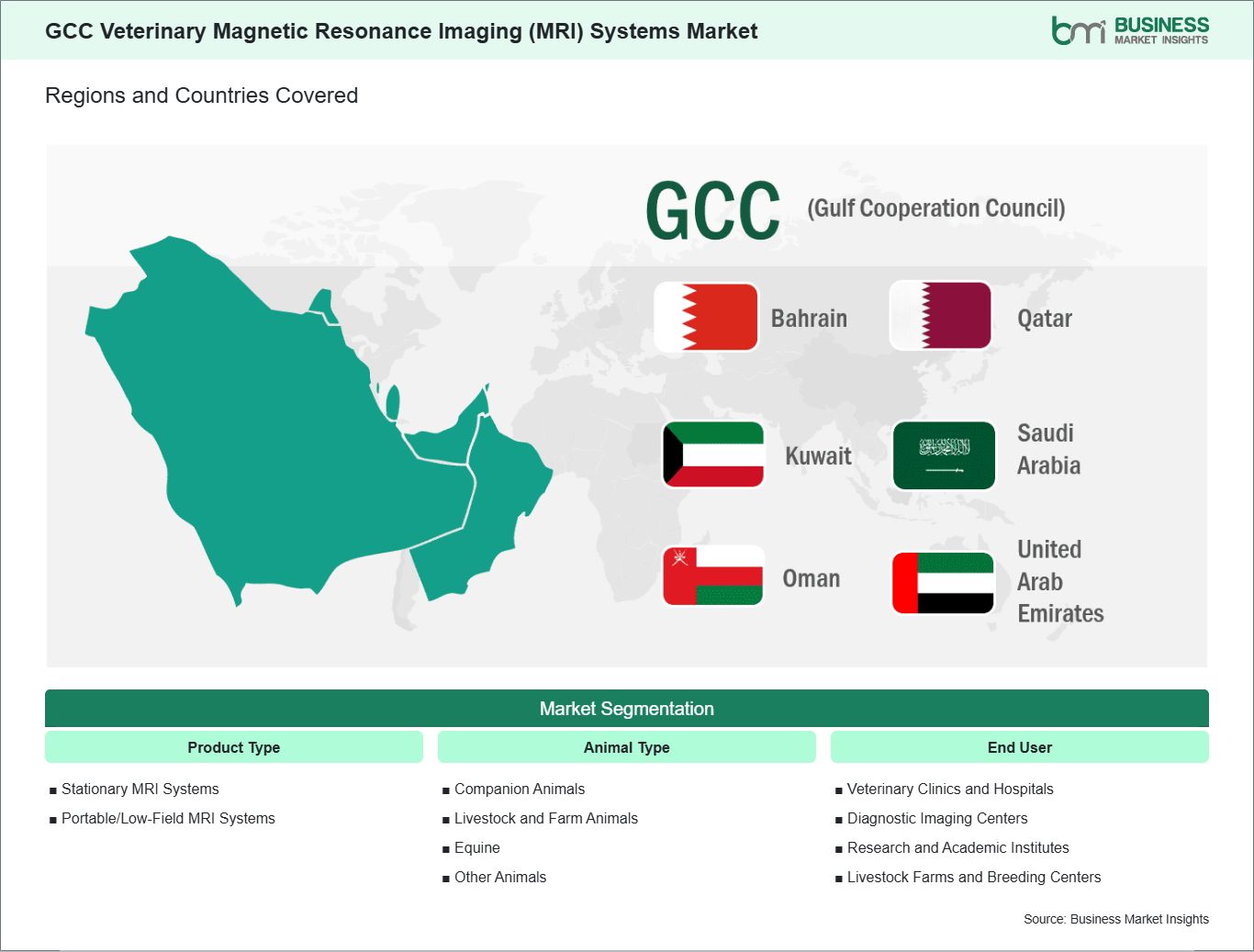
Key segments that contributed to the derivation of the GCC veterinary magnetic resonance imaging (MRI) systems market analysis are product type, animal type, and end user.
- By product type, the veterinary magnetic resonance imaging (MRI) systems market is segmented into stationary MRI systems, portable/low-field MRI systems. The stationary MRI systems segment dominated the market in 2025.
- Based on animal type, the veterinary magnetic resonance imaging (MRI) systems market is categorized into companion animals, livestock and farm animals, equine, others. The companion animals segment dominated the market in 2025.
- In terms of end user, the veterinary magnetic resonance imaging (MRI) systems market is categorized into veterinary clinics and hospitals, diagnostic imaging centers, research and academic institutes, livestock farms and breeding centers. The veterinary clinics and hospitals segment dominated the market in 2025.
Market Forces
GCC Veterinary Magnetic Resonance Imaging (MRI) Systems Market Drivers and Opportunities
Rising Demand for Advanced Veterinary MRI in GCC Clinics
The GCC veterinary magnetic resonance imaging (MRI) systems market experiences strong growth because clinics now choose to adopt better diagnostic systems. Veterinary facilities across the United Arab Emirates and Saudi Arabia are currently upgrading their imaging systems to fulfill the growing demand for precise and swift disease identification. The high-resolution imaging capabilities of MRI systems, which produce detailed soft tissue images, make them vital for diagnosing neurological disorders, ligament injuries and complex internal conditions that affect companion animals. The demand for MRI systems by veterinary clinics that offer high-end services continues to grow because of their increasing clinical value.
The trend toward pet ownership in Dubai and Riyadh urban areas shows continuous growth throughout these regions. The expansion of diagnostic services at clinics results from shifts in consumer behavior, which show greater concern for animal welfare, together with their readiness to pay for special medical treatments. The veterinary market now sees practices use advanced imaging technologies as a service that gives them a competitive edge while their market sector continues to develop. The enhanced training programs, together with improved availability of skilled staff members, currently help veterinarians to use MRI technology more effectively. Veterinary clinics now obtain advanced imaging technologies, which they use in their daily operations because of their enhanced operational capabilities and international partnerships. MRI systems have evolved into essential equipment for advanced GCC veterinary procedures because of their growing use in veterinary practices.
Expansion of Veterinary Hospitals MRI Growth High Potential
The ongoing expansion of veterinary hospitals across the GCC presents a strong opportunity for MRI system adoption. Governments and private stakeholders are investing in modern veterinary infrastructure to support both companion animal care and livestock health. Large, multi-specialty veterinary hospitals are emerging in key metropolitan areas, creating demand for comprehensive diagnostic solutions, including MRI systems capable of handling complex and high-volume cases. This infrastructure growth is particularly evident in cities such as Abu Dhabi, Doha, and Jeddah, where new veterinary facilities are being designed with integrated diagnostic departments. These hospitals are increasingly equipped to accommodate high-value imaging technologies, supported by dedicated radiology units and specialized staff. As a result, MRI systems are becoming a critical asset for hospitals aiming to deliver advanced clinical services and attract a broader client base.
Moreover, the expansion of veterinary hospitals is fostering a shift toward referral-based care models, where complex cases are directed to specialized centers. This trend enhances the utilization of MRI systems, as referral hospitals typically require advanced imaging for accurate diagnosis and treatment planning. Combined with rising demand for preventive care and early intervention, the growing hospital network is expected to significantly accelerate MRI system adoption across the GCC veterinary sector.
Size and Share Analysis
GCC Veterinary Magnetic Resonance Imaging (MRI) Systems Market Size and Share Analysis
The GCC veterinary magnetic resonance imaging (MRI) systems market is experiencing steady growth, with market size and share analysis reflecting evolving treatment preferences and competitive dynamics among key players. The report evaluates important subsegments categorized within product type, animal type, and end user, highlighting their respective contributions to market performance.
By product type, the stationary MRI systems subsegment dominated the market in 2025, driven by higher image quality, greater throughput, and widespread adoption in hospitals for comprehensive diagnostic imaging.
Based on animal type, the companion animals subsegment dominated the market in 2025, driven by increasing pet ownership and rising demand for advanced diagnostic imaging in routine veterinary care.
In terms of end user, the veterinary clinics and hospitals subsegment dominated the market in 2025, driven by the widespread adoption of x-ray systems for comprehensive diagnostic and treatment services.
Report Coverage
GCC Veterinary Magnetic Resonance Imaging (MRI) Systems Market Report Coverage and Deliverables
The "GCC Veterinary Magnetic Resonance Imaging (MRI) Systems Market Size and Forecast (2022–2033)" report provides a detailed analysis of the market covering below areas:
- Market size and forecast at regional and country levels for all market segments covered under the scope
- Market trends, as well as drivers, restraints, and opportunities
- Market analysis covering key trends, regional framework, major players, regulations, and recent developments
- Market concentration, heat map analysis, prominent players, and recent developments for the Market
- Detailed company profiles, including SWOT analysis
Geographic Insights
GCC Veterinary Magnetic Resonance Imaging (MRI) Systems Market Geographic Insights
The geographical scope of the GCC Veterinary Magnetic Resonance Imaging (MRI) Systems Market report is divided into UAE, Bahrain, Saudi Arabia, Oman, Qatar, and Kuwait. UAE held the largest share in 2025.
The GCC veterinary MRI systems market shows different expansion trends throughout the UAE, Saudi Arabia, Qatar, Kuwait, Oman and Bahrain, but the UAE functions as the main regional center because it possesses sophisticated veterinary facilities and numerous specialized animal hospitals and modern diagnostic technology. The UAE establishes itself as a regional technology center and referral hub because it operates a complete system for companion animal healthcare and growing premium veterinary service demand, and its developed a private medical system which uses expensive diagnostic equipment like MRI machines. The Saudi Arabian market consists of a large population base, which creates demand for veterinary services and companion animal care and livestock treatment, while the country invests in new animal healthcare facilities, but MRI system usage stays focused in urban regions. The country of Qatar experiences consistent growth because it builds new veterinary facilities and the countrywide healthcare system develops further, while pet owners learn more about their pets' healthcare needs, which increases their need for advanced diagnostic tools. Kuwait’s market remains smaller than other markets but shows growth because private veterinary clinics work to improve their service delivery. Omani veterinary services are entering a period of modernization that affects urban areas, which require advanced imaging systems like MRI machines. The veterinary market in Bahrain, which stands as the smallest among the three markets, shows slow development through targeted veterinary diagnostic investments and increased demand for specialized animal medical services. Across the GCC, common growth drivers include increasing pet ownership together with rising expectations for high-quality veterinary care and a gradual shift toward early and accurate diagnosis of complex conditions. The positive market trends face challenges because of high capital expenses and maintenance demands, together with the requirement for specialized knowledge, which still reduces adoption rates in smaller markets. The UAE market maintains its status as the top veterinary MRI system market in the region because it combines advanced technology with strong commercial appeal.
Industry Activity
Recent Developments
The GCC Veterinary Magnetic Resonance Imaging (MRI) Systems Market is evaluated by gathering qualitative and quantitative data post primary and secondary research, which includes important corporate publications, association data, and databases. A few of the key developments in the GCC veterinary magnetic resonance imaging (MRI) systems market are:
- In February 2026, GE HealthCare, announced FDA clearance of multiple next-generation MRI technologies, including SIGNA Sprint and SIGNA Bolt systems, aimed at improving efficiency, sustainability, and expanding access to MRI imaging across global markets.
- In February 2026, Hallmarq Veterinary Imaging, announced that it has joined forces with OR Technology to form a new global multimodality imaging group aimed at expanding international footprint across regions including Europe, Middle East, and Africa, and strengthening its veterinary MRI and CT imaging portfolio.
Trust & Transparency
Research Methodology
The market analysis combines proprietary research with secondary data from government agencies, company disclosures, regulatory filings, industry databases and expert interviews. Market estimates are validated through data triangulation, cross-market benchmarking and analyst
review.
View Full Research Methodology
Key Sources Referred:
American College of Veterinary Radiology (ACVR)World Small Animal Veterinary Association (WSAVA)British Veterinary Association (BVA)International Veterinary Radiology Association (IVRA)American Veterinary Medical Association (AVMA)European College of Veterinary Diagnostic Imaging (ECVDI)World Organisation for Animal Health (WOAH / OIE)Veterinary Imaging & Radiation Oncology Society (VIROS)