Market Summary
Executive Summary and Market Analysis
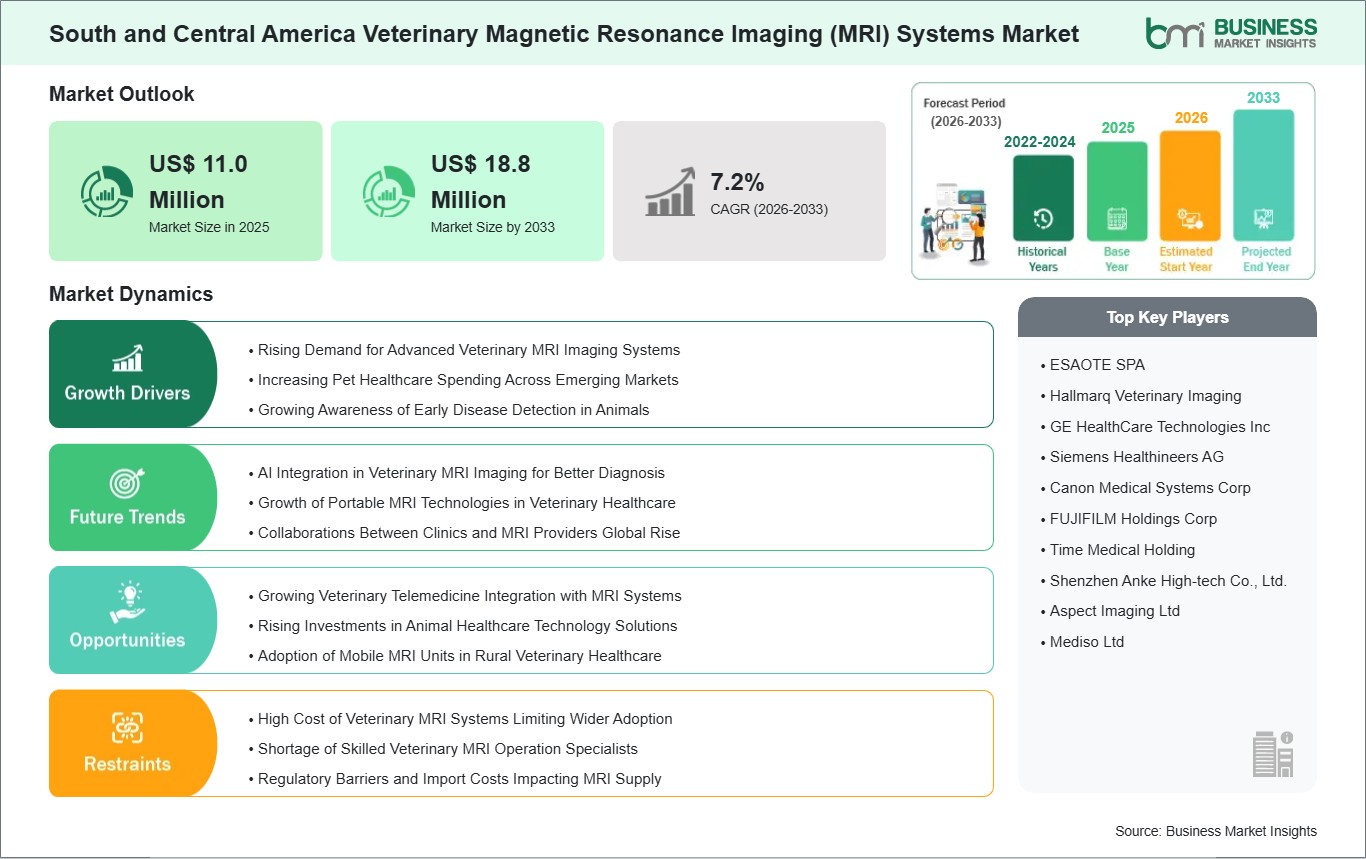
The South and Central America veterinary magnetic resonance imaging (MRI) systems market is developing at a moderate pace because veterinary care currently moves away from traditional treatment methods toward modern diagnostic techniques. The major cities in Brazil, Argentina, Chile and Colombia show a trend toward better animal healthcare standards because these areas have more advanced veterinary infrastructure. The rising trend of people treating companion animals as family members drives demand for premium diagnostic equipment, which includes MRI systems that deliver precise assessments of complicated soft tissue, nervous system and musculoskeletal system disorders. The region experiences market growth because private veterinary hospitals and specialty clinics continuously open new facilities. Veterinary practices are starting to purchase cutting-edge imaging systems because these technologies help them stand out from competitors while satisfying growing demands from their customers. The equine and livestock sectors create demand in specific sub-regions where high-value animals need precise and timely diagnosis to sustain their productivity and performance levels. Countries that have developed agricultural and equestrian sectors are now adopting MRI technology for unique uses in a targeted but effective manner. The system design enhancements that enable veterinary practices to operate with smaller, more efficient MRI devices are currently transforming the MRI adoption landscape for mid-sized veterinary clinics. The market still encounters both structural issues and economic difficulties despite the existence of positive developments. The high upfront cost of MRI systems, together with their ongoing maintenance and operational costs, creates a major hurdle that prevents most facilities from adopting these systems, especially in small clinics and economically disadvantaged regions. The region experiences low diagnostic capacity because of insufficiently trained veterinary imaging professionals, which results in decreased diagnostic effectiveness. The deployment process experiences additional limitations because of infrastructure requirements, which include unreliable power supply and inadequate facility space across multiple regions. The South and Central American market experiences slow growth, which mainly occurs in urban areas that have strong economic development. The market will continue developing throughout the long term because specialized veterinary care and diagnostic accuracy will eventually become more common, even though adoption currently happens at different rates.
Segment Analysis
South and Central America Veterinary Magnetic Resonance Imaging (MRI) Systems Market Segmentation
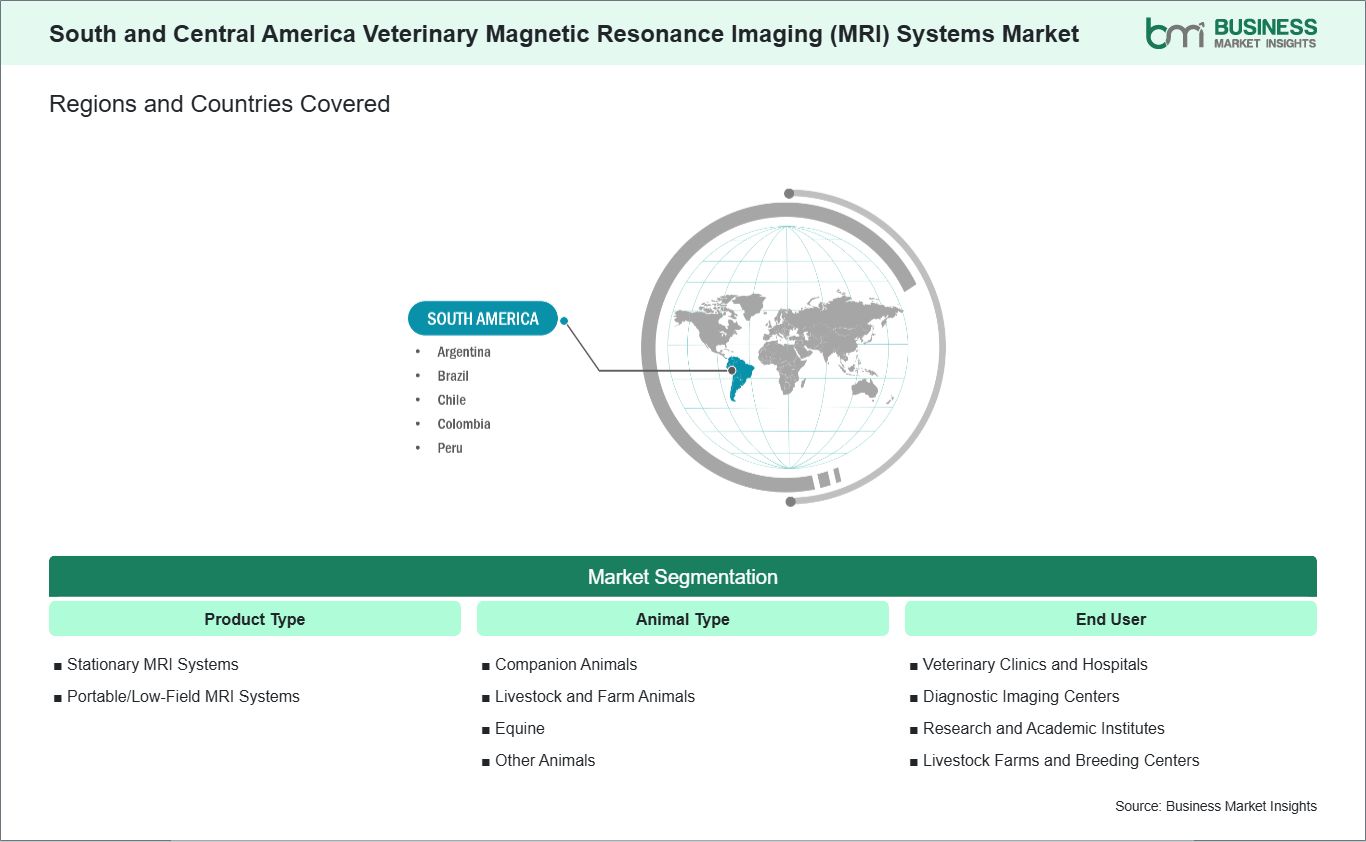
Key segments that contributed to the derivation of the South and Central America veterinary magnetic resonance imaging (MRI) systems market analysis are product type, animal type, and end user.
- By product type, the veterinary magnetic resonance imaging (MRI) systems market is segmented into stationary MRI systems, portable/low-field MRI systems. The stationary MRI systems segment dominated the market in 2025.
- Based on animal type, the veterinary magnetic resonance imaging (MRI) systems market is categorized into companion animals, livestock and farm animals, equine, others. The companion animals segment dominated the market in 2025.
- In terms of end user, the veterinary magnetic resonance imaging (MRI) systems market is categorized into veterinary clinics and hospitals, diagnostic imaging centers, research and academic institutes, livestock farms and breeding centers. The veterinary clinics and hospitals segment dominated the market in 2025.
Market Forces
South and Central America Veterinary Magnetic Resonance Imaging (MRI) Systems Market Drivers and Opportunities
Rising Demand for Advanced Veterinary MRI Imaging Systems
The South and Central America veterinary MRI systems market is experiencing continuous expansion because pet owners and livestock farmers require more sophisticated diagnostic imaging solutions. The urban areas of Brazil, Argentina and Chile are experiencing rapid growth in pet ownership because veterinary services are becoming more accessible. Veterinary clinics and specialty hospitals now require MRI systems to create precise diagnoses of three different health conditions, which include neurological disorders, musculoskeletal problems and soft tissue injuries.
The increasing occurrence of zoonotic diseases, together with complicated animal health issues, creates a greater requirement for accurate imaging systems. Veterinary professionals are increasingly using MRI systems to identify diseases in their initial stages because this practice leads to better results in medical treatment. Multi-specialty veterinary centers in São Paulo and Buenos Aires are developing advanced imaging systems to meet their increasing operational needs.
The market growth is being supported by both government initiatives and financial contributions from the private sector. The veterinary education institutions throughout Latin America now teach advanced imaging techniques, which help improve system use. The demand for MRI systems will continue to grow throughout the region because pet owners and veterinarians are becoming more aware of these systems.
Growing Veterinary Telemedicine Integration with MRI Systems
The integration of telemedicine with veterinary MRI systems is creating new growth avenues across South and Central America. With large rural and remote populations, countries such as Peru, Ecuador, and Bolivia are increasingly adopting teleconsultation platforms to bridge gaps in veterinary expertise. MRI imaging data can now be shared digitally with specialists located in urban hubs, improving diagnostic accuracy and reducing turnaround time.
This trend is particularly valuable in regions where access to advanced veterinary care remains limited. Tele-radiology services are enabling smaller clinics to leverage MRI technology without requiring in-house specialists. In Brazil and Mexico, veterinary networks are beginning to incorporate cloud-based imaging systems that allow seamless data sharing and collaboration among professionals.
Furthermore, technological advancements in connectivity and digital health infrastructure are supporting this shift. Governments and private organizations are investing in broadband expansion and digital health solutions, making telemedicine more viable. As integration between MRI systems and telehealth platforms deepens, the market is expected to benefit from improved accessibility, enhanced diagnostic capabilities, and broader reach across underserved areas.
Size and Share Analysis
South and Central America Veterinary Magnetic Resonance Imaging (MRI) Systems Market Size and Share Analysis
The South and Central America veterinary magnetic resonance imaging (MRI) systems market is experiencing steady growth, with market size and share analysis reflecting evolving treatment preferences and competitive dynamics among key players. The report evaluates important subsegments categorized within product type, animal type, and end user, highlighting their respective contributions to market performance.
By product type, the stationary MRI systems subsegment dominated the market in 2025, driven by higher image quality, greater throughput, and widespread adoption in hospitals for comprehensive diagnostic imaging.
Based on animal type, the companion animals subsegment dominated the market in 2025, driven by increasing pet ownership and rising demand for advanced diagnostic imaging in routine veterinary care.
In terms of end user, the veterinary clinics and hospitals subsegment dominated the market in 2025, driven by the widespread adoption of x-ray systems for comprehensive diagnostic and treatment services.
Report Coverage
South and Central America Veterinary Magnetic Resonance Imaging (MRI) Systems Market Report Coverage and Deliverables
The "South and Central America Veterinary Magnetic Resonance Imaging (MRI) Systems Market Size and Forecast (2022–2033)" report provides a detailed analysis of the market covering below areas:
- Market size and forecast at regional and country levels for all market segments covered under the scope
- Market trends, as well as drivers, restraints, and opportunities
- Market analysis covering key trends, regional framework, major players, regulations, and recent developments
- Market concentration, heat map analysis, prominent players, and recent developments for the Market
- Detailed company profiles, including SWOT analysis
Geographic Insights
South and Central America Veterinary Magnetic Resonance Imaging (MRI) Systems Market Geographic Insights
The geographical scope of the South and Central America Veterinary Magnetic Resonance Imaging (MRI) Systems Market report is divided into Brazil, Argentina, Peru, Chile, and Colombia. Brazil held the largest share in 2025.
The veterinary magnetic resonance imaging (MRI) systems market in South and Central America operates through its current development stage, which receives backing from two main factors: greater public understanding of animal diagnostic technology and an increasing number of pet owners and better veterinary facilities, which develop throughout Brazil, Argentina, Peru, Chile and Colombia. Brazil functions as the primary market leader in the region because its extensive animal population, advanced veterinary medical services, specialized veterinary divisions and academic institutions create a complete market ecosystem. The country requires better imaging technology, which veterinary professionals show increasing interest in adopting because urban areas demand preventive medical services and specialized healthcare treatments, which drive MRI system implementation. The demand for pet ownership has increased in Argentina, which creates high growth potential for the market, while modern veterinary practices face adoption challenges because of unstable economic conditions and insufficient financial resources for investment. The veterinary sector in Chile maintains stable growth because its organized structure enables urban centers to adopt advanced diagnostic methods, which continue to gain acceptance; yet, the expensive equipment and limited ability to expand operations will prevent most users from adopting these systems. Colombia shows progressive development through enhanced veterinary services and growing private sector involvement, which drives demand for MRI systems, although urban areas and rural areas maintain different levels of healthcare access. The Peruvian market exists at an initial stage of development because advanced imaging technologies have not yet achieved widespread use while basic diagnostic methods remain the standard, but the market will grow in the future as veterinary professionals develop their expertise and the country builds its essential infrastructure. The regional market expansion faces multiple challenges, which include the expensive MRI system acquisition and maintenance costs, the shortage of skilled professionals, and the unequal distribution of advanced veterinary facilities. The positive outlook between Brazil and other countries exists because the sector demands precise diagnostic methods, while educational facilities for veterinarians and their infrastructure develop, and the industry moves toward higher quality animal healthcare, which Brazil leads through its technological progress and service capacity.
Industry Activity
Recent Developments
The South and Central America Veterinary Magnetic Resonance Imaging (MRI) Systems Market is evaluated by gathering qualitative and quantitative data post primary and secondary research, which includes important corporate publications, association data, and databases. A few of the key developments in the South and Central America veterinary magnetic resonance imaging (MRI) systems market are:
- In July 2025, Time Medical Systems, announced that it signed a strategic partnership agreement with Hawkcell to develop and offer AI-powered, animal-dedicated MRI imaging solutions for veterinary diagnostics, supporting global expansion.
- In March 2025, Esaote S.p.A., announced the introduction of its Vet-MR Grande ELITE veterinary MRI system at ECVS 2025, featuring AI-powered image reconstruction and improved scan efficiency to enhance veterinary diagnostic capabilities globally.
Trust & Transparency
Research Methodology
The market analysis combines proprietary research with secondary data from government agencies, company disclosures, regulatory filings, industry databases and expert interviews. Market estimates are validated through data triangulation, cross-market benchmarking and analyst
review.
View Full Research Methodology
Key Sources Referred:
American College of Veterinary Radiology (ACVR)World Small Animal Veterinary Association (WSAVA)British Veterinary Association (BVA)International Veterinary Radiology Association (IVRA)American Veterinary Medical Association (AVMA)European College of Veterinary Diagnostic Imaging (ECVDI)World Organisation for Animal Health (WOAH / OIE)Veterinary Imaging & Radiation Oncology Society (VIROS)