Market Summary
Executive Summary and Market Analysis
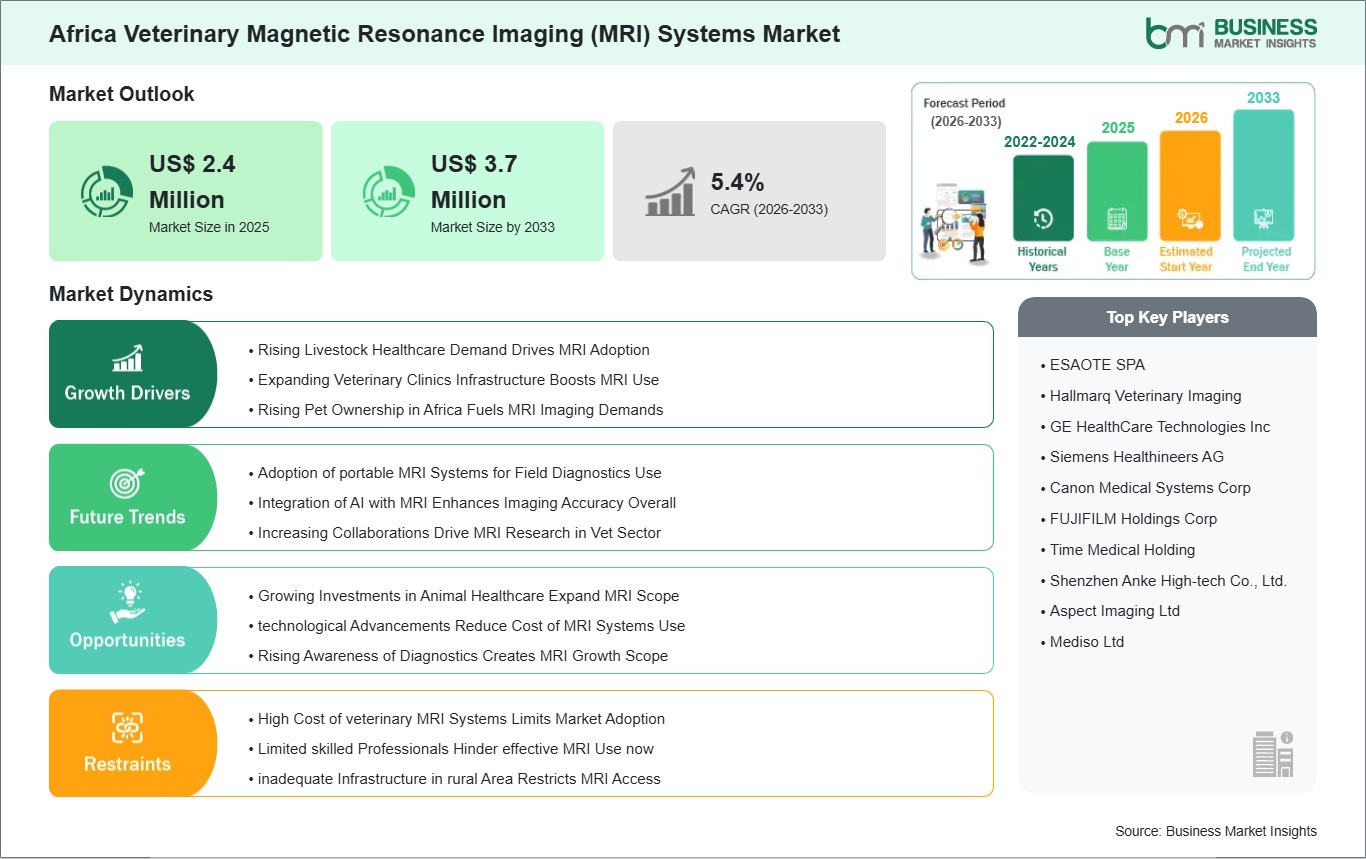
The veterinary MRI systems market in Africa exists at its initial development stage, which is currently experiencing gradual progress because of two main factors. The advanced diagnostic imaging market, which includes MRI systems shows primary demand in developed veterinary systems that include South Africa and Egypt and specific urban areas of Nigeria and Kenya. The humanization trend of companion animals has increased among pet owners who now choose to receive specialized treatments, which results in higher diagnostic technology adoption rates. The livestock industry in agricultural-dependent nations shows strong demand for advanced imaging technologies, which veterinarians use to assess valuable animal species such as equine and breeding stock. The regional market development depends on veterinary infrastructure modernization initiatives, which private veterinary hospitals, academic institutions and specialized diagnostic centers currently implement. The facilities use MRI systems to improve their diagnostic capabilities because these systems provide better assessment methods for neurological and orthopedic conditions, which traditional imaging methods cannot effectively evaluate. Africa functions as a wildlife conservation center because of its distinctive role in protecting endangered species and conducting zoological studies. The specific demand for MRI systems exists to diagnose and study exotic and endangered species through their application in this particular area. This specialized field of study demonstrates how vital advanced imaging technologies have become for particular institutional environments. Market expansion faces multiple structural obstacles that need to be overcome. The high acquisition and maintenance costs of MRI systems remain a significant barrier, limiting adoption primarily to well-funded institutions and urban centers. The region suffers from insufficient veterinary radiologists and technicians who possess the skills to operate and interpret MRI diagnostics, which results in limited equipment usage. The deployment of advanced systems faces additional challenges, which arise from infrastructure problems that result in unstable power supply and restricted maintenance access. The African veterinary MRI systems market shows selective growth patterns, which create possibilities for development in both urban areas and specialized markets. The demand fundamentals show increasing strength; however, the market will need to resolve cost challenges and develop technical skills while building necessary infrastructure to achieve broader market access.
Segment Analysis
Africa Veterinary Magnetic Resonance Imaging (MRI) Systems Market Segmentation
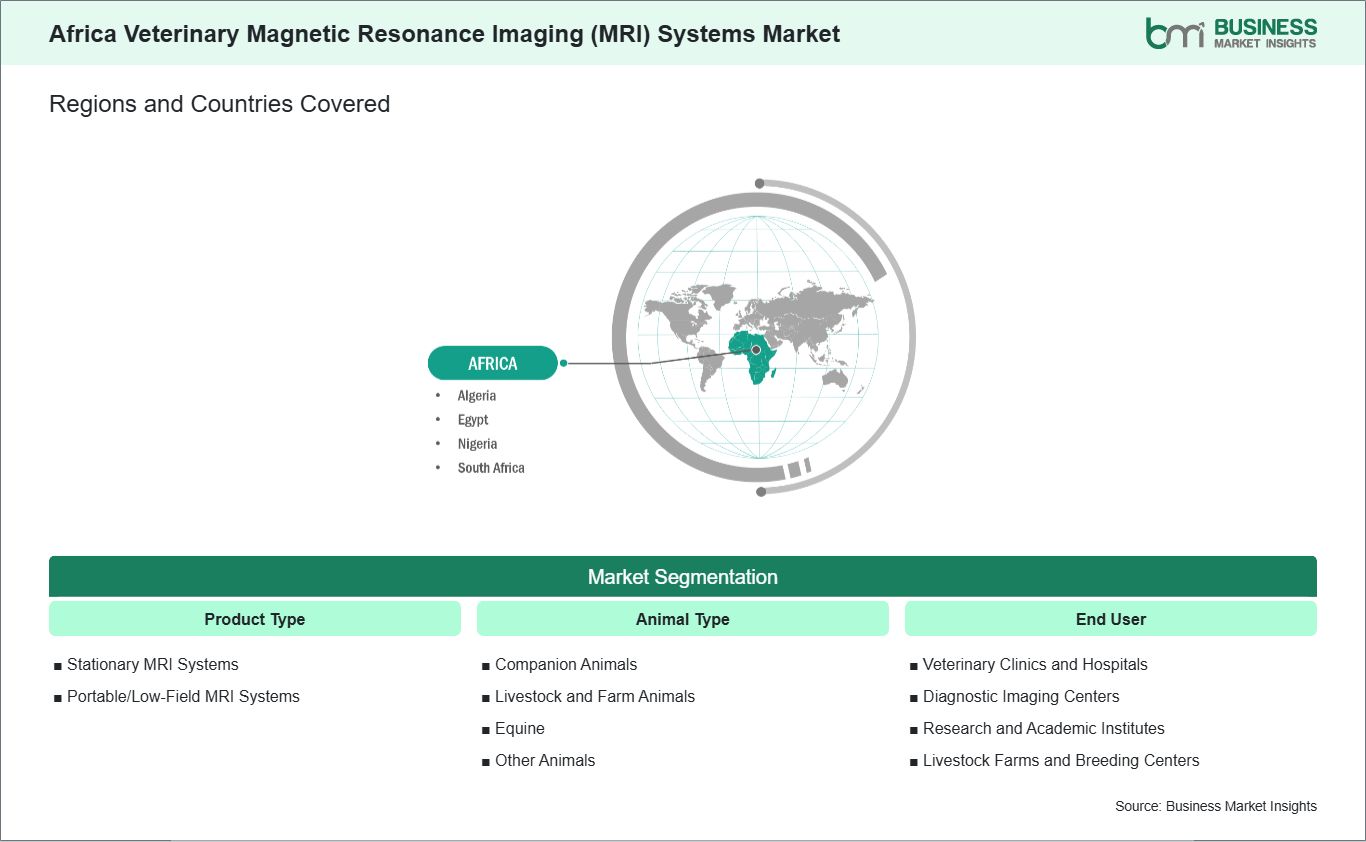
Key segments that contributed to the derivation of the Africa veterinary magnetic resonance imaging (MRI) systems market analysis are product type, animal type, and end user.
- By product type, the veterinary magnetic resonance imaging (MRI) systems market is segmented into stationary MRI systems, portable/low-field MRI systems. The stationary MRI systems segment dominated the market in 2025.
- Based on animal type, the veterinary magnetic resonance imaging (MRI) systems market is categorized into companion animals, livestock and farm animals, equine, others. The companion animals segment dominated the market in 2025.
- In terms of end user, the veterinary magnetic resonance imaging (MRI) systems market is categorized into veterinary clinics and hospitals, diagnostic imaging centers, research and academic institutes, livestock farms and breeding centers. The veterinary clinics and hospitals segment dominated the market in 2025.
Market Forces
Africa Veterinary Magnetic Resonance Imaging (MRI) Systems Market Drivers and Opportunities
Rising Livestock Healthcare Demand Drives MRI Adoption
The veterinary MRI system adoption in Africa increases because of the rising livestock numbers in African countries, which include South Africa, Kenya and Nigeria, because these nations depend on cattle, goats and sheep for their rural economic activities. Veterinarians use advanced imaging tools for early and accurate diagnosis because livestock diseases such as lumpy skin disease, brucellosis and foot-and-mouth disease prevent them from reaching full productivity. The superior soft-tissue visualization of MRI systems enables their use in detecting musculoskeletal and neurological disorders that affect valuable breeding animals.
The increasing commercialization of livestock farming across North Africa and West Africa creates a higher demand for precision diagnostic services. The Gauteng and Free State provinces of South Africa enable large-scale dairy and beef operations to implement MRI-supported veterinary practices for herd mortality reduction and breeding outcome improvement. The export-oriented livestock producers in Morocco are developing their advanced diagnostic abilities to comply with international animal health requirements.
The implementation process faces challenges because rural areas lack veterinary infrastructure and face high costs. The mobile veterinary clinics, together with regional referral hospitals, are now starting to use imaging technologies through their partnerships with global equipment suppliers. The African livestock healthcare system will experience stronger MRI adoption because of this process, which will occur throughout Africa.
Growing Investments in Animal Healthcare Expand MRI Scope
Investment in Africa's veterinary healthcare sector is steadily increasing because both government programs and private businesses are showing financial support for the industry. South Africa and Egypt are spending more money to develop their veterinary infrastructure systems, which include diagnostic imaging centers. The funding aims to enhance animal welfare standards, disease monitoring systems and food safety measures, which will create indirect pathways for adopting MRI systems in veterinary medicine.
International development programs and NGOs are also contributing to infrastructure upgrades. East African veterinary programs, which receive donor funding, are providing referral hospitals with advanced imaging equipment such as MRI and CT systems to enhance diagnostic capabilities for companion animals and livestock. MRI technology serves research purposes and complex case diagnostics at Kenya's veterinary teaching hospitals and wildlife conservation centers.
Veterinary hospital chains and specialty clinics in urban areas of Johannesburg, Cape Town and Cairo are expanding their diagnostic capabilities through new equipment acquisition. These facilities are increasingly investing in high-field MRI systems to cater to rising pet ownership and demand for premium veterinary care. The availability of MRI systems will increase throughout Africa's companion animal and livestock healthcare sectors because capital investments will keep flowing into the region.
Size and Share Analysis
Africa Veterinary Magnetic Resonance Imaging (MRI) Systems Market Size and Share Analysis
The African veterinary magnetic resonance imaging (MRI) systems market is experiencing steady growth, with market size and share analysis reflecting evolving treatment preferences and competitive dynamics among key players. The report evaluates important subsegments categorized within product type, animal type, and end user, highlighting their respective contributions to market performance.
By product type, the stationary MRI systems subsegment dominated the market in 2025, driven by higher image quality, greater throughput, and widespread adoption in hospitals for comprehensive diagnostic imaging.
Based on animal type, the companion animals subsegment dominated the market in 2025, driven by increasing pet ownership and rising demand for advanced diagnostic imaging in routine veterinary care.
In terms of end user, the veterinary clinics and hospitals subsegment dominated the market in 2025, driven by the widespread adoption of x-ray systems for comprehensive diagnostic and treatment services.
Report Coverage
Africa Veterinary Magnetic Resonance Imaging (MRI) Systems Market Report Coverage and Deliverables
The "Africa Veterinary Magnetic Resonance Imaging (MRI) Systems Market Size and Forecast (2022–2033)" report provides a detailed analysis of the market covering below areas:
- Market size and forecast at regional and country levels for all market segments covered under the scope
- Market trends, as well as drivers, restraints, and opportunities
- Market analysis covering key trends, regional framework, major players, regulations, and recent developments
- Market concentration, heat map analysis, prominent players, and recent developments for the Market
- Detailed company profiles, including SWOT analysis
Geographic Insights
Africa Veterinary Magnetic Resonance Imaging (MRI) Systems Market Geographic Insights
The geographical scope of the Africa Veterinary Magnetic Resonance Imaging (MRI) Systems Market report is divided into Nigeria, Egypt, South Africa, and Algeria. South Africa held the largest share in 2025.
The Africa veterinary magnetic resonance imaging (MRI) systems market demonstrates uneven regional development, with South Africa clearly emerging as the dominant country due to its comparatively advanced veterinary healthcare ecosystem, higher concentration of specialty animal hospitals, and stronger integration of diagnostic imaging technologies. The country benefits from a well-established companion animal care culture, increasing expenditure on pet health, and the presence of private veterinary groups that are more willing to invest in high-cost imaging modalities such as MRI. Academic institutions and referral centers in South Africa guide adoption because they provide support for training, research, and clinical implementation of modern imaging systems. Egypt functions as an emerging market that experiences growth through urban development, increasing pet ownership among higher-income households, and gradual improvements in veterinary services; however, adoption remains limited because of cost concerns, the short supply of qualified imaging personnel, and the existing preference for affordable diagnostic methods. The market in Nigeria shows early development, which will bring significant future growth because the country has a large livestock population and its emerging companion animal market. The current use of MRI systems in veterinary practices faces essential barriers because of insufficient facilities, low understanding of advanced diagnostic methods and the limited financial resources that veterinary clinics can use. Algeria exhibits its initial development stage because veterinary MRI technology exists only in select urban veterinary hospitals, which prevents the technology from spreading across the country. The four countries experience market growth because they implement better animal healthcare practices, and people understand the need for precise early diagnosis, and veterinary clinics gradually extend their service capacity. The system faces three main obstacles, which include high costs for equipment and system upkeep and the absence of skilled personnel and the uneven spread of veterinary facilities. South Africa currently leads the veterinary diagnostics market because it has better institutional support and infrastructure and more developed veterinary diagnostic systems, while Egypt, Nigeria and Algeria work through their respective development phases.
Industry Activity
Recent Developments
The Africa Veterinary Magnetic Resonance Imaging (MRI) Systems Market is evaluated by gathering qualitative and quantitative data post primary and secondary research, which includes important corporate publications, association data, and databases. A few of the key developments in the Africa veterinary magnetic resonance imaging (MRI) systems market are:
- In February 2025, GE HealthCare introduced the Freelium MRI platform, a new MRI magnet technology designed to reduce helium dependency and improve imaging accessibility in regions with limited infrastructure.
- In July 2025, Esaote announced the launch of Vet-MR Grande ELITE, a next-generation veterinary MRI system designed for small animals and equine imaging, expanding its global veterinary MRI portfolio distributed across international markets including Africa via authorized partners.
Trust & Transparency
Research Methodology
The market analysis combines proprietary research with secondary data from government agencies, company disclosures, regulatory filings, industry databases and expert interviews. Market estimates are validated through data triangulation, cross-market benchmarking and analyst
review.
View Full Research Methodology
Key Sources Referred:
American College of Veterinary Radiology (ACVR)World Small Animal Veterinary Association (WSAVA)British Veterinary Association (BVA)International Veterinary Radiology Association (IVRA)American Veterinary Medical Association (AVMA)European College of Veterinary Diagnostic Imaging (ECVDI)World Organisation for Animal Health (WOAH / OIE)Veterinary Imaging & Radiation Oncology Society (VIROS)