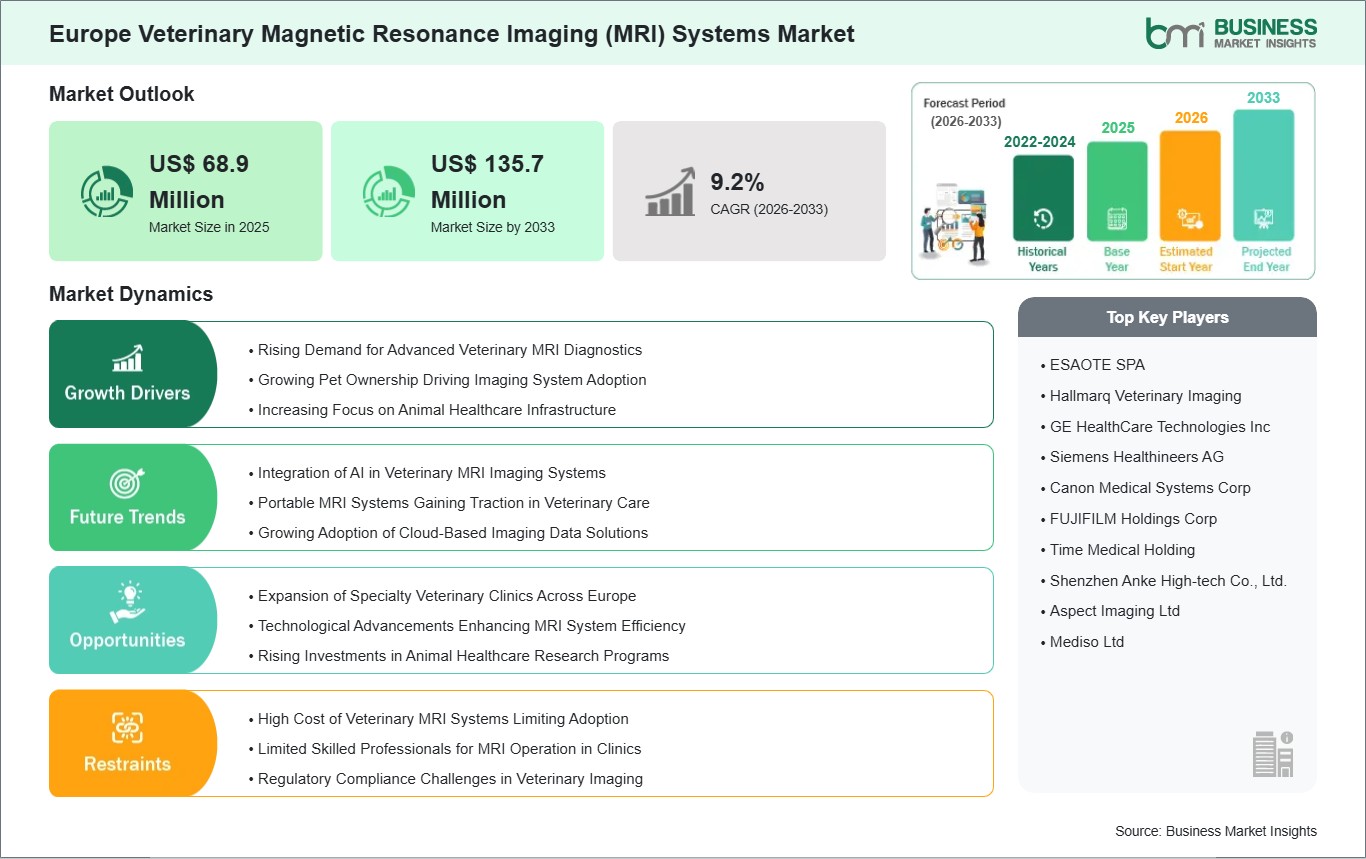
The Europe veterinary magnetic resonance imaging (MRI) systems market size is expected to reach US$ 135.7 million by 2033 from US$ 68.9 million in 2025. The market is estimated to register a CAGR of 9.2% from 2026 to 2033.
The European veterinary magnetic resonance imaging (MRI) systems market exists because the region has a complete veterinary medical system, which maintains strict clinical practices and permits veterinarians to use modern diagnostic methods for animal treatment. The region shows how veterinary practices use different imaging technologies through their structured system, which medical professionals use to improve their ability to diagnose companion animals. Veterinary MRI has become an important tool for evaluating neurological disorders, musculoskeletal conditions, and soft tissue abnormalities, especially in cases where conventional imaging techniques are insufficient. The rising market demand in Europe results from the increasing complexity of veterinary medical cases, which pet owners now recognize through their understanding of new treatment methods. The rising practice of treating pet cats and dogs with medical methods that mirror human treatment has created an increased requirement for advanced non-invasive diagnostic technologies that provide high-quality results. Veterinary practitioners now concentrate on finding diseases at their beginning stages, which has increased the usage of MRI machines in specialized veterinary clinics and their partner hospitals. The current development of veterinary medical facilities throughout the region serves as another vital component that drives market expansion. Veterinary medicine facilities now invest in advanced imaging equipment, which becomes part of their overall spending on precise animal medical care. The veterinary field benefits from MRI systems because technological innovations deliver better images, quicker scans, and better integration of the entire process. The growing partnerships between veterinary schools and medical imaging companies. They create dog and cat diagnostic systems that function better through their work. The market faces multiple structural issues which create obstacles to its growth. The veterinary field faces a major challenge because MRI systems need high costs for both their purchase and their daily operation. The veterinary field demands specialized equipment which requires dedicated spaces and specific animal handling methods to create functioning facilities. The shortage of veterinarians and technicians who can perform advanced imaging work prevents some areas from accessing wider diagnostic procedures. Western Europe shows more advanced adoption because its veterinary system reaches high development levels, while residents spend more on pet services. The veterinary infrastructure in Central and Eastern Europe markets leads to smoother development as people learn more about veterinary services. The European veterinary MRI systems market shows two opposing forces that create a consistent pattern of growth that only occurs in specific areas.

Key segments that contributed to the derivation of the Europe veterinary magnetic resonance imaging (MRI) systems market analysis are product type, animal type, and end user.
The European Veterinary MRI systems market is experiencing robust expansion, which results from increased requirements for modern diagnostic solutions in animal medical care. The countries of Germany, the UK, and France demonstrate leadership in implementing MRI systems for companion animal use, especially to diagnose neurological and musculoskeletal disorders. The increasing rate of chronic illnesses among pets, together with the rising understanding of early diagnosis benefits among pet owners, creates a strong market demand.
Veterinary hospitals and specialty clinics across Europe are investing in high-resolution MRI systems to improve diagnostic accuracy and treatment outcomes. Pet owners increasingly choose premium healthcare options, which include advanced imaging, due to the rising trend of humanizing their pets. Urban areas show this pattern because residents have higher disposable income and easier access to veterinary care services.
The adoption of MRI systems benefits from government support and advancements in veterinary educational programs. Advanced imaging technologies now find their way into university and research institution classrooms and clinical facilities, which leads to market growth in the entire region.
The expansion of specialty veterinary clinics across Europe presents a significant growth opportunity for the veterinary MRI systems market. Countries such as Spain, Italy, and the Netherlands are experiencing a rise in private veterinary practices focusing on specialized care, including oncology, neurology, and orthopedics. These clinics require advanced imaging solutions like MRI to support precise diagnosis and treatment planning.
In addition, corporate veterinary chains and investment groups are entering the European market, consolidating smaller practices and upgrading them with modern diagnostic infrastructure. This trend is accelerating the deployment of MRI systems in mid-sized and large veterinary facilities. The availability of financing options and leasing models is also making it easier for clinics to invest in high-cost imaging equipment.
Moreover, increasing cross-border collaborations and research initiatives in veterinary medicine are fostering innovation and adoption of MRI technologies. European Union funding programs and partnerships between academic institutions and private players are supporting the development of next-generation imaging systems, further strengthening market opportunities in the region.
The Europe veterinary magnetic resonance imaging (MRI) systems market is experiencing steady growth, with market size and share analysis reflecting evolving treatment preferences and competitive dynamics among key players. The report evaluates important subsegments categorized within product type, animal type, and end user, highlighting their respective contributions to market performance.
By product type, the stationary MRI systems subsegment dominated the market in 2025, driven by higher image quality, greater throughput, and widespread adoption in hospitals for comprehensive diagnostic imaging.
Based on animal type, the companion animals subsegment dominated the market in 2025, driven by increasing pet ownership and rising demand for advanced diagnostic imaging in routine veterinary care.
In terms of end user, the veterinary clinics and hospitals subsegment dominated the market in 2025, driven by the widespread adoption of x-ray systems for comprehensive diagnostic and treatment services.
| Report Attribute | Details |
|---|---|
| Market size in 2025 | US$ 68.9 Million |
| Market Size by 2033 | US$ 135.7 Million |
| CAGR (2026 - 2033) | 9.2% |
| Historical Data | 2022-2024 |
| Forecast period | 2026-2033 |
| Segments Covered | By Product Type
|
|
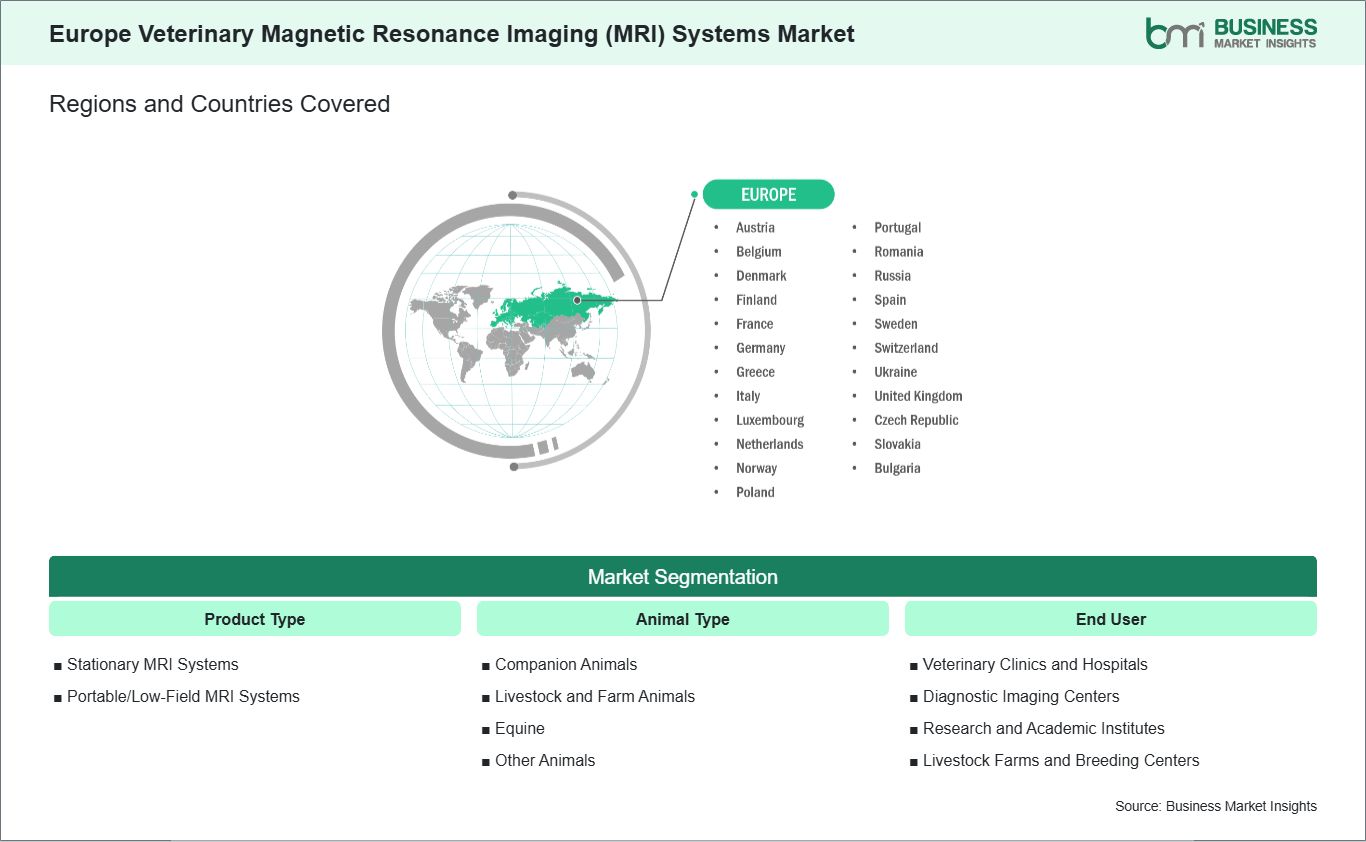
Regions and Countries Covered
| |
| Europe | Belgium, Austria, Finland, Denmark, Greece, Poland, Romania, Russia, Ukraine, Czech Republic, Slovakia, Bulgaria, Italy, Luxembourg, Germany, Switzerland, France, Netherlands, Norway, Portugal, Spain, Sweden, United Kingdom |
| Market leaders and key company profiles |
|
The "Europe Veterinary Magnetic Resonance Imaging (MRI) Systems Market Size and Forecast (2022–2033)" report provides a detailed analysis of the market covering below areas:
The geographical scope of the Europe Veterinary Magnetic Resonance Imaging (MRI) Systems Market report is divided into Belgium, Austria, Finland, Denmark, Greece, Poland, Romania, Russia, Ukraine, the Czech Republic, Slovakia, Bulgaria, Italy, Luxembourg, Germany, Switzerland, France, the Netherlands, Norway, Portugal, Spain, Sweden, and the UK. Germany held the largest share in 2025.
The veterinary magnetic resonance imaging systems market in Europe develops unevenly across different regions because of three main factors, which include the current state of veterinary healthcare services and veterinary healthcare facilities, and their ability to treat pet animals. The European market for the veterinary industry operates mainly from Germany because the country possesses advanced veterinary facilities and multiple specialized treatment centers, and it has adopted advanced medical imaging equipment before its competitors. The country operates a comprehensive system, which includes numerous veterinary teaching hospitals and specialized imaging centers that enable regular use of MRI machines for companion animal neurological and orthopedic assessments. Western European countries, including France and the United Kingdom, the Netherlands, Belgium, Luxembourg, Switzerland, Italy, Spain and Portugal, all develop their veterinary markets into competitive segments which reach high levels of competition. France and the UK show strong demand because their veterinary systems follow structured referral processes, and their high pet ownership rates contribute to their needs. The Netherlands and Switzerland demonstrate advanced adoption supported by high-quality veterinary care standards. Italy and Spain are experiencing steady growth as private veterinary hospitals expand, though adoption remains concentrated in urban centers, and Portugal reflects emerging but smaller-scale demand. The countries of Northern Europe, which include Sweden, Denmark, Norway and Finland, demonstrate advanced technology capabilities together with high per capita expenditures on pet healthcare, which enables them to adopt MRI technology more quickly, especially at veterinary hospitals that provide integrated services and focus on accurate medical testing and disease prevention. The market in Central Europe, which includes Austria, Poland, the Czech Republic and Slovakia, shows moderate development because Austria possesses greater market maturity compared to Poland and the Czech Republic and Slovakia, which are both developing their veterinary infrastructure and attracting private funding to improve MRI access. The countries of Eastern and Southeastern Europe, which include Romania, Bulgaria, Greece and Ukraine, need to reach educational milestones before they can adopt advanced technology because they face challenges from high expenses, an insufficient number of advanced medical imaging centers and a lack of trained veterinary professionals beyond their major cities, except for urban veterinary facilities, which are starting to create demand. Russia shows two different situations because its main cities have developed advanced veterinary diagnostic systems, while the rest of the country lacks these systems because of unpredictable economic conditions. The veterinary MRI situation in Europe consists of a strong leadership presence from Western and Northern European countries, while Germany maintains its position as the main power for MRI use, and Central and Eastern European countries experience their slow yet inconsistent growth because veterinary healthcare systems modernize and their need for precise tests increases.

The Europe Veterinary Magnetic Resonance Imaging (MRI) Systems Market is evaluated by gathering qualitative and quantitative data post primary and secondary research, which includes important corporate publications, association data, and databases. A few of the key developments in the Europe veterinary magnetic resonance imaging (MRI) systems market are:
The Europe Veterinary Magnetic Resonance Imaging (MRI) Systems Market is valued at US$ 68.9 Million in 2025, it is projected to reach US$ 135.7 Million by 2033.
As per our report Europe Veterinary Magnetic Resonance Imaging (MRI) Systems Market, the market size is valued at US$ 68.9 Million in 2025, projecting it to reach US$ 135.7 Million by 2033. This translates to a CAGR of approximately 9.2% during the forecast period.
The Europe Veterinary Magnetic Resonance Imaging (MRI) Systems Market report typically cover these key segments-
The historic period, base year, and forecast period can vary slightly depending on the specific market research report. However, for the Europe Veterinary Magnetic Resonance Imaging (MRI) Systems Market report:
The Europe Veterinary Magnetic Resonance Imaging (MRI) Systems Market is populated by several key players, each contributing to its growth and innovation. Some of the major players include:
The Europe Veterinary Magnetic Resonance Imaging (MRI) Systems Market report is valuable for diverse stakeholders, including:
Essentially, anyone involved in or considering involvement in the Europe Veterinary Magnetic Resonance Imaging (MRI) Systems Market value chain can benefit from the information contained in a comprehensive market report.
Please tell us your area of interest
(Market Segments/ Regions and Countries/ Companies)