Market Summary
Executive Summary and Market Analysis
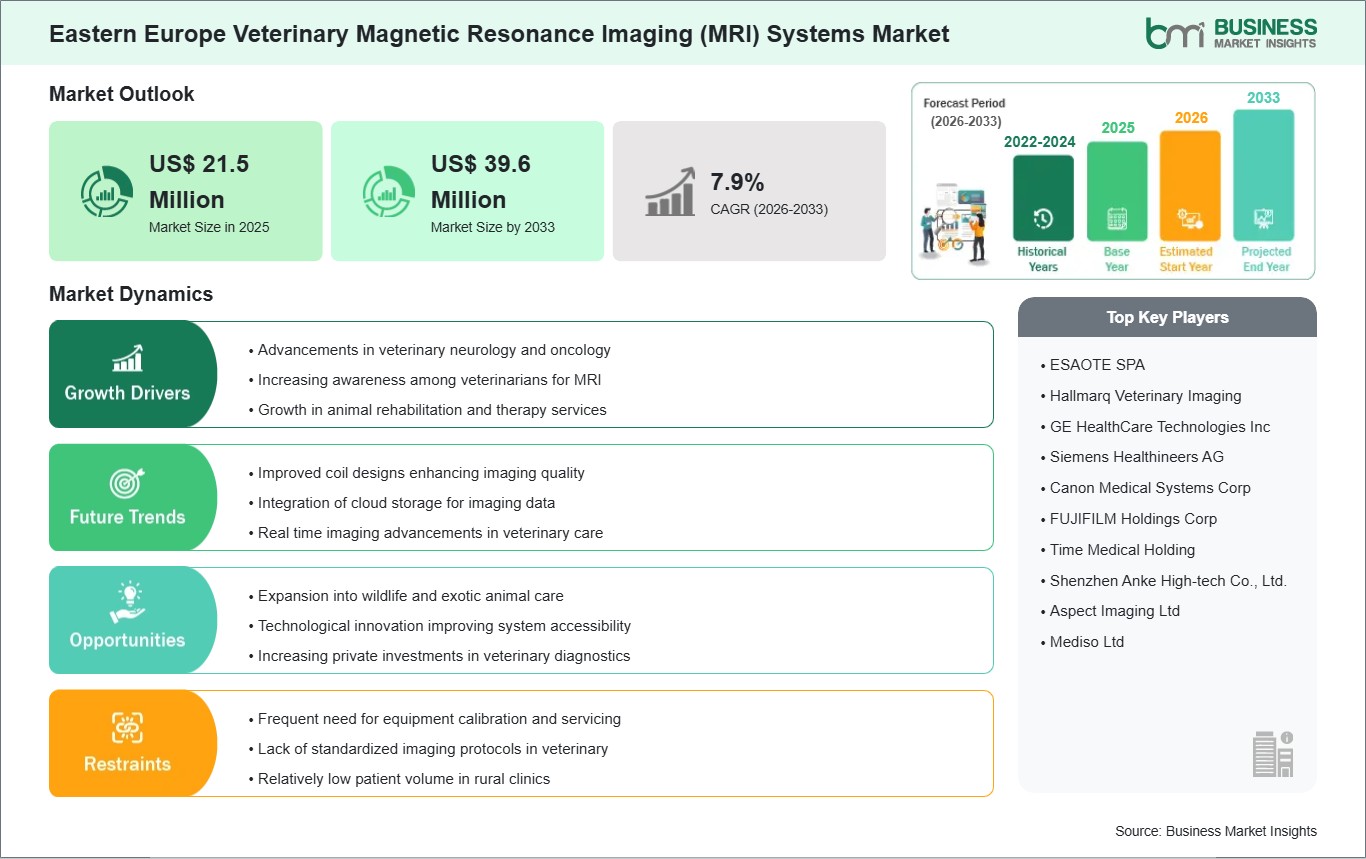
The Eastern European veterinary magnetic resonance imaging (MRI) systems market develops within the European veterinary diagnostics market because veterinary hospitals adopt modern companion animal diagnostic techniques. The adoption of advanced diagnostic imaging equipment has increased in urban veterinary hospitals and referral specialty centers across Poland, Hungary Czech Republic, Bulgaria and Russia. Pet owners are becoming more knowledgeable about neurological, orthopedic and soft-tissue disorders, which drives market demand because MRI provides the most precise non-invasive diagnostic test. Pet ownership has become more humanized in the region, which drives pet owners to select better veterinary treatment solutions. The rising expenses associated with MRI diagnostic tests became more acceptable to people because of increased spending power among higher-income residents of metropolitan areas. The clinical use of MRI systems in veterinary medicine benefits from two factors: private veterinary clinic chains are expanding, and new specialty animal diagnostic centers are opening. International veterinary healthcare providers and equipment suppliers are increasing their market presence, which leads to better access to modern imaging technologies for selected Eastern European markets. The development of veterinary education and training programs in the region has created a positive effect on market growth because it enables better professional skills development. The program assists in solving the shortage of veterinary radiologists and MRI technicians, but it does not completely eliminate this problem. The collaboration between veterinary institutions and global imaging equipment manufacturers enables both parties to share their expertise and develop new technologies for clinical use. The market encounters major restrictions that prevent it from achieving complete market expansion. The costly nature of MRI systems prevents their use in all medical facilities because only hospitals and educational institutions with substantial financial resources can afford them. The high costs of imaging equipment make smaller clinics and rural veterinary practices use ultrasound and X-ray systems instead of more expensive imaging options. The development of healthcare infrastructure in Eastern Europe has created unequal access to medical technology, which hinders the market from developing at a consistent pace. The Eastern European veterinary MRI systems market is transitioning to a new stage because most veterinary facilities still operate with outdated systems, but demand for advanced diagnostics is rising.
Segment Analysis
Eastern Europe Veterinary Magnetic Resonance Imaging (MRI) Systems Market Segmentation
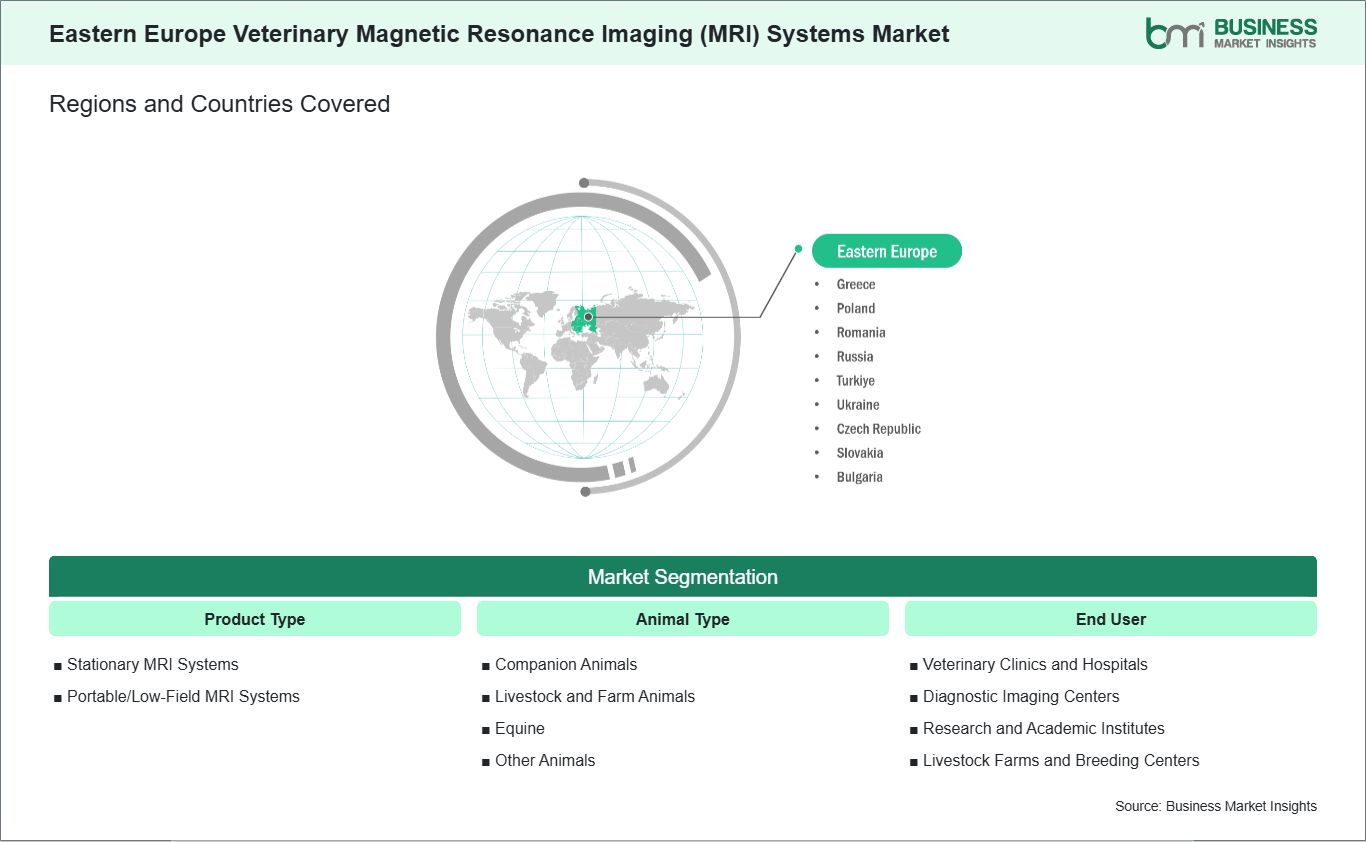
Key segments that contributed to the derivation of the Eastern Europe veterinary magnetic resonance imaging (MRI) systems market analysis are product type, animal type, and end user.
- By product type, the veterinary magnetic resonance imaging (MRI) systems market is segmented into stationary MRI systems, portable/low-field MRI systems. The stationary MRI systems segment dominated the market in 2025.
- Based on animal type, the veterinary magnetic resonance imaging (MRI) systems market is categorized into companion animals, livestock and farm animals, equine, others. The companion animals segment dominated the market in 2025.
- In terms of end user, the veterinary magnetic resonance imaging (MRI) systems market is categorized into veterinary clinics and hospitals, diagnostic imaging centers, research and academic institutes, livestock farms and breeding centers. The veterinary clinics and hospitals segment dominated the market in 2025.
Market Forces
Eastern Europe Veterinary Magnetic Resonance Imaging (MRI) Systems Market Drivers and Opportunities
Rising Companion Healthcare Spending Drives MRI Demands
The demand for veterinary MRI systems in Eastern Europe is increasing because people are spending more money on veterinary services for their pet animals. Polish, Czech and Hungarian citizens are adopting more pets while spending more money on their pets, which is particularly evident in cities like Warsaw and Prague. Veterinary hospitals are using advanced diagnostic imaging tools, which include MRI technology, to treat neurological and musculoskeletal conditions because they want to achieve better clinical outcomes for their patients.
The growth of private veterinary clinics and specialized animal hospitals in Eastern Europe provides better access to MRI services for veterinary providers. The European Union healthcare modernization initiatives in Romania and Bulgaria help implement advanced imaging technologies, which decrease the need for Western European veterinary referral centers to handle complicated diagnostic examinations.
The adoption of veterinary equipment in rural veterinary practices across Serbia and Ukraine faces two major obstacles, which include high equipment prices and short reimbursement policies. International medical imaging companies are expected to increase their investments, which will enhance market penetration according to the upcoming forecast period.
Expansion of Specialty Veterinary Clinics Boosts MRI Use
Expansion of specialty veterinary clinics across Eastern Europe is significantly boosting the adoption of MRI systems for advanced animal diagnostics. Urban veterinary centers in countries like Poland, Czech Republic, and Slovakia are increasingly integrating high-end imaging services to cater to rising demand for complex diagnostic procedures in companion animals.
Foreign direct investment and private equity participation in veterinary healthcare infrastructure are further supporting MRI system deployment in Eastern Europe. Countries such as Estonia, Latvia, and Lithuania are upgrading their veterinary diagnostic capabilities, aligning with EU animal health standards and improving access to advanced imaging technologies.
Additionally, increasing awareness among pet owners and rising insurance penetration for animals are enabling clinics to justify investments in MRI systems. However, the high operational costs and need for specialized veterinary radiologists remain key challenges. Over the forecast period, technological advancements and portable MRI solutions are expected to further accelerate market expansion in the region.
Size and Share Analysis
Eastern Europe Veterinary Magnetic Resonance Imaging (MRI) Systems Market Size and Share Analysis
The Eastern Europe veterinary magnetic resonance imaging (MRI) systems market is experiencing steady growth, with market size and share analysis reflecting evolving treatment preferences and competitive dynamics among key players. The report evaluates important subsegments categorized within product type, animal type, and end user, highlighting their respective contributions to market performance.
By product type, the stationary MRI systems subsegment dominated the market in 2025, driven by higher image quality, greater throughput, and widespread adoption in hospitals for comprehensive diagnostic imaging.
Based on animal type, the companion animals subsegment dominated the market in 2025, driven by increasing pet ownership and rising demand for advanced diagnostic imaging in routine veterinary care.
In terms of end user, the veterinary clinics and hospitals subsegment dominated the market in 2025, driven by the widespread adoption of x-ray systems for comprehensive diagnostic and treatment services.
Report Coverage
Eastern Europe Veterinary Magnetic Resonance Imaging (MRI) Systems Market Report Coverage and Deliverables
The "Eastern Europe Veterinary Magnetic Resonance Imaging (MRI) Systems Market Size and Forecast (2022–2033)" report provides a detailed analysis of the market covering below areas:
- Market size and forecast at regional and country levels for all market segments covered under the scope
- Market trends, as well as drivers, restraints, and opportunities
- Market analysis covering key trends, regional framework, major players, regulations, and recent developments
- Market concentration, heat map analysis, prominent players, and recent developments for the Market
- Detailed company profiles, including SWOT analysis
Geographic Insights
Eastern Europe Veterinary Magnetic Resonance Imaging (MRI) Systems Market Geographic Insights
The geographical scope of the Eastern Europe Veterinary Magnetic Resonance Imaging (MRI) Systems Market report is divided into Russia, Poland, Ukraine, Romania, the Czech Republic, Slovakia, Bulgaria, and Greece. Russia held the largest share in 2025.
The veterinary magnetic resonance imaging (MRI) systems market in Eastern Europe experiences continuous growth because of increased pet ownership and greater demand for livestock healthcare services, and the ongoing advancement of veterinary diagnostic technologies, which now use human medical imaging methods. The Russian market operates as the largest regional market because its extensive territory enables more veterinary facilities to operate, which results in higher public and private funds being spent on sophisticated diagnostic equipment that includes MRI machines designed for use with pets and valuable farm animals. Veterinary facilities in Russian cities have started to use high-field MRI machines, which enable better diagnosis of animal neurological conditions, musculoskeletal disorders and cancerous diseases because they work with international imaging equipment companies to develop digital systems that use artificial intelligence for imaging procedures. The Polish market serves as a strong secondary market because EU funding supports its development, and the companion animal healthcare market expands, and veterinary specialty clinics combine MRI technology for their advanced diagnostic services. Veterinary hospitals in Ukraine show early demand for imaging technology, which vendors face limitations because of the country's economic situation and infrastructure problems, yet urban veterinary facilities are starting to use imaging systems for their valuable medical cases and research work. The markets in Romania and Bulgaria serve price-sensitive customers who currently have limited access to MRI technology, which is slowly increasing in private veterinary clinics throughout urban areas. The main barriers to adoption in these markets include expensive equipment costs and insufficient reimbursement options, which are currently being resolved through European Union healthcare modernization initiatives. The Czech Republic and Slovakia demonstrate moderate adoption levels because their veterinary education systems are well-developed and they receive technological support from Western Europe, which enables their veterinary diagnostic centers to use MRI technology. Greece has a smaller population base but shows gradual adoption because pet humanization trends are increasing, and private veterinary clinics are expanding in urban areas. All countries experience common regional challenges because equipment costs are high, and there is a shortage of trained veterinary radiologists; all countries depend on imported MRI systems. The demand for precise non-invasive diagnostics, the rising rates of chronic animal diseases and the ongoing digitalization of veterinary healthcare drive market growth. The total Eastern European market follows Russia because the region lacks Russia's investment resources and infrastructure capabilities, which allows Eastern European countries to boost their adoption rates through EU membership, private sector growth and veterinary imaging technology improvements.
Industry Activity
Recent Developments
The Eastern Europe Veterinary Magnetic Resonance Imaging (MRI) Systems Market is evaluated by gathering qualitative and quantitative data post primary and secondary research, which includes important corporate publications, association data, and databases. A few of the key developments in the Eastern Europe veterinary magnetic resonance imaging (MRI) systems market are:
- In May 2025, Royal Philips announced a collaboration with NVIDIA to develop AI-powered MRI solutions, focusing on improving scan speed, workflow efficiency, and diagnostic accuracy—technologies being deployed across global and European markets.
- In July 2025, Esaote announced the Vet-MR Grande ELITE, a next-generation veterinary MRI system developed in collaboration with veterinary clinics worldwide, featuring improved imaging performance, workflow optimization, and sustainability-focused design.
Trust & Transparency
Research Methodology
The market analysis combines proprietary research with secondary data from government agencies, company disclosures, regulatory filings, industry databases and expert interviews. Market estimates are validated through data triangulation, cross-market benchmarking and analyst
review.
View Full Research Methodology
Key Sources Referred:
American College of Veterinary Radiology (ACVR)World Small Animal Veterinary Association (WSAVA)British Veterinary Association (BVA)International Veterinary Radiology Association (IVRA)American Veterinary Medical Association (AVMA)European College of Veterinary Diagnostic Imaging (ECVDI)World Organisation for Animal Health (WOAH / OIE)Veterinary Imaging & Radiation Oncology Society (VIROS)