Market Summary
Executive Summary and Market Analysis
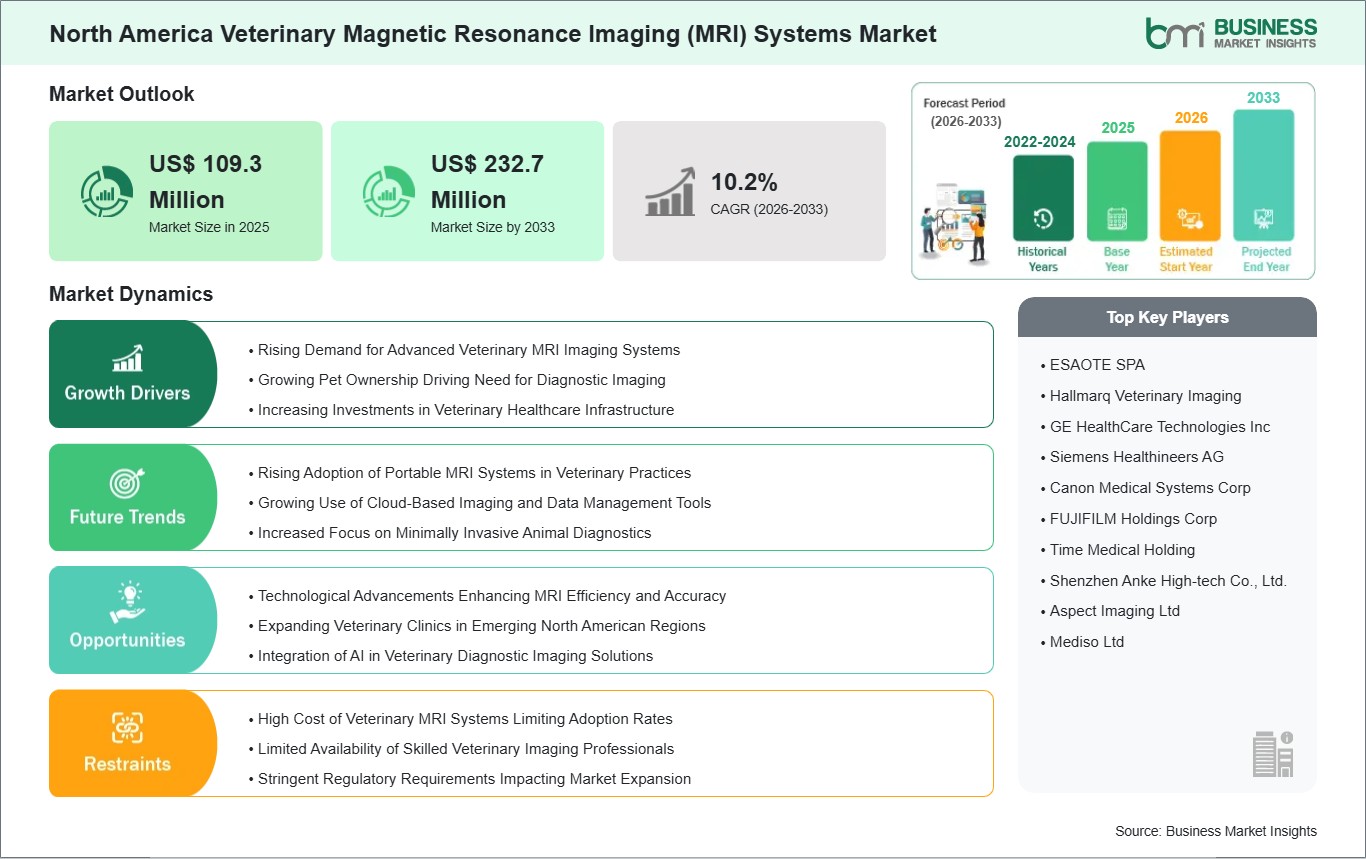
The North America veterinary magnetic resonance imaging (MRI) systems market shows advanced technology development together with complete integration into medical practices and established veterinary medicine systems. The United States, together with Canada, leads the region because specialty veterinary hospitals, academic institutions and referral centers have widely adopted advanced diagnostic imaging technologies. MRI systems have become an essential component in diagnosing complex conditions, particularly in neurology, oncology, and orthopedics, where precise imaging is critical for treatment planning and outcomes. The North American market grows because companion animal owners now prefer premium veterinary services, which results from the growing humanization of their pets. Pet owners in this region increasingly seek advanced diagnostic capabilities comparable to human healthcare standards, which has accelerated the integration of MRI systems into veterinary practices. People with higher incomes and better access to pet insurance drive demand for expensive diagnostic tests because they can now afford these services. The increasing number of chronic and age-related pet health conditions demonstrates the requirement for both precise and initial diagnostic imaging methods. The regional market development depends on technological progress, which acts as a fundamental driver. MRI system design developers brought about operational efficiency improvements together with diagnostic accuracy enhancements, through their development of portable MRI systems designed specifically for veterinary applications, their advanced imaging software and their operational efficiency software. The combination of manufacturers and service providers with research institutions creates a strong ecosystem that enables companies to develop products while adopting new technologies at an accelerated pace. The situation brings advantageous circumstances, yet certain obstacles remain. The MRI system costs, which include both initial expenses and perpetual operational expenses, present a major obstacle for small and medium-sized veterinary practices. The need for specialized training to operate MRI equipment and interpret imaging results creates a situation that depends on skilled professionals, thereby reducing access to services in rural areas. The North America veterinary MRI systems market maintains its advanced infrastructure and strong demand for high-quality veterinary diagnostics and continuous innovation, while its growth path follows cost and workforce limitations.
Segment Analysis
North America Veterinary Magnetic Resonance Imaging (MRI) Systems Market Segmentation
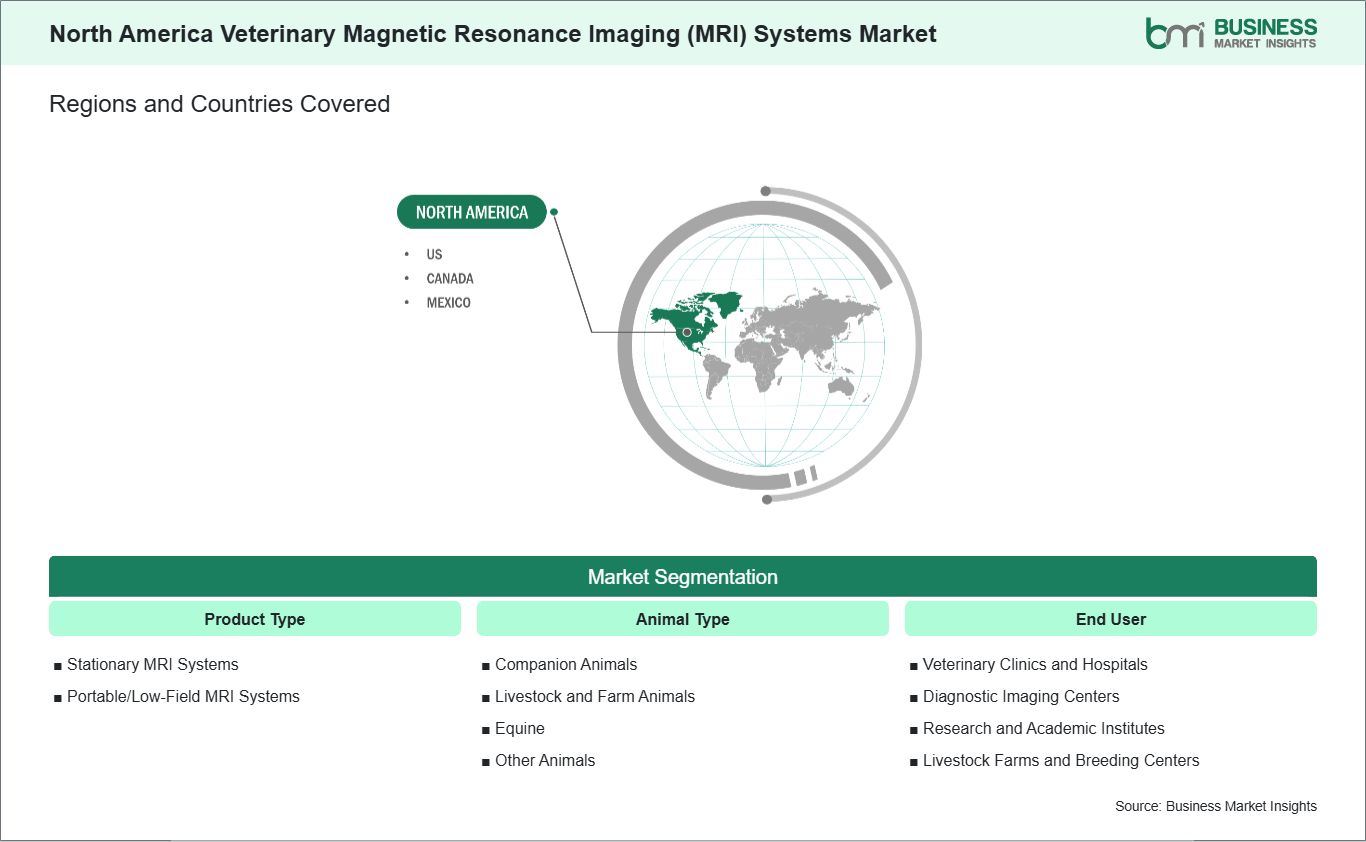
Key segments that contributed to the derivation of the North America veterinary magnetic resonance imaging (MRI) systems market analysis are product type, animal type, and end user.
- By product type, the veterinary magnetic resonance imaging (MRI) systems market is segmented into stationary MRI systems, portable/low-field MRI systems. The stationary MRI systems segment dominated the market in 2025.
- Based on animal type, the veterinary magnetic resonance imaging (MRI) systems market is categorized into companion animals, livestock and farm animals, equine, others. The companion animals segment dominated the market in 2025.
- In terms of end user, the veterinary magnetic resonance imaging (MRI) systems market is categorized into veterinary clinics and hospitals, diagnostic imaging centers, research and academic institutes, livestock farms and breeding centers. The veterinary clinics and hospitals segment dominated the market in 2025.
Market Forces
North America Veterinary Magnetic Resonance Imaging (MRI) Systems Market Drivers and Opportunities
Rising Demand for Advanced Veterinary MRI Imaging Systems
The North America Veterinary MRI Systems Market shows strong growth because animal healthcare facilities need better diagnostic systems. The need for high-resolution imaging technologies has increased because companion animals show more cases of chronic conditions, which include neurological and musculoskeletal disorders. Veterinary professionals across the United States and Canada are increasingly adopting MRI systems to improve diagnostic accuracy and treatment planning.
The increasing trend of pet humanization has resulted in higher expenses for advanced veterinary medical treatment. Pet owners are now more willing to spend money on advanced diagnostic tests, which include MRI scans, because they believe these tests will result in better pet health results. Urban areas show strong evidence of this change because specialized veterinary hospitals are expanding their imaging capabilities to meet growing customer demands.
Academic and research institutions drive MRI technology adoption forward through their essential contributions. Veterinary schools work with technology providers to create new solutions that make veterinary services more accessible. The recent developments in this region will enhance market strength because North America now leads in veterinary imaging technology development.
Technological Advancements Enhancing MRI Efficiency and Accuracy
The North America Veterinary MRI Systems Market experiences significant expansion because of technological innovation. The development of higher field strength MRI machines, together with better imaging software and quicker scanning capabilities, results in better diagnostic results. The new technologies allow veterinarians to identify medical conditions with more accuracy at earlier stages, which leads to better patient outcomes.
The use of artificial intelligence together with machine learning technologies in MRI systems has created a new approach for veterinary diagnostic procedures. AI-powered tools assist in image interpretation, reducing diagnostic errors and saving time for practitioners. This system proves especially useful in veterinary centers throughout California and Ontario, which experience increasing demand for imaging services.
The creation of affordable compact MRI systems enables smaller clinics to use advanced imaging technology. The systems need minimal space requirements and lower costs, which allows more facilities to use advanced imaging technology that was previously restricted to major hospitals. The continuous advancement of technology will lead to increased accessibility of MRI technology throughout North America, which will result in continuous market growth.
Size and Share Analysis
North America Veterinary Magnetic Resonance Imaging (MRI) Systems Market Size and Share Analysis
The North America veterinary magnetic resonance imaging (MRI) systems market is experiencing steady growth, with market size and share analysis reflecting evolving treatment preferences and competitive dynamics among key players. The report evaluates important subsegments categorized within product type, animal type, and end user, highlighting their respective contributions to market performance.
By product type, the stationary MRI systems subsegment dominated the market in 2025, driven by higher image quality, greater throughput, and widespread adoption in hospitals for comprehensive diagnostic imaging.
Based on animal type, the companion animals subsegment dominated the market in 2025, driven by increasing pet ownership and rising demand for advanced diagnostic imaging in routine veterinary care.
In terms of end user, the veterinary clinics and hospitals subsegment dominated the market in 2025, driven by the widespread adoption of x-ray systems for comprehensive diagnostic and treatment services.
Report Coverage
North America Veterinary Magnetic Resonance Imaging (MRI) Systems Market Report Coverage and Deliverables
The "North America Veterinary Magnetic Resonance Imaging (MRI) Systems Market Size and Forecast (2022–2033)" report provides a detailed analysis of the market covering below areas:
- Market size and forecast at regional and country levels for all market segments covered under the scope
- Market trends, as well as drivers, restraints, and opportunities
- Market analysis covering key trends, regional framework, major players, regulations, and recent developments
- Market concentration, heat map analysis, prominent players, and recent developments for the Market
- Detailed company profiles, including SWOT analysis
Geographic Insights
North America Veterinary Magnetic Resonance Imaging (MRI) Systems Market Geographic Insights
The geographical scope of the North America Veterinary Magnetic Resonance Imaging (MRI) Systems Market report is divided into US, Canada, and Mexico. US held the largest share in 2025.
The North America veterinary magnetic resonance imaging (MRI) systems market shows distinct differences between regions because the United States functions as the main market due to its advanced veterinary healthcare system and high rates of companion animal ownership and pet owners who prefer premium diagnostic services. The U.S. market benefits from a dense network of specialty veterinary hospitals and referral centers that have high-field MRI systems installed, which supports the growing need for precise and early assessment of neurological, orthopedic and oncological animal health conditions. The country maintains its top industry position because it has major equipment manufacturers and service providers, and benefits from the ongoing development of veterinary MRI systems that are both affordable and portable. The Canadian market exists as a smaller segment, but it continues to expand because more people adopt advanced imaging methods, and they become more aware of animal health issues. Veterinary practices in Canada are gradually integrating MRI systems, particularly in urban centers, supported by improving access to specialized care and a cultural inclination toward preventive and high-quality pet healthcare. The market has limited capacity because it depends on a small population and expensive equipment, which makes it difficult to achieve market reach beyond the main urban areas. Mexico exists as an emerging market that holds strong future development potential, but its present market for veterinary MRI systems remains limited because of economic restrictions and incomplete access to advanced veterinary facilities. The market in Mexico exists mainly in private specialty clinics, which operate in major urban areas because the middle-class population and pet humanization trends create increasing demand for their services. The market expansion needs to overcome challenges that arise from customers who are sensitive to costs and the shortage of professionals who possess the required expertise. The market in all three countries shows two main trends which drive its development: first, there is a growing demand for advanced diagnostic methods, and second, more pet owners seek precise imaging technologies, which include MRI instead of traditional methods. The United States remains the largest market because of its advanced production capacity, research capabilities and infrastructure system, while Canada and Mexico will drive regional growth through their incremental development of veterinary healthcare systems.
Industry Activity
Recent Developments
The North America Veterinary Magnetic Resonance Imaging (MRI) Systems Market is evaluated by gathering qualitative and quantitative data post primary and secondary research, which includes important corporate publications, association data, and databases. A few of the key developments in the North America veterinary magnetic resonance imaging (MRI) systems market are:
- In February 2026, Siemens Healthineers, announced the installation of its first MAGNETOM Flow.Ace MRI system for veterinary use at the Animal Neurology Center in the United States, expanding access to helium-efficient 1.5T MRI technology for veterinary diagnostics with potential applicability across international markets.
- In August 2025, Esaote North America, announced a strategic partnership with Epica International to expand MRI and CT imaging access across human and veterinary markets, strengthening its distribution network and supporting broader availability of veterinary MRI systems.
Trust & Transparency
Research Methodology
The market analysis combines proprietary research with secondary data from government agencies, company disclosures, regulatory filings, industry databases and expert interviews. Market estimates are validated through data triangulation, cross-market benchmarking and analyst
review.
View Full Research Methodology
Key Sources Referred:
American College of Veterinary Radiology (ACVR)World Small Animal Veterinary Association (WSAVA)British Veterinary Association (BVA)International Veterinary Radiology Association (IVRA)American Veterinary Medical Association (AVMA)European College of Veterinary Diagnostic Imaging (ECVDI)World Organisation for Animal Health (WOAH / OIE)Veterinary Imaging & Radiation Oncology Society (VIROS)