Market Summary
Executive Summary and Market Analysis
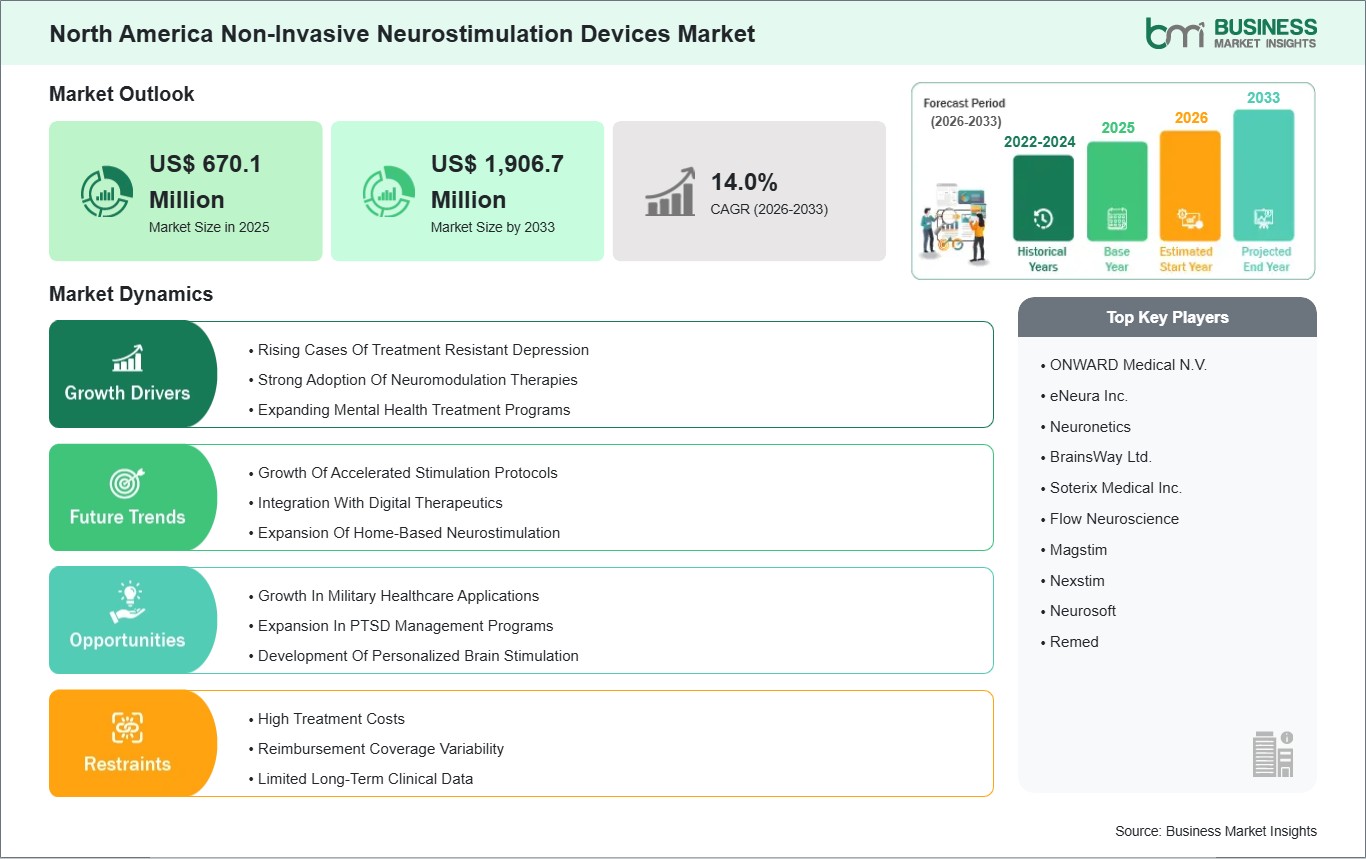
The North America non-invasive neurostimulation devices landscape is shaped by a convergence of neurological care demand, outpatient treatment preferences, and rapid refinement of neuromodulation technologies. Clinical adoption is being reinforced by rising incidence of chronic neurological and psychiatric conditions such as treatment-resistant depression, neuropathic pain syndromes, and migraine disorders, where clinicians increasingly favor device-based interventions that can complement or reduce long-term pharmacological dependence. Expanding use of modalities such as transcranial magnetic stimulation, transcranial direct current stimulation, and non-implantable vagus nerve stimulation reflects a broader shift toward precision-targeted brain modulation delivered in ambulatory settings.
A key driver is the growing preference among healthcare providers and patients for non-pharmacological therapies that minimize systemic side effects while enabling repeatable, adjustable dosing protocols tailored to individual response patterns. Another significant driver is ongoing technological advancement in device miniaturization, software-enabled treatment customization, and integration with digital health platforms that support monitoring and therapy optimization in clinical workflows. Despite this momentum, the market faces a notable restraint in the form of uneven reimbursement pathways and payer hesitancy, which can limit clinician willingness to adopt higher-cost neurostimulation systems outside established indications. In addition, the need for specialized training and variability in clinical protocols across institutions can slow standardization, creating friction in widespread deployment even within advanced healthcare networks. Continued clinician education initiatives and accumulation of real-world evidence are further strengthening confidence in therapeutic outcomes, while emerging home-based neuromodulation concepts and AI-guided stimulation protocols are beginning to influence future care delivery models across specialty practices clinical settings.
Segment Analysis
North America Non-Invasive Neurostimulation Devices Market Segmentation
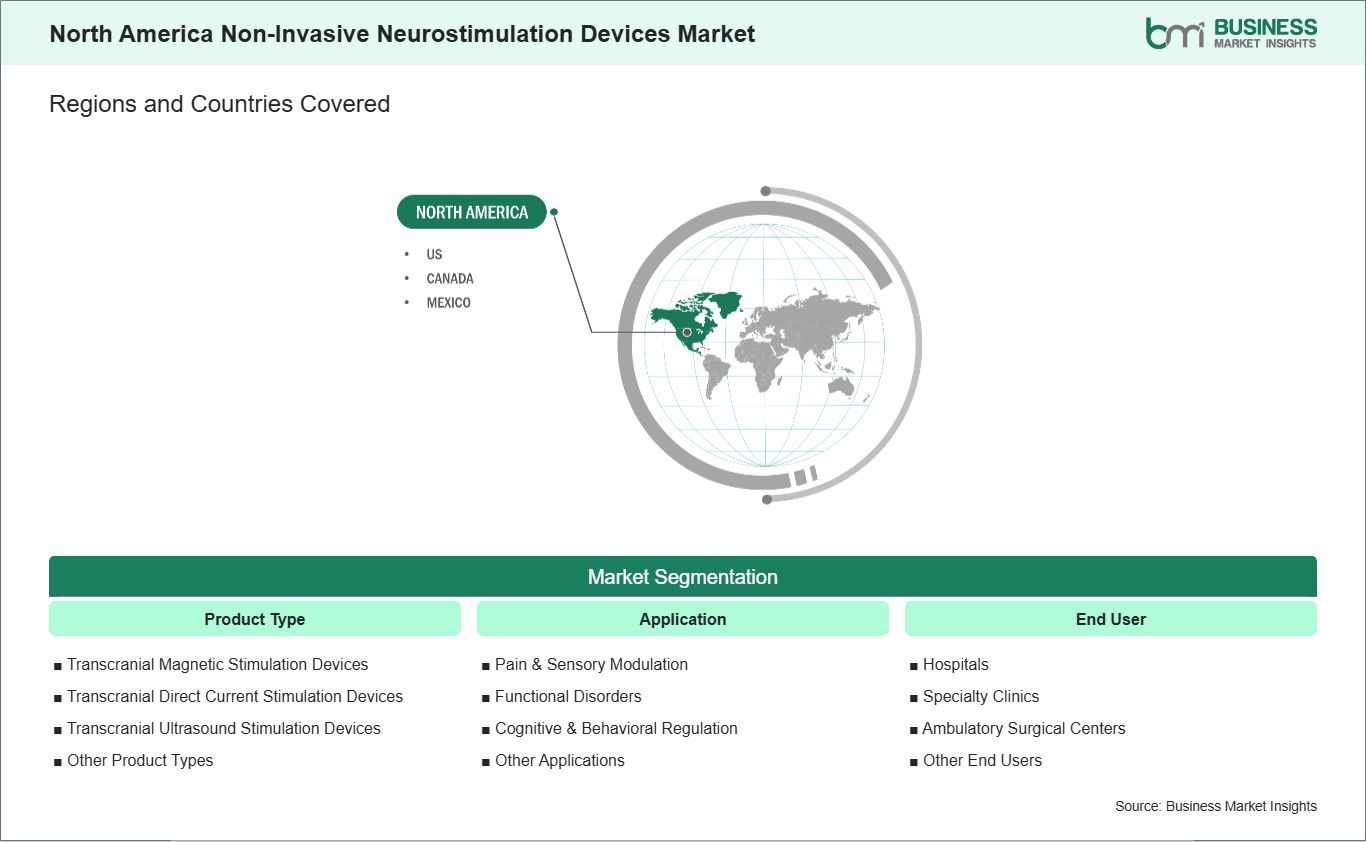
Key segments that contributed to the derivation of the North America non-invasive neurostimulation devices market analysis are product type, application and end user.
- By product type, the non-invasive neurostimulation devices market is segmented into transcranial magnetic stimulation devices, transcranial direct current stimulation devices, transcranial ultrasound stimulation devices, and other product types. The transcranial magnetic stimulation devices segment dominated the market in 2025.
- Based on application, the non-invasive neurostimulation devices market is categorized into pain & sensory modulation, functional disorders, cognitive & behavioral regulation, and other applications. The cognitive & behavioral regulation segment dominated the market in 2025.
- In terms of end user, the non-invasive neurostimulation devices market is categorized into hospitals, specialty clinics, ambulatory surgical centers, and other end users. The hospitals segment dominated the market in 2025.
Market Forces
North America Non-Invasive Neurostimulation Devices Market Drivers and Opportunities
Rising Cases of Treatment Resistant Depression
Clinicians across North America increasingly integrate device-based interventions when conventional antidepressant sequencing fails to produce sustained stabilization. In clinical neuromodulation practices across North America, treatment-resistant depression is increasingly managed through device-based interventions that bypass conventional pharmacologic cycles. Clinicians often integrate non-invasive stimulation protocols into stepped-care pathways when patients demonstrate limited responsiveness to sequential antidepressant trials. This creates structured referral loops between psychiatry clinics and specialty neurotechnology centers driven by diagnostic reassessment cycles.
Care delivery systems also reorganize around administrative and authorization logic that determines when neurostimulation can be initiated. Insurance authorization workflows and clinical documentation patterns increasingly shape how non-invasive neurostimulation is deployed for depression cases resistant to standard care. Providers frequently align treatment initiation with multidisciplinary review boards, where neuropsychiatric history and prior medication sequencing are reconstructed to justify device-based intervention pathways within integrated behavioral health systems rather than isolated clinic decisions alone.
Patient-level engagement often depends on how seamlessly device therapy is introduced within existing care journeys. Patients navigating chronic depressive conditions increasingly encounter device-based options through digital mental health screening tools and referral prompts embedded in primary care systems. Engagement patterns show that acceptance often depends on perceived procedural simplicity and expectations of non-pharmacologic intervention outcomes, especially when earlier treatment histories involve multiple medication adjustments without sustained improvement across care pathways.
Growth in Military Healthcare Applications
Defense healthcare environments in North America are progressively embedding neurostimulation tools within structured recovery and readiness programs. In North American defense healthcare ecosystems, non-invasive neurostimulation is being incorporated into structured rehabilitation frameworks addressing cognitive and emotional regulation challenges among active-duty personnel. Clinical decision-making often emphasizes functional recovery metrics tied to operational readiness, leading to carefully sequenced deployment of neuromodulation sessions within monitored therapeutic environments guided by neurobehavioral assessment protocols and clinical oversight.
Within veteran care systems, neuromodulation is increasingly positioned as an adjunct rather than a standalone intervention. Veteran healthcare systems increasingly position non-invasive brain stimulation as an adjunct within post-traumatic stress and mood disorder care pathways, particularly in cases where conventional psychotherapy alone yields partial stabilization. Treatment planning teams coordinate across neurology, psychiatry, and rehabilitation services to sequence device exposure alongside cognitive restructuring interventions within integrated veteran care models and protocols alignment.
Operational delivery models are also evolving toward distributed and outpatient-friendly formats. Portable neuromodulation systems are gradually being evaluated for use in veteran-focused outpatient settings, where continuity of care between clinical visits is prioritized over intensive inpatient supervision. Adoption patterns reflect interest in reducing logistical barriers to repeated therapy sessions while maintaining standardized stimulation parameters across decentralized care networks supporting long term therapeutic continuity in field settings.
Size and Share Analysis
North America Non-Invasive Neurostimulation Devices Market Size and Share Analysis
The North America non-invasive neurostimulation devices market demonstrates steady growth, with size and share analysis highlighting evolving trends and competitive dynamics among key players. The report examines subsegments categorized within product type, application and end user, offering insights into their contribution to overall market performance.
By product type, the transcranial magnetic stimulation devices subsegment dominated the market in 2025, driven by its established clinical efficacy, growing adoption for neurological and psychiatric disorders, and increasing availability across healthcare facilities.
Based on application, the cognitive & behavioral regulation subsegment dominated the market in 2025, driven by the rising prevalence of mental health disorders and increasing use of neurostimulation therapies for depression, anxiety, and cognitive enhancement.
In terms of end user, the hospitals subsegment dominated the market in 2025, driven by the availability of advanced neurostimulation technologies, skilled healthcare professionals, and growing patient volumes requiring specialized neurological care.
Report Coverage
North America Non-Invasive Neurostimulation Devices Market Report Coverage and Deliverables
The "North America Non-Invasive Neurostimulation Devices Market Size and Forecast (2022-2033)" report provides a detailed analysis of the market covering below areas:
- Market segments covered under the scope
- Market dynamics such as drivers, restraints, and key opportunities
- Market concentration, heat map analysis, prominent players, and recent developments
- Detailed company profiles, including SWOT analysis
Geographic Insights
North America Non-Invasive Neurostimulation Devices Market Geographic Insights
The geographical scope of the North America Non-Invasive Neurostimulation Devices Market report is divided into the US, Canada, and Mexico. The US held the largest share in 2025.
North America's non-invasive neurostimulation devices market is shaped by distinct national dynamics, with the United States firmly acting as the dominant contributor due to its advanced neurotechnology ecosystem, strong clinical research infrastructure, and rapid integration of innovative neuromodulation therapies into mainstream neurological, psychiatric, and pain management care. Favorable regulatory pathways and high physician awareness further reinforce early adoption, while robust investment from medical device companies sustains continuous product development and commercialization. Canada demonstrates steady growth driven by its emphasis on evidence-based healthcare delivery, expanding neurorehabilitation services, and increasing focus on managing age-related neurological conditions within a publicly funded system that prioritizes cost-effective, non-invasive treatment alternatives. Strong academic hospital networks and cross-border research collaborations also support gradual technology uptake across major provinces. Mexico, in contrast, is witnessing emerging demand propelled by the expansion of private healthcare facilities, growing awareness of non-invasive therapies for chronic pain and neurological disorders, and improving accessibility to advanced medical devices in urban centers. Rising medical tourism and the need for affordable, low-risk treatment options are encouraging hospitals and specialty clinics to incorporate neurostimulation solutions, despite infrastructural disparities between urban and rural regions. Collectively, these three markets contribute to a diversified regional landscape where innovation leadership, structured public healthcare adoption, and affordability-driven expansion create distinct yet complementary growth pathways for non-invasive neurostimulation technologies. Across the region, ongoing advancements in digital health integration, evolving reimbursement frameworks, and increasing clinical trial activity continue to strengthen adoption momentum while encouraging cross-border collaboration among device manufacturers and healthcare providers across regions.
Industry Activity
Recent Developments
The North America Non-Invasive Neurostimulation Devices Market is evaluated by gathering qualitative and quantitative data post primary and secondary research, which includes important corporate publications, association data, and databases. A few of the key developments in the North America non-invasive neurostimulation devices market are:
- In March 2024, Neuronetics announced that its NeuroStar Advanced Therapy system received FDA clearance for expanded adolescent use in major depressive disorder, strengthening its non-invasive TMS treatment footprint across the U.S. mental health market.
- In September 2024, BrainsWay announced that it had secured a 14-system Deep TMS order from a large U.S. mental health network, expanding deployment of its non-invasive transcranial magnetic stimulation platform across the East Coast treatment ecosystem.
Trust & Transparency
Research Methodology
The market analysis combines proprietary research with secondary data from government agencies, company disclosures, regulatory filings, industry databases and expert interviews. Market estimates are validated through data triangulation, cross-market benchmarking and analyst
review.
View Full Research Methodology
Key Sources Referred:
U.S. Food and Drug Administration (FDA)National Institutes of Health (NIH)National Institute of Neurological Disorders and Stroke (NINDS)Centers for Medicare & Medicaid Services (CMS)Medical Device Innovation Consortium (MDIC)World Health Organization (WHO)International Organization for Standardization (ISO)International Neuromodulation Society (INS)North American Neuromodulation Society (NANS)Company WebsitesCompany Annual ReportsCompany Investor Presentations