Market Summary
Executive Summary and Market Analysis
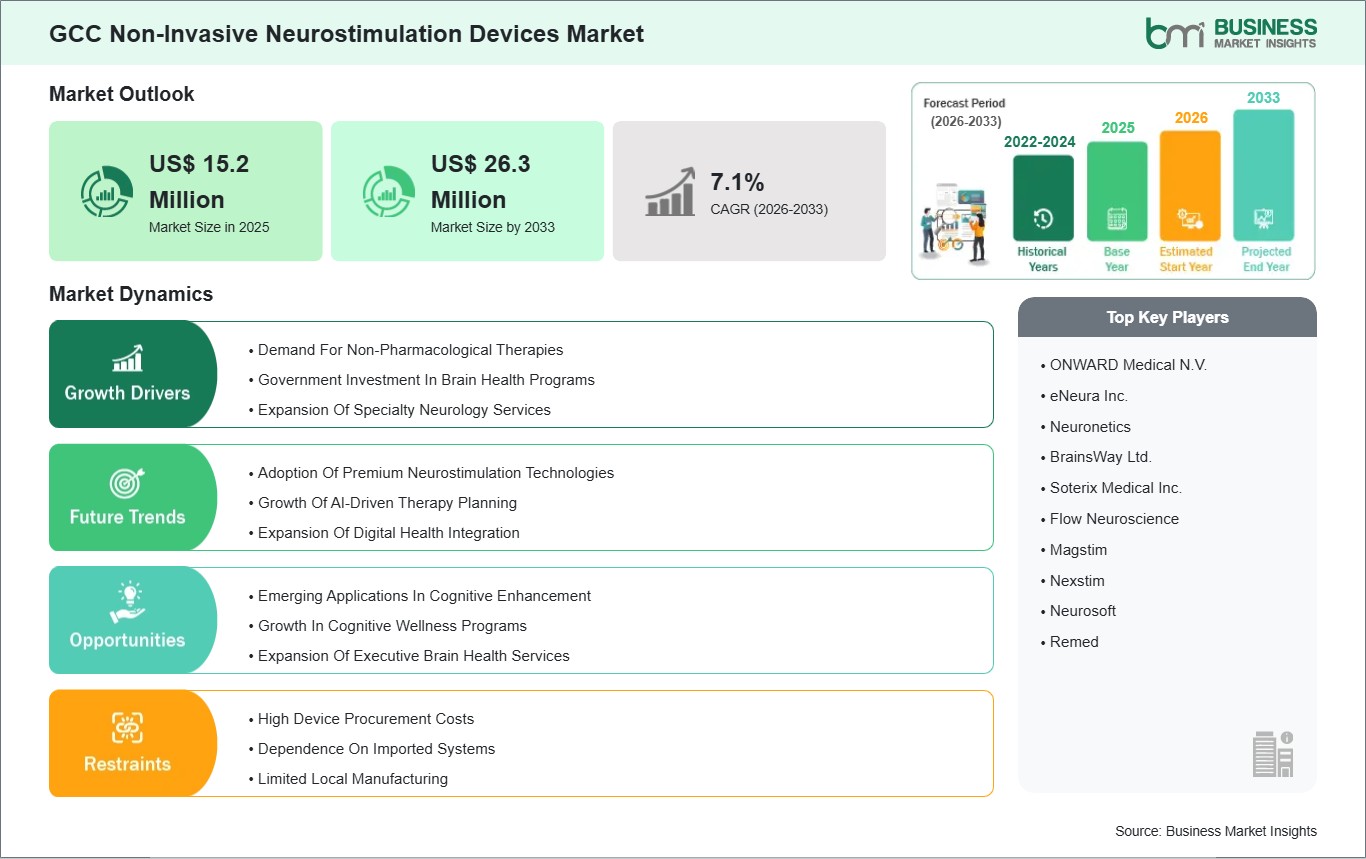
The GCC non-invasive neurostimulation devices market is seeing more advanced neurological therapies become part of regular healthcare, thanks to modernized care facilities and a stronger focus on neurological and mental health. Demand is rising as more attention is given to conditions like chronic pain, depression, migraine, and neurorehabilitation, where these devices can be used instead of or alongside medication. A major factor driving growth is the shift toward patient-centered care, which values simpler procedures, faster recovery, and greater comfort. This encourages healthcare providers to use non-invasive therapies more often. Growth is also supported by increased investment in neuroscience research, digital health systems, and specialized neurological centers across the GCC, making it easier to introduce and use new neurostimulation technologies.
Companies in the market are benefiting from more collaboration between hospitals, technology developers, and researchers, all working to improve treatment results and expand how these devices are used. At the same time, new products are being developed with portable designs, better connectivity, and personalized treatment plans to make them easier to use and more effective. However, the market still faces a challenge: many patients and some healthcare professionals are not fully aware of the long-term benefits or the best ways to use these therapies. This lack of awareness can slow down referrals and adoption, even as technology improves. Overall, competition in the market is shaped by efforts to build clinical evidence, educate doctors, and make sure devices meet the changing needs of neurological care in the GCC.
Segment Analysis
GCC Non-Invasive Neurostimulation Devices Market Segmentation
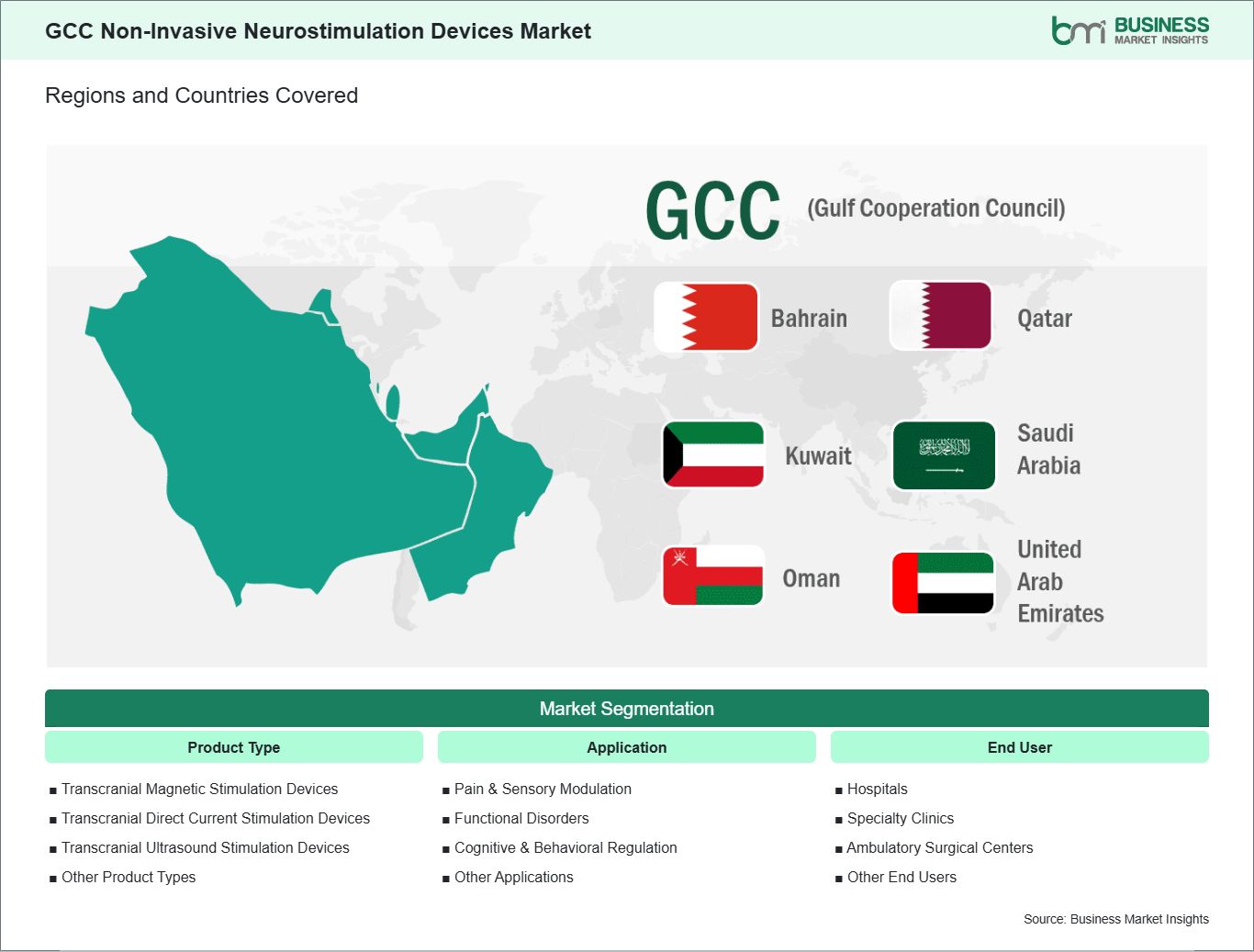
Key segments that contributed to the derivation of the GCC non-invasive neurostimulation devices market analysis are product type, application and end user.
- By product type, the non-invasive neurostimulation devices market is segmented into transcranial magnetic stimulation devices, transcranial direct current stimulation devices, transcranial ultrasound stimulation devices, and other product types. The transcranial magnetic stimulation devices segment dominated the market in 2025.
- Based on application, the non-invasive neurostimulation devices market is categorized into pain & sensory modulation, functional disorders, cognitive & behavioral regulation, and other applications. The cognitive & behavioral regulation segment dominated the market in 2025.
- In terms of end user, the non-invasive neurostimulation devices market is categorized into hospitals, specialty clinics, ambulatory surgical centers, and other end users. The hospitals segment dominated the market in 2025.
Market Forces
GCC Non-Invasive Neurostimulation Devices Market Drivers and Opportunities
Demand for Non-Pharmacological Therapies
In GCC healthcare procurement cycles, non-invasive neurostimulation devices are increasingly evaluated within broader neurology and rehabilitation tenders rather than as standalone capital purchases. Hospital groups and specialty centers tend to bundle them into integrated neurorehabilitation suites, where device selection is influenced by clinician familiarity and interoperability with existing EEG or physiotherapy platforms. This has shifted vendor engagement toward long demonstration cycles and on-site clinical validation.
Outside of hospitals, outpatient neurology clinics and rehab providers in the GCC use neurostimulation as part of regular therapy sessions. They often combine it with cognitive exercises or physiotherapy to keep patients engaged over time. Clinicians now adjust treatment plans session by session, based on how patients respond, which supports ongoing care instead of one-time treatments.
Regulators and insurers in some GCC countries are starting to support non-drug treatments that show clear results in neurological rehab. This is leading healthcare providers to use these devices in line with set care protocols and to track how well patients respond to therapy.
Emerging Applications in Cognitive Enhancement
In major GCC cities, cognitive enhancement clinics are trying out non-invasive neurostimulation alongside brain training programs that aim to improve attention and memory. These services are often offered as premium wellness packages, using personalized brain mapping to plan sessions and choose devices. This shows how clinical neurology and performance-focused services are coming together to meet consumer demand.
At the same time, corporate wellness programs and sports organizations in the GCC are testing neurostimulation to help with recovery, manage stress, and boost mental stamina. They are adding these devices to their existing performance management systems, which already use tools like biometric tracking and neurofeedback to guide training and recovery plans.
Digital therapy platforms and neurostimulation devices are coming together, allowing for adaptive cognitive enhancement where treatment settings change in real time based on user data and feedback. This trend is leading developers and providers in the GCC to create combined solutions that mix software-based brain training with device-based stimulation, making neurotechnology a key part of personalized performance programs.
Size and Share Analysis
GCC Non-Invasive Neurostimulation Devices Market Size and Share Analysis
The GCC non-invasive neurostimulation devices market demonstrates steady growth, with size and share analysis highlighting evolving trends and competitive dynamics among key players. The report examines subsegments categorized within product type, application and end user, offering insights into their contribution to overall market performance.
By product type, the transcranial magnetic stimulation devices subsegment dominated the market in 2025, driven by its established clinical efficacy, growing adoption for neurological and psychiatric disorders, and increasing availability across healthcare facilities.
Based on application, the cognitive & behavioral regulation subsegment dominated the market in 2025, driven by the rising prevalence of mental health disorders and increasing use of neurostimulation therapies for depression, anxiety, and cognitive enhancement.
In terms of end user, the hospitals subsegment dominated the market in 2025, driven by the availability of advanced neurostimulation technologies, skilled healthcare professionals, and growing patient volumes requiring specialized neurological care.
Report Coverage
GCC Non-Invasive Neurostimulation Devices Market Report Coverage and Deliverables
The "GCC Non-Invasive Neurostimulation Devices Market Size and Forecast (2022-2033)" report provides a detailed analysis of the market covering below areas:
- Market segments covered under the scope
- Market dynamics such as drivers, restraints, and key opportunities
- Market concentration, heat map analysis, prominent players, and recent developments
- Detailed company profiles, including SWOT analysis
Geographic Insights
GCC Non-Invasive Neurostimulation Devices Market Geographic Insights
The geographical scope of the GCC Non-Invasive Neurostimulation Devices Market report is divided into UAE, Bahrain, Saudi Arabia, Oman, Qatar, Kuwait. UAE held the largest share in 2025.
The GCC non-invasive neurostimulation devices market demonstrates varied growth dynamics across member states, with the UAE emerging as the dominant regional market due to its advanced healthcare infrastructure, strong adoption of innovative neurological therapies, and the presence of specialized treatment centers that actively integrate non-invasive neurostimulation technologies into patient care pathways. Saudi Arabia represents a significant growth avenue, supported by ongoing healthcare modernization initiatives and increasing investment in neurological and mental health services that encourage the incorporation of advanced therapeutic devices. In Qatar, market expansion is being driven by a growing emphasis on precision medicine and the development of highly specialized clinical facilities focused on improving outcomes for neurological disorders. Kuwait is witnessing increasing adoption as healthcare providers seek to diversify treatment options for chronic pain management and neurological rehabilitation, creating favorable conditions for non-invasive neurostimulation solutions. Bahrain's market is progressing through enhanced collaboration between public healthcare institutions and private medical providers, fostering greater awareness of innovative neurotherapeutic interventions and improving access to advanced treatment modalities. Meanwhile, Oman is experiencing steady growth owing to the gradual expansion of healthcare services beyond major urban centers, enabling broader patient access to neurological care and supporting the introduction of modern neurostimulation technologies. Collectively, these distinct country-level drivers are shaping a favorable regional landscape, characterized by rising clinical acceptance, expanding therapeutic applications, and growing recognition of non-invasive neurostimulation devices as valuable tools for addressing neurological, psychiatric, and pain-related conditions across the GCC.
Industry Activity
Recent Developments
The GCC Non-Invasive Neurostimulation Devices Market is evaluated by gathering qualitative and quantitative data post primary and secondary research, which includes important corporate publications, association data, and databases. A few of the key developments in the GCC non-invasive neurostimulation devices market are:
- In May 2026, neurocare group AG announced that the Saudi Food and Drug Authority (SFDA) granted Medical Device Marketing Authorization (MDMA) approval for its transcranial magnetic stimulation (TMS) devices in Saudi Arabia. This approval enables the company to commercialize its non-invasive neuromodulation platform for mental health disorders in the Kingdom, marking a key regulatory expansion in the GCC neurostimulation market.
- In February 2025, Nyxoah announced that it had launched its Genio hypoglossal neurostimulation therapy in the United Arab Emirates. The first implantation at Saudi German Hospital Dubai marked the commercial introduction of a non-invasive neuromodulation treatment for obstructive sleep apnea in the GCC region, expanding neurostimulation applications beyond psychiatric indications.
Trust & Transparency
Research Methodology
The market analysis combines proprietary research with secondary data from government agencies, company disclosures, regulatory filings, industry databases and expert interviews. Market estimates are validated through data triangulation, cross-market benchmarking and analyst
review.
View Full Research Methodology
Key Sources Referred:
U.S. Food and Drug Administration (FDA)National Institutes of Health (NIH)National Institute of Neurological Disorders and Stroke (NINDS)Centers for Medicare & Medicaid Services (CMS)Medical Device Innovation Consortium (MDIC)World Health Organization (WHO)International Organization for Standardization (ISO)International Neuromodulation Society (INS)North American Neuromodulation Society (NANS)Company WebsitesCompany Annual ReportsCompany Investor Presentations