ASEAN Medical Robotics Market Outlook (2022-2033)

Historic Data: 2022-2024   |   Base Year: 2025   |   Forecast Period: 2026-2033
Report Content: Market Scope, Market Segmentation, Market Dynamics, and Competitive Analysis

Report Coverage:
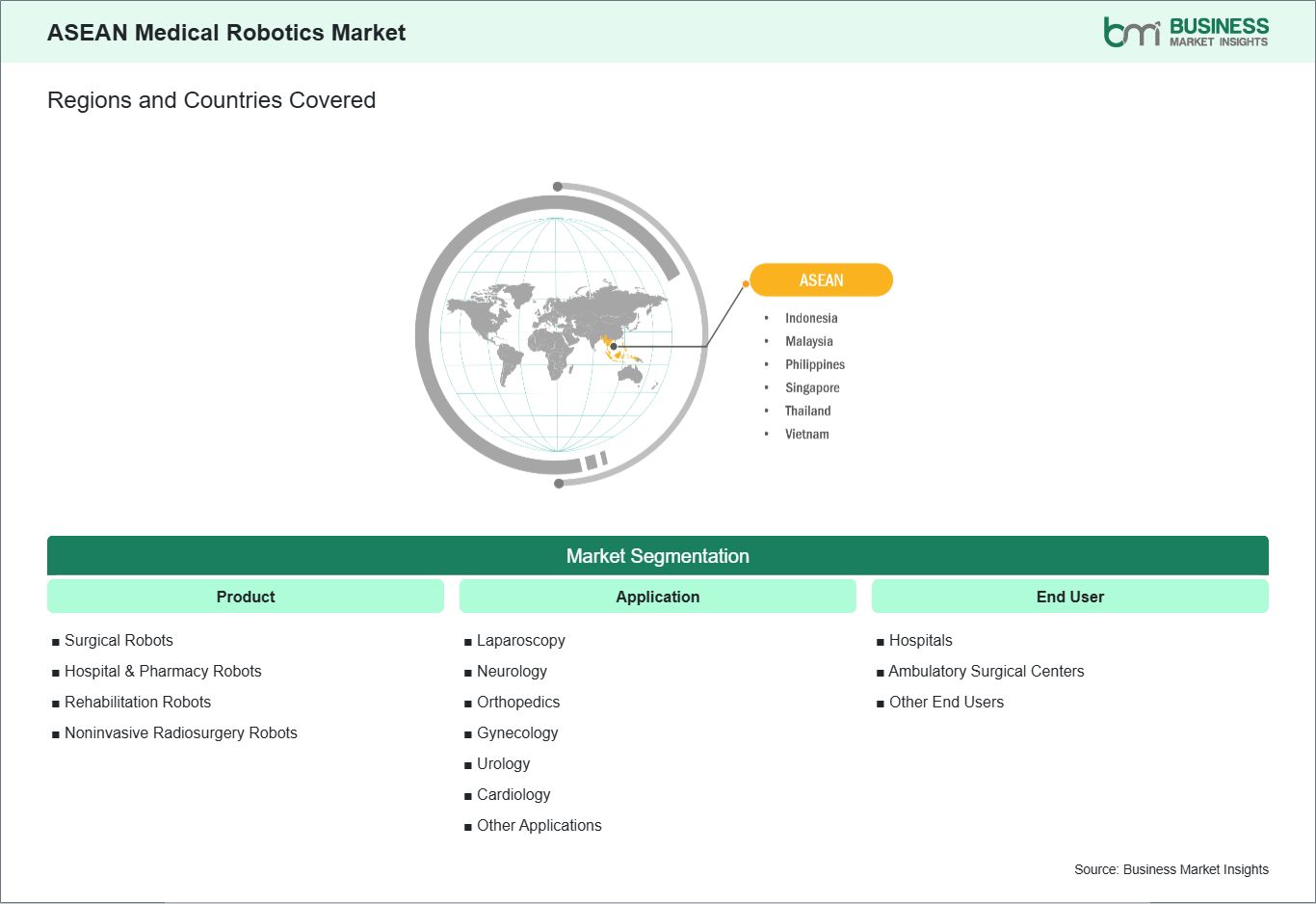
  • Product (Surgical Robots, Hospital & Pharmacy Robots, Rehabilitation Robots, Noninvasive Radiosurgery Robots)
  • Application (Laparoscopy, Neurology, Orthopedics, Gynecology, Urology, Cardiology, Other Applications)
  • End User (Hospitals, Ambulatory Surgical Centers, Other End Users)

No. of Pages: 150
Report Code: BMIPUB00034761
Category: Life Sciences
ASEAN Medical Robotics Market

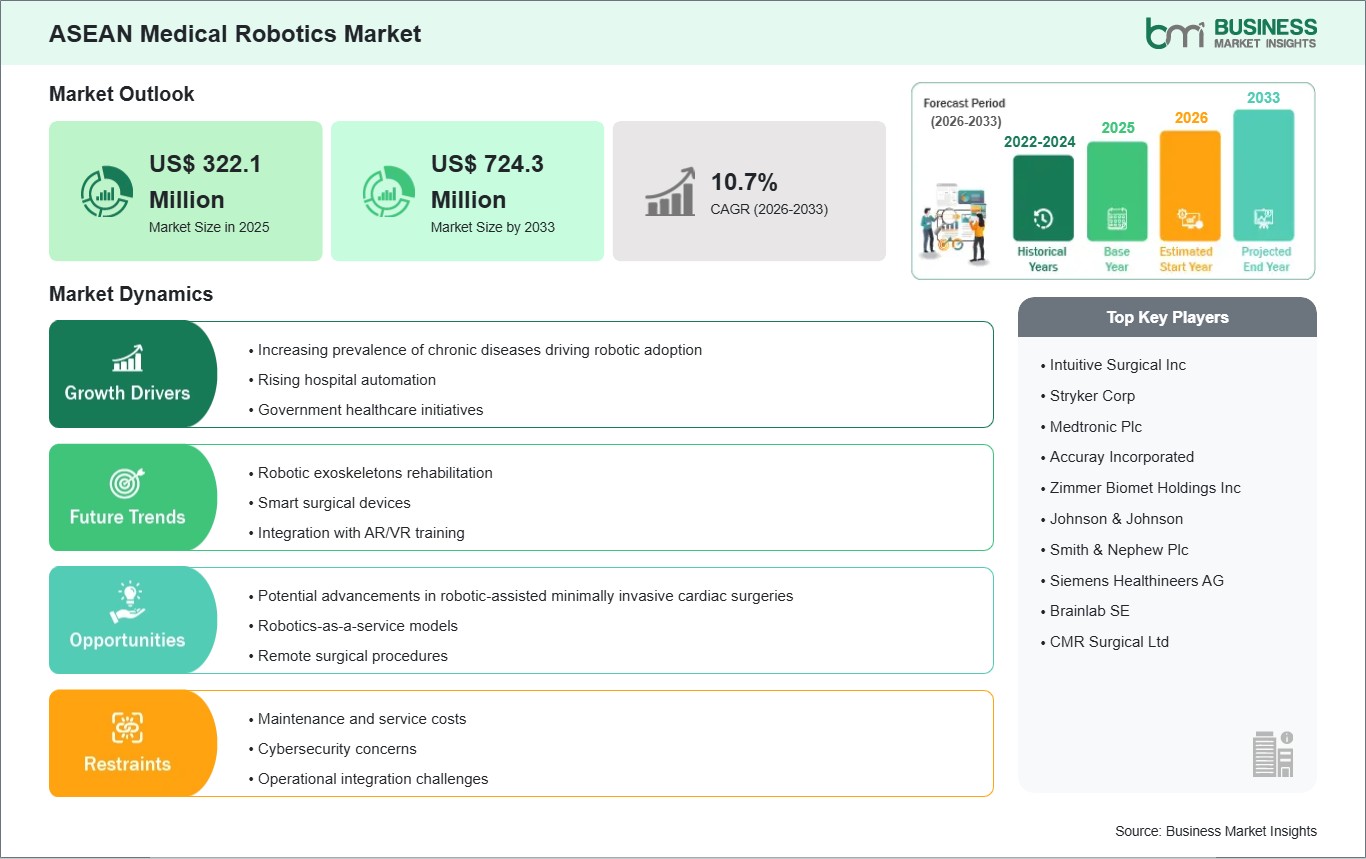
The ASEAN medical robotics market size is expected to reach US$ 724.3 million by 2033 from US$ 322.1 million in 2025. The market is estimated to record a CAGR of 10.7% from 2026 to 2033.

Executive Summary and ASEAN Medical Robotics Market Analysis:

The ASEAN medical robotics market is entering a transformative phase characterized by diversified application growth across surgical, rehabilitative, and clinical support systems. Regional health systems are placing renewed emphasis on automation and precision‑driven care as part of broader healthcare modernization initiatives. This shift reflects a strategic response to increasing patient volumes, rising prevalence of chronic conditions, and growing expectations for minimally invasive procedures. Notably, advancements in robotic platforms are enabling enhanced surgical accuracy, intra‑operative imaging integration, and more ergonomic interfaces for clinicians, driving broader interest among healthcare providers keen to improve procedural outcomes and operational efficiency. Investments from both private healthcare groups and global technology firms highlight rising confidence in ASEAN’s readiness to adopt complex medical robotics solutions. However, adoption remains uneven across member states, with urban centers and private hospitals leading deployments while rural and under‑resourced facilities lag behind due to cost barriers and limited access to specialized training. Addressing workforce readiness is emerging as a pivotal strategic focus, prompting partnerships between healthcare institutions, technology vendors, and medical training programs to upskill clinicians and technical staff. Regulatory frameworks and standards are also evolving, influencing how quickly robotics can be integrated into routine clinical use. Strategic players in the ecosystem are engaged in product innovation, collaborative alliances, and tailored financing models to mitigate cost pressures and broaden market reach. Despite headwinds such as import tariffs and skill shortages, the market trajectory points to expanding integration of robotics as a core enabler of quality care delivery across ASEAN health systems, particularly in surgical and rehabilitative domains where precision and efficiency are critical.

ASEAN Medical Robotics Market - Strategic Insights:

global-market-strategic-framework
Get more information on this report

ASEAN Medical Robotics Market Segmentation Analysis:

Key segments that contributed to the derivation of the ASEAN Medical Robotics Market analysis are product, application, and end user.

  • By product, the medical robotics market is segmented into surgical robots, hospital & pharmacy robots, rehabilitation robots, and non-invasive radiosurgery robots. The surgical robots segment dominated the market in 2025.
  • In terms of application, the medical robotics market is categorized into laparoscopy, neurology, orthopedics, gynecology, urology, cardiology, and other applications. The laparoscopy segment dominated the market in 2025.
  • Based on end user, the medical robotics market is classified into hospitals, ambulatory surgical centers, and other end users. The hospitals segment dominated the market in 2025.

ASEAN Medical Robotics Market Drivers and Opportunities:

Increasing prevalence of chronic diseases driving robotic adoption

The rise of chronic noncommunicable diseases (NCDs), including cardiovascular disease, diabetes, cancer, and hypertension, is creating a greater need for advanced surgical interventions in Africa. In countries such as South Africa, Egypt, and Kenya, hospitals are increasingly adopting robotic-assisted procedures to manage complex cases safely and efficiently. For example, tertiary hospitals in Cape Town have performed numerous robotic-assisted prostatectomies and gynecological surgeries, showing improved outcomes such as less blood loss, reduced post-operative complications, and shorter hospital stays. These clinical benefits have helped build trust in robotic systems among both surgeons and patients, encouraging broader adoption across urban medical centers. The growing prevalence of NCDs is also leading to a higher demand for minimally invasive surgeries across the continent. Lifestyle-related conditions, particularly in urban populations, are contributing to a rising number of patients requiring complex surgical procedures. Hospitals are responding by incorporating robotic systems that provide precision and consistency in delicate surgeries, particularly in urology, oncology, and general surgery. Additionally, patient awareness about surgical options is increasing, and individuals are more willing to seek minimally invasive procedures that promise faster recovery and improved quality of life. This alignment of patient expectations and clinical capabilities is driving a steady uptake of robotic technology in African healthcare facilities. Access to robotic-assisted surgery is still concentrated in major cities, but initiatives are emerging to expand availability. Training programs and surgical centers of excellence in Kenya, Tunisia, and South Africa are equipping surgeons with robotic skills, while pilot projects in Angola and Nigeria explore remote mentoring for robotic procedures. These efforts help overcome gaps in specialist availability and expand the reach of advanced surgical options. As healthcare providers continue to invest in infrastructure and training, robotic systems are expected to become increasingly integrated into routine management of chronic conditions, supporting better surgical outcomes and broader access to advanced care across Africa.

Potential advancements in robotic-assisted minimally invasive cardiac surgeries

Robotic-assisted minimally invasive cardiac surgeries offer significant advantages for Africa, where cardiovascular disease is a leading health challenge. High-precision interventions, such as valve repair, coronary artery bypass grafting, and congenital heart defect correction, require careful planning and skilled execution areas where robotics can enhance outcomes. Hospitals in South Africa and Egypt have begun using robotic systems in other specialties, laying the foundation for future adoption in cardiac procedures. Early applications show that robotic technology can reduce intraoperative trauma, shorten recovery times, and improve overall patient safety in complex cardiac surgeries. The integration of AI and advanced imaging into robotic systems further strengthens their potential in cardiac care. By providing real-time guidance, predictive analytics, and enhanced visualization, these systems support surgeons in performing delicate operations with higher precision. Academic hospitals in South Africa, such as Steve Biko Academic Hospital, have already begun using AI-assisted robotics in neurosurgery and orthopedic procedures, demonstrating the feasibility of applying similar approaches to cardiac surgery. These innovations can help address the limited availability of cardiac specialists by optimizing procedure efficiency and consistency. Collaborations between African hospitals and international surgical teams are also accelerating the development of robotic cardiac procedures. Tele-mentoring programs in Kenya and pilot robotic surgeries in Angola provide surgeons with remote support from experienced specialists, allowing high-complexity operations to be conducted safely in hospitals with limited local expertise. As training expands and digital infrastructure improves, robotic-assisted minimally invasive cardiac surgery is likely to grow across the continent. This expansion promises enhanced surgical outcomes, faster recovery, and greater access to life-saving interventions for patients who previously faced limited options.

ASEAN Medical Robotics Market Size and Share Analysis:

The ASEAN medical robotics market demonstrates steady growth, with size and share analysis highlighting evolving trends and competitive dynamics among key players. The report examines subsegments categorized within product, application, and end user, offering insights into their contribution to overall market performance.

By product, the surgical robots segment dominated the market in 2025, driven by hospitals and surgical centers in ASEAN increasingly adopting advanced robotic platforms to support precision and high‑volume minimally invasive procedures.

In terms of application, the laparoscopy segment dominated the market in 2025, driven by rising demand for robot‑assisted laparoscopic procedures that improve visualization, precision and patient recovery across common surgeries.

Based on end user, the hospitals segment dominated the market in 2025, driven by their comprehensive infrastructure, skilled specialists and financial capacity to invest in costly robotic systems for broad surgical use.

ASEAN Medical Robotics Market Report Highlights:

Report Attribute Details
Market size in 2025 US$ 322.1 Million
Market Size by 2033 US$ 724.3 Million
CAGR (2026 - 2033)10.7%
Historical Data 2022-2024
Forecast period 2026-2033
Segments Covered By Product
  • Surgical Robots
  • Hospital & Pharmacy Robots
  • Rehabilitation Robots
  • Noninvasive Radiosurgery Robots
By Application
  • Laparoscopy
  • Neurology
  • Orthopedics
  • Gynecology
  • Urology
  • Cardiology
  • Other Applications
By End User
  • Hospitals
  • Ambulatory Surgical Centers
  • Other End Users
Regions and Countries Covered
ASEAN Indonesia, Malaysia, the Philippines, Singapore, Thailand, Vietnam
Market leaders and key company profiles
  • Intuitive Surgical Inc
  • Stryker Corp
  • Medtronic Plc
  • Accuray Incorporated
  • Zimmer Biomet Holdings Inc
  • Johnson & Johnson
  • Smith & Nephew Plc
  • Siemens Healthineers AG
  • Brainlab SE
  • CMR Surgical Ltd
Get more information on this report

ASEAN Medical Robotics Market Report Coverage and Deliverables:

The "ASEAN Medical Robotics Market Size and Forecast (2022–2033)" report provides a detailed analysis of the market covering below areas:

  • ASEAN Medical Robotics Market size and forecast at regional and country levels for all market segments covered under the scope
  • ASEAN Medical Robotics Market trends, as well as drivers, restraints, and opportunities
  • ASEAN Medical Robotics Market analysis covering key trends, regional framework, major players, regulations, and recent developments
  • Industry landscape and competition analysis covering market concentration, heat map analysis, prominent players, and recent developments for the ASEAN Medical Robotics Market
  • Detailed company profiles, including SWOT analysis

ASEAN Medical Robotics Market Geographic Insights:

The geographical scope of the ASEAN Medical Robotics Market report is divided into Indonesia, Malaysia, the Philippines, Singapore, Thailand, and Vietnam. Indonesia held the largest share in 2025.

Country‑level insights into the ASEAN Medical Robotics Market reveal a diversified landscape where adoption, infrastructure capability, and strategic priorities vary markedly across Indonesia, Malaysia, the Philippines, Singapore, Thailand, and Vietnam — the dominant market among these countries in terms of emerging robotics integration and strategic potential. Vietnam’s healthcare sector is experiencing accelerated interest in robotic procedures and automation, supported by a rising demand for complex surgical interventions, capacity expansion in urban hospital clusters like Ho Chi Minh City and Hanoi, and increasing cross‑border practitioner exchange and training activities. Vietnam’s emphasis on modernizing clinical care and expanding high‑tech capacities has positioned it as a rapidly strengthening hub for medical robotics, attracting foreign investment and technology transfer opportunities while creating scale advantages relative to its ASEAN peers. In Singapore, the medical robotics environment is anchored by world‑class healthcare infrastructure and robust innovation ecosystems. The city‑state remains an attractive testbed for advanced robotic systems, driven by substantial R&D investment, supportive regulatory frameworks, and established clinical expertise. Singapore’s leading tertiary hospitals continue to integrate precision surgical platforms and AI‑enabled robotics, bolstered by deep partnerships with global robotics manufacturers and MedTech innovators. While medical robotics adoption here has traditionally been among the highest in the region, its focus is on refinement of clinical workflows and high‑value, technologically mature systems rather than sheer volume expansion. Thailand benefits from a strong medical tourism industry and supportive policy incentives that encourage robotics and high‑end medical device adoption in private hospital networks. Thai healthcare providers are increasingly investing in robotics to maintain international competitiveness and attract foreign patients seeking minimally invasive procedures and advanced surgical care. However, public sector adoption lags due to fiscal prioritization and infrastructure limitations. In Malaysia, growth in medical robotics is propelled by strategic initiatives to strengthen diagnostic and surgical capabilities, backed by manufacturing prowess in medical devices and government programs that emphasize healthcare digitalization. Robotics adoption here aligns with efforts to expand specialized care and regional medical tourism offerings. The Philippines presents a mixed picture: private hospitals lead in acquiring robotic systems, while public facilities face procurement and funding bottlenecks that constrain broader uptake. Regulatory reforms aimed at streamlining device registration are underway, which could improve market access and clinical integration over time. Lastly, Indonesia, with its large population and expanding healthcare demand, remains an important growth frontier. Despite relatively lower current penetration of medical robotics due to infrastructure and distribution challenges, the country’s scale and rising middle‑class healthcare expectations make it an attractive strategic market for robotics suppliers focusing on long‑term expansion. Together, these country dynamics illustrate that while Vietnam leads in momentum and strategic potential, each ASEAN member offers distinct entry points and operational considerations for stakeholders in the medical robotics ecosystem.

global-market-geography
Get more information on this report

ASEAN Medical Robotics Market Research Report Guidance:

  • The report includes qualitative and quantitative data in the ASEAN Medical Robotics Market across product, application, end user, and geography.
  • The report starts with the key takeaways (chapter 2), highlighting key trends and outlook of the ASEAN Medical Robotics Market.
  • Chapter 3 focuses on the research methodology of the study.
  • Chapter 4 includes ecosystem analysis.
  • Chapter 5 highlights the major industry dynamics in the ASEAN Medical Robotics Market, including factors that are driving the market, prevailing deterrents, potential opportunities, as well as future trends. Impact analysis of these drivers and restraints is also covered in this section.
  • Chapter 6 discusses the ASEAN Medical Robotics Market scenario, in terms of historical market revenues, and forecast till the year 2033.
  • Chapters 7 to 10 cover ASEAN Medical Robotics Market segments by product, application, end user and geography across Indonesia, Malaysia, the Philippines, Singapore, Thailand, and Vietnam. They cover the market revenue forecast and factors driving the market.
  • Chapter 11 describes the competitive analysis along with the heat map analysis for the key players operating in the market.
  • Chapter 12 describes the industry landscape analysis. It provides detailed descriptions of business activities such as market initiatives, new developments, mergers, and joint ventures globally, along with a competitive landscape.
  • Chapter 13 provides detailed profiles of the major companies operating in the ASEAN Medical Robotics Market. Companies have been profiled on the basis of their key facts, business descriptions, products, financial overview, SWOT analysis, and key developments.
  • Chapter 14, i.e., the appendix, is inclusive of a brief overview of the company, a list of abbreviations, and a disclaimer.

ASEAN Medical Robotics Market News and Key Development:

The ASEAN Medical Robotics Market is evaluated by gathering qualitative and quantitative data post primary and secondary research, which includes important corporate publications, association data, and databases. A few of the key developments in the ASEAN Medical Robotics Market are:

  • In February 2025, the hinotori Surgical Robot System was used for the first time in Malaysia at Mahkota Medical Centre, marking a major regional milestone for robotic‑assisted surgery outside of Singapore. The system, developed by Medicaroid and introduced by Sysmex, supports precise minimally invasive procedures across various surgical specialties. This adoption reflects growing demand in Southeast Asia for advanced surgical robotics that can improve outcomes and reduce patient recovery times. It also follows the platform’s earlier introduction in Singapore, showing expanding ASEAN deployment.
  • In September 2025, HMI Medical Group officially launched Japan‑made robotic‑assisted surgery systems (RAS) in Malaysia at Regency Specialist Hospital (Johor Bahru) and Mahkota Medical Centre (Melaka). This event showcased the Hinotori™ technology as the first Japanese RAS platform in the ASEAN private healthcare sector, enabling a broader range of minimally invasive operations. The launch featured government and international healthcare leaders, underscoring regional commitment to precision surgery innovation. Enhanced control, visibility, and reduced patient trauma were highlighted as key benefits.

Key Sources Referred:

  • World Health Organization (WHO)
  • Organisation for Economic Cooperation and Development (OECD)
  • The World Bank Group
  • Worldometer
  • The Lancet
  • International Bar Association
  • International Trade Administration
The List of Companies - ASEAN Medical Robotics Market
  • Intuitive Surgical Inc
  • Stryker Corp
  • Medtronic Plc
  • Accuray Incorporated
  • Zimmer Biomet Holdings Inc
  • Johnson & Johnson
  • Smith & Nephew Plc
  • Siemens Healthineers AG
  • Brainlab SE
  • CMR Surgical Ltd
Frequently Asked Questions
How big is the ASEAN Medical Robotics Market?

The ASEAN Medical Robotics Market is valued at US$ 322.1 Million in 2025, it is projected to reach US$ 724.3 Million by 2033.

What is the CAGR for ASEAN Medical Robotics Market by (2026 - 2033)?

As per our report ASEAN Medical Robotics Market, the market size is valued at US$ 322.1 Million in 2025, projecting it to reach US$ 724.3 Million by 2033. This translates to a CAGR of approximately 10.7% during the forecast period.

What segments are covered in this report?

The ASEAN Medical Robotics Market report typically cover these key segments-

  • Product (Surgical Robots, Hospital & Pharmacy Robots, Rehabilitation Robots, Noninvasive Radiosurgery Robots)
  • Application (Laparoscopy, Neurology, Orthopedics, Gynecology, Urology, Cardiology, Other Applications)
  • End User (Hospitals, Ambulatory Surgical Centers, Other End Users)

What is the historic period, base year, and forecast period taken for ASEAN Medical Robotics Market?

The historic period, base year, and forecast period can vary slightly depending on the specific market research report. However, for the ASEAN Medical Robotics Market report:

  • Historic Period : 2022-2024
  • Base Year : 2025
  • Forecast Period : 2026-2033
  • Who are the major players in ASEAN Medical Robotics Market?

    The ASEAN Medical Robotics Market is populated by several key players, each contributing to its growth and innovation. Some of the major players include:

  • Intuitive Surgical Inc
  • Stryker Corp
  • Medtronic Plc
  • Accuray Incorporated
  • Zimmer Biomet Holdings Inc
  • Johnson & Johnson
  • Smith & Nephew Plc
  • Siemens Healthineers AG
  • Brainlab SE
  • CMR Surgical Ltd
  • Who should buy this report?

    The ASEAN Medical Robotics Market report is valuable for diverse stakeholders, including:

    • Investors: Provides insights for investment decisions pertaining to market growth, companies, or industry insights. Helps assess market attractiveness and potential returns.
    • Industry Players: Offers competitive intelligence, market sizing, and trend analysis to inform strategic planning, product development, and sales strategies.
    • Suppliers and Manufacturers: Helps understand market demand for components, materials, and services related to concerned industry.
    • Researchers and Consultants: Provides data and analysis for academic research, consulting projects, and market studies.
    • Financial Institutions: Helps assess risks and opportunities associated with financing or investing in the concerned market.

    Essentially, anyone involved in or considering involvement in the ASEAN Medical Robotics Market value chain can benefit from the information contained in a comprehensive market report.

    Available Report Formats

    pdf-format excel-format pptx-format
    Buy Now
    Sales Assistance
    +1 646 791 7070 (US & UK)
    Customization Form

    Please tell us your area of interest
    (Market Segments/ Regions and Countries/ Companies)