Market Summary
Executive Summary and Market Analysis
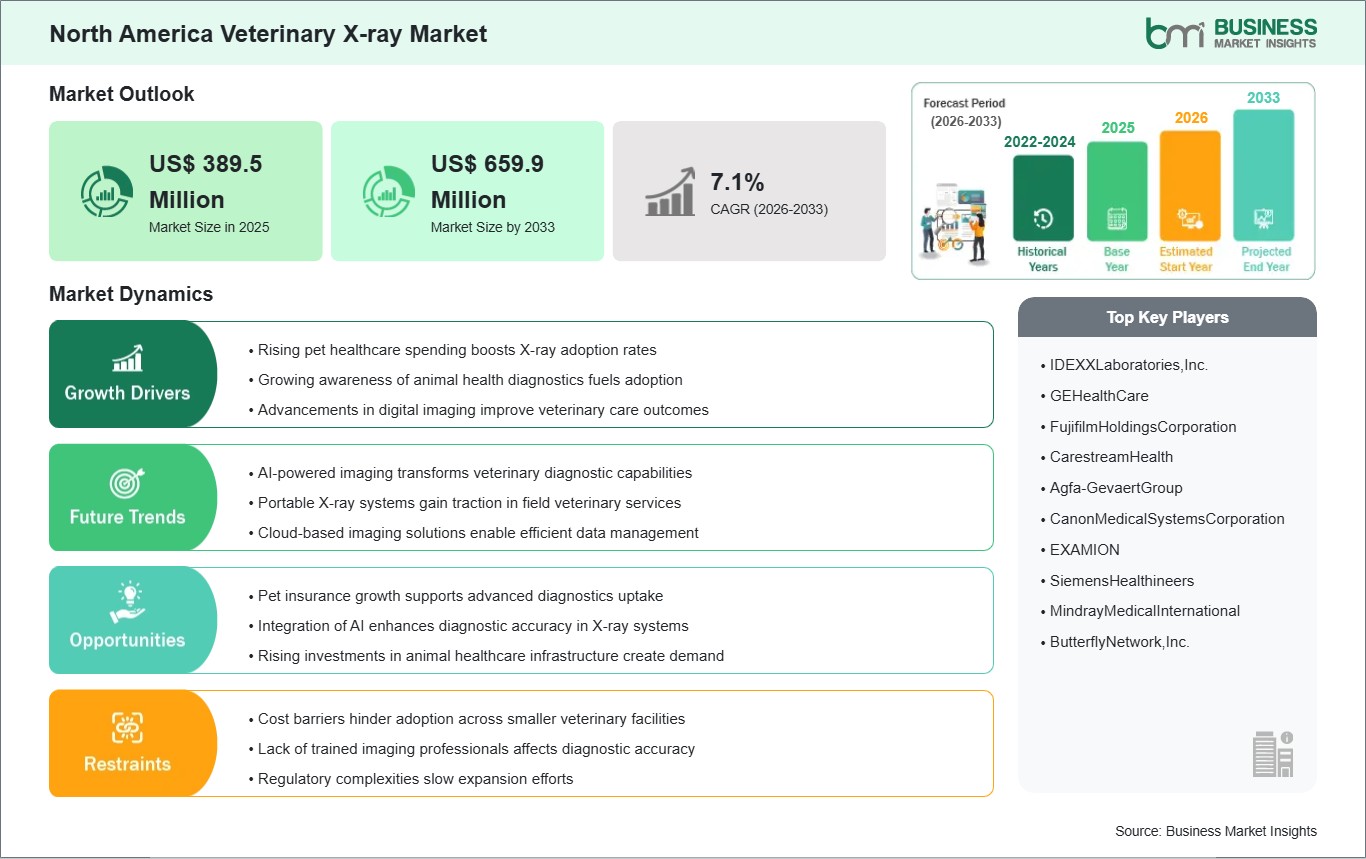
The North America veterinary X-ray market is characterized by a highly developed veterinary care ecosystem, strong technology adoption, and a well-established culture of preventive and diagnostic animal healthcare. The region demonstrates consistent demand for veterinary imaging solutions, supported by a high concentration of companion animals and a growing focus on early disease detection and treatment planning. Veterinary X-ray systems, particularly digital radiography, are widely integrated into routine clinical workflows across general practices, specialty hospitals, and emergency care centers. One of the primary factors driving this market is the increasing humanization of pets, which has significantly influenced spending patterns on animal health. Pet owners in the United States and Canada are increasingly prioritizing advanced diagnostics as part of standard care, leading to higher utilization of X-ray imaging for orthopedics, cardiopulmonary assessment, dental evaluations, and oncology screening.
This trend is further reinforced by the expansion of pet insurance coverage, which improves affordability and encourages the adoption of advanced imaging procedures. Technological advancement plays a critical role in shaping the regional market. Veterinary practices are steadily transitioning from conventional film-based systems to digital and direct radiography platforms that offer faster image acquisition, improved diagnostic accuracy, and streamlined data management. Integration with cloud-based systems and practice management software has enhanced workflow efficiency, while the emergence of artificial intelligence–assisted imaging is beginning to support clinical decision-making and diagnostic consistency.
From a regional perspective, the United States leads the market due to its large veterinary service network, early adoption of innovative technologies, and strong presence of equipment manufacturers and service providers. Canada reflects stable growth, driven by increasing awareness of animal health and continued modernization of veterinary facilities. Mexico, while comparatively less mature, is experiencing gradual development supported by improving access to veterinary services and rising investment in animal healthcare infrastructure.
Despite favorable market conditions, certain challenges persist. The high capital investment required for advanced X-ray systems can be a barrier for smaller clinics and rural practices. Additionally, competition from alternative imaging modalities, such as ultrasound and advanced cross-sectional imaging, may limit the use of X-ray in complex diagnostic scenarios. A shortage of trained veterinary radiology professionals in certain areas also affects the efficient utilization of imaging systems. The North America veterinary X-ray market remains a leading and innovation-driven region, supported by strong clinical demand, technological progress, and an evolving standard of care in veterinary medicine.
Segment Analysis
North America Veterinary X-ray Market Segmentation
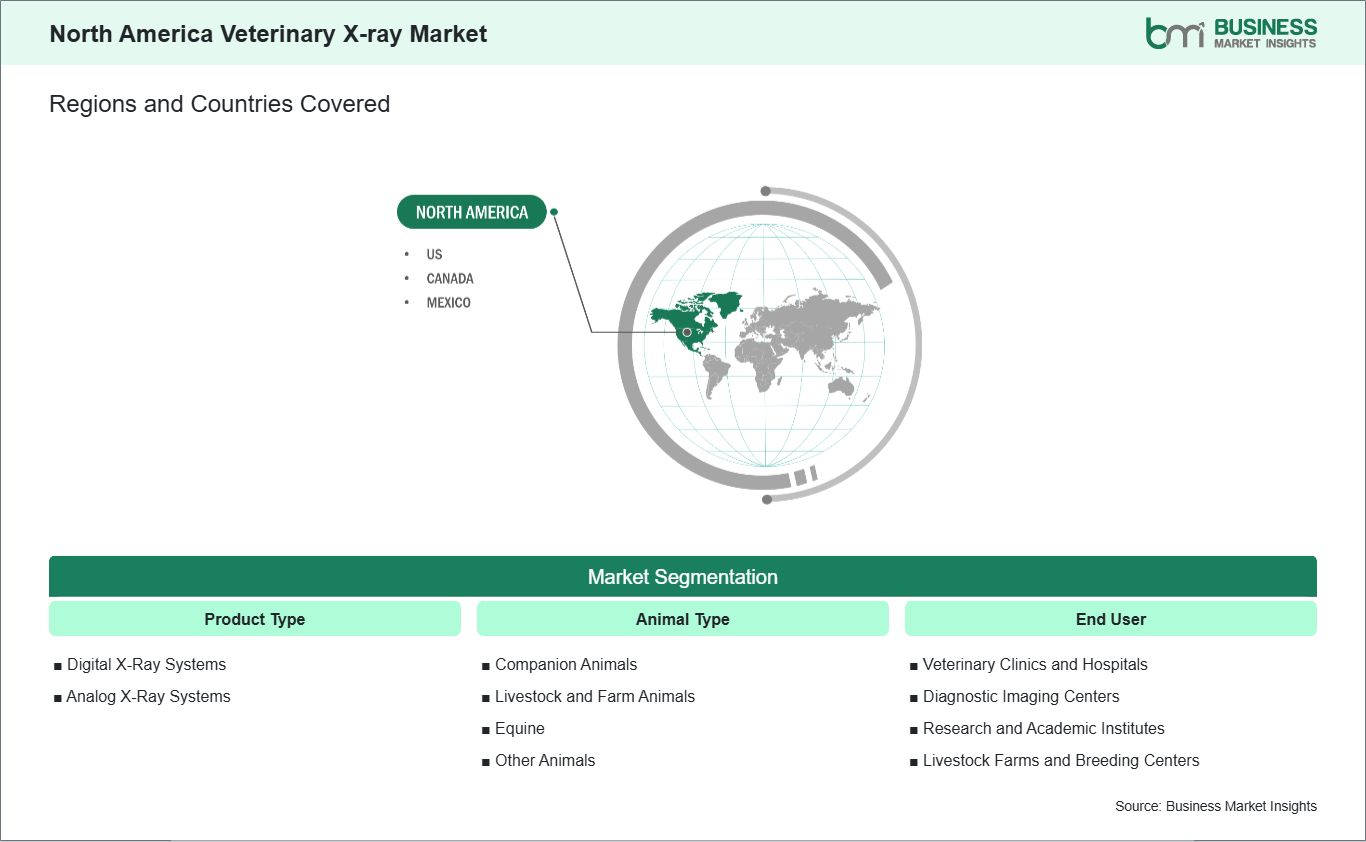
Key segments that contributed to the derivation of the North America veterinary x-ray market analysis are product type, animal type, and end user.
- By product type, the veterinary x-ray market is segmented into digital x-ray systems, analog x-ray systems. The digital x-ray systems segment dominated the market in 2025.
- Based on animal type, the veterinary x-ray market is categorized into companion animals, livestock and farm animals, equine, other animal types. The companion animals segment dominated the market in 2025.
- In terms of end user, the veterinary x-ray market is categorized into veterinary clinics and hospitals, diagnostic imaging centers, research and academic institutes, livestock farms and breeding centers. The veterinary clinics and hospitals segment dominated the market in 2025.
Market Forces
North America Veterinary X-ray Market Drivers and Opportunities
Rising pet healthcare spending boosts X-ray adoption rates
The increased expenditure of veterinary care for companion animals in North America is a major factor driving the growth in veterinary X-ray system sales. Pet owners in the United States and Canada are coming to expect that they will provide their pets with the best possible medical care and are very interested in obtaining timely and accurate diagnostic information about their pets’ health status. The demand for diagnostic imaging services, and specifically for X-ray services, in both routine appointments and urgent medical situations has significantly increased as a result of this trend. Veterinary practices are expanding their diagnostic imaging capabilities in order to improve the quality of care that they provide to their patients through enhanced use of imaging technologies in clinic settings.
Demand for veterinary imaging technologies is particularly high in metropolitan and suburban communities where the level of access to advanced veterinary services is more readily available. Most often, veterinarians use X-ray imaging to assist in diagnosing a variety of musculoskeletal injuries, dental diseases, and many internal conditions. X-ray imaging has become a vital aspect of modern veterinary practice. Additionally, the prevalence of chronic disease in aging pet populations, as well as veterinarians’ expected use of diagnostic imaging, serves to continuously drive the need for imaging services in veterinary medicine.
Veterinary practitioners, including veterinarians themselves, are focused on upgrading their diagnostic imaging capabilities by purchasing new, modern equipment and incorporating imaging technology into their standard of care processes.
Pet insurance growth supports advanced diagnostics uptake
As pet insurance coverage expands throughout North America, the veterinary X-ray industry will benefit from the impact on both affordability and accessibility through the use of more advanced diagnostic tooling. The growth of the pet insurance market has reduced pet owners’ expense for diagnostic imaging, increasing the willingness of pet owners to utilize X-ray procedures. The more certainty that a veterinarian has regarding the ability of an owner to pay for a diagnostic procedure, the more likely the veterinarian will be to recommend a complete diagnostic evaluation, thus improving the likelihood of a successful clinical outcome.
The availability of diagnostic imaging insurance coverage has also increased veterinary clinics’ adoption of advanced imaging technology such as digital and portable X-ray systems. Reimbursement mechanisms that support the provision of diagnostic imaging services have given clinics more confidence to make capital investments in high-quality imaging equipment to provide the level of care expected by pet owners. As a result, veterinarians are gradually transitioning from traditional forms of veterinary imaging to improved methods of imaging to deliver higher quality of service.
In addition, the continuing alignment of insurance providers with veterinary practices will contribute to development of innovative ways to deliver care. The use of digital healthcare and tele-consultation services will enable veterinarians to efficiently use diagnostic imaging information to thoroughly and accurately evaluate complicated cases that are referred for specialist diagnostic interpretation, resulting in effective veterinary diagnostic imaging solutions and new opportunities for growth for veterinary X-ray system suppliers.
Size and Share Analysis
North America Veterinary X-ray Market Size and Share Analysis
The North America veterinary x-ray market demonstrates steady growth, with size and share analysis highlighting evolving trends and competitive dynamics among key players. The report examines subsegments categorized within product type, animal type, and end user, offering insights into their contribution to overall market performance.
By product type, the digital x-ray systems subsegment dominated the market in 2025, driven by its enhanced image quality, faster processing time, and growing adoption in modern veterinary practices.
Based on animal type, the companion animals subsegment dominated the market in 2025, driven by increasing pet ownership and rising demand for advanced diagnostic imaging in routine veterinary care.
In terms of end user, the veterinary clinics and hospitals subsegment dominated the market in 2025, driven by the widespread adoption of x-ray systems for comprehensive diagnostic and treatment services.
Report Coverage
North America Veterinary X-ray Market Report Coverage and Deliverables
The "North America Veterinary X-ray Market Size and Forecast (2022–2033)" report provides a detailed analysis of the market covering below areas:
- North America Veterinary X-ray Market size and forecast at global, regional, and country levels for all the key market segments covered under the scope
- North America Veterinary X-ray Market trends, as well as drivers, restraints, and opportunities
- North America Veterinary X-ray Market analysis covering key trends, global and regional framework, major players, regulations, and recent developments
- Industry landscape and competition analysis covering market concentration, heat map analysis, prominent players, and recent developments for the North America Veterinary X-ray Market
- Detailed company profiles, including SWOT analysis
Geographic Insights
North America Veterinary X-ray Market Geographic Insights
The geographical scope of the North America Veterinary X-ray Market report is divided into US, Canada, and Mexico. The US held the largest share in 2025.
Regional dynamics in North America’s veterinary X-ray market vary significantly in the US, Canada, and Mexico. The USA is the largest market for veterinary X-ray technology because of the advanced level of veterinary care and established culture for companion animals in the country. The density of highly developed veterinary clinics and specialty hospitals throughout the United States that use digital radiography and advanced imaging technologies is complemented by per capita spending by the population and a developed landscape for pet health insurance. This combination of factors allows for faster adoption of technology, frequent upgrade cycles for capital equipment, and the use of imaging as part of routine and specialty diagnostic procedures, consolidating the USA’s position as the leader in this market.
The Canadian veterinary X-ray market is smaller than its US counterpart, but it is experiencing steady growth as the awareness of the importance of preventive health care for animals continues to increase, and as the veterinary practices in the country grow increasingly modernized. The use of portable digital X-ray systems by veterinary providers continues to increase as a result of improving diagnostic efficiency, particularly in more rural and remote areas where the available infrastructure does not provide ready access to centralized facilities. Government regulations and professional standards encourage the continuing use of safe and reliable imaging technology which also supports the stability of the Canada market.
Meanwhile, Mexico represents an emerging market with significant growth potential, characterized by a rising focus on veterinary care and expanding access to diagnostic services. Increasing urbanization, growth in companion animal ownership, and gradual improvements in veterinary infrastructure are contributing to greater demand for X-ray systems, particularly cost-effective and portable solutions suited to smaller clinics. While adoption levels remain lower than in the US. and Canada, ongoing investments in animal health services and growing awareness among pet owners and livestock operators are expected to drive accelerated uptake. Overall, the regional landscape reflects a mature and innovation-driven market in the United States, a stable and gradually advancing market in Canada, and a developing but rapidly evolving market in Mexico, collectively shaping North America’s position as a key region in the global veterinary X-ray industry.
Industry Activity
Recent Developments
The North America Veterinary X-ray Market is evaluated by gathering qualitative and quantitative data post primary and secondary research, which includes important corporate publications, association data, and databases. A few of the key developments in the North America veterinary x-ray market are:
- In January 2026, IDEXX Laboratories, Inc., announced that it launched the ImageVue™ DR50 Plus Digital Imaging System, an advanced veterinary radiography solution offering AI-powered imaging and significantly reduced radiation exposure, and made it available to veterinary clinics across the United States and Canada.
- In June 2024, Adaptix Ltd announced a distribution partnership with Televere Systems, LLC under which Televere was appointed as the official U.S. distributor for Adaptix’s advanced 3D Small Animal Imaging System, enhancing access to its innovative imaging products for veterinary clinics in North America.
Trust & Transparency
Research Methodology
The market analysis combines proprietary research with secondary data from government agencies, company disclosures, regulatory filings, industry databases and expert interviews. Market estimates are validated through data triangulation, cross-market benchmarking and analyst
review.
View Full Research Methodology
Key Sources Referred:
American College of Veterinary Radiology (ACVR) World Small Animal Veterinary Association (WSAVA) British Veterinary Association (BVA) International Veterinary Radiology Association (IVRA) American Veterinary Medical Association (AVMA) European College of Veterinary Diagnostic Imaging (ECVDI) World Organisation for Animal Health (WOAH / OIE) Veterinary Imaging & Radiation Oncology Society (VIROS)