Market Summary
Executive Summary and Market Analysis
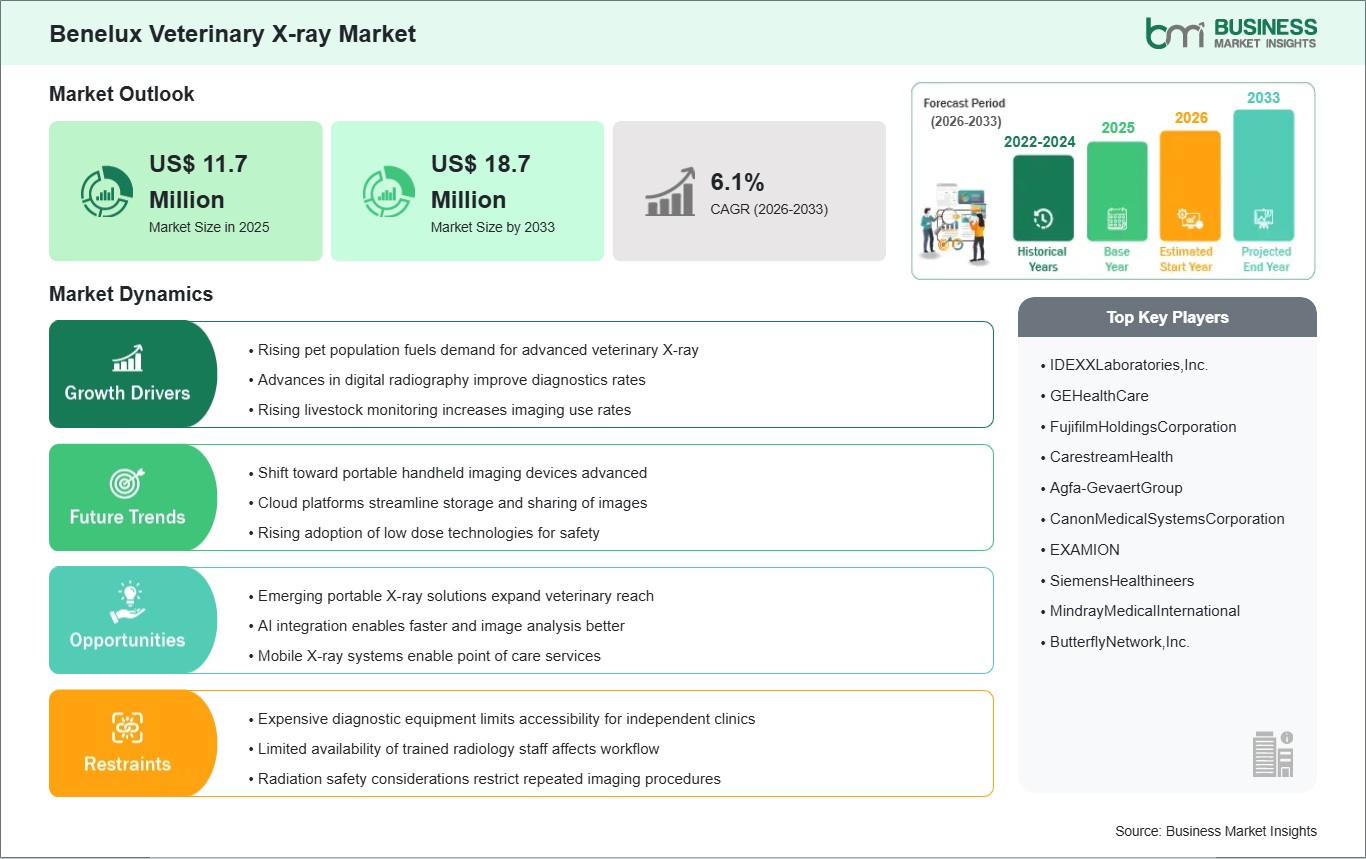
The Benelux region, encompassing Belgium, the Netherlands, and Luxembourg, represents a progressive segment of the European veterinary imaging market, driven by increasing demand for high-quality animal healthcare and diagnostic efficiency. Across the region, veterinary practices are increasingly investing in modern imaging technologies, particularly digital and computed radiography systems, to support a wide range of applications including orthopedic assessment, dental evaluations, soft tissue diagnostics, and preventive care. Rising pet ownership and growing awareness of animal welfare have created a robust environment for the adoption of advanced X-ray equipment, with clinics seeking solutions that improve diagnostic accuracy, reduce patient handling time, and integrate seamlessly into clinical workflows. In Belgium, the veterinary imaging market is shaped by well-established clinics and specialized veterinary hospitals that emphasize service differentiation through advanced diagnostic capabilities.
Veterinary practitioners are gradually moving away from traditional analog systems toward more sophisticated digital solutions, prioritizing image clarity, operational efficiency, and patient safety. However, adoption is moderated by the relatively high cost of state-of-the-art equipment and the limited availability of trained radiology personnel, particularly in smaller clinics. The Netherlands demonstrates a strong focus on preventive veterinary care and technological innovation. Veterinary practices in the country frequently integrate advanced X-ray systems to support early diagnosis and complex procedures, including those in equine and livestock care. The presence of academic veterinary institutions and centers of excellence facilitates knowledge sharing and encourages adoption of the latest imaging techniques. Despite this, the market faces challenges in navigating stringent radiation safety regulations and ensuring seamless integration of new technologies into existing practice workflows. Luxembourg, while smaller in scale, shows a growing emphasis on modern veterinary diagnostics driven by increased investment in companion animal healthcare. Clinics in Luxembourg are exploring both fixed and portable X-ray solutions to meet the diverse needs of their clientele.
Nevertheless, equipment acquisition costs and a limited pool of trained radiography professionals can constrain the pace of technology adoption relative to Belgium and the Netherlands. The Benelux veterinary X-ray market reflects a region-wide shift toward digitalization and enhanced diagnostic capabilities. While adoption is accelerated by rising demand for high-quality animal care and clinical efficiency, challenges related to cost, regulatory compliance, and workforce expertise remain key considerations for market growth.
Segment Analysis
Benelux Veterinary X-ray Market Segmentation
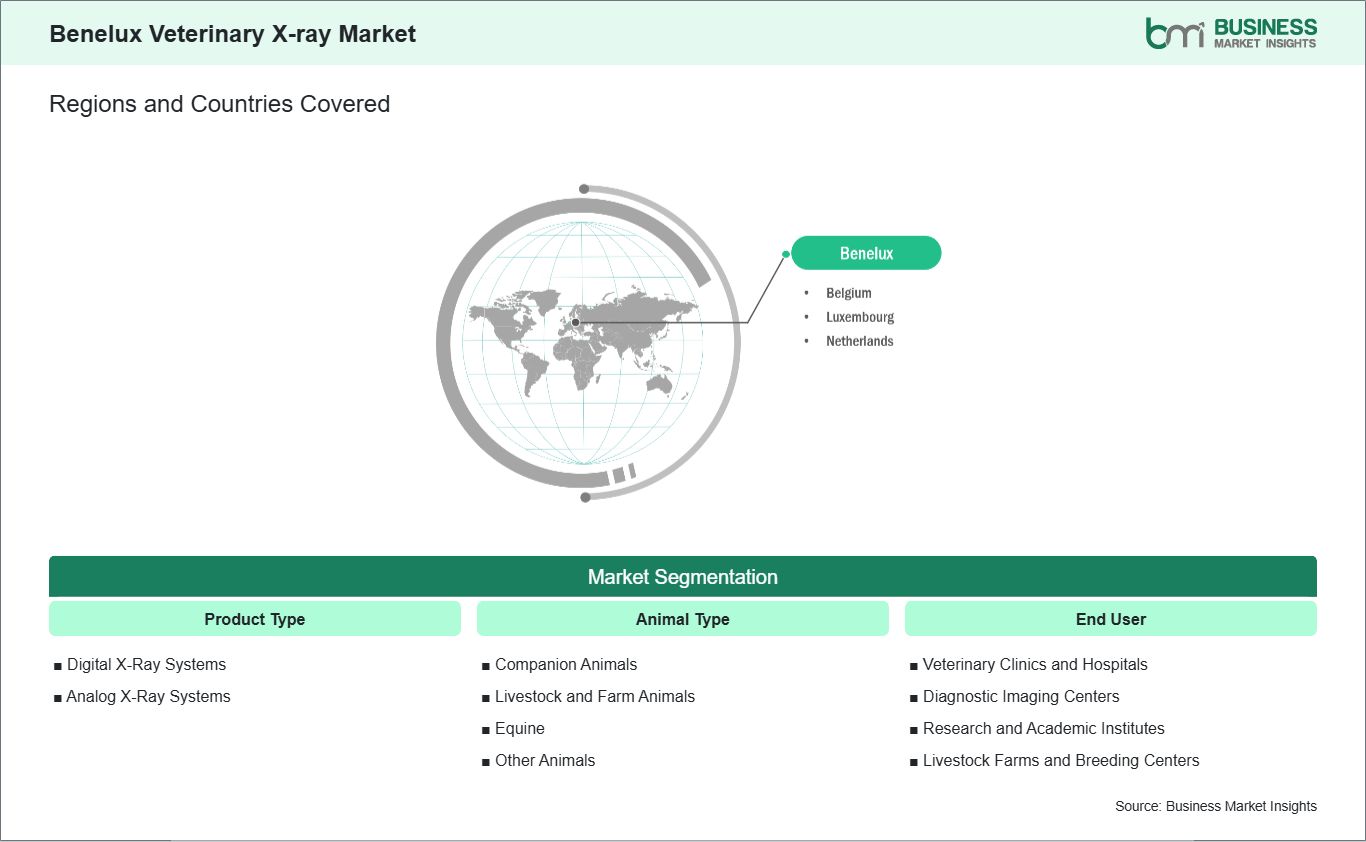
Key segments that contributed to the derivation of the Benelux veterinary x-ray market analysis are product type, animal type, and end user.
- By product type, the veterinary x-ray market is segmented into digital x-ray systems, analog x-ray systems. The digital x-ray systems segment dominated the market in 2025.
- Based on animal type, the veterinary x-ray market is categorized into companion animals, livestock and farm animals, equine, other animal types. The companion animals segment dominated the market in 2025.
- In terms of end user, the veterinary x-ray market is categorized into veterinary clinics and hospitals, diagnostic imaging centers, research and academic institutes, livestock farms and breeding centers. The veterinary clinics and hospitals segment dominated the market in 2025.
Market Forces
Benelux Veterinary X-ray Market Drivers and Opportunities
Rising pet population fuels demand for advanced veterinary X-ray
Pet ownership within the Benelux region has experienced a steady growth rate as households place substantial investments into comprehensive veterinary services. Consequently, there is now an increasing demand for sophisticated, advanced Veterinary X-ray systems that allow for accurate and timely diagnosis of a wide variety of animal health related problems ranging from fractures to internal organ evaluations. Throughout urban areas throughout the Netherlands and Belgium, many more veterinary clinics have also started to provide digital X-ray services, highlighting the increasing significance of quality imaging services within veterinary practice on an everyday basis. Beyond the predominant trend toward small companion animals (dogs and cats), livestock (including horses) and rural area equine operations within Flanders and Wallonia are also showing an increased use of portable X-ray systems to provide on-site veterinary diagnosis, thus minimizing the transportation stress for animals, and enhancing the effectiveness of treatment protocols. The move to digital imaging has also permitted veterinary hospitals and clinics to link patient X-ray images with the patient's electronic medical record (EMR), improving the workflow process and ultimately assisting to deliver superior patient care. As pet owners continue to become more aware of the advantages associated with preventive health services, there will be an increased demand for high-quality veterinary imaging services that support the early detection of disease processes such as skeletal disorders and respiratory conditions. To accommodate these patient needs, there is a clear trend for clinics to upgrade their current imaging capabilities by implementing high resolution X-ray systems that permit accurate evaluations of soft tissue, as well as, bony tissue structures.
Emerging portable X-ray solutions expand veterinary reach
In the Benelux region, the increasing acceptance of portable x-ray technology will help veterinarians provide care outside traditional clinic environments. For example, mobile x-ray units are used by veterinarians working in rural areas of Belgium, the Netherlands, and Luxembourg to perform diagnostics on livestock, horses and pets at their particular location, without having to transport them to a central clinic. Being able to provide mobile diagnostics improves operations, decreases stress on animals and allows for quicker treatment in emergency situations. In addition, portable x-ray machines are becoming more modernized through the addition of digital storage capabilities and remote viewing options. This enables veterinarians to transmit diagnostics to a variety of specialists throughout the region, providing for collaborative planning and diagnosis. This interconnectivity allows for better clinical decision making, while also preserving high standards of care for a variety of animal populations. Thus, portable solutions are very appealing to mixed animal veterinarians who treat dogs and cats as well as farm animals. Likewise, as portable imaging technology is becoming more compact and user friendly, the movement toward affordable and accessible veterinary services throughout the Benelux region is also growing. Smaller clinics and mobile veterinary services can utilize portable systems and not have to spend a large amount on infrastructure; therefore, they can continue to penetrate the market. The increase in focus on timely diagnostics and animal welfare is a large contributing factor to the increase in portable unit usage.
Size and Share Analysis
Benelux Veterinary X-ray Market Size and Share Analysis
The Benelux veterinary x-ray market demonstrates steady growth, with size and share analysis highlighting evolving trends and competitive dynamics among key players. The report examines subsegments categorized within product type, animal type, and end user, offering insights into their contribution to overall market performance.
By product type, the digital x-ray systems subsegment dominated the market in 2025, driven by its enhanced image quality, faster processing time, and growing adoption in modern veterinary practices.
Based on animal type, the companion animals subsegment dominated the market in 2025, driven by increasing pet ownership and rising demand for advanced diagnostic imaging in routine veterinary care.
In terms of end user, the veterinary clinics and hospitals subsegment dominated the market in 2025, driven by the widespread adoption of x-ray systems for comprehensive diagnostic and treatment services.
Report Coverage
Benelux Veterinary X-ray Market Report Coverage and Deliverables
The "Benelux Veterinary X-ray Market Size and Forecast (2022–2033)" report provides a detailed analysis of the market covering below areas:
- Benelux Veterinary X-ray Market size and forecast at global, regional, and country levels for all the key market segments covered under the scope
- Benelux Veterinary X-ray Market trends, as well as drivers, restraints, and opportunities
- Benelux Veterinary X-ray Market analysis covering key trends, global and regional framework, major players, regulations, and recent developments
- Industry landscape and competition analysis covering market concentration, heat map analysis, prominent players, and recent developments for the Benelux Veterinary X-ray Market
- Detailed company profiles, including SWOT analysis
Geographic Insights
Benelux Veterinary X-ray Market Geographic Insights
The geographical scope of the Benelux Veterinary X-ray Market report is divided into Belgium, the Netherlands, and Luxembourg. Netherlands held the largest share in 2025.
Veterinary x-ray markets exhibit distinct characteristics across each of the three Benelux countries, namely Belgium, The Netherlands, and Luxembourg. Of these countries, the Netherlands has developed an advanced veterinary infrastructure and has adopted veterinary technology at a greater rate than both Belgium and Luxembourg. The veterinary market in The Netherlands possesses a large number of veterinarians and veterinary hospitals and as such has a high demand for modern diagnostic imaging equipment including digital x-ray systems due to a high number of pet owners and increasing concern for pet health.
The Dutch veterinary clinics are rapidly adopting digital, mobile, high-resolution radiographic equipment, which will improve the degree of diagnostic accuracy and profitability of operations in the Netherlands; therefore, The Netherlands will be the regional investment hub for veterinary imaging within the Benelux region. The European Union (EU) veterinary x-ray market in Belgium is mature but is modest in size and will benefit from strong growth driven by the increasing emphasis on preventive health care for animals and continuing modernization of diagnostic equipment.
The Belgian veterinary community is gradually replacing older analog x-ray machines with new digital x-ray machines, but the replacement schedule is often influenced by the size and financial resources of each veterinary practice which will lead to steady growth in the Belgian veterinary market but slower than the overall growth in veterinary x-ray equipment consumption. The Luxembourg veterinary market represents a small, niche market of veterinarians due to the overall population and therefore, the overall number of veterinary practices in the country. The demand for veterinary x-ray equipment in Luxembourg will mirror trends seen in the neighboring veterinary markets of Belgium and Netherlands.
Industry Activity
Recent Developments
The Benelux Veterinary X-ray Market is evaluated by gathering qualitative and quantitative data post primary and secondary research, which includes important corporate publications, association data, and databases. A few of the key developments in the Benelux veterinary x-ray market are:
- In June 2023, Heska Corporation announced that Mars, Inc. completed the acquisition of Heska, a global provider of advanced veterinary diagnostic and specialty solutions, including imaging and diagnostic equipment, to broaden access to diagnostics and technology for veterinary professionals. This strategic change strengthens Heska’s R&D and service capabilities across its markets.
- In September 2024, IMV Technologies announced that it had acquired UD‑Vet B.V., a leading provider of veterinary practice equipment and veterinary imaging modalities based in Utrecht (Netherlands) and Brussels (Belgium), thereby strengthening its companion animal imaging and equipment business throughout the Benelux region.
Trust & Transparency
Research Methodology
The market analysis combines proprietary research with secondary data from government agencies, company disclosures, regulatory filings, industry databases and expert interviews. Market estimates are validated through data triangulation, cross-market benchmarking and analyst
review.
View Full Research Methodology
Key Sources Referred:
American College of Veterinary Radiology (ACVR) World Small Animal Veterinary Association (WSAVA) British Veterinary Association (BVA) International Veterinary Radiology Association (IVRA) American Veterinary Medical Association (AVMA) European College of Veterinary Diagnostic Imaging (ECVDI) World Organisation for Animal Health (WOAH / OIE) Veterinary Imaging & Radiation Oncology Society (VIROS)