Market Summary
Executive Summary and Market Analysis
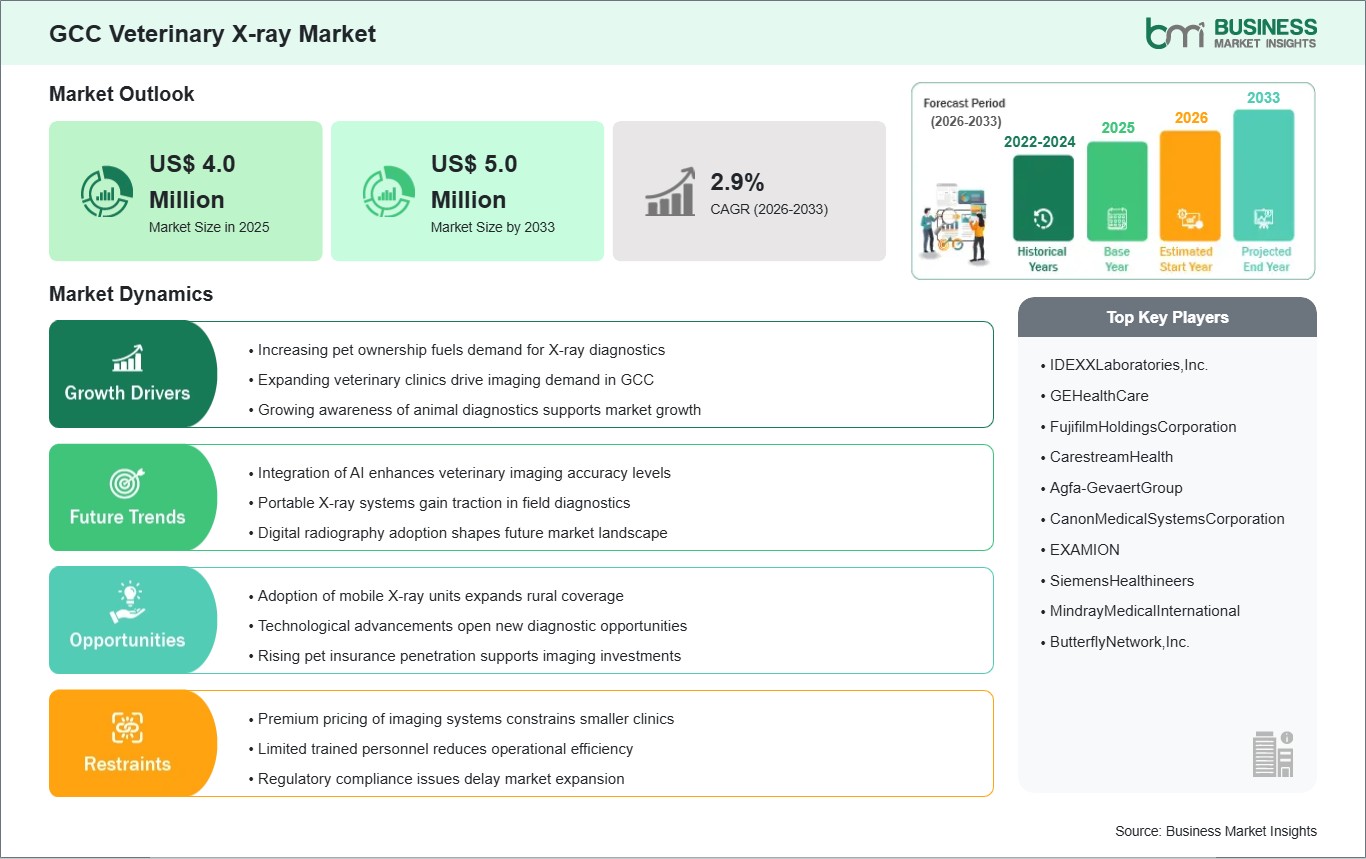
The GCC (Gulf Cooperation Council) veterinary X‑ray market is emerging as a significant segment within the broader animal healthcare ecosystem, shaped by rapidly developing veterinary infrastructure, rising awareness of animal health, and increasing public and private investment in advanced diagnostic technologies. Comprising economically dynamic countries with strong government support for healthcare modernization, the GCC region is witnessing a growing emphasis on high‑quality veterinary services that mirror advances seen in human medical care. Within this context, X‑ray imaging stands out as a foundational diagnostic tool, essential for accurate disease identification, injury assessment, and clinical decision‑making across companion animal practices, equine centers, and expanding livestock care facilities.
A primary factor propelling market growth in the GCC is the rising standard of living and expanding pet ownership, particularly in urban and expatriate communities. As pet owners increasingly view animals as integral members of the family, demand for comprehensive veterinary diagnostics—once reserved for basic care—has shifted toward advanced imaging solutions. This cultural transformation drives veterinarians to integrate digital X‑ray systems into routine examinations and specialized procedures. Moreover, the equine segment, especially in countries with strong equestrian traditions, places a premium on diagnostic accuracy, further elevating the role of X‑ray technologies for bone, joint, and musculoskeletal evaluations.
Government initiatives aimed at enhancing animal health frameworks also contribute to market momentum. Several GCC countries have established or are refining regulatory standards for veterinary practices and medical equipment procurement, encouraging clinics to adopt internationally recognized diagnostic standards. Investments in veterinary education and professional development—often in partnership with international institutions—are improving clinical competencies and fostering greater confidence in the use of sophisticated imaging tools. The livestock sector, particularly in nations with robust agricultural and food security objectives, represents an additional growth avenue. Producers are increasingly recognizing the value of diagnostic imaging in herd health management, disease surveillance, and biosecurity efforts, which supports demand for portable and fixed X‑ray units that can be deployed in field environments or centralized veterinary facilities.
However, market expansion is not without constraints. One notable challenge is the high cost associated with acquiring and maintaining advanced X‑ray systems, which can be a barrier for smaller clinics and practices with limited budgets. While larger urban centers may readily adopt new technologies, smaller veterinary providers in less densely populated areas may adopt a more cautious investment approach, delaying upgrades to digital systems in favor of existing analog equipment. Another restraint stems from variability in training and technical expertise. Although professional development is improving, there remains a gap in standardized training for advanced imaging interpretation across the region. This can limit the full utilization of the diagnostic potential of modern X‑ray systems and may slow adoption rates among practitioners less familiar with digital workflows and advanced imaging techniques.
The GCC veterinary X‑ray market is positioned for continued growth, underpinned by cultural shifts in animal care, rising service expectations, and strategic investments in veterinary infrastructure. At the same time, cost pressures and workforce readiness are critical factors that stakeholders must address to sustain long‑term market development.
Segment Analysis
GCC Veterinary X-ray Market Segmentation
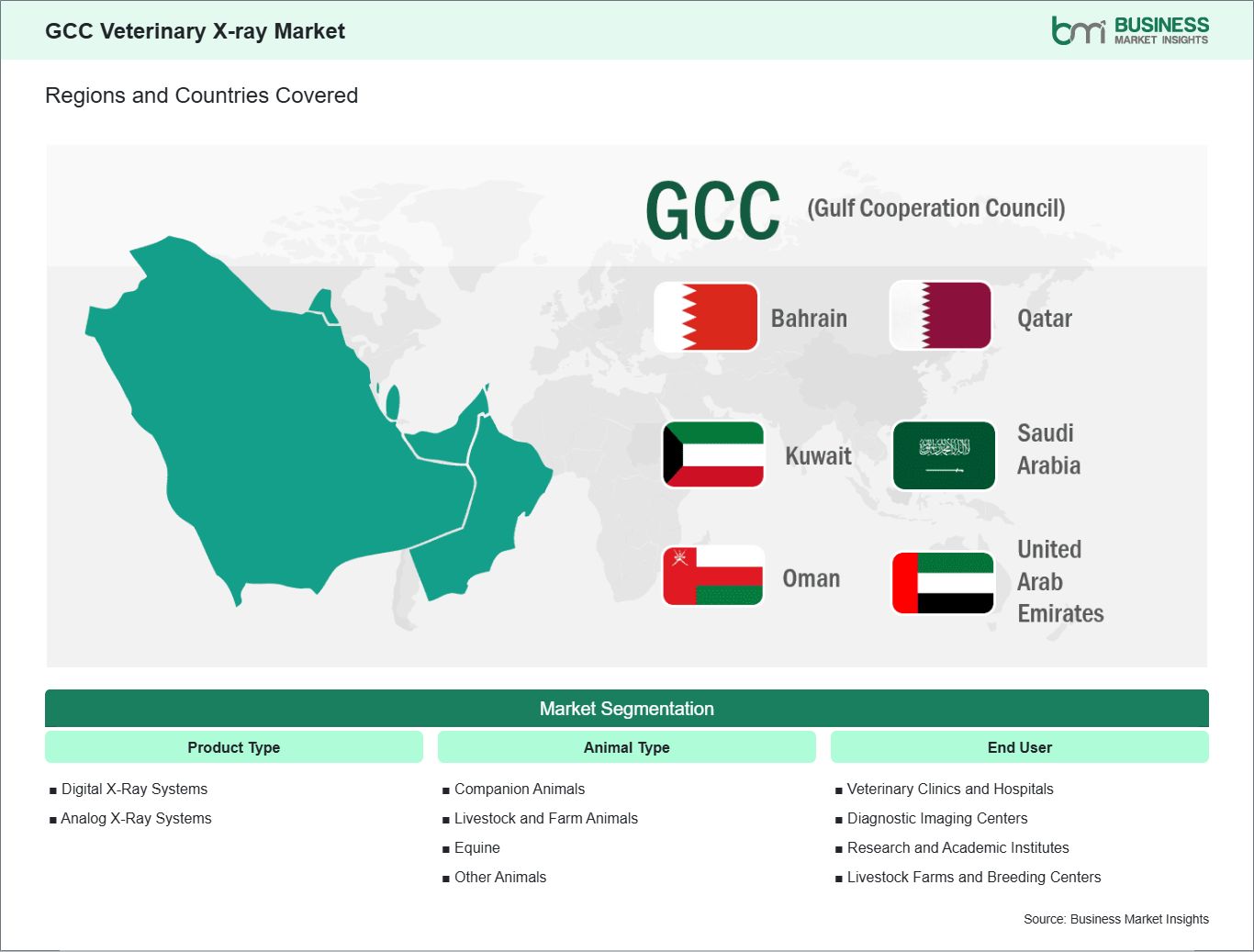
Key segments that contributed to the derivation of the GCC veterinary x-ray market analysis are product type, animal type, and end user.
- By product type, the veterinary x-ray market is segmented into digital x-ray systems, analog x-ray systems. The digital x-ray systems segment dominated the market in 2025.
- Based on animal type, the veterinary x-ray market is categorized into companion animals, livestock and farm animals, equine, other animal types. The companion animals segment dominated the market in 2025.
- In terms of end user, the veterinary x-ray market is categorized into veterinary clinics and hospitals, diagnostic imaging centers, research and academic institutes, livestock farms and breeding centers. The veterinary clinics and hospitals segment dominated the market in 2025.
Market Forces
GCC Veterinary X-ray Market Drivers and Opportunities
Increasing pet ownership fuels demand for X-ray diagnostics
As pet ownership continues to increase throughout the GCC region the veterinary X-ray market has been growing steadily. Increased urbanization and disposable income are causing households to acquire companion animals, primarily cats and dogs, which has driven up the need for advanced veterinary diagnostics. Veterinary clinics are now adding also to their existing X-ray capabilities as a means of providing service for routine examinations (preventative) the diagnosis of orthopedic conditions and other potential health issues.
Additionally, GCC livestock producers have a major need for veterinary imaging to assess livestock health and productivity, including camel, cattle, and poultry production. As large scale farms and their equine facilities are relying more and more on diagnostic X-ray technology to identify potential injuries and conditions that could ultimately be treated at a lower cost, providing an improved quality of care for animals.
As veterinary practices in the Gulf Cooperation Council region continue to modernise, clients are beginning to expect higher standards of care for their companion animals and their livestock. The ability to provide quicker results with clearer images using digital and portable veterinary X-ray systems is also driving the expansion of veterinary X-ray solutions as pet ownership and livestock management continue to increase throughout the GCC.
Adoption of mobile X-ray units expands rural coverage
The mobile X-ray market is emerging as a large opportunity in the GCC veterinary market, especially in rural areas and for large farms who have no access to fixed clinics. The portable mobile X-ray unit allows the veterinary to perform imaging on site on animals such as camels, cattle, and horses, eliminating the need to transport animals a long distance. This has increased the speed of treatment, allowing for timely diagnosis and therefore saving valuable time and cost to all parties involved in high value livestock and equine operations.
The technological advances in mobile x ray units, including lighter weight design, battery operation, and integrated digital imaging software, support the expansion of mobile diagnostic services. As clinics have incorporated mobile services into their operations, they have increased their ability to service smaller towns and remote farms. This has opened up the market for veterinary diagnostic products outside of the traditional urban areas.
Mobile x ray units are compatible with the broader digital transformation trends occurring in the region. The cloud-based storage of images, AI-based image analyses, and teleconsultation services have made it possible for veterinarians to receive input from specialists within minutes of creating the image, enhancing the diagnostic accuracy when compared to previous methodologies for providing veterinary diagnostics to customers. As the GCC region continues to invest heavily in veterinary infrastructure and modernise the livestock industry, it is anticipated that mobile x-ray unit adoption will grow rapidly and provide a rewarding opportunity for growth.
Size and Share Analysis
GCC Veterinary X-ray Market Size and Share Analysis
The GCC veterinary x-ray market demonstrates steady growth, with size and share analysis highlighting evolving trends and competitive dynamics among key players. The report examines subsegments categorized within product type, animal type, and end user, offering insights into their contribution to overall market performance.
By product type, the digital x-ray systems subsegment dominated the market in 2025, driven by its enhanced image quality, faster processing time, and growing adoption in modern veterinary practices.
Based on animal type, the companion animals subsegment dominated the market in 2025, driven by increasing pet ownership and rising demand for advanced diagnostic imaging in routine veterinary care.
In terms of end user, the veterinary clinics and hospitals subsegment dominated the market in 2025, driven by the widespread adoption of x-ray systems for comprehensive diagnostic and treatment services.
Report Coverage
GCC Veterinary X-ray Market Report Coverage and Deliverables
The "GCC Veterinary X-ray Market Size and Forecast (2022–2033)" report provides a detailed analysis of the market covering below areas:
- GCC Veterinary X-ray Market size and forecast at global, regional, and country levels for all the key market segments covered under the scope
- GCC Veterinary X-ray Market trends, as well as drivers, restraints, and opportunities
- GCC Veterinary X-ray Market analysis covering key trends, global and regional framework, major players, regulations, and recent developments
- Industry landscape and competition analysis covering market concentration, heat map analysis, prominent players, and recent developments for the GCC Veterinary X-ray Market
- Detailed company profiles, including SWOT analysis
Geographic Insights
GCC Veterinary X-ray Market Geographic Insights
The geographical scope of the GCC Veterinary X-ray Market report is divided into UAE, Bahrain, Saudi Arabia, Oman, Qatar, and Kuwait. The UAE held the largest share in 2025.
The most prominent country in the GCC veterinary X-ray industry is the United Arab Emirates, where there is a comprehensive veterinary system and digital imaging and portable x-ray applications are common due to high pet ownership rates in addition to the availability of numerous well-equipped veterinary hospitals, specialty veterinary clinics, and veterinary teaching/research institutions. These veterinary organizations utilize many advanced imaging modalities in their regular clinical practice which supports the increasing awareness of preventive veterinary medicine and the increasing amount invested in pet health care as well as livestock management. The adoption of X-ray units for diagnosing companion animals and farm animal disease is continuously growing. Saudi Arabia is the second largest market and continues to expand due to its large livestock industry, increasing number of veterinary services, and government efforts to improve the health standards of livestock.
The adoption rate for advanced imaging systems is increasing in urban veterinary clinics, but rural areas have limited access to these technologies due to lack of infrastructure. Both Qatar and Kuwait have a significant amount of growth potential for the veterinary imaging market because of high disposable incomes, modern veterinary facilities, and the growing trend of pet ownership. Demand for veterinary imaging equipment in Qatar and Kuwait is primarily location-based and urban with an emphasis on digital imaging/portable imaging solutions that will provide better diagnostic accuracy and improve the standard of care for patients. Oman's and Bahrain's markets are smaller but are both also showing steady growth in their respective markets for advanced imaging equipment.
Industry Activity
Recent Developments
The GCC Veterinary X-ray Market is evaluated by gathering qualitative and quantitative data post primary and secondary research, which includes important corporate publications, association data, and databases. A few of the key developments in the GCC veterinary x-ray market are:
- In January 2026, IDEXX Laboratories announced that it has launched the ImageVue™ DR50 Plus Digital Imaging System, its most advanced veterinary digital radiography solution with lower radiation dose and enhanced diagnostic imaging performance. The new ImageVue™ DR50 Plus system combines high‑definition imaging with reduced radiation exposure and integrated clinical workflows to accelerate diagnosis in veterinary practices.
- In June 2023, Mars Petcare announced the completion of its acquisition of Heska Corporation, a global provider of veterinary diagnostic and specialty products — including imaging and digital diagnostics technologies used in veterinary care. The acquisition broadened Mars’ point‑of‑care diagnostic capabilities and expanded Heska’s global reach, which includes veterinary practices in international regions such as the Middle East and GCC, strengthening supply and support for advanced imaging and diagnostic solutions.
Trust & Transparency
Research Methodology
The market analysis combines proprietary research with secondary data from government agencies, company disclosures, regulatory filings, industry databases and expert interviews. Market estimates are validated through data triangulation, cross-market benchmarking and analyst
review.
View Full Research Methodology
Key Sources Referred:
American College of Veterinary Radiology (ACVR) World Small Animal Veterinary Association (WSAVA) British Veterinary Association (BVA) International Veterinary Radiology Association (IVRA) American Veterinary Medical Association (AVMA) European College of Veterinary Diagnostic Imaging (ECVDI) World Organisation for Animal Health (WOAH / OIE) Veterinary Imaging & Radiation Oncology Society (VIROS)