Market Summary
Executive Summary and Market Analysis
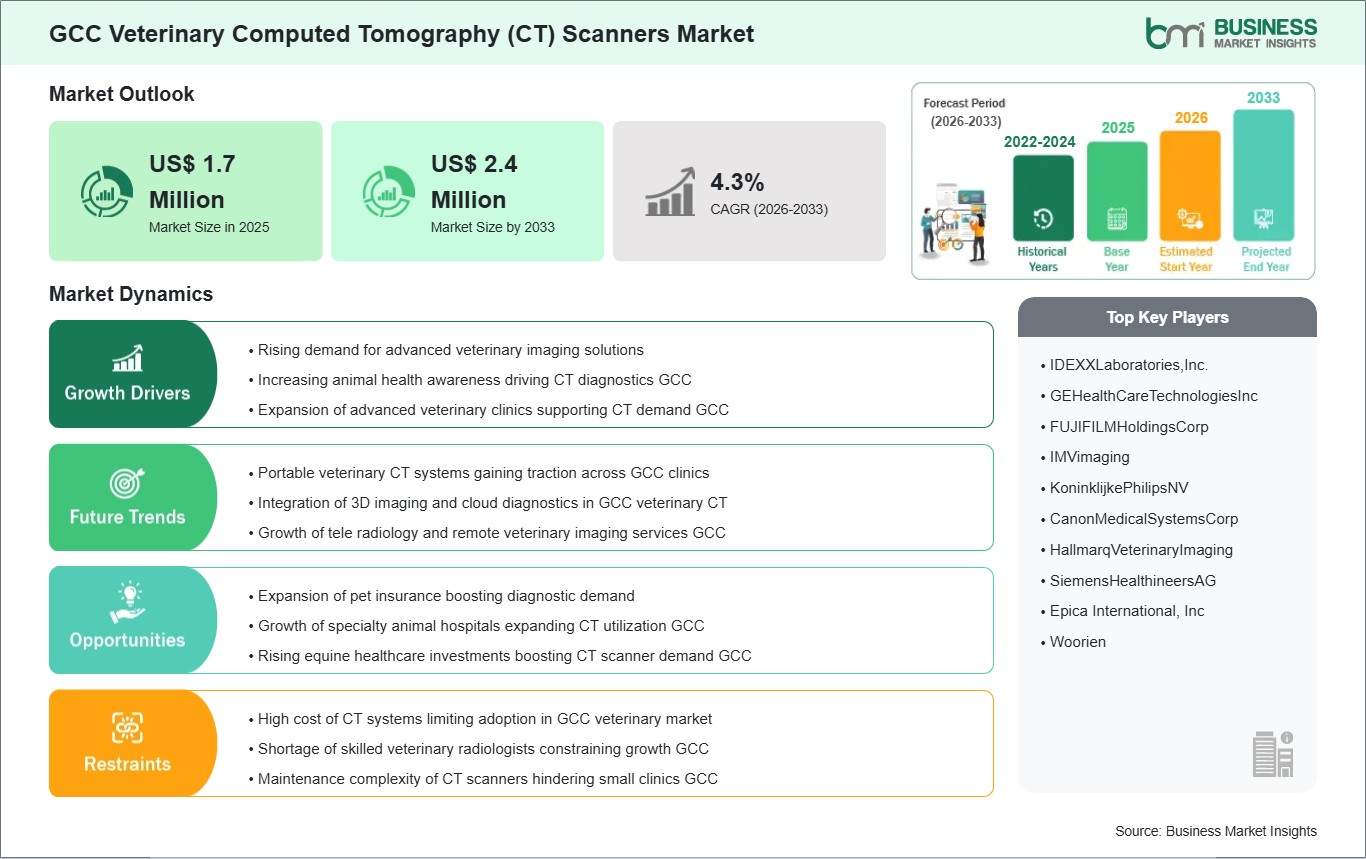
The GCC region veterinary computed tomography CT scanner market is experiencing steady development because pet healthcare investments are increasing, and veterinarians, together with pet owners, are gaining knowledge about diagnostic capabilities. Veterinary practices in urban areas need advanced imaging systems because pet ownership rates are increasing and farmers are adopting modern methods for animal management. The animal medical field now considers CT scanners as critical diagnostic instruments because they produce high-resolution images that enable accurate identification of neurological, musculoskeletal and internal organ disorders. The increasing demand for high-quality veterinary services for both companion animals and livestock animals serves as the primary reason the market continues to expand.
The veterinary clinics and hospitals in GCC cities work to achieve international service quality standards by using advanced imaging systems for their diagnostic processes. Government initiatives that support animal welfare improvement, together with contemporary veterinary practice development, have created a favorable environment that encourages veterinary facilities to adopt advanced diagnostic technologies. Clinics are now purchasing cutting-edge imaging equipment because pet owners understand that accurate and prompt diagnostics are necessary for their pets. The market growth rate experiences a reduction because multiple factors prevent its development from reaching its full potential.
The high capital investment and maintenance costs associated with CT scanners create financial barriers that prevent smaller veterinary practices from adopting these machines, which operate with standard imaging equipment. The field of veterinary radiology faces a critical shortage of professionals who possess the ability to read CT scans because most qualified experts work in big cities, while smaller towns lack adequate specialists. Clients in particular areas, especially those who need testing because of routine medical check-ups or non-urgent medical situations, experience difficulties because they must pay for advanced diagnostic tests that they need. The GCC veterinary CT scanner market will achieve continuous growth despite existing difficulties because of increasing demand for advanced animal healthcare, government support for modern veterinary practices, and growing awareness among pet owners and livestock managers about the advantages of accurate diagnostic imaging.
Segment Analysis
GCC Veterinary Computed Tomography (CT) Scanners Market Segmentation
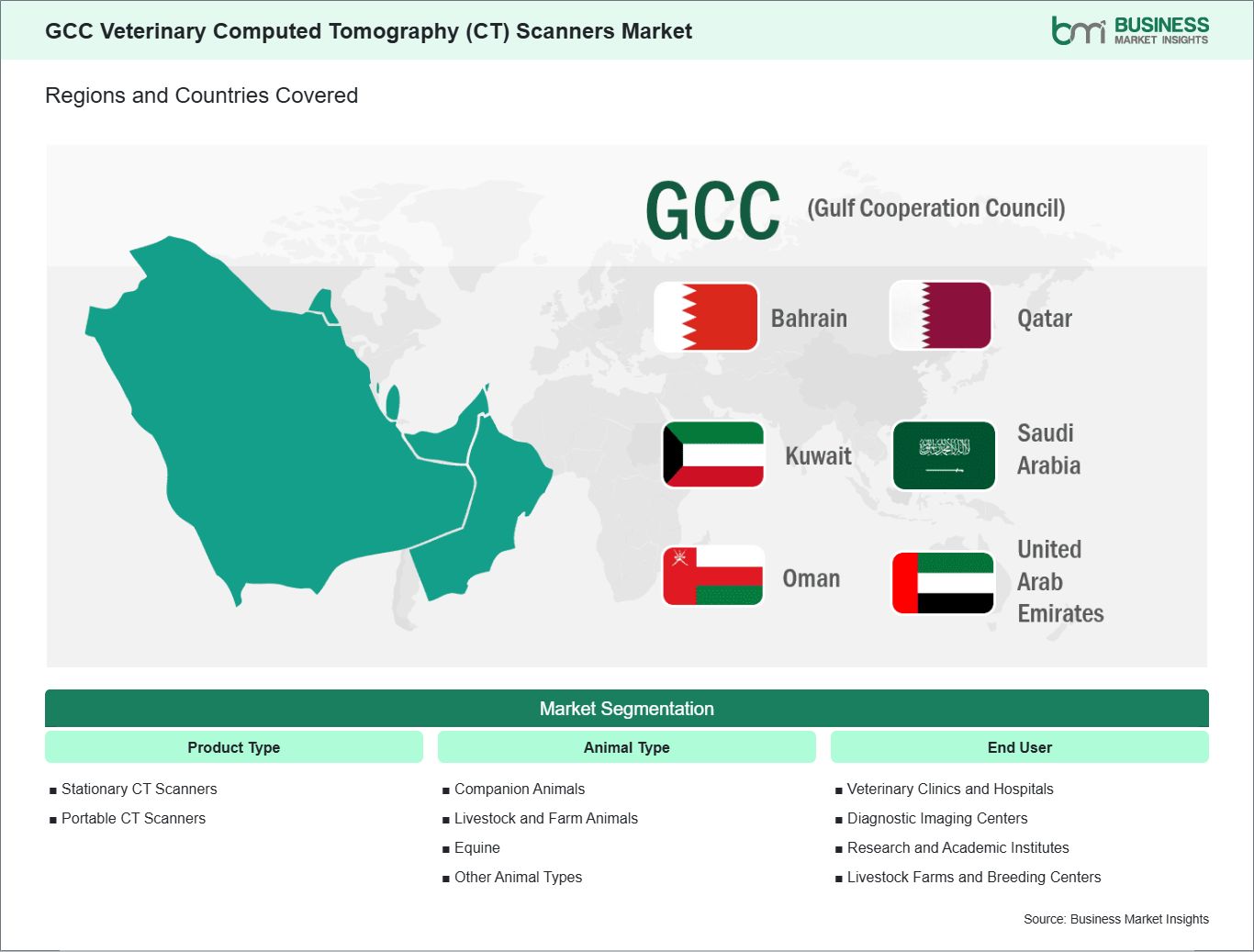
Key segments that contributed to the derivation of the GCC veterinary computed tomography (CT) scanners market analysis are product type, animal type, and end user.
- By product type, the veterinary computed tomography (CT) scanners market is segmented into stationary CT scanners, portable CT scanners. The stationary CT scanners segment dominated the market in 2025.
- Based on animal type, the veterinary computed tomography (CT) scanners market is categorized into companion animals, livestock and farm animals, equine, other animal types. The companion animals segment dominated the market in 2025.
- In terms of end user, the veterinary computed tomography (CT) scanners market is categorized into veterinary clinics and hospitals, diagnostic imaging centers, research and academic institutes, livestock farms and breeding centers. The veterinary clinics and hospitals segment dominated the market in 2025.
Market Forces
GCC Veterinary Computed Tomography (CT) Scanners Market Drivers and Opportunities
Rising demand for advanced veterinary imaging solutions
The veterinary CT scanner market in the GCC region is expanding because veterinary clinics now choose advanced imaging systems to enhance their diagnostic capabilities. The rapid rise of pet ownership in Saudi Arabia and the UAE during the last ten years has created a need for advanced diagnostic equipment that can identify intricate medical issues in pet animals. Urban clinics are purchasing CT scanners to improve their diagnostic capabilities for neurological, musculoskeletal and internal organ disorders, which conventional X-ray equipment could not detect.
CT imaging is being adopted by equine and livestock practices throughout Qatar and Kuwait to provide specialized medical treatment for high-value animals who need accurate medical assessments. Veterinary hospitals are observing an increase in surgical operations that need comprehensive body structure imaging, which drives veterinary facilities to start using CT imaging systems. The vendors in the market provide flexible payment options and equipment upkeep services to help clinics in the region acquire advanced scanning systems.
Pet owners now understand that early disease detection and access to sophisticated medical treatment are vital for their pets. Clinics use educational programs together with CT technology demonstrations to establish credibility, which leads to increased patient use. The aquarium sector in the GCC region shows continuous growth because of heightened clinical needs, which result in pet owners becoming knowledgeable about their requirements to operate the market. The region has developed into a crucial center for advanced veterinary imaging technologies.
Expansion of pet insurance boosting diagnostic demand
The growth of pet insurance in the GCC is emerging as a key driver for veterinary CT scanner adoption, as it enables more pet owners to access high-cost diagnostic procedures. In markets such as the UAE and Saudi Arabia, insurance policies increasingly cover advanced imaging services, allowing clinics to recommend CT scans without imposing prohibitive costs on owners. This development encourages early and accurate diagnosis of conditions ranging from internal injuries to complex neurological disorders, supporting both improved animal welfare and clinic revenue streams.
Furthermore, veterinary hospitals in Oman and Bahrain are beginning to see increased patient volumes for insured pets, with insurance coverage prompting owners to choose comprehensive diagnostic pathways. Clinics are responding by integrating CT scanners into routine diagnostic workflows and offering imaging packages that complement treatment plans. This alignment between insurance availability and advanced diagnostic adoption is creating a positive cycle of demand, encouraging investment in the latest imaging technologies.
The continued expansion of pet insurance across the GCC represents a substantial opportunity for veterinary clinics and scanner manufacturers alike. As coverage becomes more widespread, demand for CT imaging is expected to rise consistently, particularly in urban centers where pet ownership and disposable income are higher. Clinics that can combine insurance-supported care with advanced diagnostic capabilities are well positioned to capture a growing segment of the market while improving clinical outcomes for animals.
Size and Share Analysis
GCC Veterinary Computed Tomography (CT) Scanners Market Size and Share Analysis
The GCC veterinary computed tomography (CT) scanners market demonstrates steady growth, with size and share analysis highlighting evolving trends and competitive dynamics among key players. The report examines subsegments categorized within product type, animal type, and end user, offering insights into their contribution to overall market performance.
By product type, the stationary CT scanners subsegment dominated the market in 2025, driven by their higher imaging accuracy, greater capacity for continuous use, and preference in well-equipped veterinary facilities for advanced diagnostics.
Based on animal type, the companion animals subsegment dominated the market in 2025, driven by the increasing pet adoption and higher willingness of owners to spend on advanced diagnostic imaging for improved animal health.
In terms of end user, the veterinary clinics and hospitals subsegment dominated the market in 2025, driven by their access to better infrastructure, skilled professionals, and higher patient inflow requiring routine and specialized CT imaging services.
Report Coverage
GCC Veterinary Computed Tomography (CT) Scanners Market Report Coverage and Deliverables
The "GCC Veterinary Computed Tomography (CT) Scanners Market Size and Forecast (2022–2033)" report provides a detailed analysis of the market covering below areas:
- GCC Veterinary Computed Tomography (CT) Scanners Market size and forecast at regional, and country levels for all the key market segments covered under the scope
- GCC Veterinary Computed Tomography (CT) Scanners Market trends, as well as drivers, restraints, and opportunities
- GCC Veterinary Computed Tomography (CT) Scanners Market analysis covering key trends, regional framework, major players, regulations, and recent developments
- Industry landscape and competition analysis covering market concentration, heat map analysis, prominent players, and recent developments for the GCC Veterinary Computed Tomography (CT) Scanners Market
- Detailed company profiles, including SWOT analysis
Geographic Insights
GCC Veterinary Computed Tomography (CT) Scanners Market Geographic Insights
The geographical scope of the GCC Veterinary Computed Tomography (CT) Scanners Market report is divided into UAE, Bahrain, Saudi Arabia, Oman, Qatar, and Kuwait. UAE held the largest share in 2025.
The GCC Veterinary Computed Tomography (CT) Scanners Market demonstrates a diverse regional landscape. The United Arab Emirates (UAE) has developed advanced healthcare systems, established numerous private veterinary hospitals and started using modern diagnostic equipment. The UAE government supports animal healthcare programs while the country maintains a complete network of specialized clinics, and pet ownership increases, which leads to higher demand for advanced imaging technology, including CT scanners. Saudi Arabia, as the largest GCC country by land and population, represents a substantial market with steady growth fueled by rising awareness of veterinary diagnostics, expansion of multi-specialty veterinary centers, and modernization of animal healthcare services. The country invests in urban veterinary hospitals and specialized imaging facilities, which establish it as a major regional force after the United Arab Emirates.
The pet care market in Qatar and Kuwait exhibits strong growth potential because pet ownership costs are rising, and private veterinary clinics are opening, and clinics need precise diagnostic tools for their complicated companion animal medical cases. The veterinary CT scanner market in Oman today exists as a small market, but veterinarians are starting to adopt this technology because animal healthcare centers focus on preventive care, and veterinary facilities are slowly being upgraded. The slowest market expansion in the GCC occurs in Bahrain because its small geographical area combines with its limited veterinary service network. Premium veterinary practices that serve high-value companion animals demonstrate selective adoption of advanced diagnostic equipment.
The common drivers that operate across all GCC countries include rising pet ownership and increasing awareness of early diagnosis and treatment and the growing role of multi-specialty veterinary hospitals, which can manage complex surgical, orthopedic and oncological cases. The regional trend shows veterinary CT technology adoption will continue to grow, even though each market has a different scale and maturity level, because the UAE healthcare system provides advanced medical facilities and invests more in veterinary technology and has high demand for diagnostic services for animals. The GCC market outlook shows ongoing growth, while technology providers have strategic chances to market their products in urban areas and specialty veterinary clinics and developing segments of veterinary services that require better imaging equipment.
Industry Activity
Recent Developments
The GCC Veterinary Computed Tomography (CT) Scanners Market is evaluated by gathering qualitative and quantitative data post primary and secondary research, which includes important corporate publications, association data, and databases. A few of the key developments in the GCC veterinary computed tomography (CT) scanners market are:
- In January 2023, JPI Healthcare Solutions, announced that it introduced two innovative veterinary imaging systems, including a CBCT system and fluoroscopy system, aimed at enhancing advanced diagnostic imaging capabilities for animal healthcare providers globally, including expanding applicability in emerging regions such as the Middle East.
- In March 2024, GE HealthCare, announced that it would exclusively distribute the nCommand Lite system for multi-modality remote operations, supporting imaging workflows including CT systems and improving access to advanced imaging technologies across regions such as the Middle East.
Trust & Transparency
Research Methodology
The market analysis combines proprietary research with secondary data from government agencies, company disclosures, regulatory filings, industry databases and expert interviews. Market estimates are validated through data triangulation, cross-market benchmarking and analyst
review.
View Full Research Methodology
Key Sources Referred:
American College of Veterinary Radiology (ACVR) World Small Animal Veterinary Association (WSAVA) British Veterinary Association (BVA) International Veterinary Radiology Association (IVRA) American Veterinary Medical Association (AVMA) European College of Veterinary Diagnostic Imaging (ECVDI) World Organisation for Animal Health (WOAH / OIE) Veterinary Imaging & Radiation Oncology Society (VIROS)