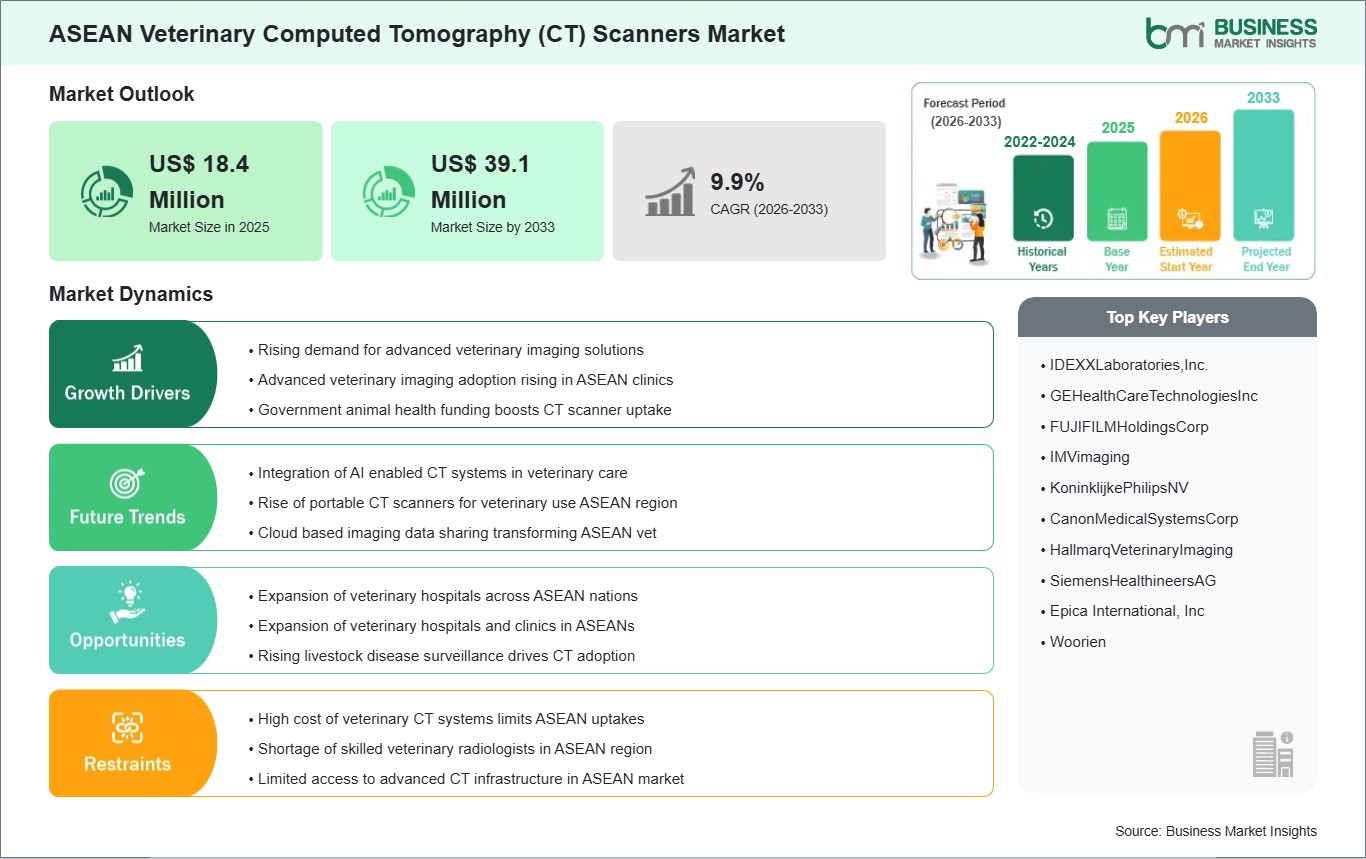
Rising demand for advanced veterinary imaging solutions
The ASEAN veterinary CT scanner market is experiencing significant growth due to increase in pet ownership and increasing focus on companion animal health. Urban centers in Thailand, Malaysia and Vietnam are seeing a rise in pet clinics equipped with advanced diagnostic technologies. Veterinarians are increasingly relying on CT imaging to accurately assess complex conditions, including orthopedic injuries, neurological disorders and internal organ deformities, that traditional X-rays cannot capture effectively. This demand is fueled by the willingness of pet owners to invest in high-quality medical care for their animals.
In addition to companion animals, livestock management programs across the region are contributing to CT scanner adoption. Countries such as Indonesia and the Philippines are emphasizing preventive and diagnostic animal health care to reduce disease outbreaks and increase productivity. Veterinary hospitals that provide both pet and livestock services are integrating CT technology to support a broader range of diagnostic needs, making these facilities more attractive to both pet owners and farmers seeking comprehensive care solutions.
Technological advancements are also playing an important role in the growth of the market. Portable and compact CT scanners have made it possible for medium-sized veterinary hospitals to adopt high-resolution imaging without the need for extensive infrastructure. These tools not only improve diagnostic accuracy but also increase operational efficiency, allowing veterinarians to provide faster and more reliable treatment plans. As awareness of animal health increases, CT imaging is becoming an essential component of modern veterinary care in ASEAN countries.
Expansion of veterinary hospitals across ASEAN nations
The expansion of veterinary hospitals across ASEAN is a major factor driving the growth of the CT scanner market. Rapid urbanization, rising incomes and increasing awareness about animal health care have led to increased veterinary facility growth. The new clinics in Malaysia, Singapore and Thailand are focusing on offering comprehensive diagnostic solutions, including CT imaging, to meet the growing expectations of customers. This expansion is particularly prominent in urban centres, where pet ownership is high and demand for specialized veterinary services is strong.
This increase is not limited to companion animals. Livestock-focused hospitals are increasingly incorporating CT scanners to improve herd health management. Advanced imaging allows veterinarians to detect internal injuries, tumors or other complex conditions in larger animals, enabling early intervention and reducing economic losses for farmers. As these services become more widely available, the veterinary health care landscape in ASEAN is moving toward a more technologically advanced and preventive care-oriented model.
Strategic adoption of CT scanners is also supported by partnerships between local veterinary networks and technology providers. By improving access, service and maintenance support, these collaborations allow smaller clinics to adopt advanced imaging solutions with less operational risk. With continued investment in veterinary infrastructure, ASEAN is set to see significant growth in CT scanner adoption over the next decade, driven by both urban pet markets and farm animal care needs.