Market Summary
Executive Summary and Market Analysis
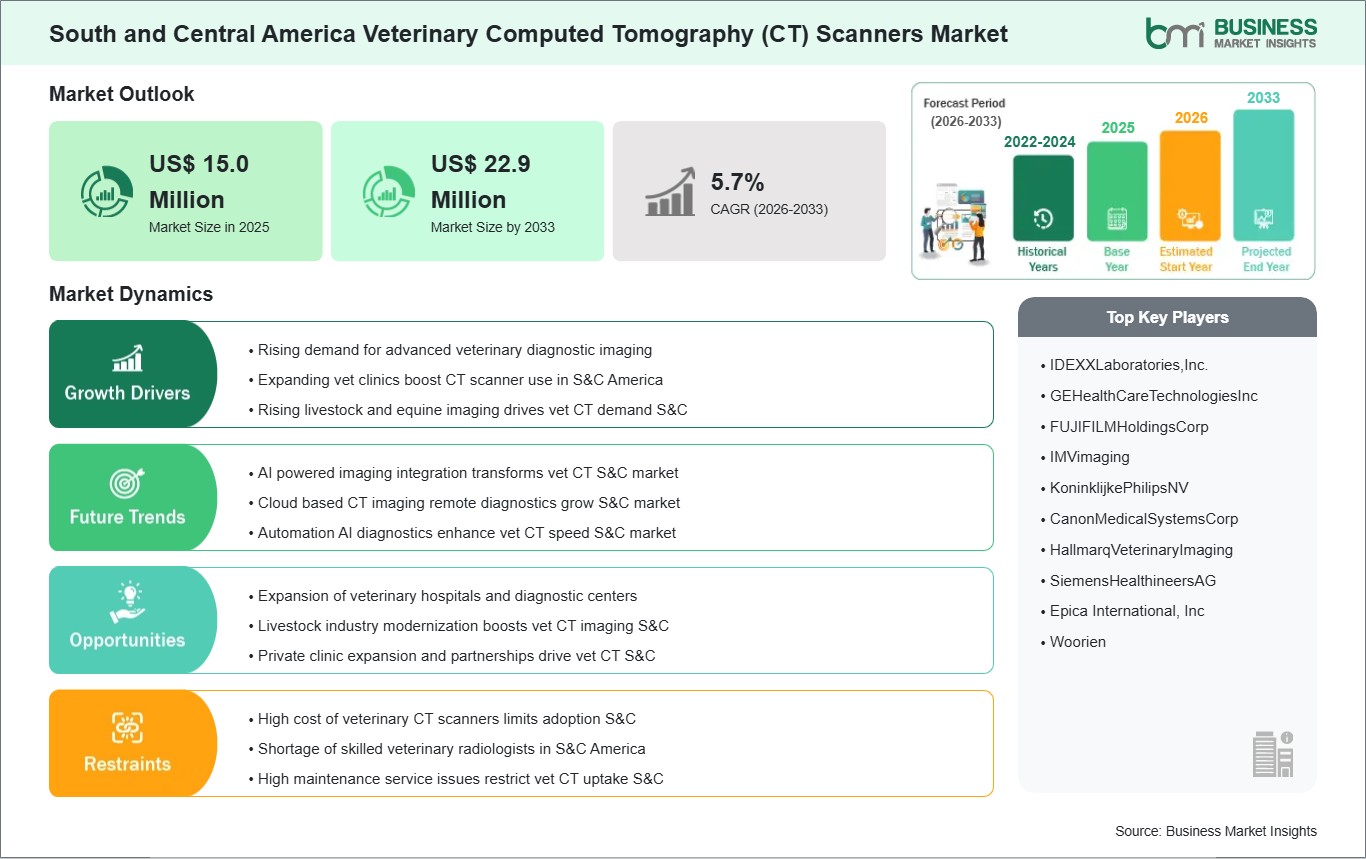
The Veterinary CT Scanners market in South and Central America is experiencing steady growth because people are becoming more aware of new diagnostic tools used in animal healthcare. The region's veterinary practices have started to use computed tomography (CT) scanners because these machines help them create precise medical assessments and treatment strategies for patients with orthopedic, neurological, and oncological medical needs. The need for improved imaging technology is growing because people now focus on companion animal care while livestock management systems undergo modernization. Advanced imaging equipment has become popular among veterinary clinics, specialty hospitals and academic institutions because urbanization, rising disposable incomes and changing pet healthcare attitudes create demand for these technologies. The veterinary market in Brazil, Argentina and Mexico functions as a main market because these countries have built their veterinary infrastructure, and their population owns pets, and their veterinary specialty services continue to expand. The leading clinics and hospitals in these markets are using CT scanners to create unique service offerings that improve their diagnostic accuracy and deliver better results to their patients.
Central American countries that have smaller populations demonstrate interest in veterinary CT technology, while their adoption process moves slowly because they face budget limitations and lack access to trained veterinary radiologists. The market, however, faces certain challenges. Smaller veterinary clinics cannot acquire CT systems because the systems require high acquisition costs and expensive maintenance expenses, and this limits their ability to provide services in remote areas. The lack of trained experts who can operate and interpret CT scans creates a critical problem that affects areas that have few veterinary training facilities. Medical equipment approval and importation regulatory complexities create additional obstacles that delay market entry in various countries.
The current difficulties create opportunities that technological progress brings through the development of portable and multi-slice CT systems that reduce operational expenses while enhancing system performance. Equipment suppliers and veterinary institutions can create partnerships that improve training programs and support systems to achieve wider technology adoption. The veterinary sector in South and Central America will experience continuous strategic growth because of its modernization efforts and adoption of precise diagnostic tools, which create demand for veterinary CT scanners used in companion animal care and livestock management.
Segment Analysis
South and Central America Veterinary Computed Tomography (CT) Scanners Market Segmentation
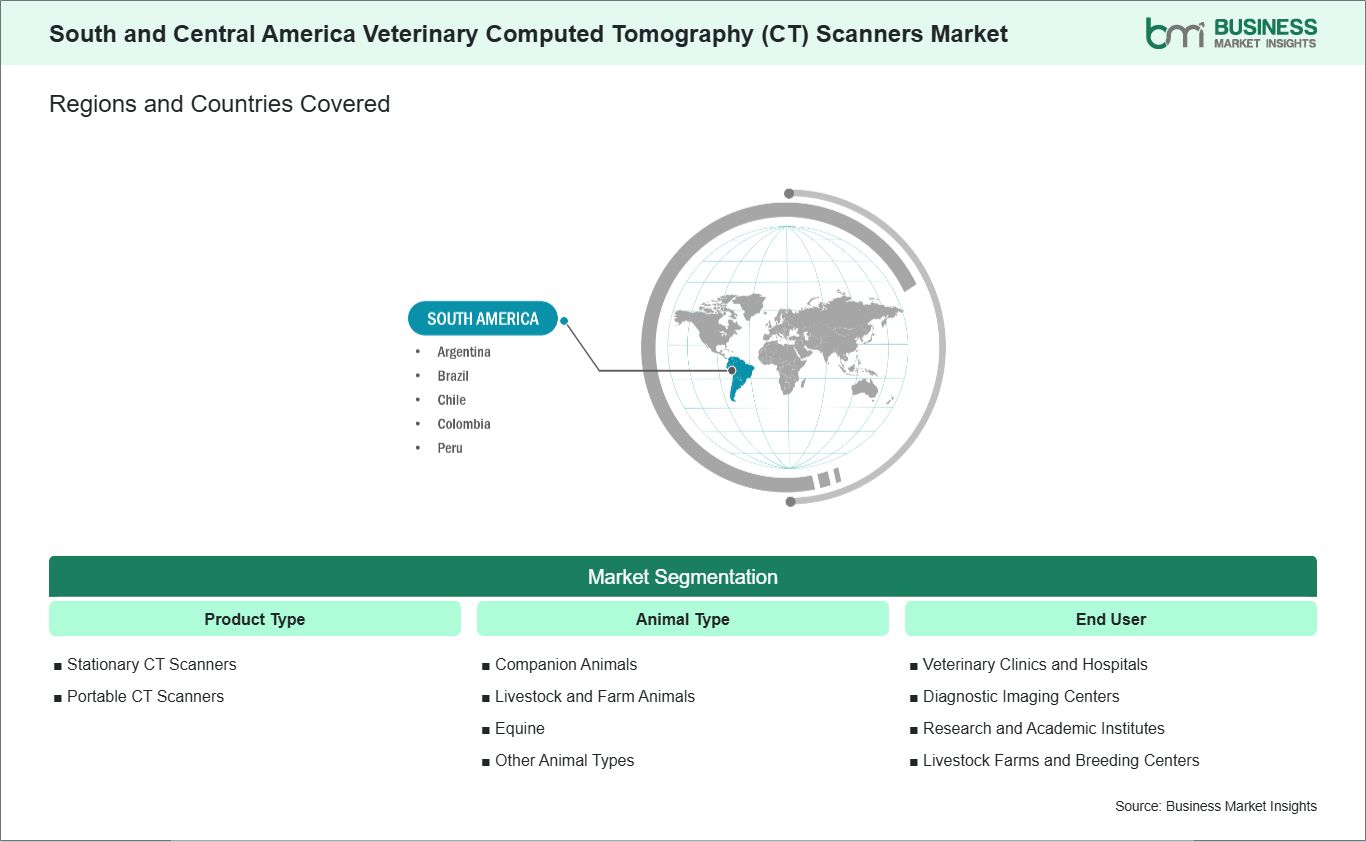
Key segments that contributed to the derivation of the South and Central America veterinary computed tomography (CT) scanners market analysis are product type, animal type, and end user.
- By product type, the veterinary computed tomography (CT) scanners market is segmented into stationary CT scanners, portable CT scanners. The stationary CT scanners segment dominated the market in 2025.
- Based on animal type, the veterinary computed tomography (CT) scanners market is categorized into companion animals, livestock and farm animals, equine, other animal types. The companion animals segment dominated the market in 2025.
- In terms of end user, the veterinary computed tomography (CT) scanners market is categorized into veterinary clinics and hospitals, diagnostic imaging centers, research and academic institutes, livestock farms and breeding centers. The veterinary clinics and hospitals segment dominated the market in 2025.
Market Forces
South and Central America Veterinary Computed Tomography (CT) Scanners Market Drivers and Opportunities
Rising demand for advanced veterinary diagnostic imaging
The growing demand for advanced veterinary diagnostic imaging services in South and Central America stems from increased animal health awareness and the rising economic capacity of Brazilian and Mexican pet owners. The increase in companion animal ownership in Brazil has driven veterinary clinics to adopt advanced diagnostic equipment, which includes CT scanners that enable early disease detection through detailed bone and soft tissue imaging. Advanced imaging technology usage has increased in Argentina and Chile as clinics adopt CT systems to enhance their orthopedic and neurological diagnostic capabilities for both companion and equine animal treatment.
Veterinary specialists in Colombia and Peru report that referring cases for external CT imaging is no longer sufficient, prompting investment in in‑house scanners to reduce turnaround times and improve treatment outcomes. Urban centers demonstrate strong demand for pet healthcare services, which North American and European countries provide to their citizens. The livestock industry in Uruguay is testing CT imaging technology to enhance breeding stock management, which strengthens local market demand. The veterinary CT equipment market across South and Central America experiences growth due to these developing trends, which create demand for high‑resolution systems.
Expansion of veterinary hospitals and diagnostic centers
The growth of veterinary hospitals and diagnostic centers throughout South America and Central America creates significant market expansion opportunities for CT scanner technologies. The major urban centers, which include São Paulo, Buenos Aires and Bogotá, are constructing multi-specialty veterinary hospitals that need advanced imaging technology to deliver complete medical services. The centers aim to decrease international patient referrals while enhancing diagnostic accuracy through their on-site CT facilities, which support trauma assessment, oncology evaluation and surgical preparation.
The pet care infrastructure of private companies expands through the establishment of new diagnostic chains, which focus on providing state-of-the-art technological solutions. The Chilean government supports agricultural innovation through its funding programs, which enhance diagnostic capabilities for valuable livestock due to increased CT scanner usage among clinics. International partnerships are establishing modern diagnostic centers in smaller markets, which include Ecuador and Paraguay, through the installation of advanced imaging systems that help businesses acquire customers. Peruvian veterinary educational institutions are using CT imaging technology in their teaching hospitals to build clinical capacity while allowing future veterinarians to gain experience with advanced scanning equipment. The region experiences substantial infrastructure development, which creates excellent business prospects for CT scanner manufacturers.
Size and Share Analysis
South and Central America Veterinary Computed Tomography (CT) Scanners Market Size and Share Analysis
The South and Central America veterinary computed tomography (CT) scanners market demonstrates steady growth, with size and share analysis highlighting evolving trends and competitive dynamics among key players. The report examines subsegments categorized within product type, animal type, and end user, offering insights into their contribution to overall market performance.
By product type, the stationary CT scanners subsegment dominated the market in 2025, driven by their ability to provide high-precision imaging for complex cases and handle high patient volumes efficiently in veterinary facilities.
Based on animal type, the companion animals subsegment dominated the market in 2025, driven by the growing pet ownership culture and increasing demand for advanced diagnostic care for cats and dogs.
In terms of end user, the veterinary clinics and hospitals subsegment dominated the market in 2025, driven by their higher capacity and preference for investing in cutting-edge imaging equipment to support diverse animal healthcare needs.
Report Coverage
South and Central America Veterinary Computed Tomography (CT) Scanners Market Report Coverage and Deliverables
The "South and Central America Veterinary Computed Tomography (CT) Scanners Market Size and Forecast (2022–2033)" report provides a detailed analysis of the market covering below areas:
- South and Central America Veterinary Computed Tomography (CT) Scanners Market size and forecast at regional, and country levels for all the key market segments covered under the scope
- South and Central America Veterinary Computed Tomography (CT) Scanners Market trends, as well as drivers, restraints, and opportunities
- South and Central America Veterinary Computed Tomography (CT) Scanners Market analysis covering key trends, regional framework, major players, regulations, and recent developments
- Industry landscape and competition analysis covering market concentration, heat map analysis, prominent players, and recent developments for the South and Central America Veterinary Computed Tomography (CT) Scanners Market
- Detailed company profiles, including SWOT analysis
Geographic Insights
South and Central America Veterinary Computed Tomography (CT) Scanners Market Geographic Insights
The geographical scope of the South and Central America Veterinary Computed Tomography (CT) Scanners Market report is divided into Brazil, Argentina, Peru, Chile, and Colombia. Brazil held the largest share in 2025.
Brazil stands as the leading country in the South and Central America veterinary computed tomography (CT) scanners market because its large and increasing companion animal population, together with its advanced veterinary healthcare system and rising demand for precise diagnostic systems, make it the top market. Veterinary practices in major urban centers such as São Paulo and Rio de Janeiro increasingly rely on CT scanners for complex diagnostics, which include orthopedic, neurological and oncological testing, while the livestock sector also shows interest in imaging technologies for herd health monitoring. Argentina serves as the second-largest market in the region because demand exists from both the strong livestock industry and the rising veterinary diagnostic knowledge of urban pet owners who bring their animals to metropolitan veterinary hospitals and specialized clinics. Chile experiences moderate expansion because veterinary CT usage rises according to pet ownership growth and premium veterinary care needs; however, high equipment expenses and insufficient infrastructure continue to hinder its widespread implementation.
The Colombian market is developing through the growth of private veterinary practices, which are beginning to invest in modern diagnostic equipment; metropolitan areas show the highest interest, but the market presence remains lower than both Brazil and Argentina. The veterinary CT technology in Peru exists as an emerging field because its current usage occurs only in Lima and a few other cities, where people begin to understand pet healthcare better, and clinics start to develop their medical equipment, thereby creating a need for sophisticated imaging systems.
The five countries display market expansion because pet ownership increases, and people start to comprehend early disease detection and require advanced diagnostic equipment for companion animals and livestock. The Brazilian market maintains its dominant position through its extensive market size and advanced infrastructure and financial resources that support technological innovation, whereas other nations develop their markets through urban growth, increasing consumer spending and better access to high-quality veterinary care. The regional veterinary CT adoption shows continuous growth because Brazil operates as the main market force, while smaller markets develop through better infrastructure, public knowledge and financial resources.
Industry Activity
Recent Developments
The South and Central America Veterinary Computed Tomography (CT) Scanners Market is evaluated by gathering qualitative and quantitative data post primary and secondary research, which includes important corporate publications, association data, and databases. A few of the key developments in the South and Central America veterinary computed tomography (CT) scanners market are:
- In January 2025, Royal Philips announced at the Asian Oceanian Congress of Radiology (AOCR 2025) that it launched its AI‑enabled CT 5300 system, designed to enhance diagnostic confidence, streamline workflows, and support broad clinical applications with advanced AI tools.
- In November 2024, Canon Medical Systems announced that its Aquilion ONE / INSIGHT Edition CT scanner won the 2024 Best New Radiology Device award at the annual Minnies Awards. This flagship CT system, initially unveiled at RSNA 2023, showcases advanced imaging capabilities that support broader diagnostic applications.
Trust & Transparency
Research Methodology
The market analysis combines proprietary research with secondary data from government agencies, company disclosures, regulatory filings, industry databases and expert interviews. Market estimates are validated through data triangulation, cross-market benchmarking and analyst
review.
View Full Research Methodology
Key Sources Referred:
American College of Veterinary Radiology (ACVR) World Small Animal Veterinary Association (WSAVA) British Veterinary Association (BVA) International Veterinary Radiology Association (IVRA) American Veterinary Medical Association (AVMA) European College of Veterinary Diagnostic Imaging (ECVDI) World Organisation for Animal Health (WOAH / OIE) Veterinary Imaging & Radiation Oncology Society (VIROS)