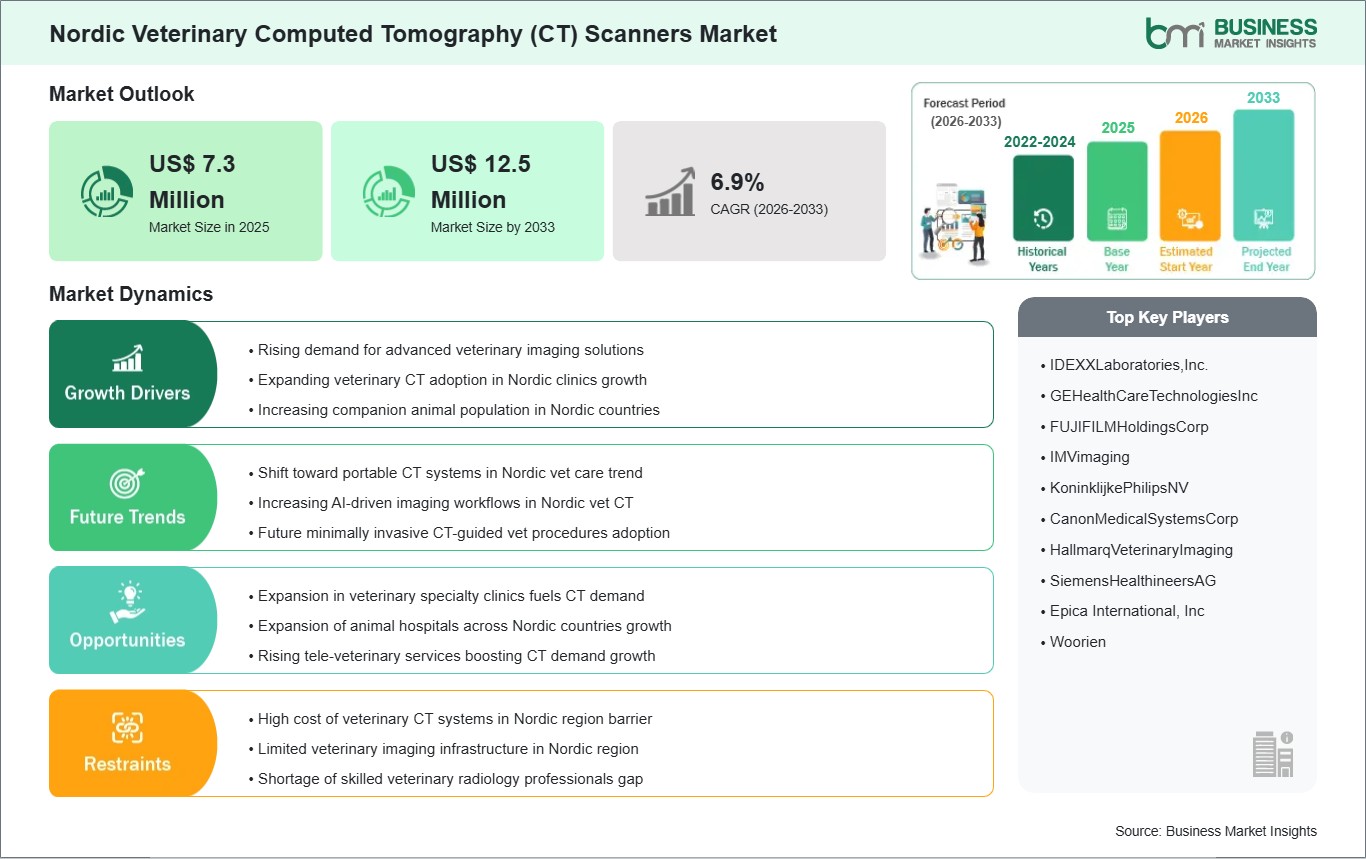
Rising demand for advanced veterinary imaging solutions
The veterinary CT scanner market in the Nordic area has seen a significant increase in demand because of the increasing complexity of veterinary medicine throughout Sweden, Norway, Denmark, and Finland. As more and more veterinary clinics are investing in advanced imaging systems to accurately diagnose complicated diseases, such as orthopedic injuries and neurological problems, veterinarians can use the scanner to improve their diagnoses.
There is a growing trend toward higher demands for accurate and timely medical care from pet owners, as well as a growing number of specialty veterinary practices located in cities, which will increase the overall demand for advanced imaging technology in Norwegian and Swedish veterinary practices. As technology advances, the veterinary CT scanners are of a much higher resolution with shorter scan times and lower radiation exposures, thus making the adoption of these systems more compatible with small animal practices. The newer CT scanners enable veterinarians to perform full diagnostic procedures in their own clinics with fewer referrals to outside imaging centers. Furthermore, the versatility of newer CT scanners allows veterinarians to do diagnostic imaging on different types of animals, including small animals (cats and dogs) and large livestock (horses).
Another contributing factor to the expansion of the veterinary CT scanner market is that pet owners are becoming aware of early detection systems, which has increased the request from pet owners for clinics to implement the use of imaging technology for the purpose of providing a detailed picture of their pet's health. The integration of clinic demand, technological progress, and awareness by pet owners for increased health monitoring for their pets has created an opportunity for the veterinary CT scanner market to experience continued growth in the Nordic region.
Expansion in veterinary specialty clinics fuels CT demand
The growth of specialty veterinary clinics throughout the Nordic countries creates the opportunity for and expands the deployment of CT scanners and increase referral hospitals and specialty practices that have a specific focus on advanced diagnostics. Cities such as Oslo, Stockholm, and Copenhagen are experiencing this growth. As these clinics expand to include high-quality imaging systems at the facility so that they can provide comprehensive care to their clients and provide patients with the ability to have advanced diagnostics performed without having to rely on utilization of referral facilities for complex cases.
In addition to rapid growth in the number of pets being owned, the increase in pet owners' willingness to spend money to keep their pets healthy is driving significant growth in the number of specialty clinics investing in CT scanners to be able to advance diagnostic services and provide patients with advanced diagnostic services associated with cancer, trauma and neurological conditions which reduces the need for specialty clinics to rely on referral facilities for these types of services.
By investing in these technologies, specialty clinics will be able to provide their clients with more timely diagnosis and treatment planning, which will improve animal patient outcomes and place them as a leading provider of high-quality veterinary care.
Moreover, the growth of the veterinary imaging market in the Nordic countries is well supported with a growing number of trained radiologists and veterinary technicians available to operate sophisticated equipment within these specialty clinics, allowing them to invest in complex imaging technologies and have a high level of confidence in the trained staff needed to operate these technologies. As the number of pet owners that are seeking preventative and specialty care for their pets continues, the market for veterinary CT scanners will continue to grow for many years.