Market Summary
Executive Summary and Market Analysis
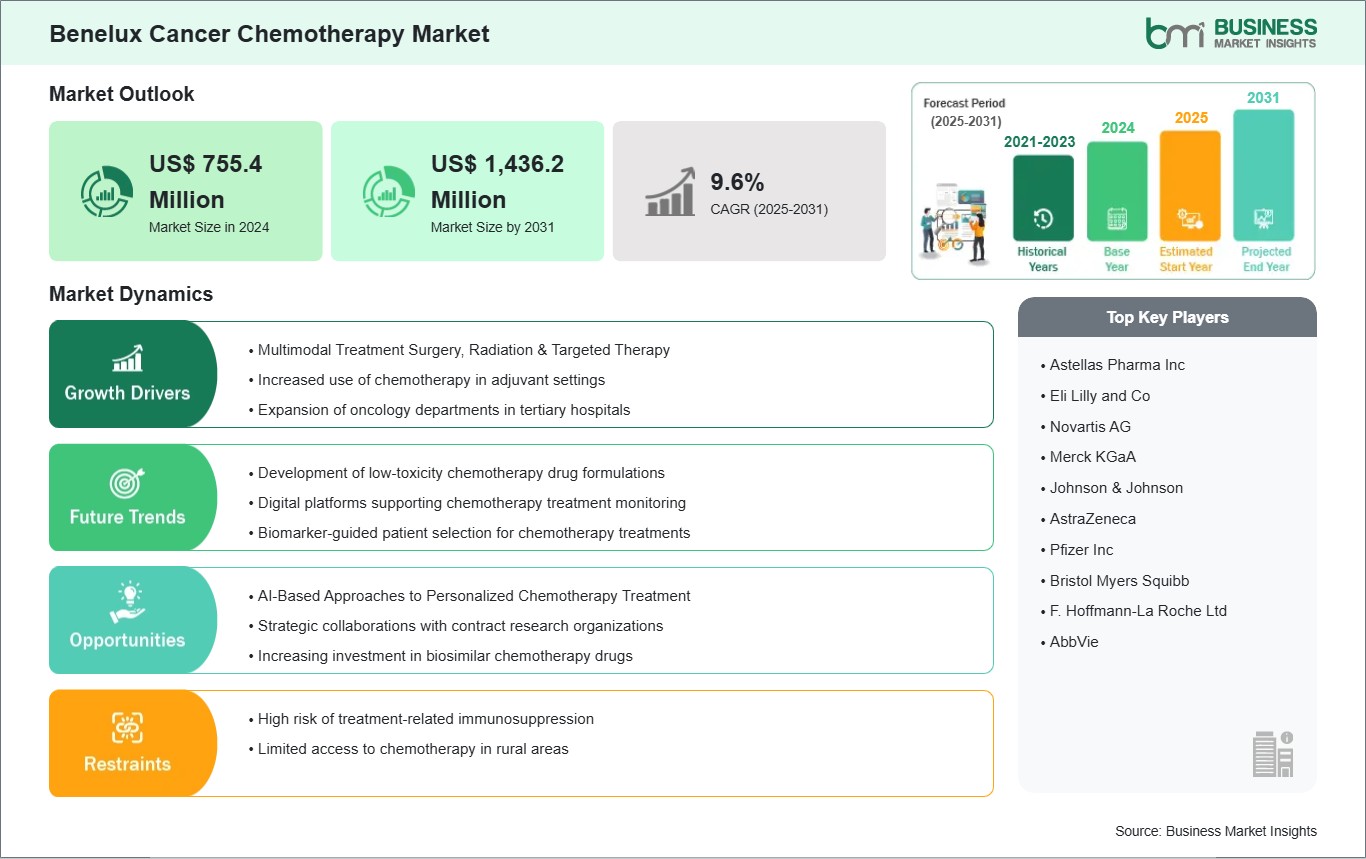
The Benelux cancer chemotherapy market is poised for steady growth through 2033, driven by rising cancer incidence, ongoing investments in healthcare infrastructure, and strong research ecosystems in Belgium and the Netherlands. Chemotherapy continues to dominate the regional cancer therapeutics segment, supported by established clinical guidelines and widespread availability across hospital oncology centers. Lung cancer, breast cancer, and colorectal cancer represent leading indications for chemotherapy usage, reflecting prevalence patterns consistent with broader European trends.
Hospitals remain the primary distribution channel due to their central role in oncology care delivery, including intravenous chemotherapy administration, infusion services, and inpatient monitoring. Retail and online pharmacies have increasing relevance, particularly for oral cytotoxic drugs and ancillary supportive care medications. The region's healthcare systems characterized by high physician density and advanced medical infrastructure facilitate early diagnosis and comprehensive treatment planning that integrates chemotherapy with surgery and radiation when clinically indicated. Belgium holds the largest regional share, supported by its strong biotech research presence and collaborations among academic centers, industry partners, and public research institutions.
Public funding, national cancer control programs, and reimbursement policies ensure broad access to chemotherapy therapies, although cost pressures from advanced treatments and diagnostics remain an ongoing policy discussion. Investments in cancer care and innovation including AI tools for precision oncology and biomarker‑driven protocols position Benelux as a strategic hub for future chemo‑related developments.
Segment Analysis
Benelux Cancer Chemotherapy Market Segmentation
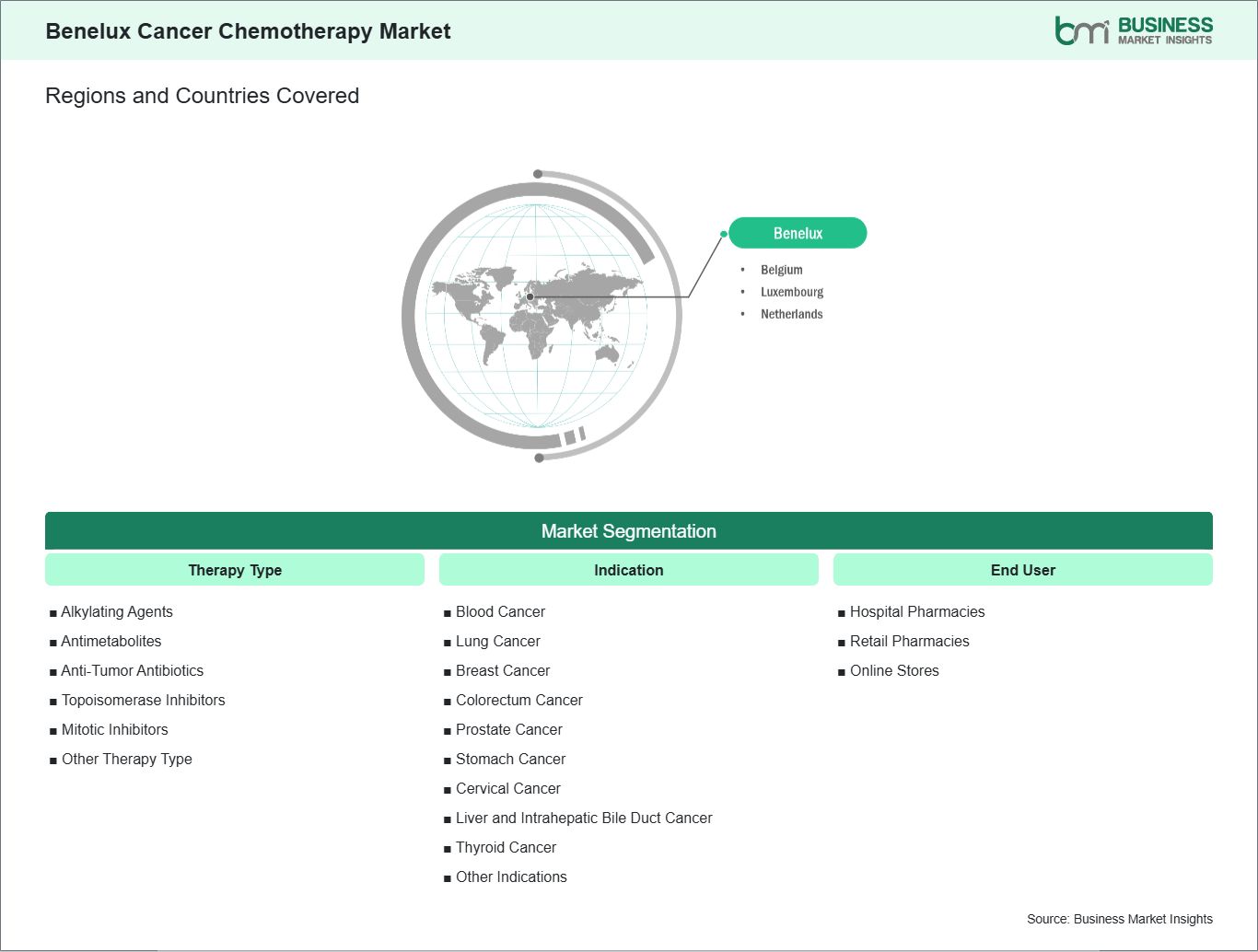
Key segments that contributed to the derivation of the Benelux Cancer Chemotherapy market analysis are therapy type, indication, and distribution channel.
- By therapy type, the cancer chemotherapy market is segmented into alkylating agents, antimetabolites, anti-tumor antibiotics, topoisomerase inhibitors, mitotic inhibitors, and others. The alkylating agents segment dominated the market in 2024.
- Based on indication, the cancer chemotherapy market is segmented into blood cancer, lung cancer, breast cancer, colorectum cancer, prostate cancer, stomach cancer, cervical cancer, liver and intrahepatic bile duct cancer, thyroid cancer, and other indications. The lung cancer segment dominated the market in 2024.
- By distribution channel, the market is segmented into hospital pharmacies, retail pharmacies, and online stores. The hospital pharmacies segment dominated the market in 2024.
Market Forces
Benelux Cancer Chemotherapy Market Drivers and Opportunities
Multimodal Treatment Surgery, Radiation & Targeted Therapy
In the Benelux region, chemotherapy's role continues to be strengthened by its integration with surgery, radiation therapy, and targeted treatments. Clinical practice increasingly emphasizes multimodal care pathways that leverage chemotherapy to shrink tumors before surgical resection, reduce microscopic residual disease post‑surgery, and sensitize tumor cells to radiation, particularly in lung, breast, and gastrointestinal cancers. These combined strategies improve patient outcomes and reinforce chemotherapy as an essential component of comprehensive oncology care.
Targeted therapies and immunotherapies are gaining traction across oncology settings in the Benelux region; however, high costs and strict indication criteria continue to reinforce chemotherapy's clinical relevance. As a result, chemotherapy remains foundational, particularly in adjuvant settings and disease stages where targeted or immune‑based options are not indicated or accessible. The ongoing development of antibody‑drug conjugates (ADCs) and biomarker‑guided chemotherapeutic approaches offers potential growth opportunities by improving treatment specificity, reducing toxicity, and expanding regimen options for historically difficult‑to‑treat cancers.
AI-Based Approaches to Personalized Chemotherapy Treatment
Artificial Intelligence (AI) enables more personalized and effective chemotherapy regimens. Traditional chemotherapy dosing is often based on generalized protocols that may not fully account for individual patient heterogeneity in metabolism, tumor biology, and response patterns. AI platforms can integrate genomic data, imaging, clinical history, and real‑world treatment response data to optimize chemotherapy selection and dosing tailored to individual patients, thereby improving efficacy and reducing adverse effects.
In Belgium and the Netherlands, increasing investments in health IT infrastructure and electronic health records support AI implementation in oncology workflows. Research collaborations between universities, hospitals, and biotech firms are exploring AI‑driven predictive models to enhance treatment planning, toxicity forecasting, and adaptive therapy adjustments. AI also supports drug development by identifying predictive biomarkers and streamlining patient stratification in clinical trials. As digital health adoption grows, AI‑enabled chemotherapy optimization is expected to contribute to improved patient outcomes, better resource utilization, and greater market efficiency.
Size and Share Analysis
Benelux Cancer Chemotherapy Market Size and Share Analysis
The Benelux Cancer Chemotherapy market demonstrates steady growth, with size and share analysis highlighting evolving trends and competitive dynamics among key players. The report further examines subsegments categorized by therapy type, indication, and distribution channel, offering insights into their contribution to overall market performance.
By therapy type, the alkylating agents subsegment dominated the market in 2024, driven by their long‑standing use and inclusion in standard treatment protocols.
Based on indication, the lung cancer subsegment dominated the market in 2024, driven by relatively high prevalence and established care pathways.
By distribution channel, the hospital pharmacies subsegment dominated the market in 2024, driven by centralized oncology services and infusion centers, while retail and online pharmacies support access to oral chemotherapy drugs, supportive care medications, and maintenance regimens.
Report Coverage
Benelux Cancer Chemotherapy Market Report Coverage and Deliverables
The "Benelux Cancer Chemotherapy Market Size and Forecast (2025–2031)" report provides a detailed analysis of the market covering below areas:
- Benelux Cancer Chemotherapy market size and forecast at regional and country levels for all the key market segments covered under the scope
- Benelux Cancer Chemotherapy market trends, as well as market dynamics such as drivers, restraints, and key opportunities
- Benelux Cancer Chemotherapy market analysis covering key market trends, regional framework, major players, regulations, and recent market developments
- Industry landscape and competition analysis covering market concentration, heat map analysis, prominent players, and recent developments for the Benelux Cancer Chemotherapy market
- Detailed company profiles, including SWOT analysis
Geographic Insights
Benelux Cancer Chemotherapy Market Geographic Insights
The geographical scope of the Benelux Cancer Chemotherapy market report is divided into Belgium, the Netherlands, and Luxembourg. The Netherlands held the largest share in 2024.
The Netherlands demonstrates stable growth supported by universal healthcare coverage, high physician density, and a regulatory framework that promotes access to essential chemotherapy drugs. Dutch patients benefit from broad access to biosimilars, reducing treatment costs and expanding affordability. Regional collaborative initiatives such as joint health technology assessments under the Benelux framework facilitate shared evaluations of cancer medicines, including chemotherapeutic agents, enhancing access and clinical consistency across borders. Belgium's market is driven by high healthcare expenditure, strong oncology research ecosystems, and collaborative innovation between academic institutions and biotech firms. Belgian healthcare systems emphasize early diagnosis and multidisciplinary oncology care, with extensive chemotherapy integration across breast, lung, colorectal, and hematologic cancers. The country's robust research environment supports advanced clinical research and the adoption of novel chemo‑based protocols. Luxembourg while smaller in population benefits from a well‑funded healthcare system with strong reimbursement policies and access to advanced oncology therapies. Chemotherapy is incorporated into national cancer care pathways, with a focus on early detection and comprehensive treatment integration. Patient outcomes are influenced by cross‑border healthcare collaborations, with many patients accessing tertiary oncology centers in neighboring countries, enhancing continuity of care and access to specialized chemotherapy regimens.
Industry Activity
Recent Developments
The Benelux Cancer Chemotherapy market is evaluated by gathering qualitative and quantitative data post primary and secondary research, which includes important corporate publications, association data, and databases. A few of the key developments in the Benelux cancer chemotherapy market are:
- In April 2024, UZ Leuven announced successful results for an antibody‑drug conjugate plus chemotherapy regimen for ovarian cancer, highlighting the region's clinical innovation.
- In March 2025, AstraZeneca announced a US$ 1 billion acquisition of Belgian biotech EsoBiotec, a company developing in‑vivo CAR‑T and cancer therapies that could impact future oncology treatment delivery models.
Trust & Transparency
Research Methodology
The market analysis combines proprietary research with secondary data from government agencies, company disclosures, regulatory filings, industry databases and expert interviews. Market estimates are validated through data triangulation, cross-market benchmarking and analyst
review.
View Full Research Methodology
Key Sources Referred:
World Health Organization (WHO) World Heart Federation (WHF) Organisation for Economic Cooperation and Development (OECD) The World Bank Group Worldometer The Lancet International Bar Association International Trade Administration