Market Summary
Executive Summary and Market Analysis
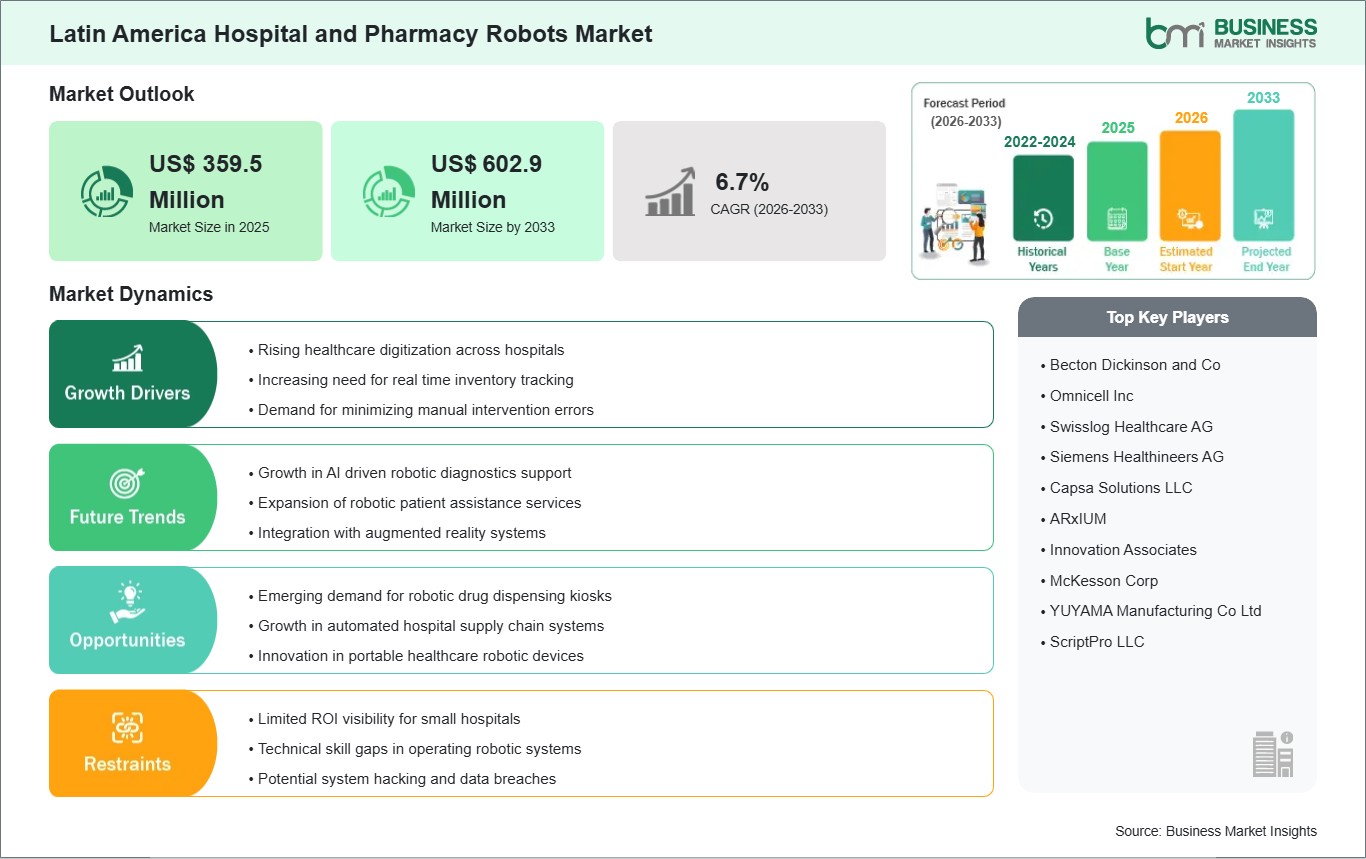
The Latin America hospital and pharmacy robots market is gradually gaining traction as healthcare providers increasingly seek automation to enhance operational efficiency, reduce medication errors, and improve patient safety. Countries such as Brazil, Mexico, Argentina, Chile, and Colombia are investing in robotic systems to automate high-volume pharmacy operations, including dispensing, labeling, compounding, and inventory management. The growing complexity of hospital pharmacy workflows, coupled with rising patient volumes, is driving the adoption of robotic solutions in both public and private healthcare institutions, particularly in urban tertiary hospitals and multi-specialty medical centers. Operational efficiency is a key factor influencing market adoption. Robotic pharmacy systems allow hospitals to standardize workflows, minimize human intervention, and improve the accuracy of medication dispensing. This is especially critical in high-volume settings where manual processes can result in errors or delays, potentially affecting patient care. Additionally, pharmacy robots enable real-time inventory monitoring, predictive stock management, and automated replenishment, helping hospitals maintain uninterrupted access to essential medications while optimizing resource utilization. Technological readiness is gradually improving across Latin America. Hospitals are increasingly integrating robotic systems with digital platforms, such as electronic health records, hospital information systems, and clinical decision-support software. This interoperability enhances prescription validation, improves traceability of medication handling, and supports regulatory compliance initiatives, particularly for controlled substances and high-risk therapies. The market is also shaped by workforce challenges and the need to optimize hospital operations. Pharmacy staff shortages and high patient-to-staff ratios are encouraging administrators to adopt automation, allowing pharmacists to focus on clinical decision-making and patient care rather than repetitive operational tasks. Autonomous mobile robots are emerging as a complementary solution, supporting internal logistics by transporting medications and laboratory samples efficiently across hospital departments. The Latin America hospital and pharmacy robots market is characterized by incremental adoption driven by operational efficiency, technological integration, and the need to optimize workforce productivity. While adoption remains concentrated in large hospitals and urban centers, continued investments in automation and digital infrastructure are positioning Latin America for steady growth in hospital and pharmacy robotics.
Segment Analysis
Latin America Hospital and Pharmacy Robots Market Segmentation
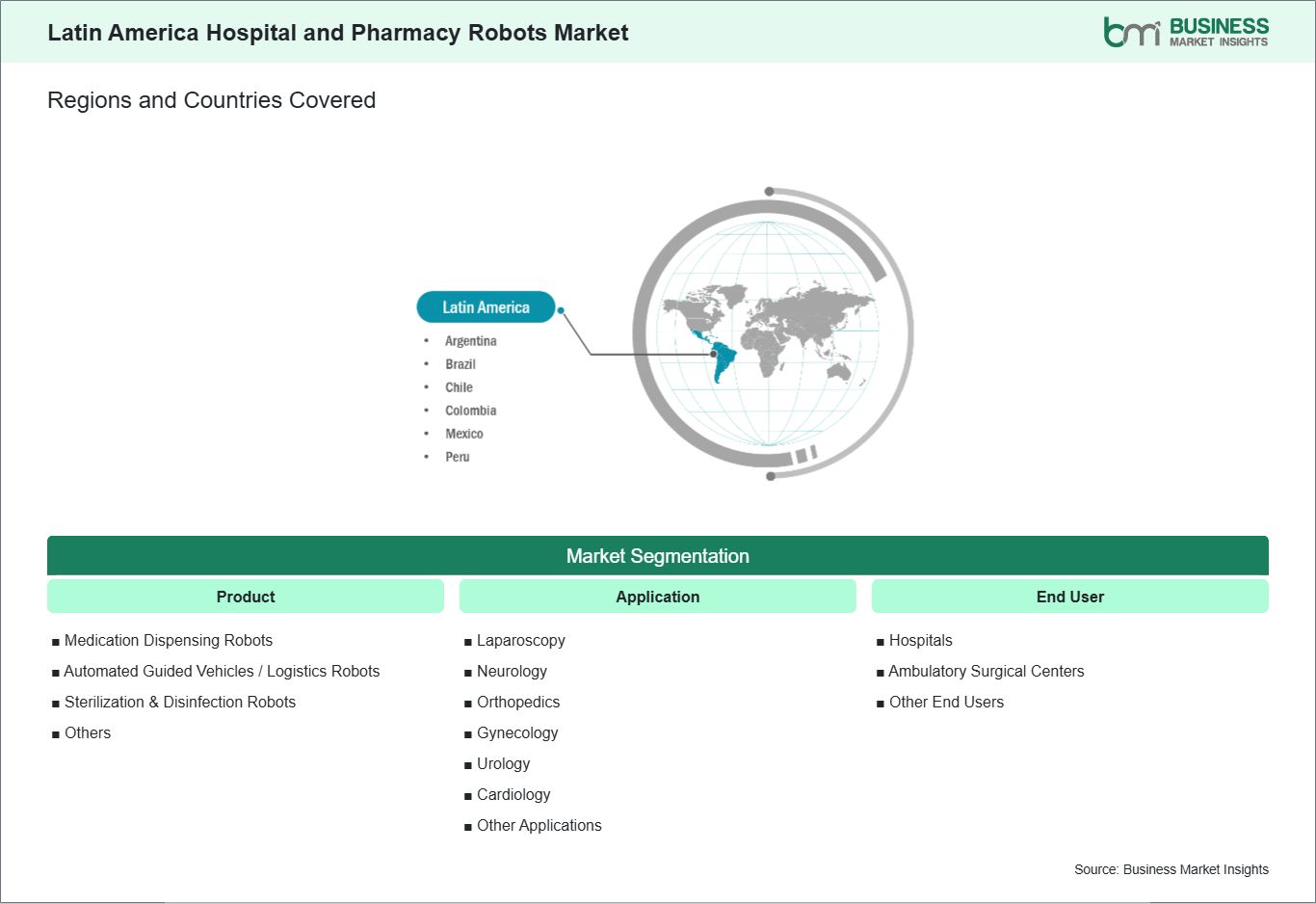
Key segments that contributed to the derivation of the Latin America hospital and pharmacy robots market analysis are product, application, and end user.
- By product, the hospital and pharmacy robots market is segmented into medication dispensing robots, automated guided vehicles (AGVs) / logistics robots, sterilization & disinfection robots and other products. The medication dispensing robots segment dominated the market in 2025.
- In terms of application, the hospital and pharmacy robots market is categorized into laparoscopy, neurology, orthopedics, gynecology, urology, cardiology and other applications. The laparoscopy segment dominated the market in 2025.
- Based on end user, the market is classified into hospitals, ambulatory surgical centers and other end users. The hospitals segment dominated the market in 2025.
Market Forces
Latin America Hospital and Pharmacy Robots Market Drivers and Opportunities
Strict regulations for drug traceability
Healthcare regulators across Latin America are increasingly focused on strengthening drug traceability standards to improve patient safety and reduce incidences of counterfeit or mishandled medications. Countries such as Brazil, Mexico, and Argentina have introduced regulatory frameworks that require pharmaceutical products to be tracked throughout the entire supply chain—from manufacturer to patient administration. These traceability mandates aim to ensure transparency and accountability at every step of the medication lifecycle, making it easier to identify and respond to discrepancies. As a result, hospitals and pharmacies in the region are under growing pressure to adopt systems and technologies that support detailed tracking and reporting of medications. In Brazil, regulatory bodies have emphasized serialization and digital tracking requirements that compel pharmacies and medical facilities to record unique identifiers for each drug unit dispensed. This shift toward more stringent tracking protocols has highlighted the limitations of traditional manual recordkeeping and barcode scanning methods, which can be prone to human error and lag in data capture. Hospital pharmacy directors across major urban centers are therefore exploring automation solutions that can support compliance with evolving regulations while streamlining operational workflows. With traceability now a compliance priority, robotic systems that can reliably capture and communicate medication movement data are gaining attention as technology partners for meeting regulatory obligations. Across Mexico and Argentina, similar traceability expectations are influencing how healthcare providers approach medication management. Hospitals are beginning to evaluate how automation and pharmacy robotics can help maintain audit‑ready records that align with government reporting requirements. In high‑volume clinical settings where thousands of prescriptions are managed daily, manual documentation of traceability data is both time‑intensive and vulnerable to inconsistencies. As regulatory scrutiny increases and drug safety initiatives become more prominent, healthcare organizations in Latin America are recognizing that robust traceability is essential not only for compliance, but also for operational integrity and patient trust. This growing regulatory emphasis is motivating investments in systems that provide consistent, verifiable records of medication handling from storage to administration.
Robots with real-time medication tracking
In response to stricter traceability regulations, hospitals and pharmacies in Latin America are beginning to adopt robotic systems that support real‑time medication tracking and data capture. These advanced systems integrate robotic handling with digital monitoring technologies to automatically record every movement of a medication unit as it passes through storage, retrieval, and dispensing stages. By embedding sensors, barcode readers, and software connectivity into robotic workflows, healthcare providers can create a continuous data trail that supports regulatory compliance and enhances operational visibility. This level of real‑time tracking is particularly valuable in high‑volume settings such as tertiary care hospitals and regional pharmacy hubs. Robotic medication storage and retrieval systems can automatically log key details such as drug identifiers, batch numbers, expiration dates, and dispensing timestamps. When connected to hospital pharmacy management platforms, these robots update electronic records instantly as medication transactions occur. This eliminates the need for manual data entry and reduces the risk of transcription errors that can compromise traceability. In large hospital systems in Brazil’s southeastern region and Mexico’s urban healthcare centers, robotic tracking solutions are being tested as part of broader pharmacy modernization initiatives aimed at improving accuracy, efficiency, and regulatory compliance in medication supply chains. Real‑time tracking also enables pharmacy managers to monitor inventory levels more effectively, helping prevent stockouts and ensuring that critical medications are available when needed. Beyond compliance and inventory control, robots with real‑time medication tracking support patient safety and quality assurance by providing detailed logs that can be used for performance analysis and continuous improvement. In Argentina and Chile, hospitals are exploring how automated tracking data can be used to streamline internal audits, identify workflow bottlenecks, and optimize staffing resources. Real‑time data from robotic systems can also enhance clinical coordination by ensuring that prescribers and pharmacy teams share a common view of medication availability and movement. As healthcare providers in Latin America work to elevate both regulatory compliance and operational excellence, the adoption of robots capable of real‑time medication tracking is emerging as a strategic investment that aligns with regional priorities for safety, accuracy, and traceable pharmaceutical care.
Size and Share Analysis
Latin America Hospital and Pharmacy Robots Market Size and Share Analysis
The Latin America hospital and pharmacy robots market demonstrates steady growth, with size and share analysis highlighting evolving trends and competitive dynamics among key players. The report examines subsegments categorized within product, application, and end user, offering insights into their contribution to overall market performance.
By product, the medication dispensing robots subsegment dominated the market in 2025, driven by the growing need to streamline pharmacy operations and minimize errors in medication dispensing.
In terms of application, the laparoscopy subsegment dominated the market in 2025, driven by the increasing demand for robotic-assisted minimally invasive surgeries that offer higher precision and faster patient recovery.
Based on end user, the hospitals subsegment dominated the market in 2025, driven by the expanding healthcare infrastructure and the need to adopt robotic systems for efficient clinical and operational workflows.
Report Coverage
Latin America Hospital and Pharmacy Robots Market Report Coverage and Deliverables
The "Latin America Hospital and Pharmacy Robots Market Size and Forecast (2022–2033)" report provides a detailed analysis of the market covering below areas:
- Latin America Hospital and Pharmacy Robots Market size and forecast at regional and country levels for all segments covered under the scope
- Latin America Hospital and Pharmacy Robots Market trends, as well as drivers, restraints, and opportunities
- Latin America Hospital and Pharmacy Robots Market analysis covering key trends, regional framework, major players, regulations, and recent developments
- Industry landscape and competition analysis covering market concentration, heat map analysis, prominent players, and recent developments for the Latin America Hospital and Pharmacy Robots Market
- Detailed company profiles, including SWOT analysis
Geographic Insights
Latin America Hospital and Pharmacy Robots Market Geographic Insights
The geographical scope of the Latin America Hospital and Pharmacy Robots Market report is divided into Mexico, Brazil, Argentina, Peru, Chile, and Colombia. Mexico held the largest share in 2025.
Country-level dynamics in the Latin America hospital and pharmacy robots market reveal varied adoption patterns shaped by healthcare infrastructure, technological readiness, and investment priorities. Mexico emerges as the dominant market in the region, driven by large urban hospitals, multi-specialty medical centers, and a growing private healthcare sector that increasingly prioritizes automation. Hospitals in Mexico are deploying robotic pharmacy systems for automated dispensing, compounding, labeling, and inventory management. Integration with hospital management systems and electronic health records enhances operational efficiency, ensures accurate prescription validation, and supports regulatory compliance. Additionally, autonomous mobile robots are being implemented for internal logistics, enabling timely delivery of medications, laboratory samples, and medical supplies across hospital departments, further solidifying Mexico’s leadership position in the region. Brazil represents a strong market with significant robotics adoption in both public and private hospitals. Hospitals focus on automated dispensing, inventory optimization, and compounding for high-risk therapies. The country’s large tertiary hospitals benefit from robotics to reduce manual labor, improve workflow efficiency, and enhance patient safety, particularly in high-volume pharmacy environments. Argentina and Chile are emerging markets where hospital robotics adoption is primarily concentrated in urban centers and academic medical facilities. Hospitals in these countries are piloting automated dispensing systems and compounding solutions to standardize workflows, reduce medication errors, and optimize operational efficiency. The focus is on improving process accuracy and supporting staff productivity while gradually expanding adoption to additional facilities. Colombia and Peru are in early stages of robotics adoption, with select tertiary hospitals and specialty clinics exploring automated dispensing and inventory management systems. These countries are also piloting autonomous mobile robots for internal logistics to enhance medication delivery efficiency and reduce staff workload. While adoption remains limited, healthcare modernization initiatives and private hospital investments are expected to drive gradual expansion. Across the region, hospitals are increasingly leveraging robotics to address workforce constraints, improve patient safety, and optimize operational workflows. Mexico leads in scale and technological integration, followed by Brazil with strong adoption in major hospitals, while Argentina, Chile, Colombia, and Peru represent emerging markets with pilot programs and selective deployment. The Latin America hospital and pharmacy robots market is characterized by a multi-tiered adoption landscape, with Mexico dominating due to infrastructure readiness and digital integration, and other countries gradually embracing robotics to improve pharmacy operations and patient care outcomes.
Industry Activity
Recent Developments
The Latin America Hospital and Pharmacy Robots Market is evaluated by gathering qualitative and quantitative data post primary and secondary research, which includes important corporate publications, association data, and databases. A few of the key developments in the Latin America hospital and pharmacy robots market are:
- In December 2024, the Toumai Laparoscopic Surgical Robot from MicroPort MedBot received ANVISA market approval in Brazil, officially clearing the system for commercial use for robot‑assisted laparoscopic surgeries in the Latin American market. This marked the entry of a cutting‑edge robotic platform capable of enhanced soft‑tissue surgical support into regional healthcare systems. The approval ceremony in Sao Paulo gathered international surgical leaders and signalled robust future adoption. This regulatory milestone helps pave the way for broader clinical use across Brazilian hospitals.
- In January 2025, the SkyWalker Orthopedic Surgical Robot from MicroPort MedBot completed its first total knee arthroplasty (TKA) procedure in Sao Paulo, Brazil, representing a key commercial breakthrough for orthopaedic robotic surgery in South America. The SkyWalker robot’s clinical success illustrated foreign robotics manufacturers expanding product deployments in the region’s surgical robotics ecosystem. This launch supports broader market penetration of advanced surgical robotics for ortho procedures.
Trust & Transparency
Research Methodology
The market analysis combines proprietary research with secondary data from government agencies, company disclosures, regulatory filings, industry databases and expert interviews. Market estimates are validated through data triangulation, cross-market benchmarking and analyst
review.
View Full Research Methodology
Key Sources Referred:
World Health Organization (WHO)Organisation for Economic Cooperation and Development (OECD)The World Bank GroupWorldometerThe LancetInternational Bar AssociationInternational Trade Administration