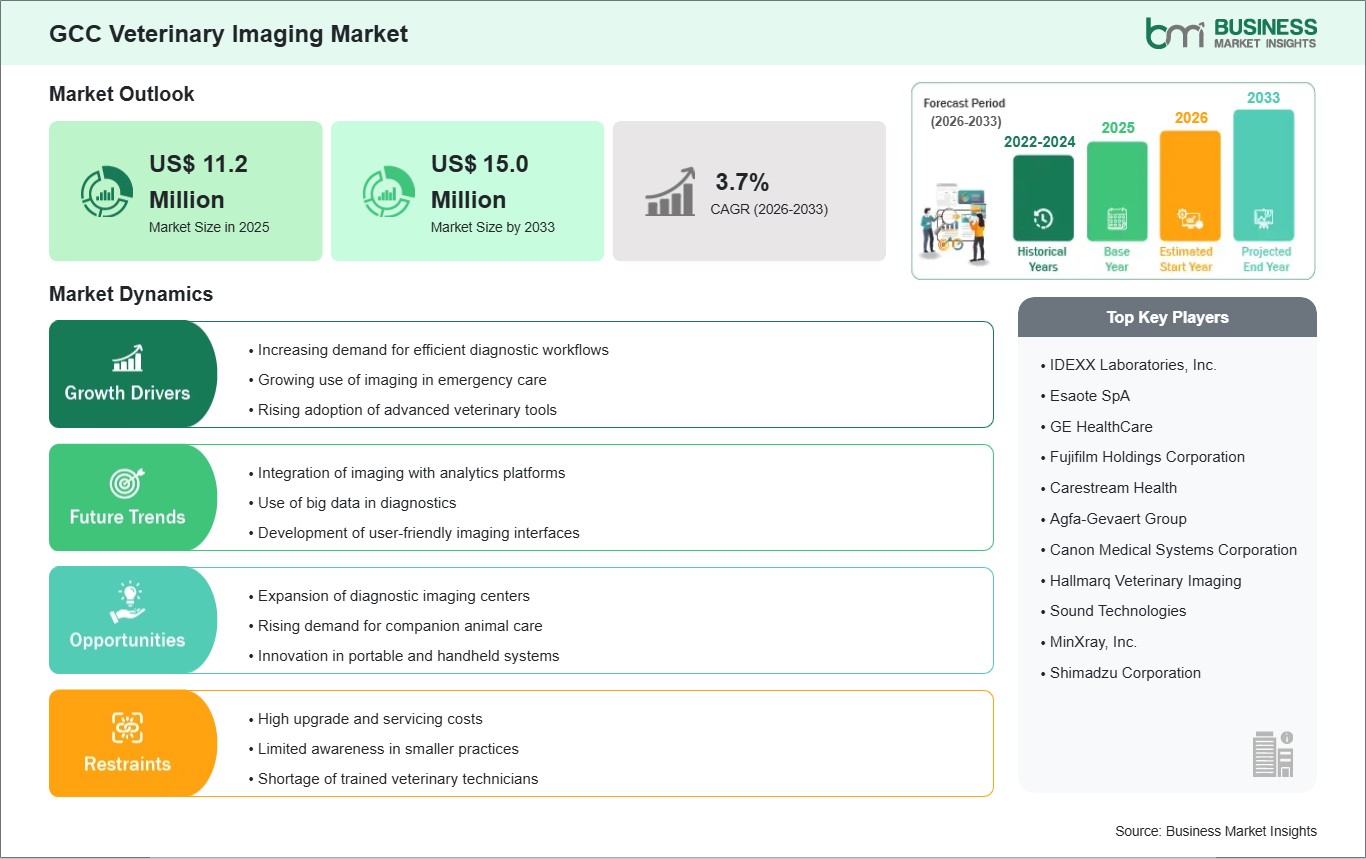
The GCC veterinary imaging market size is expected to reach US$15.0 million by 2033 from US$11.2 million in 2025. The market is estimated to record a CAGR of 3.7% from 2026 to 2033.
The GCC veterinary imaging market, covering countries including Saudi Arabia, the United Arab Emirates, Kuwait, Qatar, Bahrain, and Oman, is witnessing rapid growth driven by rising pet ownership, modernization of veterinary care, and expanding livestock and equine industries. The region is shifting from conventional diagnostic practices to imaging-led veterinary care, incorporating digital radiography, high-resolution ultrasound, and computed tomography (CT) systems. Urban veterinary clinics in major cities are increasingly adopting advanced imaging technologies for companion animals, while livestock farms, equine centers, and camel husbandry operations rely on portable and durable systems to monitor herd health, disease prevention, and productivity enhancement. Technological innovation is a key market driver in the GCC. Vendors are introducing compact, energy-efficient imaging systems with AI-assisted diagnostic tools, cloud-based storage, and telemedicine capabilities, allowing remote consultations and real-time monitoring. Given the region’s high disposable income and growing demand for premium veterinary care, there is an increasing preference for advanced diagnostic modalities such as CT and ultrasound for both small and large animals. Market growth is further supported by training programs, collaborations between equipment suppliers and veterinary associations, and after-sales service frameworks that ensure operational reliability and maximize system utilization. Regulatory frameworks across the GCC are evolving, with standardization efforts improving quality, safety, and compliance for veterinary imaging devices. Government initiatives focusing on animal health, livestock disease control, and preventive care are also stimulating market demand. Investments in veterinary infrastructure, particularly in urban and commercial livestock centers, are further accelerating the adoption of modern imaging technologies. The GCC veterinary imaging market reflects a high-growth, technology-driven environment where innovation, preventive care, and professional expertise converge. The region exhibits a dual market dynamic: high-end urban adoption for companion animals and portable, practical solutions for livestock and equine operations. With increasing awareness of animal welfare, preventive diagnostics, and technological integration, the GCC is poised to emerge as a key market for veterinary imaging solutions in the Middle East.

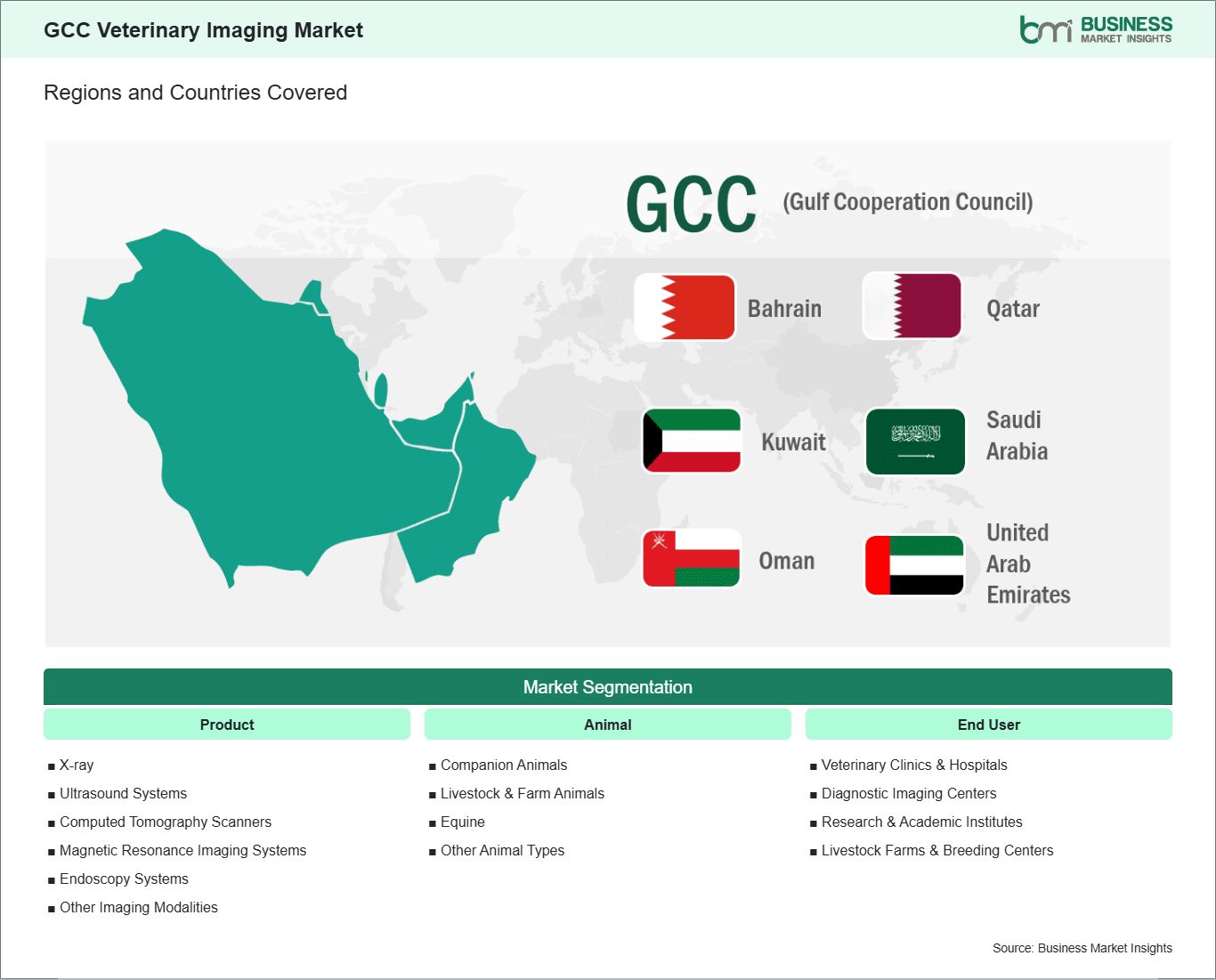
Key segments that contributed to the derivation of the GCC veterinary imaging market analysis are product type, animal type, and end user.
The GCC veterinary imaging business is being driven by the increasing concern for companion animal care. Pet owners are putting an increasing amount of importance on early diagnosis, preventive care, and comprehensive treatment of their pets. In response, veterinarians are incorporating advanced technologies like X-rays, ultrasounds, and computed tomography (CT) into their practices to allow them to make more precise assessments and develop effective treatment strategies. Imaging technologies are now widely considered as important tools for monitoring animal health, controlling chronic illness, and making treatment decisions.
With the growing interest in the wellbeing of animals, veterinary clinics in the GCC are investing in new equipment, training their personnel, and developing better infrastructure to satisfy clients' expectations for high-quality veterinary care. By using imaging services, veterinarians are able to provide early detection of health problems, develop accurate treatment plans, and monitor animals' recovery from their illnesses more effectively. This proactive approach increases the level of satisfaction that clients have for their veterinarians and strengthens the level of trust that clients have for their veterinarians, making imaging diagnostics an integral part of the routine delivery of veterinary care in the GCC.
The increase in the number of chronic and complex health problems being treated in companion animals will continue to drive increased demand for veterinary imaging services. Veterinary practices that incorporate advanced diagnosis as a standard part of their overall practice will have a better opportunity to deliver high-quality care to their patients while improving the efficiency of their operations. The emphasis placed on the care and wellbeing of companion animals throughout the GCC will further contribute to the continued growth of the GCC veterinary imaging market and continue to establish imaging technology as critical components of today's veterinary profession.
Advanced imaging technologies are changing how veterinarians approach care in the GCC. As a result of this trend, more and more veterinary clinics are now using advanced diagnostic equipment such as digital radiography (X-ray), ultrasound, and CT scanning to provide more precise diagnoses, decrease the use of invasive testing methods, and improve their ability to deliver the best possible outcome for their patients.
The use of advanced imaging technologies allows veterinarians to detect complex health issues earlier than they otherwise would have been able to do so and then manage their patients (both companion animals as well as exotic animals) more effectively.
In addition to these benefits, portable, flexible imaging systems make it possible for veterinarians to perform diagnostic tests at their clinics, in the field, or at specialized care centers. These features improve the efficiency of veterinary practice and extend the reach of veterinary services, enabling veterinarians to respond quickly to a wider range of healthcare needs. The trend toward using advanced imaging technologies is part of a larger modernization effort in the veterinary practices in the GCC, with technology playing a pivotal role in the everyday practice of veterinary medicine.
In addition to traditional imaging, there are many new digital innovations (such as digital image analysis software, artificial intelligence-assisted interpretation of diagnostic images, and teleconsultation platforms) that are helping to enhance the capabilities of veterinarians to diagnose diseases and provide better care for their patients. When veterinary practices incorporate advanced imaging into their practice along with other digital tools they will improve the quality of care they provide, the overall operational efficiency of their veterinary practice, and, as a result, the level of satisfaction of their clients. The continued adoption of these advanced imaging technologies will ultimately set the stage for sustained future growth in the GCC Veterinary Imaging Market and provide animal healthcare with a modern, technology-based approach.

The GCC veterinary imaging market demonstrates steady growth, with size and share analysis highlighting evolving trends and competitive dynamics among key players. The report examines subsegments categorized within product type, animal type, and end user, offering insights into their contribution to overall market performance.
By product type, the x-ray segment dominated the market in 2025, driven by its affordability, widespread clinical use, rapid diagnostic capabilities, and strong adoption in routine veterinary care across clinics and field settings.
Based on animal type, the companion animals segment dominated the market in 2025, driven by increasing pet ownership and higher expenditure on preventive and advanced animal healthcare, especially diagnostics for dogs and cats.
On the Basis of end user, the veterinary clinics & hospitals segment dominated the market in 2025, driven by the proliferation of veterinary care facilities equipped with advanced imaging systems to meet rising demand for comprehensive diagnostics and treatment services.
| Report Attribute | Details |
|---|---|
| Market size in 2025 | US$ 11.2 Million |
| Market Size by 2033 | US$ 15.0 Million |
| CAGR (2026 - 2033) | 3.7% |
| Historical Data | 2022-2024 |
| Forecast period | 2026-2033 |
| Segments Covered | By Product
|
|
Regions and Countries Covered
| |
| GCC | UAE, Bahrain, Saudi Arabia, Oman, Qatar, Kuwait |
| Market leaders and key company profiles |
|
The "GCC Veterinary Imaging Market Size and Forecast (2022–2033)" report provides a detailed analysis of the market covering below areas:
The geographical scope of the GCC Veterinary Imaging Market report is divided into UAE, Bahrain, Saudi Arabia, Oman, Qatar, Kuwait. Saudi Arabia held the largest share in 2025.
GCC countries demonstrate varied patterns of uptake for veterinary imaging solutions. The largest market for veterinary imaging is in Saudi Arabia, which is an accumulation of massive livestock production, equestrian enterprises, and expanding municipalities with regard to veterinary care provision. Veterinary imaging modalities like digital radiography, advanced ultrasound, and computed tomography (CT) provide critical data used to monitor herd health, practice proactive preventative medicine and assist with surgical diagnostic procedures. In addition to the investment by private veterinary practices into the acquisition of modern imaging technologies for pets/animals and by local governments promoting livestock production productivity, animal disease management, and animal welfare through publicly funded initiatives to continue to enhance Saudi Arabia’s current position within the GCC. The United Arab Emirates (UAE) is experiencing rapid growth & development in pet ownership coupled with a large equestrian market. Intelligent veterinary practices in Dubai and Abu Dhabi employ state-of-the-art imaging solutions coupled with telehealth/telemedicine technology that is utilized to facilitate remote consultation and enhance the efficacy of diagnostic procedures. Kuwait and Qatar are comparatively small but continue to demonstrate steady growth & expansion due to an increase in urban companion animal veterinary care and use of portable imaging technologies used for commercial livestock production activity. Private & public investments in infrastructure development, veterinary professionals’ training, and the overall veterinary profession support continued uptake of veterinary imaging technologies. With regards to Oman and Bahrain, both are considered to be developing markets where the focus on veterinary imaging is mostly related to livestock and equestrian activities; however, both countries do utilize portable and durable veterinary imaging technology to generally assist their use of such imaging systems in order to minimize costs of doing business.

The GCC Veterinary Imaging Market is evaluated by gathering qualitative and quantitative data post primary and secondary research, which includes important corporate publications, association data, and databases. A few of the key developments in the GCC veterinary imaging market are:
The GCC Veterinary Imaging Market is valued at US$ 11.2 Million in 2025, it is projected to reach US$ 15.0 Million by 2033.
As per our report GCC Veterinary Imaging Market, the market size is valued at US$ 11.2 Million in 2025, projecting it to reach US$ 15.0 Million by 2033. This translates to a CAGR of approximately 3.7% during the forecast period.
The GCC Veterinary Imaging Market report typically cover these key segments-
The historic period, base year, and forecast period can vary slightly depending on the specific market research report. However, for the GCC Veterinary Imaging Market report:
The GCC Veterinary Imaging Market is populated by several key players, each contributing to its growth and innovation. Some of the major players include:
The GCC Veterinary Imaging Market report is valuable for diverse stakeholders, including:
Essentially, anyone involved in or considering involvement in the GCC Veterinary Imaging Market value chain can benefit from the information contained in a comprehensive market report.
Please tell us your area of interest
(Market Segments/ Regions and Countries/ Companies)