Market Summary
Executive Summary and Market Analysis
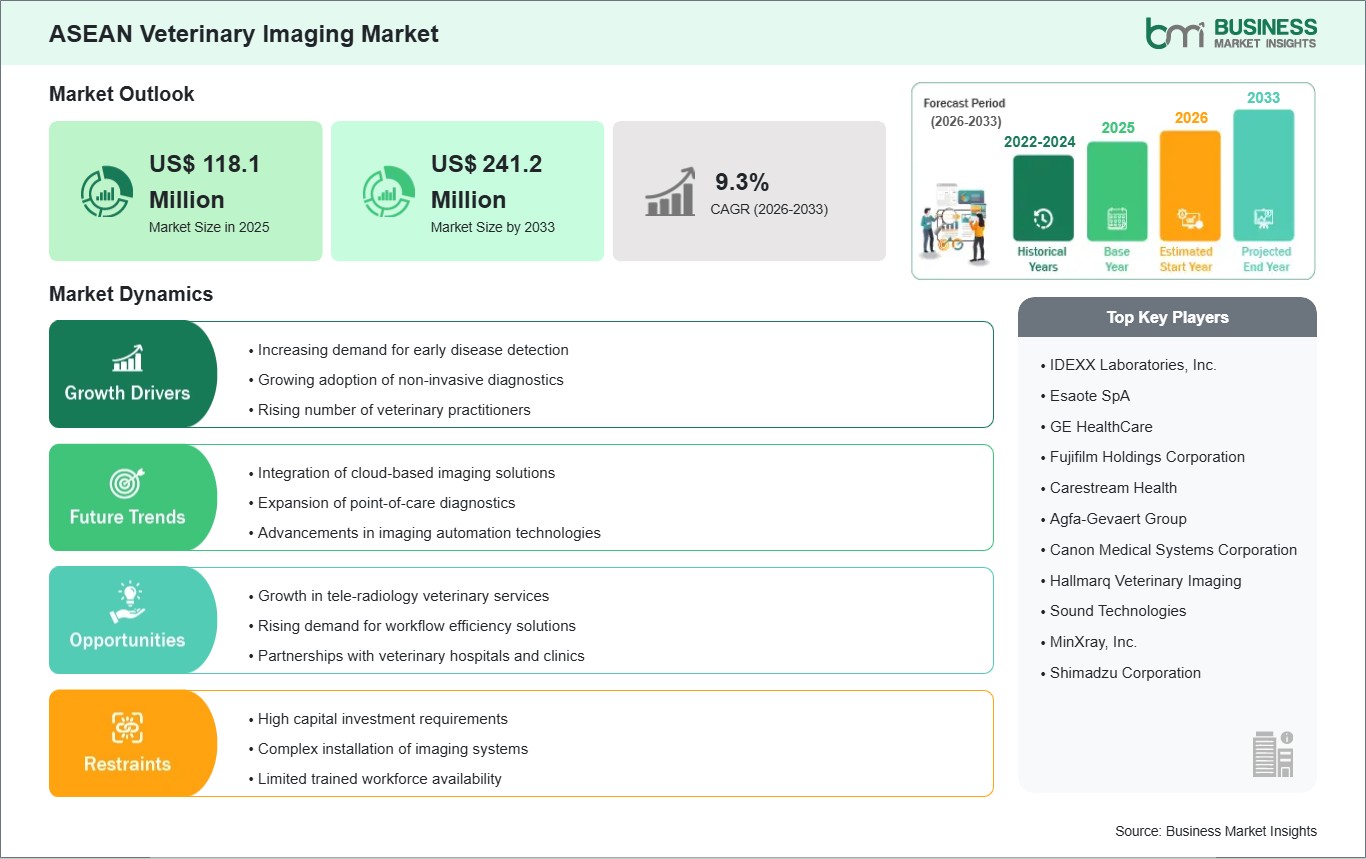
The ASEAN veterinary imaging market is experiencing steady advancement driven by the rising commercialization of animal healthcare services and the gradual integration of advanced diagnostic technologies into veterinary practices. There is an emerging trend of moving away from traditional diagnostic techniques to imaging-based decision making, especially within urban and semi-urban centers dealing with veterinary care. Diversification of services within the sector from companion animal hospitals to livestock health management facilities has triggered a diversified demand for diagnostic imaging technologies such as digital radiography, ultrasound, and mobile imaging. Product differentiation in the market is now characterized by the development of smaller products and software-based solutions coupled with imaging accuracy to meet the diverse needs of different regions in ASEAN. Another trend affecting the growth of the market includes increased investments in education centers within veterinary services where more veterinarians become aware of the existence of various diagnostic imaging tools. Equipment vendors have been able to build better distribution channels, thanks to strategic partnerships with other organizations in the sector; however, after-sales services remain key in this fragmented market environment. Preventive healthcare has also created a need for the use of diagnostic imaging services at an early stage and in a regular manner. From a competitive perspective, regional distributors hold a crucial position in the market, with customized global technologies. Digital transformation trends, including telemedicine and cloud-based image storage, are gradually gaining traction, enabling remote consultations and second-opinion diagnostics. However, operational challenges such as inconsistent regulatory frameworks and varying levels of veterinary infrastructure maturity continue to shape the market dynamics. Overall, the ASEAN veterinary imaging market reflects a transition phase characterized by technological adoption, service diversification, and evolving stakeholder expectations.
Segment Analysis
ASEAN Veterinary Imaging Market Segmentation
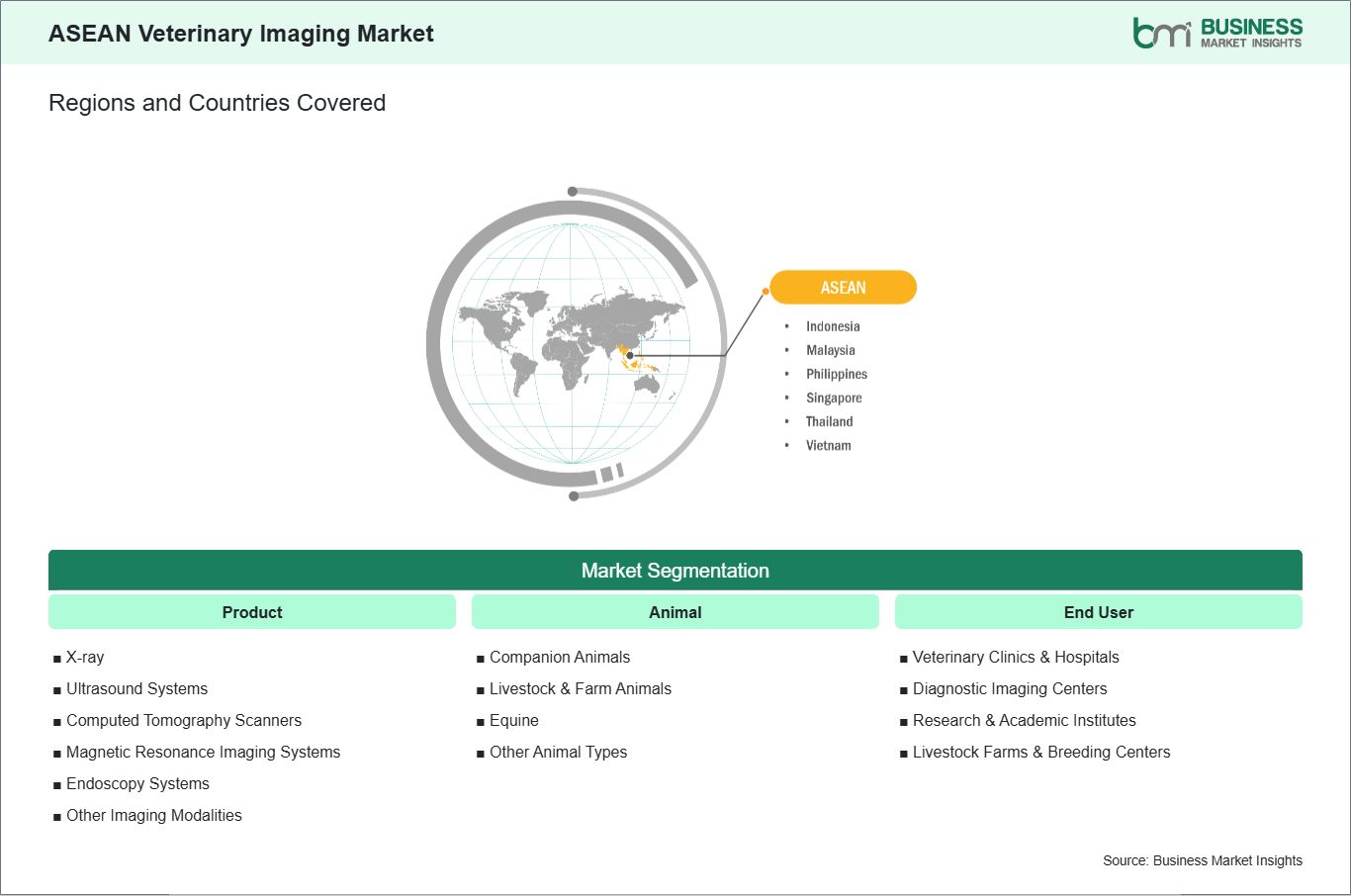
Key segments that contributed to the derivation of the ASEAN veterinary imaging market analysis are product type, animal type, and end user.
- By product type, the veterinary imaging market is segmented into X-ray, ultrasound systems, computed tomography (CT) scanners, magnetic resonance imaging (MRI) systems, endoscopy systems, other imaging modalities. The X-ray segment dominated the market in 2025.
- Based on animal type, the veterinary imaging market is categorized into companion animals, livestock & farm animals, equine, and other animal types. The companion animals segment dominated the market in 2025.
- On the Basis of end user, the veterinary imaging market is classified into veterinary clinics & hospitals, diagnostic imaging centers, research & academic institutes, and livestock farms & breeding centers. The veterinary clinics & hospitals segment dominated the market in 2025.
Market Forces
ASEAN Veterinary Imaging Market Drivers and Opportunities
Increasing companion animal healthcare spending
Rising expenditure on companion animal healthcare is a primary growth driver for the ASEAN veterinary imaging market, supported by rapid urbanization and evolving pet ownership patterns. Indonesian, Thai, and Vietnamese countries are now facing a culture change whereby the pets are considered members of the family, thus increasing the willingness to pay for superior diagnostic technology. The “humanization” phenomenon has created a greater need for prevention care, regular check-ups, and special treatment procedures that greatly depend on imaging techniques such as the X-ray and ultrasound examinations. Countries like Singapore and Malaysia have experienced an increase in discretionary income levels and population of middle classes resulting in more expenditure on veterinary treatment. High-end veterinary facilities in such economies are adopting sophisticated imaging equipment such as CT and MRI scans to satisfy their clientele needs for excellent service. In Singapore, for instance, the per capita expenditure in the veterinary sector has remained high compared to other economies within the region with pet owners using diagnostic packages just like humans do. Moreover, chronic conditions like arthritis, cancer, and cardiovascular problems in companion animals contribute to imaging use. Aging pet populations in urban ASEAN centers require more frequent diagnostic evaluations, increasing the use of imaging in orthopedic and oncology applications. Veterinary hospitals and specialty clinics are expanding imaging capabilities to address this need, contributing to sustained market growth. As a result, increasing companion animal healthcare spending continues to directly translate into higher adoption of veterinary imaging solutions across diverse ASEAN economies.
Adoption of advanced diagnostic imaging technologies
The adoption of advanced diagnostic imaging technologies is transforming the ASEAN veterinary imaging market, driven by technological innovation and increasing clinical sophistication. Emerging modalities include digital radiography, computed tomography (CT), and magnetic resonance imaging (MRI). They are becoming popular especially in the developed ASEAN countries, namely, Singapore and Thailand. Such technologies allow for non-invasive and more accurate diagnosing, which leads to earlier diagnoses and better therapy results. In turn, developing ASEAN countries such as Vietnam and the Philippines are increasingly turning towards using portable and economical imaging modalities due to the infrastructure challenges faced there. For example, ultrasound machines are often used when handling livestock and providing veterinary services to farmers as they are easier to transport and do not require expensive buildings to operate. This issue is especially relevant for agricultural economies that have to monitor livestock's well-being because of food production/export issues. Another important trend regarding veterinary imaging is the use of artificial intelligence (AI) and telemedicine techniques. They allow for a more efficient use of existing specialists and reduce dependency on qualified radiologists who are difficult to find in many of the countries. Tele-radiology platforms are also enabling cross-border expertise sharing, allowing veterinarians in developing ASEAN markets to access specialist interpretations from more advanced hubs. With approximately half of veterinary clinics in the broader Asia-Pacific region upgrading to digital and portable imaging systems, ASEAN is expected to follow a similar trajectory of rapid technological adoption and modernization.
Size and Share Analysis
ASEAN Veterinary Imaging Market Size and Share Analysis
The ASEAN veterinary imaging market demonstrates steady growth, with size and share analysis highlighting evolving trends and competitive dynamics among key players. The report examines subsegments categorized within product type, animal type, and end user, offering insights into their contribution to overall market performance.
By product type, the x-ray segment dominated the market in 2025, driven by its affordability, widespread clinical use, rapid diagnostic capabilities, and strong adoption in routine veterinary care across clinics and field settings.
Based on animal type, the companion animals segment dominated the market in 2025, driven by increasing pet ownership and higher expenditure on preventive and advanced animal healthcare, especially diagnostics for dogs and cats.
On the Basis of end user, the veterinary clinics & hospitals segment dominated the market in 2025, driven by the proliferation of veterinary care facilities equipped with advanced imaging systems to meet rising demand for comprehensive diagnostics and treatment services.
Report Coverage
ASEAN Veterinary Imaging Market Report Coverage and Deliverables
The "ASEAN Veterinary Imaging Market Size and Forecast (2022–2033)" report provides a detailed analysis of the market covering below areas:
- ASEAN Veterinary Imaging Market size and forecast at regional and country levels for all segments covered under the scope
- ASEAN Veterinary Imaging Market trends, as well as drivers, restraints, and opportunities
- ASEAN Veterinary Imaging Market analysis covering key trends, regional framework, major players, regulations, and recent developments
- Industry landscape and competition analysis covering market concentration, heat map analysis, prominent players, and recent developments for the ASEAN Veterinary Imaging Market
- Detailed company profiles, including SWOT analysis
Geographic Insights
ASEAN Veterinary Imaging Market Geographic Insights
The geographical scope of the ASEAN Veterinary Imaging Market report is divided into Indonesia, Malaysia, the Philippines, Singapore, Thailand, and Vietnam. Indonesia held the largest share in 2025.
The ASEAN veterinary imaging market demonstrates diverse country-level dynamics, with Indonesia emerging as the dominant contributor due to its large-scale livestock industry and expanding veterinary care ecosystem. The country’s market strength is underpinned by increasing demand for efficient diagnostic solutions in herd health management and disease surveillance. Veterinary imaging in Indonesia is largely driven by practical, field-oriented applications, encouraging the adoption of portable and cost-efficient systems. Moreover, ongoing improvements in veterinary service accessibility and gradual private sector participation are reinforcing Indonesia’s leading position within the region. Malaysia reflects a comparatively structured and technologically advancing veterinary imaging landscape, supported by an established network of veterinary clinics and hospitals. The country benefits from a dual demand base comprising both companion animals and commercial livestock, which fosters balanced adoption of imaging modalities. Increasing awareness of preventive animal healthcare and the integration of digital diagnostic tools are key factors influencing market progression in Malaysia. The Philippines exhibits a developing veterinary imaging market, where growth is primarily concentrated in urban areas with rising pet ownership trends. Veterinary clinics in metropolitan regions are progressively incorporating imaging technologies to enhance diagnostic capabilities, while rural areas continue to face limitations in infrastructure and access. This dual-speed development creates a segmented market environment with targeted growth opportunities. Singapore represents a highly sophisticated market, characterized by advanced veterinary infrastructure and a strong emphasis on quality and precision in diagnostics. The adoption of premium imaging technologies is driven by high consumer expectations and a well-regulated healthcare environment, positioning the country as a benchmark for innovation in veterinary imaging within ASEAN. Thailand’s veterinary imaging market is supported by a well-established agricultural sector and an increasingly professionalized veterinary services industry. The integration of imaging technologies into both livestock management and companion animal care is contributing to consistent market demand, further strengthened by institutional support and training initiatives. Vietnam is experiencing gradual advancement in veterinary imaging adoption, largely influenced by its growing livestock sector and heightened focus on disease prevention. The market is characterized by a transition toward more modern diagnostic practices, with emphasis on affordability and adaptability to local operational conditions, enabling steady but measured growth across the country.
Industry Activity
Recent Developments
The ASEAN Veterinary Imaging Market is evaluated by gathering qualitative and quantitative data post primary and secondary research, which includes important corporate publications, association data, and databases. A few of the key developments in the ASEAN veterinary imaging market are:
- In February 2023, SignalPET, a veterinary radiology technology company, announced it was expanding into Asia by signing an exclusive distribution agreement with Singapore‑based Sage Healthcare Pte Ltd to bring its AI‑powered radiograph interpretation service to Singapore, Hong Kong, and South Korea, marking a regional push into veterinary imaging and diagnostic support services.
- In January 2024, SignalPET launched SignalSTAT, a rapid veterinary radiology service powered by AI combined with human oversight, offering veterinary clinics faster X‑ray interpretation and turnaround times — a product innovation that supports enhanced imaging diagnostics in practices worldwide.
Trust & Transparency
Research Methodology
The market analysis combines proprietary research with secondary data from government agencies, company disclosures, regulatory filings, industry databases and expert interviews. Market estimates are validated through data triangulation, cross-market benchmarking and analyst
review.
View Full Research Methodology
Key Sources Referred:
International Veterinary Radiology Association (IVRA)American College of Veterinary Radiology (ACVR)European Association of Veterinary Diagnostic Imaging (EAVDI)US Food and Drug Administration (FDA)US Department of Agriculture (USDA)World Organisation for Animal Health (WOAH)American Veterinary Medical Association (AVMA)American Animal Hospital Association (AAHA)