Market Summary
Executive Summary and Market Analysis
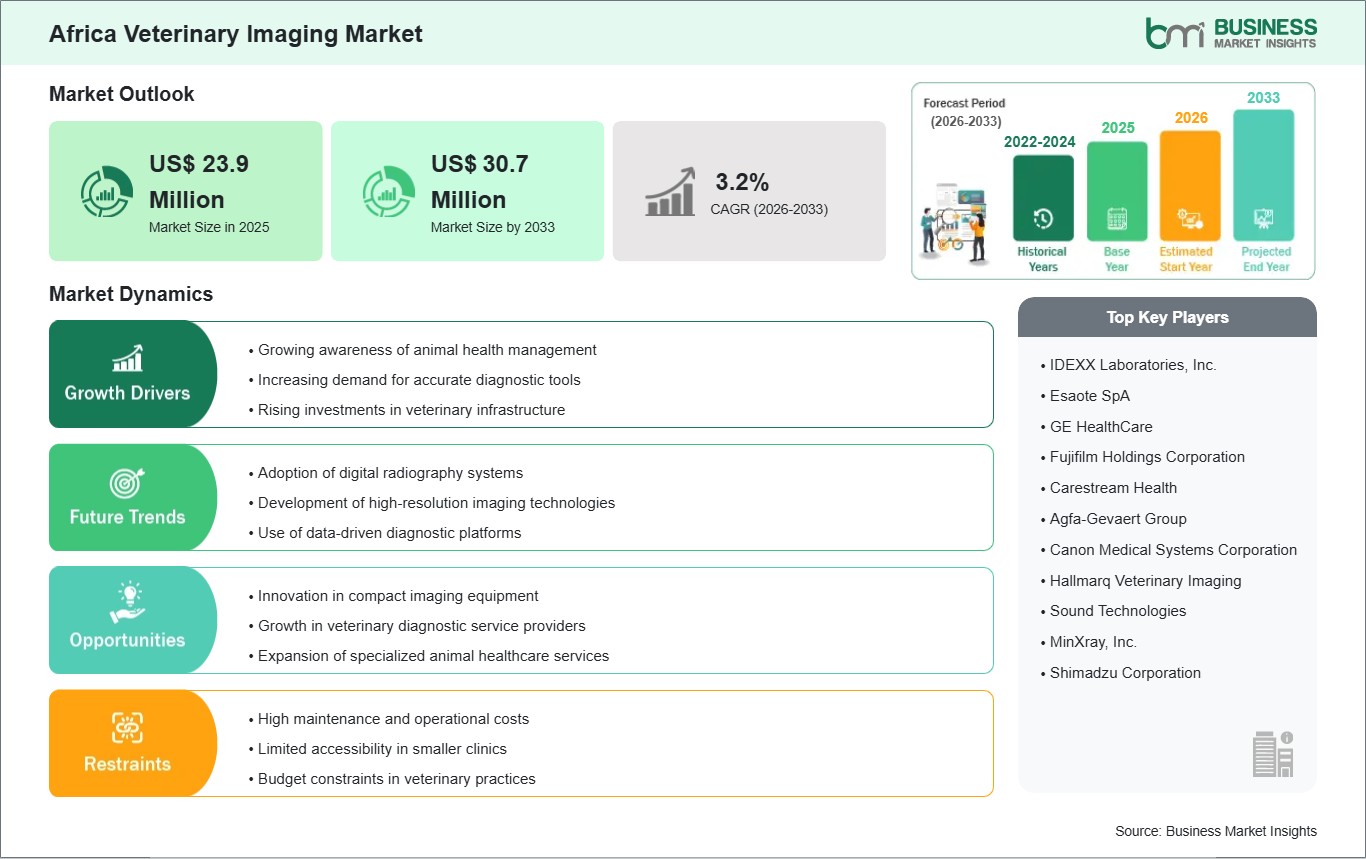
The region has experienced slow veterinary imaging development because of insufficient infrastructure, expensive equipment, and insufficiently trained radiologists. People now understand how imaging technology helps them prevent illnesses, discover diseases early, and create their surgical treatment plans. Veterinary centers in urban areas and academic institutions use digital radiography and ultrasound, but MRI and CT systems are starting to establish their presence in these facilities. The market expansion results from increased animal disease outbreaks and higher public knowledge about zoonotic diseases and the ongoing development of veterinary medical facilities. Diagnostic services are becoming more common in private clinics because they help clinics create unique services that attract patients who want better medical care. The competitive market assessment shows that the industry operates as a divided system, which consists of international original equipment manufacturers and domestic distributors who form alliances to provide affordable products designed for various market segments. The adoption of imaging technology receives support from strategic partnerships between animal welfare organizations and government-supported livestock health programs, which benefit regions that previously lacked proper imaging services. The operation faces two obstacles because businesses need to spend substantial money before they can establish operations, and they lack qualified staff members who can manage advanced technological systems. Companies are solving this problem by providing new financial solutions, which include equipment rental programs and mobile imaging systems that help reach areas outside of metropolitan locations. The organization is beginning to implement cloud-based imaging management systems and tele-radiology solutions to solve its lack of specialized knowledge. The Africa veterinary sector operates with challenges that hamper its development according to the veterinary system. It makes the market attractive for international OEMs and local service providers willing to invest in infrastructure, training, and distribution networks.
Segment Analysis
Africa Veterinary Imaging Market Segmentation
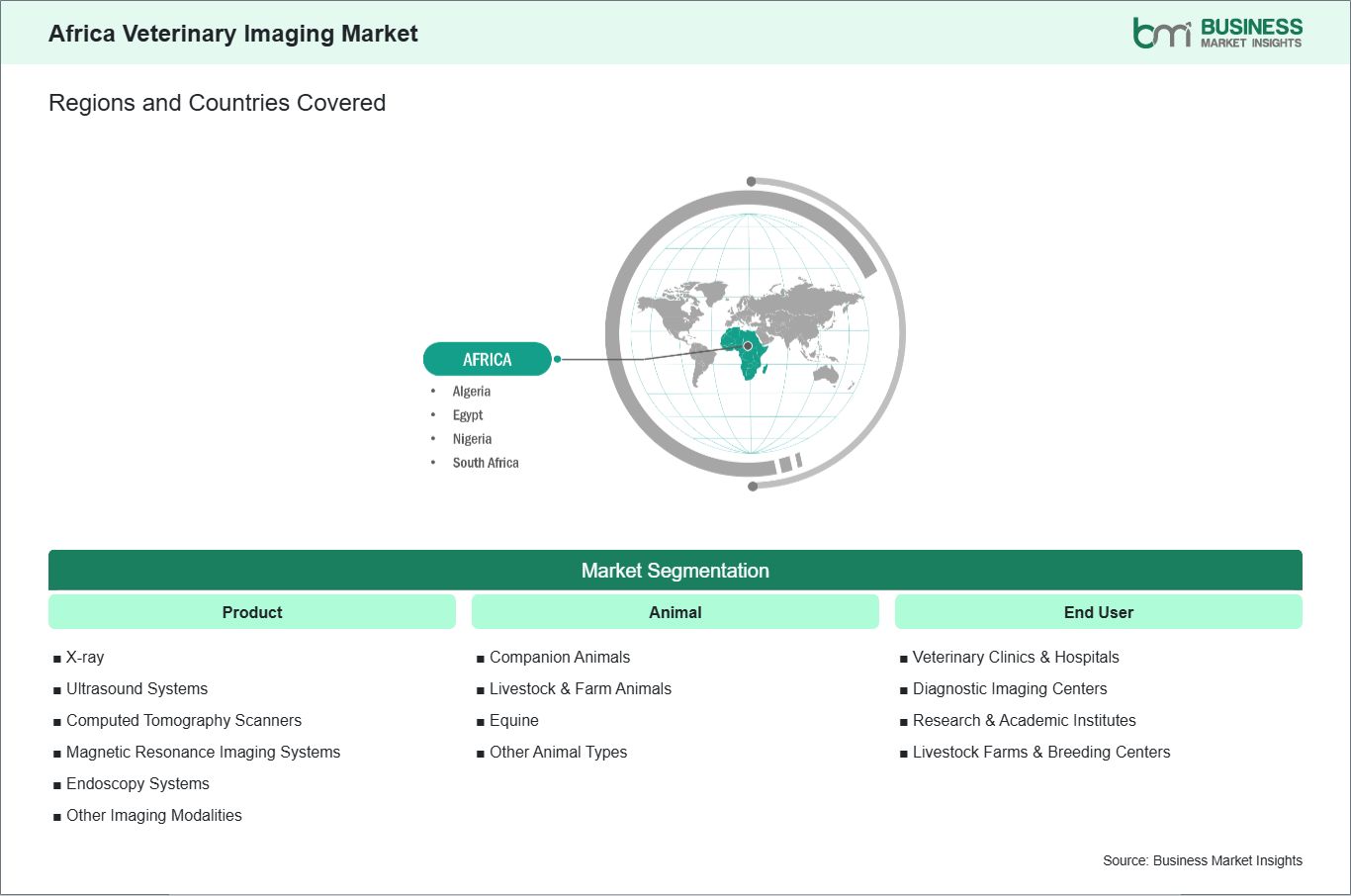
Key segments that contributed to the derivation of the Africa veterinary imaging market analysis are product type, animal type, and end user.
- By product type, the veterinary imaging market is segmented into X-ray, ultrasound systems, computed tomography (CT) scanners, magnetic resonance imaging (MRI) Systems, endoscopy systems, and other imaging modalities. The X-ray segment dominated the market in 2025.
- Based on animal type, the veterinary imaging market is categorized into companion animals, livestock & farm animals, equine, and other animal types. The companion animals segment dominated the market in 2025.
- On the basis of end user, the veterinary imaging market is classified into veterinary clinics & hospitals, diagnostic imaging centers, research & academic institutes, and livestock farms & breeding centers. The veterinary clinics & hospitals segment dominated the market in 2025.
Market Forces
Africa Veterinary Imaging Market Drivers and Opportunities
Increasing Prevalence of Chronic Animal Conditions
The lifespan of livestock and companion animals has increased, which creates a greater need for their preventive and diagnostic medical care. The management of chronic conditions needs consistent treatment because they include musculoskeletal problems, reproductive disorders, and extended organ system complications. Veterinary imaging functions as an essential element of contemporary animal health care because it enables users to identify problems at an early stage, monitor their progress, and create treatment strategies. The continent's farmers and veterinarians have started to understand how imaging technologies benefit their daily health monitoring work. Imaging technology enables veterinarians to discover hidden medical problems, which decreases the chances of health issues arising and enhances animal treatment processes. The existence of this situation holds significance because animal work serves as essential support for local economies and food production systems. Portable imaging systems have become essential for diagnostic tasks because they enable veterinarians to reach remote locations while maintaining diagnostic accuracy. Urban markets demonstrate an increasing interest in companion animal and specialized medical care services. Pet owners request more sophisticated diagnostic procedures because they want to manage extended health conditions and enhance their pets' quality of life. Veterinary clinics and hospitals use imaging technologies in their daily operations to deliver preventive services and chronic disease management programs. This trend is reshaping the market landscape, emphasizing the importance of imaging in ensuring consistent healthcare for all types of animals.
Artificial Intelligence for Image Interpretation Automation
AI technologies are being integrated into imaging workflows to enhance efficiency, accuracy, and diagnostic confidence. Image analysis technology helps veterinarians detect possible signs of disease early and prioritize critical cases. Such systems ensure the reliability of diagnostic processes and facilitate animal management. AI-based systems help make diagnoses more consistently without risks of human errors. In turn, automation is beneficial in territories where professional veterinary assistance is not available. The application of artificial intelligence could allow general practitioners to receive reliable initial diagnostics based on image analysis, improving the quality of veterinary practice. AI helps optimize the work of veterinarians, who would be able to devote their time to treatments and consultations instead of conducting routine image analysis. In the future, AI-based approaches to animal image analysis might revolutionize the veterinary healthcare industry in Africa. By automating repetitive tasks and improving the speed and accuracy of diagnostics, AI enhances the capacity of veterinary professionals to meet growing demand. This trend positions AI as a crucial enabler for the growth of veterinary imaging services across the continent.
Size and Share Analysis
Africa Veterinary Imaging Market Size and Share Analysis
The Africa veterinary imaging market demonstrates steady growth, with size and share analysis highlighting evolving trends and competitive dynamics among key players. The report examines subsegments categorized within product type, animal type, and end user, offering insights into their contribution to overall market performance.
By product type, the x-ray segment dominated the market in 2025, driven by its affordability, widespread clinical use, rapid diagnostic capabilities, and strong adoption in routine veterinary care across clinics and field settings.
Based on animal type, the companion animals segment dominated the market in 2025, driven by increasing pet ownership and higher expenditure on preventive and advanced animal healthcare, especially diagnostics for dogs and cats.
On the basis of end user, the veterinary clinics & hospitals segment dominated the market in 2025, driven by the proliferation of veterinary care facilities equipped with advanced imaging systems to meet rising demand for comprehensive diagnostics and treatment services.
Report Coverage
Africa Veterinary Imaging Market Report Coverage and Deliverables
The "Africa Veterinary Imaging Market Size and Forecast (2022–2033)" report provides a detailed analysis of the market covering below areas:
- Africa Veterinary Imaging Market size and forecast at regional and country levels for all segments covered under the scope
- Africa Veterinary Imaging Market trends, as well as drivers, restraints, and opportunities
- Africa Veterinary Imaging Market analysis covering key trends, regional framework, major players, regulations, and recent developments
- Industry landscape and competition analysis covering market concentration, heat map analysis, prominent players, and recent developments for the Africa Veterinary Imaging Market
- Detailed company profiles, including SWOT analysis
Geographic Insights
Africa Veterinary Imaging Market Geographic Insights
The geographical scope of the Africa Veterinary Imaging Market report is divided into Egypt, South Africa, Nigeria, and Algeria. Egypt held the largest share in 2025.
Egypt stands out as the dominant market, driven by rapid urbanization, increasing pet ownership, and expanding livestock production. Veterinary clinics and specialized hospitals in Cairo, Alexandria, and other urban centers are investing in advanced imaging technologies such as digital radiography, portable ultrasound, and CT scanners to enhance diagnostic precision and preventive care. Supportive government programs targeting livestock health and zoonotic disease control have reinforced demand, while mature regulatory frameworks facilitate smoother device approvals and encourage international manufacturers to partner with local distributors. South Africa represents a developed secondary market with a dense concentration of sophisticated veterinary hospitals and academic veterinary centers. Digital radiography, CT, and MRI are used in metropolitan areas, supported by tele-radiology and mobile diagnostic units that extend services to more remote regions. The market benefits from advanced training programs, research collaborations, and a strong talent pipeline, though adoption outside urban hubs is still limited. Nigeria is an emerging market with growing awareness of veterinary diagnostics in the companion animal and livestock sectors. Portable ultrasound and X-ray devices are adopted in urban clinics and poultry operations, but inconsistent infrastructure, regulatory challenges, and limited distribution networks constrain expansion. Algeria shows potential due to government-led animal health initiatives and rising investments in livestock. Yet, the market faces challenges such as a shortage of trained imaging professionals, limited private veterinary networks, and infrastructural bottlenecks. Across all four countries, strategic success requires tailored approaches that align with local infrastructure, economic realities, and regulatory conditions. Companies prioritizing Egypt as the primary hub, while offering customized support and flexible business models for South Africa, Nigeria, and Algeria, are best positioned to capture sustainable opportunities in the African veterinary imaging landscape.
Industry Activity
Recent Developments
The Africa Veterinary Imaging Market is evaluated by gathering qualitative and quantitative data post primary and secondary research, which includes important corporate publications, association data, and databases. A few of the key developments in the Africa veterinary imaging market are:
- In July 2024, NeuroLogica's OmniTom Elite mobile CT system received U.S. FDA 510(k) clearance for clinical use, bringing photon-counting CT technology into advanced imaging workflows that support both human and veterinary diagnostic applications worldwide. This clearance confirms the device's safety and effectiveness compared with existing systems, enabling commercial distribution. It marks a significant regulatory milestone for mobile CT in veterinary care.
- In February 2024, the Siemens Somatom Confidence 64‑slice CT scanner installed at the Onderstepoort Veterinary Academic Hospital in South Africa marked one of the most advanced veterinary CT systems on the continent. This CT unit enables high‑resolution imaging for both large and small animals, significantly improving diagnostic capability. It enhances clinical training and research capacity at one of Africa's leading veterinary teaching hospitals. The deployment was supported by philanthropic and institutional investment.
Trust & Transparency
Research Methodology
The market analysis combines proprietary research with secondary data from government agencies, company disclosures, regulatory filings, industry databases and expert interviews. Market estimates are validated through data triangulation, cross-market benchmarking and analyst
review.
View Full Research Methodology
Key Sources Referred:
International Veterinary Radiology Association (IVRA)American College of Veterinary Radiology (ACVR)European Association of Veterinary Diagnostic Imaging (EAVDI)US Food and Drug Administration (FDA)US Department of Agriculture (USDA)World Organisation for Animal Health (WOAH)American Veterinary Medical Association (AVMA)American Animal Hospital Association (AAHA)