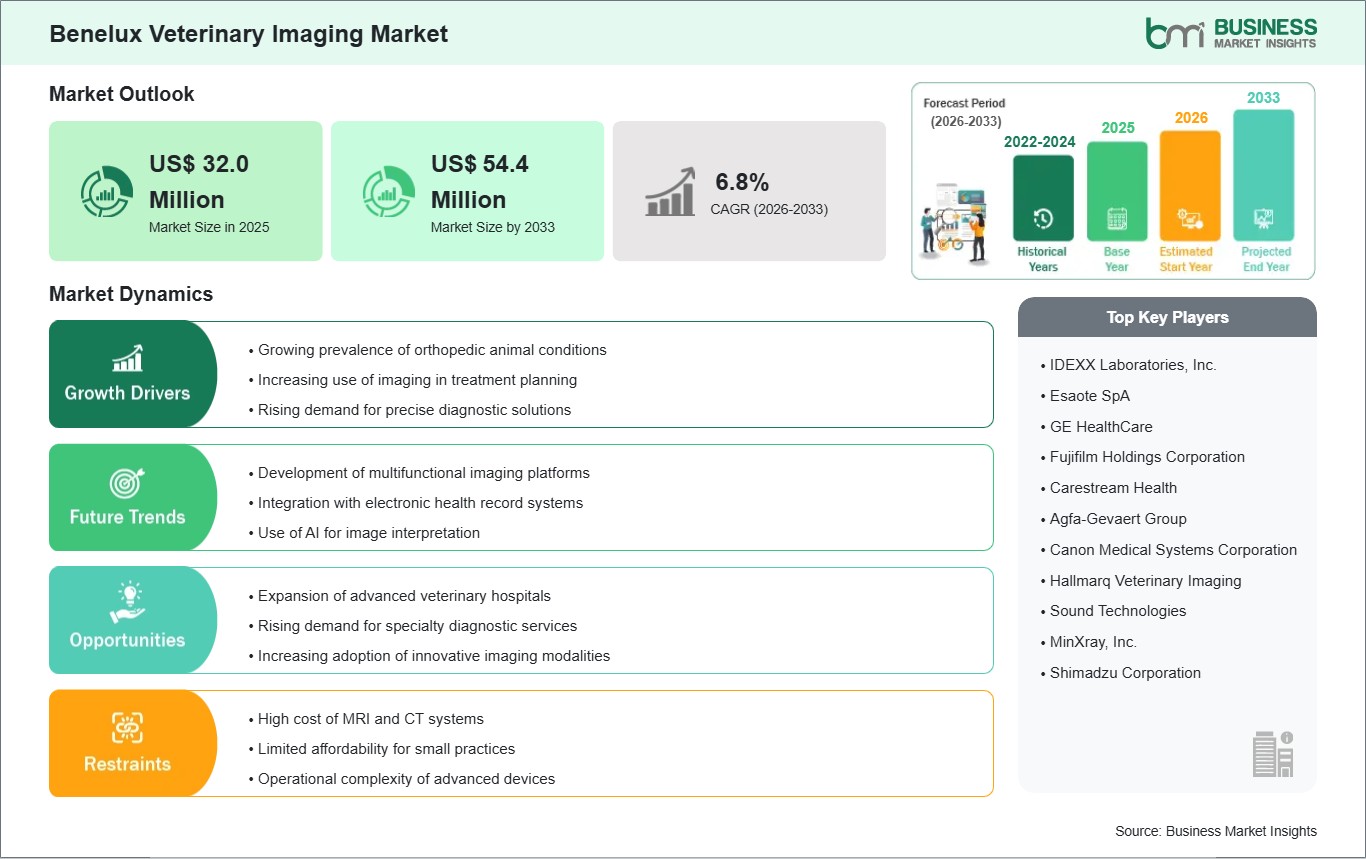
The Benelux veterinary imaging market size is expected to reach US$54.4 million by 2033 from US$32.0 million in 2025. The market is estimated to record a CAGR of 6.8% from 2026 to 2033.
The Benelux veterinary imaging market is distinguished by its mature infrastructure, advanced technology adoption, and highly regulated environment across Belgium, the Netherlands, and Luxembourg. Growth in the market is largely driven by rising pet ownership, a shift toward preventive animal healthcare, and structured livestock management practices that demand high-quality diagnostic support. Urban veterinary clinics are increasingly integrating digital radiography, computed tomography (CT), and advanced ultrasound systems to enhance early disease detection, surgical planning, and treatment accuracy. This evolution reflects a broader industry trend toward proactive veterinary care, where imaging plays a central role in diagnosis and monitoring, rather than being limited to reactive interventions. Technological advancement is a critical market driver. Vendors are developing compact, high-resolution imaging systems that can operate efficiently in both urban clinics and rural livestock environments. Integration with software solutions such as AI-assisted image analysis, cloud-based image storage, and telemedicine platforms is increasingly prevalent, enabling remote consultations and second-opinion diagnostics. Veterinary service providers can achieve better operational results while demonstrating improvements to their service areas and their ability to identify medical conditions. The testing equipment manufacturers for this region show a commitment to developing products that can withstand long-term use while consuming less energy and providing users with simpler operation methods. The veterinary market depends on the existing relationships between veterinary associations, equipment distributors, and academic institutions to create strategic partnerships that control market developments. The implementation of technology transfer, together with workforce training and after-sales support, which maintains regulatory compliance, develops the necessary components for continuous usage in strict regulatory environments. The Benelux region achieves regulatory harmonization, which makes equipment approval processes more efficient while enabling veterinarians to distribute imaging devices across national borders. Government programs that support preventive healthcare and telemedicine implementation and animal welfare regulations are driving market expansion. The Benelux veterinary imaging market shows a stable growth path, which results from technology adoption, strong regulatory systems and changing veterinary methods that focus on delivering high-quality and efficient complete diagnostic services. The Benelux region has become one of Europe’s top markets for veterinary imaging because it combines innovative practices with expert knowledge and preventive healthcare programs.

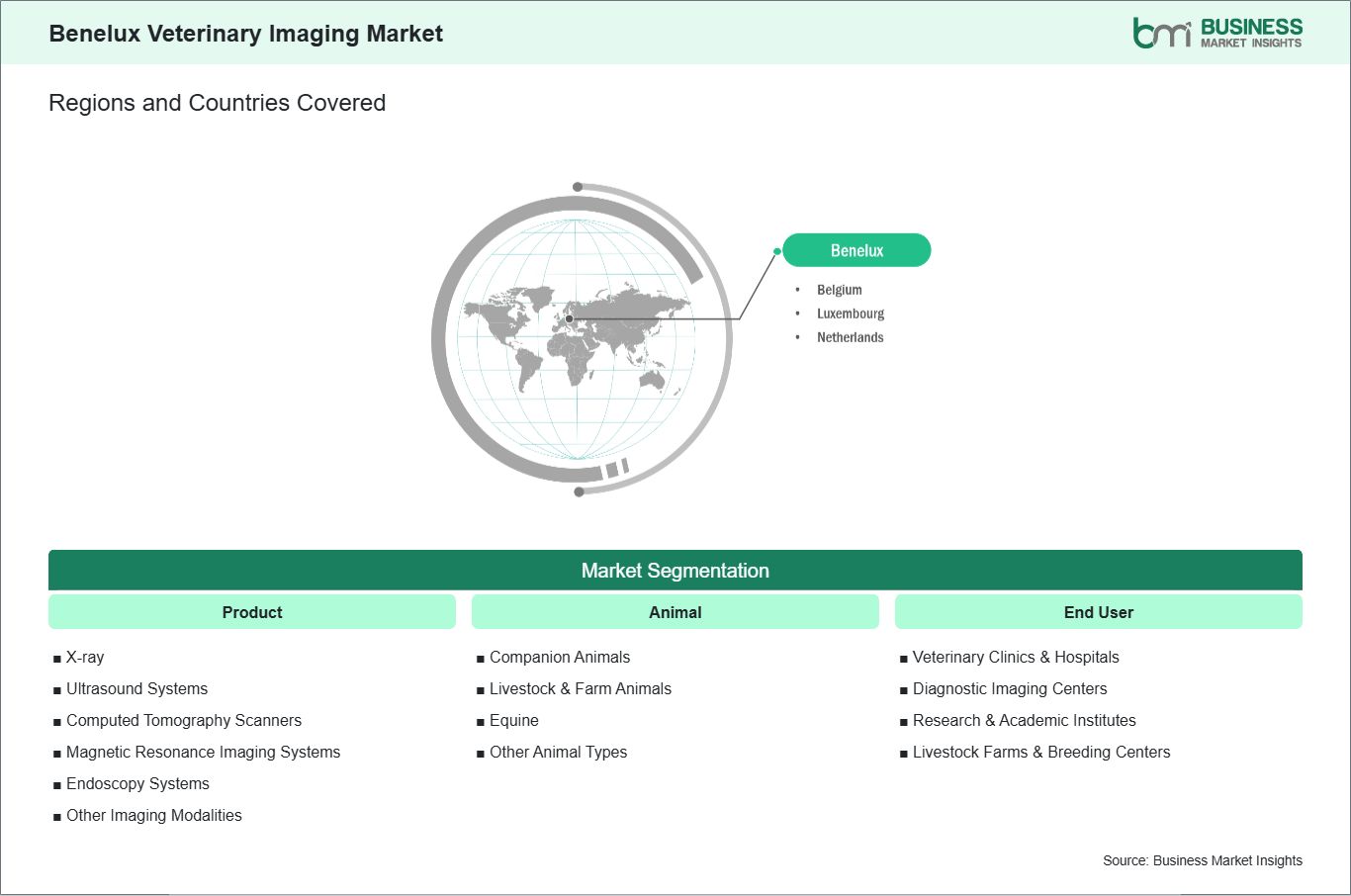
Key segments that contributed to the derivation of the Benelux veterinary imaging market analysis are product type, animal type, and end user.
Rising spending on companion animal healthcare is a key factor driving growth in the veterinary imaging market. The owners of pets nowadays concentrate not only on feeding but also on the overall wellness of their pets. They spend money on diagnostics, regular examination, and the prevention of possible diseases. Therefore, the need for diagnostic equipment is increasing. Veterinary clinics offer a range of diagnostic tests for early disease detection and prevention. Thanks to the possibility of early diagnosis, a vet can develop the most effective treatment regimen. With the help of diagnostic equipment, it is possible to assess the progress of the treatment and recovery period of the animal.
Moreover, pet owners are demanding quality care and are ready to pay extra money for it. To meet their needs, clinics improve their facilities and purchase new diagnostic equipment, such as veterinary imaging machines. Thus, veterinary imaging is an essential part of the diagnosis of animals and the development of their treatment plans.
Overall, the growing emphasis on companion animal health and wellness supports steady and sustained market growth. As owners increasingly prioritize preventive measures and proactive health management, the demand for imaging solutions is expected to remain strong. Veterinary practices that integrate advanced imaging into routine care are well-positioned to meet client expectations and capitalize on the expanding market. The trend underscores the important connection between rising healthcare spending and the adoption of diagnostic technologies.
The adoption of advanced diagnostic imaging technologies is shaping the veterinary market in the region. Modern veterinary hospitals are integrating advanced technology like digital radiology, ultrasounds, and CT scans, which help in improving the accuracy of diagnosis and treatments. Advanced imaging techniques allow for noninvasive evaluations, leading to the early identification and effective management of several health problems in animals.
Additionally, portable and easy-to-use imaging equipment has become common, helping veterinarians offer services effectively and efficiently. The use of advanced imaging technologies is among the modern practices being embraced by the veterinary sector, promoting efficiency and effectiveness in service delivery.
Furthermore, digital solutions and innovative tools, including software for image analysis and teleconsultation, are enhancing efficiency and access to expert opinions. By combining advanced equipment with streamlined workflows, veterinary practices can deliver higher-quality care while improving operational efficiency. The trend toward technological adoption continues to create opportunities for growth and innovation in the veterinary imaging market.

The Benelux veterinary imaging market demonstrates steady growth, with size and share analysis highlighting evolving trends and competitive dynamics among key players. The report examines subsegments categorized within product type, animal type, and end user, offering insights into their contribution to overall market performance.
By product type, the x-ray segment dominated the market in 2025, driven by its affordability, widespread clinical use, rapid diagnostic capabilities, and strong adoption in routine veterinary care across clinics and field settings.
Based on animal type, the companion animals segment dominated the market in 2025, driven by increasing pet ownership and higher expenditure on preventive and advanced animal healthcare, especially diagnostics for dogs and cats.
On the Basis of end user, the veterinary clinics & hospitals segment dominated the market in 2025, driven by the proliferation of veterinary care facilities equipped with advanced imaging systems to meet rising demand for comprehensive diagnostics and treatment services.
| Report Attribute | Details |
|---|---|
| Market size in 2025 | US$ 32.0 Million |
| Market Size by 2033 | US$ 54.4 Million |
| CAGR (2026 - 2033) | 6.8% |
| Historical Data | 2022-2024 |
| Forecast period | 2026-2033 |
| Segments Covered | By Product
|
|
Regions and Countries Covered
| |
| Benelux | Belgium, Netherlands, Luxembourg |
| Market leaders and key company profiles |
|
The "Benelux Veterinary Imaging Market Size and Forecast (2022–2033)" report provides a detailed analysis of the market covering below areas:
The geographical scope of the Benelux Veterinary Imaging Market report is divided into Belgium, Netherlands, and Luxembourg. Netherlands held the largest share in 2025.
The veterinary imaging market in the Benelux region shows varied adoption patterns across Belgium, the Netherlands, and Luxembourg, with the Netherlands emerging as the dominant market due to its advanced veterinary infrastructure, high urban pet ownership, and extensive integration of imaging technologies in both companion animal care and livestock management. Dutch veterinary clinics and research institutions prioritize precision diagnostics, mobile imaging units, and software-enabled modalities for early disease detection and herd health monitoring. The combination of technologically advanced veterinary services, regulatory support, and urban awareness of preventive care drives high adoption rates across the country, positioning it as a regional leader. Belgium has a strong presence in the veterinary imaging market, with urban clinics and hospitals widely using digital radiography, CT, and ultrasound systems. Adoption is supported by structured veterinary associations, professional training programs, and high standards of animal healthcare, primarily focused on companion animals and small-scale livestock operations. The market demonstrates steady growth, although it remains secondary to the Netherlands in terms of scale and technological penetration. Luxembourg, though smaller in size, exhibits high per-capita adoption of premium imaging technologies. Affluent pet owners and specialized veterinary clinics drive demand for high-end diagnostic solutions, including portable and advanced imaging systems. Cross-border collaborations with neighboring countries enhance access to technology, training, and maintenance support. Collectively, the Benelux region represents a technologically advanced and cohesive veterinary imaging market, characterized by strong regulatory alignment, high professional expertise, and a focus on quality and preventive animal healthcare. The Netherlands’ dominant position underscores the regional emphasis on innovation, precision diagnostics, and operational efficiency in veterinary imaging.

The Benelux Veterinary Imaging Market is evaluated by gathering qualitative and quantitative data post primary and secondary research, which includes important corporate publications, association data, and databases. A few of the key developments in the Benelux veterinary imaging market are:
The Benelux Veterinary Imaging Market is valued at US$ 32.0 Million in 2025, it is projected to reach US$ 54.4 Million by 2033.
As per our report Benelux Veterinary Imaging Market, the market size is valued at US$ 32.0 Million in 2025, projecting it to reach US$ 54.4 Million by 2033. This translates to a CAGR of approximately 6.8% during the forecast period.
The Benelux Veterinary Imaging Market report typically cover these key segments-
The historic period, base year, and forecast period can vary slightly depending on the specific market research report. However, for the Benelux Veterinary Imaging Market report:
The Benelux Veterinary Imaging Market is populated by several key players, each contributing to its growth and innovation. Some of the major players include:
The Benelux Veterinary Imaging Market report is valuable for diverse stakeholders, including:
Essentially, anyone involved in or considering involvement in the Benelux Veterinary Imaging Market value chain can benefit from the information contained in a comprehensive market report.
Please tell us your area of interest
(Market Segments/ Regions and Countries/ Companies)