Market Summary
Executive Summary and Market Analysis
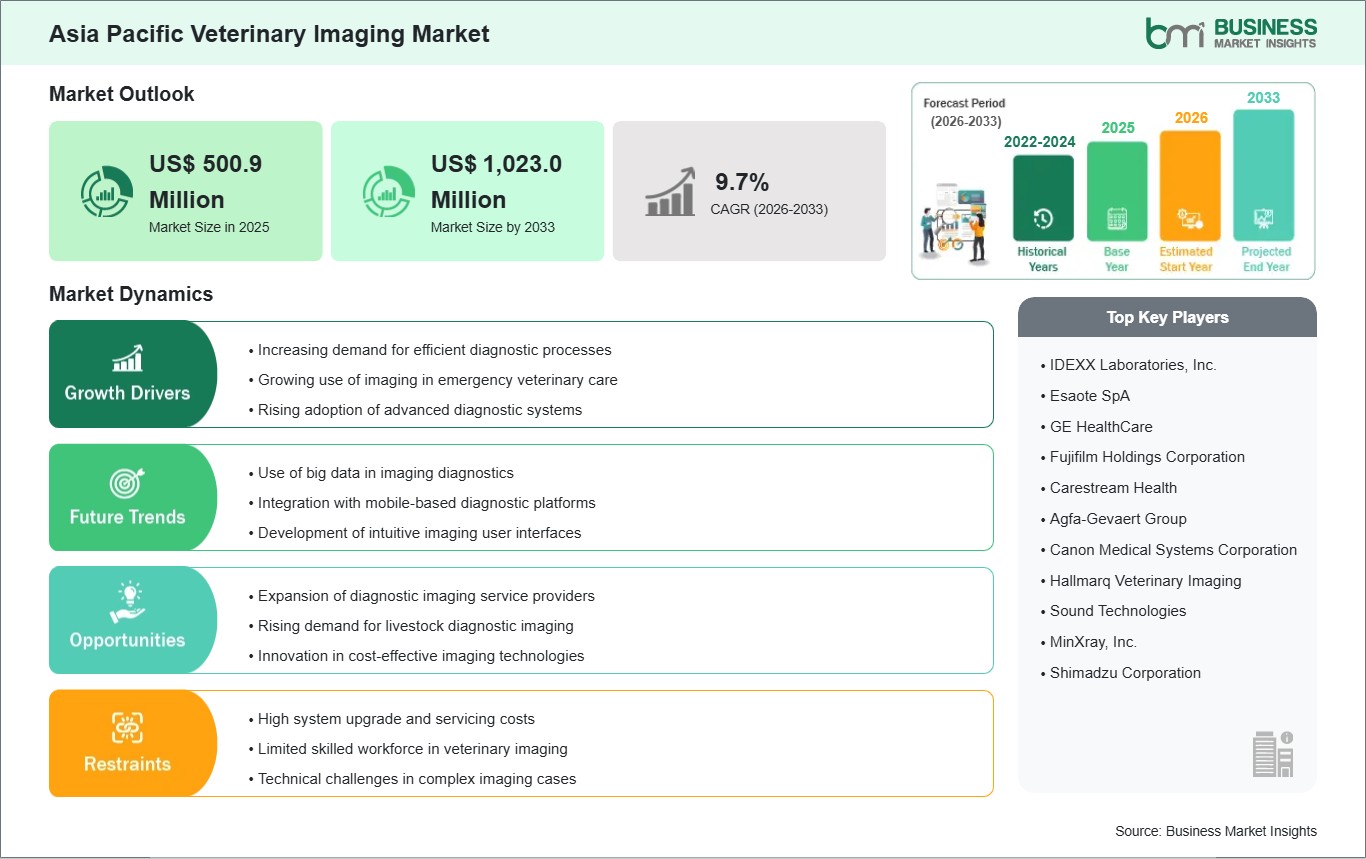
The Asia Pacific veterinary imaging market is experiencing robust transformation, propelled by the dual rise of companion animal ownership and large-scale livestock production. The development of market growth is attributed to growing knowledge about animal health and welfare, coupled with technological advances in imaging techniques like digital radiography, CT, and portable ultrasound. Veterinary service providers are employing imaging technology to improve disease detection and effectiveness of treatment and surgical procedures, especially in densely populated urban locations characterized by fast-growing standards for pets' medical services. Moreover, a trend toward preventive medicine is emerging, and imaging techniques become routine means of making accurate diagnoses. Technological advancements are expected to drive changes in the market. Equipment suppliers will concentrate on the development of small-size and efficient imaging equipment with good resolution capacity to cater for veterinary practices' need for versatility – both in clinics and field-based environments. Software integration including real-time imaging and cloud-based storage systems are anticipated to emerge as important differentiators in the veterinary imaging market due to their ability to enable telemedicine solutions. Mobile veterinary practice and telemedicine trends will also be driving factors in imaging adoption in rural areas and geographically dispersed communities. Key competitors in the Asia Pacific veterinary imaging market are engaged in partnerships and localization of their equipment in line with customers' needs for affordability and energy-efficient equipment. Different regulatory policies exist between nations that will affect the timeline for approval, prices, and access to the market, making it important for firms to implement market entry policies. Additionally, an increase in educational programs for veterinarians is producing highly trained personnel who can operate sophisticated imaging equipment, thereby enhancing uptake even further. On the whole, the Asia-Pacific veterinary imaging market is at an exciting stage of growth, marked by technological advancements and innovative service delivery models.
Segment Analysis
Asia Pacific Veterinary Imaging Market Segmentation
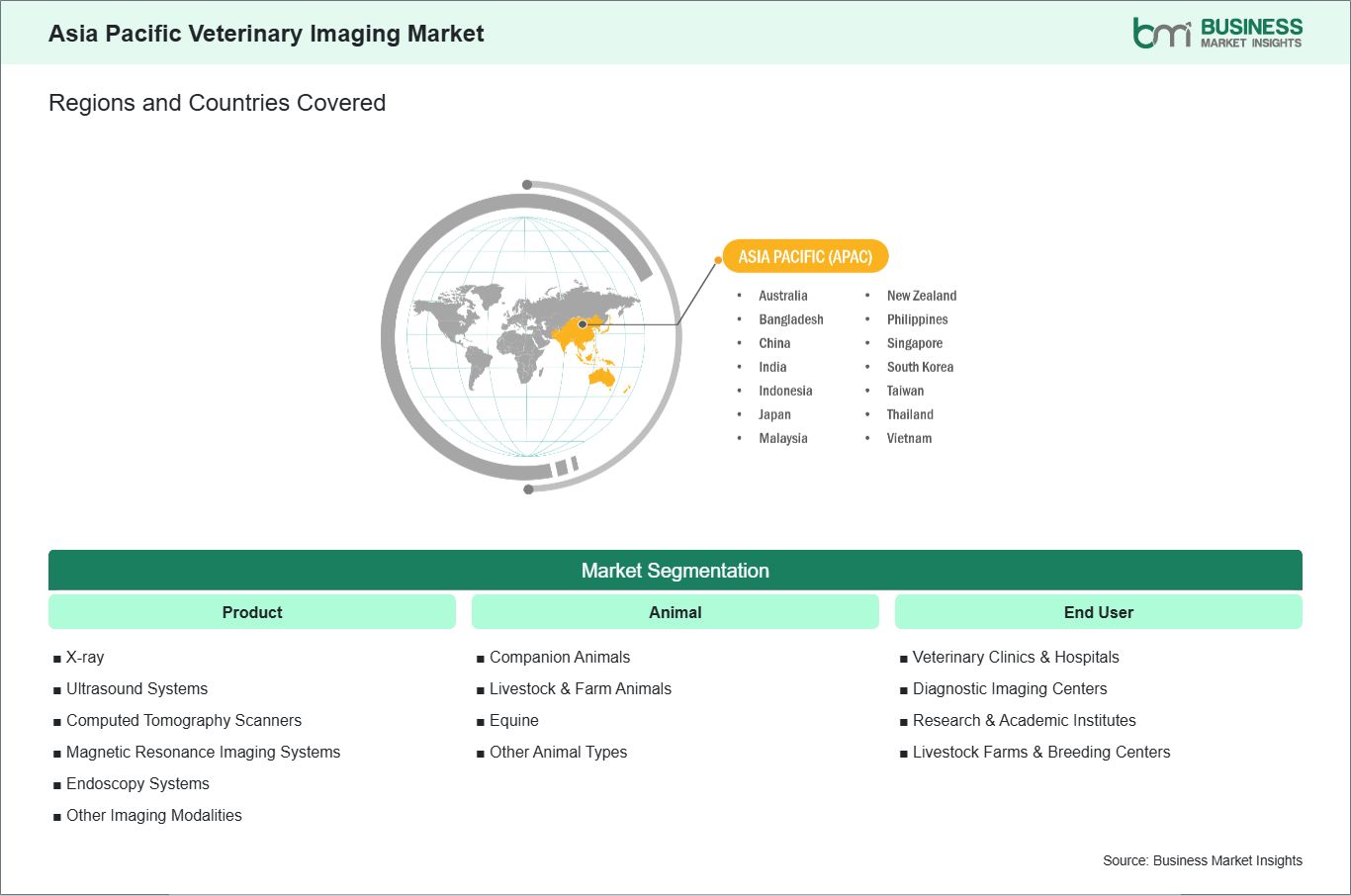
Key segments that contributed to the derivation of the Asia Pacific veterinary imaging market analysis are product type, animal type, and end user.
- By product type, the veterinary imaging market is segmented into X-ray, ultrasound systems, computed tomography (ct) scanners, magnetic resonance imaging (MRI) systems, endoscopy systems, other imaging modalities. The x-ray segment dominated the market in 2025.
- Based on animal type, the veterinary imaging market is categorized into companion animals, livestock & farm animals, equine, and other animal types. The companion animals segment dominated the market in 2025.
- On the Basis of end user, the veterinary imaging market is classified into veterinary clinics & hospitals, diagnostic imaging centers, research & academic institutes, and livestock farms & breeding centers. The veterinary clinics & hospitals segment dominated the market in 2025.
Market Forces
Asia Pacific Veterinary Imaging Market Drivers and Opportunities
Increasing companion animal healthcare spending
Rising expenditure on companion animal healthcare is driving growth in the Asia Pacific veterinary imaging market. In countries such as China, Japan, and South Korea, the pet is increasingly being viewed as a member of the family, causing pet owners to have a need for better quality diagnostics. Pet owners within urban areas, who generally earn more income, are becoming increasingly interested in preventative care of their pets and detecting diseases early on, hence creating a market for imaging techniques such as X-rays, ultrasonic, and CT scanning. The increased humanization of pets is evidenced by the growing trend in premium veterinary clinics providing all-round diagnostic services. It is worth noting that Japan is one country with the highest spendings per capita in pet healthcare in the region, with owners choosing to go for advanced diagnostic techniques to detect diseases such as orthopedic problems and heart ailments. Similarly, South Korea has experienced significant growth in the sector, with the increasing middle-class contributing to investments in pet wellness programs incorporating diagnostics and other forms of healthcare. The rise of chronic diseases in companion animals further increases imaging demand across Asia Pacific. Aging pet populations in urban areas require regular monitoring, driving up usage of veterinary imaging technologies for cancer detection, joint health assessments, and internal organ evaluations. Livestock health is also a concern, particularly in India, Vietnam, and Thailand, where veterinary imaging supports disease prevention and productivity. Overall, increased spending on companion animal healthcare is a key factor sustaining the Asia Pacific veterinary imaging market.
Adoption of advanced diagnostic imaging technologies
Advanced diagnostic imaging technologies are rapidly transforming the Asia Pacific veterinary imaging market. Countries such as Japan, Australia, and South Korea are leading the trend by using advanced imaging technologies like MRI, CT, and digital radiography in the diagnosis of their companion and large animals. The use of advanced imaging technologies makes diagnosis possible without any surgical intervention. Advanced imaging techniques enable veterinarians to diagnose conditions accurately and make effective decisions about the treatment procedures. Clinics in metropolitan areas are now incorporating imaging technologies in their general check-ups and specialized services. New market regions like India, China, and Vietnam are seeing rising adoption of cost-effective and portable imaging technologies. Portable imaging devices such as ultrasound scanners, portable digital X-rays, and handheld imaging devices make it possible for veterinarians to diagnose the conditions of animals living in rural or semi-urban areas. This kind of adoption plays an important role in the livestock industry, where early diagnosis helps prevent losses due to diseases in animals. The affordability of technology makes it possible to bring veterinary imaging closer to people who couldn't afford it earlier. The adoption of AI and telemedicine technology in the region makes this technology more adoptable than before. Tele-radiology platforms enable remote consultations, allowing veterinary clinics to access expert opinions from leading institutions in Japan, Australia, and Singapore. With digital imaging and AI integration gaining momentum, Asia Pacific is positioned for rapid modernization in veterinary diagnostics, offering opportunities for both technological innovation and market expansion.
Size and Share Analysis
Asia Pacific Veterinary Imaging Market Size and Share Analysis
The Asia Pacific veterinary imaging market demonstrates steady growth, with size and share analysis highlighting evolving trends and competitive dynamics among key players. The report examines subsegments categorized within product type, animal type, and end user, offering insights into their contribution to overall market performance.
By product type, the x-ray segment dominated the market in 2025, driven by its affordability, widespread clinical use, rapid diagnostic capabilities, and strong adoption in routine veterinary care across clinics and field settings.
Based on animal type, the companion animals segment dominated the market in 2025, driven by increasing pet ownership and higher expenditure on preventive and advanced animal healthcare, especially diagnostics for dogs and cats.
On the Basis of end user, the veterinary clinics & hospitals segment dominated the market in 2025, driven by the proliferation of veterinary care facilities equipped with advanced imaging systems to meet rising demand for comprehensive diagnostics and treatment services.
Report Coverage
Asia Pacific Veterinary Imaging Market Report Coverage and Deliverables
The "Asia Pacific Veterinary Imaging Market Size and Forecast (2022–2033)" report provides a detailed analysis of the market covering below areas:
- Asia Pacific Veterinary Imaging Market size and forecast at regional and country levels for all segments covered under the scope
- Asia Pacific Veterinary Imaging Market trends, as well as drivers, restraints, and opportunities
- Asia Pacific Veterinary Imaging Market analysis covering key trends, regional framework, major players, regulations, and recent developments
- Industry landscape and competition analysis covering market concentration, heat map analysis, prominent players, and recent developments for the Asia Pacific Veterinary Imaging Market
- Detailed company profiles, including SWOT analysis
Geographic Insights
Asia Pacific Veterinary Imaging Market Geographic Insights
The geographical scope of the Asia Pacific Veterinary Imaging Market report is divided into China, India, Japan, Australia, Bangladesh, Indonesia, Malaysia, New Zealand, Philippines, Singapore, South Korea, Taiwan, Thailand, and Vietnam. China held the largest share in 2025.
The Asia Pacific veterinary imaging market exhibits significant regional diversity, with China as the dominant country due to its vast livestock population, rapidly expanding companion animal segment, and ongoing modernization of veterinary infrastructure. The high demand for scalable and highly capable imaging systems has led to the development of imaging devices to be used in disease surveillance and prevention as well as advanced diagnosis, thereby contributing to the continued investment in technology integrations that consolidate China’s dominance. The Indian market continues to show steady growth, fueled by the development of private vet practices focused on managing livestock health and the deployment of portable and affordable imaging systems in semi-rural locations. Japan is an advanced market and an early adopter of advanced imaging technologies used in companion animal clinics and research labs, thanks to a robust regulatory framework and premium pet care culture. Australia is another established market where digital radiology and ultrasounds have been consistently used for livestock and companion animals due to compliance with regulations and a focus on animal welfare. Bangladesh is an emerging market with the majority of the adoption happening at urban-based veterinary clinics and livestock centers, where affordability and durability are key factors in adoption. Malaysia demonstrates balanced adoption across companion animals and livestock, with urban clinics leading digital imaging and preventive care integration. New Zealand focuses on livestock health and research-driven imaging applications, benefiting from robust veterinary training and infrastructure. Philippines shows urban-centric adoption trends, driven by companion animal diagnostics, while rural areas remain dependent on traditional methods. Singapore is highly advanced, with premium veterinary services and early adoption of high-end imaging technologies. South Korea sees steady growth, driven by companion animal care and technological innovation in imaging systems. Taiwan emphasizes both companion animal and agricultural applications, favoring compact and efficient imaging modalities. Thailand integrates imaging solutions across livestock and companion animal care, supported by skilled professionals and government programs, while Vietnam demonstrates gradual adoption, focusing on affordable, adaptable systems for commercial farming and emerging private veterinary services, reflecting the region’s heterogeneous but opportunity-rich landscape.
Industry Activity
Recent Developments
The Asia Pacific Veterinary Imaging Market is evaluated by gathering qualitative and quantitative data post primary and secondary research, which includes important corporate publications, association data, and databases. A few of the key developments in the Asia Pacific veterinary imaging market are:
- In July 2025, Esaote Asia Pacific Diagnostic Pvt. Ltd., announced the installation of the first Magnifico Vet MRI system in the Asia Pacific region at MaxPetZ Hospital in New Delhi, representing a major regional deployment of advanced veterinary MRI technology.
- In October 2024, WOORIEN Co., Ltd., a South Korea‑based imaging equipment company, announced the launch of ‘MyVet CT Plus’, an advanced veterinary CT imaging solution that significantly reduces scan time and enhances image quality compared with prior models — supporting improved diagnostic workflows in veterinary clinics.
Trust & Transparency
Research Methodology
The market analysis combines proprietary research with secondary data from government agencies, company disclosures, regulatory filings, industry databases and expert interviews. Market estimates are validated through data triangulation, cross-market benchmarking and analyst
review.
View Full Research Methodology
Key Sources Referred:
International Veterinary Radiology Association (IVRA)American College of Veterinary Radiology (ACVR)European Association of Veterinary Diagnostic Imaging (EAVDI)US Food and Drug Administration (FDA)US Department of Agriculture (USDA)World Organisation for Animal Health (WOAH)American Veterinary Medical Association (AVMA)American Animal Hospital Association (AAHA)