Weather Radar Market Regional Highlights
North America Weather Radar Market
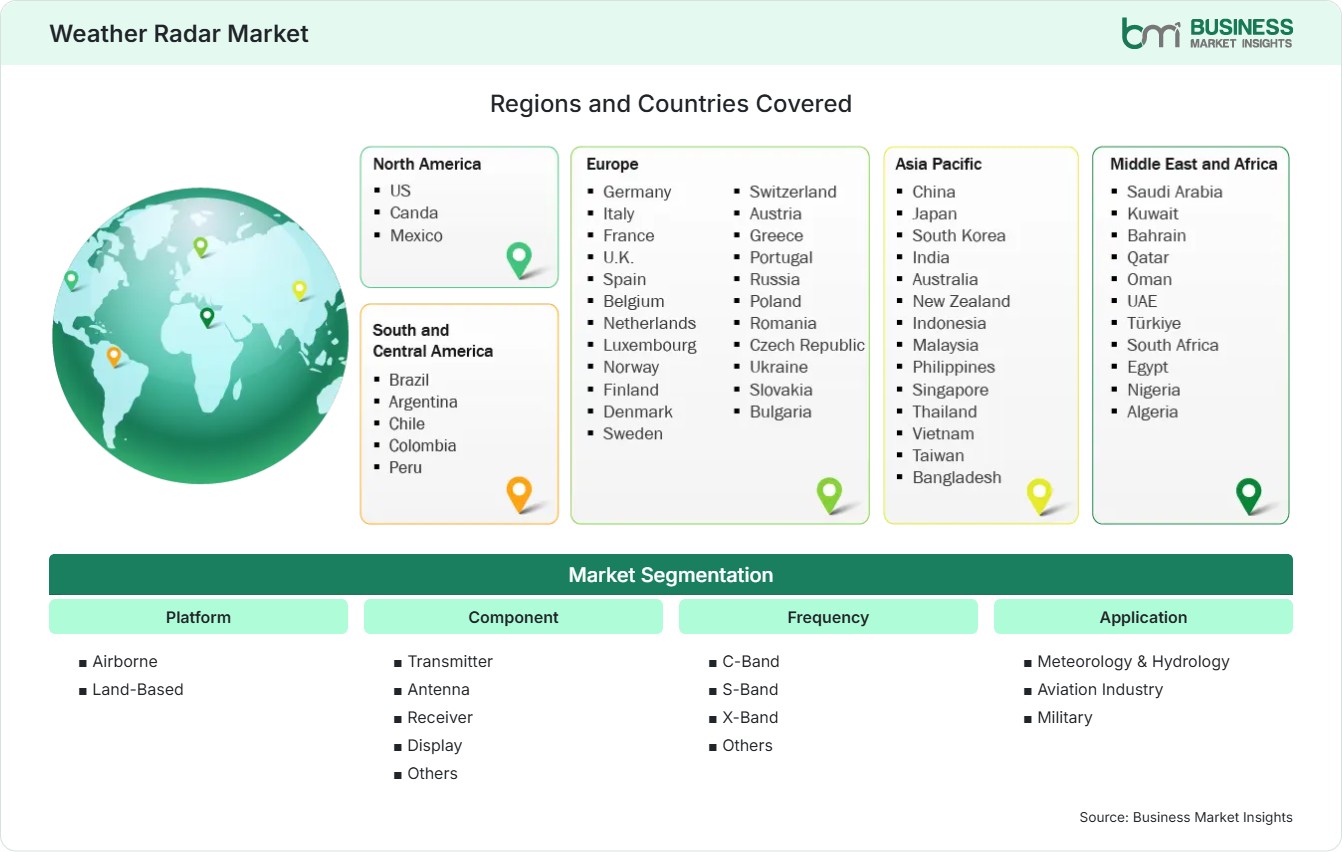
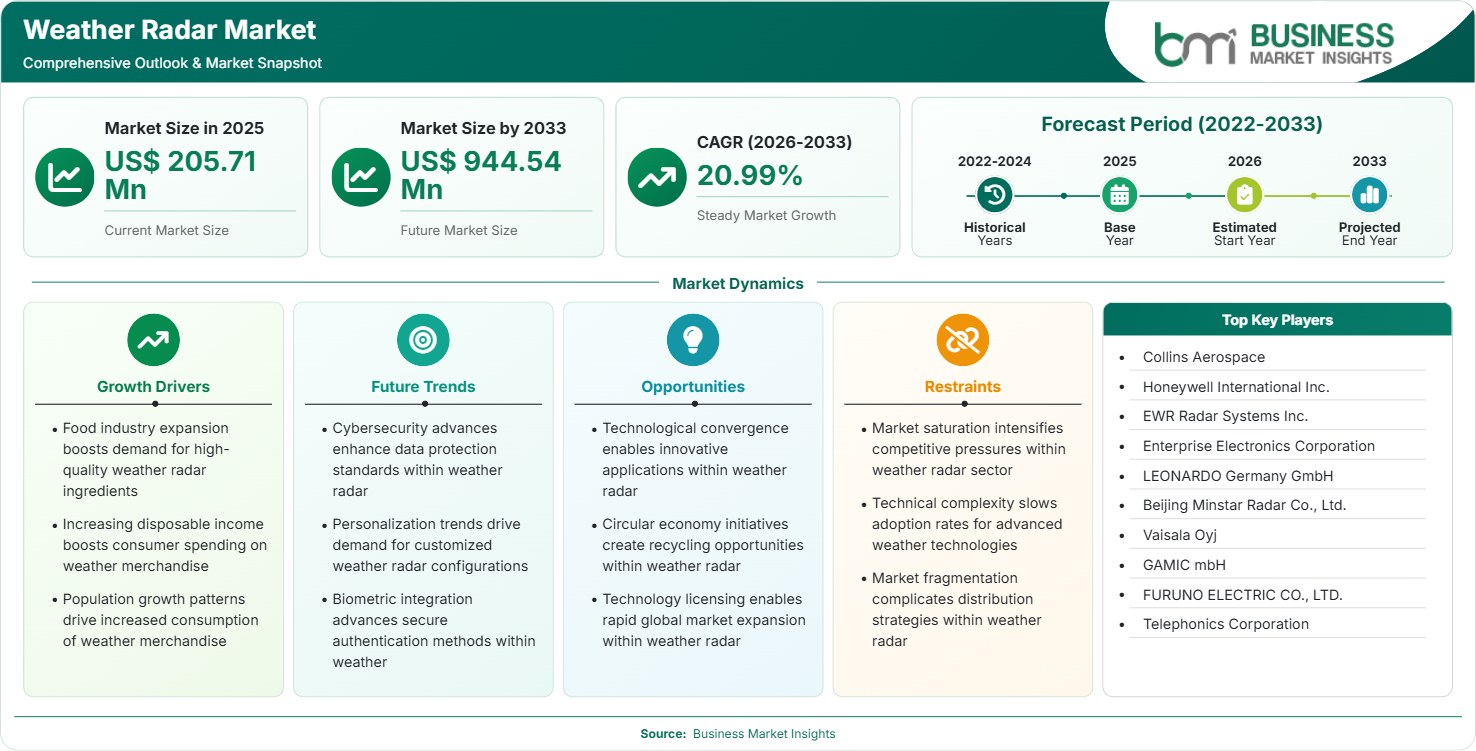
North America represents a dominant regional market with a share of 35%–38% in 2025 and is projected to expand at a CAGR of 18%–21% during 2026–2033. The region benefits from extensive meteorological infrastructure, aviation safety requirements, defense modernization programs, and demand for precise severe weather forecasting. The market share is supported by strong government investments and commercial adoption across the United States and Canada. The Weather Radar Market growth is influenced by digital radar upgrades, AI integration, and replacement of aging monitoring systems.
- The United States maintains leadership through advanced weather observation networks, airport radar modernization, and federal investments supporting accurate storm prediction, emergency response, and climate monitoring capabilities across multiple operational environments.
- Canada is increasing radar deployment for wildfire monitoring, precipitation tracking, and northern weather surveillance, supported by government initiatives focused on improving forecasting accuracy and strengthening climate resilience infrastructure.
- Defense organizations across North America are adopting advanced radar solutions for tactical weather intelligence, supporting military aviation operations, mission planning, and enhanced situational awareness under changing atmospheric conditions.
- Commercial aviation expansion and airport modernization programs are creating demand for advanced airborne and ground-based radar technologies with improved reliability and real-time forecasting capabilities.
US Weather Radar Market
The U.S. market accounts for a share of 30%–33% within North America in 2025 and is expected to grow at a CAGR of 19%–22% during 2026–2033. The country remains a technology hub due to established meteorological agencies, defense applications, and aviation infrastructure. Strong investments from public and private organizations support advanced radar adoption. The Weather Radar Market in the U.S. benefits from replacement programs, improved weather data requirements, and integration of artificial intelligence into forecasting platforms.
- The National Weather Service modernization initiatives support deployment of next-generation radar technologies, improving severe weather alerts, precipitation measurement, and public safety communication systems.
- Aviation operators are increasing investments in onboard weather detection technologies to improve flight safety, reduce weather-related disruptions, and enhance operational efficiency across commercial and private aviation sectors.
- Defense applications continue expanding through demand for reliable atmospheric monitoring systems supporting military aircraft operations, battlefield planning, and mission-critical weather intelligence requirements.
Europe Weather Radar Market
Europe holds a Weather Radar Market share of 22%–25% in 2025 and is projected to register a CAGR of 18%–21% during 2026–2033. The region benefits from strong environmental monitoring frameworks, aviation regulations, and investments in climate adaptation technologies. Germany, the United Kingdom, France, and Nordic countries represent leading markets, while Eastern European countries show increasing adoption potential. European meteorological agencies are upgrading radar networks to improve flood forecasting, renewable energy planning, and extreme weather monitoring capabilities.
- Germany leads regional adoption through advanced meteorological research, industrial technology capabilities, and investments in high-resolution radar networks supporting transportation and environmental applications.
- The United Kingdom is expanding weather monitoring infrastructure to address severe rainfall events, flooding risks, and aviation safety requirements through improved forecasting technologies.
- France is strengthening radar capabilities through modernization programs focused on agriculture monitoring, hydrology applications, and improved national weather forecasting accuracy.
- Nordic countries demonstrate high growth potential due to requirements for reliable weather intelligence in challenging climatic conditions, including maritime operations and remote infrastructure management.
Asia Pacific Weather Radar Market
Asia Pacific accounts for 28%–31% of the Weather Radar Market share in 2025 and is anticipated to grow at a CAGR of 23%–26% during 2026–2033, making it the fastest-growing regional market. The region is experiencing increased demand due to climate risks, urban development, aviation expansion, and government investments in disaster management systems. China, Japan, India, and South Korea are leading countries, while Southeast Asian nations are adopting radar systems for improved tropical weather monitoring and emergency preparedness.
- China is expanding meteorological infrastructure through investments in advanced observation networks, supporting agriculture, transportation, disaster prevention, and climate research applications.
- India is increasing radar deployment to improve cyclone prediction, monsoon forecasting, aviation operations, and disaster response capabilities through national weather modernization programs.
- Japan continues adopting advanced radar technologies due to frequent extreme weather events, earthquake-related emergencies, and demand for highly accurate precipitation monitoring systems.
- Southeast Asian countries are investing in weather observation systems to address tropical storms, flooding events, and growing aviation infrastructure requirements.
Rest of World Weather Radar Market
Rest of World accounts for a share of 8%–10% of the Weather Radar Market in 2025 and is expected to grow at a CAGR of 20%–23% during 2026–2033. South and Central America are adopting radar systems for agriculture, aviation, and disaster management, while Middle East and Africa markets are focusing on climate monitoring and infrastructure protection. Brazil, Mexico, Saudi Arabia, and South Africa represent important growth countries due to increasing weather risks and investment in environmental monitoring capabilities.
- Brazil is expanding radar usage for agricultural forecasting, rainfall monitoring, and natural disaster preparedness, supported by growing demand for accurate climate intelligence.
- Mexico is strengthening weather observation capabilities due to hurricane risks, aviation growth, and requirements for improved emergency management systems.
- Saudi Arabia and Gulf countries are investing in advanced weather technologies to support infrastructure planning, water management, and climate adaptation initiatives.
- South Africa is increasing adoption of meteorological monitoring solutions for agriculture, aviation safety, and regional weather forecasting improvements.