Waterless Cosmetics Market Regional Highlights
North America Waterless Cosmetics Market
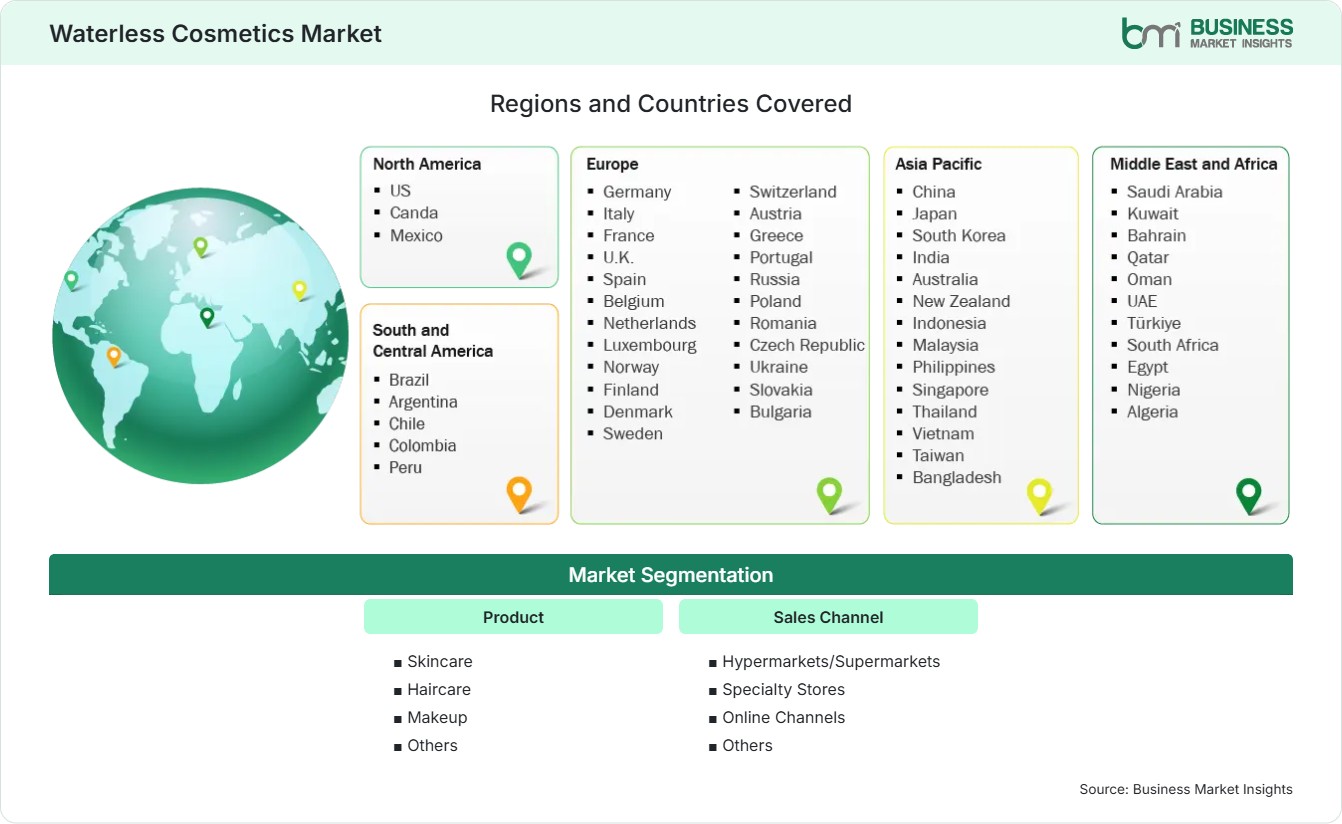
North America accounted for a 32%–35% share in 2025 and is projected to register a CAGR of 7%–9% from 2026–2033. The region maintains a strong position due to clean beauty adoption, environmental awareness, premium cosmetic consumption, and established retail infrastructure. The Waterless Cosmetics Market share reflects growing demand among consumers seeking sustainable alternatives. The United States represents the largest contributor through strong online sales and innovative beauty brands.
- The United States is expanding sustainable beauty adoption through growing clean beauty trends, sustainability-focused campaigns, and premium cosmetic innovation. Consumers are increasingly seeking environmentally responsible products featuring natural ingredients, ethical sourcing, and sustainable packaging solutions.
- Canada is witnessing rising demand for eco-friendly beauty products due to increasing consumer awareness, sustainable retail expansion, and preference for responsible personal care alternatives.
- Beauty companies are investing in concentrated formulations to reduce packaging waste, minimize transportation impacts, and improve overall product sustainability.
- Online platforms are enhancing access to sustainable cosmetics by connecting environmentally conscious consumers with innovative brands and eco-friendly beauty solutions.
US Waterless Cosmetics Market
The United States represented a 27%–30% share in 2025 and is expected to achieve a CAGR of 7%–9% between 2026–2033. The country benefits from strong consumer spending, advanced beauty retail networks, and increasing demand for sustainable products. The Waterless Cosmetics Market growth is supported by clean beauty movements, direct-to-consumer brands, and growing preference for environmentally responsible formulations.
- Consumers are increasingly adopting solid skincare and haircare products due to growing sustainability preferences, reduced packaging waste concerns, and demand for eco-friendly alternatives.
- Beauty brands are expanding online distribution channels to reach environmentally conscious customer segments and improve accessibility to sustainable personal care solutions.
- Retailers are increasing sustainable product offerings through dedicated clean beauty categories, highlighting natural ingredients, ethical sourcing, and environmentally responsible product innovations.
Europe Waterless Cosmetics Market
Europe accounted for a 25%–28% share in 2025 and is forecast to grow at a CAGR of 7%–9% during 2026–2033. The region benefits from strong sustainability regulations, consumer environmental awareness, and demand for ethical beauty products. Germany, France, and the United Kingdom represent leading markets, while Nordic countries demonstrate high adoption through strong environmental values and sustainable consumption patterns.
- Germany is increasing sustainable beauty adoption through eco-friendly retail channels, growing environmental awareness, and consumer preference for responsible personal care products. Brands are focusing on sustainable packaging, natural ingredients, and ethical sourcing practices to meet changing market expectations.
- France continues driving premium beauty innovation with strong demand for clean formulations, advanced skincare solutions, and sustainable luxury cosmetics.
- The United Kingdom is expanding zero-waste beauty adoption through specialty stores, online platforms, and brands offering refillable and eco-conscious products.
- Nordic markets are promoting sustainable cosmetics through environmental awareness, responsible consumption, and increasing demand for ethical, transparent, and low-impact beauty solutions.
Asia Pacific Waterless Cosmetics Market
Asia Pacific represented a 28%–31% share in 2025 and is projected to grow at a CAGR of 9%–11% between 2026–2033. The region demonstrates strong growth potential due to rising beauty consumption, expanding middle-class populations, increasing environmental awareness, and digital commerce growth. China, Japan, South Korea, and India are key markets, with growing interest in sustainable cosmetic innovations.
- China is expanding sustainable beauty adoption through growing demand for premium cosmetics, clean-label products, and eco-friendly personal care solutions. Strong e-commerce platforms and digital retail channels are helping brands reach environmentally conscious consumers.
- Japan and South Korea are advancing sustainable beauty innovation through advanced research capabilities, technology-driven formulations, and investments in natural ingredients and sustainable packaging solutions.
- India is experiencing rising demand for sustainable personal care products due to increasing awareness, changing consumer preferences, and growing interest in organic beauty solutions.
- Southeast Asia is adopting eco-friendly beauty products through digital marketplaces, social commerce, and increased environmental awareness.
Rest of World Waterless Cosmetics Market
South and Central America accounted for a 5%–7% share in 2025, while the Middle East and Africa contributed a combined 4%–6% share. These regions are expected to grow at CAGRs of 7%–9% and 8%–10%, respectively, supported by rising beauty consumption, sustainability awareness, premium cosmetic adoption, and expanding digital retail channels. Brazil, UAE, and South Africa represent important markets due to growing interest in environmentally responsible personal care products.
- Brazil is expanding sustainable beauty adoption through increasing consumer interest in clean formulations, natural ingredients, and eco-friendly product alternatives. Growing awareness of environmental responsibility is encouraging brands to introduce sustainable packaging and ethical beauty solutions.
- Mexico is witnessing demand growth through digital beauty platforms, rising consumer awareness, and increased availability of sustainable personal care products across online and retail channels.
- The UAE is adopting premium waterless cosmetics through luxury beauty channels, innovative product offerings, and sustainability-focused consumer preferences among premium buyers.
- South Africa is developing sustainable beauty demand through urban consumers, increasing environmental awareness, and expanding online access to eco-conscious cosmetic products.