
Uterine Cancer Diagnostics Testing Market Outlook: Size, Share, Trends, Growth Analysis, Competitive Landscape & Forecast, 2026-2033

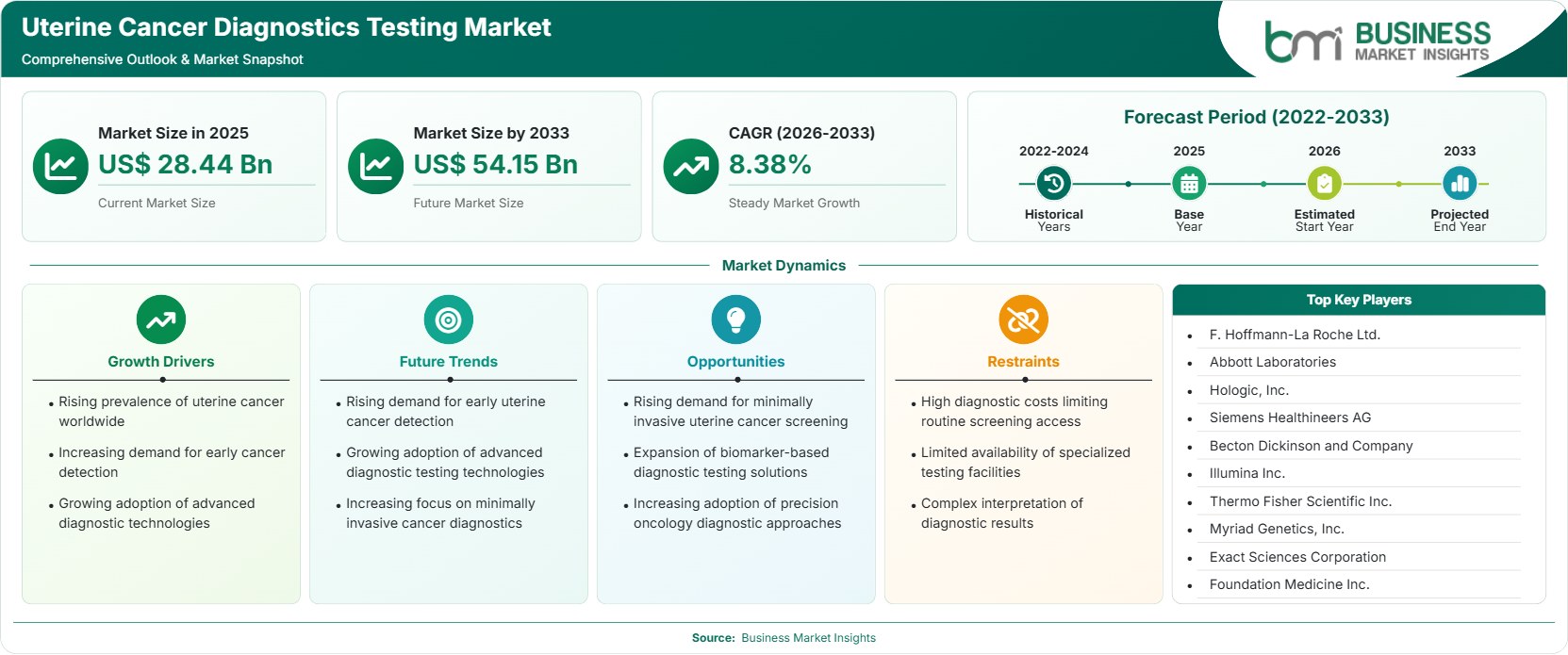
The Uterine Cancer Diagnostics Testing Market size was valued at US$ 28.44 Billion in 2025 and is projected to reach US$ 54.15 Billion by 2033, growing at a CAGR of 8.38% during 2026–2033. Growth is supported by rising endometrial cancer incidence, expanding biomarker-based diagnostics, improving imaging technologies, increasing screening awareness, and investment in precision oncology platforms across healthcare systems.

Report Coverage
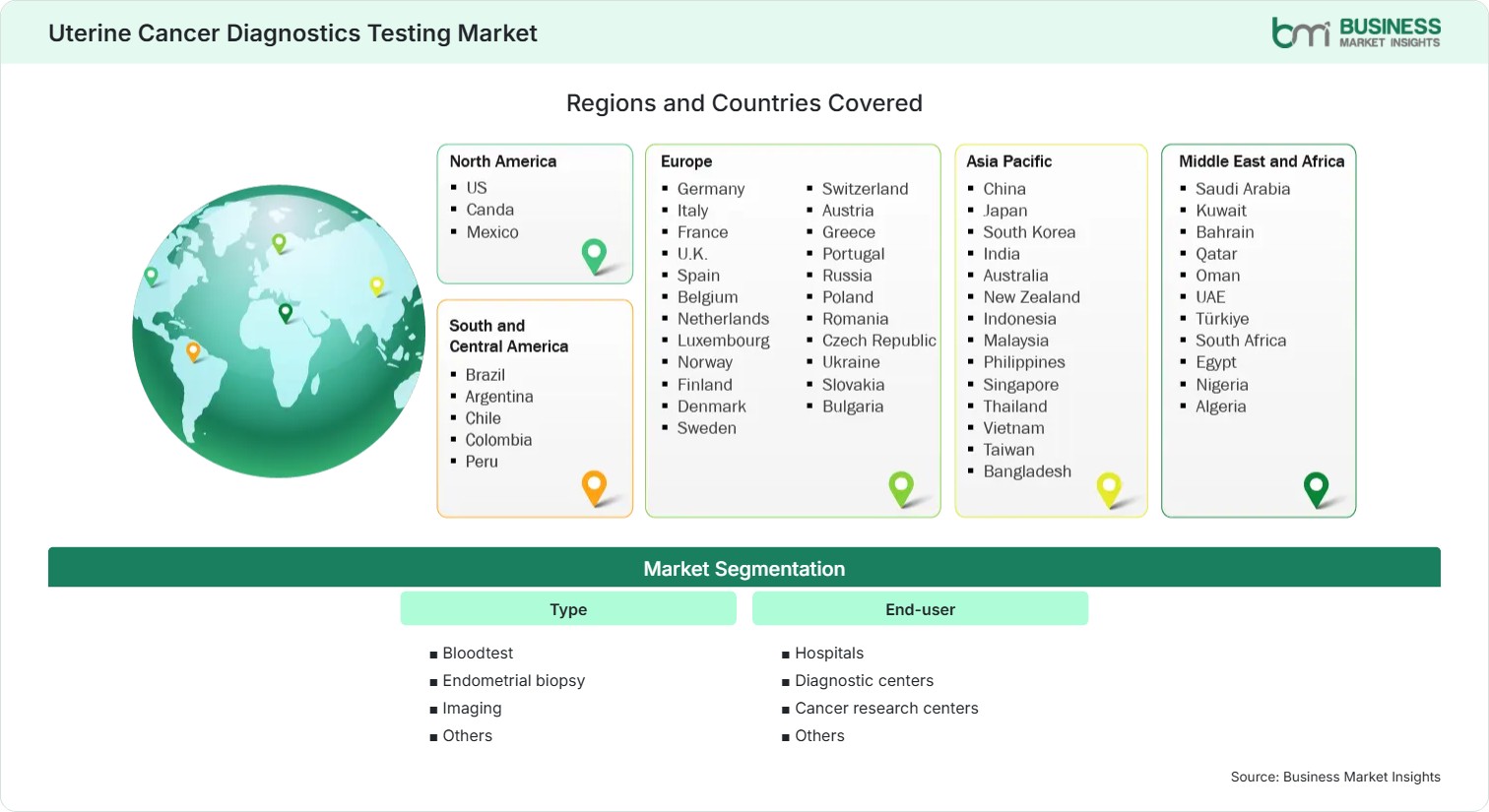
  • Type: Bloodtest, Endometrial biopsy, Imaging, Others
  • End-user: Hospitals, Diagnostic centers, Cancer research centers, Others
US$ 28.44 Bn Market size in 2025
US$ 54.15 Bn Market Size by 2033
8.38% CAGR, 2026 - 2033
2026-2033 Forecast Period

AI Overview

Uterine Cancer Diagnostics Testing Market Summary

  • North America Region: North America holds a market share of 38%–41% in 2025, growing at a CAGR of 7.6%–8.0% during 2026–2033. Key drivers include advanced oncology infrastructure, molecular diagnostics adoption, reimbursement support, and AI-enabled imaging. Opportunities emerge from precision medicine expansion and biomarker validation programs across cancer networks. US market benefits from strong clinical research activity and an estimated CAGR of 7.8%–8.2%.
  • Fastest Growing Region: Asia Pacific accounts for 24%–27% share in 2025 and is projected to grow at a CAGR of 9.8%–10.4%. Rising healthcare expenditure, increasing cancer awareness, expanding diagnostic capacity, and government-led oncology initiatives support sustained adoption across developing healthcare markets.
  • Leading Segment: Endometrial biopsy represents a 34%–37% Uterine Cancer Diagnostics Testing Market share in 2025 and advances at a CAGR of 7.9%–8.4%. Clinical reliability, established diagnostic guidelines, physician preference, pathology integration, and growing patient referrals continue supporting utilization across diagnostic pathways worldwide.
  • High Growth Segment: Imaging accounts for 24%–27% share in 2025 and records a CAGR of 9.2%–9.8%. Technological improvements in MRI and transvaginal ultrasound systems, combined with earlier disease detection requirements, accelerate clinical deployment and investment.
  • Key Market Opportunity: Growing integration of genomic testing, liquid biopsy technologies, digital pathology, and AI-supported cancer screening creates opportunities to improve early diagnosis accuracy, personalize treatment decisions, and enhance healthcare efficiency globally.
  • Major Market Players: F. Hoffmann-La Roche Ltd., Abbott Laboratories, Hologic, Inc., Siemens Healthineers AG, Becton, Dickinson and Company, Illumina, Inc., Thermo Fisher Scientific Inc., Myriad Genetics, Inc., Exact Sciences Corporation, Foundation Medicine, Inc.
Strategic Insights

Uterine Cancer Diagnostics Testing Market: Strategic Insights

Uterine Cancer Diagnostics Testing Market Strategic Framework
FREE PDF
Request your free sample
Request free sample
Stakeholder View

Key Takeaways

  • The value chain increasingly integrates pathology laboratories, imaging providers, sequencing companies, software developers, and oncology centers, creating a highly collaborative diagnostic ecosystem.
  • Imaging and molecular diagnostics present the strongest commercial upside owing to expanding use in early-stage identification, treatment stratification, and disease monitoring workflows.
  • Research activity is shifting toward liquid biopsy panels, genomic signatures, digital pathology, and machine-learning-assisted interpretation platforms capable of improving diagnostic precision.
  • Asia Pacific offers a compelling opportunity as healthcare modernization, reimbursement expansion, and rising cancer awareness accelerate demand for advanced testing services.
  • Strategic partnerships, laboratory acquisitions, and precision oncology investments continue to reshape competition as companies seek differentiated diagnostic capabilities and broader clinical reach.
  • Growing emphasis on personalized medicine is increasing demand for integrated diagnostic platforms combining histopathology, imaging, and genomic information.
Geographic Outlook

Uterine Cancer Diagnostics Testing Market Regional Highlights

North America Uterine Cancer Diagnostics Testing Market

North America accounted for approximately 38%–41% of the Uterine Cancer Diagnostics Testing Market share in 2025 and is expected to register a CAGR of 7.6%–8.0% through 2033. Strong diagnostic infrastructure, high oncology spending, and rapid adoption of precision medicine underpin regional leadership. Academic medical centers actively implement molecular profiling and digital pathology solutions. The United States generates the majority of regional demand, while Canada benefits from organized cancer programs and increasing investment in women’s health diagnostics.

  • Molecular testing adoption continues expanding across major oncology centers, improving risk stratification and supporting personalized treatment pathways.
  • AI-enhanced pathology workflows reduce turnaround times and improve diagnostic consistency across large laboratory networks.
  • Reimbursement support for advanced cancer diagnostics encourages broader clinical utilization and hospital investment.
  • Expansion of precision oncology programs supports sustained testing demand across academic and community healthcare settings.

US Uterine Cancer Diagnostics Testing Market

The United States represents approximately 82%–86% of North American revenue and records a CAGR of 7.8%–8.2% through 2033. Rising incidence of endometrial cancer, strong clinical trial activity, and rapid technology adoption sustain market expansion. Large diagnostic companies continue investing in genomic testing and AI-supported pathology. Increasing awareness regarding early diagnosis contributes to higher screening and referral volumes across healthcare institutions nationwide.

  • Large-scale oncology networks are integrating genomics with pathology for comprehensive diagnostic assessment.
  • NIH-supported cancer research initiatives encourage biomarker discovery and clinical validation programs.
  • Broader deployment of advanced MRI systems strengthens imaging-based diagnostic capabilities.
  • Digital pathology implementation supports productivity gains and specialist collaboration.

Europe Uterine Cancer Diagnostics Testing Market

Europe captures 28%–31% share in 2025 and is expected to expand at a CAGR of 7.8%–8.3%. Strong public healthcare coverage and increasing deployment of molecular oncology platforms sustain growth. Germany remains the leading Uterine Cancer Diagnostics Testing Market, while Spain demonstrates among the fastest growth rates due to modernization of cancer diagnostics infrastructure. Regional clinical guidelines increasingly support biomarker assessment and precision treatment planning, reinforcing demand throughout the diagnostic pathway.

  • Germany leads regional demand through advanced laboratory infrastructure and established cancer care systems.
  • Spain exhibits accelerated adoption driven by healthcare digitization and oncology investment.
  • Cross-border cancer research collaborations strengthen innovation and biomarker development.
  • National screening awareness programs support earlier diagnosis and improved patient pathways.

Asia Pacific Uterine Cancer Diagnostics Testing Market

The Asia-Pacific region accounts for 24%-27% in 2025 and is one of the fastest-growing regions, with a CAGR of 9.8%-10.4% for the Uterine Cancer Diagnostics Testing Market. China dominates revenue generation in the region owing to increased spending on healthcare infrastructure, whereas India has tremendous growth opportunities due to improved access to diagnostic facilities. Growth drivers include increasing healthcare spending, urbanization, and increasing awareness of gynecological cancers. Public and private sector investments in oncology infrastructure support long-term demand across the region.

  • China remains the largest regional market through extensive hospital modernization initiatives.
  • India benefits from increasing availability of specialized cancer diagnostic services.
  • Growing private laboratory networks enhance accessibility of diagnostic testing solutions.
  • Government-funded cancer programs improve awareness and patient referral pathways.
  • Expanding precision medicine initiatives strengthen demand for genomic testing platforms.

Rest of World Uterine Cancer Diagnostics Testing Market

Rest of World holds a market share of 8% to 10% and is expected to grow at a CAGR of 8.4% to 9.0%. Brazil is the leader in adoption in South and Central America owing to advancements in oncology facilities. The UAE and Saudi Arabia continue to be the leading growth areas of the Middle East region due to their healthcare initiatives. Increasing investment in specialized cancer centers and diagnostic laboratories is strengthening access to advanced testing technologies across developing healthcare markets

  • Brazil benefits from expansion of private oncology and diagnostic networks.
  • Mexico is improving access to women's health screening and diagnostic services.
  • Saudi Arabia invests heavily in advanced healthcare technologies and cancer care.
  • UAE supports precision medicine development through digital health initiatives.
  • International partnerships accelerate knowledge transfer and laboratory modernization.
Global Market Geography
FREE PDF
Request your free sample
Request free sample
Segment Analysis

Uterine Cancer Diagnostics Testing Market Segmentation

Type

This segment captured about 58%-61% of market share in 2025 and is expected to expand at a CAGR of 8.4%-8.8%. The scope of the Uterine Cancer Diagnostics Testing Market remains extensive with a multichannel strategy involving pathology, imaging, and molecular diagnostic techniques. The uptake has been driven by rising incidences of cancer, physician awareness, and the need for early and accurate diagnosis.

  • Blood test: Emerging biomarker and liquid biopsy technologies support non-invasive assessment, improve patient comfort, and expand opportunities for longitudinal cancer monitoring in clinical settings.
  • Endometrial biopsy: Widely recognized as a diagnostic standard due to strong clinical accuracy, pathology compatibility, and integration into established gynecologic oncology workflows.
  • Imaging: MRI, ultrasound, and CT technologies support disease detection, staging assessment, and treatment planning while benefiting from ongoing technological advancements.

End-user

This segment accounts for 39%-42% market share in 2025 and is expected to grow at a CAGR of 8.1%-8.6%. The demand drivers include growing oncology service provision, rising diagnostics workload, and investments made in facilities for cancer management. Current Uterine Cancer Diagnostics Testing Market trends point towards improved coordination among hospitals, laboratories, and research facilities.

  • Hospitals: Major diagnostic volumes originate from hospitals due to integrated pathology services, imaging capabilities, and direct access to multidisciplinary cancer care teams.
  • Diagnostic centers: Specialized laboratories increasingly provide genomic testing, molecular profiling, and high-throughput analysis supporting efficiency and broader patient access.
  • Cancer research centers: These institutions drive biomarker discovery, clinical validation studies, and precision oncology development, supporting future diagnostic innovation.
Market Forces

Uterine Cancer Diagnostics Testing Market Dynamics

Key Market Drivers

Rising Global Incidence of Endometrial Cancer

The global incidence of endometrial cancer rises because of the obesity epidemic, aging demographics, and metabolic conditions. WHO and other cancer registries have noted steady increases in the disease burden associated with gynecological cancers, which has increased demand for diagnostic technology. Diagnosing the disease at an early stage is beneficial and encourages medical doctors to make more diagnoses. There has been an increased adoption of pathology, imaging, and molecular diagnostic tests in hospitals. With increased patient volume, there is a need to purchase additional equipment and hire lab technicians. All of these serve as underlying drivers of market growth.

Advancements in Molecular and Genomic Diagnostics

The advent of genomic sequencing, biomarker panels, and companion diagnostics is revolutionizing cancer diagnosis. Molecular profiling has become possible, resulting in enhanced disease subtyping and personalized treatment. Diagnostic companies are continually improving next-generation sequencing, digital pathology, and laboratory automation. This leads to better performance and builds trust among physicians for use in oncology settings. The merging of genomic data with pathological information is providing a more robust diagnostic process. As precision medicine continues to be increasingly incorporated into gynecological oncology, sophisticated diagnostic tools will ensure lasting demand within healthcare systems.

Growing Adoption of AI in Diagnostic Interpretation

The technology is already producing groundbreaking results in such fields as image processing, pathology diagnostics, and workflow automation. The systems equipped with artificial intelligence technologies help detect abnormalities, reduce discrepancies, and improve laboratory performance. Digital pathology solutions have become increasingly popular in medicine due to a shortage of specialists and a high volume of cases. Companies keep inventing new algorithms capable of improving diagnostic accuracy and making decisions based on the collected data. It not only improves business performance but also helps hospitals deal with increasing oncology workloads. Investments in healthcare digitalization will ensure the adoption of the technology.

Key Market Opportunities

Expansion of Liquid Biopsy Applications

Liquid biopsy methodologies offer opportunities for early detection, therapy monitoring, and recurrence detection through noninvasive means. Further research into biomarkers linked to endometrial cancer is ongoing and continues to add value to the technology. With advancements in platform availability and reduced costs, the potential for usage increases in hospitals and specialized laboratories. High levels of investment are driving the technology's commercialization process. Positive Uterine Cancer Diagnostics Testing Market Forecasts are taking into account liquid biopsy technology as part of the future diagnostic process. Organizations that can validate their biomarker panel gain a significant competitive advantage.

Growth Potential in Emerging Healthcare Markets

Developing the healthcare infrastructure of Asia, Latin America, and some regions of the Middle East offers many opportunities. Public authorities continue to fund facilities for cancer care, diagnosis, and specialty training. A higher level of awareness about women’s health leads to greater involvement in screening procedures and clinical examination. International organizations and public health bodies assist in developing programs to improve oncology outcomes. With greater availability of diagnostic tools, there will be increased demand for advanced imaging technologies, pathology solutions, and molecular testing services. Suppliers that establish local partnerships and distribution networks may benefit from strong long-term market penetration.

Integration of Companion Diagnostics

Precision oncology increasingly relies on companion diagnostics to detect suitable therapeutic targets. Drug companies and diagnostic firms will enter into closer cooperation regarding biomarker-driven drug selection. The approval of targeted treatments by regulatory agencies creates a need for validation testing tools. Diagnostic facilities capable of providing comprehensive genomic and pathological analyses will be more valuable in precision medicine networks. The wider adoption of companion diagnostics will benefit patient treatment while meeting ongoing testing requirements. This trend supports investment in assay development, laboratory services, and advanced molecular platforms.

Market Restraints and Challenges

High Cost of Advanced Diagnostic Technologies

The need for sophisticated genetic testing techniques, digital pathology systems, and dedicated imaging equipment is usually very expensive and requires a trained workforce. Less well-endowed healthcare institutions may be hesitant to adopt such technology due to funding constraints, thereby posing accessibility challenges. Differences in reimbursement levels can make it difficult to decide about technology adoption. Even though precision medicine technology offers many benefits to patients, cost-effectiveness is a critical issue. These financial barriers can slow implementation timelines and limit market penetration in underserved regions despite rising clinical demand.

Diagnostic Access Disparities Across Regions

Differences in healthcare infrastructure, specialist availability, and laboratory capabilities lead to unequal access to more sophisticated tests for diagnosing cancer. Late diagnoses and nonstandardized testing procedures can affect patient outcomes and lead to low utilization rates. In developing countries, a lack of labor and equipment can prevent a thorough diagnostic examination. Geographical differences can lead to considerable disparities in the utilization rates of urban and rural areas. Addressing these gaps requires coordinated investment in healthcare infrastructure, workforce development, and the expansion of diagnostic networks to ensure broader access to high-quality cancer testing.

Company Analysis

Competitive Landscape

This Uterine Cancer Diagnostics Testing Market analysis highlights competition among diagnostic technology providers, molecular testing specialists, imaging companies, and precision oncology innovators.

Company Name

Overview

Products and Services relevant to this market

F. Hoffmann-La Roche Ltd.

Global diagnostics leader with strong oncology testing portfolio and precision medicine capabilities.

Molecular diagnostics, pathology solutions, companion diagnostics, biomarker testing platforms.

Abbott Laboratories

Diversified healthcare company operating advanced diagnostic and laboratory businesses.

Immunoassays, clinical laboratory systems, oncology-related testing technologies.

Hologic, Inc.

Women's health specialist with extensive diagnostic and imaging expertise.

Ultrasound technologies, diagnostic systems, gynecological testing solutions.

Siemens Healthineers AG

Major imaging and laboratory diagnostics supplier worldwide.

MRI, CT, ultrasound, laboratory diagnostics, digital healthcare platforms.

Becton, Dickinson and Company

Medical technology company supporting pathology and clinical laboratories.

Biopsy products, specimen management systems, diagnostic workflow technologies.

Illumina, Inc.

Leading sequencing technology provider expanding oncology applications.

Next-generation sequencing platforms and genomic analysis solutions.

Thermo Fisher Scientific Inc.

Global life sciences company serving diagnostic and research institutions.

Molecular testing systems, reagents, pathology laboratory solutions.

Myriad Genetics, Inc.

Precision medicine specialist focused on hereditary and oncology testing.

Genetic testing, biomarker analysis, oncology diagnostics.

Exact Sciences Corporation

Cancer diagnostics company emphasizing early detection technologies.

Molecular cancer testing and genomic diagnostic solutions.

Foundation Medicine, Inc.

Precision oncology company supporting comprehensive genomic profiling.

Genomic testing services, biomarker profiling, personalized medicine diagnostics.

Trust & Transparency

Research Methodology

The market analysis combines proprietary research with secondary data from government agencies, company disclosures, regulatory filings, industry databases and expert interviews. Market estimates are validated through data triangulation, cross-market benchmarking and analyst review.

View Full Research Methodology

Questions Answered

Frequently Asked Questions

What does the Uterine Cancer Diagnostics Testing Market Report typically analyze?

The Market Report evaluates market dynamics, technology developments, competition, regional performance, investment opportunities, and forecast trends influencing industry expansion.

Which region offers the strongest future growth potential?

Asia Pacific presents significant opportunities due to healthcare infrastructure development, rising cancer awareness, increasing investment, and expanding diagnostic accessibility.

Why is endometrial biopsy widely used?

It provides direct tissue evaluation, reliable pathological confirmation, and strong clinical accuracy, making it a cornerstone of diagnostic workflows.

What role does imaging play in diagnosis?

Imaging helps identify abnormalities, evaluate disease extent, support staging decisions, and guide physicians during treatment planning and follow-up assessment.

What factors are increasing demand for uterine cancer diagnostic tests?

Growing cancer incidence, expanded awareness, precision medicine adoption, and improved access to molecular diagnostics are increasing testing demand across healthcare systems.

Access the Full Uterine Cancer Diagnostics Testing Market Report

Get segment-level forecasts, regional estimates, competitive benchmarking, company profiles and downloadable Excel datasets.

Access the full Uterine Cancer Diagnostics Testing Market Report
350 pages PDF & Excel | 2026-09-15
Similar Research

Related Market Reports