
Cancer Vaccines Market Outlook: Size, Share, Trends, Growth Analysis, Competitive Landscape & Forecast, 2026-2033

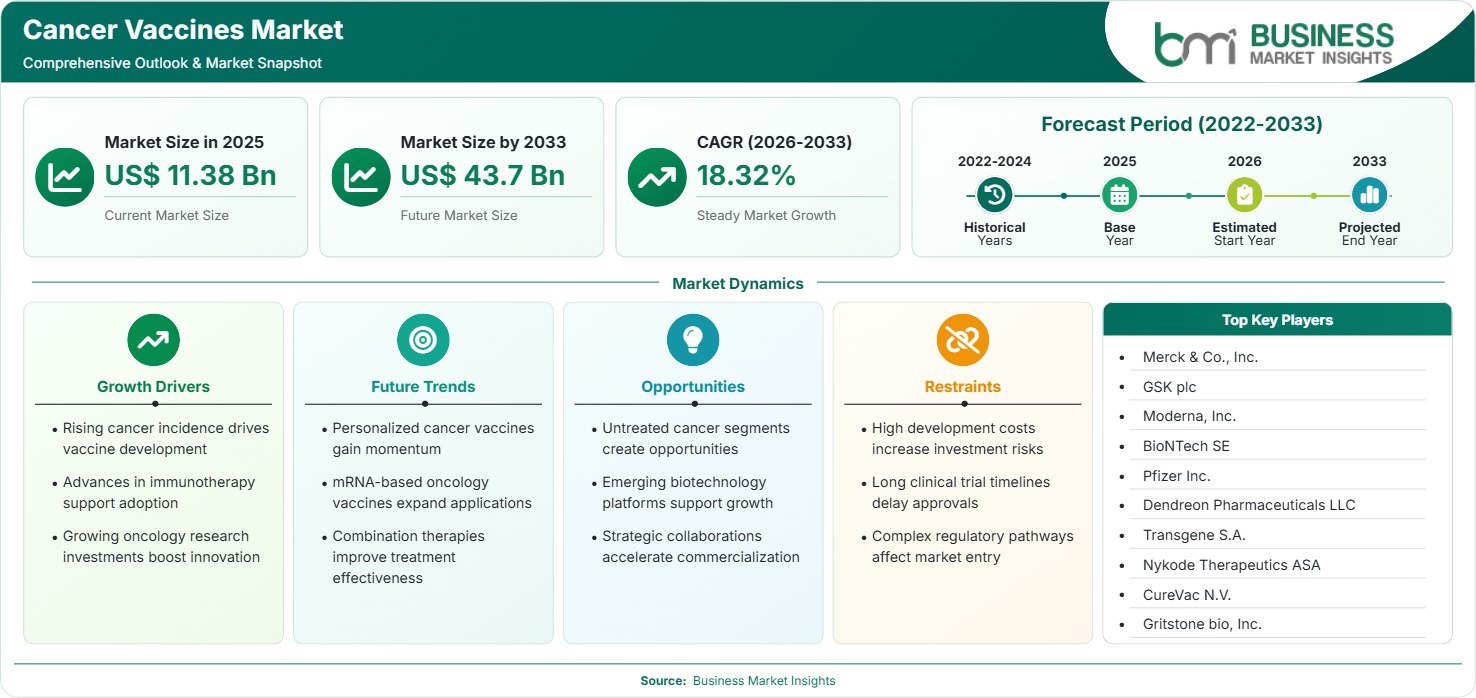
The Cancer Vaccines Market size was valued at US$ 11.38 Billion in 2025 and is projected to reach US$ 43.7 Billion by 2033, growing at a CAGR of 18.32% during 2026–2033. Rising cancer incidence, expanding immunotherapy adoption, mRNA platform advances, favorable regulatory support, and personalized oncology development are accelerating commercialization opportunities across preventive and therapeutic vaccine applications.

Report Coverage
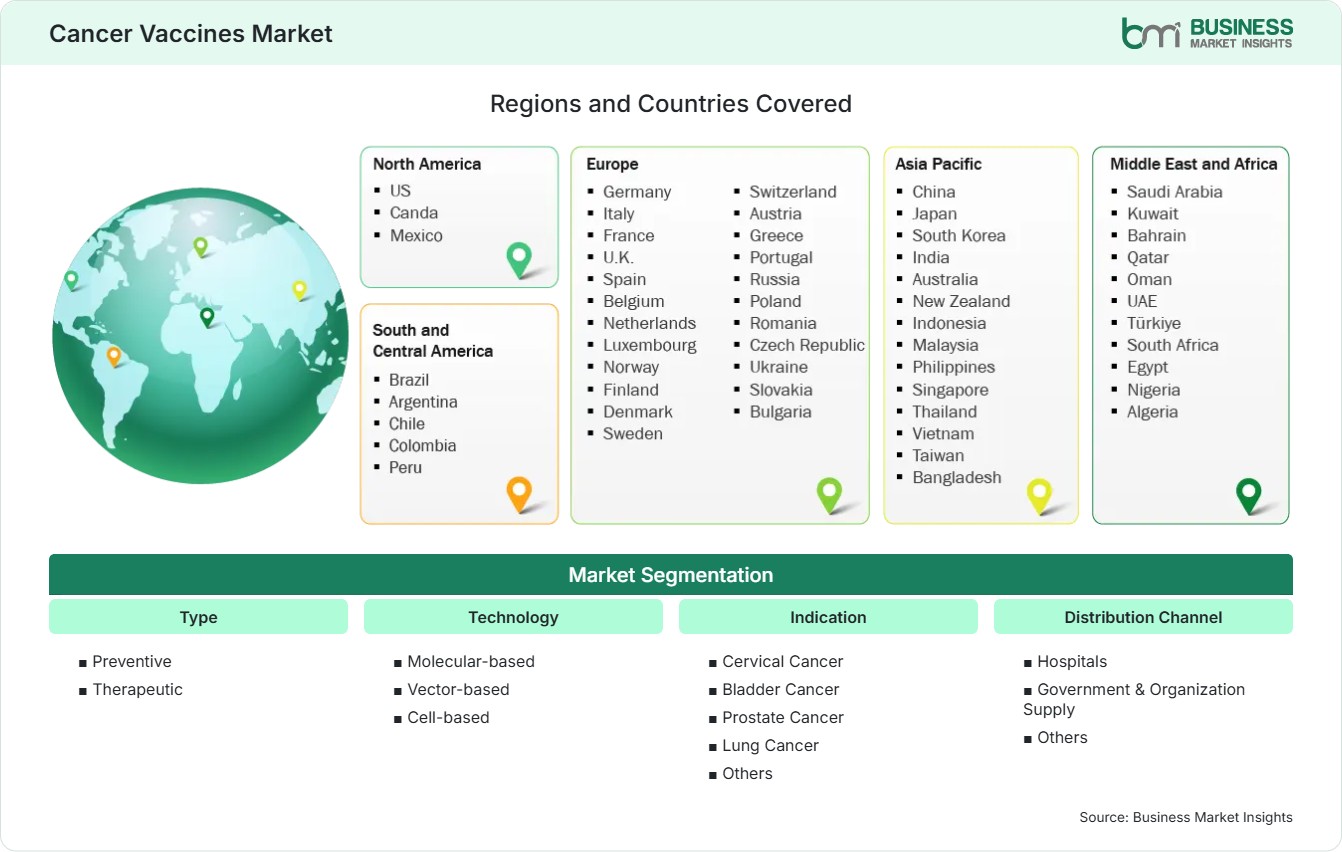
  • Type: Preventive, Therapeutic
  • Technology: Molecular-based, Vector-based, Cell-based
  • Indication: Cervical Cancer, Bladder Cancer, Prostate Cancer, Lung Cancer, Others
  • Distribution Channel: Hospitals, Government & Organization Supply, Others
US$ 11.38 Bn Market size in 2025
US$ 43.7 Bn Market Size by 2033
18.32% CAGR, 2026 - 2033
2026-2033 Forecast Period

AI Overview

Cancer Vaccines Market Summary

  • North America Region: North America holds a market share of 39%–42% in 2025, growing with a CAGR of 17.0%–18.5% during 2026–2033. Strong clinical trial activity, mRNA innovation, reimbursement support, and strategic partnerships create substantial growth opportunities across oncology care. US market benefits from robust biotech investment and personalized vaccine development, advancing at 17.5%–19.0% CAGR.
  • Fastest Growing Region: Asia Pacific holds a Cancer Vaccines Market share of 24%–27% in 2025, growing with a CAGR of 20.0%–22.0% during 2026–2033. Expanding healthcare expenditure, biotechnology manufacturing capacity, rising cancer burden, and research collaborations create attractive opportunities for vaccine developers and healthcare institutions.
  • Leading Segment: Preventive vaccines account for a 54%–58% share in 2025 and expand at 16.0%–17.5% CAGR. Established HPV and hepatitis-related immunization programs, public health initiatives, and broad clinical acceptance continue supporting segment leadership worldwide.
  • High Growth Segment: Therapeutic vaccines represent 42%–46% of the Cancer Vaccines Market share in 2025 and grow at 20.0%–22.5% CAGR. Personalized neoantigen platforms, mRNA technologies, and combination immunotherapy approaches are expanding treatment possibilities across multiple tumor indications.
  • Key Market Opportunity: Personalized cancer vaccines integrating genomic sequencing, AI-enabled antigen identification, and mRNA delivery systems are creating scalable precision oncology pathways, improving response rates while expanding commercial opportunities across high-value therapeutic segments.
  • Major Market Players: Merck & Co., Inc.; GSK plc; Moderna, Inc.; BioNTech SE; Pfizer Inc.; Dendreon Pharmaceuticals LLC; Transgene S.A.; Nykode Therapeutics ASA; CureVac N.V.; Gritstone bio, Inc.
Strategic Insights

Cancer Vaccines Market: Strategic Insights

Cancer Vaccines Market Strategic Framework
FREE PDF
Request your free sample
Request free sample
Stakeholder View

Key Takeaways

  • The value chain increasingly integrates genomic sequencing providers, antigen discovery firms, vaccine developers, contract manufacturers, and specialty oncology centers, creating a highly collaborative innovation ecosystem.
  • Therapeutic vaccine platforms targeting melanoma, lung cancer, prostate cancer, and personalized neoantigen applications offer the strongest long-term revenue expansion opportunities.
  • mRNA and AI-enabled antigen identification technologies are reshaping product development, improving patient-specific targeting and accelerating clinical candidate selection.
  • Asia Pacific presents an attractive investment destination due to expanding clinical research infrastructure, government support, and rising oncology treatment expenditure.
  • Strategic partnerships between pharmaceutical companies and biotechnology innovators are increasing, with co-development agreements reducing risk and accelerating commercialization timelines.
  • Preventive oncology programs remain critical for long-term disease reduction, particularly through HPV vaccination initiatives supported by global health organizations.
Geographic Outlook

Cancer Vaccines Market Regional Highlights

North America Cancer Vaccines Market

North America represents the largest regional market, accounting for approximately 39%–42% of the Cancer Vaccines Market share in 2025 while advancing at a CAGR of 17.0%–18.5% through 2033. Strong biotechnology ecosystems, extensive clinical research networks, established reimbursement structures, and high cancer screening rates support regional leadership. The presence of leading vaccine innovators, advanced manufacturing infrastructure, and substantial oncology R&D investment further strengthens commercialization potential. Growing adoption of precision medicine and therapeutic vaccine programs continues expanding addressable opportunities.

  • Significant mRNA oncology investment supports personalized vaccine development and clinical advancement across multiple cancer indications.
  • Robust regulatory pathways facilitate accelerated review and breakthrough designations for innovative immunotherapies.
  • Academic institutions and biotechnology companies collaborate extensively on neoantigen-based therapies.
  • Strong payer support and oncology infrastructure contribute to commercial uptake of advanced treatments.

US Cancer Vaccines Market

The United States contributes approximately 82%–86% of North American revenue, expanding at a CAGR of 17.5%–19.0% during the forecast period. Large-scale cancer research funding, advanced sequencing capabilities, and substantial biotechnology venture capital activity position the country as a primary innovation hub. Commercialization efforts increasingly focus on personalized therapeutic vaccines and combination regimens integrated with checkpoint inhibitors. Continued clinical pipeline expansion supports sustained demand.

  • Strong presence of biotechnology innovators accelerates translational research and product commercialization.
  • Federal research funding supports development of emerging immuno-oncology technologies.
  • Personalized medicine initiatives enhance adoption of genomic-guided therapeutic approaches.
  • Growing industry partnerships strengthen manufacturing and clinical development capabilities.

Europe Cancer Vaccines Market

Europe accounts for 27%–30% share in 2025 and records a CAGR of 17.5%–19.5%. Strong regulatory frameworks, public health programs, and biotechnology research capabilities support steady market expansion. Germany leads regional revenue generation, while the United Kingdom exhibits among the fastest growth rates at approximately 19%–20% CAGR. Increasing investment in immunotherapy innovation, supportive cancer strategies, and advanced clinical trial infrastructure strengthen long-term prospects for preventive and therapeutic vaccine adoption.

  • Germany remains the leading regional market due to strong biotechnology capabilities and oncology investment.
  • The United Kingdom demonstrates rapid expansion through precision medicine initiatives and clinical research programs.
  • EU cancer action plans continue supporting vaccination awareness and oncology innovation.
  • Growing partnerships between academic institutions and industry accelerate product development.
  • Expanding genomic medicine programs improve patient stratification and treatment effectiveness.

Asia Pacific Cancer Vaccines Market

The Asia Pacific region will account for 24% to 27% in 2025 and is the fastest-growing regional segment, with a CAGR of 20.0% to 22.0%. Rising cancer cases, increased availability of healthcare services, and growing investment in biotechnology create a favorable growth scenario. China dominates revenue generation in the region, while India records one of the fastest growth rates, at approximately 21%-23% CAGR. Government support for domestic vaccine manufacturing and oncology research strengthens long-term competitiveness across therapeutic and preventive applications.

  • China continues investing heavily in biotechnology innovation and domestic vaccine development.
  • India records strong growth driven by healthcare expansion and rising oncology awareness.
  • Regional governments support precision medicine and advanced manufacturing infrastructure.
  • Increasing clinical trial activity accelerates product development and market readiness.
  • Expanding healthcare insurance coverage improves treatment accessibility across key markets.

Rest of World Cancer Vaccines Market

The rest of the world region holds 8% to 11% market share in 2025 and records a CAGR of 18.0% to 20.0%. The regions of South & Central America benefit from vaccination programs and the development of oncology infrastructure. The Middle East and Africa have been seeing increasing investment in advanced cancer treatment services. Brazil drives the Latin American market, while Saudi Arabia is witnessing significant growth due to healthcare reforms and biotech investments.

  • Brazil remains a leading market supported by vaccination programs and oncology capacity expansion.
  • Saudi Arabia invests in precision medicine and advanced healthcare infrastructure development.
  • International collaborations improve technology transfer and clinical expertise.
  • Cancer awareness initiatives support earlier intervention and preventive vaccination uptake.
  • Increasing healthcare expenditure strengthens market accessibility across emerging economies.
Global Market Geography
FREE PDF
Request your free sample
Request free sample
Segment Analysis

Cancer Vaccines Market Segmentation

Type

Type segmentation is due to different goals in prevention and treatment. The largest type holds a 54%–58% share in 2025, whereas the fastest-growing type has a 20.0%–22.5% CAGR. The scope of the Cancer Vaccines Market remains large due to the development of both preventive and personalized therapy in oncology.

  • Preventive: Widely adopted for reducing virus-associated cancer risks through established immunization programs, supported by public health policies, broader awareness campaigns, and expanding access across developing healthcare systems.
  • Therapeutic: Increasingly utilized in precision oncology strategies, leveraging neoantigen targeting, mRNA technology, and immune activation mechanisms to improve outcomes for patients with established malignancies.

Technology

Technology adoption is moving towards more advanced systems that would enhance the immune system and enable personalized therapy. Molecular technologies have the largest market share, with a 44%–48% contribution, whereas cell-based technologies have the highest growth rate, at 20.0%–22.0% CAGR, due to their innovation intensity.

  • Molecular-based: Strong adoption driven by mRNA innovation, peptide vaccines, genomic targeting advances, and potential scalability for individualized treatment approaches.
  • Vector-based: Utilized to enhance antigen delivery efficiency and immune activation through engineered viral carriers supporting therapeutic applications.
  • Cell-based: Gains momentum from personalized oncology strategies, sophisticated immune modulation capabilities, and expanding clinical research activity.

Indication

The disease-specific demand is influenced by cancer incidence, treatment requirements, and vaccine efficacy. The most prevalent type of cancer is cervical cancer, accounting for 32%-36% of all cancers, while the fastest-growing type is lung cancer, which demonstrates the highest growth supported by therapeutic innovation and ongoing clinical trials.

  • Cervical Cancer: Continues benefiting from HPV vaccination programs and government-supported prevention initiatives, improving long-term disease reduction.
  • Bladder Cancer: Therapeutic innovations and growing interest in immune-based interventions support expanding clinical adoption.
  • Prostate Cancer: Increasing research investments and personalized treatment approaches strengthen future opportunity potential.
  • Lung Cancer: Significant research focus, high disease burden, and combination immunotherapy development support accelerated growth.

Distribution Channel

Distribution trends are changing as more sophisticated treatments require specific distribution mechanisms and special administration settings. The share of hospitals remains at 61%–65% in 2025, indicating a high growth rate due to the concentration of services for oncological patients.

  • Hospitals: Primary treatment settings with advanced infrastructure, oncology specialists, and administration capabilities required for complex vaccine therapies.
  • Government & Organization Supply: Supports population-level preventive vaccination programs through public healthcare systems and institutional procurement frameworks.
Market Forces

Cancer Vaccines Market Dynamics

Key Market Drivers

Rising Global Cancer Burden and Preventive Vaccination Demand

WHO states that cancer continues to be one of the major causes of mortality around the world and, therefore, requires innovation in its prevention and treatment methods. With more and more efforts to increase the number of HPV vaccines and raise people's awareness about the virus's connection to cancer, it becomes easier to introduce preventive measures. The Cancer Vaccines Market trends indicate a shift toward more public health approaches to reduce disease risk through vaccination. The development of preventive programs for cervical cancer in developed and developing nations contributes to steady revenues.

Advances in mRNA and Personalized Oncology Platforms

The successes achieved with mRNA technology have increased its utility in oncology, particularly for personalized neoantigen vaccines. There is growing recognition of the clinical feasibility of personalized therapies that elicit specific immune responses. This is evident in advances in individualized cancer vaccine development, as highlighted by Nature. Improvements in sequencing, AI for antigen recognition, and manufacturing have all improved the clinical feasibility of the therapy. These developments support broader adoption of therapeutics and create opportunities for high-value products that address previously difficult-to-treat cancers.

Strategic Collaborations Accelerating Commercialization

The collaboration between biotech companies that innovate and the pharmaceutical industry is making the development process more efficient within the entire industry. Through co-development initiatives, one can have clinical expertise, manufacturing capability, and commercialization. The growth of the market for cancer vaccines is increasingly driven by such collaboration models, in which development risk decreases, and geographic scope widens. Licensing deals, research collaborations, and platform technologies are fast-tracking clinical development. This trend strengthens competitive positioning and increases investment attractiveness across the oncology innovation landscape.

Key Market Opportunities

Expansion of Personalized Neoantigen Vaccine Programs

The development of personalized vaccines is considered one of the most promising possibilities for precision medicine in oncology. The idea behind the development is to use patient-specific mutations to elicit a more effective immune response. The increased availability of sequencing technologies and bioinformatics creates many opportunities for commercial success. According to Cancer Vaccines Market Forecasts, there is strong interest in investing in individualized therapeutic products that can address different types of tumors. With improvements in manufacturing scalability and efficiency, there will be significant long-term revenue-generation opportunities for major oncology centers that adopt them.

Emerging Market Biotechnology Infrastructure Development

Many new economy nations are making significant investments in areas such as biotechnology research, vaccine development, and oncology treatments. Countries have begun to recognize the importance of their own biopharmaceutical development as a healthcare strategy. Increased capacity in manufacturing and research funding enables innovation and self-reliance rather than reliance on imports. The increased availability of diagnostic services and specialized cancer treatments makes the market even more attractive for investment. Companies establishing early partnerships within these regions can benefit from favorable growth trajectories and increasing healthcare expenditure.

Combination Therapies with Checkpoint Inhibitors

The use of therapeutic vaccines, along with checkpoint inhibitors, holds promise for achieving better results across several tumors. This combination will increase immune stimulation while combating immune suppression caused by tumors. Current research indicates growing commercial interest in combined therapy approaches. If these can be validated clinically, they will increase patient eligibility, efficacy, and insurance coverage prospects. These factors create meaningful opportunities for developers seeking differentiation within increasingly competitive immuno-oncology markets.

Market Restraints and Challenges

High Development Costs and Manufacturing Complexity

Personalized and advanced therapeutic vaccines involve sophisticated genomic analysis, specialized manufacturing processes, and extensive clinical validation, making their development highly resource-intensive. These requirements significantly increase research, production, and commercialization costs, creating substantial financial risks for developers. Individualized vaccine manufacturing is far more complex than traditional pharmaceutical production, requiring customized workflows and stringent quality controls. In addition, evolving regulatory requirements for novel vaccine platforms add further compliance expenses and development timelines. Smaller biotechnology companies often face funding challenges during late-stage clinical development, potentially delaying market entry, limiting product diversity, and slowing overall market growth despite promising scientific advancements.

Regulatory and Clinical Uncertainty for Novel Platforms

Emerging therapeutic vaccine platforms often face significant regulatory and clinical uncertainties because long-term efficacy, durability, and safety data are frequently limited during early development stages. The absence of standardized regulatory pathways for innovative technologies can result in lengthy approval processes, delayed market entry, and increased investment risks. Developers must provide robust evidence of consistent manufacturing quality, sustained therapeutic benefits, and favorable safety outcomes across diverse patient populations. Differences in regulatory requirements across countries further complicate commercialization strategies, requiring substantial financial and operational resources. These challenges can slow product adoption and limit market expansion even after approval in key healthcare markets.

Company Analysis

Competitive Landscape

Cancer Vaccines Market analysis indicates rising competition among pharmaceutical leaders, specialized immunotherapy developers, and mRNA innovators.

Company Name

Overview

Products and Services relevant to this market

Merck & Co., Inc.

Global pharmaceutical leader with extensive oncology portfolio and strong immunotherapy research capabilities.

Personalized cancer vaccine collaborations, oncology therapeutics, immunotherapy development, clinical research programs.

GSK plc

Major vaccine manufacturer with global preventive healthcare expertise and strong vaccine commercialization infrastructure.

Preventive vaccines, adjuvant technologies, oncology vaccine research and development.

Moderna, Inc.

Biotechnology company specializing in mRNA platform innovation and individualized oncology programs.

mRNA cancer vaccines, personalized neoantigen therapies, precision medicine solutions.

BioNTech SE

Pioneer in mRNA therapeutics and personalized cancer immunotherapy development.

Individualized mRNA vaccines, oncology platforms, immune-targeted therapeutics.

Pfizer Inc.

Diversified pharmaceutical company with global vaccine and oncology capabilities.

Vaccine technologies, oncology medicines, immunotherapy support programs.

Dendreon Pharmaceuticals LLC

Specialized oncology company recognized for therapeutic cancer vaccine development.

Cellular immunotherapy and prostate cancer vaccine technologies.

Transgene S.A.

Clinical-stage biotechnology firm focused on viral vector-based immunotherapies.

Therapeutic vaccines, viral vector platforms, oncology development programs.

Nykode Therapeutics ASA

Immunotherapy developer advancing targeted vaccine technologies.

Cancer vaccines, antigen delivery platforms, immune activation technologies.

CureVac N.V.

RNA-focused biotechnology company leveraging messenger RNA innovations.

mRNA vaccine platforms, oncology research, precision medicine initiatives.

Gritstone Bio, Inc.

Biotechnology innovator focused on neoantigen-based immunotherapy approaches.

Personalized vaccines, tumor antigen discovery, immuno-oncology solutions.

Trust & Transparency

Research Methodology

The market analysis combines proprietary research with secondary data from government agencies, company disclosures, regulatory filings, industry databases and expert interviews. Market estimates are validated through data triangulation, cross-market benchmarking and analyst review.

View Full Research Methodology

Questions Answered

Frequently Asked Questions

What does this Cancer Vaccines Market Report indicate about future competition?

The Market Report highlights increasing competition around personalized therapies, mRNA innovation, strategic partnerships, and combination immunotherapy development across major oncology companies.

How are mRNA technologies influencing industry development?

mRNA platforms enable faster vaccine design, personalized neoantigen targeting, and flexible manufacturing approaches, making them highly attractive for next-generation cancer immunotherapies.

Which region offers the strongest future investment potential?

Asia Pacific offers significant investment opportunities because of rapid healthcare expansion, increasing biotechnology capabilities, and supportive government initiatives for oncology innovation.

What makes therapeutic cancer vaccines different from preventive vaccines?

Preventive vaccines reduce future cancer risk by targeting disease-causing viruses, while therapeutic vaccines stimulate immune responses against existing tumors in diagnosed patients.

Which cancer type currently generates the highest vaccine demand?

Cervical cancer remains a major demand contributor due to the global adoption of HPV vaccination programs and ongoing public health initiatives targeting prevention of virus-associated malignancies.

Access the Full Cancer Vaccines Market Report

Get segment-level forecasts, regional estimates, competitive benchmarking, company profiles and downloadable Excel datasets.

Access the full Cancer Vaccines Market Report
350 pages PDF & Excel | 2026-08-31