
Companion Diagnostics Market Outlook: Size, Share, Trends, Growth Analysis, Competitive Landscape & Forecast, 2026-2033

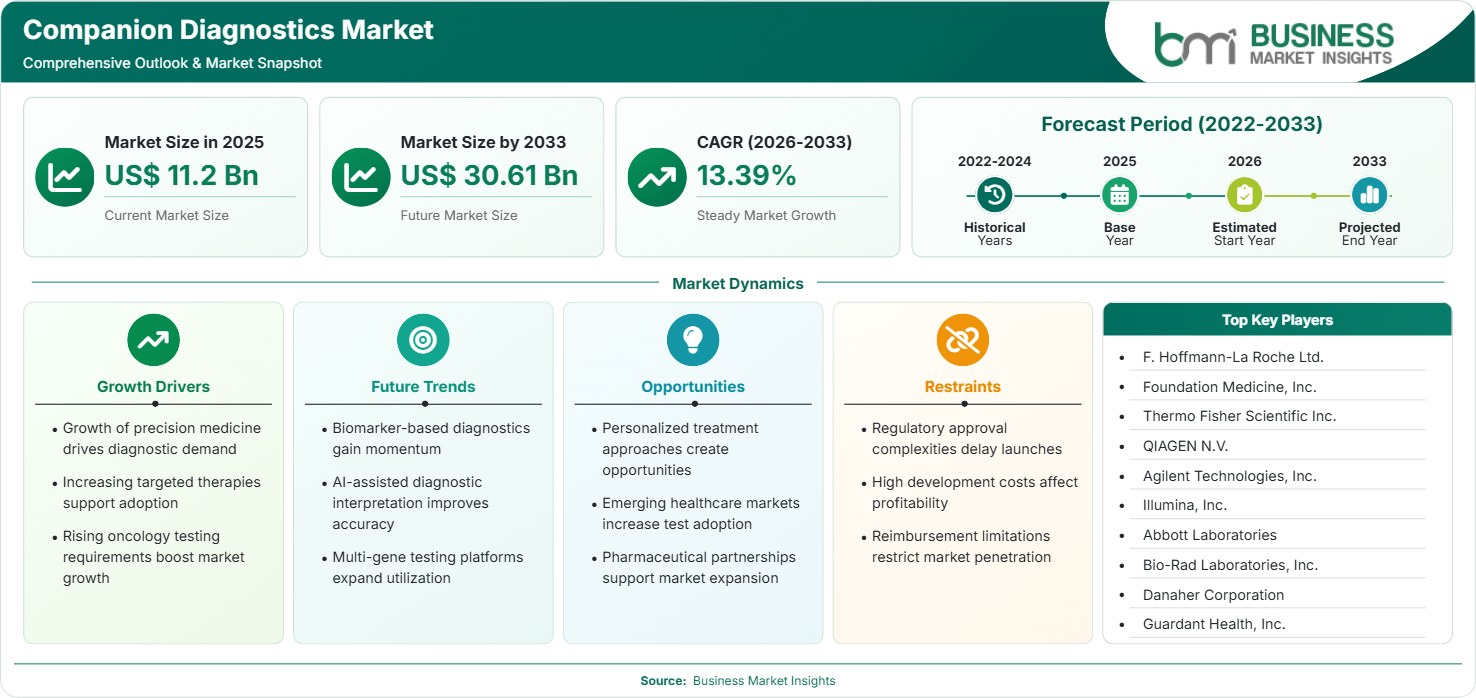
The Companion Diagnostics Market size was valued at US$ 11.2 Billion in 2025 and is projected to reach US$ 30.61 Billion by 2033, growing at a CAGR of 13.39% during 2026–2033. Growth is supported by precision oncology adoption, expanding biomarker-based therapies, increasing regulatory approvals, pharmaceutical-diagnostic collaborations, and opportunities emerging from next-generation sequencing, liquid biopsy, and personalized medicine programs.

Report Coverage
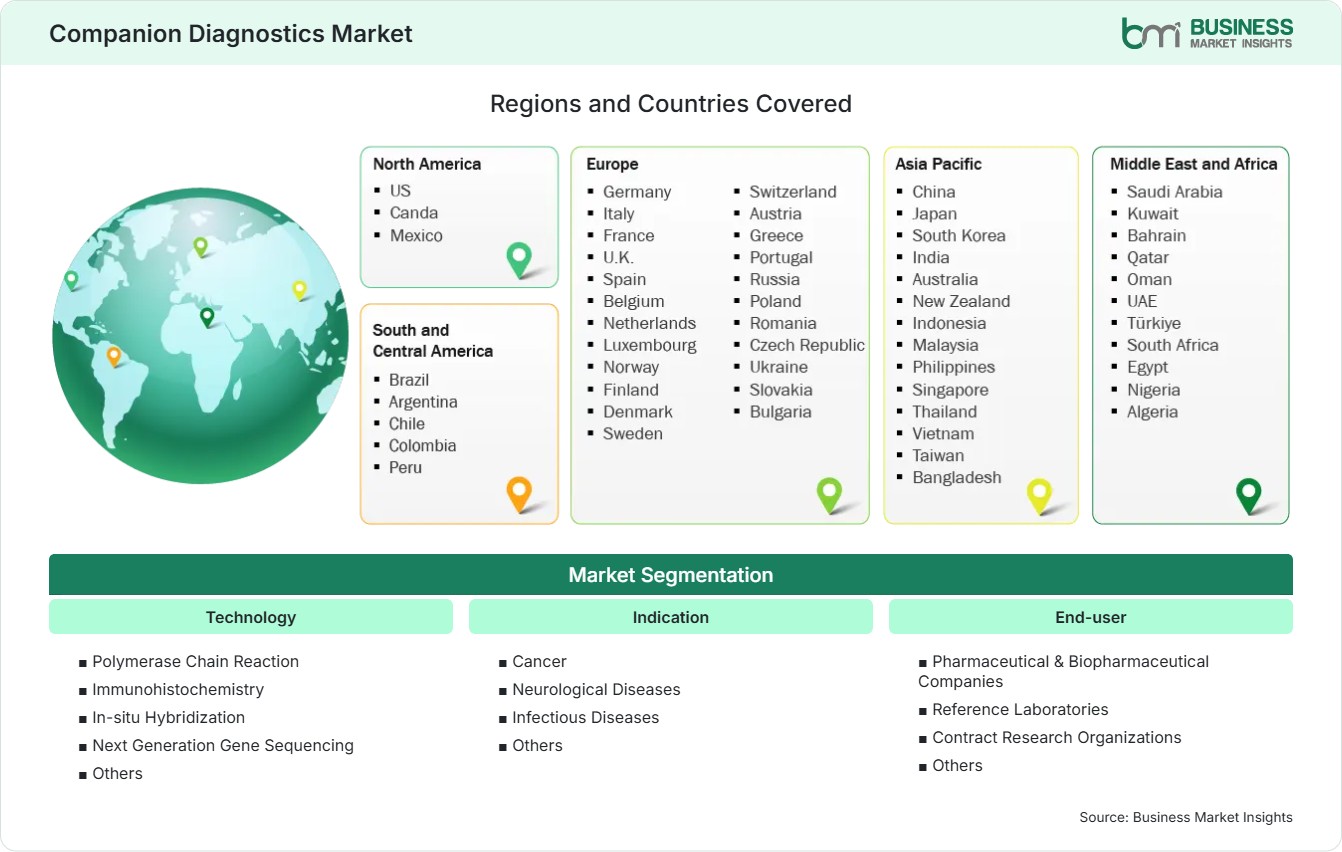
  • Technology: Polymerase Chain Reaction, Immunohistochemistry, In-situ Hybridization, Next Generation Gene Sequencing, Others
  • Indication: Cancer, Neurological Diseases, Infectious Diseases, Others
  • End-user: Pharmaceutical & Biopharmaceutical Companies, Reference Laboratories, Contract Research Organizations, Others
US$ 11.2 Bn Market size in 2025
US$ 30.61 Bn Market Size by 2033
13.39% CAGR, 2026 - 2033
2026-2033 Forecast Period

AI Overview

Companion Diagnostics Market Summary

  • North America Region: North America holds a market share of 38%–41% in 2025, growing with a CAGR of 12.2%–13.0% during 2026–2033, supported by precision medicine funding, oncology biomarker adoption, reimbursement access, and pharmaceutical partnerships. The U.S. market benefits from advanced genomic testing infrastructure and is expected to expand at a CAGR of 12.5%–13.3%.
  • Fastest Growing Region: Asia Pacific holds a market share of 23%–26% in 2025, growing with a CAGR of 15.0%–16.2% during 2026–2033, driven by genomics investments, expanding cancer screening programs, healthcare modernization, regulatory reforms, localized manufacturing, and increasing access to targeted therapies.
  • Leading Segment: Cancer accounts for a 54%–58% share in 2025, advancing at a CAGR of 13.1%–14.0%, supported by increasing targeted therapies, biomarker discoveries, companion assay approvals, precision oncology adoption, clinical trial activity, and higher molecular testing penetration.
  • High Growth Segment: Next Generation Gene Sequencing represents 24%–28% share in 2025, growing at a CAGR of 15.5%–16.8%, supported by declining sequencing costs, multiplex biomarker detection, comprehensive genomic profiling, decentralized testing expansion, and pharmaceutical co-development programs.
  • Key Market Opportunity: Integration of liquid biopsy, AI-enabled genomic interpretation, decentralized testing models, and pan-tumor biomarker strategies creates scalable pathways for broader precision medicine adoption across hospital and laboratory networks.
  • Major Market Players: F. Hoffmann-La Roche Ltd., Foundation Medicine, Inc., Thermo Fisher Scientific Inc., QIAGEN N.V., Agilent Technologies, Inc., Illumina, Inc., Abbott Laboratories, Bio-Rad Laboratories, Inc., Danaher Corporation, Guardant Health, Inc.
Strategic Insights

Companion Diagnostics Market: Strategic Insights

Companion Diagnostics Market Strategic Framework
FREE PDF
Request your free sample
Request free sample
Stakeholder View

Key Takeaways

  • Diagnostic manufacturers, pharmaceutical developers, research organizations, and reference laboratories are forming tightly integrated value chains where biomarker discovery, assay validation, and therapeutic commercialization increasingly occur through collaborative partnerships.
  • Oncology-focused applications remain the most attractive opportunity area, while neurological and infectious disease companion testing presents underpenetrated markets with considerable medium-term commercialization potential.
  • Innovation is shifting toward multiplex biomarker assessment, comprehensive genomic profiling, AI-supported interpretation, and liquid biopsy workflows capable of generating clinically actionable insights from minimally invasive samples.
  • Asia-Pacific offers a compelling investment case as China, India, South Korea, and Singapore continue expanding genomics infrastructure, precision medicine programs, and reimbursement support for advanced diagnostics.
  • Strategic partnerships, licensing agreements, and acquisitions focused on molecular diagnostics capabilities are increasing as companies seek access to biomarker portfolios, sequencing platforms, and pharmaceutical development pipelines.
  • Future competitiveness will depend on regulatory expertise, data analytics capabilities, laboratory network reach, and the ability to support co-development programs for next-generation targeted therapies.
Geographic Outlook

Companion Diagnostics Market Regional Highlights

North America Companion Diagnostics Market

North America holds around 38%-41% of the Companion Diagnostics Market share in 2025 and is anticipated to grow at a CAGR of 12.2%-13.0% between 2025 and 2033. North America's dominance is bolstered by widespread clinical acceptance of precision oncology, a favorable reimbursement environment, the availability of various biomarker tests, and high spending on pharmaceutical R&D. The number of FDA-approved companion diagnostics continues to rise across various therapeutic segments. Academic hospitals, cancer centers, and commercial laboratories maintain significant testing volumes while pharmaceutical partnerships accelerate biomarker validation and commercialization activities.

  • Precision oncology programs across major healthcare systems continue increasing routine biomarker testing adoption and supporting broader deployment of targeted therapies.
  • Pharmaceutical and biotechnology companies maintain substantial investments in biomarker-based drug development, strengthening assay demand across oncology pipelines.
  • Regulatory clarity for drug-diagnostic co-development improves commercialization timelines and enhances confidence among developers and healthcare providers.
  • Expanded use of comprehensive genomic profiling supports broader patient stratification capabilities and greater clinical utility.
  • Growing laboratory automation initiatives improve throughput, turnaround time, and operational efficiency across diagnostic networks.

US Companion Diagnostics Market

The United States holds 78%–82% market share in North America and is poised for growth at a CAGR of 12.5%–13.3%. The wide availability of molecular tests, innovative pharmaceutical clusters, and robust precision medicine programs helps maintain demand. Rising cancer incidence rates and approvals of targeted therapies contribute to increased demand for tests. There is an established reimbursement system, along with a well-developed laboratory infrastructure. The market benefits from a mature reimbursement environment, advanced laboratory infrastructure, and ongoing investments in biomarker research.

  • Academic medical centers remain focal points for translational genomics research and companion assay commercialization.
  • Strong venture capital activity supports innovative liquid biopsy and sequencing technology developers.
  • Expanded Medicare and private payer recognition of molecular testing improves patient accessibility.
  • Targeted therapies approved across multiple tumor types generate sustained demand for associated diagnostic tests.

Europe Companion Diagnostics Market

Europe is estimated to have a 28%–31% share in 2025, with a growth rate of 12.4%–13.2%. Germany dominates revenues in this region, whereas the Eastern part of Europe has better growth rates. The rising adoption of precision medicine models, the implementation of cancer screening programs, and genome research programs are driving demand for the market. Requirements of IVDR compliance standards are fostering higher validation standards and gaining confidence among healthcare professionals. Companion Diagnostics Market analysis across Europe highlights increasing adoption among university hospitals and specialist laboratories.

  • Germany remains the leading country due to strong molecular diagnostics infrastructure and pharmaceutical innovation capacity.
  • The United Kingdom benefits from national genomics initiatives and expanding personalized medicine programs.
  • Spain and Italy experience increasing biomarker testing penetration across oncology care pathways.
  • Poland and selected Eastern European markets exhibit higher growth rates as healthcare investments increase.
  • Regional collaboration improves access to genomic databases and advanced research networks.

Asia Pacific Companion Diagnostics Market

The Asia Pacific region holds a market share of 23%-26% in 2025 and demonstrates the highest CAGR of 15.0%-16.2%. Rising healthcare expenditures, increasing cancer prevalence, advances in laboratory technologies, and government policies in genomics drive market growth. China dominates regional revenues, whereas India has one of the highest growth rates in the region. Diagnostics firms of multinational corporations continue to localize their manufacturing and development.

  • China benefits from large-scale precision medicine initiatives and growing biomarker testing infrastructure.
  • India demonstrates strong growth supported by expanding private diagnostics networks and oncology care investments.
  • Japan maintains significant expertise in advanced diagnostics and targeted therapeutic development.
  • South Korea advances through genomic research leadership and digital healthcare integration.
  • Regional manufacturing investments improve affordability and testing accessibility.

Rest of World Companion Diagnostics Market

The Rest of World segment accounts for 8%-11% market share in 2025 and is projected to grow at a CAGR of 13.5%-14.3% through 2033. South & Central America increased access to oncology diagnostics due to initiatives to modernize healthcare facilities. The Middle East & Africa market is seeing steady uptake due to specialized cancer centers, government investments in the healthcare sector, and growing awareness of personalized treatment approaches across major urban healthcare systems.

  • Brazil remains the leading South American market with growing molecular diagnostics adoption.
  • Mexico benefits from healthcare infrastructure improvements and increasing oncology investments.
  • Saudi Arabia supports precision medicine initiatives through healthcare transformation programs.
  • UAE strengthens genomic medicine capabilities through advanced healthcare facilities.
  • South Africa serves as a regional hub for specialized diagnostic services and research activities.
Global Market Geography
FREE PDF
Request your free sample
Request free sample
Segment Analysis

Companion Diagnostics Market Segmentation

Technology

Technology accounted for the foundation of commercialization strategies, with PCR maintaining a leading position, while sequencing technologies have greater potential for further growth. The segment represents 100% of the market and is characterized by the growing importance of advanced molecular techniques. The scope of the Companion Diagnostics Market is expanding. The technology segment will have a CAGR of 13.3%–14.4% through the forecast period.

  • Polymerase Chain Reaction: Widely adopted due to established workflows, regulatory familiarity, rapid turnaround times, and strong performance for targeted biomarker detection across oncology and infectious disease applications.
  • Immunohistochemistry: Remains essential for tissue-based biomarker evaluation, supporting pathology integration and therapeutic selection within routine clinical oncology practice.
  • In-situ Hybridization: Provides accurate gene amplification and chromosomal alteration assessment, supporting targeted therapy eligibility decisions and confirmatory diagnostic workflows.
  • Next Generation Gene Sequencing: Expands clinical utility through multiplex genomic analysis, comprehensive profiling capabilities, and support for precision medicine decision-making.
  • Others: Emerging technologies focus on digital pathology, liquid biopsy support tools, and advanced molecular characterization approaches.

Indication

Cancer is the primary application with a market share of 54% to 58% and a 13.1% to 14.0% CAGR for 2025. The Companion Diagnostics Market trends include the rapid growth of biomarker-based treatment in oncology. Higher incidences of solid tumors, approvals of more targeted treatments, and investments in precision medicine continue to fuel the demand.

  • Cancer: Largest application area owing to extensive biomarker utilization, targeted therapy integration, and increasing adoption of personalized treatment protocols.
  • Neurological Diseases: Growing research activity around neurodegenerative biomarkers supports future assay development opportunities and clinical validation efforts.
  • Infectious Diseases: Precision treatment selection and antimicrobial resistance management create new opportunities for biomarker-driven diagnostics.

End-user

Pharmaceutical & Biopharmaceutical Companies dominate the Companion Diagnostics market with a market share of 42% to 46% in 2025 and a forecasted CAGR of 13.5% to 14.3%. The co-development strategy that couples therapeutics and diagnostics continues to influence market development trends. The investment in biomarker-based clinical trials and the approval process is encouraging market acceptance.

  • Pharmaceutical & Biopharmaceutical Companies: Primary adopters due to extensive biomarker development, targeted therapy pipelines, and regulatory requirements for precision treatment identification.
  • Reference Laboratories: Benefit from increasing testing volumes, advanced molecular capabilities, and broad physician referral networks.
  • Contract Research Organizations: Support assay validation, clinical trial testing, biomarker discovery, and regulatory evidence generation activities.
Market Forces

Companion Diagnostics Market Dynamics

Key Market Drivers

Expansion of Precision Oncology and Targeted Therapies

The need for cancer diagnostics is the most compelling driver of companion diagnostics, owing to the growing adoption of therapies in which biomarkers are identified before therapy. There are several regulatory approvals of biomarker-based therapies for lung cancer, breast cancer, colorectal cancer, and other forms of cancer. Pharmaceutical companies are incorporating diagnostics early in the drug development process to improve clinical trials and outcomes. Companion Diagnostics Market growth is significantly dependent on precision medicine initiatives, rising genomic testing, and growing adoption of biomarker-driven treatments by clinicians. The combination of higher cancer incidence, larger therapeutic pipelines, and broader payer acceptance creates durable demand for companion diagnostic assays across global healthcare systems.

Advances in Genomic and Molecular Testing Platforms

Next-generation sequencing, multiplex PCR, digital pathology, and high-sensitivity molecular assays are continually evolving for improved clinical utility and lab productivity. This technology enables comprehensive biomarker profiling from small tissue samples and reduces test turnaround time. Automation makes the process easier and facilitates large-scale roll-out to reference labs. New software for analysis improves interpretability and relevance to the clinic. The Companion Diagnostics Market trends now show a shift away from single-gene assays toward more genomics-based profiling methods, enabling multiple therapeutic decisions per patient sample.

Increasing Pharmaceutical-Diagnostic Co-development Programs

As drug developers become increasingly collaborative with diagnostic developers to identify responsive patient populations and enhance their regulatory applications, there have been growing benefits associated with the use of companion diagnostics. Companion diagnostics help in clinical trials by enabling patient stratification and demonstrating the efficacy of therapy in specific patient groups based on biomarkers. This kind of collaboration reduces the risks involved in development while improving the success rate of product commercialization. Increasing funding from biopharmaceutical companies is driving innovations in assay development, validation, and deployment globally.

Key Market Opportunities

Expansion of Liquid Biopsy-Based Testing

The field of liquid biopsy is quite promising, as it enables minimally invasive biomarker analysis. Blood tests for treatment decisions, disease monitoring, and genetic profiling are becoming more common. The increased sensitivity and wider clinical validation make liquid biopsy technology more suitable for practical applications. Investors consider the potential of liquid biopsy to be that of a scalable precision medicine platform. The Companion Diagnostics Market forecasts are now taking into account the impact of the introduction of liquid biopsy technology, especially in oncology. Successful commercialization could expand testing volumes while creating recurring revenue opportunities across healthcare networks.

Companion Diagnostics Beyond Oncology Applications

Even though oncology currently accounts for most revenue, there are underexplored fields such as neurological diseases, autoimmune disorders, and infections. New developments in biomarker identification and molecular profiling have deepened understanding of disease heterogeneity across therapeutic categories. Companion diagnostics used in diseases other than cancer can significantly broaden market scope. In pharmaceutical companies, the development of precision medicines to treat heterogeneous diseases is being actively pursued. The successful validation of biomarkers beyond oncology can generate revenue from new markets.

AI-Enabled Clinical Interpretation and Data Integration

The use of artificial intelligence can improve genomic data analysis, optimize processes, and support evidence-based treatment decisions. The increasing volume of molecular data poses challenges for traditional analytical techniques and calls for more advanced software products. AI technology can help identify clinically meaningful mutations, suggest treatment options, and accelerate reporting. In addition, the connection with electronic health records makes AI even more clinically valuable. Vendors that can offer validated decision support systems will gain a competitive advantage.

Market Restraints and Challenges

High Development Costs and Complex Regulatory Requirements

Factor: Companion diagnostic development requires extensive biomarker research, clinical validation, analytical testing, and regulatory documentation. Impact: Significant upfront investment can delay commercialization and limit market participation for smaller innovators. Regulatory expectations often vary across jurisdictions, increasing complexity and compliance costs. Developers must coordinate assay performance data with therapeutic evidence, creating additional timelines and operational requirements. These challenges can constrain innovation velocity, extend approval processes, and reduce profitability despite increasing demand. Companies lacking sufficient financial resources or regulatory expertise may struggle to compete effectively within evolving precision medicine ecosystems.

Reimbursement Variability and Healthcare Access Gaps

Factor: Reimbursement frameworks remain inconsistent across countries, healthcare systems, and specific testing applications. Impact: Limited coverage can restrict physician adoption and patient access, particularly within emerging markets. Healthcare providers may hesitate to incorporate advanced molecular testing without predictable reimbursement pathways. Economic constraints also affect laboratory investments in specialized equipment and workforce development. The result is uneven market penetration despite demonstrated clinical value. Addressing reimbursement barriers requires stronger clinical evidence, stakeholder education, and policy alignment aimed at supporting precision medicine implementation.

Company Analysis

Competitive Landscape

Companion Diagnostics Market analysis indicates a moderately consolidated competitive environment characterized by strong pharmaceutical-diagnostic partnerships, extensive regulatory expertise, and ongoing investment in molecular testing innovation.

Company Name

Overview

Products and Services relevant to this market

F. Hoffmann-La Roche Ltd.

Global diagnostics and pharmaceutical leader with extensive precision medicine capabilities and broad companion diagnostic portfolio.

PCR systems, tissue diagnostics, genomic assays, oncology companion diagnostics, biomarker testing solutions.

Foundation Medicine, Inc.

Precision oncology specialist focused on comprehensive genomic profiling and biomarker insights.

FoundationOne platforms, genomic profiling, companion diagnostic support services.

Thermo Fisher Scientific Inc.

Major molecular diagnostics provider serving clinical laboratories and pharmaceutical developers worldwide.

Oncomine assays, sequencing systems, companion diagnostic development solutions.

QIAGEN N.V.

Molecular diagnostics company with strong biomarker testing and sample preparation expertise.

Companion diagnostic assays, PCR platforms, bioinformatics workflows.

Agilent Technologies, Inc.

Leading diagnostics and pathology technology provider with established oncology capabilities.

Dako-based IHC assays, ISH solutions, biomarker testing platforms.

Illumina, Inc.

Genomics technology pioneer supporting precision medicine programs globally.

Next-generation sequencing platforms, genomic analysis solutions.

Abbott Laboratories

Diversified healthcare company with broad diagnostics portfolio and global reach.

Molecular diagnostic systems, precision testing solutions.

Bio-Rad Laboratories, Inc.

Life science and diagnostics specialist serving research and clinical laboratories.

PCR technologies, quality controls, molecular testing products.

Danaher Corporation

Healthcare technology group with extensive diagnostics and life sciences operations.

Molecular diagnostics, genomic analysis solutions, laboratory technologies.

Guardant Health, Inc.

Precision oncology company specializing in liquid biopsy technologies.

Liquid biopsy assays, genomic profiling, companion diagnostic development.

Trust & Transparency

Research Methodology

The market analysis combines proprietary research with secondary data from government agencies, company disclosures, regulatory filings, industry databases and expert interviews. Market estimates are validated through data triangulation, cross-market benchmarking and analyst review.

View Full Research Methodology

Questions Answered

Frequently Asked Questions

What does the Companion Diagnostics Market Report typically evaluate?

It assesses market size, technology adoption, competitive positioning, regulatory developments, regional opportunities, demand drivers, segmentation performance, and future commercialization trends.

Which region offers the best long-term growth opportunity?

Asia Pacific presents the strongest growth outlook due to expanding genomics infrastructure, healthcare investment, and increasing adoption of personalized medicine approaches.

Why is oncology the dominant application area?

Most approved companion diagnostic assays are linked to cancer therapies where biomarker identification is critical for treatment selection, response optimization, and patient stratification.

Which technology segment shows the strongest future potential?

Next Generation Gene Sequencing demonstrates the strongest expansion potential because it enables comprehensive genomic profiling and supports multiple biomarker assessments through a single workflow.

What is driving demand for companion diagnostics?

Growing adoption of targeted therapies, expanding biomarker discovery, increasing cancer incidence, and wider implementation of precision medicine programs are the primary demand drivers across global healthcare systems.

Access the Full Companion Diagnostics Market Report

Get segment-level forecasts, regional estimates, competitive benchmarking, company profiles and downloadable Excel datasets.

Access the full Companion Diagnostics Market Report
350 pages PDF & Excel | 2026-08-31
Similar Research

Related Market Reports