
Precision Diagnostics Market Outlook: Size, Share, Trends, Growth Analysis, Competitive Landscape & Forecast, 2026-2033

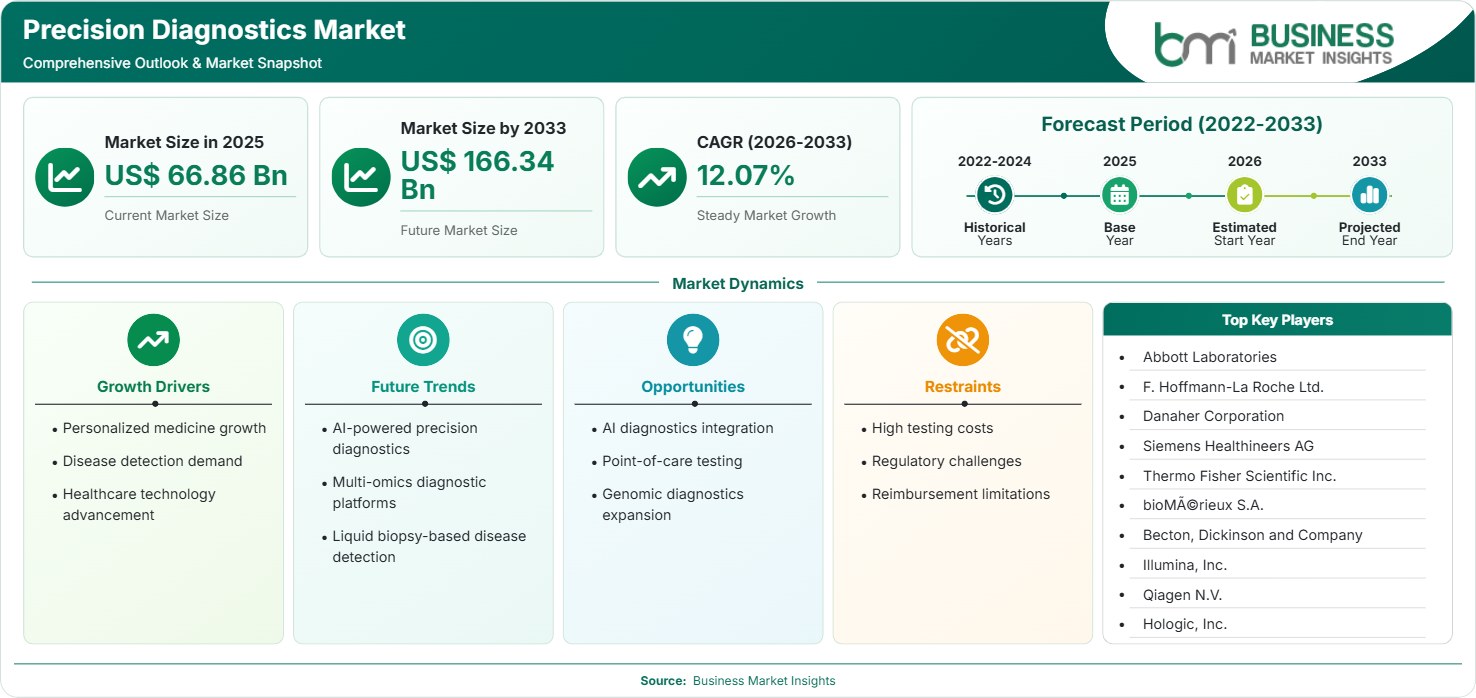
The Precision Diagnostics Market size was valued at US$ 66.86 billion in 2025 and is projected to reach US$ 166.34 billion by 2033, growing at a CAGR of 12.07% during 2026–2033. Increasing adoption of personalized medicine, rising demand for early disease detection, technological advancements in molecular diagnostics, and expanding genomic testing capabilities are creating substantial growth opportunities across healthcare systems worldwide.

Report Coverage
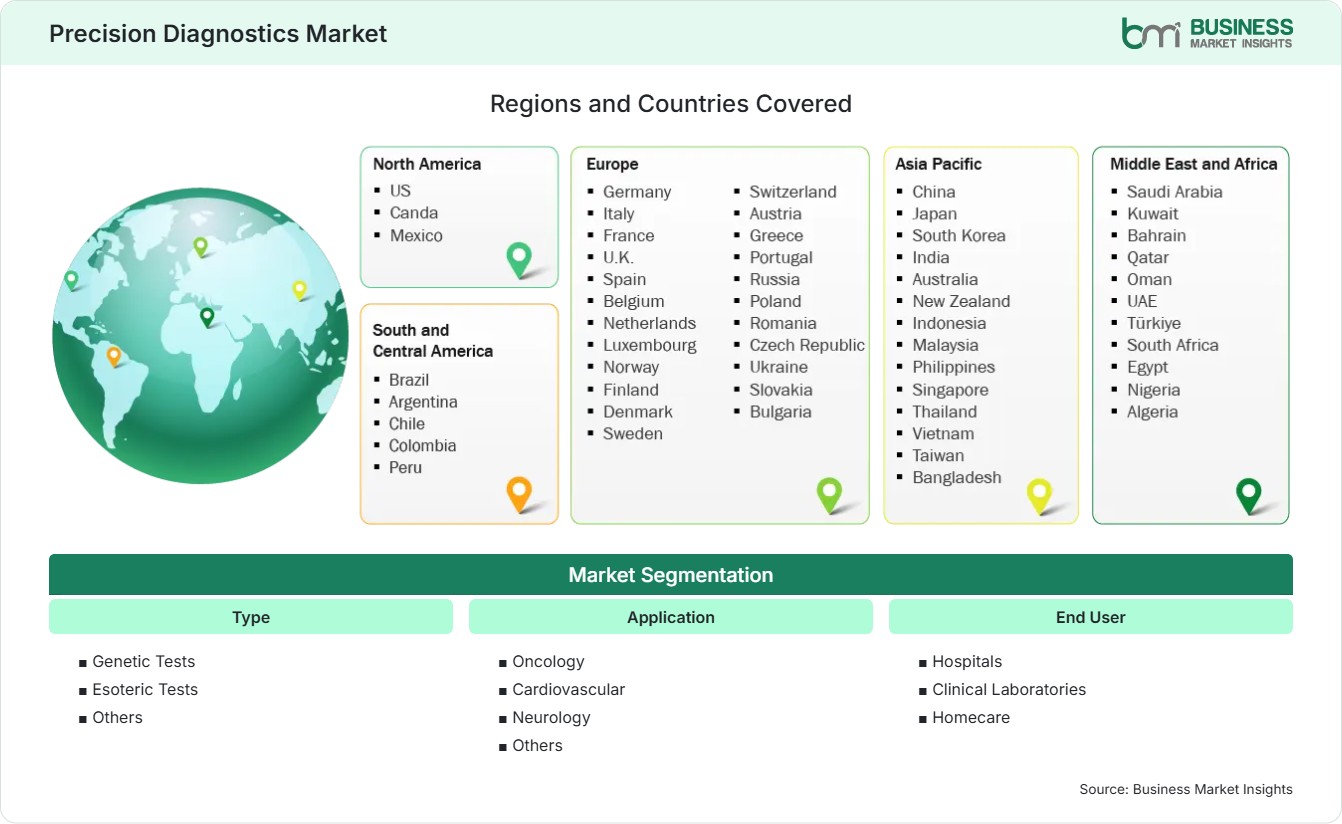
  • Type: Genetic Tests, Esoteric Tests, Others
  • Application: Oncology, Cardiovascular, Neurology, Others
  • End User: Hospitals, Clinical Laboratories, Homecare
US$ 66.86 Bn Market size in 2025
US$ 166.34 Bn Market Size by 2033
12.07% CAGR, 2026 - 2033
2026-2033 Forecast Period

AI Overview

Precision Diagnostics Market Summary

  • North America Region: North America holds an estimated 38%–42% precision diagnostics market share in 2025 and is projected to expand at a 11.5%–12.2% CAGR during 2026–2033. Strong healthcare infrastructure, high adoption of advanced diagnostic technologies, precision medicine initiatives, and significant biotechnology investment support regional growth. The United States remains the leading market, growing at a 11.7%–12.4% CAGR, driven by oncology testing demand, genomic research, and integration of advanced diagnostic platforms into clinical workflows.
  • Fastest Growing Region: Asia Pacific accounts for approximately 22%–26% market share in 2025 and is forecast to register a 13.5%–14.5% CAGR through 2033. Increasing healthcare investment, expanding diagnostic infrastructure, rising disease burden, and improving access to molecular testing technologies are accelerating adoption across emerging economies.
  • Leading Segment: Genetic Tests represent an estimated 52%–56% market share in 2025 and are expected to grow at a 12.5%–13.2% CAGR. Increasing genomic profiling adoption, hereditary disease screening, cancer biomarker testing, and personalized treatment selection continue supporting segment leadership.
  • High Growth Segment: Oncology accounts for approximately 35%–39% of the precision diagnostics market share in 2025 and is projected to expand at a 13.0%–13.8% CAGR. Rising cancer incidence, targeted therapies, companion diagnostics adoption, and demand for early detection solutions are accelerating application growth.
  • Key Market Opportunity: AI-enabled diagnostic platforms, decentralized testing solutions, genomic medicine expansion, and integration of precision diagnostics with electronic health records are creating opportunities for improved clinical decision-making and personalized treatment pathways.
  • Major Market Players: Abbott Laboratories, F. Hoffmann-La Roche Ltd., Danaher Corporation, Siemens Healthineers AG, Thermo Fisher Scientific Inc., bioMérieux S.A., Becton, Dickinson and Company, Illumina, Inc., Qiagen N.V., Hologic, Inc.
Strategic Insights

Precision Diagnostics Market: Strategic Insights

Precision Diagnostics Market Strategic Framework
FREE PDF
Request your free sample
Request free sample
Stakeholder View

Key Takeaways

  • The Precision Diagnostics market ecosystem is transitioning toward integrated precision healthcare networks involving diagnostic technology providers, biotechnology companies, healthcare institutions, research organizations, and data analytics firms. Collaboration across these stakeholders is improving access to advanced testing platforms, accelerating clinical adoption, and strengthening personalized treatment pathways.
  • Oncology, genetic screening, and chronic disease management represent high-potential application areas as healthcare systems increasingly prioritize early detection and targeted therapies. Diagnostic providers developing scalable molecular testing platforms and biomarker-based solutions are positioned to benefit from rising demand for patient-specific healthcare strategies.
  • Innovation is centered on next-generation sequencing, artificial intelligence-assisted diagnostics, liquid biopsy technologies, and automated laboratory workflows. Companies are investing in faster turnaround times, improved analytical accuracy, and integrated data interpretation capabilities to support more efficient clinical decision-making.
  • Asia Pacific presents a strong growth opportunity due to expanding healthcare infrastructure, rising disease prevalence, increasing government investment in diagnostics, and growing access to genomic technologies. Countries including China, India, and South Korea are strengthening precision medicine capabilities through research initiatives and healthcare modernization programs.
  • Investment activity is increasingly focused on strategic collaborations, technology acquisitions, and partnerships between diagnostic companies and healthcare providers. Companies are expanding capabilities in genomic analysis, molecular diagnostics, and AI-powered interpretation platforms to strengthen competitive positioning.
  • The future competitive landscape will depend on affordability, regulatory compliance, clinical validation, data integration capabilities, and the ability to deliver actionable diagnostic insights across hospitals, laboratories, and decentralized healthcare settings.
Geographic Outlook

Precision Diagnostics Market Regional Highlights

North America Precision Diagnostics Market

North America represents the largest regional market, accounting for an estimated 38%–42% precision diagnostics market share in 2025 and expanding at a projected 11.5%–12.2% CAGR during 2026–2033. The region benefits from advanced healthcare infrastructure, strong biotechnology investment, widespread adoption of molecular testing, and favorable precision medicine initiatives. The United States remains the primary contributor due to high diagnostic spending, increasing oncology testing demand, and integration of genomic technologies into clinical decision-making.

  • The United States leads regional adoption through advanced laboratory infrastructure, strong research funding, and growing use of molecular diagnostics for cancer profiling and personalized treatment selection.
  • Canada is expanding precision diagnostic capabilities through healthcare modernization programs, increasing genomic research activity, and broader adoption of advanced testing platforms across clinical environments.
  • Healthcare providers are investing in automated diagnostic systems and digital laboratory solutions to improve testing efficiency, reduce turnaround times, and support complex disease management.
  • Oncology applications remain a major demand driver as increasing cancer screening initiatives and targeted therapy adoption encourage broader use of biomarker-based diagnostic solutions.

US Precision Diagnostics Market

The United States accounts for approximately 33%–36% of global revenue in 2025 and is projected to grow at a 11.7%–12.4% CAGR through 2033. Strong biotechnology innovation, advanced healthcare infrastructure, and increasing adoption of genomic testing support continued expansion. The country’s precision medicine ecosystem benefits from collaborations between diagnostic companies, research institutions, pharmaceutical organizations, and healthcare providers.

  • Rising demand for personalized oncology treatments is increasing adoption of genomic profiling, companion diagnostics, and molecular testing solutions across healthcare systems, according to precision diagnostics market forecasts.
  • Leading diagnostic providers are expanding laboratory automation, artificial intelligence integration, and data analytics capabilities to improve diagnostic accuracy and clinical workflow efficiency.
  • Increasing investment in preventive healthcare and early disease detection is supporting broader adoption of advanced diagnostic technologies beyond specialized medical centers.

Europe Precision Diagnostics Market

Europe accounts for an estimated 25%–29% precision diagnostics market share of the global market in 2025 and is expected to register a 11.0%–11.8% CAGR during 2026–2033. The region benefits from strong healthcare systems, expanding molecular diagnostics adoption, and government-supported genomic initiatives. Germany remains a leading market due to its advanced healthcare infrastructure, while the United Kingdom and France demonstrate strong growth through investments in precision medicine programs and diagnostic innovation.

  • Germany maintains regional leadership through advanced clinical laboratory networks, strong healthcare investment, and adoption of molecular diagnostic platforms across hospitals and research institutions.
  • The United Kingdom demonstrates growth through national genomic initiatives, expanding sequencing capabilities, and integration of precision diagnostics into healthcare pathways.
  • France continues developing precision medicine capabilities through biotechnology investments, clinical research programs, and increasing adoption of advanced diagnostic technologies.
  • European healthcare systems are emphasizing early detection, personalized therapies, and data-driven medicine, encouraging investments in innovative diagnostic platforms.
  • Regulatory focus on diagnostic accuracy, patient safety, and clinical validation is shaping product development strategies among regional and global manufacturers.

Asia Pacific Precision Diagnostics Market

Asia Pacific represents approximately 22%–26% of Precision Diagnostics market revenue in 2025 and is forecast to achieve the fastest expansion with a 13.5%–14.5% CAGR through 2033. Increasing healthcare expenditure, growing disease burden, expanding diagnostic infrastructure, and rising access to genomic technologies are accelerating adoption. China remains the largest regional market, while India and South Korea demonstrate significant growth potential through healthcare modernization and research investments.

  • China leads regional demand through large-scale healthcare investment, expanding genomic research programs, and increasing adoption of molecular diagnostics in clinical settings.
  • India is experiencing rapid growth due to improving healthcare access, rising awareness of early detection, and expanding laboratory infrastructure across urban and regional areas.
  • South Korea continues advancing precision healthcare through biotechnology innovation, government-supported research initiatives, and integration of advanced diagnostic technologies.
  • Southeast Asian countries are increasing investments in healthcare infrastructure and laboratory capabilities to improve access to advanced testing solutions.
  • Regional companies are developing cost-effective diagnostic platforms to address diverse healthcare needs and expand precision testing availability across emerging markets.

Rest of World Precision Diagnostics Market

The Rest of the World constitutes about 7%-10% of the world’s total revenues by 2025 and is expected to register a 12.0%–13.0% CAGR until 2033. There is higher adoption of precision diagnostics in South and Central America owing to advancements in healthcare facilities and the increasing need for advanced diagnostic techniques, especially in countries such as Brazil and Mexico.

The Middle East and Africa Precision Diagnostics market is growing due to initiatives to strengthen their healthcare systems and advancements in laboratory infrastructure. In addition, there is an increasing awareness about the early detection of diseases. The United Arab Emirates and Saudi Arabia present lucrative markets due to healthcare transformation initiatives and the rising adoption of advanced medical technologies.

  • Brazil continues to be the largest regional market due to expanding diagnostic networks, rising healthcare spending, and increased demand for molecular diagnostics solutions.
  • Mexico enjoys better healthcare infrastructure, growing investments in private healthcare, and increasing adoption of advanced diagnostic tools.
  • The UAE is increasing its precision healthcare capabilities through healthcare innovation programs, advanced hospitals, and diagnostic infrastructure investments.
  • Saudi Arabia shows Precision Diagnostics market growth opportunities through its healthcare transformation programs, higher medical technology adoption, and development of advanced laboratories.
  • Regional healthcare providers are increasingly adopting precision diagnostics to improve disease detection, treatment planning, and patient management outcomes.
Global Market Geography
FREE PDF
Request your free sample
Request free sample
Segment Analysis

Precision Diagnostics Market Segmentation

Type

The type segment is a key driver of precision diagnostics market adoption, with genetic tests continuing to lead owing to rising genomics research, genetic diseases, and treatment. This segment held an approximate 100% share in 2025 and is expected to grow at a CAGR of 12.07% to 12.8% from 2026 to 2033. The growing need for information on molecular processes, technological advancements, and clinical applications is driving companies to introduce advanced solutions.

  • Genetic Tests: Genetic testing stands out as the most dominant among all because of the rise in genomic testing, hereditary diseases, pharmacogenomics, and the growing use of a personalized medicine approach.
  • Esoteric Tests: Esoteric testing is becoming increasingly significant through specialized disease testing, complex biomarker testing, and sophisticated laboratory procedures used to diagnose rare conditions.

By Application

The applications segment demonstrates increasing use of precise diagnostics across various diseases requiring precise detection and treatment methods. The segment has a share of around 100% in 2025 and is expected to register a CAGR of 12.07%–12.9% between 2026 and 2033. Increasing disease burden, demand for early diagnosis, and advancements in biomarker technologies are driving broader adoption across hospitals, laboratories, and specialized healthcare centers.

  • Oncology: Oncology constitutes the largest application category owing to the increasing occurrence of cancer, the usage of companion diagnostics, biomarker testing, and genomics profiling to develop targeted medicines.
  • Cardiovascular: Cardiovascular applications are expanding through molecular risk assessment, genetic screening, and advanced diagnostic methods, and cardiovascular disease is on the rise.
  • Neurology: Neurology applications are growing through increased use of genetic testing and biomarker analysis for neurological disorders requiring improved diagnostic accuracy and individualized treatment planning.

End User

The end-user segment reflects the growing importance of precision diagnostics in healthcare delivery settings. This segment accounted for around 100% market share in 2025 and is predicted to register a CAGR of 12.07%–13.0% in 2026–2033. Growing decentralization of diagnostics, laboratory advancements, and the increasing need for quick clinical data are shaping adoption trends, following precision diagnostics market trends.

  • Hospitals: Hospitals remain a major end-user segment due to increasing integration of advanced diagnostic platforms, oncology testing capabilities, and precision medicine programs within clinical care pathways.
  • Clinical Laboratories: Clinical laboratories are expanding precision testing capacity through automation, advanced molecular technologies, and specialized diagnostic services supporting healthcare providers with accurate analytical results.
  • Homecare: Homecare applications are emerging through increased demand for convenient testing solutions, remote healthcare monitoring, and decentralized diagnostic approaches that improve patient accessibility and engagement.
Market Forces

Precision Diagnostics Market Dynamics

Key Market Drivers

Growing Adoption of Personalized Medicine Approaches

The gradual shift towards personalized medicine is a key driver of market growth. The demand from healthcare providers for patient-specific knowledge to select targeted treatments that improve outcomes and minimize unnecessary procedures is fueling market growth. The development of technologies such as genomic sequencing, biomarker discovery, and molecular profiling allows practitioners to gain more knowledge about the specifics of the disease in each case. The Precision Diagnostics market trends are characterized by increased integration of diagnostic data into clinical decision-making tools, especially in oncology, rare diseases, and chronic conditions management.

Rising Demand for Early Disease Detection and Screening

Increasing emphasis on preventive healthcare and early detection of illnesses has led to a growing preference for precision diagnostic technologies. Healthcare providers are increasingly focusing on early detection methods that are not only effective but also reduce healthcare costs and deliver better outcomes. Molecular diagnostics, genetic tests, and biomarkers have become integral parts of everyday medical practice for diagnosing diseases. Growing knowledge of proactive health care management among both patients and healthcare providers has also been fueling demand. Diagnostic companies are responding by developing faster, more accurate, and accessible testing platforms that can address expanding screening requirements across diverse healthcare settings.

Advancement of Healthcare Technology and Diagnostic Platforms

Advancements in sequencing, automation, artificial intelligence, and data analytics are transforming diagnostic technologies in healthcare organizations. Existing diagnostic technologies are enabling improved efficiency, reduced result processing time, and complex analyses of biological information. Artificial intelligence is assisting laboratories in analyzing large volumes of data and identifying important clinical patterns, while automation makes the process more efficient. Businesses are focusing on developing a next-generation system for disease diagnosis using molecular diagnostics and digital health solutions. Advances are expanding the scope of precision diagnostics across various settings, including hospitals, clinics, laboratories, and decentralized healthcare systems.

Key Market Opportunities

Integration of Artificial Intelligence in Diagnostic Workflows

The use of AI is a significant opportunity for healthcare organizations trying to increase the efficiency and effectiveness of their diagnostics. According to Precision Diagnostics Market Forecasts, there is growing potential for AI technologies capable of processing genomic, imaging, and lab results. Diagnostic companies create products using AI and molecular testing technologies. Such a combination could help classify patients' diseases more accurately and provide more effective treatment recommendations. The use of AI technologies enables the recognition of patterns in large datasets.

Expansion of Point-of-Care Testing Solutions

Point-of-care testing offers significant growth potential by providing rapid diagnostic capabilities at the patient's bedside. The decentralized testing systems can enhance access to healthcare services, especially in areas that lack laboratory facilities. Portable molecular diagnostics, rapid testing devices, and small-sized analytical instruments are among the innovations contributing to the expansion of operations outside laboratories. Health practitioners are increasingly looking for ways to reduce the time before starting treatment. Companies offering reliable, cost-effective, and user-friendly testing systems stand to benefit immensely.

Growth of Genomic Diagnostics Applications

Enhancing genomic diagnostic services can offer potential in the oncology, genetic diseases, pharmacogenomics, and preventive health care sectors. Advancements in sequencing techniques and reductions in test prices are making genomic analysis more accessible to patients. Moreover, pharmaceutical firms are also considering the benefits of genomics in their new drug discovery process, and thus, there is greater demand for sophisticated testing systems. Providers of diagnostics who can offer scalable sequencing services and clinically useful applications can capitalize on advances in genomics and precision medicine delivery.

Market Restraints and Challenges

High Costs Associated with Advanced Diagnostic Testing

Factor: Advanced precision diagnostic technologies often require expensive equipment, specialized laboratory infrastructure, skilled personnel, and complex data interpretation capabilities. Impact: The high cost of testing may hinder small healthcare organizations from adopting it and impede the accessibility of such solutions in cost-sensitive environments. Reimbursement constraints may affect the patient's decision to undergo a more sophisticated procedure. Diagnostics companies are coping with this issue by means of advancing technology, automating the process, cutting costs, and developing scalable testing solutions. Expanding insurance coverage and healthcare investment will also play important roles in improving accessibility and supporting wider adoption of precision diagnostic solutions.

Complex Regulatory Requirements for Diagnostic Technologies

Factor: Precision diagnostics involve complex regulatory approval processes due to requirements related to analytical performance, clinical validation, data management, and patient safety. Impact: Lengthy regulatory processes may delay product launches, increase costs, and add uncertainty for companies developing new diagnostic technologies. Companies will have to invest heavily in developing compliance approaches, conducting clinical trials, and establishing quality management systems to obtain approval across various markets. Standardizing regulatory approaches and providing guidelines for new technologies could help accelerate adoption while maintaining diagnostic accuracy and patient safety standards.

Company Analysis

Competitive Landscape

The Precision Diagnostics Market analysis reveals that the industry operates under a competitive environment due to innovations in molecular technology, genomics, diagnostic precision, regulatory know-how, and healthcare integration. The top players in the market have been investing in next-generation sequencing technologies, artificial-intelligence diagnostic platforms, automation solutions, and clinical applications. Strategic partnerships with hospitals, research organizations, and pharmaceutical companies are now more important than ever before for the industry participants.

Company Name

Overview

Products and Services relevant to this market

Abbott Laboratories

Global healthcare company providing diagnostic solutions across clinical and molecular testing applications.

Molecular diagnostics, laboratory testing platforms, infectious disease assays, and precision healthcare solutions.

F. Hoffmann-La Roche Ltd.

Healthcare technology leader focused on diagnostics and personalized medicine solutions.

Molecular diagnostics, companion diagnostics, oncology testing, and laboratory diagnostic systems.

Danaher Corporation

Global science and technology company operating through leading diagnostic businesses.

Molecular testing platforms, genomic analysis solutions, laboratory automation, and diagnostic technologies.

Siemens Healthineers AG

Medical technology company providing advanced diagnostic and healthcare solutions globally.

Laboratory diagnostics, imaging integration, molecular testing solutions, and digital healthcare platforms.

Thermo Fisher Scientific Inc.

Life sciences company supporting research, clinical diagnostics, and genomic applications.

Genetic testing technologies, sequencing solutions, molecular diagnostics, and laboratory instruments.

bioMérieux S.A.

Diagnostics company specializing in clinical and industrial microbiology solutions.

Molecular diagnostic systems, infectious disease testing, and clinical laboratory solutions.

Becton, Dickinson and Company

Medical technology company developing diagnostic and laboratory solutions.

Molecular diagnostics, sample management systems, and laboratory workflow technologies.

Illumina, Inc.

Genomics company specializing in sequencing technologies and genomic analysis platforms.

Next-generation sequencing systems, genomic testing solutions, and data analysis technologies.

Qiagen N.V.

Molecular diagnostics company providing sample preparation and testing solutions.

Molecular assays, genetic testing products, sample technologies, and diagnostic workflows.

Hologic, Inc.

Healthcare technology company focused on diagnostic and women's health solutions.

Molecular diagnostics, screening technologies, and advanced testing platforms.

Industry Activity

Recent Developments

June 2026

CareDx, Inc. announced a strategic focus on precision diagnostics, expanding into minimal residual disease (MRD) testing through the acquisition of Naveris. The company also outlined plans to commercially launch its AlloHeme test for relapse monitoring in AML and MDS patients in the first quarter of 2027.

April 2026

Guardant Health, Inc. announced a multi-year strategic collaboration with Nuvalent to develop companion diagnostics using the Guardant Infinity™ platform. The partnership will support the clinical development and potential commercialization of Nuvalent's targeted cancer therapies.

March 2026

Lucence, DxD Hub, and National Cancer Centre Singapore launched UNITED 2.0, a S$6 million research collaboration to develop a next-generation clinical-grade cancer profiling test. The assay will use a dual Whole Exome and Whole Transcriptome Sequencing approach combined with AI to provide comprehensive tumour analysis and guide precision treatments

March 2026

Integrated DNA Technologies (IDT) launched its first in vitro diagnostic (IVD) next-generation sequencing assays, Archer FUSION Plex™‑HT Dx and VARIANT Plex™‑HT Dx, marking the company's strategic entry into the clinical diagnostics market with standardized IVD-grade oncology solutions.

Trust & Transparency

Research Methodology

The market analysis combines proprietary research with secondary data from government agencies, company disclosures, regulatory filings, industry databases and expert interviews. Market estimates are validated through data triangulation, cross-market benchmarking and analyst review.

View Full Research Methodology

Questions Answered

Frequently Asked Questions

How does the Precision Diagnostics Report evaluate market opportunities?

The Precision Diagnostics Market Report evaluates market opportunities through analysis of technology advancements, application expansion, healthcare adoption trends, competitive strategies, and regional developments shaping precision healthcare.

What challenges affect adoption of precision diagnostics?

High testing costs, regulatory complexity, infrastructure requirements, and limited reimbursement coverage can restrict adoption, particularly in developing healthcare markets with limited diagnostic accessibility.

How is artificial intelligence influencing precision diagnostics?

Artificial intelligence is improving diagnostic interpretation, identifying complex biological patterns, supporting clinical decisions, and enhancing efficiency in analyzing large volumes of genomic and laboratory data.

Which application area offers the strongest growth potential?

Oncology remains a major growth area due to increasing cancer incidence, biomarker-based treatment selection, companion diagnostics adoption, and demand for targeted therapeutic approaches.

What is driving demand for precision diagnostics worldwide?

Increasing personalized medicine adoption, rising chronic disease burden, demand for early detection, genomic technology advancements, and improved healthcare data integration are driving demand for precision diagnostic solutions.

Access the Full Precision Diagnostics Market Report

Get segment-level forecasts, regional estimates, competitive benchmarking, company profiles and downloadable Excel datasets.

Access the full Precision Diagnostics Market Report
350 pages PDF & Excel | 2026-08-03
Similar Research

Related Market Reports