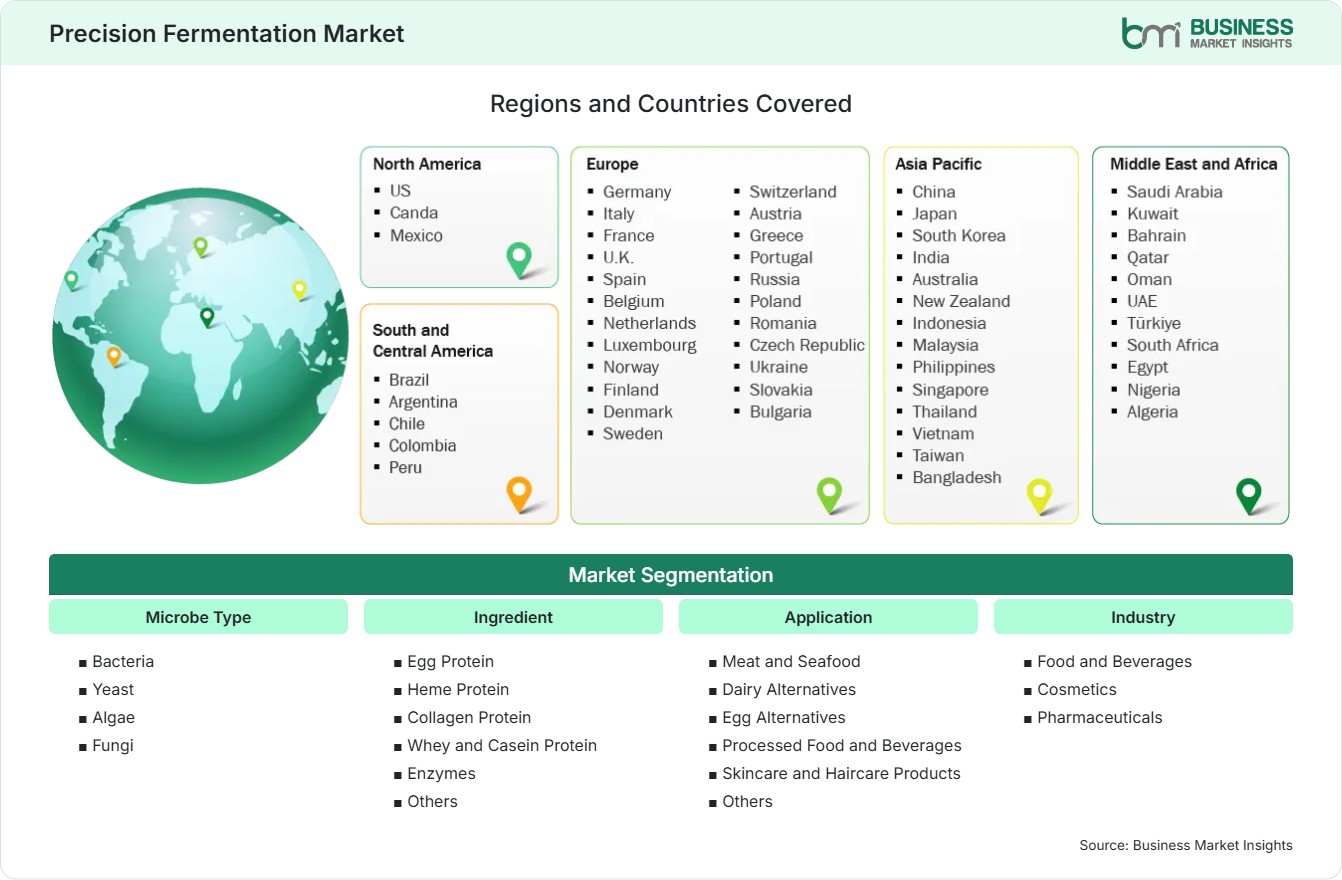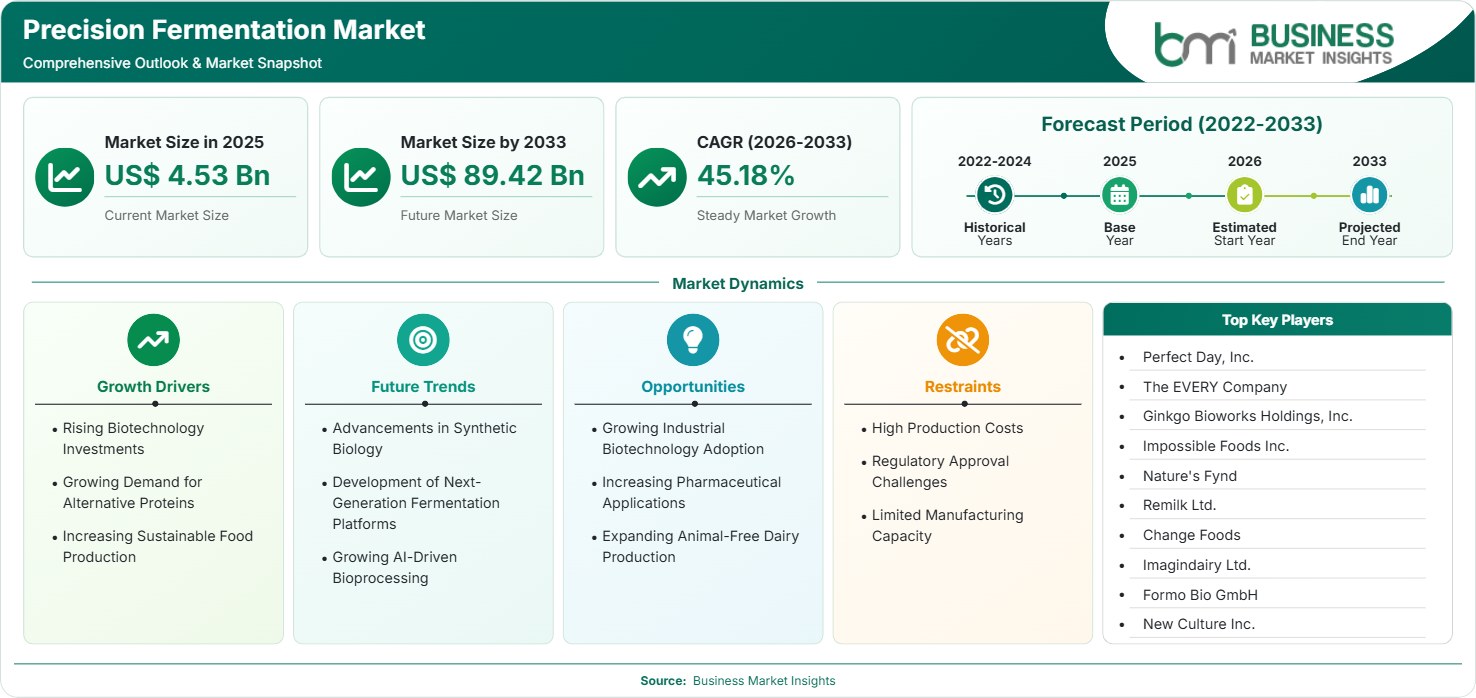
Precision Fermentation Market Regional Highlights
North America Precision Fermentation Market
North America represents a 38%–42% share in 2025 and is projected to expand at a CAGR of 43.50%–44.50% during 2026–2033. Strong biotechnology infrastructure, venture capital availability, and early commercialization of alternative proteins support regional leadership. The Precision Fermentation Market share remains concentrated in the United States due to startup ecosystems, research institutions, and food technology investments. Canada is also developing capabilities through biotechnology research and sustainable food initiatives.
- The United States dominates regional development through biotechnology startups, advanced research facilities, and increasing partnerships between food companies and fermentation technology providers.
- Venture capital investments are supporting development of commercial fermentation facilities, improving production scalability and accelerating transition from laboratory research to industrial manufacturing.
- Consumer interest in sustainable proteins and environmentally responsible food products is encouraging companies to introduce fermentation-derived ingredients across retail and foodservice channels.
- Regulatory progress and increasing collaboration between biotechnology firms and food manufacturers are improving commercialization opportunities throughout the region.
US Precision Fermentation Market
The US market accounts for a 32%–36% share within North America in 2025 and is expected to grow at a CAGR of 44.00%–44.80% during 2026–2033. Strong biotechnology research capabilities, food innovation investments, and startup activity support expansion. The region demonstrates significant adoption potential due to established venture networks, advanced manufacturing infrastructure, and increasing demand for sustainable protein solutions.
- Biotechnology hubs in California, Massachusetts, and other innovation centers are supporting research, commercialization, and partnerships within fermentation-based food technology.
- Leading food companies are collaborating with startups to integrate precision-produced proteins into commercial products and improve sustainable ingredient availability.
- Government research support and private investment are strengthening domestic fermentation capabilities through pilot facilities and advanced manufacturing projects.
Europe Precision Fermentation Market
Europe holds a 25%–30% share in 2025 and is forecast to grow at a CAGR of 44.50%–45.50% during 2026–2033. Strong sustainability policies, biotechnology research capabilities, and alternative protein demand support regional expansion. Germany, the United Kingdom, the Netherlands, and Denmark are emerging as important markets. The Precision Fermentation Market growth is supported by regulatory discussions, research partnerships, and increasing investment in sustainable food production technologies.
- Germany is advancing fermentation research through biotechnology innovation programs and industrial food technology development initiatives.
- The United Kingdom demonstrates strong startup activity with investments focused on alternative proteins, synthetic biology, and sustainable ingredient platforms.
- The Netherlands benefits from food technology expertise, research institutions, and collaboration between biotechnology companies and agricultural innovation networks.
- Denmark is developing fermentation capabilities through strong food science infrastructure and sustainability-focused industrial projects.
- European companies are prioritizing resource-efficient production systems aligned with environmental objectives and sustainable food policies.
Asia Pacific Precision Fermentation Market
Asia Pacific accounts for a 24%–28% share in 2025 and is expected to register the fastest expansion with a CAGR of 46.50%–47.50% during 2026–2033. Rising population, increasing protein demand, biotechnology investments, and government support for food innovation are strengthening regional adoption. China, Japan, India, Singapore, and South Korea are developing fermentation capabilities through research initiatives and commercial partnerships. The region presents strong potential for scalable production facilities.
- China is expanding fermentation research through biotechnology investments, food technology development, and increasing demand for sustainable protein alternatives among urban consumers.
- India is emerging as a promising market due to rising food security concerns, biotechnology entrepreneurship, and growing interest in alternative nutritional ingredients.
- Japan and South Korea are leveraging advanced biotechnology infrastructure to develop high-value fermentation-derived proteins, enzymes, and functional ingredients.
- Singapore is strengthening its position through government-backed food innovation programs, research centers, and investments in cellular agriculture technologies.
- Regional companies are focusing on cost-efficient production systems to improve accessibility of fermentation-based ingredients across consumer and industrial applications.
Rest of World Precision Fermentation Market
South and Central America, Middle East, and Africa collectively represent a 7%–10% share in 2025 and are projected to grow at a CAGR of 42.50%–44.00% during 2026–2033. Increasing food security priorities, biotechnology investments, and demand for sustainable production methods are supporting adoption. Brazil, Israel, UAE, and South Africa are emerging markets developing biotechnology capabilities and alternative food ecosystems.
Brazil and Latin American economies are exploring fermentation technologies to improve sustainable food production and diversify protein supply chains. Middle Eastern countries are investing in food innovation solutions to address resource limitations and strengthen food independence.
- Brazil is developing biotechnology capabilities through research partnerships and increasing interest in sustainable protein production technologies.
- Israel is becoming an innovation hub through strong synthetic biology expertise, startup development, and alternative protein commercialization activities.
- UAE is investing in food technology initiatives to improve supply resilience and attract biotechnology companies.
- South Africa demonstrates gradual adoption through research institutions, specialty food companies, and sustainable agriculture initiatives.
- Regional manufacturers are evaluating fermentation technologies for localized ingredient production and reduced dependence on imported food resources.