
Pembrolizumab Market Outlook: Size, Share, Trends, Growth Analysis, Competitive Landscape & Forecast, 2026-2033

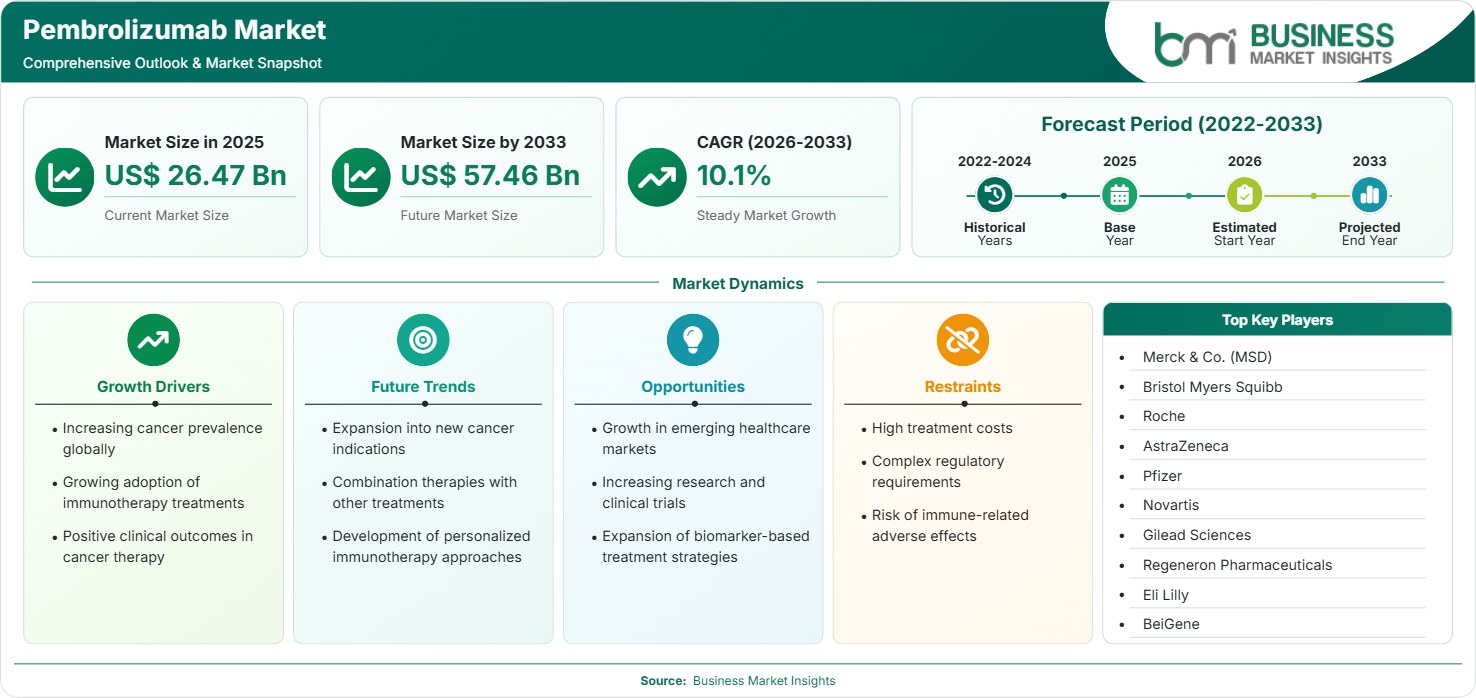
The Pembrolizumab Market size was valued at US$ 26.47 billion in 2025 and is projected to reach US$ 57.46 billion by 2033, growing at a CAGR of 10.1% from 2026 to 2033, driven by increasing cancer incidence, expanding immunotherapy adoption, clinical advancements, biomarker-guided therapies, and oncology treatment innovation.

Report Coverage
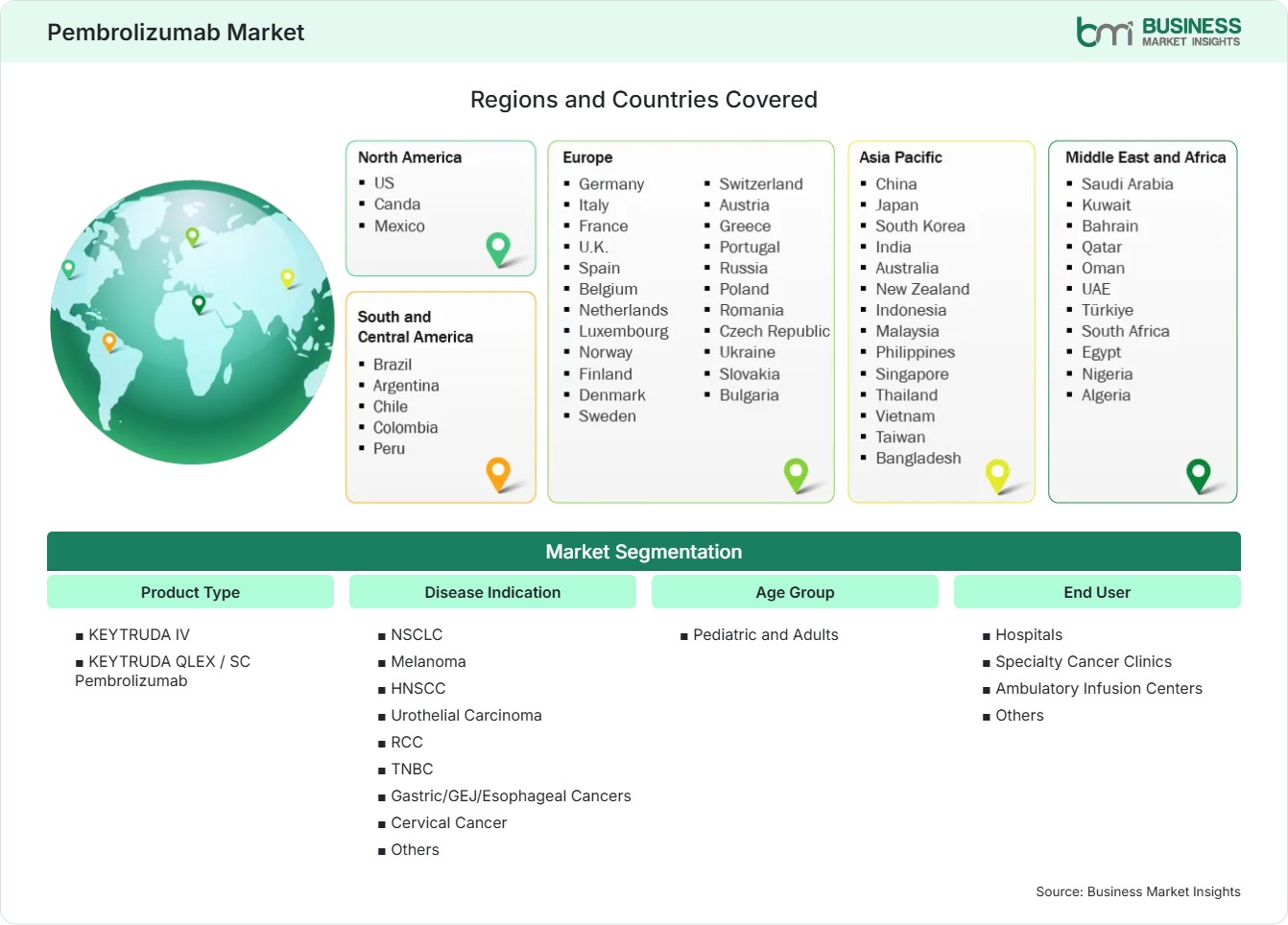
  • Product Type: KEYTRUDA IV, KEYTRUDA QLEX / SC Pembrolizumab
  • Disease Indication: NSCLC, Melanoma, HNSCC, Urothelial Carcinoma, RCC, TNBC, Gastric/GEJ/Esophageal Cancers, Cervical Cancer, Others
  • Age Group: Pediatric and Adults
  • End User: Hospitals, Specialty Cancer Clinics, Ambulatory Infusion Centers, Others
US$ 26.47 Bn Market size in 2025
US$ 57.46 Bn Market Size by 2033
10.1% CAGR, 2026 - 2033
2026-2033 Forecast Period

AI Overview

Pembrolizumab Market Summary

  • North America Region: North America holds a market share of 42%–45% in 2025, growing with a CAGR of 8%–10%, influenced by advanced oncology infrastructure, high immunotherapy adoption, clinical research activity, and strong healthcare spending. The US market demonstrates consistent growth with a CAGR of 8%–10% during 2026–2033, supported by cancer treatment innovation and precision medicine adoption.
  • Fastest Growing Region: Asia Pacific represents a share range of 22%–25% in 2025, expanding with a CAGR of 12%–14% driven by rising cancer burden, improving healthcare access, oncology investments, and increasing availability of advanced therapeutic options across emerging economies.
  • Leading Segment: KEYTRUDA IV represents the leading product segment with a share range of 92%–95% in 2025, growing at a CAGR of 9%–11% due to established clinical adoption, broad indication approvals, and extensive hospital-based administration.
  • High Growth Segment: KEYTRUDA QLEX / SC Pembrolizumab demonstrates a share range of 5%–8% in 2025, expanding at a CAGR of 18%–22% due to shorter administration time, patient convenience, and healthcare workflow optimization.
  • Key Market Opportunity: Opportunities are concentrated in emerging oncology markets, biomarker-driven treatment approaches, expanded clinical trials, combination therapies, and improved patient access to immunotherapy solutions.
  • Major Market Players: Merck & Co. (MSD), Bristol Myers Squibb, Roche, AstraZeneca, Pfizer, Novartis, Gilead Sciences, Regeneron Pharmaceuticals, Eli Lilly, BeiGene.
Strategic Insights

Pembrolizumab Market: Strategic Insights

Pembrolizumab Market Strategic Framework
FREE PDF
Request your free sample
Request free sample
Stakeholder View

Key Takeaways

  • The oncology treatment ecosystem is transitioning toward personalized immunotherapy approaches supported by pharmaceutical innovators, diagnostic companies, healthcare providers, and research institutions.
  • Expansion opportunities are concentrated in additional cancer indications, emerging healthcare markets, combination therapies, and patient populations benefiting from biomarker-based treatment selection.
  • Innovation priorities are shifting toward subcutaneous formulations, immune-oncology combinations, companion diagnostics, and clinical strategies designed to improve therapeutic effectiveness and patient convenience.
  • Asia Pacific represents a strategic investment opportunity due to rising cancer incidence, healthcare modernization, and increasing access to advanced oncology treatments.
  • Competitive positioning is influenced by clinical trial pipelines, regulatory approvals, lifecycle management strategies, and partnerships supporting immunotherapy development.
Geographic Outlook

Pembrolizumab Market Regional Highlights

North America Pembrolizumab Market

North America accounted for a share range of 42%–45% in 2025 and is projected to grow at a CAGR of 8%–10% during 2026–2033. The region maintains leadership due to advanced oncology infrastructure, high healthcare expenditure, extensive clinical research, and early adoption of immunotherapy treatments. The Pembrolizumab Market share in North America is supported by strong physician familiarity, reimbursement frameworks, and established cancer care networks.

  • The United States remains the largest regional contributor due to advanced oncology centers, clinical trial activity, and broad adoption of checkpoint inhibitor therapies.
  • Cancer treatment facilities are increasingly integrating immunotherapy protocols into standard care pathways for multiple tumor indications.
  • Pharmaceutical companies continue investing in oncology research collaborations and clinical development programs across North American institutions.
  • Healthcare providers are adopting biomarker testing strategies to improve treatment selection and patient outcomes.

US Pembrolizumab Market

The US represented a share range of 37%–40% in 2025 and is expected to expand at a CAGR of 8%–10% between 2026–2033. The country remains a key market due to strong pharmaceutical innovation, extensive oncology research infrastructure, and high availability of advanced cancer therapies. Demand is supported by increasing cancer prevalence and healthcare systems prioritizing evidence-based immunotherapy treatment approaches.

  • The US oncology ecosystem benefits from extensive clinical research networks supporting new pembrolizumab indications and combination therapy evaluations.
  • Specialty cancer centers continue increasing adoption of immune checkpoint inhibitors for eligible patient populations across multiple cancer types.
  • Precision medicine initiatives are strengthening biomarker testing capabilities for personalized treatment decisions.
  • Healthcare investment in cancer care infrastructure supports broader access to advanced immunotherapy solutions.

Europe Pembrolizumab Market

Europe held a share range of 25%–28% in 2025, growing at a CAGR of 9%–11% during 2026–2033. The region benefits from established healthcare systems, oncology research capabilities, and increasing adoption of innovative cancer therapies. Germany, the United Kingdom, and France remain leading markets, while Spain and Italy demonstrate growth potential due to improving access to advanced oncology treatments.

  • Germany supports market expansion through strong hospital infrastructure, oncology research programs, and healthcare technology adoption.
  • The United Kingdom continues advancing immunotherapy access through cancer treatment initiatives and clinical research partnerships.
  • France demonstrates increasing adoption through specialized oncology centers and government-supported healthcare programs.
  • European pharmaceutical collaborations are supporting clinical development of next-generation cancer treatment approaches.

Asia Pacific Pembrolizumab Market

Asia Pacific accounted for a share range of 22%–25% in 2025 and is expanding at a CAGR of 12%–14% during 2026–2033. The region represents the fastest-growing market due to increasing cancer incidence, improving healthcare infrastructure, rising oncology awareness, and expanding access to innovative therapies. China, Japan, India, South Korea, and Australia are driving regional growth through healthcare investments and clinical research expansion.

  • China represents a major growth market due to rising oncology demand, healthcare modernization initiatives, and increasing availability of advanced cancer treatment options.
  • India is experiencing expanding immunotherapy adoption through improving cancer care facilities, medical investments, and growing awareness of targeted treatment approaches.
  • Japan and South Korea continue strengthening oncology capabilities through advanced hospitals, clinical research programs, and precision medicine adoption.
  • Southeast Asian countries are improving access to innovative therapies through healthcare infrastructure development and pharmaceutical partnerships.

Rest of World Pembrolizumab Market

Rest of World accounted for a share range of 7%–10% in 2025, expanding at a CAGR of 11%–13% during 2026–2033. Latin America, the Middle East, and Africa are gradually increasing adoption due to improving healthcare access, cancer care investments, and expansion of specialty treatment facilities. Brazil, Mexico, Saudi Arabia, and the UAE represent emerging markets supported by healthcare modernization initiatives.

  • Brazil is expanding oncology treatment capacity through healthcare investments, increasing cancer awareness, and broader availability of advanced therapies.
  • Mexico is improving cancer treatment access through healthcare system development and increasing adoption of innovative oncology medicines.
  • Saudi Arabia and the UAE are investing in specialized cancer centers and advanced treatment infrastructure as part of healthcare transformation programs.
  • African markets are gradually improving oncology capabilities through international partnerships, healthcare initiatives, and increased disease awareness.
Global Market Geography
FREE PDF
Request your free sample
Request free sample
Segment Analysis

Pembrolizumab Market Segmentation

Product Type

The product type segment is influenced by administration preferences, healthcare infrastructure, and treatment delivery models. KEYTRUDA IV represented the leading segment with a share range of 92%–95% in 2025 and CAGR of 9%–11% between 2026–2033. The Pembrolizumab Market scope is expanding through increasing oncology treatment adoption, broader indication approvals, and innovation in administration methods.

  • KEYTRUDA IV: KEYTRUDA IV remains widely adopted due to extensive clinical evidence, established hospital protocols, broad regulatory approvals, and physician familiarity across multiple cancer indications.
  • KEYTRUDA QLEX / SC Pembrolizumab: KEYTRUDA QLEX / SC Pembrolizumab supports treatment convenience through shorter administration times, improved patient experience, and potential healthcare workflow efficiency benefits.

Disease Indication

The disease indication segment demonstrates diverse adoption across oncology applications due to pembrolizumab’s role in immune checkpoint inhibition. NSCLC represents a major application area supported by significant clinical evidence and treatment adoption. The Pembrolizumab Market trends reflect expanding use across multiple cancers as clinical studies evaluate combination therapies, biomarker-based strategies, and broader patient eligibility.

  • NSCLC: Non-small cell lung cancer remains a key indication due to extensive clinical validation, high disease prevalence, and immunotherapy integration into treatment pathways.
  • Melanoma: Melanoma applications benefit from strong immunotherapy response rates and established use of checkpoint inhibitor treatments in advanced disease management.
  • HNSCC: Head and neck squamous cell carcinoma adoption is supported by clinical evidence demonstrating immunotherapy benefits for eligible patients.
  • Urothelial Carcinoma: Urothelial carcinoma treatment applications continue expanding through immunotherapy-based approaches and evolving oncology treatment guidelines.
  • RCC: Renal cell carcinoma adoption is increasing through combination treatment strategies and clinical research evaluating improved patient outcomes.
  • TNBC: Triple-negative breast cancer represents an expanding application area due to increasing focus on immunotherapy options for difficult-to-treat breast cancer subtypes.
  • Gastric/GEJ/Esophageal Cancers: These cancers are gaining attention through clinical advancements supporting immunotherapy integration into treatment protocols.
  • Cervical Cancer: Cervical cancer applications are expanding through increasing recognition of immune-based therapies and improved treatment strategies.

Age Group

The age group segment reflects treatment adoption across different patient populations requiring specialized oncology management. Adults represent the dominant segment due to higher cancer prevalence and extensive clinical evidence supporting pembrolizumab use. Pediatric applications remain an emerging area influenced by ongoing clinical investigations and regulatory developments. Treatment decisions continue to depend on disease characteristics, biomarkers, and patient-specific clinical factors.

  • Pediatric: Pediatric applications are developing through clinical research evaluating safety, efficacy, and appropriate treatment approaches for younger cancer patients.
  • Adults: Adult patients represent the largest adoption group due to higher cancer incidence, broader indications, and established immunotherapy treatment pathways.

End User

The end-user segment is shaped by healthcare delivery models, oncology infrastructure availability, and treatment administration requirements. Hospitals remain the leading end users due to their comprehensive cancer care capabilities and infusion facilities. Specialty cancer clinics and ambulatory infusion centers are expanding as healthcare systems seek efficient treatment delivery models and improved patient convenience.

  • Hospitals: Hospitals provide comprehensive oncology services with specialized departments, infusion capabilities, and multidisciplinary treatment teams supporting pembrolizumab administration.
  • Specialty Cancer Clinics: Specialty cancer clinics offer focused oncology expertise, personalized treatment planning, and dedicated facilities for immunotherapy delivery.
  • Ambulatory Infusion Centers: Ambulatory infusion centers support convenient outpatient treatment models, reducing hospital burden and improving patient accessibility.
Market Forces

Pembrolizumab Market Dynamics

Key Market Drivers

Increasing Cancer Prevalence Globally

Rising cancer incidence worldwide is a primary factor supporting demand for advanced oncology therapies. The pembrolizumab market growth is influenced by increasing patient populations requiring effective treatment options across multiple cancer types. It is stated by the World Health Organization that cancer is still among the biggest causes of death all over the world; hence, there is an increasing need for new methods of treatment in healthcare systems. An increase in the number of diagnosed cases of cancer, an aging population, and better cancer screening programs are increasing the need for treatment. This leads pharmaceutical companies to invest in clinical research projects to test pembrolizumab in new indications.

Growing Adoption of Immunotherapy Treatments

Immunotherapy adoption is increasing as healthcare providers recognize the benefits of immune checkpoint inhibitors in cancer management. The pembrolizumab market trends are supported by growing physician acceptance, clinical evidence, and regulatory approvals across multiple tumor types. Immunotherapy has revolutionized therapy strategies because of the ability to selectively target the body’s immune system in fighting cancer. Clinical and research facilities continue to conduct trials on various combinations of immunotherapy drugs, including pembrolizumab, alongside chemotherapy, radiotherapy, and targeted drug treatments. Increasing awareness among health practitioners of the advantages of immunotherapy has led to its wider use.

Positive Clinical Outcomes in Cancer Therapy

Pembrolizumab is showing positive results in clinical practice, which is increasing the level of trust of physicians and patients in its use. Positive results in terms of survival and other aspects of treatment in various clinical trials are facilitating its use. Approval for many indications has made it a significant element of oncology treatment strategy. Clinical trials continue to be undertaken by pharmaceutical companies for more uses of combination drugs. There is an increasing emphasis on evidence-based use of drugs in oncology, leading to more health practitioners considering treatment strategies that have been validated clinically.

Key Market Opportunities

Growth in Emerging Healthcare Markets

Emerging healthcare markets represent significant opportunities as governments and healthcare providers expand oncology infrastructure and improve access to advanced therapies. Increasing healthcare expenditure, development of specialized cancer centers, and rising awareness of innovative treatments are supporting immunotherapy adoption. The pembrolizumab market forecasts indicate strong potential from countries investing in cancer care modernization and pharmaceutical accessibility programs. Manufacturers can expand through regional partnerships, patient assistance initiatives, and collaborations with healthcare institutions. Growing demand for effective cancer therapies across the Asia Pacific, Latin America, and Middle Eastern markets creates opportunities for broader treatment availability and improved patient outcomes.

Increasing Research and Clinical Trials

Expansion of clinical research activities creates opportunities through the investigation of new cancer indications, combination therapies, and treatment optimization strategies. Pharmaceutical companies and research institutions are conducting studies to evaluate the effectiveness of pembrolizumab across diverse patient populations and disease settings. Advancements in oncology research due to investments are fueling developments in immune checkpoint blockade and personalization strategies. The ability to conduct more clinical trials allows firms to discover more uses for their drugs and develop effective lifecycle plans for their products. Cooperation between biotech firms, universities, and healthcare establishments is promoting the development of innovative cancer treatment paths.

Expansion of Biomarker-Based Treatment Strategies

Biomarker-based treatment strategies are creating opportunities by improving patient selection and enhancing therapeutic precision. Companion diagnostics and molecular profiling approaches allow healthcare providers to identify patients more likely to respond to pembrolizumab therapy. The increasing use of precision oncology platforms is helping to promote the adoption of testing technology in the field of cancer treatment. The pharmaceutical industry is making investments in collaborative research aimed at developing personalized treatment therapies. This approach will help deliver better treatment outcomes, efficient utilization of healthcare resources, and wider adoption of immunotherapies.

Market Restraints and Challenges

High Treatment Costs

Factor: High pricing associated with advanced immunotherapy treatments creates affordability challenges for patients, healthcare systems, and insurance providers.

Impact: Limited access in cost-sensitive markets may restrict adoption and create reimbursement pressures for healthcare stakeholders. Pembrolizumab therapies require substantial investment due to complex biological manufacturing processes, clinical research costs, and specialized healthcare delivery requirements. Although clinical benefits support adoption, affordability remains a key consideration across developed and emerging healthcare systems. Pharmaceutical companies are focusing on access programs, pricing strategies, and healthcare partnerships to improve availability. Managing treatment costs while maintaining innovation investment remains a significant challenge for pembrolizumab market participants.

Complex Regulatory Requirements

Factor: Stringent regulatory approval processes, evolving clinical standards, and regional compliance requirements create operational complexity for immunotherapy developers.

Impact: Companies face longer development timelines, increased research expenditure, and additional documentation requirements when expanding indications or entering new markets. Regulatory authorities require extensive clinical evidence demonstrating safety, efficacy, and patient benefit before approving oncology therapies. Different regional approval pathways can influence commercialization strategies and market access timelines. Pharmaceutical companies must maintain regulatory expertise and invest in compliance capabilities to successfully manage global expansion. These requirements can increase development complexity while ensuring patient safety and treatment quality.

Company Analysis

Competitive Landscape

The pembrolizumab market analysis highlights a competitive environment driven by oncology innovation, clinical trial pipelines, regulatory capabilities, and lifecycle management strategies. Leading pharmaceutical companies are focusing on expanding treatment indications, developing combination therapies, strengthening global access, and investing in precision medicine approaches to maintain competitive positioning.

Company Name

Overview

Products and Services relevant to this market

Merck & Co. (MSD)

Global pharmaceutical company leading immuno-oncology innovation through KEYTRUDA development.

KEYTRUDA IV, KEYTRUDA QLEX / SC Pembrolizumab, oncology immunotherapy solutions.

Bristol Myers Squibb

Biotechnology and pharmaceutical company specializing in innovative cancer therapies.

Immunotherapy products, oncology medicines, cancer treatment solutions.

Roche

Healthcare company focused on pharmaceuticals and diagnostics worldwide.

Oncology medicines, biomarker diagnostics, personalized cancer treatment solutions.

AstraZeneca

Global biopharmaceutical company developing advanced cancer therapies.

Oncology medicines, targeted therapies, immunotherapy solutions.

Pfizer

Pharmaceutical company providing innovative medicines across multiple therapeutic areas.

Oncology treatments, cancer medicines, clinical research programs.

Novartis

Healthcare company focused on innovative medicines and advanced therapies.

Oncology products, precision medicine solutions, cancer treatment research.

Gilead Sciences

Biopharmaceutical company specializing in innovative therapies and oncology solutions.

Cancer medicines, cell therapies, immuno-oncology research.

Regeneron Pharmaceuticals

Biotechnology company developing antibody-based therapies and advanced medicines.

Immunotherapy research, antibody treatments, oncology solutions.

Eli Lilly

Pharmaceutical company delivering medicines across multiple healthcare areas.

Oncology therapies, cancer medicines, clinical development programs.

BeiGene

Biotechnology company focused on innovative oncology treatments globally.

Cancer therapies, immuno-oncology products, clinical research solutions.

Industry Activity

Recent Developments

February 2026

Merck received U.S. FDA approval for KEYTRUDA (pembrolizumab) and KEYTRUDA QLEX (pembrolizumab and berahyaluronidase alfa-pmph) in combination with paclitaxel, with or without bevacizumab, for adults with PD-L1–positive platinum-resistant epithelial ovarian, fallopian tube, or primary peritoneal carcinoma, expanding pembrolizumab treatment applications in gynecologic cancers.

September 2025

Merck received U.S. FDA approval for KEYTRUDA QLEX (pembrolizumab and berahyaluronidase alfa-pmph), a subcutaneous formulation of pembrolizumab designed to provide an alternative administration option for patients receiving KEYTRUDA-based therapy.

June 2025

Dr. Reddy’s Laboratories and Alvotech announced a strategic collaboration to co-develop, manufacture, and commercialize a biosimilar version of KEYTRUDA (pembrolizumab) for global markets, supporting future expansion of pembrolizumab access through biosimilar competition.

October 2024 Exelixis and Merck entered into a clinical development collaboration to evaluate Exelixis’ investigational zanzalintinib in combination with KEYTRUDA (pembrolizumab) in a Phase 3 trial for patients with head and neck squamous cell carcinoma, expanding combination therapy research involving pembrolizumab.

Trust & Transparency

Research Methodology

The market analysis combines proprietary research with secondary data from government agencies, company disclosures, regulatory filings, industry databases and expert interviews. Market estimates are validated through data triangulation, cross-market benchmarking and analyst review.

View Full Research Methodology

Questions Answered

Frequently Asked Questions

How does the Pembrolizumab Market Report support stakeholders?

The market report provides insights into market dynamics, competitive positioning, regional opportunities, segment performance, and emerging oncology treatment trends.

What challenges affect wider immunotherapy access?

High treatment costs, reimbursement limitations, regulatory complexity, and healthcare infrastructure differences can influence access to advanced immunotherapy treatments.

How are biomarker strategies influencing treatment decisions?

Biomarker strategies improve patient selection by identifying individuals more likely to respond to immunotherapy, supporting personalized oncology approaches and optimized treatment outcomes.

Which cancer indication contributes significantly to Pembrolizumab market demand?

NSCLC represents a major indication due to high disease prevalence, extensive clinical evidence, and established integration of immunotherapy into treatment pathways.

What factors are driving pembrolizumab adoption worldwide?

Increasing cancer prevalence, strong clinical evidence, expanding immunotherapy acceptance, biomarker-based treatment approaches, and broader oncology infrastructure development are supporting pembrolizumab adoption.

Access the Full Pembrolizumab Market Report

Get segment-level forecasts, regional estimates, competitive benchmarking, company profiles and downloadable Excel datasets.

Access the full Pembrolizumab Market Report
350 pages PDF & Excel | 2026-07-31
Similar Research

Related Market Reports