
Protease Market Outlook: Size, Share, Trends, Growth Analysis, Competitive Landscape & Forecast, 2026-2033

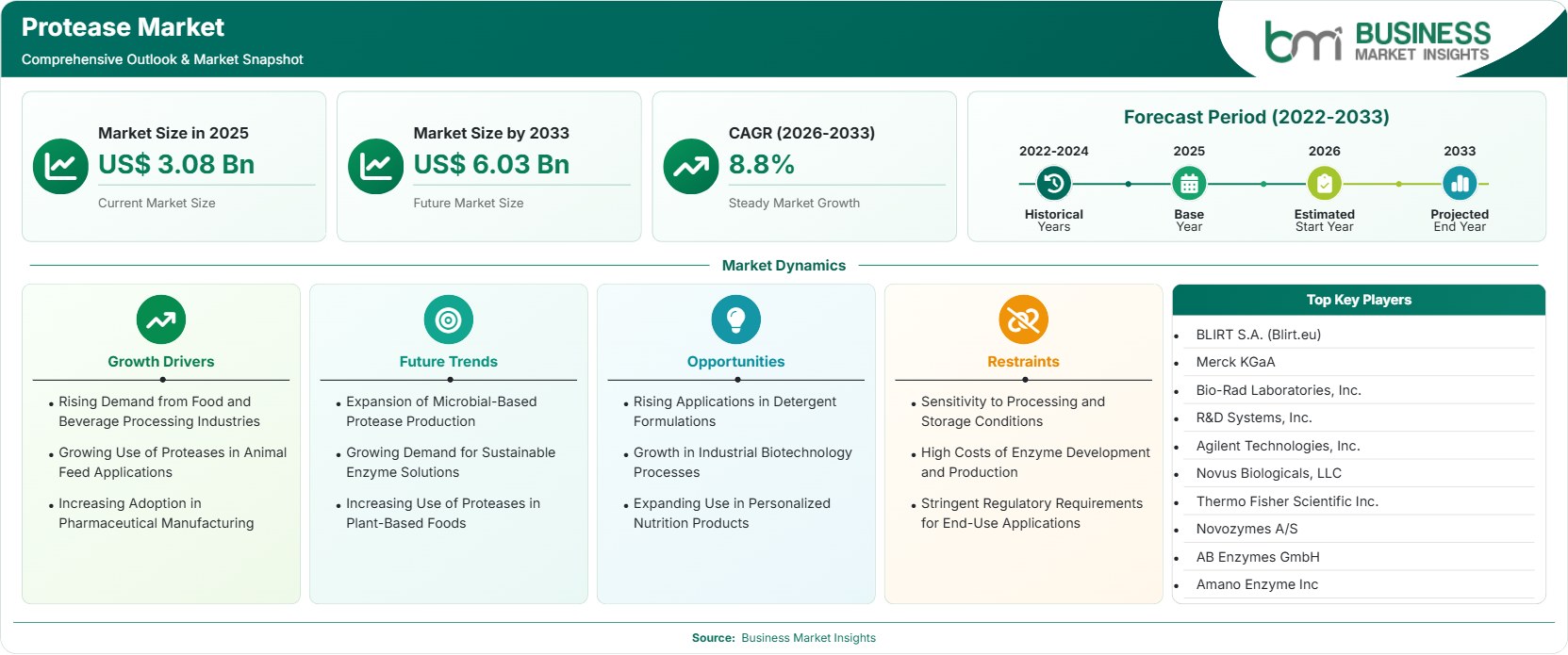
The Protease Market size was valued at US$ 3.08 billion in 2025 and is projected to reach US$ 6.03 billion by 2033, growing at a CAGR of 8.8% during 2026–2033. Increasing demand for enzyme-based food processing, expanding pharmaceutical applications, and growing adoption of sustainable biocatalysts are driving market growth. Opportunities are emerging from microbial enzyme innovation, precision fermentation technologies, and expanding utilization in high-value industrial and healthcare applications.

Report Coverage
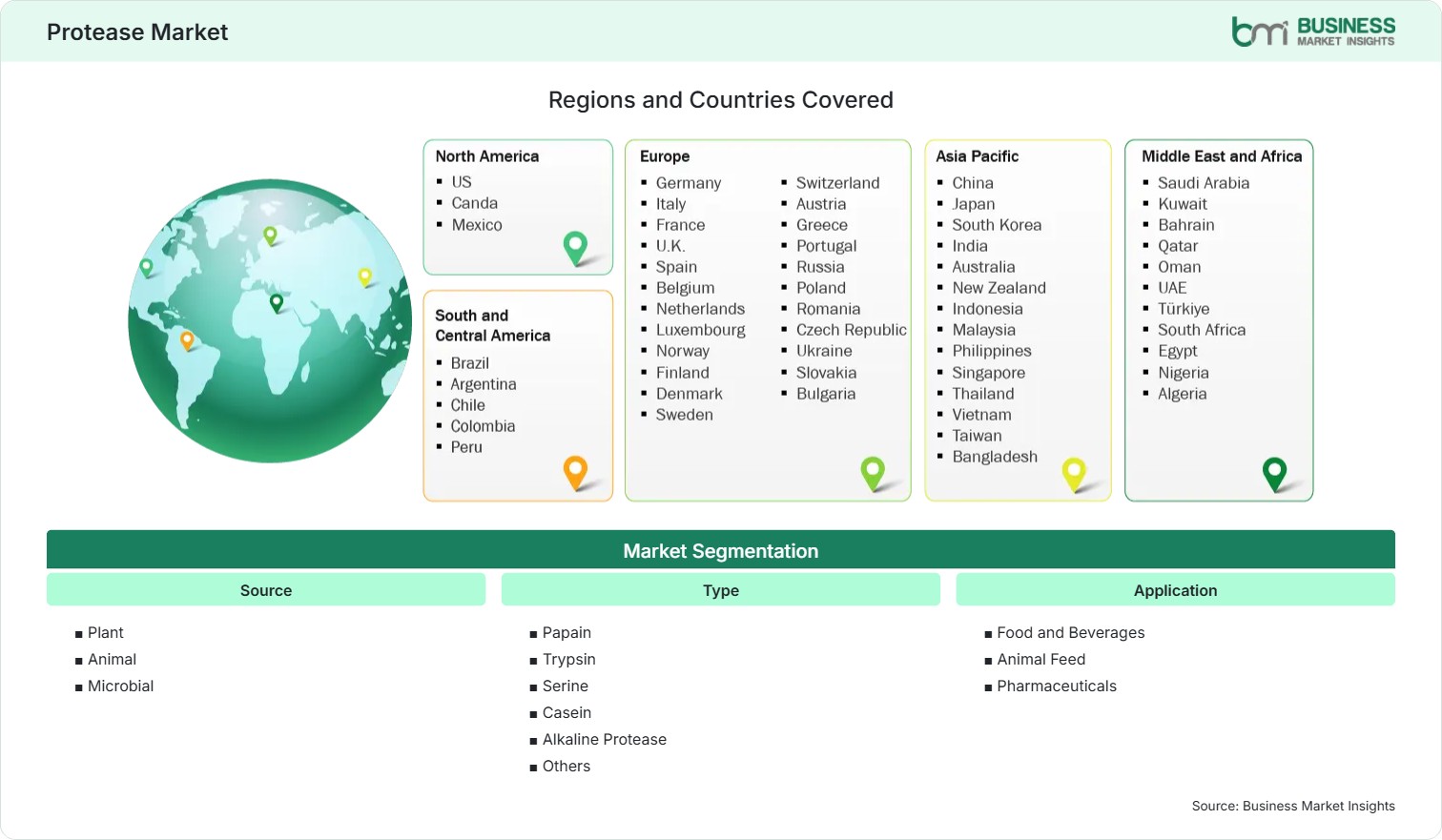
  • Source: Plant, Animal, Microbial
  • Type: Papain, Trypsin, Serine, Casein, Alkaline Protease, Others
  • Application: Food and Beverages, Animal Feed, Pharmaceuticals
US$ 3.08 Bn Market size in 2025
US$ 6.03 Bn Market Size by 2033
8.8% CAGR, 2026 - 2033
2026-2033 Forecast Period

01 AI Overview

Protease Market Summary

  • North America Region: North America holds 34%–36% market share in 2025 and is projected to grow at a 8.3%–8.7% CAGR during 2026–2033. Strong biotechnology industries, expanding pharmaceutical manufacturing, and rising enzyme adoption in food processing support regional demand. The US market remains the largest, expanding at a 8.4%–8.8% CAGR through 2033, driven by continuous investments in biotechnology and industrial enzyme production.
  • Fastest Growing Region: Asia Pacific accounts for 29%–31% market share in 2025 and is anticipated to register a 9.5%–9.9% CAGR during 2026–2033. Expanding food processing industries, increasing pharmaceutical manufacturing, and rising demand for sustainable enzyme technologies continue accelerating regional market development.
  • Leading Segment: Microbial source represents 57%–60% market share in 2025 and is expected to grow at a 9.0%–9.4% CAGR through 2033. High production efficiency, cost-effectiveness, scalability, and broad industrial applicability continue driving adoption across diverse end-use industries.
  • High Growth Segment: Pharmaceuticals accounts for 23%–25% market share in 2025 while expanding at a 9.6%–10.0% CAGR during 2026–2033. Rising enzyme-based therapeutics, diagnostic applications, and biopharmaceutical manufacturing continue supporting rapid segment expansion.
  • Key Market Opportunity: Advancements in enzyme engineering, recombinant production technologies, and precision fermentation are enabling development of high-performance proteases with improved stability, specificity, and industrial process efficiency across multiple application areas.
  • Major Market Players: BLIRT S.A., Merck KGaA, Bio-Rad Laboratories, Inc., R&D Systems, Inc., Agilent Technologies, Inc., Novus Biologicals, LLC, Thermo Fisher Scientific Inc., Novozymes A/S, AB Enzymes GmbH, Amano Enzyme Inc.
02 Strategic Insights

Protease Market: Strategic Insights

Protease Market Strategic Framework
FREE PDF
Request your free sample
Request free sample
03 Stakeholder View

Key Takeaways

  • The market ecosystem integrates enzyme manufacturers, biotechnology companies, fermentation technology providers, ingredient suppliers, and end-use industries, creating a highly specialized value chain focused on sustainable enzyme production.
  • Microbial proteases continue generating the highest revenue owing to superior scalability and production efficiency, while pharmaceutical applications present the strongest long-term growth opportunities through expanding biologics manufacturing.
  • Innovation increasingly focuses on recombinant enzyme production, protein engineering, precision fermentation, and formulation technologies that improve enzyme activity, thermal stability, and industrial process performance.
  • Asia Pacific offers the most compelling investment opportunity due to expanding food processing capacity, rapid pharmaceutical manufacturing growth, and increasing biotechnology investments across major economies.
  • Strategic collaborations, biotechnology acquisitions, and investments in advanced fermentation infrastructure are strengthening competitive positioning and accelerating commercialization of next-generation enzyme products.
  • Growing emphasis on sustainable manufacturing and bio-based processing technologies continues encouraging adoption of proteases as environmentally friendly alternatives to conventional chemical processing methods.
04 Geographic Outlook

Protease Market Regional Highlights

North America Protease Market

North America accounted for 34%–36% of the Protease Market share in 2025 and is projected to expand at a 8.3%–8.7% CAGR during 2026–2033. The region benefits from a well-established biotechnology ecosystem, advanced pharmaceutical manufacturing, and strong adoption of industrial enzymes across food processing and animal nutrition. Continuous investments in enzyme research, bioprocessing technologies, and sustainable manufacturing further support market expansion. The United States remains the largest contributor, while Canada continues strengthening enzyme production through growing biotechnology and life sciences investments.

  • Pharmaceutical and biotechnology companies continue increasing demand for high-purity proteases used in biologics manufacturing, protein analysis, drug discovery, and molecular research applications.
  • Food manufacturers increasingly adopt enzyme-based processing technologies to improve product quality, processing efficiency, texture modification, and clean-label product development.
  • Growing investments in industrial biotechnology accelerate innovation in microbial fermentation, recombinant enzyme production, and sustainable manufacturing technologies.
  • Rising demand for specialty enzymes in diagnostics, laboratory research, and biopharmaceutical development continues supporting regional market expansion.
  • Regulatory support for environmentally sustainable industrial processes encourages broader adoption of enzyme-based manufacturing solutions.

US Protease Market

The United States represented 27%–29% of the global market in 2025 and is expected to register a 8.4%–8.8% CAGR through 2033. Strong biotechnology innovation, expanding pharmaceutical production, and extensive food processing activities continue driving enzyme demand. The presence of leading biotechnology companies, advanced research institutions, and significant investments in enzyme engineering further strengthen Protease market growth across commercial and research applications.

  • Expanding biologics manufacturing continues increasing demand for high-performance proteases in protein purification and pharmaceutical production.
  • Food processing companies increasingly utilize proteases to improve flavor development, protein hydrolysis, and manufacturing efficiency.
  • Academic and commercial research organizations support innovation in enzyme engineering, recombinant protein production, and molecular biology applications.
  • Strong investment in industrial biotechnology strengthens commercialization of advanced microbial enzyme technologies.

Europe Protease Market

Europe held 28%–30% market share in 2025 and is forecast to grow at a 8.5%–8.9% CAGR during 2026–2033. Regional demand is driven by sustainable manufacturing practices, advanced biotechnology research, and growing adoption of industrial enzymes in food, pharmaceuticals, and animal nutrition. Germany leads regional demand through its strong biotechnology and food processing industries, while Denmark records the fastest growth owing to its globally recognized enzyme manufacturing expertise.

  • Germany remains the leading Protease market supported by advanced pharmaceutical production, biotechnology innovation, and industrial enzyme applications.
  • Denmark demonstrates rapid growth through strong enzyme manufacturing capabilities and continuous investments in industrial biotechnology.
  • Sustainable production initiatives encourage broader adoption of enzyme-based manufacturing technologies across multiple industries.
  • Expanding research in protein engineering and fermentation technologies strengthens development of next-generation enzyme products.
  • Increasing demand for natural processing aids supports wider utilization of proteases in food and beverage manufacturing.

Asia Pacific Protease Market

Asia Pacific accounted for 29%–31% of global demand in 2025 and is anticipated to expand at a 9.5%–9.9% CAGR during 2026–2033, representing the fastest Protease Market growth. Rising food processing activities, expanding pharmaceutical manufacturing, and increasing biotechnology investments continue supporting regional expansion. China leads regional revenue generation owing to its large industrial enzyme production capacity, while India records the fastest growth through expanding biotechnology, pharmaceutical manufacturing, and food processing industries.

  • China remains the largest regional producer and consumer of industrial enzymes supported by expanding biotechnology and manufacturing infrastructure.
  • India records the fastest regional growth through increasing investments in pharmaceuticals, industrial biotechnology, and food processing.
  • Growing livestock production encourages higher utilization of proteases in animal feed formulations to improve nutrient digestibility.
  • Expanding enzyme manufacturing capacity strengthens regional competitiveness in global biotechnology supply chains.
  • Government initiatives promoting biotechnology innovation continue encouraging commercial enzyme production and research activities.

Rest of World Protease Market

Rest of World accounted for 7%–9% of the Protease market share in 2025 and is projected to register a 8.6%–9.0% CAGR during 2026–2033.

South and Central America continue experiencing increasing enzyme adoption across food processing and animal nutrition industries, with Brazil leading regional demand through its large agricultural and livestock sectors. The Middle East and Africa are witnessing gradual growth supported by expanding food manufacturing capacity, biotechnology investments, and increasing demand for sustainable industrial processing technologies.

  • Brazil remains the leading regional market owing to strong food processing, animal feed production, and agricultural biotechnology activities.
  • Gulf countries continue investing in food manufacturing and biotechnology to improve domestic production capabilities and food security.
  • Growing awareness of sustainable processing technologies supports adoption of industrial enzymes across multiple manufacturing sectors.
  • Expanding pharmaceutical production creates new opportunities for specialty proteases used in biologics and diagnostic applications.
  • International enzyme manufacturers continue expanding distribution networks to strengthen market presence across emerging economies.
Global Market Geography
FREE PDF
Request your free sample
Request free sample
05 Segment Analysis

Protease Market Segmentation

Source

The Microbial source segment accounted for 57%–60% market share in 2025 and is projected to grow at a 9.0%–9.4% CAGR during 2026–2033. High enzyme productivity, cost-efficient fermentation processes, excellent scalability, and consistent product quality continue driving adoption across industrial applications. The Protease Market scope is expanding as manufacturers increasingly prefer microbial enzymes for sustainable production, improved process efficiency, and broad commercial applicability.

  • Plant: Plant-derived proteases such as papain and bromelain are widely utilized in food processing, pharmaceuticals, and nutraceuticals owing to their natural origin, high specificity, and consumer preference for plant-based ingredients.
  • Animal: Animal-derived proteases remain important in pharmaceutical formulations, laboratory research, and specialty food applications where high enzymatic activity and established processing characteristics are required.
  • Microbial: Microbial proteases dominate the market due to their high production yield, ease of large-scale fermentation, lower manufacturing costs, and broad applicability across food, feed, pharmaceutical, and industrial sectors.

Type

The Alkaline Protease segment held 31%–34% market share in 2025 and is expected to register a 9.1%–9.5% CAGR through 2033. Strong demand from food processing, detergents, and industrial biotechnology supports segment growth, while specialty proteases continue gaining importance in pharmaceutical and research applications requiring high substrate specificity.

  • Papain: Extensively used in meat tenderization, digestive formulations, wound care products, and food processing due to its broad proteolytic activity and plant-derived origin.
  • Trypsin: Widely utilized in cell culture, biopharmaceutical production, protein digestion, and laboratory research owing to its precise protein cleavage characteristics.
  • Serine: Plays an important role in biotechnology research, diagnostic assays, and industrial processing requiring efficient protein hydrolysis and catalytic performance.
  • Casein: Primarily applied in dairy research, protein hydrolysis, nutritional product development, and analytical laboratory applications involving milk protein characterization.
  • Alkaline Protease: Represents the leading enzyme type because of its excellent stability under alkaline conditions and broad use in food processing, industrial biotechnology, and protein modification.
  • Others (Chymotrypsin, Bromelain): Serve specialized applications in pharmaceuticals, clinical diagnostics, nutraceuticals, food processing, and biomedical research requiring highly selective proteolytic activity.

Application

The Food and Beverages segment accounted for 46%–49% market share in 2025 and is projected to expand at a 8.7%–9.1% CAGR during 2026–2033. Growing demand for enzyme-assisted food processing, clean-label ingredients, and protein modification technologies continues supporting adoption. The Protease Market trends increasingly reflect the shift toward sustainable processing methods and functional food ingredient development.

  • Food and Beverages: Continues leading demand through applications including protein hydrolysis, meat tenderization, baking, dairy processing, beverage clarification, and production of functional food ingredients.
  • Animal Feed: Improves protein digestibility, nutrient absorption, feed conversion efficiency, and livestock productivity while supporting sustainable animal nutrition and reducing feed costs.
  • Pharmaceuticals: Records the fastest growth owing to increasing use in therapeutic enzyme formulations, biologics manufacturing, diagnostics, wound care, and advanced biomedical research. 
06 Market Forces

Protease Market Dynamics

Key Market Drivers

Rising Demand from Food and Beverage Processing Industries

The food and beverage industry continues to be a major consumer of proteases owing to their ability to improve processing efficiency, product quality, and production consistency. Proteases are extensively used in meat tenderization, dairy processing, baking, protein hydrolysis, and beverage clarification. Growing consumer demand for clean-label foods and natural processing aids is encouraging manufacturers to replace chemical additives with enzyme-based solutions. Advances in enzyme engineering have further enhanced protease stability and performance under diverse processing conditions. Rising consumption of processed and convenience foods globally continues supporting steady demand for high-performance proteases across commercial food manufacturing operations.

Growing Use of Proteases in Animal Feed Applications

Proteases are increasingly incorporated into animal feed formulations to improve protein digestibility, nutrient utilization, and feed conversion efficiency. Enhanced enzyme supplementation enables livestock producers to optimize feed formulations while reducing production costs and environmental nitrogen emissions. Growing global demand for poultry, swine, and aquaculture products continues encouraging adoption of advanced feed enzymes. Proteases also support improved animal health and productivity by maximizing nutrient absorption from plant-based feed ingredients. Expanding commercial livestock production and increasing focus on sustainable animal nutrition are expected to sustain demand for protease-based feed additives throughout the forecast period.

Increasing Adoption in Pharmaceutical Manufacturing

The pharmaceutical industry increasingly utilizes proteases in biologics manufacturing, protein purification, cell culture, diagnostics, and therapeutic enzyme formulations. Growing investments in biotechnology research and biopharmaceutical production are expanding enzyme applications across drug discovery and manufacturing processes. Proteases improve process efficiency, product consistency, and analytical precision in advanced pharmaceutical production. Rising development of protein-based therapeutics and biosimilars further strengthens demand for high-purity enzymes. Continuous innovation in recombinant enzyme production and protein engineering enables manufacturers to develop highly specialized proteases tailored to evolving pharmaceutical and biomedical applications.

Key Market Opportunities

Rising Applications in Detergent Formulations

Proteases are increasingly incorporated into modern detergent formulations because they effectively remove protein-based stains while reducing washing temperatures and energy consumption. Demand for environmentally sustainable cleaning products is encouraging detergent manufacturers to adopt advanced enzyme technologies that improve cleaning performance without relying on harsh chemicals. Protease Market Forecasts indicate growing opportunities as consumer preference shifts toward high-efficiency, eco-friendly laundry and household cleaning products. Continuous improvements in enzyme stability and compatibility with detergent formulations are expected to further expand commercial adoption across developed and emerging markets.

Growth in Industrial Biotechnology Processes

Industrial biotechnology continues creating significant opportunities for protease manufacturers through expanding applications in bio-processing, waste valorization, protein modification, and sustainable manufacturing. Enzyme-based technologies improve process efficiency while reducing chemical consumption, energy requirements, and environmental impact across multiple industries. Advances in microbial fermentation, recombinant DNA technology, and enzyme engineering enable production of highly efficient proteases tailored for specific industrial applications. Increasing investments in circular bioeconomy initiatives further support adoption of industrial enzymes as environmentally responsible alternatives to conventional chemical processing methods.

Expanding Use in Personalized Nutrition Products

Growing consumer interest in personalized nutrition and digestive health is driving demand for specialized enzyme formulations containing proteases. Nutritional supplements increasingly incorporate targeted enzyme blends to improve protein digestion and nutrient absorption based on individual dietary needs. Advances in nutrigenomics, precision health, and functional food development continue creating opportunities for manufacturers to develop customized enzyme products. Rising awareness of preventive healthcare and personalized wellness solutions is expected to strengthen commercial demand for innovative protease formulations within the expanding nutritional supplement industry.

Market Restraints and Challenges

Sensitivity to Processing and Storage Conditions

Factor: Proteases are highly sensitive to temperature, pH variations, moisture, and storage conditions, which may reduce enzymatic activity during manufacturing, transportation, and long-term storage. Impact: Manufacturers must invest in specialized stabilization technologies, controlled storage environments, and optimized formulation techniques to preserve enzyme performance. These additional processing requirements increase production complexity and operational costs while limiting application under harsh industrial conditions. Reduced enzyme stability may also affect product consistency and customer confidence in performance-sensitive applications.

High Costs of Enzyme Development and Production

Factor: Developing commercial proteases requires significant investment in strain development, fermentation optimization, downstream purification, quality assurance, and regulatory compliance before large-scale commercialization. Impact: High research, development, and manufacturing costs increase product pricing and create barriers for smaller manufacturers entering the market. Continuous investment in advanced biotechnology infrastructure and skilled scientific expertise further elevates operational expenditure. These cost pressures may limit adoption in price-sensitive applications despite the long-term efficiency and sustainability benefits offered by enzyme-based processing technologies.

07 Company Analysis

Competitive Landscape

The competitive environment of the Protease Market analysis is characterized by global enzyme manufacturers, biotechnology companies, life science suppliers, and specialty reagent providers. Market participants compete through enzyme engineering, microbial fermentation technologies, recombinant protein production, strategic collaborations, and expansion of application-specific enzyme portfolios for food, pharmaceutical, biotechnology, and animal nutrition industries.

Company Name

Overview

Products and Services Relevant to this Market

BLIRT S.A.

Biotechnology company specializing in enzyme production, molecular biology products, and fermentation-based bioprocesses.

Proteases, recombinant enzymes, molecular biology reagents, fermentation services, and enzyme manufacturing solutions.

Merck KGaA

Global science and technology company serving life sciences, healthcare, and electronics industries.

Proteases, research enzymes, cell culture reagents, protein analysis solutions, and bioprocessing products.

Bio-Rad Laboratories, Inc.

Life science company providing research products and clinical diagnostic technologies worldwide.

Proteases, protein analysis reagents, electrophoresis products, laboratory research kits, and analytical solutions.

R&D Systems, Inc.

Biotechnology brand specializing in high-quality research reagents and proteins for life science applications.

Recombinant proteases, enzymes, proteins, immunoassays, cell biology reagents, and molecular research products.

Agilent Technologies, Inc.

Global analytical instrumentation and laboratory solutions provider serving pharmaceutical and biotechnology sectors.

Protease digestion kits, analytical reagents, chromatography solutions, mass spectrometry workflows, and protein characterization products.

Novus Biologicals, LLC

Biotechnology company supplying antibodies, proteins, enzymes, and molecular biology research products.

Proteases, recombinant proteins, antibodies, cell biology reagents, enzyme assays, and laboratory research solutions.

Thermo Fisher Scientific Inc.

Global leader in scientific research, diagnostics, and laboratory technologies.

Proteases, protein purification products, cell culture reagents, bioprocessing solutions, analytical instruments, and life science consumables.

Novozymes A/S

Leading industrial biotechnology company specializing in enzyme innovation for multiple industrial applications.

Industrial proteases, food enzymes, feed enzymes, fermentation technologies, and sustainable bioprocessing solutions.

AB Enzymes GmbH

Enzyme manufacturer focused on food processing, animal nutrition, and industrial biotechnology applications.

Proteases, baking enzymes, food processing enzymes, feed enzymes, and industrial biotechnology solutions.

Amano Enzyme Inc.

Global enzyme manufacturer with expertise in specialty enzymes for pharmaceutical and food industries.

Proteases, digestive enzymes, food processing enzymes, pharmaceutical enzymes, and customized enzyme formulations.

08 Industry Activity

Recent Developments

June 2026

Novonesis – Announced the launch of its new protease portfolio, including Progress® Beyond, Progress® Pro, and Polarzyme® Ultra, to deliver faster and more efficient stain removal in cold-water laundry applications while improving detergent performance and supporting energy-efficient washing.

June 2026

Shionogi & Co., Ltd. – announced that the U.S. Food and Drug Administration (FDA) officially granted approval for XOCOVA® (ensitrelvir), a landmark 3CL protease inhibitor oral antiviral treatment, establishing the first and only oral option designed to prevent symptomatic COVID-19 following close-contact exposure.

May 2025

Novonesis – expands its product portfolio for liquid laundry detergents with the launch of two unmatched protein stain removal solutions: Progress® Beyond and Progress® Go.

March, 2024

Novus International – Announced that it completed the acquisition of BioResource International, Inc. (BRI), expanding its enzyme portfolio, strengthening its innovation pipeline, and enhancing its capabilities in feed additives, fermentation technologies, and animal nutrition solutions.

10 Trust & Transparency

Research Methodology

The market analysis combines proprietary research with secondary data from government agencies, company disclosures, regulatory filings, industry databases and expert interviews. Market estimates are validated through data triangulation, cross-market benchmarking and analyst review.

View Full Research Methodology

11 Questions Answered

Frequently Asked Questions

Who are the leading companies in the Protease Market Report?

Major companies include BLIRT S.A., Merck KGaA, Bio-Rad Laboratories, Inc., R&D Systems, Inc., Agilent Technologies, Inc., Novus Biologicals, LLC, Thermo Fisher Scientific Inc., Novozymes A/S, AB Enzymes GmbH, and Amano Enzyme Inc.

Which region holds the largest share in the market?

North America leads the global market with a 34%–36% share in 2025, supported by advanced biotechnology infrastructure, pharmaceutical manufacturing, extensive research activities, and strong industrial enzyme adoption.

Which application is expected to grow the fastest?

Pharmaceutical applications are projected to register the fastest growth due to increasing biologics manufacturing, enzyme therapeutics, protein purification, diagnostics, and expanding biotechnology research activities worldwide.

Which source dominates the market?

Microbial proteases dominate the market with 57%–60% share in 2025 owing to high production efficiency, scalability, lower manufacturing costs, and broad applicability across food, pharmaceutical, feed, and industrial biotechnology sectors.

What is driving the growth of the Protease Market?

The market is primarily driven by increasing demand from food processing industries, expanding pharmaceutical manufacturing, growing use of enzymes in animal feed, and rising adoption of sustainable enzyme-based industrial processing technologies.

Access the Full Protease Market Report

Get segment-level forecasts, regional estimates, competitive benchmarking, company profiles and downloadable Excel datasets.

Access the full Protease Market Report
350 pages PDF & Excel | 2026-07-28