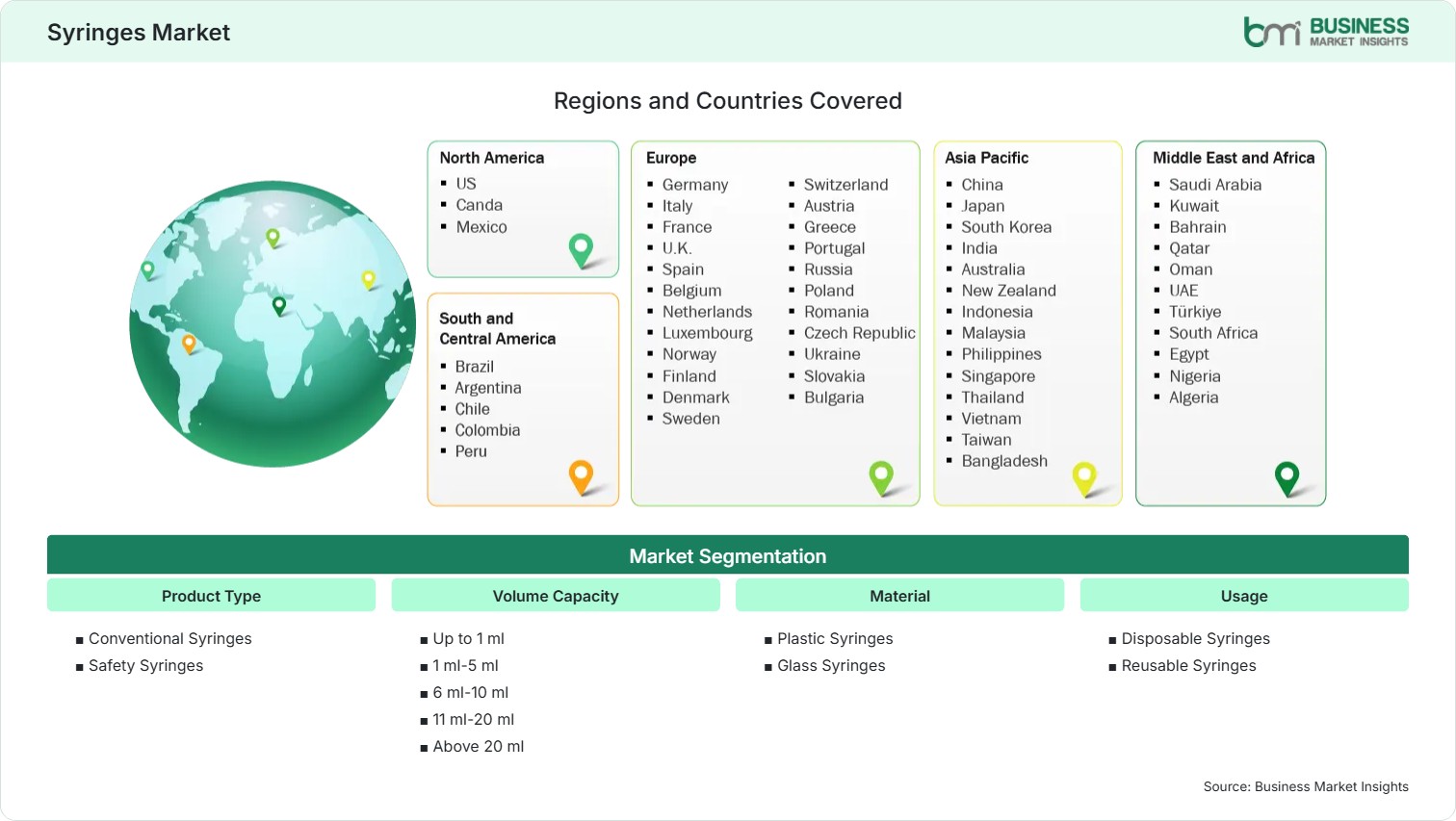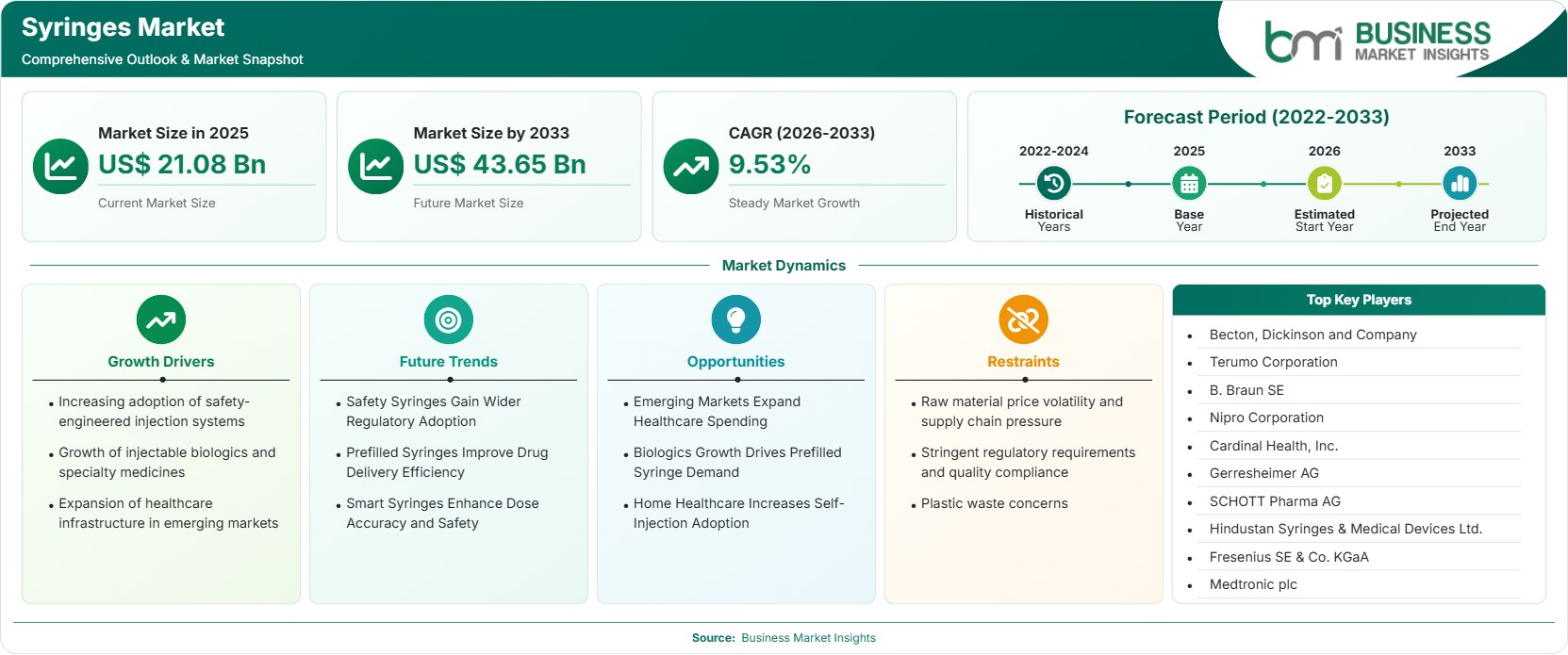
Syringes Market Regional Highlights
North America Syringes Market
North America accounted for 34%–37% of the market in 2025 and is projected to expand at a CAGR of 8.8%–9.4% between 2026–2033. Strong healthcare infrastructure, advanced pharmaceutical development, and regulatory focus on injection safety support regional leadership. The region continues to see significant demand from hospitals, biotechnology companies, and specialty drug manufacturers. The Syringes Market share reflects mature healthcare systems and strong adoption of advanced delivery technologies.
- Safety syringe adoption is increasing due to workplace protection standards and healthcare provider focus on reducing needlestick incidents.
- Pharmaceutical companies are expanding partnerships for prefilled syringe manufacturing supporting biologics and specialty medicines.
- Automation investments are improving manufacturing consistency, quality control, and production scalability across regional facilities.
- Canada contributes through healthcare modernization programs and increasing demand for injectable treatments.
US Syringes Market
The US market accounted for 29%–32% of the market share in 2025 and is expected to grow at a CAGR of 8.9%–9.3% during 2026–2033. The country remains a major contributor due to advanced medical infrastructure, pharmaceutical innovation, and widespread adoption of injectable therapies. Strong demand from hospitals, clinics, and biotechnology companies supports continued market expansion.
- Hospitals increasingly replace conventional products with safety-focused solutions to improve healthcare worker protection.
- Biopharmaceutical research growth supports demand for premium glass and prefilled syringe technologies.
- Domestic production investments strengthen supply chain resilience for critical medical devices.
Europe Syringes Market
Europe held a 25%–28% share in 2025 and is estimated to grow at a CAGR of 8.5%–9.2% from 2026 to 2033. Germany, France, and the United Kingdom represent major markets, supported by established pharmaceutical industries and healthcare systems. Germany demonstrates strong Syringes Market growth through medical device manufacturing capabilities, while European regulations continue encouraging safer injection practices.
- Germany benefits from pharmaceutical manufacturing expertise and advanced medical device production capabilities.
- France supports adoption through healthcare programs and expanding injectable treatment requirements.
- The United Kingdom drives demand through healthcare innovation and clinical research activities.
- European sustainability initiatives influence material selection and manufacturing strategies.
Asia Pacific Syringes Market
Asia Pacific accounted for 27%–30% of the market in 2025 and is projected to expand at a CAGR of 10.8%–11.6% during 2026–2033. The region represents the fastest-growing opportunity due to expanding healthcare access, pharmaceutical manufacturing capabilities, and government-led immunization initiatives. China, India, and Japan remain key contributors, while Southeast Asian countries are improving their healthcare infrastructure and increasing the adoption of injectable treatments.
- China strengthens regional demand through large-scale pharmaceutical production, medical device manufacturing, and healthcare infrastructure investments.
- India supports expansion through domestic syringe production capabilities, increasing healthcare accessibility, and growing pharmaceutical exports.
- Japan drives premium product adoption through advanced biotechnology applications and demand for high-quality delivery systems.
- Southeast Asian countries experience rising utilization due to hospital expansion, vaccination programs, and improved clinical services.
Rest of World Syringes Market
The rest of the world represented a 9%–12% share in 2025 and is forecast to grow at a CAGR of 9.5%–10.3% between 2026 and 2033. South and Central America are supported by healthcare expansion and vaccination initiatives, while the Middle East and Africa benefit from hospital investments and improved access to healthcare. Brazil, Mexico, Gulf countries, and South Africa represent important demand centers.
- Brazil contributes through healthcare network expansion, pharmaceutical development, and increasing demand for injectable therapies.
- Mexico benefits from medical manufacturing growth and integration with international healthcare supply chains.
- Gulf countries invest in advanced healthcare facilities, supporting demand for specialized injection products.
- South Africa represents a key African market through healthcare modernization and disease management programs.