
Pharmacogenomics Market Outlook: Size, Share, Trends, Growth Analysis, Competitive Landscape & Forecast, 2026-2033

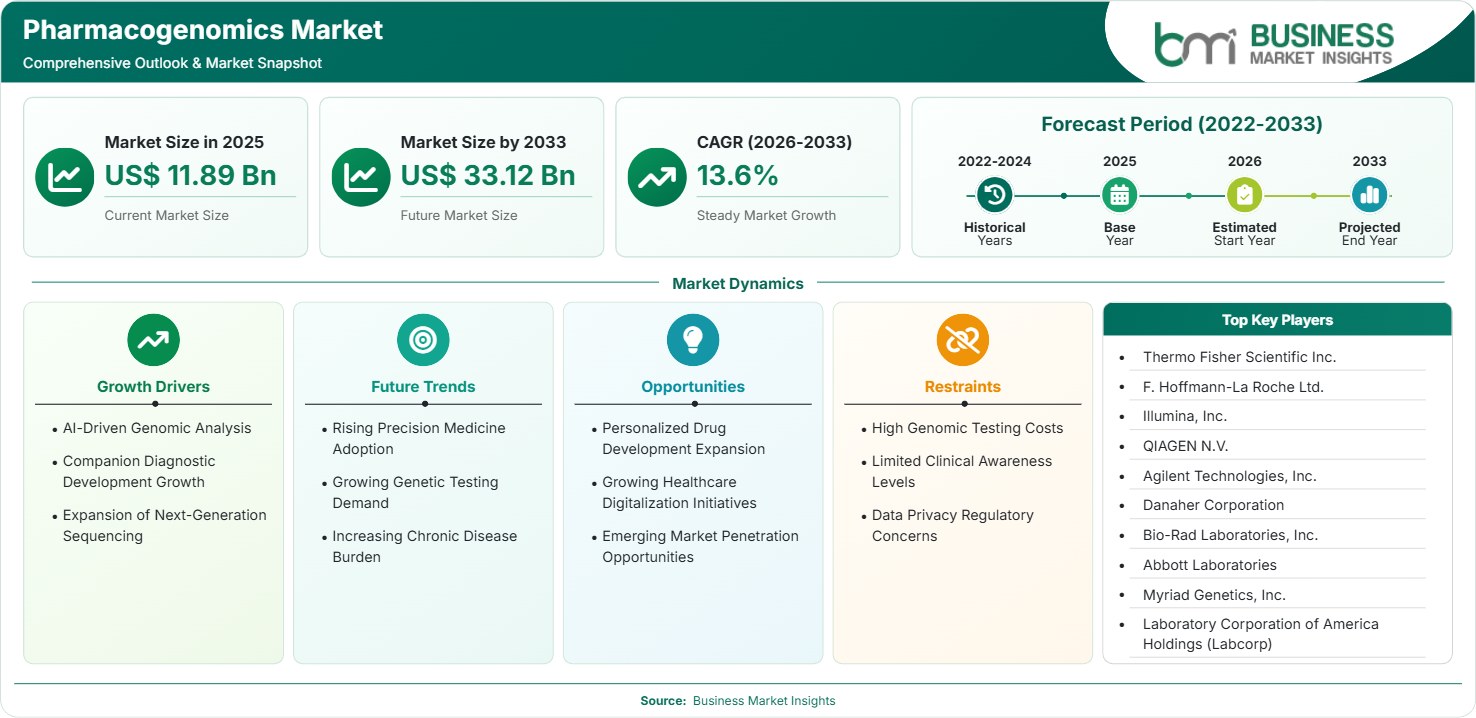
The Pharmacogenomics Market size was valued at US$ 11.89 Billion in 2025 and is projected to reach US$ 33.12 Billion by 2033, growing at a CAGR of 13.6% during 2026–2033. Market expansion is supported by growing AI-driven genomic analysis, increasing companion diagnostic development, and wider adoption of next-generation sequencing technologies. Rising investments in precision medicine, healthcare digitalization, and genomic research continue to create substantial opportunities across clinical diagnostics and pharmaceutical development.

Report Coverage
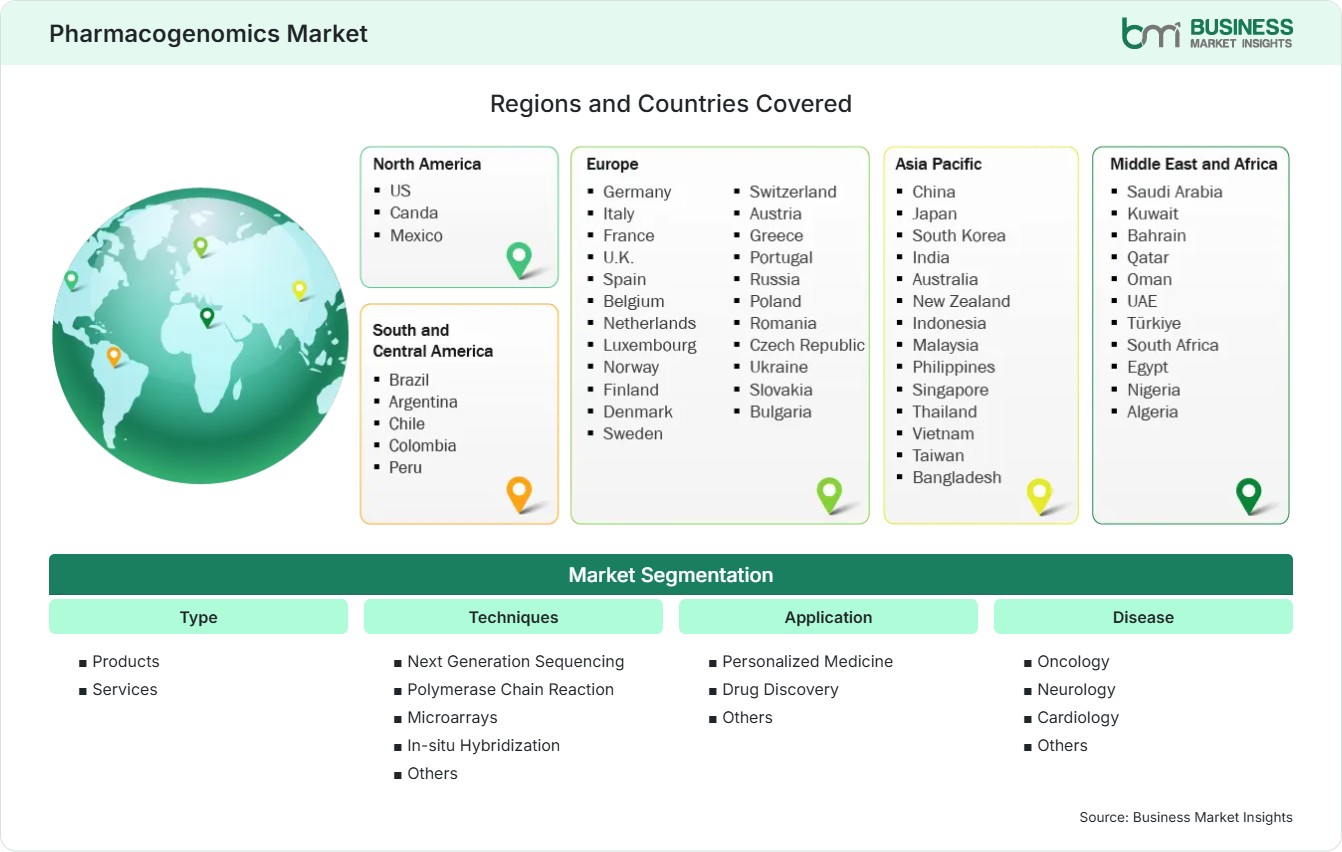
  • Type: Products, Services
  • Techniques: Next Generation Sequencing, Polymerase Chain Reaction, Microarrays, In-situ Hybridization, Others
  • Application: Personalized Medicine, Drug Discovery, Others
  • Disease: Oncology, Neurology, Cardiology, Others
  • End User: Academic and Research Institutes, Pharmaceutical and Biotechnology Companies, Others
US$ 11.89 Bn Market size in 2025
US$ 33.12 Bn Market Size by 2033
13.6% CAGR, 2026 - 2033
2026-2033 Forecast Period

01 AI Overview

Pharmacogenomics Market Summary

  • North America Region: North America holds 42%–45% of global revenue in 2025 and is projected to register a CAGR of 13.2%–13.8% during 2026–2033. Strong precision medicine initiatives, expanding genomic testing adoption, favorable reimbursement for selected molecular diagnostics, and increasing pharmaceutical R&D investments continue to support regional leadership. The U.S. market is expected to grow at a CAGR of 13.3%–13.9%, driven by widespread implementation of companion diagnostics and precision oncology programs.
  • Fastest Growing Region: Asia Pacific accounts for 24%–27% of the global market in 2025 and is projected to expand at a CAGR of 15.0%–15.6% during 2026–2033. Expanding genomic research programs, government funding, growing biotechnology industries, and increasing healthcare digitalization continue accelerating regional market development.
  • Leading Segment: Products account for 67%–70% of market revenue in 2025 and are anticipated to grow at a CAGR of 13.4%–14.0% during the forecast period. Continuous demand for sequencing consumables, molecular diagnostic kits, and laboratory instruments continues supporting segment leadership.
  • High Growth Segment: Personalized Medicine accounts for 47%–50% of market revenue in 2025 and is projected to register the fastest CAGR of 14.4%–15.0% during 2026–2033. Increasing integration of pharmacogenomic testing into clinical decision-making, oncology treatment, and individualized drug selection continues accelerating adoption.
  • Key Market Opportunity: Expanding precision drug development, increasing integration of artificial intelligence into genomic interpretation, and strengthening healthcare digitalization initiatives are expected to create long-term commercial opportunities across clinical and pharmaceutical applications.
  • Major Market Players: Thermo Fisher Scientific Inc., F. Hoffmann-La Roche Ltd., Illumina, Inc., QIAGEN N.V., Agilent Technologies, Inc., Danaher Corporation, Bio-Rad Laboratories, Inc., Abbott Laboratories, Myriad Genetics, Inc., and Laboratory Corporation of America Holdings.
02 Strategic Insights

Pharmacogenomics Market: Strategic Insights

pharmacogenomics-market-market-strategic-framework
FREE PDF
Request your free sample
Request free sample
03 Stakeholder View

Key Takeaways

  • The value chain is rapidly evolving through tighter integration between sequencing technology providers, bioinformatics developers, pharmaceutical companies, diagnostic laboratories, and healthcare providers, creating a more collaborative precision medicine ecosystem.
  • Personalized medicine continues offering the strongest commercial opportunity as healthcare providers increasingly adopt pharmacogenomic testing to optimize treatment efficacy, minimize adverse drug reactions, and improve long-term patient outcomes.
  • Innovation is increasingly focused on AI-powered genomic interpretation, multi-gene testing panels, cloud-based bioinformatics platforms, and automated sequencing workflows that enhance diagnostic accuracy and laboratory efficiency.
  • Asia Pacific represents one of the most attractive long-term investment destinations owing to expanding biotechnology infrastructure, government-funded genomics programs, increasing clinical research activities, and rising healthcare expenditure.
  • Strategic collaborations between pharmaceutical manufacturers and molecular diagnostics companies continue accelerating companion diagnostic development, biomarker validation, and commercialization of targeted therapies across oncology, neurology, and cardiology.
  • Growing regulatory recognition of pharmacogenomic testing in clinical guidelines is expected to strengthen physician adoption, improve reimbursement frameworks, and expand routine integration into personalized healthcare delivery.
04 Geographic Outlook

Pharmacogenomics Market Regional Highlights

North America Pharmacogenomics Market

North America accounted for 42%–45% of global revenue in 2025 and is projected to expand at a CAGR of 13.2%–13.8% during 2026–2033. The Pharmacogenomics Market share remains the largest worldwide, supported by well-established genomic research infrastructure, widespread adoption of precision medicine, strong biotechnology ecosystems, and favorable regulatory support for companion diagnostics. Increasing investments in AI-enabled genomic interpretation and clinical sequencing continue strengthening regional market leadership.

  • The United States continues leading genomic medicine adoption through large-scale precision medicine initiatives, expanding molecular diagnostic laboratories, and strong pharmaceutical investments in biomarker-driven drug development.
  • Canada continues strengthening pharmacogenomics research through government-funded genomic programs, academic collaborations, and expanding integration of precision medicine into healthcare systems.
  • Growing adoption of companion diagnostics in oncology continues increasing demand for pharmacogenomic testing to improve therapeutic selection and reduce adverse drug reactions.
  • Leading sequencing technology providers continue expanding laboratory automation, cloud-based genomic analytics, and AI-enabled decision support platforms to improve workflow efficiency.
  • Strong regulatory support and increasing reimbursement for selected pharmacogenomic tests continue accelerating commercial adoption across hospitals and reference laboratories.

US Pharmacogenomics Market

The United States represented 37%–40% of global revenue in 2025 and is expected to register a CAGR of 13.3%–13.9% throughout the forecast period. Expanding precision oncology programs, growing adoption of companion diagnostics, and increasing pharmaceutical investment continue driving Pharmacogenomics Market growth across clinical diagnostics and personalized medicine applications.

  • Pharmaceutical companies continue integrating pharmacogenomic biomarkers into drug development programs to improve treatment efficacy and support regulatory approvals.
  • Large healthcare providers are expanding genomic testing capabilities through advanced sequencing technologies and electronic health record integration.
  • Academic medical centers continue leading translational research by accelerating biomarker discovery and expanding clinical validation studies.
  • Growing implementation of artificial intelligence and machine learning continues improving genomic data interpretation and clinical decision support.

Europe Pharmacogenomics Market

Europe accounted for 28%–31% of global revenue in 2025 and is projected to expand at a CAGR of 13.1%–13.6% during 2026–2033. Increasing implementation of national genomics programs, expanding precision medicine initiatives, and growing clinical adoption of companion diagnostics continue supporting Pharmacogenomics Market expansion. Germany remains the leading regional market, while Poland is expected to record the fastest growth.

  • Germany continues leading regional adoption through advanced molecular diagnostics infrastructure, pharmaceutical innovation, and increasing integration of pharmacogenomics into clinical practice.
  • Poland is projected to register a CAGR of 14.3%–14.8%, supported by expanding healthcare modernization, biotechnology investments, and genomic research capabilities.
  • France and the United Kingdom continue investing in national genomic medicine programs to strengthen personalized healthcare delivery.
  • European pharmaceutical companies continue increasing biomarker-driven clinical trials supporting precision drug development.
  • Growing regulatory alignment for companion diagnostics continues improving commercialization opportunities across regional healthcare systems.

Asia Pacific Pharmacogenomics Market

Asia Pacific accounted for 24%–27% of global revenue in 2025 and is projected to register the fastest CAGR of 15.0%–15.6% during 2026–2033. Government support for genomics research, expanding biotechnology sectors, increasing healthcare digitalization, and rising investments in precision medicine continue to accelerate the Pharmacogenomics Market growth. China leads regional revenue generation, while India is expected to achieve the fastest growth.

  • China continues investing heavily in genomic sequencing infrastructure, precision medicine research, and large-scale population genomics initiatives supporting clinical implementation.
  • India is projected to register a CAGR of 15.7%–16.3%, driven by expanding molecular diagnostics laboratories, increasing genomic research, and supportive healthcare digitalization initiatives.
  • Japan continues advancing personalized medicine through sophisticated genomic testing capabilities and strong pharmaceutical innovation.
  • South Korea continues expanding biotechnology research and precision diagnostics through public-private partnerships and advanced sequencing technologies.
  • Australia continues strengthening genomic medicine through national precision healthcare programs and collaborative clinical research.

Rest of World Pharmacogenomics Market

The Rest of the World accounted for 4%–6% of global Pharmacogenomics Market revenue in 2025 and is projected to expand at a CAGR of 12.7%–13.2% during 2026–2033. Latin America, the Middle East, and Africa are gradually increasing investments in molecular diagnostics, biotechnology research, and digital healthcare infrastructure, supporting long-term adoption of pharmacogenomic testing.

Growing international collaborations, healthcare modernization initiatives, and expanding access to genomic technologies continue improving clinical implementation across emerging markets. Increased awareness of precision medicine is expected to support future commercial expansion.

  • Brazil continues expanding genomic medicine research through academic partnerships and biotechnology investments supporting personalized healthcare.
  • Saudi Arabia is strengthening national genomics initiatives while investing in precision medicine infrastructure and advanced molecular diagnostics.
  • The United Arab Emirates continues expanding specialized genomic laboratories and digital healthcare platforms supporting personalized treatment approaches.
  • South Africa continues improving genomic research capacity through international collaborations and growing biotechnology investment.
  • Government initiatives promoting precision healthcare and molecular diagnostics continue supporting gradual market development across emerging regions.
global-market-geography
FREE PDF
Request your free sample
Request free sample
05 Segment Analysis

Pharmacogenomics Market Segmentation

Type

The Products segment accounted for 67%–70% of the global market in 2025 and is projected to expand at a CAGR of 13.4%–14.0% during 2026–2033. Growth is supported by increasing demand for sequencing consumables, genomic testing kits, laboratory automation systems, and molecular diagnostic instruments. The Pharmacogenomics Market scope continues to broaden as healthcare providers and pharmaceutical companies expand precision medicine capabilities through advanced genomic technologies.

  • Products: Continue dominating the market owing to sustained demand for consumables, sequencing platforms, PCR instruments, and genomic analysis systems supporting clinical diagnostics and pharmaceutical research.
    • Consumables: Represent the largest product category due to recurring demand for reagents, assay kits, sequencing cartridges, and sample preparation products required for routine genomic testing.
    • Equipment: Continues expanding with increasing adoption of automated sequencing platforms, PCR systems, genomic analyzers, and laboratory workflow automation technologies.
  • Services: Witness strong adoption as healthcare providers increasingly outsource genomic testing, bioinformatics analysis, clinical interpretation, and pharmacogenomic consulting to specialized laboratories.

Techniques

The Next Generation Sequencing segment accounted for 42%–45% of market revenue in 2025 and is projected to register a CAGR of 14.2%–14.8% throughout the forecast period. Declining sequencing costs, higher throughput, improved accuracy, and increasing clinical implementation continue driving adoption. Current Pharmacogenomics Market trends indicate expanding use of NGS in companion diagnostics, biomarker discovery, and personalized therapeutic development.

  • Next Generation Sequencing: Remains the leading technology because of comprehensive genomic profiling capabilities, high scalability, and broad application across research, diagnostics, and precision medicine.
  • Polymerase Chain Reaction: Continues widespread adoption owing to rapid turnaround times, high analytical sensitivity, cost-effectiveness, and extensive use in targeted genetic testing.
  • Microarrays: Maintain clinical relevance for large-scale genotyping studies, pharmacogenetic screening, and biomarker discovery in academic and pharmaceutical research.
  • In-situ Hybridization: Supports molecular pathology by enabling visualization of genetic abnormalities directly within tissue samples, particularly in oncology diagnostics.

Application

The Personalized Medicine segment accounted for 47%–50% of global Pharmacogenomics Market revenue in 2025 and is expected to expand at a CAGR of 14.4%–15.0% during 2026–2033. Increasing clinical utilization of pharmacogenomic testing for individualized drug selection, dose optimization, and adverse drug reaction prevention continues strengthening segment leadership across multiple therapeutic specialties.

  • Personalized Medicine: Represents the largest application segment as clinicians increasingly incorporate genomic information into treatment planning, improving therapeutic effectiveness while minimizing medication-related complications.
  • Drug Discovery: Continues expanding through biomarker identification, patient stratification, clinical trial optimization, and development of targeted therapies supported by pharmacogenomic insights.

Disease

The Oncology segment accounted for 52%–55% of market revenue in 2025 and is projected to register a CAGR of 14.0%–14.6% throughout the forecast period. Rising adoption of companion diagnostics, biomarker-guided treatment selection, and precision oncology programs continues driving strong demand for pharmacogenomic testing in cancer management.

  • Oncology: Maintains market leadership through increasing implementation of biomarker-guided therapies, companion diagnostics, and genomic profiling supporting precision cancer treatment.
  • Neurology: Gains momentum with growing research into genetic influences on neurological disorders and individualized treatment approaches for complex diseases.
  • Cardiology: Experiences increasing adoption as pharmacogenomic testing improves drug response prediction and supports personalized cardiovascular disease management.

End User

The Pharmaceutical and Biotechnology Companies segment accounted for 41%–44% of global revenue in 2025 and is expected to expand at a CAGR of 13.8%–14.4% during the forecast period. Strong investment in biomarker-driven drug discovery, companion diagnostic development, and precision medicine research continues supporting segment leadership.

  • Academic and Research Institutes: Continue driving innovation through genomic research, biomarker discovery, translational medicine, and collaborative precision medicine initiatives.
  • Pharmaceutical and Biotechnology Companies: Lead commercial demand by integrating pharmacogenomics into drug development, clinical trials, regulatory submissions, and targeted therapeutic development.
06 Market Forces

Pharmacogenomics Market Dynamics

Key Market Drivers

Growing AI-Driven Genomic Analysis

AI is revolutionizing pharmacogenomic studies due to its ability to process vast genomic data swiftly and making more informed medical decisions. With AI algorithms, one can achieve better accuracy in genetic variation and biomarkers discovery and predict the reaction of a particular medication on an individual. Machine learning is being used extensively in precision medicine to make the choice of treatment more accurate and hasten drug development. The market development for pharmacogenomics is also facilitated by the use of cloud bioinformatics solutions, automated genome interpretation systems, and investment in digital health innovations.

Companion Diagnostic Development Growth

Advancements in companion diagnostics are aiding the increasing relevance of pharmacogenomics within the domain of precision medicine. Regulatory bodies are increasingly endorsing the concept of developing companion diagnostics alongside specific targeted treatments in order to ensure that patients treatments are identified. The domain of oncology continues to dominate, as biomarker-based therapy is helping to enhance the efficacy of treatment while minimizing the exposure of patients to unnecessary medications. Drug manufacturers are continuing their efforts of partnering with molecular diagnostics firms in the realm of companion diagnostics.

Expansion of Next-Generation Sequencing

The development of next-generation sequencing (NGS) technology continues to fuel the increasing use of pharmacogenomic tests in both scientific research and clinical settings. With improvements in terms of sequencing speed, reduced costs, increased throughput, and greater accuracy of analysis, genotyping has become increasingly attainable. The use of NGS enables parallel testing of numerous pharmacogenes, thereby allowing health care professionals to select the right drugs and appropriate doses. Continuous innovation in sequencing chemistry, automation, and integrated bioinformatics solutions is improving laboratory productivity while expanding clinical utilization across oncology, cardiology, neurology, and rare disease management.

Key Market Opportunities

Personalized Drug Development Expansion

Pharmaceutical companies are increasingly incorporating pharmacogenomic insights into every stage of drug discovery and clinical development. Positive Pharmacogenomics Market Forecasts are encouraging investments in biomarker-guided therapies, genetically stratified clinical trials, and precision drug development programs. Identification of genetic markers associated with therapeutic response enables developers to improve clinical outcomes, reduce trial failure rates, and accelerate regulatory approvals. Growing collaboration among pharmaceutical manufacturers, biotechnology firms, and genomic technology providers is expected to create substantial long-term commercial opportunities.

Growing Healthcare Digitalization Initiatives

Healthcare systems worldwide are expanding digital infrastructure to improve clinical efficiency and facilitate integration of genomic information into routine patient care. Electronic health records, cloud-based genomic databases, and clinical decision support systems enable physicians to access pharmacogenomic information more effectively during prescribing decisions. Increasing interoperability between genomic laboratories and healthcare providers is improving treatment personalization while supporting broader implementation of precision medicine across hospitals, specialty clinics, and academic medical centers.

Emerging Market Penetration Opportunities

Emerging nations have been making progress in developing their biotech systems by way of investing in genomics facilities, programs in precision medicine, and molecular diagnostics labs. Through government grants, private-public partnerships, and health care improvements, access to pharmacogenomics testing is increasing in the Asia Pacific, Latin America, and Middle Eastern regions. The use of international technology partnerships and local production capacities is anticipated to lower testing prices while facilitating market adoption.

Market Restraints and Challenges

High Genomic Testing Costs

Factor: Comprehensive pharmacogenomic testing requires advanced sequencing platforms, sophisticated laboratory infrastructure, specialized bioinformatics capabilities, and highly trained personnel, resulting in substantial testing and operational costs. Impact: High costs may limit adoption in price-sensitive healthcare systems, reduce patient access to precision medicine, and delay widespread clinical implementation. Market participants continue investing in laboratory automation, high-throughput sequencing technologies, and workflow optimization to improve cost efficiency while maintaining analytical accuracy and regulatory compliance.

Limited Clinical Awareness Levels

Factor: Many healthcare professionals remain unfamiliar with pharmacogenomic testing, genomic data interpretation, and integration of genetic information into routine prescribing decisions, particularly outside specialized clinical settings. Impact: Limited awareness can slow physician adoption, reduce testing utilization, and delay incorporation of pharmacogenomic guidelines into routine healthcare practice. Educational initiatives, professional training programs, and evidence-based clinical guidelines are increasingly being developed to improve clinician confidence, expand precision medicine adoption, and strengthen long-term market growth.

07 Company Analysis

Competitive Landscape

The Pharmacogenomics Market analysis highlights that leading companies are expanding their precision medicine portfolios through strategic collaborations, AI-enabled genomic analysis, acquisitions, and investments in advanced laboratory technologies to strengthen their global market positions.

Company Name

Overview

Products and Services Relevant to this Market

Thermo Fisher Scientific Inc.

Global leader in life sciences offering comprehensive genomic research and molecular diagnostic solutions.

Next-generation sequencing systems, PCR platforms, reagents, genomic analysis software, laboratory automation, and precision medicine solutions.

F. Hoffmann-La Roche Ltd.

Leading healthcare company focused on molecular diagnostics and personalized medicine innovations.

Companion diagnostics, genomic testing platforms, sequencing technologies, oncology diagnostics, and precision healthcare solutions.

Illumina, Inc.

Pioneer in next-generation sequencing technologies supporting clinical and research genomics worldwide.

NGS platforms, sequencing consumables, bioinformatics software, genomic analysis tools, and precision medicine applications.

QIAGEN N.V.

Global provider of molecular diagnostics and sample preparation technologies for precision medicine.

Sample preparation systems, PCR assays, genomic testing kits, bioinformatics software, and companion diagnostic solutions.

Agilent Technologies, Inc.

Life sciences company specializing in genomic analysis and laboratory workflow solutions.

Microarray platforms, genomic instruments, sequencing workflow solutions, reagents, and laboratory automation technologies.

Danaher Corporation

Diversified life sciences company supporting genomic research through multiple operating businesses.

Molecular diagnostics, sequencing technologies, laboratory instruments, automation systems, and precision medicine solutions.

Bio-Rad Laboratories, Inc.

Developer of advanced molecular biology and clinical diagnostic technologies.

PCR systems, digital PCR platforms, genomic reagents, laboratory instruments, and clinical testing solutions.

Abbott Laboratories

Global healthcare company offering molecular diagnostics and precision healthcare technologies.

Molecular diagnostic systems, genomic testing solutions, companion diagnostics, and laboratory automation products.

Myriad Genetics, Inc.

Precision medicine company focused on genetic testing and companion diagnostics.

Pharmacogenomic testing, hereditary disease screening, companion diagnostics, and clinical genomic interpretation services.

Laboratory Corporation of America Holdings

Leading diagnostic laboratory network providing comprehensive genomic testing services.

Clinical pharmacogenomic testing, molecular diagnostics, genomic interpretation, laboratory services, and precision medicine support.

08 Industry Activity

Recent Developments

June 2025

QIAGEN expanded its oncology diagnostics portfolio with two strategic partnerships to advance the use of minimal residual disease (MRD) testing in clinical trials to support pharma co-development projects for companion diagnostics.

February 2025

Illumina, Inc. expanded its multiomics portfolio with new sequencing workflow enhancements designed to improve genomic analysis efficiency and support precision medicine applications.

October 2024

Illumina Inc. launched the MiSeq i100 Series sequencing platform in additional global markets, providing faster and more accessible next-generation sequencing capabilities to support pharmacogenomics, precision medicine, and clinical research applications.

April, 2025: Thermo Fisher Scientific Inc. announced the opening of its Advanced Therapies Collaboration Center (ATxCC) in Carlsbad, Calif. This advanced facility is designed to accelerate the development and commercialization of cell therapies, specifically by supporting biotech, and biopharma.

10 Trust & Transparency

Research Methodology

The market analysis combines proprietary research with secondary data from government agencies, company disclosures, regulatory filings, industry databases and expert interviews. Market estimates are validated through data triangulation, cross-market benchmarking and analyst review.

View Full Research Methodology

11 Questions Answered

Frequently Asked Questions

Why is the Market Report important for stakeholders?

The Pharmacogenomics Market Report provides detailed insights into market size, regional opportunities, competitive positioning, emerging technologies, investment trends, and future growth prospects, enabling strategic planning for biotechnology companies, healthcare providers, investors, and policymakers.

What are the major challenges limiting market growth?

High genomic testing costs, limited physician awareness, reimbursement challenges, complex genomic data interpretation, and infrastructure limitations remain key barriers to broader pharmacogenomic implementation across healthcare systems.

Which application segment is expected to witness the fastest growth?

Personalized Medicine is projected to register the fastest growth owing to increasing clinical adoption of genomic-guided treatment decisions, precision oncology, individualized drug dosing, and broader integration of pharmacogenomic testing into routine healthcare.

Which region dominates the Pharmacogenomics Market?

North America holds the largest market share due to advanced healthcare infrastructure, strong pharmaceutical research, extensive genomic testing adoption, favorable regulatory support, and significant investments in precision medicine initiatives.

What factors are driving the Market?

Growing adoption of precision medicine, AI-driven genomic analysis, companion diagnostic development, expanding next-generation sequencing technologies, and increasing investments in personalized healthcare are the primary factors driving market expansion.

Access the Full Pharmacogenomics Market Report

Get segment-level forecasts, regional estimates, competitive benchmarking, company profiles and downloadable Excel datasets.

Access the full Pharmacogenomics Market Report
350 pages PDF & Excel | 2026-07-31