
In Vitro Diagnostics (IVD) Market Outlook: Size, Share, Trends, Growth Analysis, Competitive Landscape & Forecast, 2026-2033

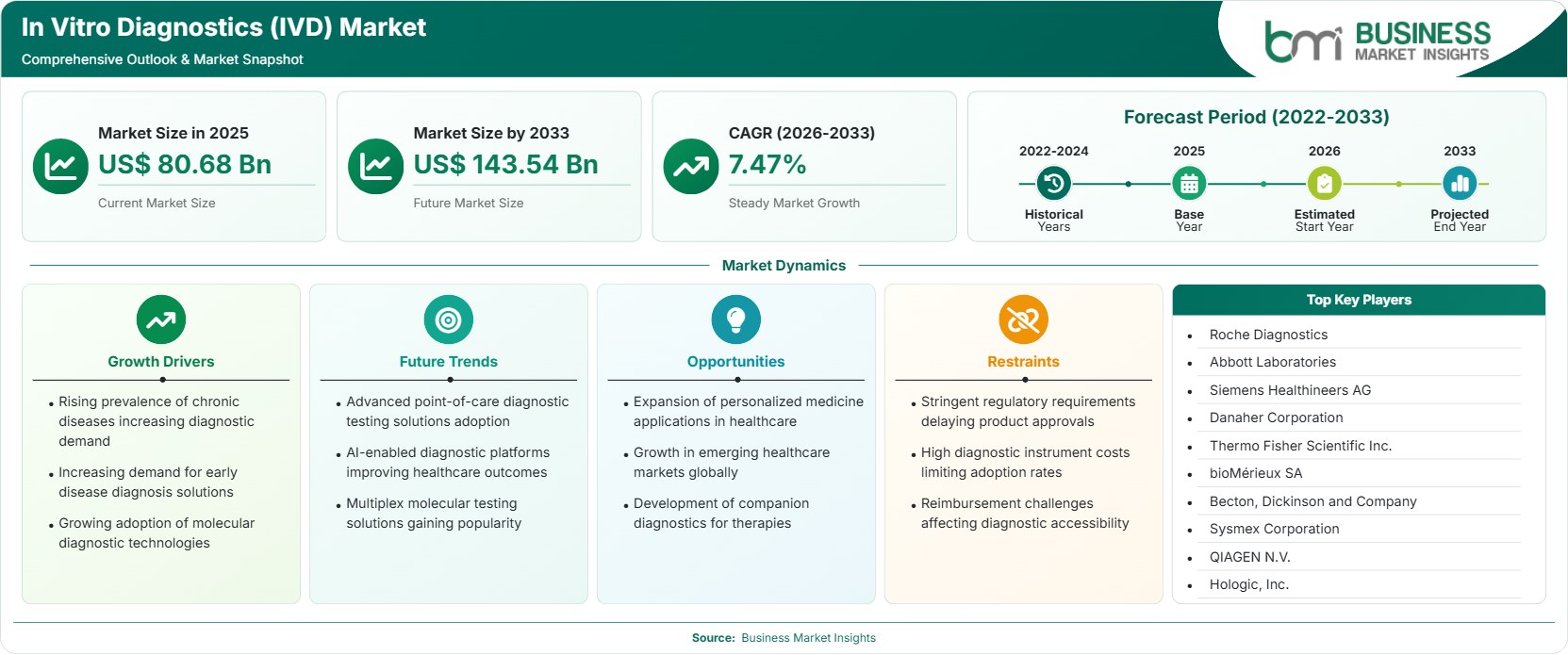
The In Vitro Diagnostics (IVD) Market size was valued at US$ 80.68 billion in 2025 and is projected to reach US$ 143.54 billion by 2033, registering a CAGR of 7.47% during 2026–2033. The market is experiencing sustained growth driven by rising prevalence of chronic diseases increasing diagnostic demand, increasing demand for early disease diagnosis solutions, and growing adoption of molecular diagnostic technologies. In vitro diagnostics have become an essential component of modern healthcare by enabling accurate disease detection, patient monitoring, treatment selection, and preventive healthcare through laboratory-based and point-of-care testing solutions.

Report Coverage
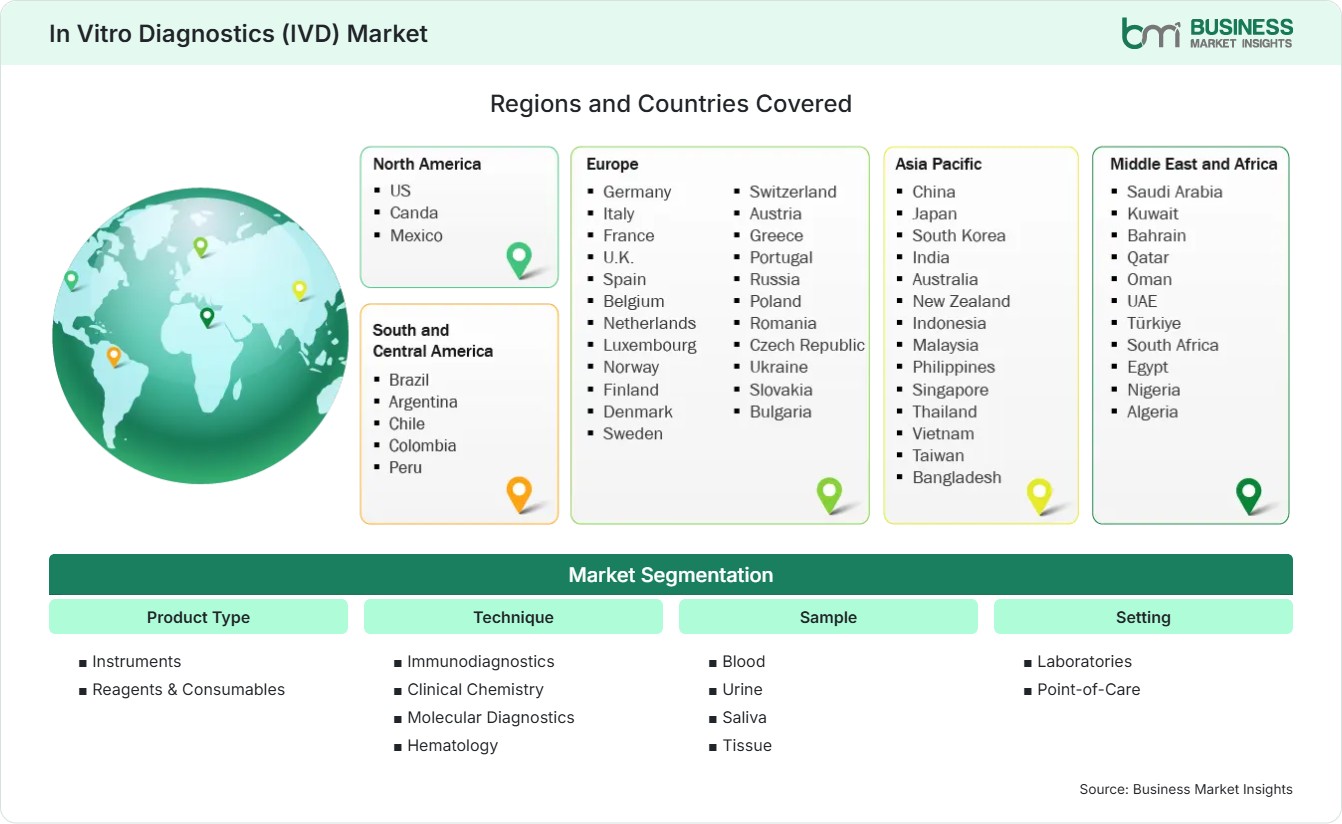
  • Product Type: Instruments, Reagents & Consumables
  • Technique: Immunodiagnostics, Clinical Chemistry, Molecular Diagnostics, Hematology
  • Sample: Blood, Urine, Saliva, Tissue
  • Setting: Laboratories, Point-of-Care
  • Application: Infectious Diseases, Cardiology, Oncology, Gastroenterology, Allergy
US$ 80.68 Bn Market size in 2025
US$ 143.54 Bn Market Size by 2033
7.47% CAGR, 2026 - 2033
2026-2033 Forecast Period

AI Overview

In Vitro Diagnostics (IVD) Market Summary

  • North America Region: North America accounted for 39%–42% of global revenue in 2025 and is projected to register a CAGR of 7.1%–7.6% during 2026–2033. The region maintains a leading market position due to advanced healthcare infrastructure, high diagnostic testing volumes, strong reimbursement systems, and continuous investments in precision medicine and laboratory automation. The United States contributes approximately 86%–89% of regional revenue and is expected to register a CAGR of 7.2%–7.7% owing to increasing adoption of molecular diagnostics, personalized medicine, and advanced clinical laboratory technologies.
  • Fastest Growing Region: Asia Pacific represented 24%–27% of global revenue in 2025 and is projected to register the highest CAGR of 8.2%–8.7% during the forecast period. Expanding healthcare infrastructure, increasing disease burden, rising healthcare expenditure, and growing investments in laboratory diagnostics continue driving regional market growth.
  • Leading Segment: Reagents & Consumables accounted for 67%–70% of market revenue in 2025 and are projected to register a CAGR of 7.8%–8.3% during the assessment period owing to recurring testing requirements, high test volumes, and continuous utilization across clinical laboratories and hospitals.
  • High Growth Segment: Molecular Diagnostics is projected to witness significant growth, expanding at a CAGR of 9.4%–10.0% during 2026–2033 due to increasing adoption of precision medicine, infectious disease testing, oncology diagnostics, and genetic analysis technologies.
  • Key Market Opportunity: Expansion of personalized medicine applications in healthcare, growth in emerging healthcare markets globally, and development of companion diagnostics for therapies continue creating substantial market opportunities.
  • Major Market Players: Roche Diagnostics, Abbott Laboratories, Siemens Healthineers AG, Danaher Corporation, Thermo Fisher Scientific Inc., bioMérieux SA, Becton, Dickinson and Company, Sysmex Corporation, QIAGEN N.V., Hologic, Inc.
Strategic Insights

In Vitro Diagnostics (IVD) Market: Strategic Insights

In Vitro Diagnostics (IVD) Market Strategic Framework
FREE PDF
Request your free sample
Request free sample
Stakeholder View

Key Takeaways

  • The market continues benefiting from rising prevalence of chronic diseases increasing diagnostic demand, increasing demand for early disease diagnosis solutions, and growing adoption of molecular diagnostic technologies.
  • The strongest In Vitro Diagnostics (IVD) Market Growth opportunities continue emerging from expansion of personalized medicine applications in healthcare, growth in emerging healthcare markets globally, and development of companion diagnostics for therapies.
  • Reagents & Consumables remain the dominant product type owing to continuous diagnostic testing requirements, recurring laboratory utilization, and increasing adoption across hospitals and clinical laboratories.
  • Asia Pacific is projected to witness the fastest growth owing to expanding healthcare infrastructure, increasing diagnostic awareness, rising healthcare investments, and growing laboratory testing capacity.
  • Diagnostic manufacturers are increasingly investing in molecular diagnostics, laboratory automation, artificial intelligence, digital pathology, and point-of-care technologies to strengthen market competitiveness.
  • Companies focusing on precision medicine, companion diagnostics, advanced molecular testing, and integrated digital healthcare solutions are expected to strengthen their competitive positioning.
Geographic Outlook

In Vitro Diagnostics (IVD) Market Regional Highlights

North America In Vitro Diagnostics (IVD) Market

North America accounted for 39%–42% of global revenue in 2025 and is projected to register a CAGR of 7.1%–7.6% during 2026–2033. The region continues maintaining its leadership due to advanced healthcare infrastructure, high diagnostic testing volumes, strong reimbursement systems, and widespread adoption of precision medicine. The In Vitro Diagnostics (IVD) Market Share remains substantial as hospitals, clinical laboratories, and physician practices increasingly utilize advanced diagnostic technologies to improve disease detection, patient monitoring, and treatment selection.

  • The United States remains the largest regional market owing to extensive laboratory infrastructure, increasing molecular diagnostic testing, growing chronic disease prevalence, and strong investments in healthcare innovation.
  • Canada continues supporting regional growth through expanding healthcare modernization, increasing preventive screening programs, and wider adoption of automated diagnostic systems.
  • Rising investments in laboratory automation and digital pathology continue improving testing efficiency across healthcare facilities.
  • Increasing utilization of point-of-care diagnostics and personalized medicine continues strengthening long-term market demand.

US In Vitro Diagnostics (IVD) Market

The United States accounted for approximately 86%–89% of North American revenue in 2025 and is projected to register a CAGR of 7.2%–7.7% during the forecast period. Strong healthcare expenditure, high diagnostic testing volumes, expanding molecular diagnostics, and increasing investments in precision medicine continue driving domestic market growth.

  • Growing adoption of genetic testing, infectious disease diagnostics, and oncology diagnostics continues supporting in vitro diagnostics (IVD) market expansion.
  • Increasing deployment of automated laboratory platforms continues improving diagnostic accuracy and workflow efficiency.
  • Rising healthcare investments continue encouraging modernization of hospital laboratories and diagnostic centers.
  • Continuous innovation in companion diagnostics and precision medicine continues expanding clinical diagnostic applications.

Europe In Vitro Diagnostics (IVD) Market

Europe represented 29%–32% of global revenue in 2025 and is expected to expand at a CAGR of 6.9%–7.4% during 2026–2033. The region continues benefiting from universal healthcare systems, increasing chronic disease screening, expanding laboratory modernization, and growing adoption of personalized medicine. Germany remains the largest regional market, while the United Kingdom is projected to register the fastest growth in in vitro diagnostics (IVD) market with a CAGR of 7.6%–8.1% owing to increasing molecular testing adoption, healthcare digitization, and investments in advanced diagnostics.

  • Germany continues leading regional demand through advanced diagnostic laboratories, healthcare innovation, and strong biotechnology capabilities.
  • The United Kingdom continues witnessing steady growth through expanding genomic medicine initiatives, disease screening programs, and laboratory automation investments.
  • France continues supporting market expansion through preventive healthcare initiatives, increasing diagnostic testing, and healthcare infrastructure modernization.
  • European healthcare providers continue investing in digital pathology, automation technologies, and precision diagnostic platforms.
  • Increasing regulatory focus on quality diagnostics continues encouraging innovation across laboratory technologies.

Asia Pacific In Vitro Diagnostics (IVD) Market

Asia Pacific accounted for 24%–27% of global revenue in 2025 and is projected to register the highest CAGR of 8.2%–8.7% during the forecast period. Expanding healthcare infrastructure, increasing disease burden, rising healthcare expenditure, and growing investments in laboratory diagnostics continue driving regional market growth. China remains the leading regional market, while India is projected to register the fastest growth in in vitro diagnostics (IVD) market with a CAGR of 8.8%–9.3% owing to expanding diagnostic laboratory networks, increasing healthcare access, and rising government investments in healthcare infrastructure.

  • China continues dominating regional demand through rapid healthcare modernization, increasing molecular diagnostic adoption, and expanding hospital infrastructure.
  • India continues witnessing rapid growth due to rising diagnostic awareness, expanding laboratory chains, increasing healthcare investments, and growing preventive health screening.
  • Japan continues supporting advanced diagnostic technology adoption through precision medicine initiatives and strong healthcare infrastructure.
  • South Korea continues contributing through biotechnology innovation, advanced laboratory automation, and molecular diagnostic research.
  • Southeast Asian countries continue creating significant opportunities through improving healthcare accessibility, expanding diagnostic services, and increasing investments in laboratory capacity.

Rest of World In Vitro Diagnostics (IVD) Market

The Rest of World accounted for 7%–10% of global revenue in 2025 and is projected to register a CAGR of 7.3%–7.8% during 2026–2033. Latin America, the Middle East, and Africa continue experiencing increasing demand for in vitro diagnostics due to expanding healthcare infrastructure, growing disease surveillance programs, rising chronic disease prevalence, and increasing investments in laboratory services.

Increasing public healthcare investments, diagnostic capacity expansion, and improved access to modern laboratory technologies are creating substantial opportunities for diagnostic manufacturers across emerging economies.

  • Brazil continues supporting regional demand through expanding public healthcare programs, increasing laboratory testing, and modernization of diagnostic facilities.
  • Mexico continues strengthening market growth through healthcare infrastructure expansion, preventive screening initiatives, and increasing diagnostic awareness.
  • Middle Eastern countries continue investing in advanced hospital infrastructure, laboratory automation, and precision medicine initiatives.
  • South Africa continues contributing through expanding clinical laboratory services, infectious disease testing, and healthcare modernization programs.
  • Emerging economies across Latin America, the Middle East, and Africa continue creating long-term opportunities through increasing healthcare investments, laboratory network expansion, and wider adoption of advanced diagnostic technologies.
Global Market Geography
FREE PDF
Request your free sample
Request free sample
Segment Analysis

In Vitro Diagnostics (IVD) Market Segmentation

Product Type

The Product Type segment accounted for 67%–70% of market revenue in 2025 and is projected to register a CAGR of 7.8%–8.3% during the forecast period. Rising diagnostic testing volumes, increasing laboratory automation, and growing adoption of advanced diagnostic technologies continue driving segment growth. The In Vitro Diagnostics (IVD) Market Trends indicate increasing demand for high-performance diagnostic products that improve testing accuracy, laboratory efficiency, and clinical decision-making.

  • Instruments: Instruments continue witnessing steady demand as healthcare providers invest in automated analyzers, molecular diagnostic platforms, immunoassay systems, hematology analyzers, and clinical chemistry equipment to improve laboratory productivity and diagnostic accuracy.
  • Reagents & Consumables: Reagents & Consumables remain the dominant product type owing to their recurring utilization across routine diagnostic testing, disease screening, molecular diagnostics, immunodiagnostics, and clinical laboratory workflows. Continuous testing requirements generate sustained long-term demand across hospitals and diagnostic laboratories.

Technique

The Technique segment continues evolving through technological advancements that improve sensitivity, specificity, turnaround time, and diagnostic precision. The In Vitro Diagnostics (IVD) Market Scope continues expanding through integration of automation, molecular technologies, and digital laboratory systems.

  • Immunodiagnostics: Immunodiagnostics continue representing one of the largest diagnostic techniques owing to broad utilization across infectious disease testing, hormone analysis, autoimmune disease diagnosis, and cancer biomarker detection.
    • Enzyme Linked Immunosorbent Assay: Continues supporting high-volume laboratory testing through reliable and cost-effective immunological analysis.
    • Fluorescence immunoassay: Continues gaining adoption due to higher analytical sensitivity, rapid testing capability, and automation compatibility.
    • Rapid test: Continues expanding across point-of-care settings through fast diagnostic results, operational simplicity, and increasing use in infectious disease screening.
  • Clinical Chemistry: Clinical Chemistry continues supporting routine diagnostic testing through biochemical analysis used in disease diagnosis, health monitoring, and preventive healthcare.
  • Molecular Diagnostics: Molecular Diagnostics is projected to witness the fastest growth due to increasing utilization in oncology, infectious disease testing, genetic analysis, precision medicine, and companion diagnostics.
  • Hematology: Hematology continues maintaining strong demand through complete blood count testing, blood disorder diagnosis, anemia screening, and routine clinical laboratory services.

Sample

The Sample segment continues expanding as diagnostic technologies become compatible with multiple biological specimen types supporting diverse clinical applications.

  • Blood: Blood remains the dominant sample type owing to its extensive utilization across routine laboratory testing, molecular diagnostics, immunodiagnostics, hematology, and clinical chemistry applications.
  • Urine: Urine continues supporting diagnostic testing for kidney disorders, urinary tract infections, metabolic diseases, pregnancy testing, and toxicology screening.
  • Saliva: Saliva continues witnessing increasing adoption due to its non-invasive collection, patient convenience, and growing utilization in molecular and infectious disease diagnostics.
  • Tissue: Tissue samples continue supporting advanced pathology, oncology diagnostics, biomarker analysis, and precision medicine applications.

Setting

The Setting segment continues evolving through expansion of centralized laboratories and decentralized diagnostic testing environments.

  • Laboratories: Laboratories remain the dominant setting owing to high testing volumes, advanced analytical capabilities, automated diagnostic platforms, and comprehensive disease testing services.
  • Point-of-Care: Point-of-Care continues witnessing rapid growth through increasing adoption of portable diagnostic devices that enable immediate clinical decision-making, faster diagnosis, and improved patient management.

Application

The Application segment continues expanding due to increasing diagnostic requirements across multiple therapeutic areas.

  • Infectious Diseases: Infectious Diseases remain the leading application owing to increasing demand for rapid pathogen detection, disease surveillance, outbreak monitoring, and public health screening.
  • Cardiology: Cardiology continues supporting market growth through biomarker testing, cardiovascular risk assessment, and early cardiac disease diagnosis.
  • Oncology: Oncology continues witnessing significant expansion due to increasing cancer prevalence, biomarker identification, companion diagnostics, and personalized treatment selection.
  • Gastroenterology: Gastroenterology continues supporting diagnostic demand through gastrointestinal disease screening, liver function assessment, and digestive disorder diagnosis.
  • Allergy: Allergy diagnostics continue expanding through increasing prevalence of allergic conditions and growing demand for personalized allergy testing.

End-user

The End-user segment continues strengthening as healthcare providers expand diagnostic capabilities across clinical care settings.

  • Clinical Laboratories: Clinical Laboratories remain the dominant end-user owing to high-volume diagnostic testing, specialized laboratory infrastructure, and advanced analytical capabilities.
  • Hospitals: Hospitals continue driving market growth through integrated diagnostic services, emergency testing, inpatient disease management, and comprehensive clinical care.
  • Physician’s Offices: Physician’s Offices continue witnessing increasing adoption of point-of-care diagnostics that enable rapid patient assessment, immediate treatment decisions, and improved outpatient care.
Market Forces

In Vitro Diagnostics (IVD) Market Dynamics

Key Market Drivers

Rising prevalence of chronic diseases increasing diagnostic demand

Rising prevalence of chronic diseases increasing diagnostic demand is significantly driving market growth as healthcare providers require accurate laboratory testing for early diagnosis, disease monitoring, treatment selection, and long-term patient management. Increasing incidence of diabetes, cardiovascular diseases, cancer, autoimmune disorders, and infectious diseases continues supporting sustained demand for advanced in vitro diagnostic solutions.

Increasing demand for early disease diagnosis solutions

Increasing demand for early disease diagnosis solutions is accelerating adoption of advanced diagnostic technologies as healthcare systems increasingly prioritize preventive medicine, routine health screening, and timely clinical intervention. Early diagnosis improves treatment outcomes while reducing healthcare costs associated with advanced disease progression.

Growing adoption of molecular diagnostic technologies

Growing adoption of molecular diagnostic technologies is strengthening market expansion through increasing utilization of PCR, next-generation sequencing, genetic testing, and biomarker analysis for infectious diseases, oncology, inherited disorders, and precision medicine applications. Continuous technological innovation continues improving diagnostic sensitivity, specificity, and clinical utility.

Key Market Opportunities

Expansion of personalized medicine applications in healthcare

Expansion of personalized medicine applications in healthcare is creating substantial opportunities as clinicians increasingly utilize genomic testing, biomarker analysis, and precision diagnostics to develop individualized treatment strategies. Growing adoption of targeted therapies continues increasing demand for advanced diagnostic solutions.

Growth in emerging healthcare markets globally

Growth in emerging healthcare markets globally is generating significant opportunities as developing countries continue expanding healthcare infrastructure, laboratory capacity, disease screening programs, and diagnostic accessibility. Rising healthcare expenditure and government investments continue supporting long-term market expansion.

Development of companion diagnostics for therapies

Development of companion diagnostics for therapies is creating new growth opportunities as pharmaceutical companies increasingly integrate diagnostic testing into targeted drug development. Companion diagnostics improve treatment selection, therapeutic effectiveness, patient stratification, and precision medicine implementation across multiple disease areas.

Market Restraints and Challenges

Stringent regulatory requirements delaying product approvals

Factor: In vitro diagnostic products are subject to rigorous regulatory evaluation to ensure analytical accuracy, clinical performance, product safety, and manufacturing quality before commercialization. Manufacturers must complete extensive validation studies, clinical evaluations, quality management processes, and regulatory documentation to comply with evolving global regulatory standards.

Impact: Stringent regulatory requirements can increase product development timelines, delay commercial launches, and raise compliance costs for diagnostic manufacturers. Companies continue investing in regulatory expertise, quality assurance systems, clinical validation programs, and global compliance strategies to accelerate approvals while maintaining product quality and patient safety.

High diagnostic instrument costs limiting adoption rates

Factor: Advanced diagnostic instruments, including molecular diagnostic platforms, automated laboratory analyzers, and high-throughput testing systems, require substantial capital investment along with ongoing maintenance, calibration, software updates, and skilled personnel for operation.

Impact: High diagnostic instrument costs can limit adoption among smaller laboratories, community hospitals, and healthcare facilities operating with constrained budgets, particularly across developing markets. Manufacturers continue addressing this challenge through flexible financing models, reagent rental agreements, scalable diagnostic platforms, and workflow optimization solutions that improve affordability and return on investment.

Company Analysis

Competitive Landscape

Competition within the in vitro diagnostics industry is driven by technological innovation, molecular testing capabilities, laboratory automation, diagnostic accuracy, regulatory compliance, and global distribution networks. The In Vitro Diagnostics (IVD) Market Analysis indicates that leading diagnostic companies are investing heavily in precision medicine, molecular diagnostics, artificial intelligence-enabled laboratory solutions, and integrated diagnostic platforms to strengthen their competitive positions.

Company Name

Overview

Products and Services relevant to this market

Roche Diagnostics

Global leader in diagnostic technologies and precision healthcare solutions.

Molecular diagnostics, immunodiagnostics, clinical chemistry analyzers, laboratory automation, and companion diagnostics.

Abbott Laboratories

Diversified healthcare company with a comprehensive in vitro diagnostics portfolio.

Immunoassay systems, molecular diagnostics, clinical chemistry analyzers, point-of-care diagnostics, and rapid diagnostic tests.

Siemens Healthineers AG

Healthcare technology company specializing in laboratory diagnostics and imaging solutions.

Clinical chemistry analyzers, immunodiagnostics, hematology systems, molecular diagnostics, and laboratory automation solutions.

Danaher Corporation

Global life sciences and diagnostics company serving clinical laboratories worldwide.

Molecular diagnostics, laboratory instruments, diagnostic reagents, automation systems, and life science technologies.

Thermo Fisher Scientific Inc.

Global provider of analytical instruments and molecular diagnostic technologies.

PCR systems, genetic testing platforms, laboratory reagents, molecular diagnostic solutions, and laboratory instruments.

bioMérieux SA

Diagnostics company specializing in infectious disease detection and microbiology solutions.

Molecular diagnostics, microbiology systems, immunoassays, infectious disease testing, and diagnostic reagents.

Becton, Dickinson and Company

Global medical technology company serving diagnostic laboratories and healthcare providers.

Diagnostic instruments, specimen collection systems, molecular diagnostics, laboratory automation, and clinical testing solutions.

Sysmex Corporation

Diagnostics company specializing in hematology and laboratory automation technologies.

Hematology analyzers, clinical laboratory systems, diagnostic reagents, laboratory automation, and healthcare information solutions.

QIAGEN N.V.

Global provider of molecular diagnostic and genomic testing technologies.

Molecular diagnostics, sample preparation technologies, PCR assays, genomic testing, and companion diagnostic solutions.

Hologic, Inc.

Medical technology company focused on diagnostic solutions for women's health and molecular testing.

Molecular diagnostics, infectious disease testing, oncology diagnostics, women's health diagnostics, and laboratory systems.

Trust & Transparency

Research Methodology

The market analysis combines proprietary research with secondary data from government agencies, company disclosures, regulatory filings, industry databases and expert interviews. Market estimates are validated through data triangulation, cross-market benchmarking and analyst review.

View Full Research Methodology

Questions Answered

Frequently Asked Questions

How do market forecasts support strategic planning?

In Vitro Diagnostics (IVD) Market Forecasts help diagnostic manufacturers, healthcare providers, hospitals, clinical laboratories, investors, pharmaceutical companies, and policymakers evaluate future demand, identify emerging opportunities, optimize investment strategies, and support long-term business planning.

What does the market report include?

The In Vitro Diagnostics (IVD) Market Report provides comprehensive insights covering market size, competitive landscape, segmentation analysis, regional outlook, industry trends, investment opportunities, competitive benchmarking, and future growth prospects.

What factors are driving market expansion?

Rising prevalence of chronic diseases increasing diagnostic demand, increasing demand for early disease diagnosis solutions, growing adoption of molecular diagnostic technologies, and continuous advancements in laboratory automation continue driving market growth.

Which technique segment is expected to witness significant growth?

Molecular Diagnostics is expected to witness the fastest growth due to increasing adoption of precision medicine, genetic testing, infectious disease diagnostics, oncology applications, and companion diagnostic technologies.

Which product type dominates the market?

Reagents & Consumables represent the leading product type owing to their recurring utilization across routine laboratory testing, molecular diagnostics, immunodiagnostics, and high-volume clinical testing applications.

Access the Full In Vitro Diagnostics (IVD) Market Report

Get segment-level forecasts, regional estimates, competitive benchmarking, company profiles and downloadable Excel datasets.

Access the full In Vitro Diagnostics (IVD) Market Report
350 pages PDF & Excel | 2026-08-06
Similar Research

Related Market Reports