
Lab Based IVD Market Outlook: Size, Share, Trends, Growth Analysis, Competitive Landscape & Forecast, 2026-2033

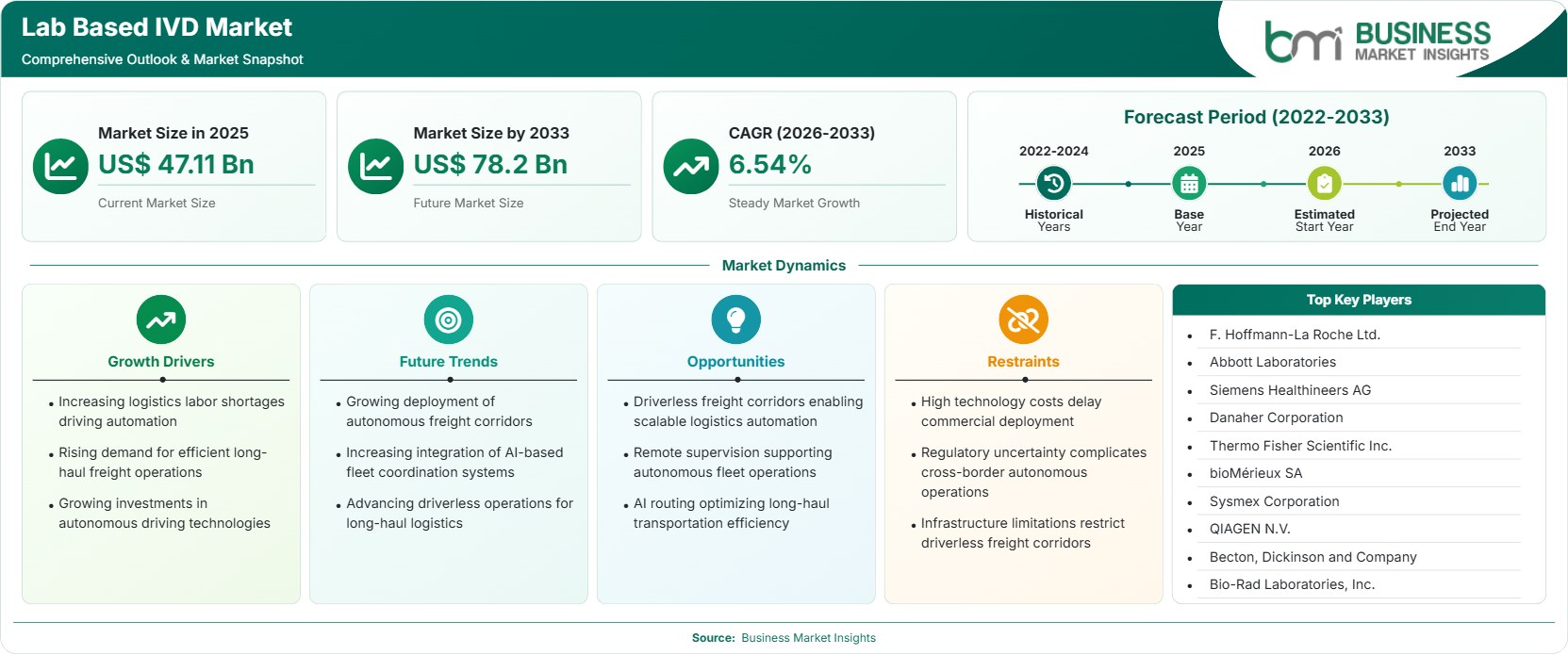
The Lab Based IVD Market size was valued at US$ 47.11 Billion in 2025 and is projected to reach US$ 78.2 Billion by 2033, growing at a CAGR of 6.54% during 2026–2033. Growth is supported by rising volumes of chronic disease testing, adoption of laboratory automation, expansion of molecular diagnostics, demand for precision medicine, and opportunities arising from AI-enabled workflows and decentralized diagnostic networks.

Report Coverage
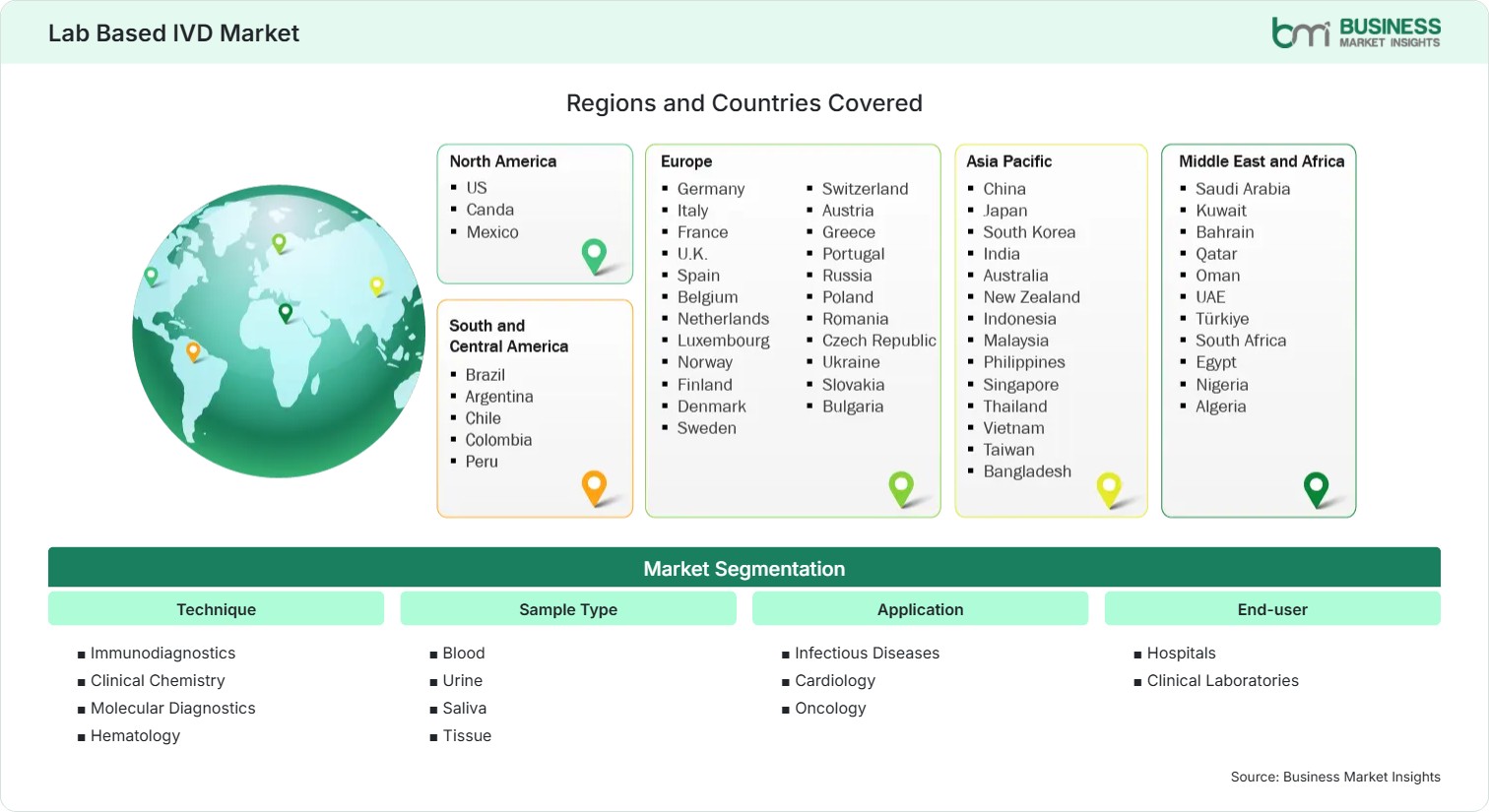
  • Technique: Immunodiagnostics [Enzyme-Linked Immunosorbent Assay, Fluorescence Immunoassay, Rapid Test], Clinical Chemistry [Electrolyte Panel, Basic & Comprehensive Metabolic Panels, Liver Tests], Molecular Diagnostics [PCR, In Situ Hybridization], Hematology
  • Sample Type: Blood, Urine, Saliva, Tissue
  • Application: Infectious Diseases, Cardiology, Oncology
  • End-user: Hospitals, Clinical Laboratories
US$ 47.11 Bn Market size in 2025
US$ 78.2 Bn Market Size by 2033
6.54% CAGR, 2026 - 2033
2026-2033 Forecast Period

AI Overview

Lab Based IVD Market Summary

  • North America Region: North America holds a market share of 37%–40% in 2025, growing with a CAGR of 5.8%–6.2% during 2026–2033. Growth is supported by high diagnostic testing volumes, advanced laboratory infrastructure, automation investments, reimbursement support, oncology screening expansion, growing demand for molecular testing, biomarker adoption, and precision medicine initiatives. The U.S. remains the largest contributor, supported by integrated healthcare networks and expanding molecular diagnostics adoption, CAGR 5.9%–6.3%.
  • Fastest Growing Region: Asia Pacific accounts for 24%–27% share in 2025 and is anticipated to register a CAGR of 7.6%–8.2%. Growth stems from healthcare infrastructure expansion, rising laboratory capacity, infectious disease surveillance programs, local manufacturing investments, expanding insurance coverage, increasing disposable incomes, and government-backed diagnostics modernization strategies.
  • Leading Segment: Reagents & Consumables command 68%–72% share in 2025 and are projected to grow at 6.8%–7.2% CAGR. Recurring testing demand, assay replacement cycles, increasing specimen volumes, laboratory standardization requirements, automation compatibility, chronic disease monitoring, and expanding utilization of molecular diagnostics sustain the segment's leadership globally.
  • High Growth Segment: Molecular Diagnostics represents 15%–18% share in 2025 and is forecast to grow at 8.5%–9.2% CAGR. Rising adoption of precision medicine, oncology biomarker testing, requirements for infectious disease monitoring, expansion of companion diagnostics, increased PCR utilization, and technological advances in genetic analysis support strong momentum.
  • Key Market Opportunity: Expansion of AI-assisted laboratory platforms creates opportunities to improve throughput, reduce diagnostic turnaround times, enhance workflow efficiency, support personalized medicine programs, and enable scalable testing capacity across healthcare systems.
  • Major Market Players: F. Hoffmann-La Roche Ltd., Abbott Laboratories, Siemens Healthineers AG, Danaher Corporation, Thermo Fisher Scientific Inc., bioMérieux SA, Sysmex Corporation, QIAGEN N.V., Becton, Dickinson and Company, Bio-Rad Laboratories, Inc.
Strategic Insights

Lab Based IVD Market: Strategic Insights

Lab Based IVD Market Strategic Framework
FREE PDF
Request your free sample
Request free sample
Stakeholder View

Key Takeaways

  • The value chain in the industry is now giving greater preference to suppliers who provide integrated instruments, assays, software, and service contracts, as a result of which they are able to secure long-term recurring revenue and gain advantages in terms of retaining customers.
  • The greatest potential for gain lies in the field of molecular diagnostics and its applications in oncology, since healthcare systems are expanding their use of biomarker testing and precise treatments.
  • The incorporation of artificial intelligence into laboratory workflows is having a transformative effect on quality control, the interpretation of results, predictive maintenance, and the optimization of workflows.
  • India, China, and Southeast Asia offer compelling investment opportunities due to expanding laboratory infrastructure and enhanced healthcare accessibility.
  • Strategic acquisitions are still helping to strengthen the companies' technology portfolios, especially in the areas of molecular diagnostics, digital pathology, and automation solutions.
  • The reagents and consumables category is still the most resilient in terms of revenue since the need for regular testing continues to generate steady demand regardless of when the instruments are replaced.
Geographic Outlook

Lab Based IVD Market Regional Highlights

North America Lab Based IVD Market

North America accounted for approximately 37%–40% of global revenue in 2025 and is projected to record a 5.8%–6.2% CAGR through 2033. The region benefits from sophisticated laboratory networks, widespread automation adoption, strong reimbursement frameworks, and high testing volumes across oncology and infectious disease applications. Lab Based IVD Market share remains strongest within advanced healthcare systems that prioritize early diagnosis and precision medicine. Investments in digital pathology, genomic testing, and laboratory information systems continue supporting sustained regional expansion.

  • Large hospital laboratories are still installing automated chemistry and immunoassay systems to improve their turnaround times and operational efficiency.
  • The demand for biomarker testing is being sped up by precision medicine programs in the fields of oncology, cardiology, and the management of rare diseases.
  • Oversight by regulators helps to ensure product quality and, at the same time, promotes innovation in the area of advanced diagnostic technologies.
  • Academic medical centers create a great deal of demand for specialized molecular and translational diagnostic testing.

US Lab Based IVD Market

The United States represented roughly 78%–82% of North American Lab Based IVD Market revenue in 2025, expanding at an estimated 5.9%–6.3% CAGR. Diagnostic utilization remains supported by aging demographics, chronic disease prevalence, extensive laboratory infrastructure, and rapid adoption of advanced testing modalities. Growth is reinforced by investments in molecular diagnostics, automation, and AI-enabled laboratory platforms.

  • The large reference laboratories are currently extending their capabilities in the areas of genomic and oncology testing to meet the demands for personalized treatment.
  • Rising healthcare spending leads to the adoption of more valuable diagnostic technologies within hospital networks.
  • The formation of strategic collaborations between manufacturers and healthcare providers speeds up the validation and implementation of new assays.
  • The increasing demand for preventive screening is leading to continued rises in the volume of specimens that need to be processed.

Europe Lab Based IVD Market

Europe held approximately 27%–30% Lab Based IVD Market share in 2025 and is expected to advance at a 5.6%–6.0% CAGR. Strong healthcare systems, established diagnostic standards, and aging populations support demand throughout the region. Germany remains the leading national market, while Central and Eastern European countries demonstrate relatively faster expansion. Investments in laboratory digitization and cancer screening programs support long-term demand.

  • Germany is leading the region in terms of revenue generation due to the strength of its laboratory infrastructure and its high levels of healthcare expenditure.
  • France and the United Kingdom have a strong demand for molecular and immunodiagnostic testing solutions.
  • Spain and Poland show a greater capacity for growth as a result of the modernization of their laboratory facilities.
  • European cancer screening programs promote a greater use of advanced diagnostic tests.
  • The harmonization of regulations helps innovative diagnostic platforms to gain access to the market.

Asia Pacific Lab Based IVD Market

Asia Pacific accounted for 24%–27% share in 2025 and represents the fastest-growing regional market with a 7.6%–8.2% CAGR through 2033. Rapid urbanization, healthcare expansion, rising disease burden, and government-supported diagnostic programs are strengthening demand. China generates the largest regional revenue, while India records the strongest growth momentum. Lab Based IVD Market growth in the region continues benefiting from domestic manufacturing expansion and increased healthcare accessibility.

  • China is still the biggest regional market as a result of its extensive investments in healthcare and the expansion of its laboratory network.
  • India attains its highest growth rates as a result of improved diagnostic penetration and infrastructure development.
  • Japan maintains a demand for advanced technologies in the fields of clinical chemistry and molecular diagnostics.
  • The countries of Southeast Asia are increasing their investments in infectious disease surveillance and screening.
  • Initiatives aimed at local production help to ensure affordability and strengthen the supply chain.

Rest of World Lab Based IVD Market

Rest of World contributes approximately 8%–10% Lab Based IVD Market share and is anticipated to expand at a 6.3%–6.8% CAGR. South and Central America benefit from laboratory modernization and increasing private healthcare investments. The Middle East and Africa are supported by expanding healthcare infrastructure, disease surveillance activities, and diagnostic capacity building efforts. Brazil leads Latin America, while the UAE and Saudi Arabia are among the fastest-growing Middle Eastern markets.

  • Brazil promotes regional demand by expanding its public health programs and diagnostic laboratories.
  • There is a growing adoption of automated diagnostic systems in healthcare centers in Mexico.
  • Saudi Arabia is making heavy investments in projects relating to the transformation of its healthcare system and in the digitization of its laboratories.
  • The healthcare providers in the UAE are still continuing to adopt advanced testing platforms and molecular diagnostic capabilities.
  • Enhancing access to laboratories helps achieve market penetration in certain African countries.
Global Market Geography
FREE PDF
Request your free sample
Request free sample
Segment Analysis

Lab Based IVD Market Segmentation

Product Type

Product Type remains a fundamental revenue contributor. Reagents & consumables account for 68%–72% market share in 2025 and are expected to grow at 6.8%–7.2% CAGR, supported by recurring testing volumes. The Lab Based IVD Market scope continues expanding as laboratories increase automation adoption and assay utilization across disease categories.

  • Instruments: Automated analyzers, integrated diagnostic platforms, and advanced laboratory systems improve throughput, reduce operational complexity, and enhance diagnostic consistency in hospitals and reference laboratories.
  • Reagents & Consumables: Continuous assay usage, quality control requirements, and growing test volumes generate recurring demand, making this category the largest revenue contributor across laboratory environments.

Technique

Technique segmentation reflects evolving diagnostic requirements. Clinical chemistry maintains a leading position with 32%–36% share, while molecular diagnostics exhibits the strongest expansion profile at 8.5%–9.2% CAGR. Lab Based IVD Market trends increasingly favor precision-focused testing approaches.

  • Enzyme-Linked Immunosorbent Assay (ELISA): Widely utilized for infectious disease detection, biomarker assessment, and research applications due to sensitivity, scalability, and established laboratory workflows.
  • Fluorescence Immunoassay: Supports quantitative measurement capabilities and delivers improved analytical performance for specialized testing environments.
  • Rapid Test: Provides fast preliminary diagnostic information and complements centralized laboratory testing for selected disease categories.
  • Electrolyte Panel: Essential for monitoring metabolic balance and supporting emergency, critical care, and chronic disease management decisions.
  • Basic & Comprehensive Metabolic Panels: Frequently ordered laboratory evaluations supporting routine health assessment and disease monitoring.
  • Liver Tests: Increasingly utilized in chronic liver disease evaluation, medication monitoring, and preventive health programs.
  • PCR: Gold-standard molecular diagnostic technology supporting infectious disease identification, oncology testing, and genetic analysis.
  • In Situ Hybridization: Enables cellular-level genetic assessment, particularly valuable in oncology and pathology applications.
  • Hematology: Supports blood disorder evaluation, routine screening, and disease management across healthcare settings.

Sample Type

Blood remains the dominant sample category with 52%–56% Lab Based IVD Market share in 2025, while tissue-based testing experiences stronger growth as precision medicine expands. Laboratories increasingly optimize workflows to support diverse specimen processing requirements.

  • Blood: Most extensively used specimen due to broad applicability in chemistry, immunology, hematology, and molecular diagnostics.
  • Urine: Supports metabolic, renal, infectious disease, and routine screening applications across laboratories.
  • Saliva: Gains acceptance in selected genetic and infectious disease testing scenarios due to non-invasive collection benefits.
  • Tissue: Growing relevance in oncology diagnostics, biomarker evaluation, and personalized treatment planning.

Application

Application demand remains driven by disease prevalence patterns. Infectious diseases retain notable testing volumes, while oncology demonstrates stronger revenue acceleration associated with precision diagnostics adoption.

  • Infectious Diseases: Continues generating substantial testing demand through surveillance programs, screening initiatives, and outbreak monitoring requirements.
  • Cardiology: Biomarker-based testing supports risk assessment, disease monitoring, and clinical decision-making.
  • Oncology: Increasing utilization of companion diagnostics and molecular profiling drives rapid expansion across cancer care pathways.

End-user

Hospitals and clinical laboratories remain essential end users. Large laboratories benefit from economies of scale, automation adoption, and specialized test portfolios supporting operational efficiency.

  • Hospitals: Integrated diagnostic capabilities support acute care decisions, treatment planning, and patient monitoring requirements.
  • Clinical Laboratories: High testing throughput, specialization, and advanced automation systems position laboratories as major demand generators.
Market Forces

Lab Based IVD Market Dynamics

Key Market Drivers

Rising Chronic Disease Testing Requirements

The growing prevalence of chronic conditions such as cancer, diabetes, cardiovascular disease, and respiratory disorders is increasing the need for diagnostic testing worldwide. WHO estimates show that chronic diseases account for a large share of global mortality, encouraging healthcare providers to place greater focus on early detection, regular screening, and continuous patient monitoring. Expanded screening programs and disease management initiatives are creating steady demand for laboratory-based diagnostic services. Healthcare providers increasingly depend on accurate analytical testing to support treatment decisions, monitor disease progression, and evaluate patient outcomes. These trends are strengthening the use of laboratory diagnostics across clinical chemistry, immunodiagnostics, hematology, and molecular testing. As chronic disease management becomes a larger part of healthcare delivery, the need for reliable and timely laboratory testing is expected to remain strong.

Expansion of Molecular Diagnostics Adoption

Molecular diagnostics are becoming an increasingly important part of modern healthcare as healthcare providers seek faster and more precise ways to identify diseases and understand patient conditions. Technologies such as PCR, genetic testing, and biomarker analysis are being used across infectious disease testing, oncology, inherited conditions, and other clinical applications. Advances in sequencing technologies and improvements in disease surveillance are further increasing the use of molecular tests in laboratories. Laboratories are also investing in high-throughput platforms that can process larger numbers of samples while delivering accurate results within shorter timeframes. Companion diagnostics linked to targeted therapies are creating additional demand for specialized molecular testing. As healthcare professionals become more comfortable using genomic and molecular information to guide treatment decisions, continued investment in molecular testing infrastructure and advanced assay development is expected.

Laboratory Automation and Digital Integration

Labs are now making greater use of automation, robotics, artificial intelligence, and laboratory information systems. Because of the increasing number of patient samples and the ongoing need to boost efficiency, laboratories are seeking to eliminate manual procedures wherever possible. Automated systems can help reduce errors during processing, speed up testing, and enable laboratories to handle more samples with the same number of staff members. These technologies are especially beneficial, as healthcare organizations are experiencing staff shortages and rising demand for diagnostic services. Connected equipment and software also permit information to flow more easily between testing machinery, laboratory systems, and the patients' medical records. This, in turn, improves access to the information and helps decisions to be made more quickly. As the labs carry out their digital transformation, automation and connected technologies are driving tangible gains in productivity, workflow management, test quality, and overall operational efficiency.

Key Market Opportunities

AI-Enabled Diagnostic Workflow Optimization

The growing adoption of artificial intelligence is creating significant opportunities to improve laboratory diagnostic workflows and overall operational performance. AI-based systems can analyze large amounts of laboratory data and help identify patterns that may otherwise take considerable time to detect manually. Predictive analytics can support quality assurance, equipment maintenance planning, workload management, and other routine laboratory activities. AI-assisted interpretation tools may also help reduce turnaround times and improve consistency when evaluating diagnostic results. These capabilities can be particularly valuable for laboratories managing high testing volumes and limited staff resources. Vendors that successfully integrate intelligent software with existing diagnostic platforms can provide additional value beyond traditional testing hardware. Lab Based IVD Market Forecasts increasingly reflect the impact of digital transformation as healthcare institutions continue investing in technologies that can improve efficiency, accuracy, and decision-making.

Precision Medicine and Companion Diagnostics Expansion

The ongoing advancement of precision medicine is opening up new possibilities for sophisticated laboratory diagnostic technologies. Since precision medicine depends on detailed knowledge of a patient's biomarkers, genetic features, and disease profile to inform more targeted treatment decisions, pharmaceutical companies are increasingly collaborating with diagnostic manufacturers to develop companion diagnostics that can identify patients most likely to benefit from certain therapies. This is especially significant in oncology, as treatment options are increasingly determined by the molecular features of individual tumors. The increasing emphasis on personalized cancer treatment is leading to a greater demand for specialized assays and advanced testing systems. Cooperation between pharmaceutical companies and diagnostic developers can help accelerate the development and commercialization of these solutions. As precision medicine is extended into other areas of disease, specialized laboratory testing is likely to offer further opportunities for diagnostic technology providers.

Healthcare Infrastructure Investments in Emerging Markets

Developing countries are opening new possibilities for laboratory-based in vitro diagnostics, as both governments and private healthcare providers are working to improve access to medical services. As spending on hospitals, diagnostic laboratories, testing centers, and public health initiatives rises, so does the availability of diagnostic services in these areas. The growth in insurance coverage is also allowing more people to access medical testing, leading to higher overall use of diagnostic services. National screening programs for diseases such as cancer, diabetes, and infectious diseases are generating further demand for scalable laboratory testing systems and repeated purchases of diagnostic consumables. Meanwhile, companies are considering establishing local manufacturing and distribution networks to improve product availability and manage costs more efficiently. Those providers who build strong local partnerships, develop effective distribution channels, and offer low-cost product portfolios may be better positioned to expand their operations as the healthcare infrastructure continues to develop.

Market Restraints and Challenges

Stringent Regulatory Requirements and Extended Commercialization Timelines

Before a diagnostic product can be put on the market, it must undergo thorough validation, generate clinical evidence, and be subject to regulatory review. Because of these processes, the cost of developing the product increases, and the time to launch is extended. The fact that regulatory requirements differ from one country to another adds an extra layer of compliance complexity for manufacturers operating in multiple countries. Smaller companies might encounter resource limitations, which in turn affect their ability to innovate and enter the market. Even though advanced diagnostic technologies have demonstrated clinical value, extended approval routes can still delay their availability.

High Capital Costs and Slower Adoption in Resource-Constrained Facilities

Since advanced diagnostic systems typically require substantial investment in equipment, infrastructure, maintenance, and personnel training, budget constraints in smaller hospitals and laboratories can delay the adoption of new technology. Continued operational costs also affect the decisions regarding purchases. The financial strain caused by upgrading old systems can prevent sophisticated analytical solutions from being widely adopted, especially in developing areas where healthcare financing is still limited.

Company Analysis

Competitive Landscape

The competitive environment is characterized by technology innovation, assay portfolio expansion, automation investments, and strategic partnerships. Current Lab Based IVD Market analysis indicates that established multinational diagnostic companies maintain strong positions through integrated product ecosystems and global distribution networks.

Company Name

Overview

Products and Services relevant to this market

F. Hoffmann-La Roche Ltd.

Global diagnostics leader with extensive laboratory testing portfolio and strong molecular capabilities.

Immunodiagnostics systems, molecular diagnostic platforms, reagents, digital pathology solutions.

Abbott Laboratories

Diversified healthcare company with strong laboratory and rapid diagnostics operations.

Clinical chemistry, immunoassay analyzers, molecular testing systems, consumables.

Siemens Healthineers AG

Major healthcare technology provider serving laboratories worldwide.

Clinical chemistry, immunoassay, automation systems, laboratory informatics.

Danaher Corporation

Diagnostics leader through subsidiaries including Beckman Coulter and Cepheid.

Molecular diagnostics, clinical analyzers, workflow automation technologies.

Thermo Fisher Scientific Inc.

Significant provider of laboratory technologies and analytical solutions.

PCR systems, reagents, genetic testing tools, laboratory instruments.

bioMérieux SA

Specialist diagnostics company focused on microbiology and infectious diseases.

Microbiology systems, molecular diagnostics, diagnostic reagents.

Sysmex Corporation

Global hematology and laboratory diagnostics specialist.

Hematology analyzers, urinalysis systems, laboratory automation.

QIAGEN N.V.

Molecular diagnostics and sample preparation technology provider.

PCR assays, molecular testing kits, sample processing solutions.

Becton, Dickinson and Company

Global medical technology company with diagnostic capabilities.

Diagnostic reagents, flow cytometry systems, laboratory products.

Bio-Rad Laboratories, Inc.

Life science and diagnostic solutions manufacturer.

Quality controls, molecular diagnostics, immunoassay technologies.

Trust & Transparency

Research Methodology

The market analysis combines proprietary research with secondary data from government agencies, company disclosures, regulatory filings, industry databases and expert interviews. Market estimates are validated through data triangulation, cross-market benchmarking and analyst review.

View Full Research Methodology

Questions Answered

Frequently Asked Questions

What does a Lab Based IVD Market Report typically evaluate?

A comprehensive report assesses market size, competitive positioning, technology trends, regional demand patterns, regulatory developments, growth drivers, restraints, opportunities, and future industry outlook.

How is artificial intelligence influencing diagnostic laboratories?

AI improves workflow efficiency, predictive maintenance, quality management, and result interpretation while helping laboratories manage increased testing volumes.

Why do reagents and consumables dominate industry revenue?

Reagents and consumables generate recurring revenue because every diagnostic test requires assay materials, controls, and consumable components regardless of instrument replacement cycles.

What application area offers the strongest revenue potential?

Oncology diagnostics offers significant potential due to biomarker testing, companion diagnostics, and increasing use of personalized treatment pathways.

What factors are increasing demand for laboratory-based diagnostics?

Growing chronic disease prevalence, aging populations, precision medicine adoption, and larger screening programs are increasing demand for laboratory testing solutions worldwide.

Access the Full Lab Based IVD Market Report

Get segment-level forecasts, regional estimates, competitive benchmarking, company profiles and downloadable Excel datasets.

Access the full Lab Based IVD Market Report
350 pages PDF & Excel | 2026-09-10
Similar Research

Related Market Reports