Oncology Molecular Diagnostics Market Regional Highlights
North America Oncology Molecular Diagnostics Market
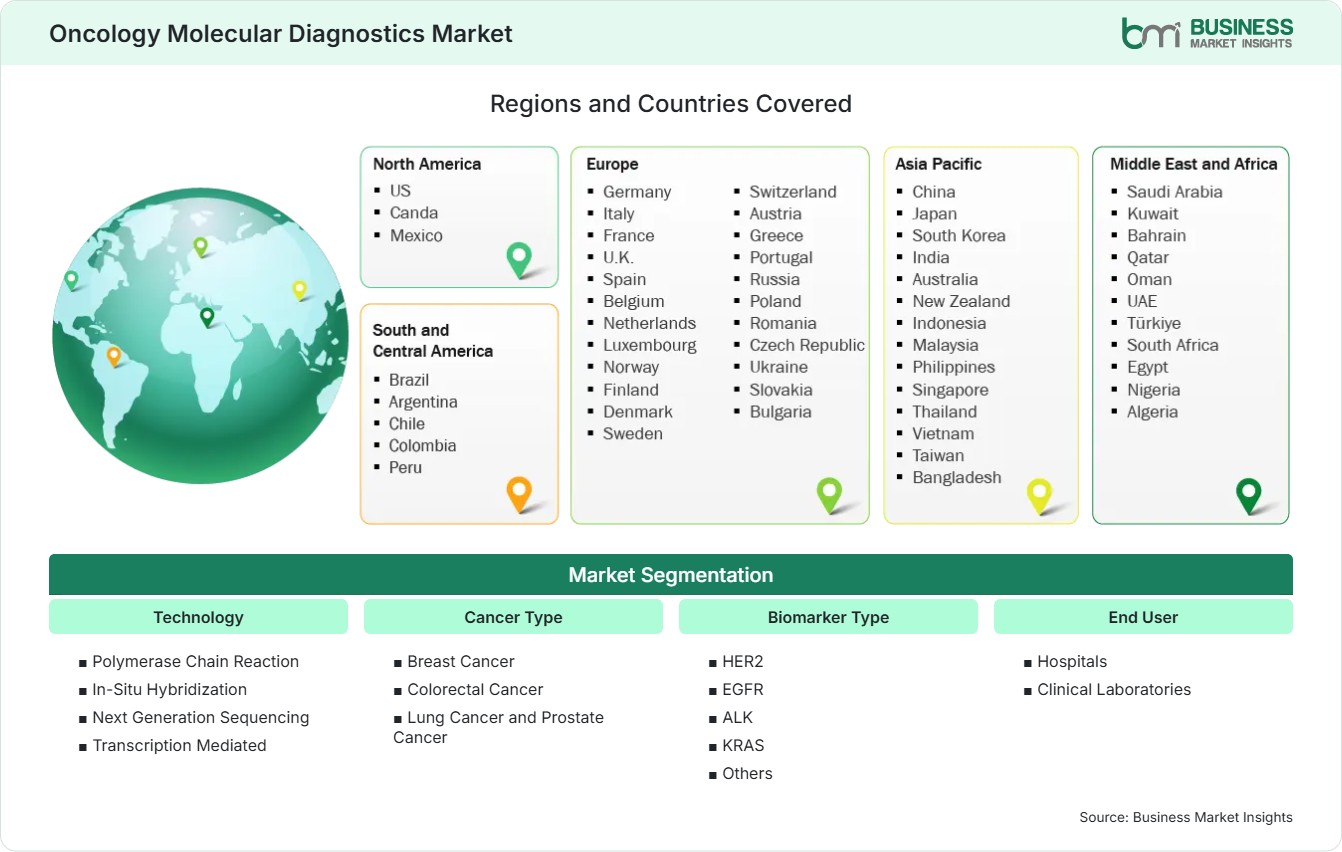
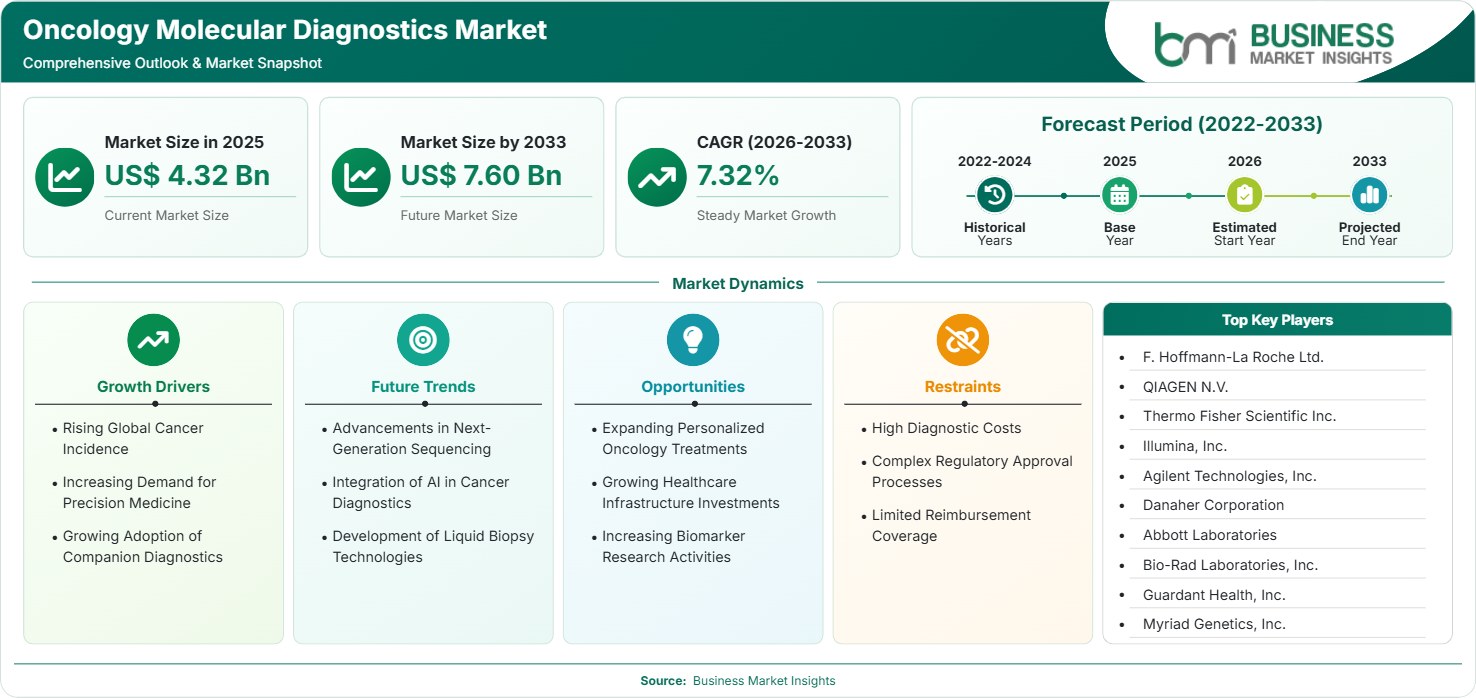
North America Oncology Molecular Diagnostics Market accounted for a 38%–41% share in 2025 and is projected to expand at a CAGR of 7.0%–7.5% during 2026–2033. The United States remains the largest contributor due to high adoption of genomic profiling and companion diagnostics, while Canada supports growth through public healthcare modernization and cancer research programs.
- Increasing adoption of comprehensive genomic profiling in oncology centers is improving treatment selection accuracy, supported by advanced laboratory infrastructure and expanding reimbursement pathways across healthcare systems.
- Pharmaceutical partnerships with diagnostic providers are accelerating companion diagnostic development, enabling identification of suitable patient populations for targeted therapies and improving clinical trial efficiency.
- Research investments in liquid biopsy and minimally invasive testing technologies are creating new opportunities for early cancer detection, therapy monitoring, and disease progression assessment.
- Regulatory support for precision oncology programs is encouraging commercialization of innovative molecular platforms, strengthening regional capabilities in personalized cancer management and diagnostic innovation.
US Oncology Molecular Diagnostics Market
The US represented a 32%–35% Oncology Molecular Diagnostics Market share of the North American market in 2025 and is estimated to register a CAGR of 7.2%–7.7% between 2026–2033. The country maintains leadership due to extensive cancer research funding, high healthcare expenditure, and strong adoption of sequencing-based diagnostics.
- Growing utilization of next-generation sequencing panels is supporting broader biomarker identification, enabling oncologists to select targeted therapies based on individual tumor characteristics.
- Increasing clinical adoption of liquid biopsy solutions is enhancing real-time treatment monitoring capabilities, particularly for advanced cancers requiring continuous molecular assessment.
- Expanding regulatory approvals for companion diagnostics are strengthening partnerships between pharmaceutical manufacturers and diagnostic companies developing precision oncology therapies.
- Rising investments in artificial intelligence-driven diagnostic interpretation are improving genomic data analysis efficiency and supporting complex oncology decision-making workflows.
Europe Oncology Molecular Diagnostics Market
Europe held a 27%–30% share in 2025 and is expected to grow at a CAGR of 6.8%–7.3% during 2026–2033. The region benefits from established healthcare systems, increasing genomic medicine initiatives, and coordinated cancer research programs. Germany, the United Kingdom, and France represent leading markets, while countries in Eastern Europe are experiencing faster adoption due to improving diagnostic infrastructure and healthcare modernization efforts.
- Government-supported precision medicine programs are expanding molecular testing accessibility, enabling broader patient identification for targeted cancer treatments across European healthcare systems.
- Germany continues strengthening diagnostic capabilities through advanced laboratory networks, oncology research collaborations, and increasing adoption of genomic profiling technologies.
- The United Kingdom is accelerating molecular oncology adoption through healthcare digitization, cancer research initiatives, and integration of genomic testing into clinical pathways.
- France is expanding personalized oncology approaches through investments in cancer centers, diagnostic innovation, and biomarker-driven treatment strategies.
Asia Pacific Oncology Molecular Diagnostics Market
Asia Pacific represented a 25%–28% Oncology Molecular Diagnostics Market share in 2025 and is projected to record a CAGR of 8.0%–8.6% from 2026–2033, making it the fastest-growing regional market. Increasing cancer incidence, improving healthcare infrastructure, rising diagnostic awareness, and expanding biotechnology capabilities are supporting growth. China, Japan, and India are major contributors, with emerging economies gaining momentum through healthcare investment and technology adoption.
- China is expanding molecular diagnostic capacity through biotechnology investments, large patient populations, and increasing demand for precision oncology solutions.
- Japan is advancing genomic medicine adoption through strong research capabilities, healthcare innovation programs, and increasing integration of molecular testing in cancer treatment pathways.
- India presents significant growth potential due to rising cancer burden, expanding diagnostic networks, and improving accessibility of advanced oncology testing technologies.
- Healthcare infrastructure development across Southeast Asia is encouraging adoption of molecular diagnostics through improved laboratory capabilities and international partnerships.
Rest of World Oncology Molecular Diagnostics Market
Rest of World accounted for a 5%–8% share in 2025 and is anticipated to grow at a CAGR of 6.5%–7.0% during 2026–2033. South and Central America are witnessing gradual adoption due to increasing cancer awareness, while Middle East and Africa markets are developing through healthcare investments and diagnostic infrastructure expansion. Brazil, Mexico, Saudi Arabia, and the UAE represent important growth centers.
- Brazil is improving oncology diagnostic accessibility through healthcare modernization programs, expanded laboratory networks, and increasing demand for biomarker testing solutions.
- Mexico is experiencing growing adoption of molecular testing as healthcare providers focus on improving cancer diagnosis accuracy and treatment personalization.
- Middle Eastern countries are investing in advanced healthcare infrastructure, supporting genomic testing adoption through specialized cancer centers and international collaborations.
- Saudi Arabia and the UAE are strengthening precision medicine capabilities through national healthcare transformation initiatives and research investments.
- African markets present long-term opportunities as healthcare systems improve, cancer screening awareness increases, and partnerships expand molecular diagnostic availability.