
Point of Care Diagnostics Market Outlook: Size, Share, Trends, Growth Analysis, Competitive Landscape & Forecast, 2026-2033

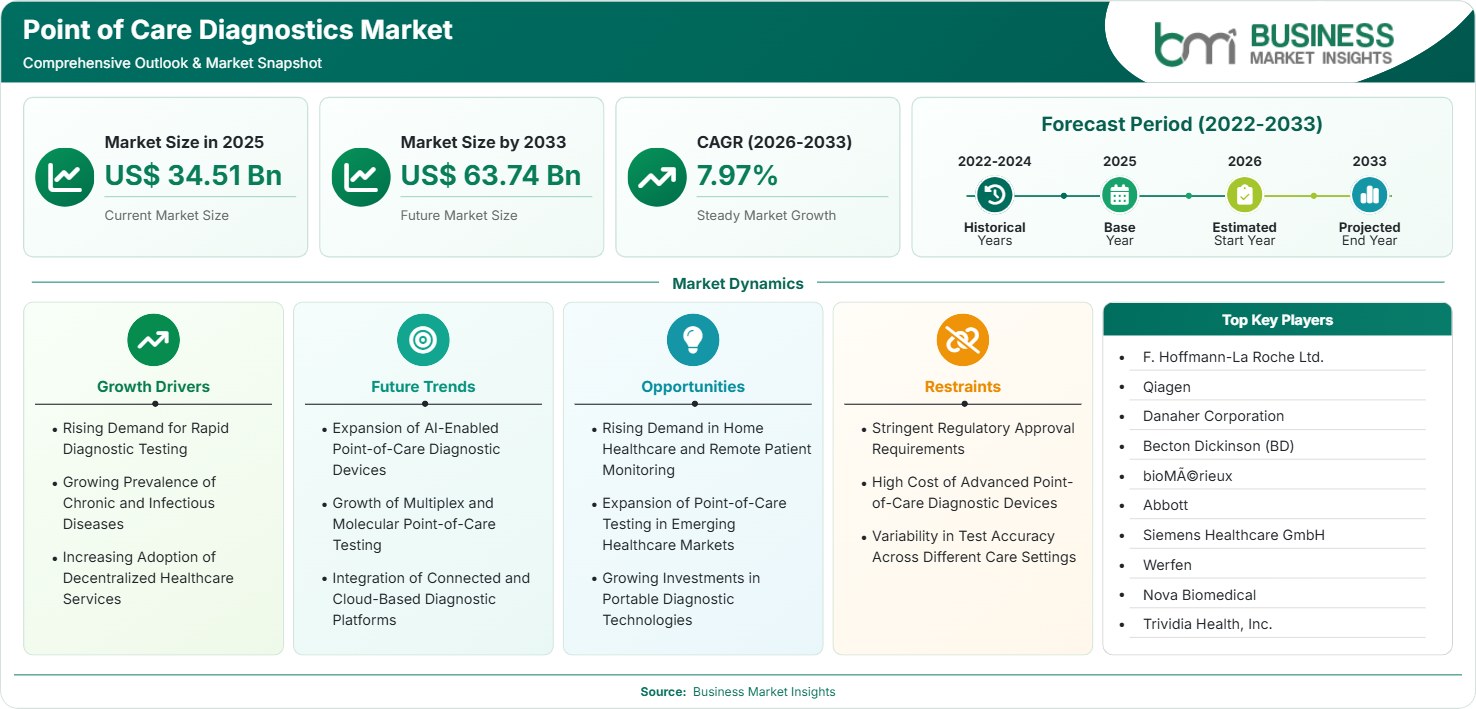
The Point of Care Diagnostics Market size was valued at US$ 34.51 Billion in 2025 and is projected to reach US$ 63.74 Billion by 2033, growing at a CAGR of 7.97% during 2026–2033. Rising demand for rapid diagnostic testing, increasing prevalence of chronic and infectious diseases, growing preference for decentralized healthcare delivery, and expanding adoption of home-based testing solutions are supporting market growth globally.

Report Coverage
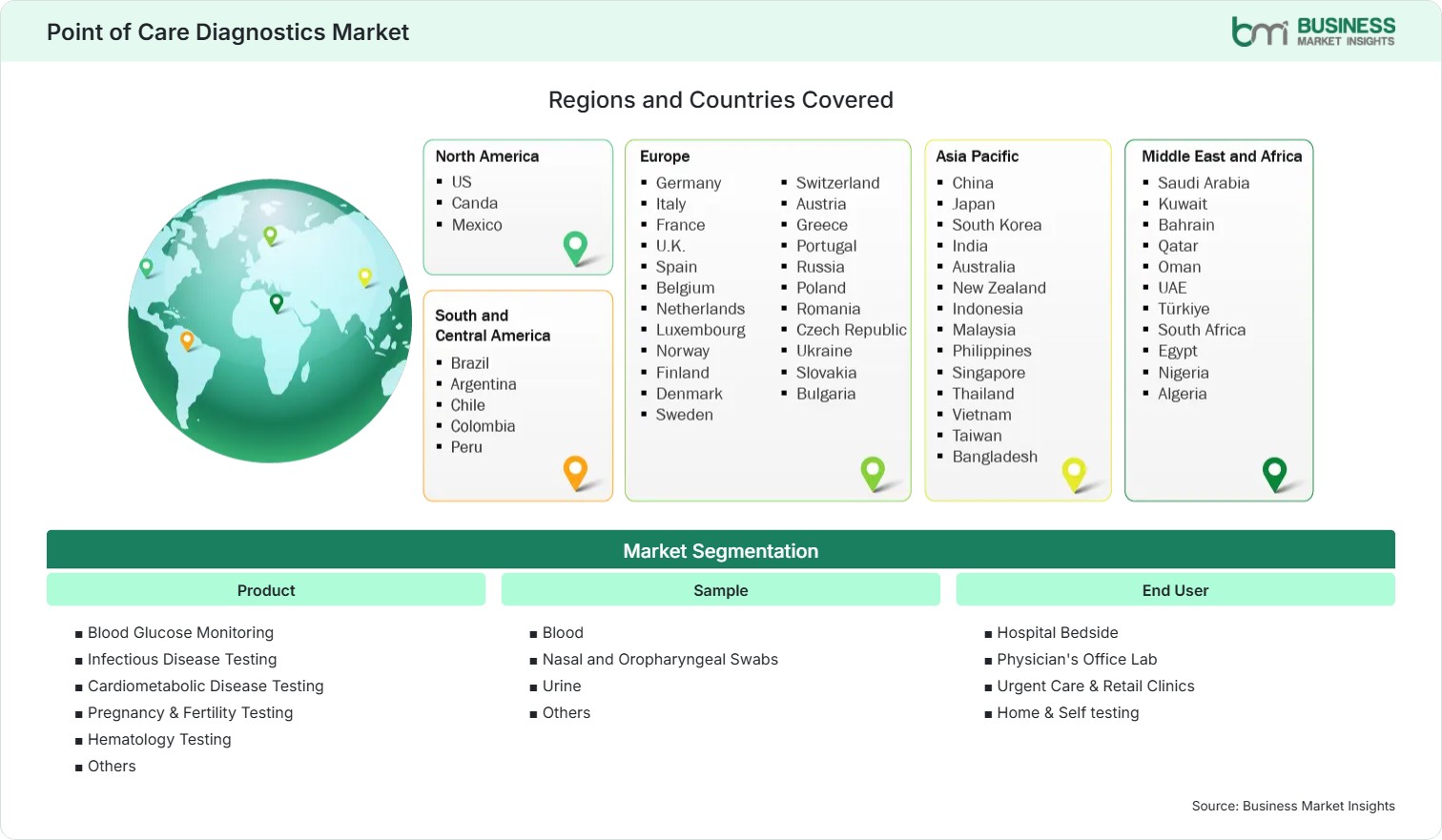
  • Product: Blood Glucose Monitoring, Infectious Disease Testing, Cardiometabolic Disease Testing, Pregnancy & Fertility Testing, Hematology Testing, Others
  • Sample: Blood, Nasal and Oropharyngeal Swabs, Urine, Others
  • End User: Hospital Bedside, Physician's Office Lab, Urgent Care & Retail Clinics, Home & Self testing
US$ 34.51 Bn Market size in 2025
US$ 63.74 Bn Market Size by 2033
7.97% CAGR, 2026 - 2033
2026-2033 Forecast Period

AI Overview

Point of Care Diagnostics Market Summary

  • North America Region: North America holds a market share of 36%–39% in 2025, growing with a CAGR of 7.5%–8.2% during 2026–2033. Strong healthcare infrastructure, high diagnostic testing adoption, and increasing focus on early disease detection continue supporting regional leadership. The U.S. market is expected to register a CAGR of 7.7%–8.4%.
  • Fastest Growing Region: Asia Pacific accounts for 28%–31% share in 2025 and is projected to grow at a CAGR of 8.6%–9.3% through 2033. Rising healthcare expenditure, expanding diagnostic accessibility, and growing chronic disease burden continue driving regional growth.
  • Leading Segment: Blood Glucose Monitoring represents 31%–34% share in 2025 and is expected to grow at a CAGR of 8.0%–8.7% through 2033. Increasing diabetes prevalence and growing self-monitoring practices continue supporting segment dominance.
  • High Growth Segment: Hospital Bedside accounts for 37%–40% share in 2025 and is forecast to grow at a CAGR of 8.4%–9.1% during 2026–2033. Rising demand for rapid decision-making and immediate diagnostic results continues accelerating segment growth.
  • Key Market Opportunity: Expansion of home-based diagnostics, digital healthcare integration, advanced infectious disease testing platforms, and decentralized healthcare models is creating substantial growth opportunities.
  • Major Market Players: F. Hoffmann-La Roche Ltd., Qiagen, Danaher Corporation, Becton Dickinson (BD), bioMérieux, Abbott, Siemens Healthcare GmbH, Werfen, Nova Biomedical, and Trividia Health, Inc.
Strategic Insights

Point of Care Diagnostics Market: Strategic Insights

Point of Care Diagnostics Market Strategic Framework
FREE PDF
Request your free sample
Request free sample
Stakeholder View

Key Takeaways

  • Point-of-care diagnostics are increasingly transforming healthcare delivery through faster clinical decision-making.
  • Blood glucose monitoring remains the leading product segment due to growing diabetes prevalence.
  • Hospital bedside testing continues dominating end-user demand due to immediate diagnostic requirements.
  • Home and self-testing solutions are gaining widespread consumer acceptance.
  • Rapid infectious disease testing remains an important growth area.
  • North America remains the leading point of care diagnostics market due to strong healthcare infrastructure.
  • Asia Pacific is projected to witness the fastest growth owing to improving healthcare accessibility.
  • Digital diagnostics and connected healthcare technologies are expected to create significant future opportunities.
Geographic Outlook

Point of Care Diagnostics Market Regional Highlights

North America Point of Care Diagnostics Market

North America accounts for 36%–39% Point of Care Diagnostics Market share in 2025 and is projected to grow at a CAGR of 7.5%–8.2% through 2033. The region benefits from advanced healthcare systems, increasing chronic disease prevalence, strong adoption of rapid diagnostic technologies, and growing emphasis on preventive healthcare. Continued investments in healthcare innovation and decentralized testing continue supporting regional market leadership.

  • Healthcare providers increasingly adopt rapid diagnostic technologies to improve patient care efficiency.
  • Growing diabetes and cardiovascular disease prevalence continues driving diagnostic testing demand.
  • Home-based and self-testing solutions are gaining widespread consumer acceptance.
  • Healthcare facilities continue investing in portable and connected diagnostic devices.
  • Digital health integration is strengthening diagnostic accessibility and workflow efficiency.
  • Increasing focus on early disease detection supports long-term market expansion.

US Point of Care Diagnostics Market

The United States contributes approximately 88%–92% of North American revenue and is expected to register a CAGR of 7.7%–8.4% through 2033. The country remains the largest point of care diagnostics market due to strong healthcare spending, advanced diagnostic infrastructure, and increasing demand for rapid testing solutions.

  • Hospitals continue incorporating point-of-care testing into routine clinical workflows.
  • Diabetes monitoring remains a major contributor to testing demand.
  • Home healthcare expansion is supporting decentralized diagnostics adoption.
  • Continuous innovation in diagnostic technologies remains a key growth factor.
  • Healthcare providers increasingly prioritize rapid clinical decision-making tools.

Europe Point of Care Diagnostics Market

Europe represents 23%–26% of global revenue in 2025 and is anticipated to expand at a CAGR of 7.9%–8.6% through 2033. Strong healthcare systems, growing diagnostic awareness, and increasing demand for rapid testing technologies continue supporting regional growth. Germany remains the leading market while Poland demonstrates stronger growth momentum.

  • Germany continues leading regional demand through advanced healthcare infrastructure and diagnostic technology adoption.
  • Poland is among the fastest-growing markets and is estimated to register a CAGR of 8.8%–9.5% during the forecast period, supported by healthcare modernization and diagnostic accessibility improvements.
  • Governments continue promoting early disease detection programs.
  • Growing elderly populations are supporting diagnostic testing demand.
  • Rapid infectious disease testing remains a significant market driver.
  • Digital healthcare initiatives continue encouraging market development.

Asia Pacific Point of Care Diagnostics Market

Asia Pacific accounts for 28%–31% of global revenue in 2025 and is expected to achieve the fastest CAGR of 8.6%–9.3% through 2033. Increasing healthcare investments, growing chronic disease burden, rising healthcare accessibility, and expanding awareness regarding early diagnosis continue supporting strong regional growth.

  • China remains the largest regional market due to healthcare infrastructure expansion and high patient volumes.
  • India is projected to achieve approximately 9.5%–10.2% CAGR, supported by growing healthcare access, increasing diagnostic awareness, and expanding home healthcare adoption.
  • Governments continue investing in healthcare modernization initiatives.
  • Chronic disease management programs are increasing diagnostic utilization.
  • Portable testing technologies are improving healthcare accessibility in remote regions.
  • Rising adoption of decentralized healthcare models continues creating growth opportunities.

Rest of World Point of Care Diagnostics Market

Rest of World accounts for 8%–11% of global revenue in 2025 and is projected to expand at a CAGR of 7.0%–7.7% through 2033. Improving healthcare infrastructure, increasing access to diagnostic technologies, and growing awareness regarding preventive healthcare are supporting market growth across Latin America, the Middle East, and Africa.

  • Brazil continues generating demand through expanding healthcare coverage and diagnostic adoption.
  • The UAE is witnessing increasing implementation of advanced healthcare technologies.
  • Saudi Arabia is expected to achieve approximately 7.9%–8.6% CAGR through 2033, supported by healthcare modernization and digital transformation initiatives.
  • Diagnostic accessibility improvements continue supporting market penetration.
  • Healthcare investment programs are expanding testing infrastructure.
  • Preventive healthcare initiatives continue creating long-term growth opportunities.
Global Market Geography
FREE PDF
Request your free sample
Request free sample
Segment Analysis

Point of Care Diagnostics Market Segmentation

Product

The product segment represents the major categories of point-of-care diagnostic solutions utilized across healthcare settings for rapid disease detection, monitoring, and clinical decision-making. This segment accounts for approximately 31%–34% share in 2025 and is projected to grow at a CAGR of 8.0%–8.7% through 2033. The expanding Point of Care Diagnostics Market Scope is supported by increasing demand for decentralized healthcare services, growing prevalence of chronic conditions, and rising adoption of rapid testing technologies.

  • Blood Glucose Monitoring: Blood glucose monitoring dominates the market due to the growing global diabetic population and increasing adoption of self-monitoring solutions.
  • Infectious Disease Testing: Rapid infectious disease testing continues witnessing strong demand for early diagnosis and timely treatment decisions.
  • Cardiometabolic Disease Testing: These tests support diagnosis and monitoring of cardiovascular and metabolic conditions.
  • Pregnancy & Fertility Testing: Widely utilized across hospitals, clinics, and home healthcare environments.
  • Hematology Testing: Hematology-based point-of-care tests continue supporting rapid blood analysis and clinical assessment.
  • Others: Other products include coagulation testing, cancer biomarkers, urinalysis, and specialty diagnostic applications.

Sample

The sample segment highlights the primary specimen types utilized in point-of-care diagnostic procedures. This segment accounts for approximately 54%–57% share in 2025 and is expected to register a CAGR of 8.1%–8.8% through 2033. Current Point of Care Diagnostics Market Trends indicate increasing adoption of minimally invasive testing methods, rapid infectious disease screening, and portable diagnostic technologies.

  • Blood: Blood remains the leading sample type due to extensive use in glucose monitoring, cardiometabolic testing, infectious disease detection, and hematology assessment.
  • Nasal and Oropharyngeal Swabs: These samples are commonly utilized for respiratory and infectious disease diagnostics.
  • Urine: Urine testing remains widely adopted for pregnancy testing, kidney function monitoring, and various diagnostic applications.
  • Others: Other samples include saliva, tissue, stool, and specialized biological specimens used for targeted diagnostics.

End-User

The end-user segment reflects the primary healthcare settings utilizing point-of-care diagnostic technologies to improve patient outcomes and clinical efficiency. This segment accounts for approximately 37%–40% share in 2025 and is forecast to grow at a CAGR of 8.4%–9.1% through 2033.

  • Hospital Bedside: Hospital bedside testing dominates due to the need for immediate diagnostic results and faster treatment decisions.
  • Physician’s Office Lab: Physician offices increasingly utilize portable diagnostic systems to improve patient management and operational efficiency.
  • Urgent Care & Retail Clinics: These facilities continue expanding adoption to provide fast diagnosis and improved patient convenience.
  • Home & Self Testing: Home testing solutions are gaining popularity due to rising healthcare awareness, convenience, and remote care trends.
Market Forces

Point of Care Diagnostics Market Dynamics

Key Market Drivers

Rising Demand for Rapid Diagnostic Testing

It is imperative that diagnostic technologies offered by healthcare companies deliver results within minutes, not hours or even days. Such technologies can provide a wide range of benefits such as improvement in the decision-making process, cutting down of the waiting time for patients and timely treatment of the patients. Technologies like point-of-care diagnostics have been adopted by various healthcare providers, such as emergency departments, hospitals, urgent care centers, and other outpatient centers, to make the healthcare process more efficient.

Growing Prevalence of Chronic and Infectious Diseases

The rising cases of chronic diseases like diabetes, heart problems, and respiratory infections have led to a high demand for efficient ways of conducting diagnosis that would be convenient and continuous. In addition to this, the periodic outbreak of infectious diseases has emphasized the need for fast diagnostic procedures, which would play a crucial role in managing the disease. The point-of-care techniques assist health professionals to manage the patients efficiently and help in the timely intervention. There is a growing need for diagnostic tools that can assist in acute and long-term disease management.

Increasing Adoption of Decentralized Healthcare Services

Healthcare delivery is gradually shifting away from centralized laboratory-based testing toward decentralized care models that prioritize convenience, accessibility, and efficiency. Point-of-care diagnostics play a critical role in this transformation by enabling testing across hospitals, clinics, pharmacies, community healthcare centers, and patients' homes. Decentralized diagnostic services help reduce healthcare system burdens while improving access for underserved populations. Advancements in portable diagnostic technologies, connectivity solutions, and digital health platforms are further accelerating adoption. As healthcare systems increasingly emphasize patient-centered care, decentralized diagnostic models continue creating significant opportunities for market expansion.

Key Market Opportunities

Rising Demand in Home Healthcare and Remote Patient Monitoring

There has been increasing growth in home healthcare programs and remote patient monitoring programs, owing to the need for healthcare providers to effectively manage various health conditions at low cost. The point-of-care diagnostic devices offer patients an opportunity to undertake regular tests in the comfort of their homes while allowing healthcare practitioners to remotely track the test results. Consumer acceptance of self-testing technologies is contributing to the adoption of the devices. The applications include the management of diabetes, cardiovascular conditions, and wellness diagnostics.

Expansion of Point-of-Care Testing in Emerging Healthcare Markets

Emerging economies present substantial growth opportunities due to increasing healthcare investments, improving diagnostic access, and growing awareness regarding early disease detection. Many developing regions continue facing shortages of centralized laboratory infrastructure, making portable diagnostic solutions especially valuable. Governments and healthcare organizations are investing in primary healthcare modernization and expanding access to diagnostic services at the community level. Point-of-care testing enables timely diagnosis in remote and resource-limited settings while improving healthcare delivery efficiency. Continued healthcare infrastructure development is expected to support strong adoption across emerging markets in the coming years.

Growing Investments in Portable Diagnostic Technologies

Manufacturers and healthcare technology companies are investing heavily in miniaturized, portable, and digitally connected diagnostic solutions capable of delivering laboratory-quality results outside traditional healthcare settings. Advances in biosensors, artificial intelligence, microfluidics, and wireless connectivity are improving device accuracy, usability, and scalability. These innovations are enabling broader deployment across hospitals, clinics, pharmacies, and home healthcare environments. Increased investment activity is also accelerating product development and commercialization efforts. Long-term Point of Care Diagnostics Market Forecast projections remain favorable as portable diagnostic technologies continue expanding the accessibility and efficiency of healthcare services worldwide.

Market Restraints and Challenges

Stringent Regulatory Approval Requirements

Factor: Point-of-care diagnostic devices must comply with rigorous regulatory standards related to safety, accuracy, reliability, performance validation, and quality assurance before receiving market approval. Regulatory requirements vary across jurisdictions and often involve extensive clinical evaluations.

Impact: Lengthy approval timelines and compliance obligations can increase development costs, delay product launches, and create barriers for smaller manufacturers. Regulatory complexity may also slow commercialization of innovative diagnostic solutions.

High Cost of Advanced Point-of-Care Diagnostic Devices

Factor: Advanced point-of-care testing systems incorporate sophisticated technologies such as biosensors, connectivity platforms, microfluidics, and digital analytics capabilities, which contribute to elevated development and manufacturing expenses.

Impact: High device costs may limit adoption among smaller healthcare facilities and resource-constrained regions. Budget limitations can influence purchasing decisions and slow penetration of premium diagnostic technologies across certain healthcare markets.

Company Analysis

Competitive Landscape

The Point of Care Diagnostics Market Analysis is characterized by strong competition among diagnostic device manufacturers, healthcare technology companies, life sciences firms, and in-vitro diagnostics providers. Market participants are focusing on rapid testing platforms, portable diagnostic systems, molecular diagnostics, digital healthcare integration, and home-based testing solutions to strengthen their market positions. Rising demand for decentralized healthcare, increasing chronic disease prevalence, and growing adoption of rapid diagnostic technologies continue driving innovation across the market. Companies are investing in advanced biosensors, connectivity-enabled devices, miniaturized diagnostic platforms, and expanded test menus to improve accessibility, accuracy, and patient outcomes.

Company Name

Overview

Products and Services relevant to this market

F. Hoffmann-La Roche Ltd.

Global healthcare company specializing in diagnostics and pharmaceuticals.

Point-of-care diagnostic systems, glucose monitoring solutions, infectious disease testing, and molecular diagnostics.

Qiagen

Biotechnology and molecular diagnostics company serving healthcare and research markets.

Molecular testing solutions, infectious disease diagnostics, sample preparation technologies, and diagnostic assays.

Danaher Corporation

Diversified life sciences and diagnostics company.

Point-of-care testing platforms, clinical diagnostics, molecular diagnostic systems, and healthcare analytics solutions.

Becton Dickinson (BD)

Medical technology company focused on diagnostics and healthcare solutions.

Point-of-care testing products, specimen collection systems, diagnostic instruments, and healthcare technologies.

bioMérieux

Diagnostics company specializing in infectious disease detection and clinical testing.

Rapid diagnostics, microbiology solutions, infectious disease testing, and clinical diagnostic platforms.

Abbott

Healthcare company with a broad portfolio of diagnostic technologies.

Blood glucose monitoring systems, rapid diagnostic tests, point-of-care analyzers, and healthcare diagnostics.

Siemens Healthcare GmbH

Medical technology company providing imaging and diagnostic solutions.

Point-of-care analyzers, clinical diagnostics, laboratory solutions, and healthcare testing technologies.

Werfen

Specialized diagnostics company serving hospitals and laboratories.

Hemostasis testing, acute care diagnostics, point-of-care systems, and specialty diagnostic solutions.

Nova Biomedical

Diagnostics company focused on critical care and blood testing technologies.

Blood glucose monitoring systems, critical care analyzers, and hospital point-of-care testing solutions.

Trividia Health, Inc.

Healthcare company specializing in diabetes management technologies.

Blood glucose monitoring products, diabetes management solutions, and self-testing diagnostic devices.

Trust & Transparency

Research Methodology

The market analysis combines proprietary research with secondary data from government agencies, company disclosures, regulatory filings, industry databases and expert interviews. Market estimates are validated through data triangulation, cross-market benchmarking and analyst review.

View Full Research Methodology

Questions Answered

Frequently Asked Questions

How is home healthcare influencing the point-of-care diagnostics market?

Home healthcare is increasing demand for portable and user-friendly diagnostic devices that enable patients to perform testing independently while supporting remote patient monitoring and decentralized healthcare delivery.

What does this Point of Care Diagnostics Market Report cover?

This market report covers product analysis, sample assessment, end-user evaluation, regional trends, competitive landscape analysis, market drivers, opportunities, restraints, challenges, and future growth prospects through 2033.

Why is Hospital Bedside the leading end-user segment?

Hospital bedside testing leads the market because healthcare providers require immediate diagnostic results to support rapid clinical decision-making, patient monitoring, and treatment optimization.

Which product segment dominates the market?

Blood Glucose Monitoring dominates the market due to the growing global diabetic population, increasing awareness of disease management, and widespread adoption of self-monitoring technologies.

What is driving growth in the Point of Care Diagnostics market?

Rising demand for rapid diagnostic testing, growing prevalence of chronic and infectious diseases, increasing adoption of decentralized healthcare services, and expanding home-based testing utilization are major factors driving market growth.

Access the Full Point of Care Diagnostics Market Report

Get segment-level forecasts, regional estimates, competitive benchmarking, company profiles and downloadable Excel datasets.

Access the full Point of Care Diagnostics Market Report
350 pages PDF & Excel | 2026-08-21