
Genetic Testing Service Market Outlook: Size, Share, Trends, Growth Analysis, Competitive Landscape & Forecast, 2026-2033

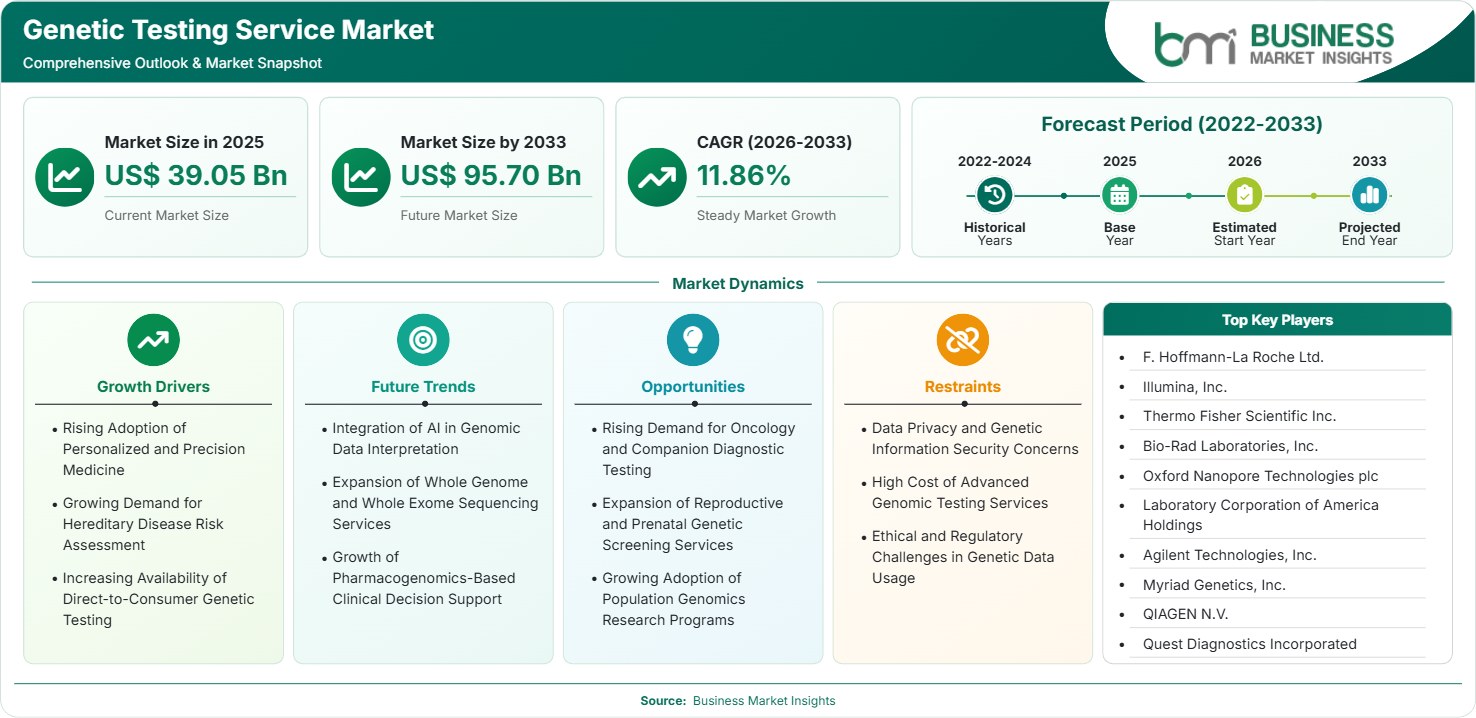
The Genetic Testing Service Market size was valued at US$ 39.05 Billion in 2025 and is projected to reach US$ 95.70 Billion by 2033, growing at a CAGR of 11.86% during 2026–2033. Precision medicine is increasingly being embraced, inheritance of diseases is becoming common, there is an expansion in diagnostics for cancer, and the continuous development of genomics sequencing technologies is among the key factors fueling the market.

Report Coverage
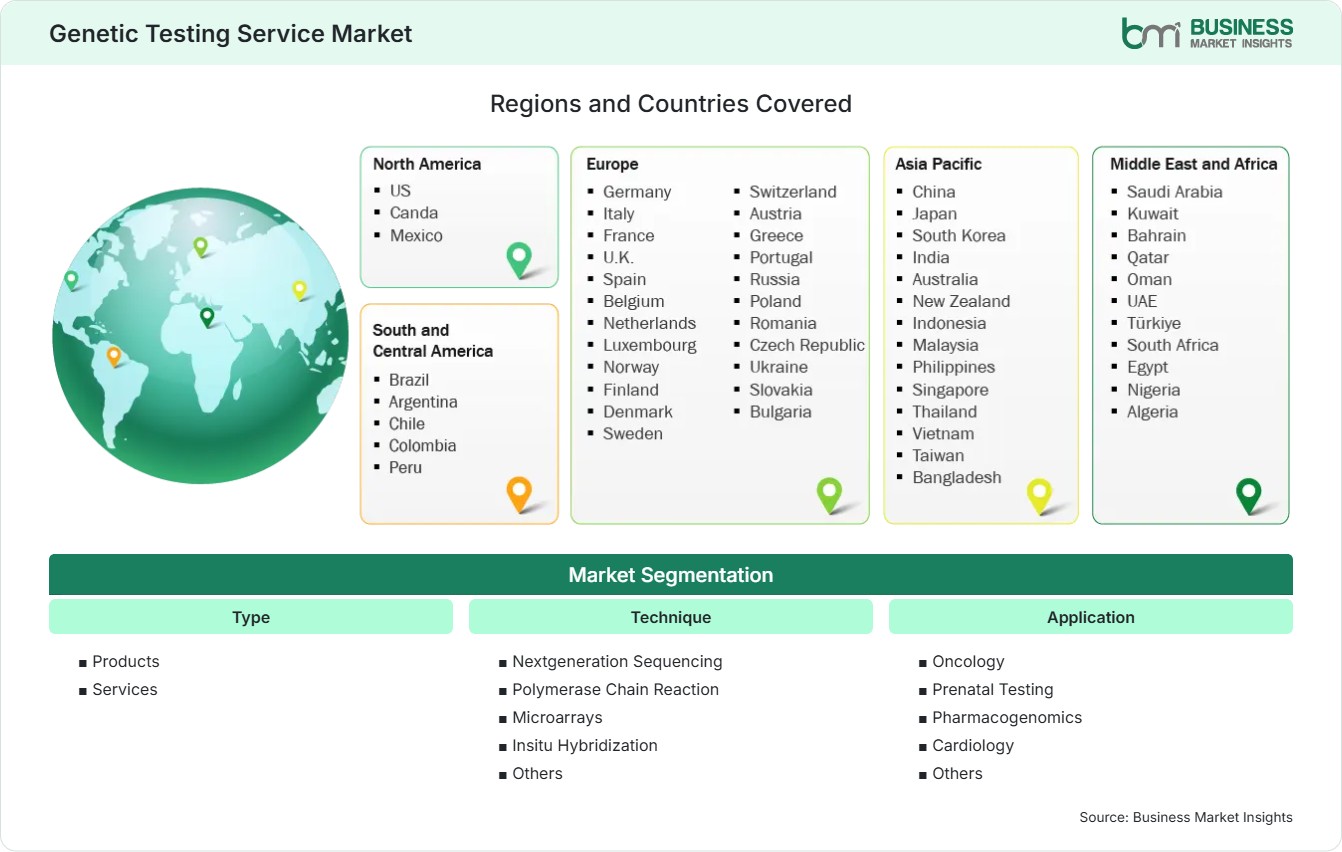
  • Type: Products, Services
  • Technique: Nextgeneration Sequencing, Polymerase Chain Reaction, Microarrays, Insitu Hybridization, Others
  • Application: Oncology, Prenatal Testing, Pharmacogenomics, Cardiology, Others
US$ 39.05 Bn Market size in 2025
US$ 95.70 Bn Market Size by 2033
11.86% CAGR, 2026 - 2033
2026-2033 Forecast Period

AI Overview

Genetic Testing Service Market Summary

  • North America Region: North America holds 40%–43% genetic testing service market share in 2025 and is projected to grow at a CAGR of 11.2%–11.8% during 2026–2033. Strong reimbursement support, advanced molecular diagnostics infrastructure, and increasing precision medicine initiatives continue driving market expansion.
  • Fastest Growing Region: Asia Pacific accounts for 24%–27% market share in 2025 and is expected to expand at a CAGR of 13.1%–13.7%. Increasing healthcare expenditure, growing genomic research, expanding molecular diagnostic laboratories, and supportive government initiatives continue accelerating regional adoption.
  • Leading Segment: Services account for 52%–55% market share in 2025 while growing at a CAGR of 12.0%–12.5%. Rising demand for clinical genetic screening, laboratory-developed tests, and specialized diagnostic services continues supporting segment leadership.
  • High Growth Segment: Next-generation Sequencing (NGS) represents 34%–37% market share in 2025 and is projected to register a CAGR of 13.8%–14.4% owing to increasing applications in oncology, rare disease diagnosis, reproductive health, and precision medicine.
  • Key Market Opportunity: Growing integration of genomic testing into preventive healthcare, companion diagnostics, population screening programs, and personalized treatment planning continues creating significant opportunities for diagnostic service providers.
  • Major Market Players: F. Hoffmann-La Roche Ltd., Illumina, Inc., Thermo Fisher Scientific Inc., Bio-Rad Laboratories, Inc., Oxford Nanopore Technologies plc, Laboratory Corporation of America Holdings, Agilent Technologies, Inc., Myriad Genetics, Inc., QIAGEN N.V., and Quest Diagnostics Incorporated.
Strategic Insights

Genetic Testing Service Market: Strategic Insights

Genetic Testing Service Market Strategic Framework
FREE PDF
Request your free sample
Request free sample
Stakeholder View

Key Takeaways

  • The genetic testing service market continues evolving through close collaboration among sequencing technology developers, molecular diagnostic laboratories, pharmaceutical companies, healthcare providers, and bioinformatics firms, creating an integrated ecosystem supporting precision medicine and personalized healthcare delivery.
  • Genomics applied to oncology, reproductive health, and hereditary disorders remains one of the most promising areas in terms of business prospects due to the adoption of genome diagnostics in healthcare for improved decision making, therapy choice, and patient outcomes.
  • Tech innovation increasingly centers around next-generation sequencing, long-read sequencing, digital PCR, genome analysis using artificial intelligence, and cloud computing bioinformatics solutions for enhanced test accuracy and efficiency.
  • The Asia-Pacific region remains a very promising investment area in terms of genomics due to the development of genomics research, increased expenditures on healthcare, government support, and high demand for molecular diagnostic services.
  • Partnerships between diagnostic laboratories, biotech companies, drugmakers, and academic organizations continue to accelerate commercial application of novel genetic tests.
Geographic Outlook

Genetic Testing Service Market Regional Highlights

North America Genetic Testing Service Market

North America accounted for approximately 40%–43% of global revenue in 2025 and is projected to register a CAGR of 11.2%–11.8% through 2033. The Genetic Testing Service Market share remains the largest globally due to advanced healthcare infrastructure, widespread molecular diagnostics adoption, favorable reimbursement policies, and extensive genomic research activities. Healthcare providers increasingly utilize genetic testing for oncology, rare diseases, reproductive health, pharmacogenomics, and preventive healthcare, while continuous technological innovation supports improved accessibility and diagnostic accuracy.

  • Strong precision medicine initiatives continue accelerating clinical adoption of genomic diagnostics across hospitals, cancer centers, specialty laboratories, and academic medical institutions.
  • Biotechnology companies continue investing in advanced sequencing technologies, AI-driven genomic interpretation platforms, and companion diagnostic development supporting personalized therapeutic strategies.
  • Expanding national genomic research programs and public-private collaborations strengthen innovation across hereditary disease screening, pharmacogenomics, and molecular diagnostics.
  • Growing awareness of preventive healthcare and inherited disease risk assessment continues supporting broader utilization of clinical genetic testing services.

US Genetic Testing Service Market

The United States represents approximately 86%–89% of North American revenue and is projected to expand at a CAGR of 11.4%–12.0% during the forecast period. The country benefits from extensive genomic research capabilities, advanced diagnostic laboratories, precision oncology initiatives, and strong biotechnology innovation.

  • Precision oncology programs continue expanding utilization of comprehensive genomic profiling across multiple cancer types.
  • Leading biotechnology companies continue investing in sequencing technologies, molecular diagnostics, and AI-enabled genomic analysis platforms.
  • Clinical laboratories increasingly automate testing workflows to improve throughput, turnaround times, and diagnostic consistency.
  • Growing consumer awareness regarding hereditary disease risk assessment continues supporting adoption of preventive genetic screening services.

Europe Genetic Testing Service Market

Europe accounted for approximately 26%–29% of global revenue in 2025 and is projected to grow at a CAGR of 10.8%–11.4% during 2026–2033. The region benefits from well-established public healthcare systems, increasing implementation of precision medicine programs, expanding genomic research initiatives, and favorable regulatory support for molecular diagnostics. Germany remains the largest regional genetic testing service market owing to its advanced clinical laboratory infrastructure and biotechnology industry.

  • Germany leads regional demand through strong molecular diagnostics capabilities, extensive research collaborations, and increasing implementation of precision medicine across academic hospitals and specialty laboratories.
  • The United Kingdom continues expanding genomic testing through national sequencing initiatives, precision oncology programs, and growing integration of genomic medicine into routine clinical practice.
  • France supports market growth through expanding reimbursement coverage, investments in clinical genomics research, and prenatal genetic screening services.
  • Nordic countries continue strengthening adoption through digital healthcare infrastructure, advanced genomic databases, and growing implementation of personalized medicine across public healthcare systems.

Asia Pacific Genetic Testing Service Market

Asia Pacific represented approximately 24%–27% of global revenue in 2025 and is expected to register the fastest CAGR of 13.1%–13.7% through 2033. Rising healthcare expenditure, expanding biotechnology industries, increasing awareness of inherited diseases, and government investments in genomic medicine continue accelerating regional growth. China remains the largest regional genetic testing service market due to significant investments in precision medicine, sequencing infrastructure, and biotechnology innovation, while India records the fastest growth supported by improving diagnostic infrastructure, expanding healthcare access, and increasing adoption of molecular testing.

  • China dominates regional revenue through large-scale genome research programs, expanding sequencing capacity, biotechnology innovation, and increasing adoption of precision oncology diagnostics.
  • India records the fastest regional growth due to expanding molecular diagnostic laboratories, government healthcare initiatives, growing biotechnology investments, and increasing awareness regarding inherited disease screening.
  • Japan continues strengthening clinical adoption through advanced genomic research, personalized medicine initiatives, and integration of next-generation sequencing into cancer diagnosis and treatment planning.

Rest of World Genetic Testing Service Market

The Rest of World accounted for approximately 7%–9% of global revenue in 2025 and is projected to expand at a CAGR of 11.6%–12.2% during the forecast period. South and Central America continue increasing investments in molecular diagnostics, hereditary disease screening, and oncology testing as healthcare systems modernize. Meanwhile, the Middle East and Africa are experiencing gradual expansion supported by precision medicine initiatives, improving diagnostic laboratory infrastructure, and growing government investments in specialized healthcare services.

  • Brazil is leading the adoption process by means of increased oncology diagnostics, better laboratory molecular expertise, and increased spending on public and private healthcare infrastructure.
  • Mexico has been continuously improving the utilization of genetic testing through healthcare modernization, biotech collaboration, and advanced molecular diagnostics services.
  • Saudi Arabia has the fastest growth in the region due to national genome projects, precision medicine, and development of specialized genomic healthcare centers.
  • The United Arab Emirates is still working on personal healthcare, clinical genomics, and diagnostic labs for precision medicine.
Global Market Geography
FREE PDF
Request your free sample
Request free sample
Segment Analysis

Genetic Testing Service Market Segmentation

Type

The Type segment accounted for approximately 52%–55% of the market in 2025 and is projected to grow at a CAGR of 12.0%–12.5% during 2026–2033. Continuous advances in sequencing technologies, laboratory automation, and molecular diagnostics are driving demand for both testing products and specialized services. The Genetic Testing Service Market scope continues expanding as precision medicine becomes an integral component of disease diagnosis, treatment planning, and preventive healthcare across developed and emerging healthcare systems.

  • Products: Products include advanced sequencing equipment, PCR instruments, microarray systems, reagents, assay kits, and laboratory consumables that support high-quality molecular testing across clinical, research, and diagnostic laboratories.
    • Equipment: Equipment comprises sequencing platforms, thermal cyclers, automated extraction systems, imaging instruments, and laboratory automation solutions designed to improve testing throughput, analytical accuracy, and workflow efficiency.
    • Consumables: Consumables include sequencing reagents, sample preparation kits, PCR reagents, microarray chips, probes, buffers, enzymes, and laboratory plastics required for routine genetic testing procedures.
  • Services: Genetic testing services dominate the market due to increasing demand for clinical sequencing, genetic counseling support, and interpretation of complex genomic information through specialized accredited laboratories.

Technique

Technique selection continues evolving with improvements in sequencing speed, analytical sensitivity, multiplex testing, and bioinformatics capabilities. The Technique segment represented approximately 34%–37% of market revenue in 2025 and is projected to register the fastest CAGR of 13.8%–14.4% throughout the forecast period. The Genetic Testing Service Market trends indicate growing preference for high-throughput molecular technologies capable of supporting comprehensive genomic analysis, precision oncology, inherited disease diagnosis, reproductive health screening, and pharmacogenomic applications.

  • Next-generation Sequencing (NGS): NGS remains the fastest-growing technology owing to its ability to analyze multiple genes simultaneously with high accuracy, supporting precision oncology, rare disease diagnosis, reproductive testing, and population genomics.
  • Polymerase Chain Reaction: PCR continues maintaining widespread clinical adoption because of its high sensitivity, rapid turnaround time, cost-effectiveness, and established role in detecting inherited disorders, infectious diseases, and genetic mutations.
  • Microarrays: Microarray technologies remain valuable for gene expression profiling, chromosomal abnormality detection, copy number variation analysis, and large-scale genomic research supporting clinical and translational medicine.
  • In-situ Hybridization: In-situ hybridization supports visualization of genetic abnormalities directly within tissue samples, enabling accurate diagnosis of chromosomal alterations and biomarker identification in oncology applications.
  • Others: Additional molecular techniques, including Sanger sequencing, digital PCR, CRISPR-based diagnostics, methylation analysis, and long-read sequencing, continue expanding specialized genetic testing capabilities.

Application

Expanding clinical applications of genomic medicine continue strengthening demand across multiple disease areas. The Application segment is witnessing sustained growth as healthcare providers increasingly integrate molecular diagnostics into routine patient management.

  • Oncology: Oncology represents the largest application area, supporting tumor profiling, targeted therapy selection, companion diagnostics, treatment monitoring, and identification of hereditary cancer syndromes using advanced genomic technologies.
  • Prenatal Testing: Prenatal testing continues expanding through increasing adoption of non-invasive prenatal testing, carrier screening, fetal chromosomal abnormality detection, and reproductive genetic counseling services.
  • Pharmacogenomics: Pharmacogenomic testing enables personalized drug selection and dosage optimization by identifying genetic variations influencing drug metabolism, therapeutic response, and adverse reaction risks.
  • Cardiology: Cardiology applications include genetic screening for inherited cardiovascular disorders, cardiomyopathies, arrhythmias, familial hypercholesterolemia, and early risk assessment supporting preventive clinical interventions.
  • Others: Additional applications include neurology, rare diseases, infectious disease diagnostics, metabolic disorders, pediatric genetics, transplant medicine, and population health screening programs.
Market Forces

Genetic Testing Service Market Dynamics

Key Market Drivers

Rising Adoption of Personalized and Precision Medicine

Precision medicine is transforming healthcare by enabling clinicians to tailor prevention, diagnosis, and treatment according to an individual's genetic profile. Advances in genomic sequencing, biomarker discovery, and molecular diagnostics have significantly improved the ability to identify disease-causing mutations and predict therapeutic responses. According to the World Health Organization and NIH-supported precision medicine initiatives, genomic information is increasingly integrated into clinical decision-making across oncology, rare diseases, and inherited disorders. The Genetic Testing Service Market growth continues accelerating as healthcare providers adopt personalized treatment pathways that improve patient outcomes, reduce unnecessary therapies, and support evidence-based medical decisions through comprehensive genetic analysis.

Growing Demand for Hereditary Disease Risk Assessment

The rise in awareness concerning genetic diseases that can be inherited is motivating health care professionals and patients to consider predictive genetic testing for early detection of diseases. Hereditary cancers, cardiovascular diseases, neurologic diseases, and rare genetic conditions can all be screened through genetic testing so that proper measures can be taken to manage the disease and make plans for the future. The provision of counseling services in relation to genetics has increased patient confidence in the tests and their interpretation. Health care organizations are realizing the significance of early detection in terms of both cost and benefit.

Increasing Availability of Direct-to-Consumer Genetic Testing

Direct-to-consumer genetic testing has helped increase the availability of genomic data by facilitating easy health-oriented genetic tests without needing any referral from a doctor in many locations. Affordable testing procedures, advanced report generation tools, and increasing consumer knowledge are contributing factors that have helped drive the growth of the market. A number of testing companies are currently providing ancestral, carrier screening, wellness, and disease risk testing options. Despite the changing regulatory policies, increased consumer awareness about personalized wellness is driving market growth.

Key Market Opportunities

Rising Demand for Oncology and Companion Diagnostic Testing

Precision medicine is contributing to the emergence of one of the most promising markets for providers of genetic testing services. The widespread use of targeted treatments means that there is a need to diagnose actionable mutations before administering treatment. This allows doctors to determine the appropriate treatment, check its efficacy, and achieve better results for patients as well as facilitates pharmaceutical drug development. With the growing prevalence of cancers all over the world and the availability of precision drugs, the laboratories focusing on genomic technologies are bound to grow steadily in the future.

Expansion of Reproductive and Prenatal Genetic Screening Services

There are heightened awareness about issues of reproductive health and inherited genetic disorders that have increased the need for carrier testing, prenatal diagnosis, and preimplantation genetic testing. There are increased efforts among healthcare practitioners to carry out genetic assessment early on to detect any chromosomal issues, inherited disorders, or any genetic risks associated with pregnancy. Continued improvements in non-invasive prenatal testing techniques, sequencing accuracy, and genetic counseling have ensured continued support for these services. Growing maternal healthcare and advanced reproductive medicine services present good business opportunities for laboratories conducting these tests.

Growing Adoption of Population Genomics Research Programs

Governments and research organizations are investing heavily in national genome initiatives designed to improve understanding of disease biology, public health trends, and personalized medicine strategies. Large-scale genomic databases support biomarker discovery, drug development, epidemiological research, and precision healthcare planning. The Genetic Testing Service Market Forecasts remain favorable as population genomics programs continue expanding globally, encouraging collaborations among academic institutions, biotechnology companies, healthcare providers, and diagnostic laboratories. These initiatives are expected to accelerate innovation while increasing long-term demand for sequencing services, bioinformatics platforms, and advanced genomic interpretation capabilities.

Market Restraints and Challenges

Data Privacy and Genetic Information Security Concerns

Factor: Genomic information derived from genetic testing is highly sensitive in nature, thus needs to be stored securely, accessed selectively, shared ethically, and maintained within the scope of privacy regulations in healthcare.

Impact: Issues related to security breaches, data breaches, unauthorized access, discrimination, etc. can deter people from opting for genetic testing. Diagnostic labs and healthcare organizations need to spend considerable resources for ensuring confidentiality through encryption, cloud computing, authentication, compliance, etc. The growing importance of data governance globally keeps complicating operations further for these organizations.

High Cost of Advanced Genomic Testing Services

Factor: Comprehensive genomic sequencing, sophisticated laboratory equipment, advanced bioinformatics platforms, and highly skilled personnel contribute to elevated operational and testing costs, particularly for complex clinical applications.

Impact: High testing costs and inconsistent reimbursement policies can limit access to advanced genomic diagnostics, particularly in low- and middle-income countries. Healthcare providers may prioritize conventional diagnostic methods where budget constraints exist, slowing broader market adoption. Service providers continue addressing this challenge through laboratory automation, workflow optimization, technological innovation, and expanding sequencing capacity to gradually reduce costs while improving affordability and accessibility of advanced genetic testing services worldwide.

Company Analysis

Competitive Landscape

The Genetic Testing Service Market analysis reflects a highly competitive environment characterized by continuous innovation in sequencing technologies, molecular diagnostics, bioinformatics, and laboratory automation. Leading companies focus on expanding genomic testing portfolios, strengthening clinical laboratory capabilities, developing companion diagnostics, and establishing strategic collaborations with healthcare providers and pharmaceutical companies. Investments in artificial intelligence-enabled genomic interpretation, high-throughput sequencing platforms, and global laboratory networks continue shaping competition while supporting the increasing adoption of precision medicine and personalized healthcare worldwide.

Company Name

Overview

Products and Services Relevant to this Market

F. Hoffmann-La Roche Ltd.

Global healthcare leader with strong expertise in molecular diagnostics, precision medicine, and companion diagnostic development supporting clinical decision-making worldwide.

Molecular diagnostic systems, PCR platforms, sequencing solutions, oncology diagnostics, companion diagnostics, laboratory automation, and genetic testing services.

Illumina, Inc.

Leading developer of genomic sequencing technologies with extensive global presence across clinical diagnostics, research institutions, and pharmaceutical applications.

Next-generation sequencing platforms, sequencing consumables, genomic analysis software, clinical sequencing solutions, and bioinformatics services.

Thermo Fisher Scientific Inc.

Global life sciences company offering comprehensive molecular diagnostics, laboratory technologies, and genomic analysis solutions for healthcare and research organizations.

PCR systems, sequencing instruments, laboratory consumables, genetic testing solutions, reagents, bioinformatics platforms, and diagnostic services.

Bio-Rad Laboratories, Inc.

Established provider of life science research and clinical diagnostic technologies supporting molecular testing, genomic analysis, and laboratory workflow optimization.

Digital PCR systems, molecular diagnostic instruments, reagents, quality controls, genetic testing solutions, and laboratory automation technologies.

Oxford Nanopore Technologies plc

Innovative biotechnology company specializing in nanopore sequencing technologies enabling rapid, scalable, and real-time genomic analysis.

Long-read sequencing platforms, sequencing consumables, genomic analysis software, portable sequencing devices, and molecular research solutions.

Laboratory Corporation of America Holdings

One of the world's largest clinical laboratory organizations providing comprehensive diagnostic testing and precision medicine services.

Clinical genetic testing, oncology diagnostics, hereditary disease screening, prenatal testing, pharmacogenomics, and laboratory services.

Agilent Technologies, Inc.

Global analytical and life sciences company supporting molecular diagnostics through advanced laboratory technologies and genomic workflow solutions.

Genomic instruments, microarray platforms, sample preparation systems, laboratory consumables, bioinformatics tools, and molecular diagnostic solutions.

Myriad Genetics, Inc.

Precision medicine company focused on genetic testing for hereditary diseases, oncology, reproductive health, and personalized treatment guidance.

Hereditary cancer testing, companion diagnostics, pharmacogenomic testing, reproductive health screening, and precision medicine services.

QIAGEN N.V.

Leading provider of molecular diagnostics and sample preparation technologies supporting genomic research and clinical diagnostics worldwide.

Sample preparation kits, PCR assays, sequencing workflow solutions, bioinformatics software, molecular diagnostics, and genomic testing products.

Quest Diagnostics Incorporated

Major diagnostic information services provider offering comprehensive laboratory testing with expanding precision medicine capabilities.

Clinical genetic testing, oncology diagnostics, prenatal screening, hereditary disease testing, laboratory services, and genomic interpretation solutions.

Trust & Transparency

Research Methodology

The market analysis combines proprietary research with secondary data from government agencies, company disclosures, regulatory filings, industry databases and expert interviews. Market estimates are validated through data triangulation, cross-market benchmarking and analyst review.

View Full Research Methodology

Questions Answered

Frequently Asked Questions

What does the genetic testing service market report highlight about future opportunities?

The report identifies strong opportunities in companion diagnostics, reproductive and prenatal screening, national genomics programs, AI-enabled genomic interpretation, and precision medicine initiatives that continue expanding clinical adoption globally.

Which region is expected to grow the fastest during the forecast period?

Asia Pacific is anticipated to record the highest growth due to increasing healthcare investments, government genomics initiatives, improving laboratory infrastructure, and rising awareness of personalized medicine across developing economies.

Why is genetic testing becoming important in oncology?

Genetic testing helps identify actionable mutations, supports companion diagnostics, guides targeted therapy selection, and enables personalized cancer care, improving clinical outcomes while reducing ineffective treatment approaches.

Which testing technique is expected to witness the fastest growth?

Next-generation Sequencing (NGS) is projected to register the fastest growth because it enables comprehensive genomic analysis, detects multiple genetic variants simultaneously, and offers higher throughput than conventional molecular testing methods.

What factors are driving the growth of the genetic testing service market?

The market is expanding due to increasing adoption of precision medicine, growing prevalence of inherited disorders, and broader use of genetic testing in oncology, reproductive health, and pharmacogenomics.

Access the Full Genetic Testing Service Market Report

Get segment-level forecasts, regional estimates, competitive benchmarking, company profiles and downloadable Excel datasets.

Access the full Genetic Testing Service Market Report
350 pages PDF & Excel | 2026-08-07