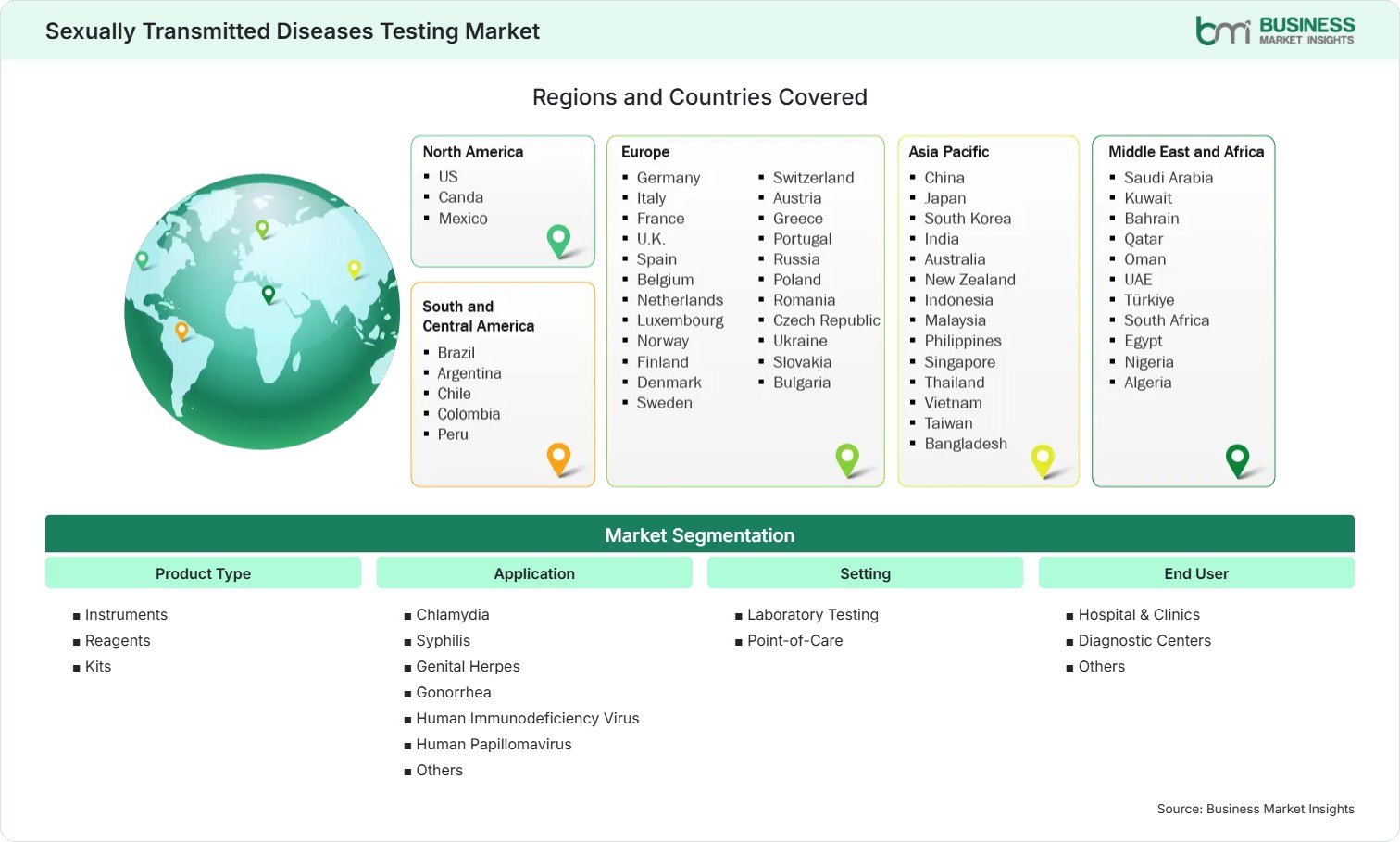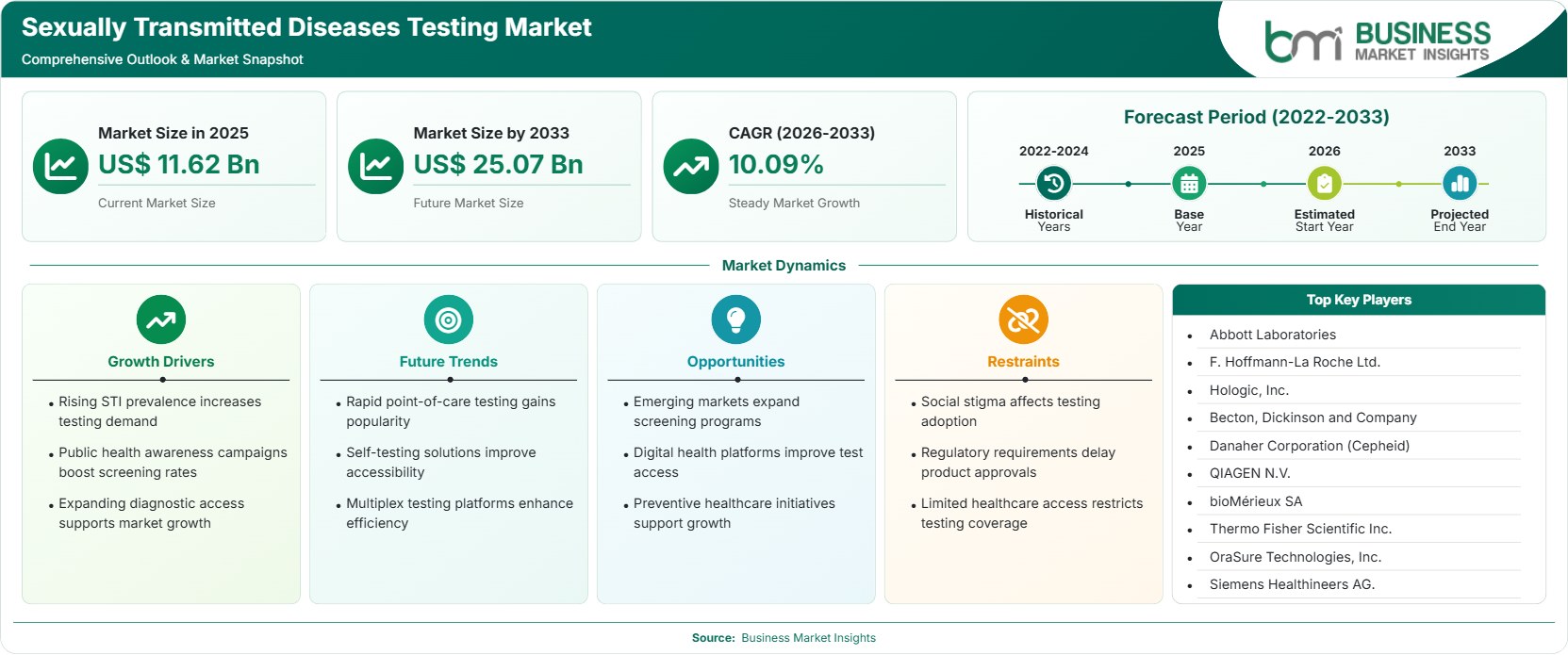
Sexually Transmitted Diseases Testing Market Regional Highlights
North America Sexually Transmitted Diseases Testing Market
North America accounted for 36%–39% of revenue in 2025 and is expected to register a CAGR of 8.8%–9.4% through 2033. The region benefits from advanced diagnostic infrastructure, widespread reimbursement, strong public health surveillance, and high testing awareness. The phrase Sexually Transmitted Diseases Testing Market share remains highest in North America due to large-scale laboratory networks and early technology adoption.
- Molecular testing adoption continues increasing across hospital systems and national laboratory chains.
- Government-supported screening initiatives improve diagnostic accessibility among high-risk populations.
- Integration of automation and digital reporting enhances efficiency and turnaround performance.
- Continued innovation from established diagnostics vendors strengthens commercial competitiveness.
- Self-testing and home-collection services support wider participation in routine screening.
US Sexually Transmitted Diseases Testing Market
The United States represents 78%–82% of North American demand and is projected to grow at 8.9%–9.5% CAGR. Rising STI case reporting, strong reimbursement pathways, advanced laboratory capabilities, and rapid regulatory approvals support sustained adoption. Healthcare providers increasingly favor multiplex diagnostic platforms that reduce testing complexity while improving clinical workflow efficiency.
- Public health agencies continue strengthening surveillance and routine screening frameworks.
- Community-based testing programs improve early detection rates across vulnerable populations.
- Investment in molecular platforms supports high-throughput infectious disease diagnostics.
- Retail clinics and telehealth providers expand decentralized testing availability.
Europe Sexually Transmitted Diseases Testing Market
Europe holds 27%–30% Sexually Transmitted Diseases Testing Market share in 2025 and grows at a CAGR of 9.2%–9.9%. The region benefits from universal healthcare structures, preventive screening programs, and increasing investment in laboratory modernization. Germany leads regional revenues, while Eastern European markets demonstrate stronger growth trajectories due to expanding diagnostic capacity and healthcare infrastructure development.
- National screening initiatives support stable testing volumes across major healthcare systems.
- Multiplex PCR technologies gain wider adoption in reference laboratories.
- Germany remains the largest regional market while Poland records stronger growth momentum.
- Cross-border healthcare standards improve diagnostic quality and consistency.
- Digital health integration streamlines patient engagement and result delivery.
Asia Pacific Sexually Transmitted Diseases Testing Market
Asia Pacific captures 24%–27% Sexually Transmitted Diseases Testing Market share in 2025 and records the highest CAGR of 11.8%–12.6%. Rapid urbanization, expanding healthcare access, and growing awareness support diagnostic penetration. China leads regional revenue generation, whereas India and Southeast Asian countries display stronger acceleration due to expanding screening programs and rising laboratory investments.
- Government healthcare funding supports diagnostic infrastructure expansion.
- Private laboratory networks increasingly deploy advanced molecular testing systems.
- India demonstrates strong growth through broader preventive healthcare initiatives.
- Awareness campaigns improve testing participation among younger populations.
- Point-of-care deployment enhances access in rural and underserved communities.
Rest of World Sexually Transmitted Diseases Testing Market
Rest of World accounts for 8%–11% Sexually Transmitted Diseases Testing Market share in 2025 and grows at a CAGR of 10.4%–11.1%. South and Central America benefit from strengthening public health programs, while Middle East and Africa markets gain support from healthcare infrastructure investments and disease surveillance initiatives. Brazil leads regional revenues, whereas Saudi Arabia and South Africa exhibit notable expansion.
- International health partnerships support laboratory capability enhancements.
- Awareness initiatives improve diagnosis rates and treatment pathways.
- Local manufacturing investments strengthen supply chain resilience.
- Mobile testing services expand access to remote populations.
- Growing healthcare expenditure supports technology adoption.