
Nucleic Acid Testing Market Outlook: Size, Share, Trends, Growth Analysis, Competitive Landscape & Forecast, 2026-2033

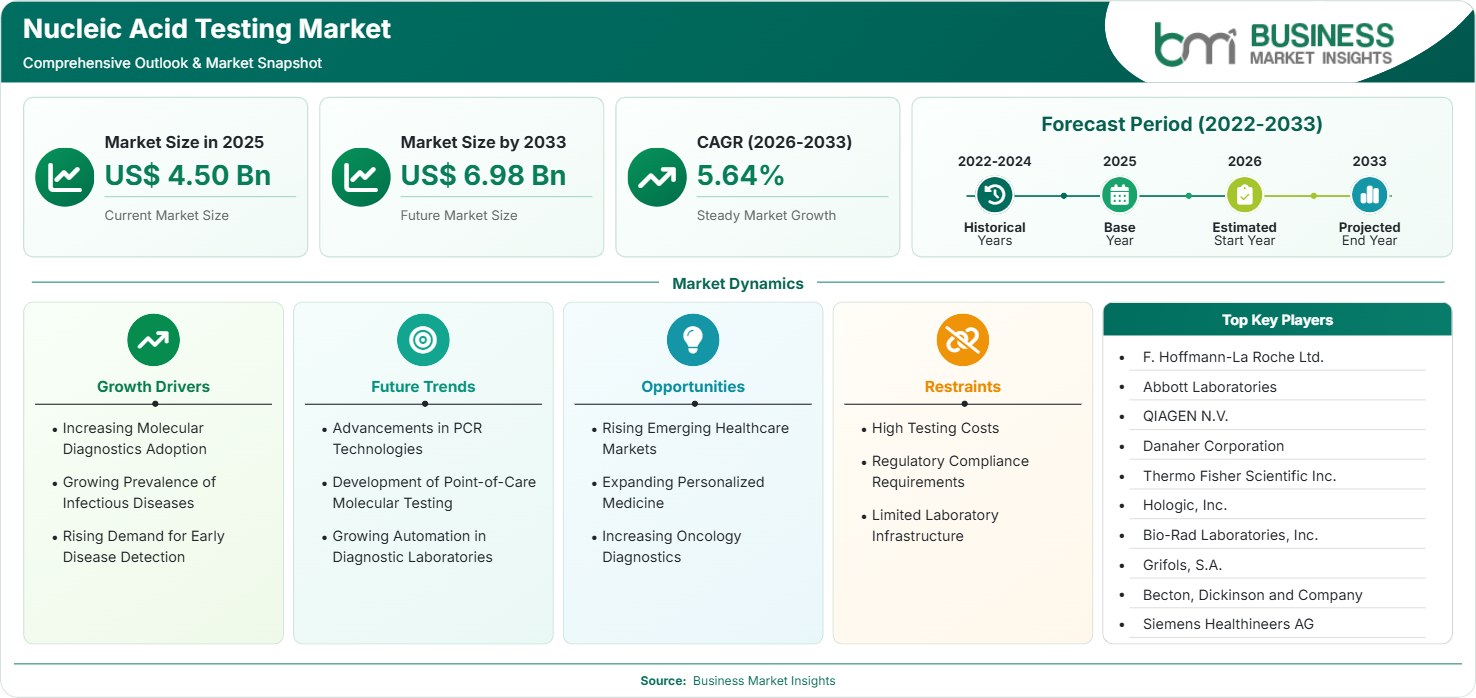
The Nucleic Acid Testing Market size was valued at US$ 4.50 Billion in 2025 and is projected to reach US$ 6.98 Billion by 2033, growing at a CAGR of 5.64% during 2026–2033, driven by increasing molecular diagnostics adoption, rising infectious disease screening requirements, expanding personalized medicine applications, and technological advancements in genomic testing platforms.

Report Coverage
  • Technology: Polymerase Chain Reaction, Ligase Chain Reaction, Transcription-mediated Amplification, Whole Genome Sequencing
  • Application: Disease Diagnosis, Forensic Testing, Personalized Medicine, Others
  • End User: Hospitals, Specialty Clinics, Diagnostic Centers, Academic & Research Institutes
US$ 4.50 Bn Market size in 2025
US$ 6.98 Bn Market Size by 2033
5.64% CAGR, 2026 - 2033
2026-2033 Forecast Period

AI Overview

Nucleic Acid Testing Market Summary

  • North America Region: North America holds a 38%–42% share in 2025, expanding at a CAGR of 5.30%–5.70% during 2026–2033. Advanced healthcare infrastructure, widespread diagnostic adoption, reimbursement support, and increasing precision medicine investments are strengthening regional demand. The US market demonstrates steady expansion with a CAGR of 5.40%–5.80%, supported by molecular diagnostics integration across hospitals and laboratories.
  • Fastest Growing Region: Asia Pacific represents the fastest-growing region with a 24%–28% share in 2025, achieving a CAGR of 6.20%–6.70% during 2026–2033. Rising healthcare expenditure, expanding diagnostic networks, infectious disease monitoring programs, and biotechnology investments are accelerating adoption across emerging economies.
  • Leading Segment: Polymerase Chain Reaction technology maintains a leading position with a 58%–62% share in 2025, growing at a CAGR of 5.20%–5.60% during 2026–2033. High accuracy, rapid processing, established clinical workflows, and broad diagnostic applications support segment leadership.
  • High Growth Segment: Whole Genome Sequencing demonstrates strong growth potential with a 9%–12% share in 2025, expanding at a CAGR of 8.00%–8.50% during 2026–2033. Increasing genomic research, precision healthcare initiatives, and declining sequencing costs are supporting adoption.
  • Key Market Opportunity: Expansion of personalized medicine, oncology diagnostics, and emerging healthcare infrastructure creates opportunities for advanced molecular testing platforms, enabling improved disease detection, targeted therapies, and broader clinical adoption across developing regions.
  • Major Market Players: F. Hoffmann-La Roche Ltd., Abbott Laboratories, QIAGEN N.V., Danaher Corporation, Thermo Fisher Scientific Inc., Hologic, Inc., Bio-Rad Laboratories, Inc., Grifols, S.A., Becton, Dickinson and Company, Siemens Healthineers AG.
Strategic Insights

Nucleic Acid Testing Market: Strategic Insights

Nucleic Acid Testing Market Strategic Framework
FREE PDF
Request your free sample
Request free sample
Stakeholder View

Key Takeaways

  • Molecular diagnostic ecosystems are becoming increasingly integrated, with manufacturers, reagent suppliers, laboratory networks, and healthcare providers collaborating to improve testing efficiency and accessibility.
  • Disease diagnosis applications remain a major growth area, while personalized medicine and oncology testing create additional opportunities through advanced genomic and molecular profiling solutions.
  • Innovation is shifting toward automated workflows, next-generation sequencing integration, multiplex assays, and compact diagnostic platforms designed for decentralized healthcare environments.
  • Asia Pacific presents an attractive investment opportunity due to expanding healthcare infrastructure, increasing biotechnology activities, and government-supported diagnostic modernization programs.
  • Strategic collaborations, technology partnerships, and acquisitions among diagnostic companies are shaping competitive positioning by expanding product portfolios and strengthening molecular testing capabilities.
  • Data-driven healthcare models are increasing demand for testing platforms capable of generating actionable genetic insights for clinical decision-making.
Geographic Outlook

Nucleic Acid Testing Market Regional Highlights

North America Nucleic Acid Testing Market

North America accounted for a 38%–42% share in 2025 and is projected to expand at a CAGR of 5.30%–5.70% during 2026–2033. Strong laboratory infrastructure, advanced healthcare systems, and adoption of molecular diagnostics support regional leadership. The Nucleic Acid Testing Market share remains concentrated in the US due to high testing volumes, reimbursement availability, and research investments. Canada also contributes through healthcare modernization and biotechnology development.

  • The US maintains a dominant position due to extensive diagnostic networks, advanced laboratory capabilities, and strong demand for molecular testing solutions across clinical applications.
  • Increasing investments in genomic research and precision medicine programs are encouraging healthcare providers to adopt advanced nucleic acid-based diagnostic technologies.
  • Regulatory approvals for innovative diagnostic platforms are supporting faster commercialization and improving access to advanced testing solutions.
  • Partnerships between biotechnology companies and healthcare institutions are expanding molecular testing applications across infectious disease, oncology, and genetic disorder management.

US Nucleic Acid Testing Market

The US represented approximately 75%–80% of North America’s regional demand in 2025, growing at a CAGR of 5.40%–5.80% between 2026–2033. Strong clinical adoption, advanced laboratory infrastructure, and increasing genomic medicine initiatives support expansion. The country remains a key innovation hub with significant investments in molecular diagnostics, biotechnology research, and healthcare technology development.

  • Healthcare providers are increasing adoption of automated molecular platforms to improve diagnostic efficiency and manage rising testing requirements.
  • Pharmaceutical and biotechnology companies are integrating genomic testing into drug development and targeted treatment strategies.
  • Academic institutions continue expanding research activities involving sequencing, genetic analysis, and molecular disease identification.
  • Increasing focus on preventive healthcare is supporting broader adoption of early diagnostic testing solutions.

Europe Nucleic Acid Testing Market

Europe accounted for a 27%–31% Nucleic Acid Testing Market share in 2025 and is estimated to grow at a CAGR of 5.10%–5.50% during 2026–2033. Germany, the United Kingdom, France, and Italy represent major contributors due to advanced healthcare systems and strong diagnostic capabilities.

  • Germany demonstrates strong adoption through advanced laboratory infrastructure, biotechnology investments, and clinical research capabilities.
  • The United Kingdom is expanding molecular testing applications through genomic healthcare initiatives and precision medicine programs.
  • France is increasing diagnostic technology adoption through healthcare innovation strategies and research collaborations.
  • European laboratories are investing in automation and integrated molecular testing platforms to improve efficiency and accuracy.

Asia Pacific Nucleic Acid Testing Market

Asia Pacific represented a 24%–28% share in 2025 and is expected to register a CAGR of 6.20%–6.70% during 2026–2033, making it the fastest-expanding regional market. China, Japan, India, South Korea, and Southeast Asian economies are strengthening diagnostic capabilities through healthcare investments and biotechnology development.

  • China is advancing molecular diagnostics adoption through biotechnology investments, expanded healthcare infrastructure, and government-supported genomic research programs.
  • India is experiencing increasing demand for affordable diagnostic solutions due to expanding healthcare access, infectious disease monitoring, and laboratory modernization initiatives.
  • Japan and South Korea are focusing on precision healthcare applications, advanced sequencing technologies, and integration of molecular diagnostics into clinical workflows.
  • Southeast Asian countries are improving diagnostic capacity through public health initiatives, international collaborations, and investments in laboratory infrastructure.
  • Increasing private healthcare expansion across emerging economies is creating opportunities for diagnostic companies offering scalable molecular testing solutions.

Rest of World Nucleic Acid Testing Market

Latin America, Middle East, and Africa collectively represented a 6%–9% share in 2025 and are projected to grow at a CAGR of 5.80%–6.30% during 2026–2033. Improving healthcare infrastructure, disease surveillance programs, and international health initiatives are strengthening diagnostic adoption. Brazil, Mexico, Saudi Arabia, and South Africa are emerging contributors as governments invest in laboratory modernization.

  • Brazil is expanding molecular diagnostic capabilities through healthcare investments, improved laboratory networks, and increasing demand for accurate disease detection.
  • Mexico is strengthening diagnostic infrastructure through public healthcare programs and partnerships focused on infectious disease testing accessibility.
  • Middle Eastern countries are investing in advanced healthcare facilities and genomic research initiatives to improve diagnostic capabilities.
  • South Africa is increasing molecular testing adoption through disease monitoring programs and healthcare system improvements.
  • International healthcare collaborations are supporting technology transfer and laboratory development across emerging markets.
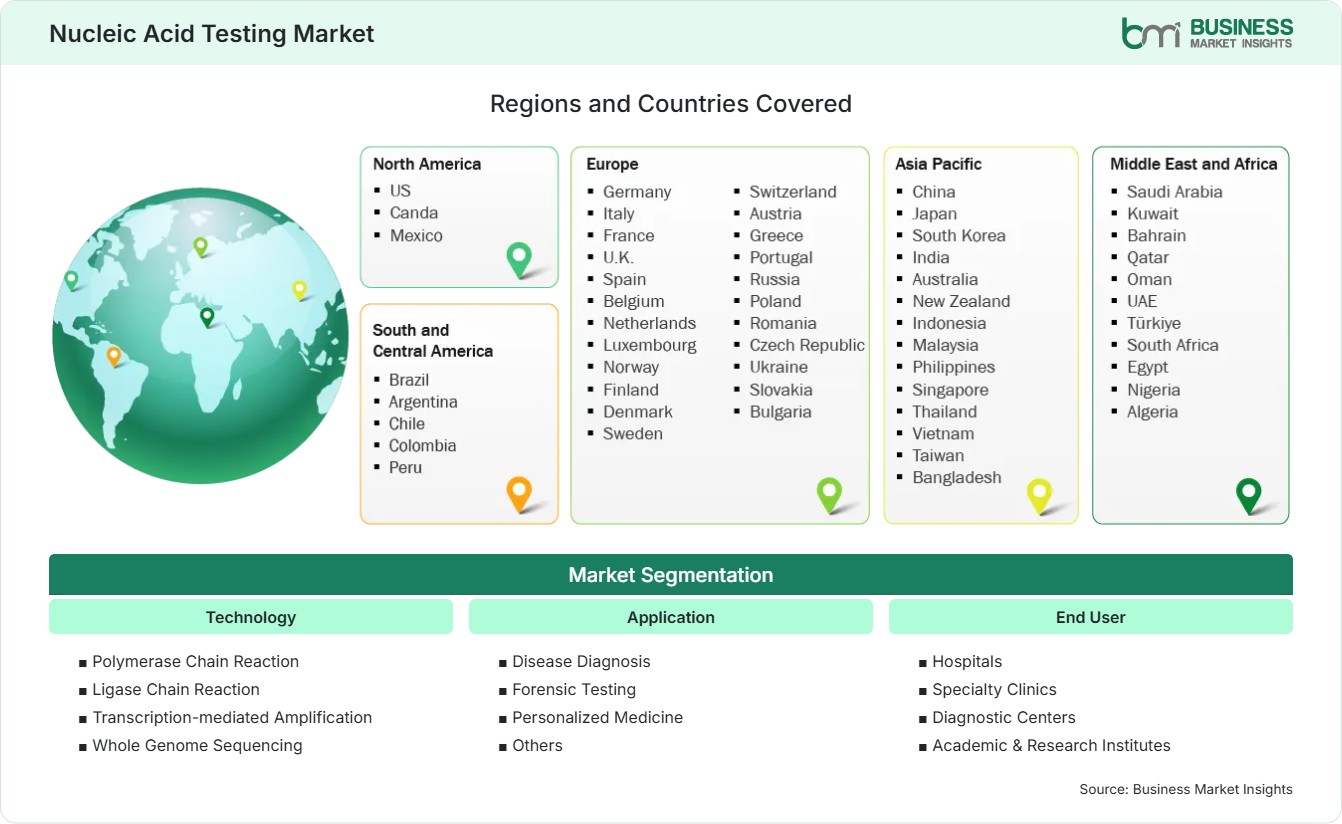
Global Market Geography
FREE PDF
Request your free sample
Request free sample
Segment Analysis

Nucleic Acid Testing Market Segmentation

Technology

Technology segmentation represents a critical component of the Nucleic Acid Testing Market scope, with molecular diagnostic platforms driving adoption across healthcare applications. This segment accounted for a significant share in 2025 and is expected to maintain steady growth through 2026–2033. Increasing automation, improved accuracy, and expanding clinical applications are supporting technology advancements. Polymerase Chain Reaction leads adoption, while sequencing technologies provide future expansion opportunities.

  • Polymerase Chain Reaction: Widely adopted molecular amplification technology enabling rapid and accurate detection of genetic material across infectious disease and diagnostic applications.
  • Ligase Chain Reaction: Specialized amplification method supporting genetic analysis applications where high specificity and targeted molecular detection capabilities are required.
  • Transcription-mediated Amplification: Advanced amplification technology used for RNA detection, supporting applications requiring sensitive molecular identification and clinical testing accuracy.
  • Whole Genome Sequencing: Emerging genomic technology enabling comprehensive genetic analysis, supporting personalized medicine, research applications, and advanced disease characterization.

Application

Application segmentation highlights diverse healthcare uses, with disease diagnosis remaining the largest application area due to increasing demand for rapid and reliable testing. The segment continues expanding as healthcare providers adopt molecular technologies for clinical decision-making. The Nucleic Acid Testing Market trends indicate rising utilization across personalized medicine, forensic applications, and advanced disease management. Growing healthcare digitization and genomic research are strengthening application diversification.

  • Disease Diagnosis: Represents the primary application area, supporting infectious disease identification, genetic disorder detection, and clinical testing workflows.
  • Forensic Testing: Utilizes molecular identification methods for genetic profiling, criminal investigations, and human identification applications.
  • Personalized Medicine: Enables targeted treatment strategies through genomic information, improving therapy selection and patient-specific healthcare decisions.

End User

End user segmentation reflects increasing adoption across healthcare institutions, diagnostic facilities, and research organizations. Hospitals and diagnostic centers represent major contributors due to expanding testing volumes and clinical integration. The segment demonstrates strong potential as healthcare systems prioritize early detection and molecular-based treatment approaches. Increasing laboratory automation and research funding are strengthening adoption across various healthcare environments.

  • Hospitals: Major users of molecular diagnostic solutions, adopting testing platforms for infectious diseases, oncology applications, and clinical decision support.
  • Specialty Clinics: Increasingly utilizing targeted molecular tests for specialized healthcare services, personalized treatment planning, and disease monitoring.
  • Diagnostic Centers: Expanding testing capabilities through advanced molecular platforms, centralized laboratories, and high-throughput diagnostic services.
  • Academic & Research Institutes: Supporting innovation through genomic studies, biotechnology research, and development of next-generation diagnostic technologies.
Market Forces

Nucleic Acid Testing Market Dynamics

Key Market Drivers

Increasing Molecular Diagnostics Adoption

Increasing the usage of molecular diagnostics has increased the demand for advanced molecular testing platforms. Accuracy, speed, and automation are leading laboratories to substitute traditional testing techniques with molecular technologies. Nucleic Acid Testing Market growth will be driven by expanding application areas, investment from laboratories, and the increasing need for accurate diagnosis of diseases. Trends in the market include continuous inclusion of molecular technologies in hospitals, diagnostic centers, and research institutes. Health care providers globally are focused on early detection methods, whereas biotechnology firms are developing better diagnostic tests and platforms.

Growing Prevalence of Infectious Diseases

Growing prevalence of infectious diseases is increasing the requirement for reliable molecular testing systems capable of rapid pathogen identification. Healthcare providers are adopting nucleic acid-based diagnostics to improve outbreak monitoring, infection control, and treatment decisions. Increasing international interest in disease surveillance is resulting in investments in lab facilities and technology. There is an expansion of molecular testing capacity by public health initiatives to deal with health hazards. Increased demand for effective detection technologies is driving advances in multiplex testing, automation and decentralized diagnostics. This trend presents continuous opportunities for providers of molecular testing technology.

Rising Demand for Early Disease Detection

Increasing the need for early detection of various diseases is prompting health care institutions to embrace technologies that can detect diseases at their early stages. Early diagnosis helps to increase the effectiveness of treatment and enables the use of preventive health care strategies for various infections, cancers, and genetic conditions. Awareness amongst healthcare practitioners and patients is driving the adoption of advanced diagnostic tests. Investments made by health organizations into precision healthcare infrastructure are also contributing to increased demand for molecular diagnostics technologies. The Nucleic Acid Testing Market has been positively impacted by increased focus on preventive healthcare, advances in laboratory technology, and use of genomic data in decision-making.

Key Market Opportunities

Rising Emerging Healthcare Markets

Emerging healthcare markets are creating new opportunities for molecular diagnostic companies through expanding healthcare infrastructure, increasing diagnostic awareness, and government-led modernization programs. Developing economies are making investments in building laboratory capacities, enhancing their access to better testing facilities, and enhancing their disease surveillance infrastructure. Nucleic Acid Testing Market Forecasts show increased opportunities for areas that are shifting towards accurate molecular diagnosis by healthcare professionals. Firms that can provide cost-effective, scalable, and automated solutions are expected to gain from growing demands in underserved communities.

Expanding Personalized Medicine

Expanding personalized medicine is creating opportunities for molecular diagnostic providers by increasing demand for genetic profiling and targeted treatment approaches. Healthcare systems are integrating genomic information into clinical decision-making to improve therapy selection and patient outcomes. Technological developments in sequencing, biomarker detection, and companion diagnostics are helping the rise in the use of personalized care models. Significant capital investment is being made in oncology, rare diseases, and genetics to increase market potential. Molecular diagnostic systems that can provide information about the complete biological system are projected to become significant due to the shift towards personalized healthcare.

Increasing Oncology Diagnostics

Growing usage of oncology diagnostics is driving up the need for nucleic acid testing systems which assist in detection, monitoring and treatment of cancer. The molecular test allows for the determination of genetic mutations, tumor profile and other biomarkers associated with the therapy. There are many advances being made in the development of more sophisticated diagnostic systems to meet the needs of the precision medicine programs. Biomarkers and companion diagnostics are being developed by research organizations and pharmaceutical companies. High prevalence of cancer, growing awareness about early detection and availability of targeted drugs are creating good conditions for using molecular diagnostic tests.

Market Restraints and Challenges

High Testing Costs

Factor: High testing costs associated with advanced molecular platforms, specialized reagents, laboratory infrastructure, and skilled personnel create affordability challenges for healthcare providers. Impact: Elevated expenses can restrict adoption in cost-sensitive regions and limit accessibility among smaller diagnostic facilities. Despite advances in automation and technology that are lowering costs of operation, capital expenditures for high-tech nucleic acid testing systems continue to be expensive. The trade-offs between equipment purchase, maintenance, consumables, and testing quality need to be struck. Cost-effective systems and expanded insurance coverage can help lower these barriers. But pricing issues continue to represent a major hurdle to adoption, especially in the new markets of healthcare.

Regulatory Compliance Requirements

Factor: Regulatory compliance requirements involving clinical validation, quality standards, and approval processes increase complexity for companies developing molecular diagnostic products. Impact: Lengthy regulatory pathways can delay commercialization timelines and increase research and development expenditures. There are high standards that diagnostic manufacturers need to fulfill in terms of analytical performance, safety, precision, and production. There can be differences in the regulatory framework of different countries which can pose an added challenge while expanding the business internationally. Organizations are putting their efforts in having regulatory and quality management systems to enhance the process of approvals. Although there could be standardized rules to facilitate market entry in the future.

Company Analysis

Competitive Landscape

The Nucleic Acid Testing Market analysis highlights a competitive environment driven by diagnostic technology leaders, molecular assay developers, and healthcare solution providers. Companies are focusing on expanding product portfolios, improving automation capabilities, strengthening laboratory partnerships, and developing advanced molecular platforms for infectious disease, oncology, and genomic applications.

Company Name

Overview

Products and Services relevant to this market

F. Hoffmann-La Roche Ltd.

Global healthcare company specializing in diagnostics, pharmaceuticals, and innovative molecular healthcare solutions.

Provides PCR systems, molecular diagnostic assays, laboratory automation solutions, and nucleic acid testing platforms.

Abbott Laboratories

Healthcare technology company developing diagnostic products and medical solutions for global healthcare systems.

Offers molecular diagnostic instruments, infectious disease testing solutions, and automated nucleic acid testing platforms.

QIAGEN N.V.

Molecular diagnostics company focused on sample preparation, assay technologies, and genetic testing solutions.

Provides PCR kits, molecular testing workflows, genomic analysis solutions, and diagnostic consumables.

Danaher Corporation

Life sciences and diagnostics organization supporting healthcare innovation through advanced technology platforms.

Provides molecular diagnostic systems through diagnostic subsidiaries, including testing instruments and laboratory solutions.

Thermo Fisher Scientific Inc.

Scientific technology company offering analytical instruments, laboratory products, and biotechnology solutions.

Supplies PCR instruments, genetic analysis platforms, reagents, and molecular biology research solutions.

Hologic, Inc.

Medical technology company specializing in women’s health diagnostics and molecular testing technologies.

Develops molecular diagnostic systems, infectious disease assays, and nucleic acid amplification testing products.

Bio-Rad Laboratories, Inc.

Life science and diagnostics company providing research and clinical laboratory technologies.

Offers PCR systems, molecular testing reagents, digital PCR solutions, and diagnostic workflow products.

Grifols, S.A.

Healthcare company focused on plasma-derived therapies and diagnostic technologies.

Provides diagnostic testing solutions, molecular screening technologies, and laboratory-based healthcare products.

Becton, Dickinson and Company

Global medical technology company supporting diagnostics, healthcare delivery, and laboratory innovation.

Offers molecular diagnostic platforms, sample management solutions, and laboratory automation technologies.

Siemens Healthineers AG

Medical technology company developing diagnostic imaging, laboratory diagnostics, and healthcare solutions.

Provides molecular diagnostic systems, laboratory automation, and advanced diagnostic testing technologies.

Trust & Transparency

Research Methodology

The market analysis combines proprietary research with secondary data from government agencies, company disclosures, regulatory filings, industry databases and expert interviews. Market estimates are validated through data triangulation, cross-market benchmarking and analyst review.

View Full Research Methodology

Questions Answered

Frequently Asked Questions

What challenges affect expansion of molecular testing in developing regions?

Limited laboratory infrastructure, affordability constraints, skilled workforce shortages, and regulatory complexities can slow adoption. Partnerships between governments, healthcare organizations, and technology providers are helping address these barriers.

How does the Nucleic Acid Testing Market Report support healthcare decision-making?

The report provides insights into technology adoption, competitive strategies, application trends, regional developments, and investment opportunities influencing future molecular diagnostics growth.

What role does sequencing technology play in future diagnostic development?

Sequencing technologies are expanding diagnostic capabilities by enabling comprehensive genomic analysis, supporting personalized medicine, rare disease identification, and advanced research applications beyond traditional targeted testing methods.

How are artificial intelligence and automation influencing molecular diagnostics?

Automation is improving laboratory productivity by reducing manual processes, increasing testing consistency, and enabling higher sample throughput. Artificial intelligence is supporting interpretation of complex molecular data and improving diagnostic decision-making.

What factors are increasing adoption of nucleic acid testing technologies?

Nucleic acid testing adoption is increasing due to demand for faster diagnosis, improved accuracy, automation, and integration with precision medicine workflows.

Access the Full Nucleic Acid Testing Market Report

Get segment-level forecasts, regional estimates, competitive benchmarking, company profiles and downloadable Excel datasets.

Access the full Nucleic Acid Testing Market Report
350 pages PDF & Excel | 2026-08-07
Similar Research

Related Market Reports