
Autoimmune Disease Testing Market Outlook: Size, Share, Trends, Growth Analysis, Competitive Landscape & Forecast, 2026-2033

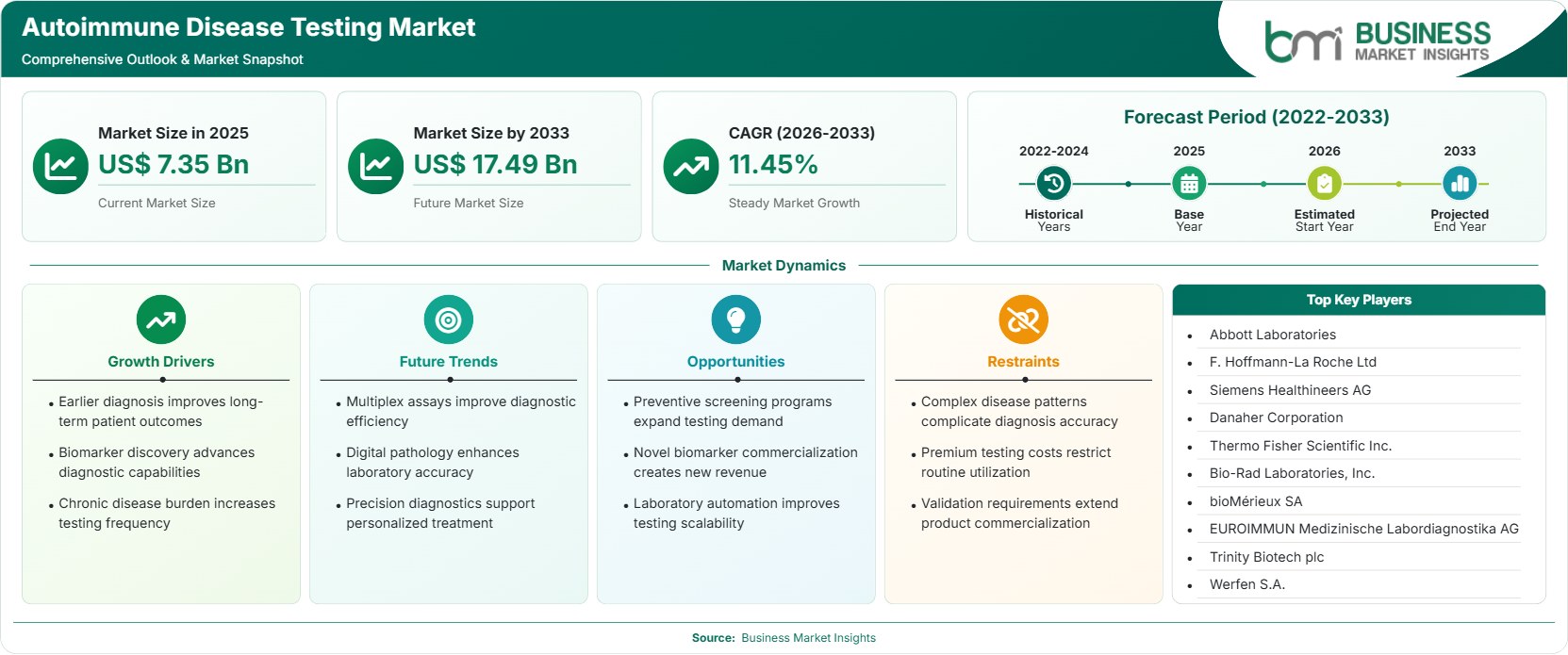
The Autoimmune Disease Testing Market size was valued at US$ 7.35 billion in 2025 and is projected to reach US$ 17.49 billion by 2033, growing at a CAGR of 11.45% during 2026–2033. Rising demand for early diagnosis, expanding biomarker research, and increasing chronic autoimmune disease prevalence are supporting testing adoption across healthcare systems.

Report Coverage
  • Product Type: Instruments, Reagents, Consumables
  • Disease Type: Rheumatoid Arthritis, Systemic Lupus Erythematosus, Scleroderma, Vasculitis, Inflammatory Bowel Disease, Others
  • Test Type: Antinuclear Autoantibody, Rheumatoid Factor, C-Reactive Protein, Anti-Thyroglobulin Antibody, Others
  • End-user: Hospital & Clinics, Diagnostic Centers, Others
US$ 7.35 Bn Market size in 2025
US$ 17.49 Bn Market Size by 2033
11.45% CAGR, 2026 - 2033
2026-2033 Forecast Period

AI Overview

Autoimmune Disease Testing Market Summary

  • North America Region: North America holds 38%–41% market share in 2025 and is expected to expand at a CAGR of 10.8%–11.4% during 2026–2033. Strong diagnostic infrastructure, advanced laboratory networks, and increasing autoimmune disease awareness support regional demand. The U.S. market is projected to grow at a CAGR of 11.0%–11.6%, driven by reimbursement availability, precision diagnostics adoption, and increased testing frequency.
  • Fastest Growing Region: Asia Pacific accounts for 24%–27% market share in 2025 and is expected to register a CAGR of 12.5%–13.2% during 2026–2033. Rising healthcare investments, expanding diagnostic facilities, increasing disease awareness, and improved access to advanced testing technologies are accelerating regional growth.
  • Leading Segment: Reagents & Consumables represents 62%–65% market share in 2025 and is projected to grow at a CAGR of 11.7%–12.3%, supported by recurring testing requirements, increasing laboratory workload, and continuous demand for immunoassay-based diagnostic products.
  • High Growth Segment: Diagnostic Centers account for 31%–34% market share in 2025 and are anticipated to achieve a CAGR of 12.2%–12.8%, supported by outsourcing trends, specialized testing capabilities, and expanding availability of independent laboratory services.
  • Key Market Opportunity: Increasing adoption of automated testing platforms, personalized diagnostics, and novel autoimmune biomarkers creates opportunities for companies developing faster, accurate, and cost-effective testing solutions.
  • Major Market Players: Abbott Laboratories, F. Hoffmann-La Roche Ltd., Siemens Healthineers AG, Danaher Corporation, Thermo Fisher Scientific Inc., Bio-Rad Laboratories, Inc., bioMérieux SA, EUROIMMUN Medizinische Labordiagnostika AG, Trinity Biotech plc, and Werfen S.A.
Strategic Insights

Autoimmune Disease Testing Market: Strategic Insights

Autoimmune Disease Testing Market Strategic Framework
FREE PDF
Request your free sample
Request free sample
Stakeholder View

Key Takeaways

  • The market ecosystem is shifting toward integrated diagnostic platforms that combine automated testing, advanced biomarkers, and digital laboratory management solutions.
  • Reagents and consumables remain a major revenue contributor due to recurring demand from hospitals, diagnostic laboratories, and research institutions requiring continuous testing supplies.
  • Innovation in biomarker identification, multiplex assays, and artificial intelligence-supported interpretation is improving diagnostic precision and supporting future product development.
  • Asia Pacific presents a strong investment opportunity due to expanding healthcare infrastructure, rising awareness of autoimmune disorders, and increasing diagnostic service penetration.
  • Strategic collaborations, acquisitions, and partnerships among diagnostic companies are accelerating technology development and strengthening global market competitiveness.
  • Increasing focus on personalized medicine is encouraging development of disease-specific testing approaches for improved treatment selection and patient monitoring.
Geographic Outlook

Autoimmune Disease Testing Market Regional Highlights

North America Autoimmune Disease Testing Market

North America represents 38%–41% Autoimmune Disease Testing Market share in 2025 and is expected to grow at a CAGR of 10.8%–11.4% during 2026–2033. The region benefits from advanced healthcare infrastructure, strong presence of diagnostic companies, established reimbursement systems, and high adoption of automated laboratory technologies. Growing autoimmune disease awareness and increasing demand for precision diagnostics continue supporting market expansion across the United States and Canada.

  • Advanced laboratory infrastructure supports widespread adoption of immunoassay and molecular diagnostic technologies.
  • Rising autoimmune disease screening awareness encourages earlier testing and improved disease management.
  • Strong research investments accelerate development of advanced biomarkers and diagnostic platforms.
  • Healthcare providers increasingly adopt automated solutions to improve laboratory efficiency.

US Autoimmune Disease Testing Market

The United States accounts for 82%–85% of North American revenue and is projected to register a CAGR of 11.0%–11.6% during the forecast period. Strong diagnostic capabilities, favorable healthcare spending, and increasing demand for personalized medicine continue supporting market development.

  • Growing prevalence of autoimmune conditions increases demand for routine and specialized testing.
  • Leading diagnostic companies continue introducing advanced laboratory solutions across healthcare facilities.
  • Reimbursement support improves accessibility to autoimmune testing procedures.
  • Clinical research programs accelerate adoption of innovative biomarker-based diagnostics.

Europe Autoimmune Disease Testing Market

Europe holds 27%–30% market share in 2025 and is anticipated to expand at a CAGR of 10.5%–11.1% during 2026–2033. Strong healthcare systems, increasing chronic disease burden, and government support for diagnostic advancement continue driving regional demand. Germany remains the leading market, while France and the United Kingdom demonstrate steady growth through healthcare modernization and laboratory automation initiatives.

  • European healthcare systems are increasing investment in advanced diagnostic infrastructure.
  • Growing emphasis on early disease detection supports autoimmune testing adoption.
  • Regulatory frameworks encourage development of reliable and accurate diagnostic technologies.
  • Laboratory networks are expanding automated testing capabilities across hospitals and diagnostic centers.

Asia Pacific Autoimmune Disease Testing Market

Asia Pacific accounts for 24%–27% market share in 2025 and is expected to register the fastest 12.5%–13.2% CAGR through 2026–2033. Rising healthcare expenditure, expanding diagnostic centers, increasing disease awareness, and improving access to advanced medical technologies are supporting regional growth. China remains the largest contributor, while India and Southeast Asian countries demonstrate strong expansion potential.

  • Healthcare infrastructure development is improving access to autoimmune testing services.
  • Rising awareness campaigns encourage diagnosis of previously underidentified autoimmune conditions.
  • Private diagnostic networks are expanding specialized testing capabilities.
  • International companies are increasing investments in regional laboratory markets.

Rest of World Autoimmune Disease Testing Market

The Rest of World region contributes 6%–9% market share in 2025 and is projected to grow at a CAGR of 11.2%–11.8% during 2026–2033. Latin America, the Middle East, and Africa are experiencing gradual adoption due to healthcare modernization, improving diagnostic access, and rising awareness of autoimmune disorders.

  • Brazil and Mexico are expanding diagnostic capabilities through healthcare investments.
  • Middle Eastern countries are increasing adoption of advanced laboratory technologies.
  • Healthcare partnerships are improving specialized testing availability in developing regions.
  • Rising chronic disease awareness supports long-term demand for autoimmune diagnostics.
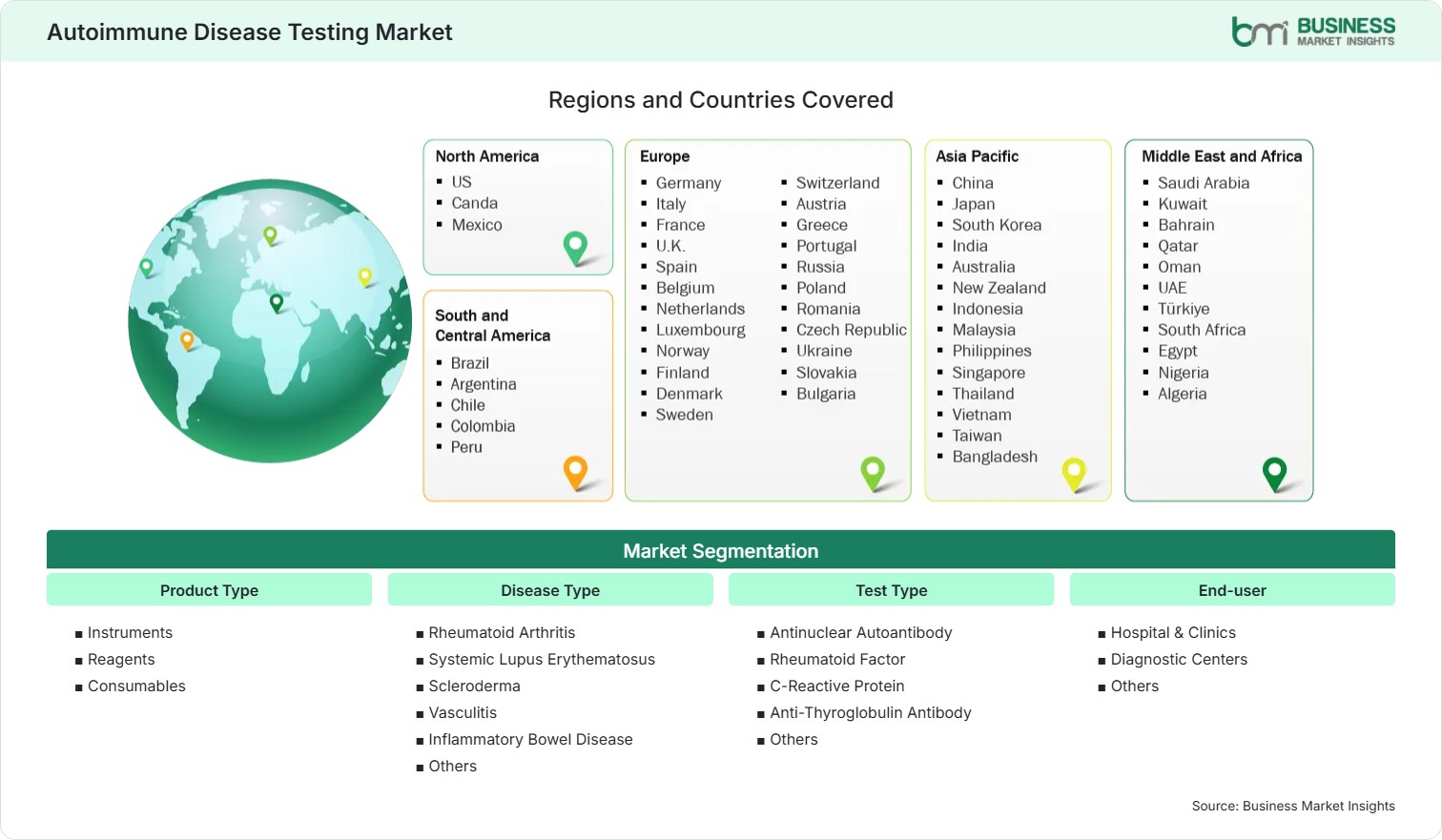
Global Market Geography
FREE PDF
Request your free sample
Request free sample
Segment Analysis

Autoimmune Disease Testing Market Segmentation

Product Type

The product type segment determines testing efficiency, accuracy, and scalability across hospitals, diagnostic laboratories, and research facilities. It accounted for 62%–65% market share in 2025 and is projected to grow at a CAGR of 11.7%–12.3% during 2026–2033. Increasing testing frequency, expanding diagnostic infrastructure, and continuous innovation in immunoassay technologies are supporting demand for advanced products. Growing Autoimmune Disease Testing Market trends indicate rising preference for automated systems and high-quality consumables that improve laboratory workflow and diagnostic reliability.

  • Instruments: Instruments support automated testing processes by improving accuracy, reducing turnaround time, and enabling high-throughput autoimmune diagnostics across hospitals, laboratories, and specialized testing centers.
  • Reagents & Consumables: Reagents and consumables represent the largest product category due to recurring demand for antibody tests, assay kits, calibration materials, and routine diagnostic procedures.

Disease Type

The disease type segment is expanding due to increasing recognition of autoimmune disorders and improved diagnostic capabilities for identifying disease-specific biomarkers. This segment accounted for 51%–54% market share in 2025 and is expected to achieve a CAGR of 11.3%–11.9% during 2026–2033. Growing clinical awareness, improved testing accuracy, and rising chronic disease prevalence are supporting wider adoption of specialized diagnostic solutions across healthcare settings.

  • Rheumatoid Arthritis: Represents a major testing application due to high disease prevalence and continued demand for rheumatoid factor and antibody-based diagnostic evaluations.
  • Systemic Lupus Erythematosus: Testing demand is increasing due to the complexity of disease symptoms and the need for accurate autoimmune marker identification.
  • Scleroderma: Diagnostic requirements are expanding as healthcare providers utilize specialized antibody tests for early detection and improved disease management.
  • Vasculitis: Growing adoption of autoimmune testing supports identification of inflammatory blood vessel disorders through advanced antibody and biomarker analysis.
  • Inflammatory Bowel Disease: Increasing diagnosis rates are supporting demand for autoimmune-related testing solutions that assist in disease differentiation and treatment planning.

Test Type

The test type segment plays an important role in improving diagnostic precision by enabling identification of specific autoimmune markers and inflammatory responses. It represented 46%–49% market share in 2025 and is projected to grow at a CAGR of 11.6%–12.2% during 2026–2033. Advancements in immunological testing platforms and increasing demand for personalized treatment approaches are supporting expansion across clinical laboratories.

  • Antinuclear Autoantibody: Widely used for autoimmune screening because it helps identify antibody patterns associated with multiple systemic autoimmune disorders.
  • Rheumatoid Factor: Remains an important diagnostic marker for rheumatoid arthritis evaluation and supports disease monitoring through laboratory-based testing.
  • C-Reactive Protein: Gains adoption as an inflammatory biomarker supporting assessment of disease activity and monitoring of inflammatory conditions.
  • Anti-Thyroglobulin Antibody: Used in thyroid-related autoimmune disorder detection, supporting diagnosis and management of immune-mediated thyroid conditions.

End-user

The end-user segment is driven by increasing testing volumes across healthcare facilities, diagnostic networks, and specialized laboratories. It accounted for 45%–48% market share in 2025 and is anticipated to expand at a CAGR of 11.8%–12.4% during 2026–2033. Expansion of healthcare infrastructure, laboratory automation, and demand for faster diagnostic results continue improving adoption across different healthcare environments.

  • Hospital & Clinics: Hospitals and clinics remain key users due to access to advanced diagnostic equipment, specialist consultations, and integrated patient management systems.
  • Diagnostic Centers: Diagnostic centers are expanding rapidly through specialized testing services, automated laboratory platforms, and increasing outsourcing of complex autoimmune diagnostic procedures.
Market Forces

Autoimmune Disease Testing Market Dynamics

Key Market Drivers

Earlier diagnosis improves long-term patient outcomes

Growing recognition of autoimmune diseases and the significance of early diagnosis is driving healthcare practitioners to embrace new approaches in testing. Late diagnosis will lead to disease progression, higher medical costs, and decreased efficacy of treatment, necessitating the need for effective testing procedures. Antibody testing, biomarker testing, and automation of laboratory work have become increasingly available. The growing focus on preventive healthcare and personalized treatment strategies continues supporting Autoimmune Disease Testing Market growth as hospitals and diagnostic centers prioritize accurate disease identification. These developments are also shaping Autoimmune Disease Testing Market trends by increasing demand for faster, more sensitive, and clinically reliable testing platforms.

Biomarker discovery advances diagnostic capabilities

Advancements in biomarker research are improving the accuracy and clinical value of autoimmune disease testing solutions. Scientists and diagnostic companies have identified additional immune markers to differentiate diseases and facilitate early diagnosis and patient monitoring. The use of multiplex testing techniques and modern immunoassay systems allows health care specialists to test various biomarkers at once. Growing cooperation between biotech firms, research centers and health care facilities leads to faster commercialization of novel testing techniques. This trend broadens the scope of possibilities for diagnostics in autoimmune diseases and promotes investment in advanced testing platforms.

Chronic disease burden increases testing frequency

The rising global burden of chronic autoimmune disorders is increasing demand for regular monitoring and diagnostic evaluation. Medical conditions including rheumatoid arthritis, lupus, inflammatory bowel disease, and many others that involve immunity need regular monitoring for the progress of disease and response to the therapy. Rising healthcare costs, aging population, and increased awareness of diseases are some of the reasons that have contributed to higher numbers of tests performed at hospitals and diagnostic centers. Healthcare organizations are increasingly relying on automated systems for testing due to increased number of patients.

Key Market Opportunities

Preventive screening programs expand testing demand

The growing importance of preventive health care programs is creating many new opportunities for the use of autoimmune testing. Health care providers are slowly moving away from reactive treatment plans and towards proactive strategies that lead to better patient results. The implementation of screening programs and increased awareness will generate demand for biomarker testing for autoimmune diseases, especially among vulnerable populations. Diagnostics manufacturers are working hard to develop affordable testing solutions. Autoimmune Disease Testing Market Forecasts indicate that preventive healthcare initiatives will remain an important growth opportunity as healthcare systems prioritize early disease intervention and improved chronic disease management.

Novel biomarker commercialization creates new revenue

Commercialization of innovative biomarkers is opening new opportunities for diagnostic companies by enabling more accurate disease classification and personalized treatment decisions. Highly advanced biomarkers could help distinguish autoimmune diseases that share common symptoms, thereby aiding informed clinical decision-making. There are collaborative efforts by biotech companies and diagnostic developers to carry out research in order to bring to market new tests. With the growing trend toward precision medicine, there will be new business opportunities through biomarker diagnostics.

Laboratory automation improves testing scalability

Increasing laboratory automation is creating opportunities to improve testing efficiency, reduce operational costs, and handle growing diagnostic workloads. Automated immunoassay platforms, digital laboratory systems, and workflow solutions have enabled laboratories to process larger sample volumes with greater consistency. Diagnostic centers and hospitals are now adopting automation techniques to eliminate manual errors and reduce turnaround times. With the ongoing efforts to upgrade lab infrastructure within healthcare organizations, companies providing scalable and connected diagnostic solutions will have much to gain.

Market Restraints and Challenges

Complex disease patterns complicate diagnosis accuracy

Autoimmune disorders often present overlapping symptoms and complex immune responses, making accurate diagnosis challenging for healthcare professionals. Factor: Disease variability, multiple biomarker interactions, and similarities between autoimmune conditions increase diagnostic complexity and require advanced testing expertise. Impact: Misdiagnosis risks, additional testing requirements, and longer diagnostic timelines can limit efficient patient management and increase healthcare costs. Diagnostic companies continue investing in improved biomarker panels, advanced analytical technologies, and clinical validation studies to enhance diagnostic accuracy and address these challenges.

Premium testing costs restrict routine utilization

Advanced autoimmune testing technologies often involve specialized instruments, high-quality reagents, and complex laboratory procedures that increase overall testing expenses. Factor: High equipment costs, specialized workforce requirements, and expensive consumables can create affordability challenges for healthcare providers and patients. Impact: Limited access to premium diagnostic solutions may restrict routine testing adoption, particularly in price-sensitive regions and smaller healthcare facilities. Manufacturers are focusing on cost-efficient platforms, simplified workflows, and scalable diagnostic solutions to improve accessibility while maintaining accuracy and reliability.

Company Analysis

Competitive Landscape

The competitive environment is shaped by diagnostic innovation, biomarker development, laboratory automation, and strategic expansion of testing portfolios. Autoimmune Disease Testing Market analysis indicates that leading companies are focusing on advanced immunoassay platforms, integrated laboratory solutions, and precision diagnostic technologies to improve testing accuracy and support increasing demand from hospitals, diagnostic centers, and research institutions.

Company Name

Overview

Products and Services Relevant to this Market

Abbott Laboratories

Global healthcare company offering diagnostic solutions, medical devices, and laboratory technologies across worldwide healthcare markets.

Immunoassay analyzers, autoimmune diagnostic reagents, laboratory automation systems, and antibody testing solutions.

F. Hoffmann-La Roche Ltd.

Leading healthcare company specializing in diagnostics, pharmaceuticals, and advanced clinical testing technologies.

Elecsys immunoassay systems, autoimmune antibody tests, laboratory platforms, and diagnostic workflow solutions.

Siemens Healthineers AG

Healthcare technology provider delivering imaging, diagnostics, and laboratory automation solutions globally.

Immunoassay systems, autoimmune testing reagents, laboratory automation platforms, and diagnostic instruments.

Danaher Corporation

Science and technology company providing diagnostic solutions through multiple healthcare-focused operating companies.

Immunodiagnostic platforms, autoimmune testing systems, laboratory instruments, and diagnostic consumables.

Thermo Fisher Scientific Inc.

Global provider of analytical technologies and laboratory solutions supporting clinical and research applications.

Autoimmune assay kits, diagnostic reagents, laboratory instruments, and research-based testing technologies.

Bio-Rad Laboratories, Inc.

Diagnostic technology company specializing in clinical diagnostics and life science research products.

Autoimmune testing systems, quality control products, immunoassay solutions, and laboratory diagnostic reagents.

bioMérieux SA

International diagnostics company focused on clinical microbiology and advanced in vitro diagnostic solutions.

Immunoassays, diagnostic testing platforms, autoimmune-related laboratory solutions, and clinical workflow products.

EUROIMMUN Medizinische Labordiagnostika AG

Specialist in autoimmune diagnostics with expertise in immunofluorescence and immunoassay technologies.

Autoimmune antibody tests, ELISA kits, immunofluorescence systems, and laboratory diagnostic solutions.

Trinity Biotech plc

Diagnostic company developing clinical testing products for healthcare and laboratory applications.

Immunoassays, autoimmune diagnostic products, clinical chemistry systems, and laboratory testing solutions.

Werfen S.A.

Healthcare company providing specialized diagnostic technologies for hospitals and laboratories.

Autoimmune testing platforms, specialty diagnostics, laboratory automation, and clinical testing solutions.

Trust & Transparency

Research Methodology

The market analysis combines proprietary research with secondary data from government agencies, company disclosures, regulatory filings, industry databases and expert interviews. Market estimates are validated through data triangulation, cross-market benchmarking and analyst review.

View Full Research Methodology

Questions Answered

Frequently Asked Questions

What does the Autoimmune Disease Testing Market Report cover?

The Autoimmune Disease Testing Market Report provides insights into market size, competitive landscape, segmentation, regional trends, technological developments, growth opportunities, and strategic factors influencing future industry expansion.

Which region has strong future growth potential?

Asia Pacific offers significant growth potential due to healthcare infrastructure expansion, increasing diagnostic awareness, rising healthcare expenditure, and improving availability of advanced laboratory technologies.

How are automation technologies affecting autoimmune diagnostics?

Laboratory automation is improving testing efficiency by reducing manual intervention, increasing sample processing capacity, improving consistency, and enabling healthcare facilities to manage growing diagnostic workloads.

Which product category dominates autoimmune disease testing?

Reagents and consumables represent the leading product category due to recurring testing requirements, continuous laboratory usage, and increasing adoption of antibody-based diagnostic procedures.

What factors are increasing demand for autoimmune testing solutions?

Rising autoimmune disease prevalence, improved disease awareness, increased focus on early diagnosis, and advancements in biomarker-based testing technologies are increasing demand across hospitals and diagnostic laboratories.

Access the Full Autoimmune Disease Testing Market Report

Get segment-level forecasts, regional estimates, competitive benchmarking, company profiles and downloadable Excel datasets.

Access the full Autoimmune Disease Testing Market Report
350 pages PDF & Excel | 2026-08-25
Similar Research

Related Market Reports