
Pompe Disease Treatment Market Outlook: Size, Share, Trends, Growth Analysis, Competitive Landscape & Forecast, 2022-2033

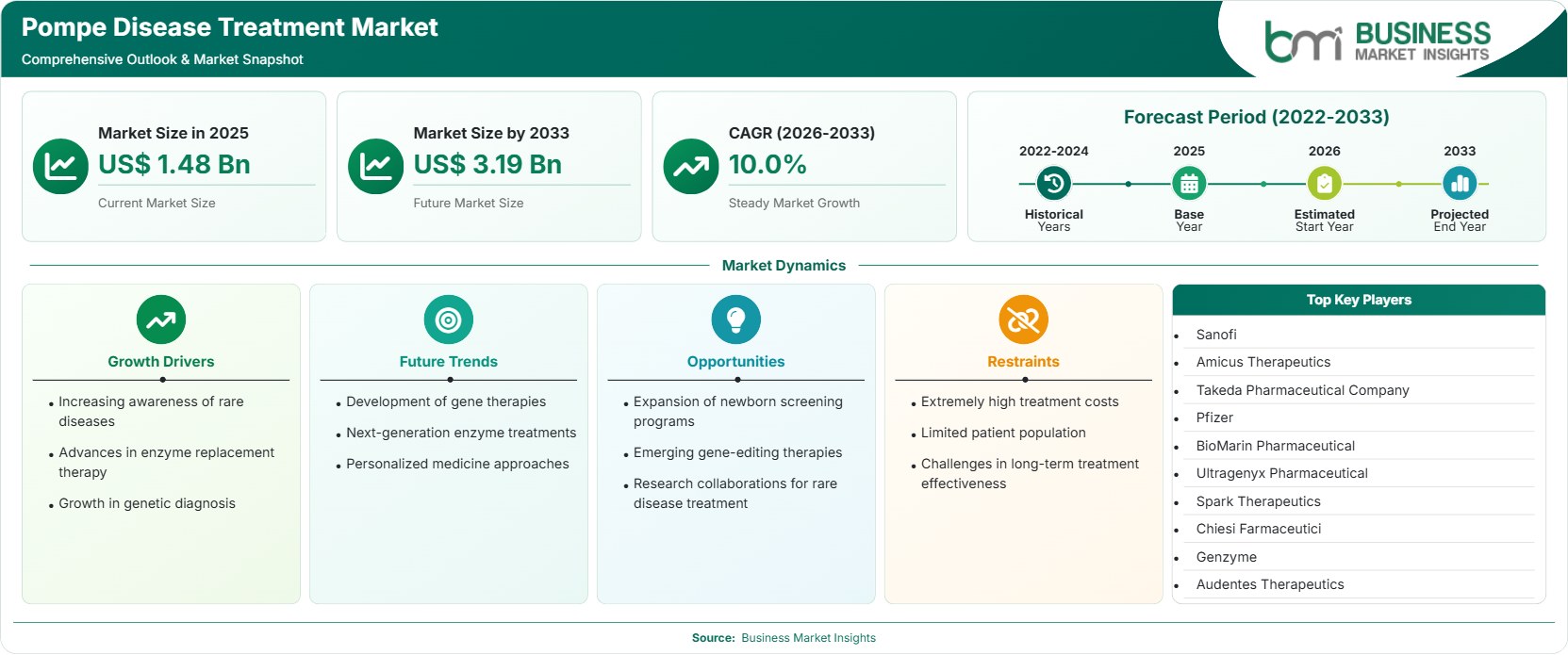
The Pompe Disease Treatment Market size was valued at US$ 1.48 Billion in 2025 and is projected to reach US$ 3.19 Billion by 2033, growing at a CAGR of 10.0% during 2026–2033. Increasing awareness of rare diseases, advances in enzyme replacement therapy, and growth in genetic diagnosis are driving market expansion. Opportunities are emerging from newborn screening programs, gene-editing therapy research, and collaborations focused on developing improved treatment approaches for rare metabolic disorders.

Report Coverage
  • Treatment: Enzyme Replacement Therapy, Substrate Reduction Therapy, Chaperone-Advanced Replacement Therapy, Others
  • Route of Administration: Oral, Intravenous, Others
  • Distribution Channel: Hospital & Clinics Pharmacies, Retail Pharmacies, Online Pharmacies, Others
US$ 1.48 Bn Market size in 2025
US$ 3.19 Bn Market Size by 2033
10.0% CAGR, 2026 - 2033
2026-2033 Forecast Period

01 AI Overview

Pompe Disease Treatment Market Summary

  • North America Region: North America accounted for approximately 42%–45% market share in 2025 and is projected to expand at a CAGR of 9.8%–10.3% during 2026–2033. Strong rare disease infrastructure, advanced diagnostic capabilities, favorable reimbursement frameworks, and high adoption of approved therapies support regional leadership. The United States remains the dominant contributor due to specialized treatment centers and biotechnology innovation, with a projected CAGR of 10.0%–10.5%.
  • Fastest Growing Region: Asia Pacific represented approximately 18%–21% market share in 2025 and is expected to register a CAGR of 11.5%–12.0% during 2026–2033. Expanding healthcare access, improving genetic testing capabilities, increasing rare disease awareness, and government screening initiatives are accelerating adoption.
  • Leading Segment: Enzyme Replacement Therapy (ERT) accounted for approximately 72%–75% market share in 2025 and is projected to grow at a CAGR of 9.5%–10.0%. Established clinical use, regulatory approvals, and proven disease management benefits continue supporting segment dominance.
  • High Growth Segment: Chaperone-Advanced Replacement Therapy (CART) represented approximately 8%–11% market share in 2025 and is forecast to expand at a CAGR of 12.5%–13.0%. Advancements in precision medicine and research into improved therapeutic performance are supporting future growth.
  • Key Market Opportunity: Expansion of newborn screening programs, emerging gene-editing approaches, and increased research partnerships are creating opportunities for pharmaceutical companies developing advanced treatments for Pompe disease patients.
  • Major Market Players: Sanofi, Amicus Therapeutics, Takeda Pharmaceutical Company Limited, Pfizer Inc., BioMarin Pharmaceutical Inc., Ultragenyx Pharmaceutical Inc., Spark Therapeutics, Chiesi Farmaceutici S.p.A., Genzyme Corporation, Audentes Therapeutics.
02 Strategic Insights

Pompe Disease Treatment Market: Strategic Insights

Pompe Disease Treatment Market Strategic Framework
FREE PDF
Request your free sample
Request free sample
03 Stakeholder View

Key Takeaways

  • The treatment ecosystem involves biotechnology companies, pharmaceutical manufacturers, genetic testing providers, specialty clinics, and patient advocacy organizations. Integrated approaches combining diagnosis, treatment, and monitoring are becoming increasingly important.
  • Enzyme replacement therapy remains the established treatment standard, while emerging approaches such as gene-editing therapies and advanced replacement strategies provide future opportunities for market expansion.
  • Innovation is focused on improving enzyme delivery, enhancing treatment durability, reducing administration challenges, and developing personalized therapies based on genetic characteristics.
  • Asia Pacific presents a strong growth opportunity due to improving healthcare infrastructure, increasing rare disease recognition, expansion of diagnostic capabilities, and government-supported screening programs.
  • Strategic collaborations, research partnerships, and biotechnology investments are shaping competition as companies accelerate development of next-generation rare disease treatments.
  • Increased emphasis on early diagnosis through newborn screening programs is expected to improve patient identification and support timely treatment initiation.
04 Geographic Outlook

Pompe Disease Treatment Market Regional Highlights

North America Pompe Disease Treatment Market

North America accounted for approximately 42%–45% of global revenue in 2025 and is projected to expand at a CAGR of 9.8%–10.3% during 2026–2033. The region maintains market leadership due to advanced rare disease diagnosis infrastructure, strong biotechnology research capabilities, established reimbursement systems, and widespread availability of specialized treatment centers. The Pompe Disease Treatment Market share remains supported by high therapy adoption, genetic testing advancements, and increasing awareness among healthcare professionals and patients.

  • The United States dominates regional demand due to strong rare disease research funding, specialized healthcare facilities, and broad access to approved therapies, with a projected CAGR of 10.0%–10.5%.
  • Increased adoption of genetic testing is improving early disease identification and supporting timely treatment initiation for patients with different forms of Pompe disease.
  • Pharmaceutical companies are expanding clinical research activities focused on improved enzyme therapies, targeted treatments, and advanced genetic approaches.
  • Rare disease advocacy programs are increasing awareness among patients and healthcare providers, improving diagnosis rates and treatment accessibility.
  • Specialty care networks are strengthening disease management through multidisciplinary approaches involving genetic specialists, neurologists, and metabolic disorder experts.

US Pompe Disease Treatment Market

The United States represented approximately 37%–40% of the global Pompe Disease Treatment Market in 2025 and is expected to grow at a CAGR of 10.0%–10.5% through 2033. Strong healthcare expenditure, advanced diagnostic infrastructure, rare disease initiatives, and availability of innovative therapies continue supporting market expansion. The country remains a major hub for clinical trials, biotechnology development, and commercialization of treatments targeting rare metabolic disorders.

  • Government and healthcare organizations are supporting rare disease awareness initiatives that improve diagnosis and patient access to specialized treatments.
  • Increasing availability of genetic testing technologies is enabling earlier detection of Pompe disease and supporting personalized treatment planning.
  • Research institutions and pharmaceutical companies are conducting clinical studies focused on next-generation therapies with improved effectiveness and patient outcomes.
  • Specialty pharmacies and treatment centers are expanding patient support services, improving therapy management and long-term disease monitoring.

Europe Pompe Disease Treatment Market

Europe accounted for approximately 26%–29% of global Pompe Disease Treatment Market revenue in 2025 and is expected to register a CAGR of 9.5%–10.0% during the forecast period. Increasing rare disease awareness, supportive healthcare frameworks, newborn screening initiatives, and biotechnology research are driving adoption. Germany remains the leading market, while the United Kingdom demonstrates strong growth due to investment in genomic medicine and rare disease programs.

  • Germany leads regional demand through advanced healthcare infrastructure, metabolic disorder treatment centers, and strong pharmaceutical research capabilities, with a projected CAGR of 9.6%–10.1%.
  • The United Kingdom is expected to achieve steady growth with a CAGR of 10.2%–10.7%, supported by genomic healthcare initiatives and rare disease screening programs.
  • European healthcare systems are expanding access to specialized therapies through improved diagnosis pathways and rare disease management programs.
  • Increasing collaboration between academic institutions and pharmaceutical companies is accelerating development of innovative Pompe disease treatments.
  • Newborn screening expansion across European countries is improving early identification and supporting timely therapeutic intervention.

Asia Pacific Pompe Disease Treatment Market

Asia Pacific represented approximately 18%–21% of global Pompe Disease Treatment Market revenue in 2025 and is projected to achieve the fastest CAGR of 11.5%–12.0% during 2026–2033. Improving healthcare infrastructure, increasing awareness of genetic disorders, expanding diagnostic capabilities, and government initiatives for rare disease management are accelerating adoption. Japan remains a mature market, while China and India are emerging as high-growth countries due to healthcare modernization.

  • Japan maintains strong adoption through advanced healthcare systems, rare disease expertise, and established access to specialized treatments, with a projected CAGR of 10.8%–11.3%.
  • China is expected to demonstrate strong growth with a CAGR of 12.0%–12.5%, supported by improving diagnosis rates, biotechnology investments, and healthcare reforms.
  • India is projected to record significant expansion with a CAGR of 12.5%–13.0% due to increasing genetic testing availability and growing rare disease awareness.
  • Regional governments are increasing focus on rare disease policies, improving treatment accessibility and supporting patient assistance programs.
  • Pharmaceutical companies are expanding research collaborations and distribution networks to improve access to advanced therapies.

Rest of World Pompe Disease Treatment Market

The Rest of World region accounted for approximately 6%–9% of global revenue in 2025 and is projected to expand at a CAGR of 10.5%–11.0% during 2026–2033. Latin America, the Middle East, and Africa are gradually improving rare disease diagnosis and treatment availability through healthcare modernization and international collaborations. Limited awareness remains a challenge, but expanding healthcare programs are supporting future adoption.

Brazil remains the leading market in South & Central America, while Saudi Arabia is emerging as a high-growth market in the Middle East due to investments in specialized healthcare services.

  • Brazil continues increasing rare disease treatment adoption through healthcare improvements, diagnostic expansion, and patient support programs, with a projected CAGR of 10.3%–10.8%.
  • Saudi Arabia is expected to experience strong growth with a CAGR of 11.0%–11.5%, supported by healthcare transformation initiatives and specialized treatment investments.
  • Healthcare providers are improving access to genetic testing and metabolic disorder diagnosis across developing markets.
  • International partnerships are supporting awareness campaigns and treatment accessibility initiatives for rare disease patients.
  • Expanding specialty healthcare facilities are creating opportunities for pharmaceutical companies to strengthen regional treatment availability.
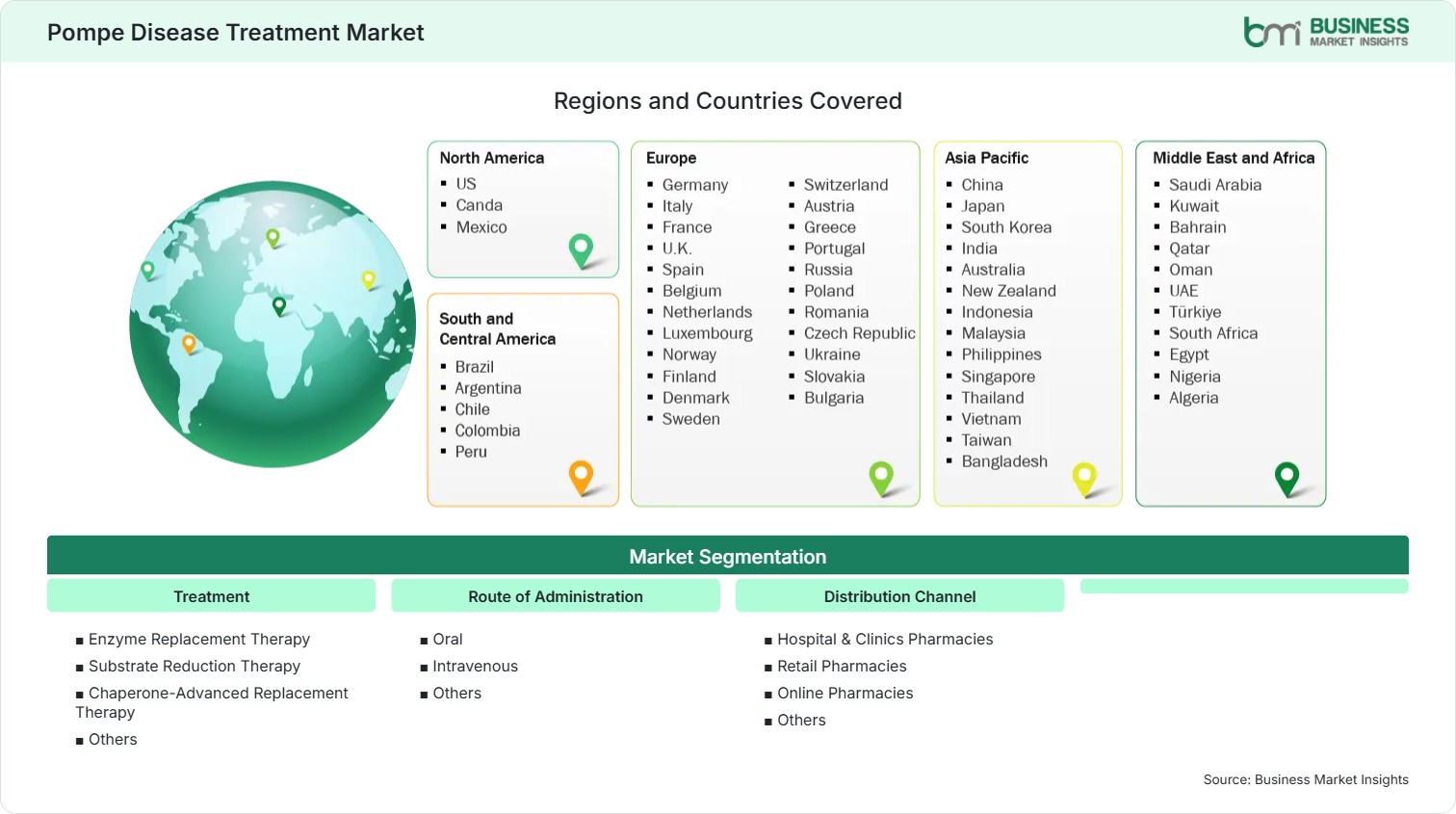
Global Market Geography
FREE PDF
Request your free sample
Request free sample
05 Segment Analysis

Pompe Disease Treatment Market Segmentation

Treatment

The treatment segment represents the core therapeutic approaches used for managing Pompe disease, including enzyme-based therapies and emerging targeted treatments. The segment accounted for approximately 78%–81% market share in 2025 and is projected to grow at a CAGR of 9.8%–10.3% during 2026–2033. Increasing diagnosis rates, continuous therapy adoption, advancements in biotechnology, and research into improved treatment approaches are strengthening demand across infantile-onset and late-onset Pompe disease patient populations.

  • Enzyme Replacement Therapy (ERT): ERT remains the primary treatment approach due to established clinical outcomes, regulatory approvals, and widespread use for improving muscle function and disease management.
  • Substrate Reduction Therapy (SRT): SRT is gaining research attention as an alternative approach designed to reduce disease-related substrate accumulation and improve therapeutic outcomes for metabolic disorders.
  • Chaperone-Advanced Replacement Therapy (CART): CART is emerging through precision medicine research focused on improving enzyme stability, cellular delivery, and treatment effectiveness for specific patient groups.

Route of Administration

The route of administration segment is influenced by therapy characteristics, patient requirements, treatment frequency, and healthcare delivery infrastructure. The segment accounted for approximately 85%–88% Pompe Disease Treatment Market share in 2025 and is expected to expand at a CAGR of 9.9%–10.4% during 2026–2033. Intravenous administration remains dominant due to established enzyme replacement therapy protocols, while oral and alternative delivery approaches are gaining research interest.

  • Oral: Oral treatment approaches are attracting interest due to potential convenience advantages, reduced administration burden, and ongoing research into improved patient-friendly therapeutic delivery methods.
  • Intravenous: Intravenous administration dominates due to its established role in enzyme replacement therapy, clinical effectiveness, hospital-based treatment protocols, and physician familiarity with infusion-based disease management.
  • Others: Other administration routes are being explored through innovative drug delivery technologies aimed at improving therapeutic efficiency, patient convenience, and long-term treatment outcomes.

Distribution Channel

The distribution channel segment is expanding as healthcare providers, specialty pharmacies, and digital platforms improve access to rare disease therapies. The segment accounted for approximately 70%–73% market share in 2025 and is projected to grow at a CAGR of 10.0%–10.5% through 2033. Increasing demand for specialized medication handling, patient support services, and coordinated therapy delivery is influencing channel development.

  • Hospital & Clinics Pharmacies: Hospital and clinic pharmacies represent the leading channel due to specialized treatment requirements, infusion-based therapies, physician supervision, and rare disease care infrastructure.
  • Retail Pharmacies: Retail pharmacies support treatment accessibility for supportive medications and related healthcare products while expanding their role through improved rare disease service capabilities.
  • Online Pharmacies: Online pharmacies are gaining adoption due to convenience, improved medication accessibility, digital healthcare growth, and increasing demand for home-based healthcare support.
  • Others: Other distribution channels include specialty providers and patient assistance programs supporting therapy coordination, treatment monitoring, and improved access for rare disease patients.
06 Market Forces

Pompe Disease Treatment Market Dynamics

Key Market Drivers

Increasing awareness of rare diseases

Growing awareness of rare genetic disorders is improving diagnosis rates and encouraging earlier treatment initiation for Pompe disease patients. Patient advocacy groups, healthcare education programs, and improved clinical recognition among physicians are contributing to better identification of lysosomal storage disorders. The Pompe Disease Treatment Market growth is supported by increasing attention toward rare disease management, improved disease registries, and healthcare initiatives focused on reducing diagnostic delays. The market trends are increasingly influenced by investments in awareness campaigns, specialist training, and patient support programs that improve access to available therapies. As awareness expands among healthcare professionals and families, demand for advanced diagnostic testing and long-term treatment solutions continues to increase across global healthcare systems.

Advances in enzyme replacement therapy

Advancements in enzyme replacement therapy are strengthening treatment outcomes and reflecting important Pompe Disease Treatment Market trends focused on next-generation biologics, improved enzyme delivery, and personalized treatment strategies. Pharmaceutical companies are investing in next-generation enzyme formulations designed to enhance stability, increase tissue targeting, and address limitations associated with existing therapies. Continuous innovation in biotechnology is supporting development of treatments that improve disease progression management and patient quality of life. Clinical research focused on optimizing enzyme activity and reducing treatment challenges is encouraging broader adoption of advanced therapies. As healthcare providers gain more experience managing Pompe disease, improved treatment protocols and personalized approaches are supporting better long-term outcomes for patients across different disease stages.

Growth in genetic diagnosis

Expansion of genetic diagnosis capabilities is improving early identification of Pompe disease and enabling more accurate patient classification. Advances in molecular testing, genomic technologies, and newborn screening methods are helping healthcare professionals detect disease-causing mutations at earlier stages. Early diagnosis allows timely intervention, which is particularly important for infantile-onset Pompe disease where rapid disease progression can occur without treatment. Healthcare systems are increasingly incorporating genetic testing into rare disease management pathways, improving patient identification and supporting personalized treatment decisions. The growing availability of advanced diagnostic technologies is also contributing to increased disease awareness, improved epidemiological understanding, and stronger demand for targeted therapeutic solutions.

Key Market Opportunities

Expansion of newborn screening programs

The expansion of newborn screening programs represents a significant opportunity for Pompe disease treatment providers by enabling earlier diagnosis and timely therapeutic intervention. Countries are increasingly evaluating or implementing screening approaches for rare metabolic disorders to identify affected infants before severe symptoms develop. Early detection can improve treatment outcomes by allowing healthcare providers to begin therapy during critical developmental stages. Increasing government support, healthcare modernization initiatives, and improvements in genetic testing infrastructure are encouraging adoption of expanded screening programs. Pharmaceutical companies can benefit from stronger disease identification pathways, supporting the long-term Pompe Disease Treatment Market forecast through increasing patient identification and earlier therapeutic intervention.

Emerging gene-editing therapies

Emerging gene-editing technologies are creating future opportunities for transforming Pompe disease treatment approaches by targeting underlying genetic causes rather than only managing symptoms. Research organizations and biotechnology companies are exploring advanced genetic platforms designed to provide durable therapeutic effects and potentially reduce dependence on lifelong treatment. Although clinical development remains complex, progress in gene-based medicine is increasing investment interest within rare disease markets. Advances in delivery technologies, precision medicine, and molecular engineering are supporting exploration of innovative solutions. Successful development of gene-editing therapies could significantly influence future treatment strategies by providing new options for patients with limited response to existing therapeutic approaches.

Research collaborations for rare disease treatment

Collaborations between pharmaceutical companies, biotechnology firms, academic institutions, and patient organizations are accelerating innovation in Pompe disease treatment development. Research partnerships enable access to specialized scientific expertise, clinical trial networks, patient data resources, and advanced technology platforms. Increasing collaboration is supporting development of improved enzyme therapies, genetic approaches, and personalized treatment strategies for rare metabolic disorders. Academic-industry partnerships are also helping address challenges related to small patient populations and clinical research complexity. As rare disease research receives increased attention, collaborative models are expected to improve treatment discovery, accelerate regulatory progress, and expand access to innovative therapies for Pompe disease patients.

Market Restraints and Challenges

Extremely high treatment costs

Factor: Pompe disease therapies, particularly enzyme replacement therapies, involve complex biotechnology manufacturing processes, specialized administration requirements, and long-term treatment protocols that contribute to substantial healthcare expenses. The high cost of developing, producing, and delivering rare disease therapies increases overall treatment expenditure for patients and healthcare systems. Impact: Extremely high treatment costs can restrict patient access, create reimbursement challenges, and limit adoption in regions with constrained healthcare budgets. Insurance coverage variations and affordability concerns may delay treatment initiation, especially in emerging markets. Pharmaceutical companies are focusing on patient assistance programs, pricing strategies, and innovative delivery models to improve accessibility while maintaining investment in rare disease research.

Limited patient population

Factor: Pompe disease is a rare inherited metabolic disorder with a relatively small affected population compared with common diseases. The limited number of diagnosed patients creates challenges for clinical trial recruitment, market expansion, and return on research investments. Impact: A small patient pool can increase development risks, extend clinical study timelines, and influence commercialization strategies for pharmaceutical companies. Limited awareness and delayed diagnosis in some regions may further reduce the identified treatment population. Companies are addressing these challenges through international research collaborations, improved diagnostic programs, newborn screening initiatives, and patient registries designed to identify more individuals requiring specialized treatment.

07 Company Analysis

Competitive Landscape

The market analysis highlights a competitive environment involving global pharmaceutical companies, biotechnology firms, and rare disease specialists focusing on enzyme therapies, genetic medicine, and innovative treatment platforms. Pompe disease treatment market analysis highlights increasing competition around next-generation therapies, improved enzyme formulations, clinical research partnerships, and personalized approaches designed to address unmet needs in rare metabolic disorder management.

Company Name

Overview

Products and Services Relevant to this Market

Sanofi

Global pharmaceutical company specializing in innovative medicines and rare disease therapies.

Enzyme replacement therapies, Pompe disease treatments, specialty medicines, and rare disease solutions.

Amicus Therapeutics

Biotechnology company focused on developing therapies for rare genetic diseases.

Rare disease medicines, enzyme-related treatments, and precision therapeutic approaches.

Takeda Pharmaceutical Company Limited

Global pharmaceutical company with expertise in rare diseases and specialty care.

Rare metabolic disorder treatments, biotechnology medicines, and patient support programs.

Pfizer Inc.

Global healthcare company developing medicines across multiple therapeutic areas.

Rare disease research, genetic medicine platforms, and innovative therapeutic solutions.

BioMarin Pharmaceutical Inc.

Biotechnology company focused on developing treatments for rare genetic conditions.

Enzyme therapies, metabolic disorder medicines, and specialty pharmaceutical products.

Ultragenyx Pharmaceutical Inc.

Biopharmaceutical company developing therapies for rare and ultra-rare diseases.

Gene therapies, biologics, metabolic disorder treatments, and rare disease pipelines.

Spark Therapeutics

Biotechnology company focused on gene therapy development.

Genetic medicines, gene therapy platforms, and rare disease research solutions.

Chiesi Farmaceutici S.p.A.

Pharmaceutical company specializing in rare diseases and specialty care.

Rare disease medicines, metabolic disorder therapies, and patient support services.

Genzyme Corporation

Biotechnology company known for rare disease and lysosomal disorder treatments.

Enzyme replacement therapies, lysosomal storage disorder treatments, and specialty medicines.

Audentes Therapeutics

Biotechnology company developing genetic medicines for rare diseases.

Gene therapy research, rare disease platforms, and advanced therapeutic development.

08 Industry Activity

Recent Developments

June 2026

Sanofi announced positive Phase 3 Baby-COMET study results for Nexviazyme (avalglucosidase alfa) in infantile-onset Pompe disease, with the therapy meeting its primary endpoint of survival without invasive ventilation at 52 weeks.

May 2025

Chiesi Farmaceutici S.p.A. continued expansion of its rare disease and specialty care activities, supporting development and access initiatives for patients with complex inherited disorders through its global rare disease portfolio.

May 2024

Amicus Therapeutics presented updates from its rare disease pipeline, including progress in lysosomal storage disorder programs and patient-focused initiatives supporting individuals with genetic diseases.

February 2024

Sanofi announced new clinical data for Nexviazyme (avalglucosidase alfa) in Pompe disease, including long-term results from the Mini-COMET study and early data from the Baby-COMET Phase 3 study, supporting continued evaluation of enzyme replacement therapy for infantile- and late-onset Pompe disease.

10 Trust & Transparency

Research Methodology

The market analysis combines proprietary research with secondary data from government agencies, company disclosures, regulatory filings, industry databases and expert interviews. Market estimates are validated through data triangulation, cross-market benchmarking and analyst review.

View Full Research Methodology

11 Questions Answered

Frequently Asked Questions

What does the Pompe Disease Treatment Market Report provide?

The market report provides insights into market size, treatment trends, regional developments, competitive analysis, technology advancements, segmentation, growth opportunities, and challenges influencing future market direction.

How are gene therapies influencing Pompe disease treatment development?

Gene therapies are influencing future treatment strategies by targeting underlying genetic causes, potentially offering durable therapeutic effects and expanding options beyond conventional disease management approaches.

Which treatment approach dominates the Pompe disease treatment landscape?

Enzyme Replacement Therapy (ERT) remains the leading treatment approach due to established clinical use, regulatory approvals, and its role as a standard therapy for managing Pompe disease.

Why is early diagnosis important for Pompe disease treatment?

Early diagnosis enables timely therapeutic intervention, particularly for infantile-onset Pompe disease, helping healthcare providers manage disease progression and improve long-term patient outcomes through appropriate treatment strategies.

What factors are driving growth in the Pompe Disease Treatment Market?

Increasing awareness of rare diseases, improvements in genetic diagnosis, advancements in enzyme replacement therapy, newborn screening expansion, and growing investment in rare disease research are supporting market growth.

Access the Full Pompe Disease Treatment Market Report

Get segment-level forecasts, regional estimates, competitive benchmarking, company profiles and downloadable Excel datasets.

Access the full Pompe Disease Treatment Market Report
350 pages PDF & Excel | 2026-07-28