
Psoriasis Treatment Market Outlook: Size, Share, Trends, Growth Analysis, Competitive Landscape & Forecast, 2026-2033

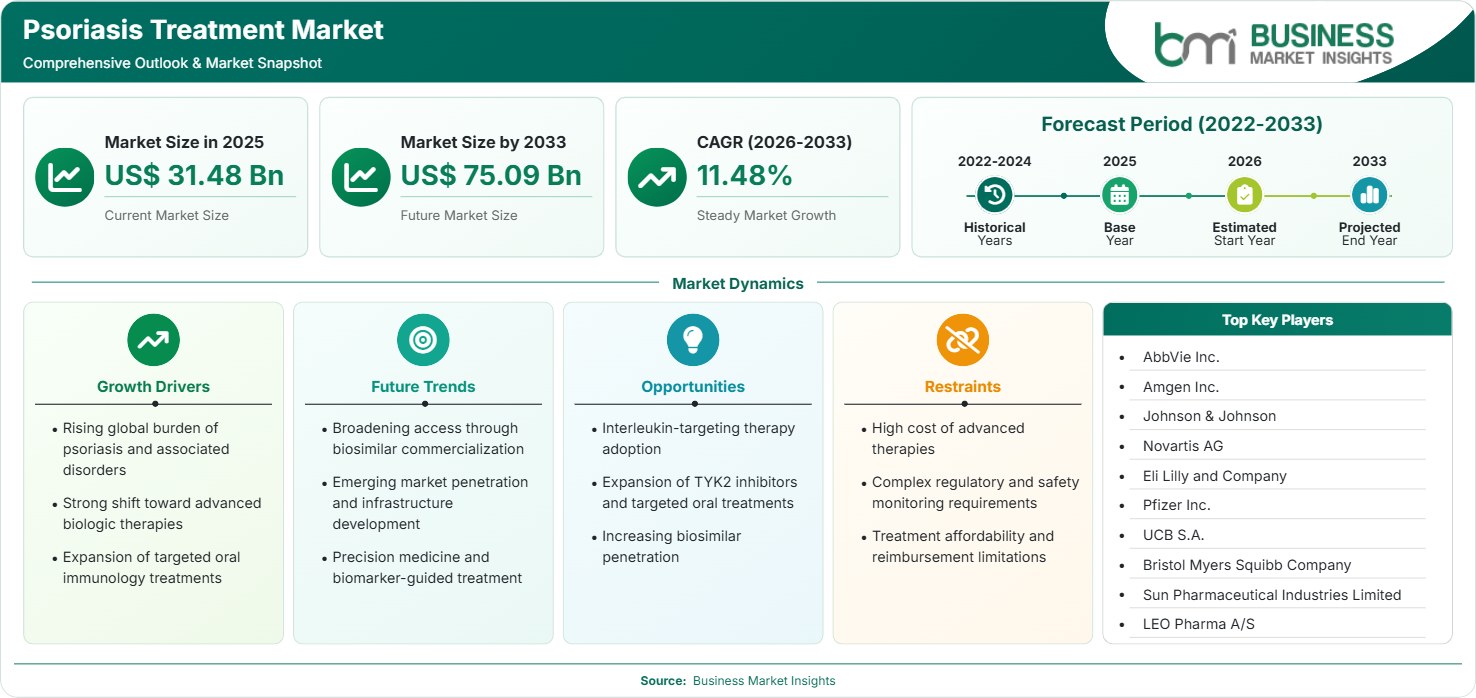
The Psoriasis Treatment Market size was valued at US$ 31.48 Billion in 2025 and is projected to reach US$ 75.09 Billion by 2033, growing at a CAGR of 11.48% during 2026–2033, driven by biologic innovation, expanding diagnosis rates, broader reimbursement coverage, biosimilar adoption, and rising demand for targeted immunomodulatory therapies.

Report Coverage
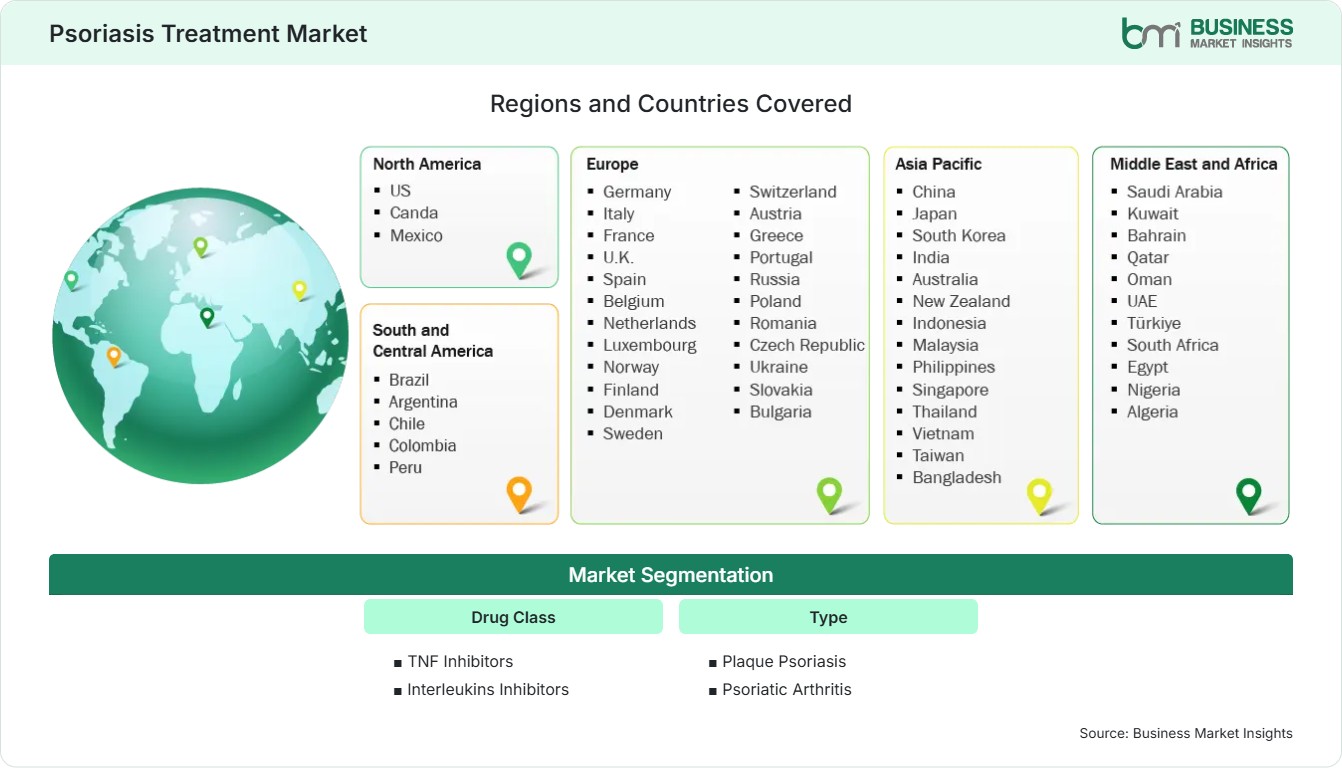
  • Drug Class: TNF Inhibitors, Interleukins Inhibitors
  • Type: Plaque Psoriasis, Psoriatic Arthritis
US$ 31.48 Bn Market size in 2025
US$ 75.09 Bn Market Size by 2033
11.48% CAGR, 2026 - 2033
2026-2033 Forecast Period

AI Overview

Psoriasis Treatment Market Summary

  • North America Region: North America holds a market share of 37%–40% in 2025, growing at a CAGR of 10.5%–11.2% during 2026–2033. Key drivers include high biologic penetration, strong reimbursement frameworks, advanced dermatology networks, increasing psoriasis prevalence, expanding biosimilar access, precision medicine adoption, specialty pharmacy growth, patient awareness programs, favorable coverage policies, and continuous clinical innovation. The U.S. market benefits from robust biologics uptake, specialty care access, and an estimated CAGR of 10.8%–11.4%.
  • Fastest Growing Region: Asia Pacific accounts for 24%–27% share in 2025 and is forecast to expand at 13.2%–14.0% CAGR. Growth is supported by healthcare infrastructure expansion, increasing diagnosis rates, local biologics manufacturing, insurance reforms, growing middle-class healthcare spending, digital dermatology adoption, and wider treatment accessibility.
  • Leading Segment: Biologics represent 44%–47% share in 2025 and are expected to grow at 11.8%–12.5% CAGR. Adoption is driven by superior efficacy, durable remission outcomes, wider use in moderate-to-severe disease, physician preference, guideline support, favorable reimbursement, expanding indications, and continuous monoclonal antibody innovation.
  • High Growth Segment: Interleukins Inhibitors hold 33%–36% share in 2025 and are projected to expand at 13.0%–13.8% CAGR. Growth stems from improved skin-clearance outcomes, targeted mechanisms, strong clinical evidence, increasing preference over older therapies, broader approvals, and expanding real-world utilization.
  • Key Market Opportunity: Expansion of oral targeted therapies and biosimilar biologics is improving affordability, increasing patient access, supporting earlier intervention strategies, strengthening treatment adherence, and creating substantial revenue opportunities across emerging healthcare systems.
  • Major Market Players: AbbVie Inc.; Amgen Inc.; Johnson & Johnson; Novartis AG; Eli Lilly and Company; Pfizer Inc.; UCB S.A.; Bristol Myers Squibb Company; Sun Pharmaceutical Industries Limited; LEO Pharma A/S.
Strategic Insights

Psoriasis Treatment Market: Strategic Insights

Psoriasis Treatment Market Strategic Framework
FREE PDF
Request your free sample
Request free sample
Stakeholder View

Key Takeaways

  • Biologic producers, specialty pharmacies, contract manufacturing organizations, and healthcare providers form an increasingly integrated value chain where patient support services significantly influence treatment persistence.
  • Interleukin-targeting therapies and oral targeted immunology drugs present the strongest growth opportunities due to favorable efficacy profiles and expanding physician acceptance.
  • R&D investments are shifting toward precision immunology, biomarker-guided therapy selection, and longer-duration disease control with reduced administration burden.
  • China, India, and Southeast Asia offer compelling investment opportunities because diagnostic penetration remains below developed-market levels while healthcare spending continues rising.
  • Strategic acquisitions, licensing transactions, and biosimilar alliances are intensifying as companies seek portfolio diversification and market-share expansion.
  • Digital dermatology platforms are improving specialist access, treatment monitoring, and therapy adherence, particularly in underserved geographic regions.
Geographic Outlook

Psoriasis Treatment Market Regional Highlights

North America Psoriasis Treatment Market

North America accounts for approximately 37%–40% Psoriasis Treatment Market share in 2025 and is projected to expand at 10.5%–11.2% CAGR through 2033. The region benefits from strong biologics adoption, advanced specialty-care networks, extensive reimbursement coverage, and high awareness levels. Innovation among leading immunology drug manufacturers remains a central growth catalyst. Biosimilar penetration is increasing, although branded biologics continue maintaining substantial revenue contributions. The region also leads global clinical development activity, supporting sustained therapeutic advancement across dermatology and rheumatology indications.

  • High biologic utilization and favorable reimbursement frameworks continue supporting premium therapy uptake across major healthcare systems.
  • Growing biosimilar adoption improves treatment affordability while maintaining strong clinical confidence among physicians.
  • Clinical trial concentration accelerates commercialization of next-generation interleukin and oral targeted therapies.
  • Specialty pharmacy expansion enhances patient support, adherence monitoring, and treatment access.

US Psoriasis Treatment Market

The United States represents nearly 80%–84% Psoriasis Treatment Market share within North America and is expected to record 10.8%–11.4% CAGR during the forecast period. Strong specialty-care infrastructure, high healthcare expenditure, and rapid uptake of innovative biologics support market leadership. Regulatory approvals for advanced immune-modulating therapies reinforce treatment availability. Academic medical centers and large dermatology networks continue expanding early diagnosis and long-term disease management capabilities, strengthening commercial opportunities.

  • Advanced reimbursement systems encourage the adoption of premium biologic therapies.
  • Increasing use of targeted oral therapies broadens treatment options for moderate disease populations.
  • Large-scale clinical research activity supports continuous product launches and label expansions.
  • Growing awareness of psoriasis-related comorbidities encourages earlier intervention strategies.

Europe Psoriasis Treatment Market

Europe captures 27%–30% share in 2025 and is projected to grow at 10.8%–11.6% CAGR through 2033. Germany remains the leading regional market, while Spain and select Central European countries demonstrate faster expansion. Strong public healthcare systems support treatment accessibility, although cost-containment policies encourage biosimilar utilization. Regional adoption of interleukin inhibitors continues increasing as clinicians seek durable disease control and improved safety outcomes. Market growth remains supported by guideline-driven treatment approaches and broad physician awareness.

  • Germany maintains leadership through robust specialty-care capacity and strong biologics utilization.
  • Spain demonstrates accelerated adoption of innovative immunology therapies with favorable growth prospects.
  • Biosimilar penetration supports cost efficiency across public healthcare systems.
  • Expanded access programs improve treatment availability for moderate-to-severe disease populations.

Asia Pacific Psoriasis Treatment Market

Asia Pacific holds 24%–27% share in 2025 and is anticipated to register the fastest CAGR of 13.2%–14.0%. China is the leading revenue contributor, while India demonstrates among the strongest growth trajectories. Rising healthcare expenditure, increasing diagnosis rates, growing dermatology infrastructure, and local biologics production are driving expansion. Regulatory modernization and broader insurance coverage are improving access to advanced therapies. The region continues attracting substantial pharmaceutical investment and manufacturing capacity development.

  • China benefits from expanding specialty-care infrastructure and stronger biologics availability.
  • India records rapid expansion supported by healthcare modernization and growing treatment awareness.
  • Local manufacturing initiatives improve affordability and accessibility of advanced therapies.
  • Digital health adoption facilitates patient engagement and specialist consultations.
  • Rising clinical-trial participation accelerates market development and product availability.

Rest of World Psoriasis Treatment Market

The Rest of World region accounts for 8%–11% Psoriasis Treatment Market share in 2025 and is projected to grow at 11.5%–12.5% CAGR. Brazil leads South and Central America, while Saudi Arabia and the United Arab Emirates are notable Middle East growth contributors. Increasing awareness, expanding healthcare infrastructure, and improved access to specialty medicines support development. Government healthcare investments and partnerships with multinational pharmaceutical companies continue enhancing treatment availability in underserved markets.

  • Brazil remains the principal Latin American market supported by expanding access programs.
  • Gulf countries are investing in advanced specialty-care services and biologics adoption.
  • Private healthcare expansion improves access to innovative dermatology treatments.
  • Greater physician education supports earlier diagnosis and specialized disease management.
  • Public procurement initiatives increase availability of biologics and biosimilars.
Global Market Geography
FREE PDF
Request your free sample
Request free sample
Segment Analysis

Psoriasis Treatment Market Segmentation

Drug Class

This segment represents a core treatment category with evolving innovation dynamics. Interleukin-targeting therapies continue gaining traction against legacy options. The segment accounts for substantial revenue generation, supported by improved efficacy profiles. The Psoriasis Treatment Market scope within drug classes remains broad, with shares concentrated among biologics. Segment growth is expected near 11.5%–13.0% CAGR through the forecast period.

  • TNF Inhibitors: Established therapies with strong physician familiarity, broad clinical evidence, and continued use in both dermatology and rheumatology settings despite rising competitive pressure from newer biologics.
  • Interleukins Inhibitors: Rapid adoption supported by superior skin-clearance outcomes, durable efficacy, and expanding utilization among moderate-to-severe patient populations.

Type

Disease-type segmentation is influenced by prevalence patterns, treatment intensity, and long-term management requirements. Plaque psoriasis remains dominant because of its significantly larger diagnosed population. Market expansion continues as awareness increases and targeted therapies improve disease control. The segment contributes a major proportion of global demand and supports sustainable growth through specialty treatment adoption.

  • Plaque Psoriasis: Largest patient population segment, driving extensive demand for topical therapies, biologics, and oral targeted treatment approaches.
  • Psoriatic Arthritis: Growing clinical focus reflects increasing recognition of joint involvement and comorbidity management requirements.

Product Type

Product-type dynamics increasingly favor advanced biologics because of enhanced efficacy and patient outcomes. Biologics account for 44%–47% share in 2025 and remain the leading segment, expanding at 11.8%–12.5% CAGR. The Psoriasis Treatment Market trends indicate a continued shift toward targeted immune-modulating treatments, although non-biologics maintain relevance across earlier treatment stages and cost-sensitive settings.

  • Biologics: Deliver targeted action, strong response rates, durable remission outcomes, and growing physician preference in severe disease management.
  • Non-Biologics: Remain essential for early-stage treatment, affordability requirements, and patients unsuitable for advanced biologic therapies.

Route of Administration

Administration preferences are evolving alongside treatment innovation. Injectable and systemic approaches continue dominating moderate-to-severe treatment protocols, while oral therapies gain momentum due to convenience benefits. Topical therapies remain important for milder disease. The segment is characterized by increasing personalization, improving adherence and supporting broader patient-centered disease management.

  • Oral: Convenient administration supports acceptance among patients seeking alternatives to injectable biologics.
  • Parenteral/Systemic: Critical for advanced disease requiring targeted immune modulation and sustained therapeutic effects.
  • Topical: Continues serving mild disease populations and adjunct treatment strategies.

Distribution Channel

Distribution channels are shaped by specialty prescribing patterns, reimbursement structures, and patient access pathways. Hospital pharmacies retain leadership through specialty-drug management capabilities. Retail and online channels continue gaining relevance through improved accessibility and digital health integration. Growth remains linked to specialty-care expansion and broader pharmaceutical distribution modernization.

  • Hospital Pharmacies: Central channel for biologics dispensing, specialist coordination, and treatment monitoring.
  • Retail Pharmacies: Provide accessibility advantages and support ongoing therapy continuity across broader patient populations.
  • Online Pharmacies: Expanding rapidly through digital healthcare adoption, home delivery services, and enhanced convenience.
Market Forces

Psoriasis Treatment Market Dynamics

Key Market Drivers

Rising Global Burden of Psoriasis and Associated Disorders

Psoriasis affects an estimated 125 million people globally, according to international patient advocacy and dermatology organizations, creating sustained therapeutic demand. With increased diagnosis of plaque psoriasis and psoriatic arthritis, more cases are being treated in health care systems. Awareness of associated conditions, such as cardiovascular, metabolic, and inflammatory conditions, makes the need for earlier treatment and management paramount. This creates a further need for effective medicines that can achieve sustainable relief from symptoms. An aging population and increasing disease awareness campaigns continue to boost healthcare usage. This means that ongoing needs for long-term treatments remain important drivers of market growth and innovation.

Strong Shift Toward Advanced Biologic Therapies

Biologics have transformed disease management by targeting specific inflammatory pathways with improved efficacy and safety profiles. In particular, interleukin inhibitors show robust efficacy, thus encouraging physicians to use them. Drug companies keep making significant investments in the area of immunology research, which allows them to gain approval and label extensions. Data from the real world is accumulating regarding the sustainability of treatment and its effectiveness over the longer term. Availability of novel mechanisms of action expands the range of therapeutic opportunities for patients suffering from refractory diseases.

Expansion of Targeted Oral Immunology Treatments

The introduction of targeted oral therapies, including TYK2-focused approaches, is reshaping treatment algorithms. Such products respond to the patient's need for ease of use, combined with competitive efficacy. Ease of use will increase compliance, especially with patients who are unwilling to start injectable medication. Future clinical development will allow for wider usage in cases of moderate disease. The advantages of such products, coupled with increased knowledge and awareness among physicians, ensure good commercial potential.

Key Market Opportunities

Broadening Access Through Biosimilar Commercialization

Biosimilars present an important chance of making therapy more affordable and accessible on a global scale. Healthcare providers in search of cost savings promote the use of biosimilars via procurement and reimbursement policies. Cost reduction will result in an increased number of patients being able to get cutting-edge therapy. Pharmaceutical companies are utilizing their biosimilar products in order to establish themselves in the market at competitive prices. According to long-term Psoriasis Treatment Market Forecasts, biosimilar adoption is expected to unlock substantial patient volume growth while supporting sustainable healthcare spending.

Emerging Market Penetration and Infrastructure Development

Healthcare modernization across Asia Pacific, Latin America, and parts of the Middle East creates meaningful investment opportunities. The growth in insurance penetration rates, the proliferation of specialists, and improved diagnostic technology are leading to greater adoption of therapy. Global companies are leveraging local partnerships and distribution networks to capitalize on these trends. With greater awareness of therapies, there is growing inclusion of hitherto unreached patients into the mainstream healthcare delivery system.

Precision Medicine and Biomarker-Guided Treatment

Advances in genomic knowledge and understanding of immune pathways present new possibilities for patient-specific treatment options. The precision medicine approach can be used to maximize treatment benefits without changing treatment therapies, and hence minimize the costs of treatment. These innovations have the potential to improve patient satisfaction and support premium product positioning. Continued research activity is expected to generate attractive commercialization pathways for industry participants.

Market Restraints and Challenges

High Cost of Advanced Therapies

Factor: Premium pricing associated with biologics and specialty medicines continues to limit accessibility in many healthcare systems. Impact: Patients can face delays in starting treatment, payment issues, or interruptions in therapy due to affordability concerns. Issues with affordability become more crucial in developing economies with an inconsistent insurance system. Insurance companies are getting more selective about their formularies and demanding higher proof of cost-effectiveness. Even though biosimilars address issues with costs, there are still issues with access in various regions.

Complex Regulatory and Safety Monitoring Requirements

Factor: Advanced immune-modulating therapies require comprehensive clinical evaluation, pharmacovigilance programs, and ongoing safety monitoring. Impact: Timeframes of development, costs involved in the commercialization process, and compliance become major concerns for manufacturers. Variation in regulations between countries may also pose challenges in terms of entry into markets and approval processes. Safety issues will continue to matter since the treatment interacts with the immune response system. Continuous investment in post-marketing monitoring and research is required.

Company Analysis

Competitive Landscape

The competitive environment remains innovation-driven, with biologics, targeted oral therapies, and biosimilars shaping differentiation. Current Psoriasis Treatment Market analysis indicates strong competition across immunology portfolios and specialty dermatology franchises.

Company Name

Overview

Products and Services relevant to this market

AbbVie Inc.

Global biopharmaceutical leader with a strong immunology franchise and extensive dermatology presence.

Skyrizi and other immune-mediated disease therapies targeting psoriasis pathways.

Amgen Inc.

Major biotechnology company active in biologics and biosimilar development.

Otezla portfolio and biosimilar capabilities supporting psoriasis treatment access.

Johnson & Johnson

Global healthcare company with established immunology and specialty-care operations.

Tremfya and related therapies for plaque psoriasis and psoriatic arthritis.

Novartis AG

Diversified pharmaceutical company with strong dermatology and immunology expertise.

Cosentyx and advanced biologic treatment offerings.

Eli Lilly and Company

Research-focused pharmaceutical company expanding immunology capabilities.

Taltz and related inflammatory disease therapies.

Pfizer Inc.

Global pharmaceutical manufacturer with broad specialty-medicine portfolio.

Systemic therapies and immunology-focused treatment solutions.

UCB S.A.

Biopharmaceutical innovator focused on immune-mediated diseases.

Bimzelx and associated psoriasis treatment products.

Bristol Myers Squibb Company

Global biopharmaceutical company with strong immunology research investments.

Sotyktu and targeted oral psoriasis therapies.

Sun Pharmaceutical Industries Limited

Leading specialty pharmaceutical manufacturer with dermatology focus.

Topical, systemic, and specialty dermatology treatment products.

LEO Pharma A/S

Dermatology-focused company with broad global presence.

Topical psoriasis treatments and skin disease management solutions.

Trust & Transparency

Research Methodology

The market analysis combines proprietary research with secondary data from government agencies, company disclosures, regulatory filings, industry databases and expert interviews. Market estimates are validated through data triangulation, cross-market benchmarking and analyst review.

View Full Research Methodology

Questions Answered

Frequently Asked Questions

What does the Psoriasis Treatment Market Report highlight for investors?

The Psoriasis Treatment Market Report highlights opportunities in biologics, oral targeted therapies, biosimilars, emerging markets, precision medicine platforms, and strategic immunology partnerships.

How are biosimilars influencing industry dynamics?

Biosimilars improve affordability, enhance patient access, intensify competition, and support broader adoption of advanced therapies across cost-sensitive healthcare systems.

Why are interleukin inhibitors gaining market share?

They offer strong efficacy, durable disease control, favorable clinical outcomes, and increasing physician preference compared with several older systemic treatment approaches.

Which region is expected to grow the fastest during the forecast period?

Asia Pacific is projected to register the highest growth rate due to healthcare infrastructure development, rising treatment awareness, expanding insurance coverage, and increasing availability of biologics.

What is driving demand for advanced psoriasis therapies?

Demand is being supported by improved diagnosis, wider awareness of inflammatory comorbidities, increased biologics adoption, and strong clinical outcomes from targeted immunology treatments.

Access the Full Psoriasis Treatment Market Report

Get segment-level forecasts, regional estimates, competitive benchmarking, company profiles and downloadable Excel datasets.

Access the full Psoriasis Treatment Market Report
350 pages PDF & Excel | 2026-09-02