
Acne Treatment Market Outlook: Size, Share, Trends, Growth Analysis, Competitive Landscape & Forecast, 2026-2033

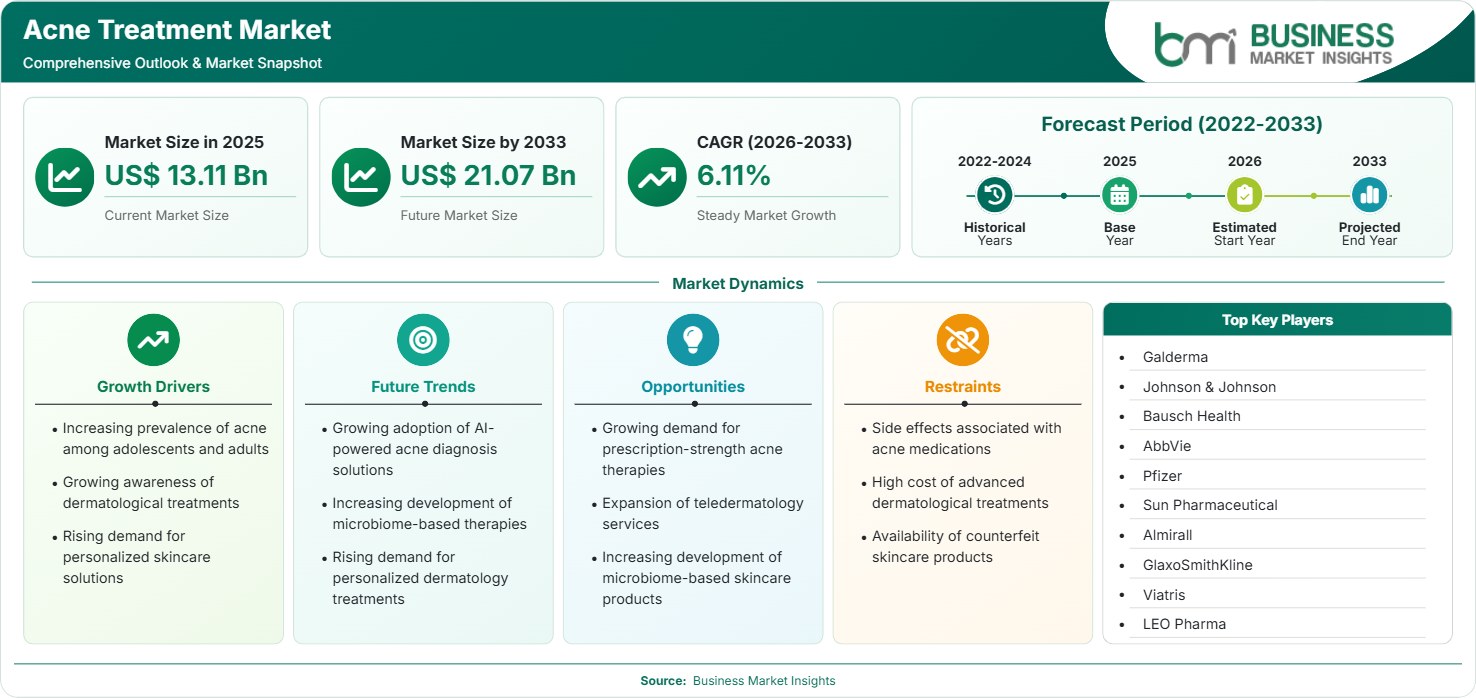
The Acne Treatment Market size was valued at US$ 13.11 Billion in 2025 and is projected to reach US$ 21.07 Billion by 2033, growing at a CAGR of 6.11% during 2026–2033. Increasing acne prevalence among adolescents and adults, rising dermatological awareness, growing demand for personalized skincare solutions, and expansion of advanced acne therapies are driving market development.

Report Coverage
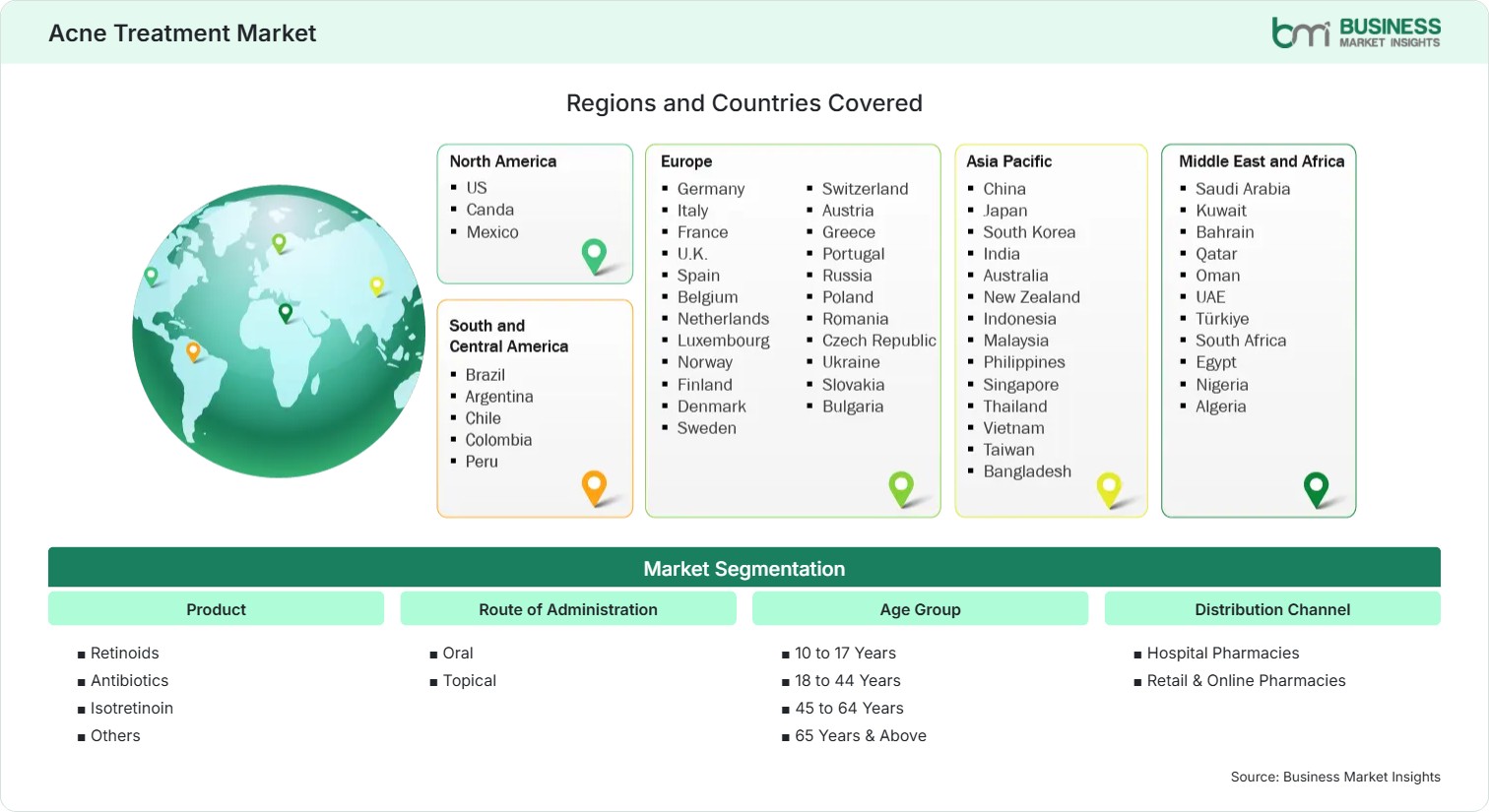
  • Product: Retinoids, Antibiotics, Isotretinoin, Others
  • Route of Administration: Oral, Topical
  • Age Group: 10 to 17 Years, 18 to 44 Years, 45 to 64 Years, 65 Years & Above
  • Distribution Channel: Hospital Pharmacies, Retail & Online Pharmacies
US$ 13.11 Bn Market size in 2025
US$ 21.07 Bn Market Size by 2033
6.11% CAGR, 2026 - 2033
2026-2033 Forecast Period

AI Overview

Acne Treatment Market Summary

  • North America Region: North America holds 34%–37% share in 2025, growing with a 5.8%–6.3% CAGR during 2026–2033, supported by high acne prevalence, strong dermatology infrastructure, advanced prescription treatment adoption, and rising demand for personalized skincare solutions. The U.S. remains the leading regional contributor due to strong pharmaceutical presence, increasing dermatology consultations, and advanced acne medication adoption, expanding at a 5.9%–6.4% CAGR.
  • Fastest Growing Region: Asia Pacific holds 25%–28% share in 2025, expanding at a 7.0%–7.5% CAGR through 2033, driven by increasing adolescent populations, rising disposable incomes, growing awareness of dermatological care, expanding online pharmacies, and increasing access to prescription acne therapies.
  • Leading Segment: Retinoids account for 32%–35% market share in 2025 and grow at a 6.3%–6.7% CAGR, supported by strong clinical acceptance, effectiveness in acne management, dermatologist recommendations, and continued innovation in topical formulations.
  • High Growth Segment: Microbiome-focused skincare solutions within advanced acne care represent emerging growth potential, expanding at a 7.2%–7.8% CAGR, supported by increasing research into skin microbiota, personalized treatments, and consumer demand for innovative dermatological products.
  • Key Market Opportunity: Growth opportunities are emerging through prescription-strength therapies, teledermatology platforms, personalized skincare technologies, and microbiome-based solutions that improve treatment accessibility, customization, and long-term acne management outcomes.
  • Major Market Players: Galderma, Johnson & Johnson, Bausch Health, AbbVie, Pfizer, Sun Pharmaceutical, Almirall, GlaxoSmithKline, Viatris, and LEO Pharma.
Strategic Insights

Acne Treatment Market: Strategic Insights

Acne Treatment Market Strategic Framework
FREE PDF
Request your free sample
Request free sample
Stakeholder View

Key Takeaways

  • The market value chain is evolving from conventional acne medications toward integrated dermatology ecosystems combining pharmaceuticals, digital consultations, personalized skincare solutions, and specialty distribution channels.
  • Prescription-strength acne therapies represent a major opportunity area as consumers increasingly seek dermatologist-guided treatments offering improved effectiveness for moderate and severe acne conditions.
  • Innovation is shifting toward targeted therapies, microbiome-based formulations, improved delivery systems, and combination treatments designed to enhance efficacy while reducing medication-related concerns.
  • Asia Pacific presents strong investment potential due to expanding healthcare access, large adolescent populations, increasing dermatological awareness, and rapid growth of online healthcare channels.
  • Pharmaceutical companies are strengthening competitive positions through strategic partnerships, portfolio expansion, product approvals, and investments in advanced acne treatment research.
  • Digital healthcare adoption is transforming acne management by enabling remote consultations, continuous patient engagement, and improved access to dermatological expertise across underserved regions.
Geographic Outlook

Acne Treatment Market Regional Highlights

North America Acne Treatment Market

North America accounted for 34%–37% of the global market share in 2025 and is expected to grow at a 5.8%–6.3% CAGR from 2026–2033. Growth is driven by advanced dermatology infrastructure, treatment awareness, and adoption of prescription acne therapies. The United States leads the region through pharmaceutical innovation, strong healthcare networks, and rising demand for personalized acne management solutions in acne treatment market.

  • Increasing adoption of prescription acne medications is supported by strong dermatologist networks, advanced healthcare facilities, and growing consumer preference for clinically proven treatment options.
  • Pharmaceutical companies are investing in improved topical formulations, combination therapies, and targeted solutions to address different acne severity levels among diverse patient groups.
  • Growing acceptance of teledermatology platforms is improving access to consultations, especially for consumers seeking convenient diagnosis and personalized treatment recommendations.
  • Rising demand for premium skincare products and dermatologist-recommended solutions is strengthening market opportunities across retail and online pharmacy channels.

US Acne Treatment Market

The United States accounted for 82%–85% of North America’s acne treatment revenue in 2025 and is projected to grow at a 5.9%–6.4% CAGR through 2033. Growth is driven by strong pharmaceutical presence, advanced healthcare infrastructure, rising dermatology consultations, and increasing adoption of innovative acne therapies. Digital dermatology and personalized skincare solutions are further improving treatment access and patient engagement in acne treatment market.

  • High demand for prescription therapies continues due to increasing dermatologist recommendations and consumer preference for clinically validated acne management solutions.
  • Online pharmacy expansion is improving availability of acne medications by offering convenient access, digital consultations, and recurring treatment purchase options.
  • Research investments in advanced dermatological products are supporting development of safer and more effective acne treatment formulations.
  • Growing interest among adults experiencing persistent acne is expanding the consumer base beyond traditional adolescent-focused treatment categories.

Europe Acne Treatment Market

Europe accounted for 27%–30% of the global market share in 2025 and is projected to grow at a 5.7%–6.2% CAGR from 2026–2033. Growth is supported by advanced dermatology practices, strong healthcare systems, and rising skincare awareness. Germany leads adoption, while the U.K. shows growth through demand for specialized acne therapies and digital healthcare services in acne treatment market.

  • Germany maintains strong market adoption through established dermatology clinics, pharmaceutical innovation, and increasing preference for evidence-based acne treatments.
  • The United Kingdom is experiencing growth through expanding teledermatology services, online pharmacy adoption, and increasing consumer interest in personalized skincare solutions.
  • France and Italy demonstrate steady demand due to strong skincare cultures, growing aesthetic awareness, and increasing availability of dermatological products.
  • European companies are focusing on microbiome research and advanced formulations to develop differentiated acne treatment solutions.
  • Regulatory emphasis on medication safety and product quality is strengthening consumer trust in pharmaceutical acne therapies.

Asia Pacific Acne Treatment Market

Asia Pacific held a 25%–28% market share in 2025 and is expected to grow at a 7.0%–7.5% CAGR from 2026–2033, making it the fastest-growing region. Growth is driven by rising adolescent populations, skincare awareness, healthcare access, and online pharmacy expansion. China leads demand, while India shows strong growth through digital healthcare adoption, rising incomes, and advanced acne treatment demand in acne treatment market.

  • China continues driving regional growth through increasing consumer spending on skincare products, expanding dermatology clinics, and rising adoption of prescription acne management solutions.
  • India is witnessing higher demand for acne treatments due to growing awareness of dermatological care, expanding online pharmacies, and increasing availability of affordable skincare products.
  • South Korea remains influential in skincare innovation, with strong consumer interest in advanced formulations, personalized treatments, and technology-driven dermatology solutions.
  • Southeast Asian countries are experiencing increased adoption through medical tourism growth, rising healthcare investments, and improving access to specialized dermatological services.
  • Growing research into microbiome-based skincare and personalized treatment approaches is creating new opportunities for regional manufacturers and international skincare companies.

Rest of World Acne Treatment Market

The Rest of World accounted for 8%–11% of the global market share in 2025 and is projected to grow at a 6.0%–6.5% CAGR from 2026–2033. Growth is driven by rising dermatological awareness, improved healthcare access, and increasing demand for acne treatments. Latin America shows strong potential, led by Brazil, while the Middle East and Africa are expanding through healthcare investments, digital health platforms, and advanced dermatology services in acne treatment market.

  • Brazil maintains strong regional demand due to increasing skincare awareness, established beauty culture, and expanding availability of dermatology products.
  • Mexico is experiencing growth through improved pharmacy networks, rising consumer spending on personal care, and increasing access to acne treatment options.
  • Gulf countries are developing advanced dermatology infrastructure supported by healthcare investments, premium skincare demand, and increasing adoption of digital healthcare services.
  • South Africa is showing gradual market development through growing urban demand, improved healthcare accessibility, and increasing awareness of dermatological treatment options.
  • Regional providers are strengthening market presence through partnerships, online distribution channels, and localized product strategies targeting diverse consumer needs.
Global Market Geography
FREE PDF
Request your free sample
Request free sample
Segment Analysis

Acne Treatment Market Segmentation

Product

The product segment is a key market component, driven by rising adoption of pharmaceutical acne therapies and dermatologist recommendations. Retinoids led the segment with a 32%–35% acne treatment market share in 2025 and are projected to grow at a 6.3%–6.7% CAGR through 2033, supported by strong clinical acceptance, treatment effectiveness, and ongoing formulation advancements.

  • Retinoids: Retinoids remain widely prescribed for acne management due to their ability to regulate skin cell turnover, reduce clogged pores, and support long-term treatment outcomes.
  • Antibiotics: Antibiotic treatments continue supporting acne management by controlling bacterial activity and inflammation, particularly among patients with moderate inflammatory acne conditions.
  • Isotretinoin: Isotretinoin maintains importance for severe acne cases due to strong clinical effectiveness, although monitoring requirements influence treatment adoption and patient management.

Route of Administration

The route of administration segment is driven by demand for convenient and effective acne treatment methods. Topical administration led the segment with a 58%–61% market share in 2025 and is expected to grow at a 5.9%–6.3% CAGR through 2033, supported by consumer preference for localized treatments, product availability, and dermatologist recommendations in acne treatment market.

  • Oral: Oral acne treatments remain important for moderate to severe conditions requiring systemic management, supported by prescription usage and dermatologist supervision.
  • Topical: Topical treatments maintain strong demand due to ease of application, targeted action, consumer familiarity, and availability across prescription and retail skincare channels.

Age Group

The age group segment is driven by rising acne prevalence among adolescents and adults, along with growing awareness of dermatological treatments. The 10–17 Years category led the market with a 42%–45% share in 2025 and is projected to grow at a 6.2%–6.6% CAGR through 2033, supported by high adolescent acne incidence, increased dermatologist consultations, and treatment awareness in acne treatment market.

  • 10 to 17 Years: This group represents a significant patient base due to high acne prevalence during puberty, increasing skincare awareness, and rising adoption of dermatologist-recommended treatments.
  • 18 to 44 Years: Adult consumers increasingly seek acne treatments due to persistent acne concerns, lifestyle factors, hormonal influences, and demand for effective skincare management solutions.
  • 45 to 64 Years: Adoption in this category is supported by consumers experiencing adult acne, skin health concerns, and increasing interest in advanced dermatological care.
  • 65 Years & Above: This segment shows gradual growth through demand for specialized skincare solutions addressing age-related skin changes and dermatological conditions requiring professional guidance.

Distribution Channel

The distribution channel segment is growing due to improved pharmaceutical access, digital commerce expansion, and demand for convenient purchasing options. Retail & Online Pharmacies led the segment with a 55%–58% market share in 2025 and are projected to grow at a 6.5%–6.9% CAGR through 2033, supported by e-commerce growth, online consultations, and direct-to-consumer skincare channels.

  • Hospital Pharmacies: Hospital pharmacies continue supporting acne treatment access through dermatologist prescriptions, clinical recommendations, and availability of specialized pharmaceutical therapies.
  • Retail & Online Pharmacies: These channels are expanding through convenience, wider product availability, digital purchasing options, and increasing consumer adoption of online skincare and healthcare platforms.
Market Forces

Acne Treatment Market Dynamics

Key Market Drivers

Increasing Prevalence of Acne Among Adolescents and Adults

Increasing prevalence of acne among adolescents and adults is creating sustained demand for effective treatment solutions across prescription and over-the-counter categories. Lifestyle changes, hormonal fluctuations, environmental factors, and stress-related skin concerns are contributing to broader acne incidence across different age groups. Growing recognition of adult acne as a long-term dermatological condition is expanding treatment adoption beyond traditional adolescent populations. Pharmaceutical companies are developing improved formulations to address different acne severity levels and patient needs. Rising dermatologist consultations and consumer awareness are supporting broader acceptance of advanced therapies. This driver continues strengthening the Acne Treatment Market growth by increasing demand for clinically validated products and personalized treatment approaches.

Growing Awareness of Dermatological Treatments

Growing awareness of dermatological treatments is encouraging consumers to seek professional guidance instead of relying only on general skincare products. Increased access to online health information, social media education, and dermatologist-led content is improving understanding of acne causes and treatment options. Consumers are becoming more aware of prescription therapies, advanced topical solutions, and combination treatments designed for specific acne conditions. Expanding dermatology clinics and digital consultation platforms are further improving treatment accessibility is supporting acne treatment market trends. rising awareness is also encouraging early intervention, which helps reduce long-term skin complications. These developments are supporting broader adoption of evidence-based acne management solutions across global consumer segments.

Rising Demand for Personalized Skincare Solutions

The growing need for personalized skincare options is shaping how acne will be managed in future due to increased customization of treatment according to the state of the skin, the level of the infection, lifestyle issues, and responses to treatment. People are now more interested in getting personalized advice instead of the regular skincare options. The dermatologists are using technology and improved diagnostic methods in their treatment planning. Pharmaceutical and skincare companies are also working on the development of personalized products suited for different needs of consumers such as those of people with sensitive skin and combination acne.

Key Market Opportunities

Growing Demand for Prescription-Strength Acne Therapies

There is growing need for high-strength prescription treatments for acne, which is opening up avenues for pharmaceutical companies to come out with superior drugs for treating moderate-to-severe cases of acne. An increasing number of patients are looking for dermatological guidance and treatments that offer superior clinical results to ordinary cosmetic skin care products. Innovations in retinoids, antibiotics, isotretinoin, and combinations of these treatments have made treatments more effective and better address varied patient needs. A growing number of diagnoses and dermatological visits are leading to increasing use of prescription drugs in both developed and developing countries.

Expansion of Teledermatology Services

The expansion of teledermatology facilities is generating new possibilities as a result of increasing access to expert dermatologists, especially those who operate in areas where dermatologists are scarce. Online consultation provides diagnosis, treatment advice, prescription management, and ongoing patient monitoring. The rising availability of smartphones and consumer adoption of virtual health care services are also contributing to increased adoption of online dermatology services. Online platforms are helping patients obtain timely acne treatment advice while eliminating some barriers encountered in face-to-face consultations.

Increasing Development of Microbiome-Based Skincare Products

Advances in the production of microbiome-based skincare products are creating new business growth opportunities, as research has increased understanding of the connection between skin bacterial balance and acne formation. Firms have been developing products that contain probiotics, prebiotics, and microbiomes. Consumer interest in gentle and scientifically backed approaches to skincare is driving innovations that go beyond conventional drugs. Such products can offer several benefits for consumers seeking skin care and protection against irritation. Further research collaborations among biotechnology, dermatology, and skincare companies should lead to the commercialization of acne treatment products.

Market Restraints and Challenges

Side Effects Associated with Acne Medications

Factor: side effects associated with acne medications raise concerns among patients due to possible irritation, dryness, sensitivity, and other treatment-related reactions, depending on the type of therapy and individual skin response. Impact: safety concerns may reduce treatment adherence, discourage long-term usage, and influence consumer preference toward milder skincare alternatives. There have been instances when prescribed drugs such as retinoids, antibiotics, and isotretinoin have required professional supervision because of the side effects that could be associated with their use. To address these issues, healthcare professionals are using methods such as improving patient education, developing better treatment programs, and producing more tolerable formulations.

High Cost of Advanced Dermatological Treatments

Factor: high cost of advanced dermatological treatments creates affordability challenges due to expensive prescription therapies, specialist consultations, and premium skincare products. Impact: elevated treatment expenses can restrict access among price-sensitive consumers and limit adoption in developing regions where acne care may receive lower healthcare spending priority. Advanced therapies requiring repeated consultations or long-term management can increase overall patient costs. Manufacturers and healthcare providers are responding through broader product availability, online pharmacy expansion, and development of cost-effective treatment alternatives. Despite these efforts, affordability remains a significant challenge influencing treatment accessibility and market penetration across emerging consumer segments.

Company Analysis

Competitive Landscape

The Acne Treatment Market analysis highlights a competitive pharmaceutical and dermatology ecosystem driven by innovation in prescription therapies, topical formulations, oral medications, digital healthcare platforms, and advanced skincare solutions. Leading companies are focusing on product development, regulatory approvals, strategic partnerships, and expansion of dermatology portfolios to address increasing demand for effective acne management solutions across global markets.

Company Name

Overview

Products and Services relevant to this market

Galderma

Galderma is a global dermatology-focused company specializing in medical dermatology, aesthetic treatments, and skincare solutions.

Provides prescription acne treatments, dermatology products, and skin health solutions supporting acne management and related conditions.

Johnson & Johnson

Johnson & Johnson operates across healthcare segments with a strong presence in consumer health and pharmaceutical products.

Offers dermatology products, skincare solutions, and acne treatment products through healthcare and consumer channels.

Bausch Health

Bausch Health develops pharmaceutical and dermatology products focused on specialized healthcare needs and skin conditions.

Provides acne medications including prescription dermatology therapies and treatment solutions for moderate to severe acne.

AbbVie

AbbVie is a global pharmaceutical company with expertise in specialty medicines and dermatological therapies.

Offers dermatology-focused prescription treatments and research-driven solutions supporting skin disease management.

Pfizer

Pfizer is a multinational pharmaceutical company developing therapies across multiple healthcare categories.

Provides pharmaceutical products and research capabilities relevant to dermatology and acne-related treatment applications.

Sun Pharmaceutical

Sun Pharmaceutical is a global pharmaceutical manufacturer with strong presence in specialty and generic medicines.

Offers dermatology medications, topical formulations, and acne treatment products through global healthcare markets.

Almirall

Almirall specializes in medical dermatology products focused on improving treatment outcomes for skin conditions.

Provides prescription dermatology therapies, acne medications, and innovative skin health solutions.

GlaxoSmithKline

GlaxoSmithKline is a global healthcare company with pharmaceutical and consumer health expertise.

Provides healthcare products and research capabilities supporting dermatological treatment categories.

Viatris

Viatris is a global healthcare company focused on increasing access to medicines across therapeutic areas.

Supplies generic and specialty pharmaceutical products including dermatology-related treatment solutions.

LEO Pharma

LEO Pharma specializes in medical dermatology and develops therapies for various skin conditions.

Offers prescription dermatology products and acne-related treatment solutions for healthcare professionals and patients.

Trust & Transparency

Research Methodology

The market analysis combines proprietary research with secondary data from government agencies, company disclosures, regulatory filings, industry databases and expert interviews. Market estimates are validated through data triangulation, cross-market benchmarking and analyst review.

View Full Research Methodology

Questions Answered

Frequently Asked Questions

What does the Acne Treatment Market Report indicate about future developments?

The report indicates continued growth through personalized therapies, digital dermatology expansion, advanced prescription treatments, and innovative skincare technologies focused on improved patient outcomes.

Why are microbiome-based skincare products gaining attention?

Microbiome-based products are gaining attention because they focus on maintaining skin balance, reducing irritation, and providing innovative approaches for long-term acne management.

How is digital healthcare influencing acne treatment access in acne treatment market forecasts?

Teledermatology platforms are improving access by enabling remote consultations, treatment recommendations, prescription management, and continuous monitoring for patients seeking convenient dermatological care.

Which product category dominates acne treatment demand?

Retinoids maintain a strong position due to dermatologist preference, established clinical effectiveness, and their ability to address multiple acne-related concerns through topical and prescription formulations.

What factors are increasing demand for acne treatments?

Rising acne prevalence among adolescents and adults, increased dermatological awareness, improved treatment accessibility, and growing demand for personalized skincare solutions are supporting market expansion.

Access the Full Acne Treatment Market Report

Get segment-level forecasts, regional estimates, competitive benchmarking, company profiles and downloadable Excel datasets.

Access the full Acne Treatment Market Report
350 pages PDF & Excel | 2026-08-06