
Endometriosis Treatment Market Outlook: Size, Share, Trends, Growth Analysis, Competitive Landscape & Forecast, 2026-2033

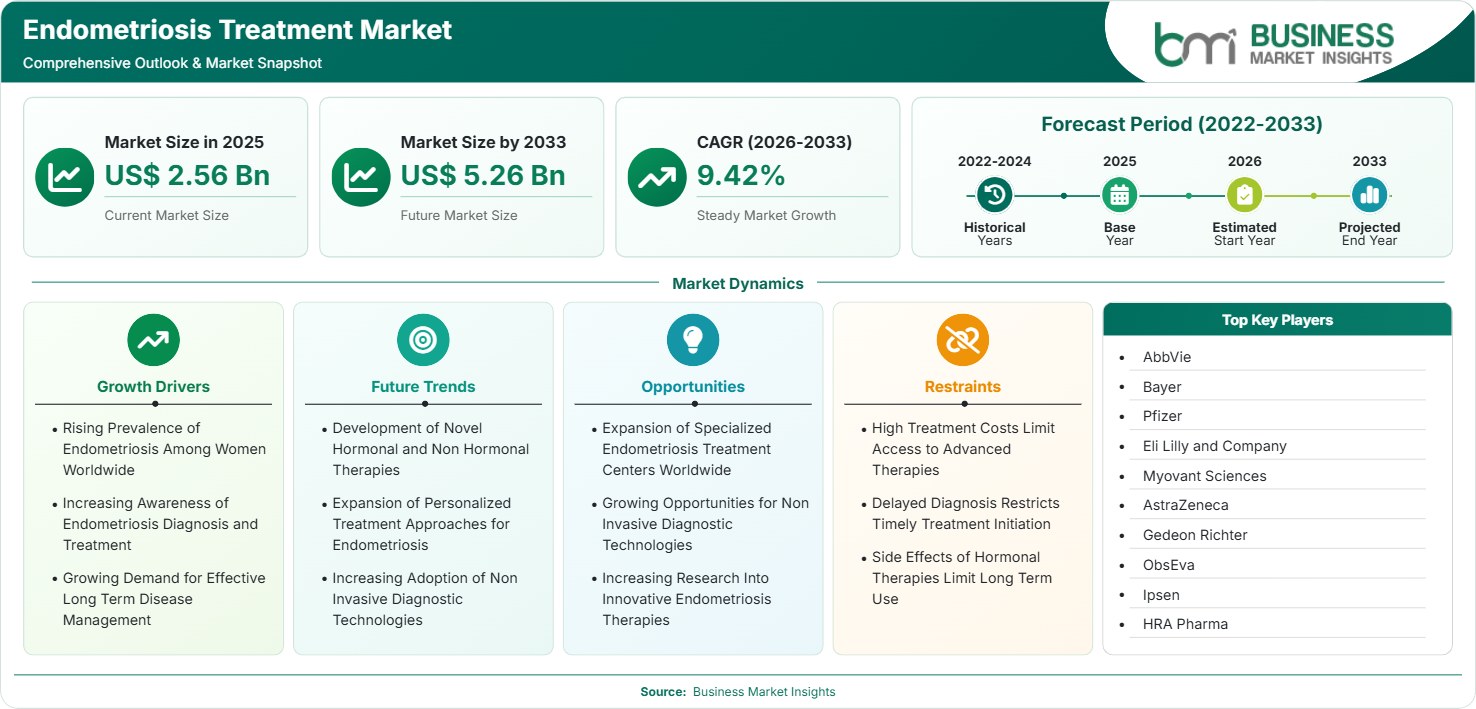
The Endometriosis Treatment Market size was valued at US$ 2.56 billion in 2025 and is projected to reach US$ 5.26 billion by 2033, growing at a CAGR of 9.42% during 2026–2033, supported by rising disease prevalence, improved diagnosis, expanding treatment access, and innovation in hormonal therapies.

Report Coverage
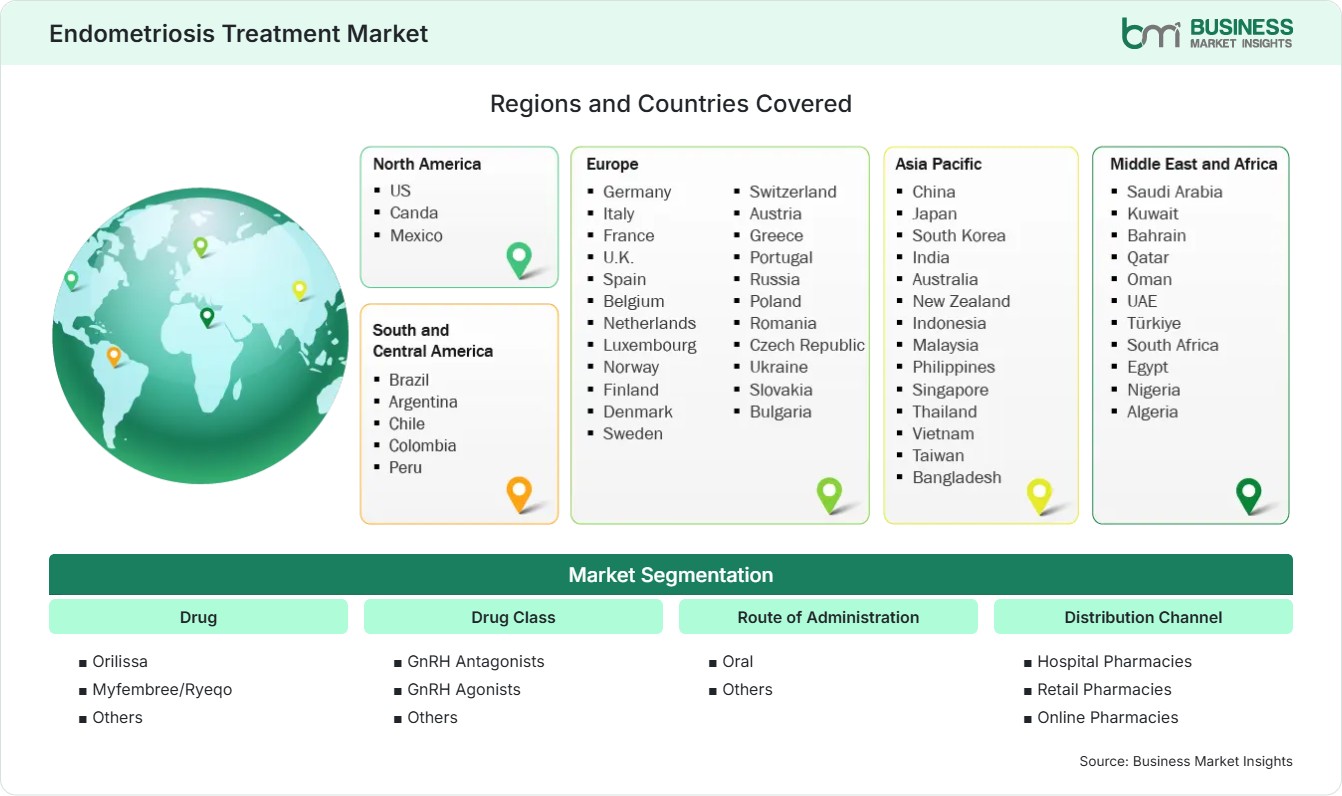
  • Drug: Orilissa, Myfembree/Ryeqo, Others
  • Drug Class: GnRH Antagonists, GnRH Agonists, Others
  • Route of Administration: Oral, Others
  • Distribution Channel: Hospital Pharmacies, Retail Pharmacies, Online Pharmacies
US$ 2.56 Bn Market size in 2025
US$ 5.26 Bn Market Size by 2033
9.42% CAGR, 2026 - 2033
2026-2033 Forecast Period

01 AI Overview

Endometriosis Treatment Market Summary

  • North America Region: North America · 35%–39% share (2025) · 8.8%–9.6% CAGR (2026–2033) · Rising diagnosis, established specialty care, favorable reimbursement, and adoption of oral hormonal therapies support treatment demand. In the US, treatment expansion is supported by broad specialist access, pharmaceutical availability, and growing awareness of chronic pelvic pain.
  • Fastest Growing Region: Asia Pacific · 9.0%–10.2% CAGR (2026–2033) · Increasing diagnosis, expanding women's healthcare infrastructure, rising awareness, and wider availability of prescription therapies create substantial opportunities across large underserved patient populations.
  • Leading Segment: Drug · 52%–56% share (2025) · 9.0%–9.8% CAGR (2026–2033) · Established pharmacological management, recurring treatment needs, expanding oral options, and preference for symptom control support sustained drug demand across diagnosed patients.
  • High Growth Segment: GnRH Antagonists · 10.0%–11.2% CAGR (2026–2033) · Improved oral convenience, targeted hormonal suppression, treatment innovation, and broader physician familiarity create opportunities for differentiated therapies addressing persistent endometriosis pain.
  • Key Market Opportunity: Investment in non-invasive diagnostics, specialist treatment networks, and novel hormonal therapies can shorten diagnostic pathways, expand diagnosed populations, improve treatment personalization, and address unmet needs among patients inadequately controlled by existing options.
  • Major Market Players: AbbVie, Bayer, Pfizer, Eli Lilly and Company, Myovant Sciences, AstraZeneca, Gedeon Richter, ObsEva, Ipsen, HRA Pharma
02 Strategic Insights

Endometriosis Treatment Market: Strategic Insights

endometriosis-treatment-market-market-strategic-framework
FREE PDF
Request your free sample
Request free sample
03 Stakeholder View

Key Takeaways

  • The value chain extends from pharmaceutical innovators and active pharmaceutical ingredient suppliers to specialty physicians, hospitals, pharmacies, digital health channels, and patient-support services. Treatment adoption depends on diagnosis, prescribing confidence, reimbursement, and sustained patient adherence.
  • Oral drug formulations and GnRH antagonist therapies offer strong commercial potential because they can provide convenient administration while addressing moderate-to-severe symptoms requiring longer-term management.
  • Research is moving toward more selective hormonal modulation, improved safety profiles, non-invasive diagnostic methods, and therapies that address pain while accommodating reproductive goals.
  • Asia Pacific presents an attractive expansion opportunity because large patient populations coexist with uneven diagnosis and specialist access, creating room for awareness programs, localized distribution, and treatment infrastructure.
  • Pharmaceutical companies continue to prioritize reproductive health portfolios, while licensing, partnerships, and specialty commercialization strategies can accelerate access to differentiated endometriosis therapies.
  • Diagnostic innovation may expand the addressable treatment population by identifying patients earlier, reducing dependence on invasive confirmation, and directing patients toward appropriate medical management.
04 Geographic Outlook

Endometriosis Treatment Market Regional Highlights

North America Endometriosis Treatment Market

North America holds a 35%–39% share in 2025, with a 8.8%–9.6% CAGR through 2033, supported by specialist availability, established reimbursement pathways, and strong pharmaceutical commercialization. The Endometriosis Treatment Market share reflects comparatively mature diagnosis and treatment adoption. Market growth outlook remains favorable as awareness campaigns, patient advocacy, and oral hormonal therapies improve management options. The US remains the principal regional contributor, while Canada offers additional opportunities through expanding women's health initiatives and specialist-led care.

  • Strong specialist networks support diagnosis and treatment selection, while established pharmaceutical distribution enables broader access to prescription therapies and patient-support programs.
  • Increasing recognition of chronic pelvic pain encourages earlier clinical evaluation, potentially expanding diagnosed populations eligible for pharmacological treatment.
  • Pharmaceutical innovation remains commercially important as manufacturers seek differentiated hormonal therapies with improved convenience, tolerability, and long-term management characteristics.
  • Digital healthcare and online pharmacy adoption can improve treatment continuity, prescription fulfillment, and patient education, particularly for patients requiring recurring medication.

US Endometriosis Treatment Market

The US represents approximately 29%–33% of global market value in 2025 and is projected to expand at 8.9%–9.7% CAGR through 2033. The market benefits from extensive specialist infrastructure, availability of branded therapies, and growing recognition of endometriosis as a chronic condition. FDA-approved pharmacological options support physician choice, while patient advocacy increases attention to diagnostic delays. However, treatment selection remains influenced by contraindications, adverse-effect considerations, insurance coverage, and individual reproductive plans.

  • The US benefits from broad access to prescription therapies, although affordability and insurance coverage can influence the adoption of newer branded treatments.
  • Greater patient awareness of persistent pelvic pain may encourage earlier consultations and increase the number of patients receiving formal diagnosis and treatment.
  • Clinical use of oral hormonal therapies is supported by established prescribing pathways and ongoing evaluation of safety, efficacy, and treatment duration.

Europe Endometriosis Treatment Market

Europe accounts for a 27%–31% share in 2025 and is projected to record a 8.5%–9.4% CAGR through 2033. Germany, France, Italy, and the UK represent leading markets due to established healthcare systems, while Poland and Spain offer attractive expansion potential. The region continues to address diagnostic delays and uneven specialist access. Availability of Ryeqo across European markets strengthens treatment options, while policy attention toward women's health may encourage earlier recognition and coordinated management.

  • Germany's established gynecology infrastructure and specialist care pathways support treatment access, while growing attention to chronic pelvic pain can encourage earlier clinical intervention.
  • France offers opportunities through public-health initiatives, although evidence indicates that significant diagnostic delays remain among women with moderate-to-severe disease.
  • The UK benefits from established endometriosis services and clinical awareness, creating opportunities for therapies that improve symptom control and long-term treatment adherence.
  • Central and Eastern European markets can provide incremental growth as healthcare infrastructure, specialist capacity, and pharmaceutical availability continue improving.

Asia Pacific Endometriosis Treatment Market

Asia Pacific represents a 20%–24% share in 2025 and is forecast to grow at 9.8%–10.8% CAGR through 2033. Japan, China, and Australia are leading contributors, while India, Indonesia, and Southeast Asian markets offer stronger growth potential. Rising women's healthcare awareness, improving urban healthcare infrastructure, and greater availability of prescription medicines are expanding treatment opportunities. Persistent underdiagnosis remains a major commercial constraint, making awareness, specialist education, and accessible diagnostic pathways important growth enablers.

  • Japan's mature healthcare system supports access to specialist treatment, while continued clinical attention to endometriosis can sustain demand for pharmacological management.
  • China's large population and expanding healthcare infrastructure create significant potential as awareness improves and more women seek diagnosis and treatment.
  • India offers substantial long-term opportunity because large patient numbers coexist with limited diagnosis, uneven specialist availability, and increasing attention to women's health.
  • Australia benefits from established endometriosis awareness and clinical infrastructure, although prolonged diagnostic pathways remain an important area for improvement.

Rest of World Endometriosis Treatment Market

South and Central America account for an estimated 7%–10% share in 2025, while the Middle East and Africa contribute approximately 5%–8%. Combined growth is projected at 8.8%–10.0% CAGR through 2033. Brazil and Mexico lead Latin American demand, while Saudi Arabia, the UAE, and South Africa represent important opportunities across the Middle East and Africa. Expansion depends on specialist access, diagnosis, affordability, and pharmaceutical distribution.

The Endometriosis Treatment Market growth potential in these regions is strengthened by increasing awareness of women's health and greater recognition of chronic pelvic pain. However, limited specialist capacity and unequal healthcare access can delay diagnosis and restrict treatment adoption. Expanding pharmacy networks, telehealth, physician education, and affordable treatment programs could improve market penetration.

  • Brazil's established pharmaceutical ecosystem supports treatment availability, while awareness initiatives can improve recognition of symptoms and encourage specialist consultations.
  • Mexico presents opportunities as women's health awareness expands and private healthcare networks improve access to specialist diagnosis and prescription medicines.
  • Saudi Arabia and the UAE offer potential through advanced healthcare infrastructure, specialist centers, and increasing investment in women's health services.
  • South Africa can serve as a regional access hub, although affordability and uneven specialist availability remain important barriers to treatment continuity.
global-market-geography
FREE PDF
Request your free sample
Request free sample
05 Segment Analysis

Endometriosis Treatment Market Segmentation

Drug

The Drug segment held an estimated 52%–56% share in 2025 and is projected to expand at a 9.0%–9.8% CAGR through 2034. The Endometriosis Treatment Market scope within drug therapy is supported by chronic symptom management, prescription demand, oral convenience, and continuing innovation. Established products and newer hormonal options provide physicians with differentiated approaches for patients requiring sustained pain control and disease management.

  • Orilissa: Orilissa provides an oral GnRH antagonist option for endometriosis-associated pain, supporting convenient administration and treatment personalization among appropriately selected patients requiring hormonal symptom management.
  • Myfembree/Ryeqo: These relugolix-based combination therapies provide hormonal suppression with add-back therapy, supporting pain reduction while addressing estrogen-related effects associated with GnRH pathway modulation.
  • Others: Other pharmacological options include established hormonal and analgesic approaches, providing treatment flexibility according to symptom severity, tolerability, contraindications, fertility considerations, and physician preference.

Drug Class

The Drug Class segment is led by GnRH-based therapies, with the overall segment projected at a 9.0%–9.8% CAGR through 2034. The Endometriosis Treatment Market share reflects continued demand for effective hormonal symptom control. Treatment selection depends on disease severity, previous therapies, safety considerations, reproductive intentions, and patient response. GnRH antagonists offer particular commercial momentum due to oral administration and newer treatment approaches.

  • GnRH Antagonists: Oral GnRH antagonists provide direct suppression of gonadotropin signaling and are increasingly used for moderate-to-severe symptoms where conventional treatments provide inadequate relief.
  • GnRH Agonists: GnRH agonists remain established options for selected patients, although treatment use is influenced by hypoestrogenic effects, add-back strategies, duration considerations, and tolerability.
  • Others: Other drug classes include progestins, combined hormonal contraceptives, analgesics, and additional hormonal approaches used according to symptoms and individual treatment objectives.

Route of Administration

The Route of Administration segment is expected to grow at a 8.8%–9.7% CAGR through 2034, supported by demand for convenient chronic treatment. Oral therapies remain commercially important because they simplify administration and support outpatient care. The Endometriosis Treatment Market trends increasingly favor patient-friendly options that can improve adherence while allowing physicians to tailor treatment according to symptoms, safety, and reproductive considerations.

  • Oral: Oral administration dominates prescription treatment because tablets support convenient outpatient use, recurring therapy, and broad distribution through retail and online pharmacy channels.
  • Others: Other administration routes remain relevant for selected therapies and supportive treatment approaches, particularly when oral medication is unsuitable or when clinical circumstances require alternative delivery.

Distribution Channel

The Distribution Channel segment is projected to expand at a 8.7%–9.6% CAGR through 2034 as treatment access broadens across healthcare settings. Distribution increasingly reflects patient preference, prescription infrastructure, and recurring medication requirements. Pharmacy accessibility remains important because endometriosis management frequently involves ongoing therapy. Digital purchasing and home delivery can further improve convenience, although prescription controls and clinical oversight remain essential.

  • Hospital Pharmacies: Hospital pharmacies support specialist-led treatment initiation, particularly when patients require diagnosis, multidisciplinary assessment, prescription monitoring, or management of complex symptoms.
  • Retail Pharmacies: Retail pharmacies provide convenient access to prescribed medications and support recurring treatment, making them important for patients transitioning from specialist care to long-term management.
  • Online Pharmacies: Online pharmacies can improve convenience through home delivery, digital prescription processing, and refill services, although regulatory compliance and medication authenticity remain critical considerations.
06 Market Forces

Endometriosis Treatment Market Dynamics

Key Market Drivers

Rising Prevalence of Endometriosis Among Women Worldwide

The high incidence of endometriosis provides an underlying need for diagnosis and management of symptoms. The persistent nature of the condition results in recurring treatment needs rather than one-off needs. Medicines that affect hormones, pain medications, and recent treatments that target the GnRH all address different stages of the management of the condition. With healthcare systems becoming more aware of the reproductive health concern that endometriosis presents, there will be more attention directed towards diagnosis and the initiation of treatment. The endometriosis treatment market growth is thus related to this.

Increasing Awareness of Endometriosis Diagnosis and Treatment

Increased awareness amongst patients and healthcare practitioners has increased the demand for early evaluation of pelvic pain, dysmenorrhea, infertility, and other related symptoms. WHO states that the lack of awareness and normalization of pain during menstruation remains an ongoing barrier to treatment. Increased awareness can lead to prompt consultation from the patient’s side and greater awareness amongst general practitioners of the need to refer patients to specialists based on symptoms. This will result in better pathways and an increase in the number of diagnosed and treated cases. Hence, the Endometriosis Treatment Market trend is increasingly focused on recognizing the disease rather than normalizing symptoms.

Growing Demand for Effective Long Term Disease Management

Endometriosis is a disease that does not have any defined cure; long-term symptom management is a key aim of treatment in this case. More and more individuals are trying to look for drugs that can decrease pain while ensuring safety, tolerance, fertility objectives, and duration of therapy. GnRH antagonists and combination therapies are some of the drug therapies that are gaining prominence for properly chosen individuals. Regulatory data on drugs like Ryeqo indicate that newer hormonal agents can play a role in alleviating both menstrual and non-menstrual pain in clinical studies. Growth in the Endometriosis Treatment Market can thus be attributed not only to new diagnoses but also to treatment compliance and the differentiation of therapies.

Key Market Opportunities

Expansion of Specialized Endometriosis Treatment Centers Worldwide

The establishment of specialized centers for the treatment of endometriosis will provide a more developed continuum from the recognition of symptoms through diagnosis to the selection of appropriate treatment methods and follow-up. Multidisciplinary approaches, which will include specialists from gynecology, imaging, pain management, fertility, and psychology, will be able to cover all aspects of care needed by patients with continuing symptoms. Specialized centers can also facilitate better physician training and the establishment of referral protocols. There is potential for investments in emerging markets, where there is a lack of specialization and delay in diagnosis. Such investments will increase the number of people treated, thereby supporting the commercial development of the Endometriosis Treatment Market.

Growing Opportunities for Non-Invasive Diagnostic Technologies

Non-invasive diagnostic technology poses a big opportunity in light of the fact that delays in diagnosis could lead to delayed commencement of therapy and higher healthcare utilization. WHO highlights novel technologies such as symptomatic testing, blood tests, salivary testing, and menstrual-blood testing as some of the emerging fields of focus. Development and commercialization of these non-invasive technologies would enable patients to enter the right treatment pathways much earlier, without the need for invasive measures in all cases. Diagnostic technology firms, diagnostics firms, pharmaceutical producers, and specialist care providers might derive value from collaboration within the diagnostics-to-treatment pathways framework. Consequently, the Endometriosis Treatment Market forecast shows significant room for growth in innovation in early diagnosis and clinical decision-making.

Increasing Research Into Innovative Endometriosis Therapies

Investigation into novel therapies opens up avenues for treating patients who continue to suffer from insufficiently controlled conditions due to currently available therapy. Research focuses will include selective hormone modulation, better add-back therapy, non-hormonal treatment, pain-based therapy, and fertility-oriented therapy. Past regulatory experience with novel GnRH antagonist combinations demonstrates the business viability of therapies that address both efficacy and safety concerns. Further research will be driven by developing markers that allow individualized patient therapy.

Market Restraints and Challenges

High Treatment Costs Limit Access to Advanced Therapies

Factor: Advanced branded hormonal therapies can be more expensive than established generic or lower-cost treatment alternatives, creating affordability challenges for patients and healthcare systems. Impact: The cost factor will determine drug prescribing, reimbursement coverage, therapy adherence, and the availability of new therapies. For patients who do not have comprehensive insurance, they might have difficulties accessing treatment that requires the continuous taking of drugs for a long period of time. Although reimbursement is available, formulary limitations and prior authorization procedures may delay the initiation of therapy. In this case, the cost factor might lead to the preference of older drugs in a price-sensitive market.

Delayed Diagnosis Restricts Timely Treatment Initiation

Factor: Endometriosis diagnosis remains delayed because symptoms can be normalized, clinical presentation varies, and patients may consult multiple healthcare professionals before receiving confirmation. Impact: A delay in diagnosis means a delay in starting treatment; the chances of managing symptoms in their early stages become limited, and the complexities of providing long-term treatment increase. Delay in diagnosis also limits the growth of the commercial market due to the fact that the patients who are not diagnosed stay out of the treatment track.

07 Company Analysis

Competitive Landscape

Competitive dynamics are shaped by branded hormonal therapies, established pharmaceutical portfolios, specialty reproductive-health capabilities, and emerging innovation. The Endometriosis Treatment Market analysis indicates that companies with regulatory experience, strong physician relationships, and differentiated oral therapies are positioned to compete for long-term treatment demand.

Company Name

Overview

Products and Services relevant to this market

AbbVie

Global biopharmaceutical company with a significant women's health and reproductive health presence.

Orilissa and related endometriosis-focused pharmaceutical capabilities, supported by commercialization and patient support infrastructure.

Bayer

Global pharmaceutical company with established women's healthcare and hormonal medicine expertise.

Women's health therapies and reproductive health products, including hormone-based treatment capabilities relevant to endometriosis management.

Pfizer

Major global pharmaceutical company with broad commercial reach and extensive therapeutic development capabilities.

Prescription medicines and healthcare infrastructure supporting women's health and pain-management treatment pathways.

Eli Lilly and Company

Global pharmaceutical company active across multiple therapeutic areas with significant research and commercialization capabilities.

Pharmaceutical research, clinical development, and commercial expertise applicable to women's health and chronic disease treatment.

Myovant Sciences

Biopharmaceutical company historically focused on reproductive health and endocrine conditions.

Relugolix-based women's health development and commercialization capabilities associated with endometriosis treatment.

AstraZeneca

Global biopharmaceutical company with extensive research, clinical development, and international commercialization capabilities.

Drug development expertise and global healthcare infrastructure supporting potential opportunities in women's health therapeutics.

Gedeon Richter

European pharmaceutical company with strong women's healthcare and gynecology expertise.

Ryeqo and related reproductive health capabilities, including hormonal treatment for endometriosis symptoms.

ObsEva

Biopharmaceutical company historically focused on women's reproductive health and gynecological conditions.

Reproductive health development experience and clinical expertise relevant to endometriosis treatment innovation.

Ipsen

Global specialty biopharmaceutical company with experience in specialty care and complex disease management.

Specialty pharmaceutical development and commercialization capabilities relevant to reproductive and endocrine treatment opportunities.

HRA Pharma

Specialty pharmaceutical company with expertise in women's health and reproductive healthcare.

Women's health products and commercialization capabilities supporting broader reproductive health treatment access.

10 Trust & Transparency

Research Methodology

The market analysis combines proprietary research with secondary data from government agencies, company disclosures, regulatory filings, industry databases and expert interviews. Market estimates are validated through data triangulation, cross-market benchmarking and analyst review.

View Full Research Methodology

11 Questions Answered

Frequently Asked Questions

What factors influence treatment selection?

Treatment selection depends on symptom severity, previous treatment response, side-effect considerations, long-term safety, cost, availability, and whether the patient intends to become pregnant. These factors require individualized clinical decision-making.

How can diagnostic innovation influence treatment demand?

Non-invasive diagnostic technologies could shorten the pathway from symptom onset to treatment. Blood, saliva, menstrual-blood, and symptom-based approaches may help identify patients earlier if successfully validated and integrated into clinical practice.

Why is early diagnosis important for market development?

Earlier diagnosis allows patients to enter appropriate treatment pathways sooner. It can increase the diagnosed population, improve symptom management, and reduce prolonged healthcare journeys. Current evidence shows that diagnostic delays remain substantial across multiple healthcare settings.

Which therapies are gaining importance in endometriosis treatment?

GnRH antagonists are gaining importance because oral therapies can provide targeted hormonal suppression while offering convenient administration. Combination approaches incorporating add-back therapy are also important for balancing symptom control with treatment tolerability.

What is the primary growth driver for the Market?

According to Endometriosis Treatment Market report, the primary growth driver is the large affected population combined with increasing diagnosis and awareness. WHO estimates that approximately 10% of reproductive-age women worldwide are affected, creating substantial unmet demand for effective symptom management and long-term treatment.

Access the Full Endometriosis Treatment Market Report

Get segment-level forecasts, regional estimates, competitive benchmarking, company profiles and downloadable Excel datasets.

Access the full Endometriosis Treatment Market Report
350 pages PDF & Excel | 2026-08-05