Vitiligo Treatment Market Regional Highlights
North America Vitiligo Treatment Market
North America represents 34%–38% of global demand in 2025 and is projected to grow at a 4.5%–5.5% CAGR through 2033. The region benefits from established dermatology networks, advanced pharmaceutical research, specialist availability, and comparatively high awareness of treatment options. The United States remains the leading Vitiligo Treatment Market, while Canada provides additional opportunities through expanding specialty dermatological services.
- Prescription topical therapies are supporting treatment accessibility through dermatologist-led outpatient care and home-based administration.
- Specialist dermatology networks are improving diagnosis, treatment selection, follow-up, and long-term disease management.
- Clinical research activity is encouraging development of targeted therapies addressing immune mechanisms associated with melanocyte destruction.
- Patient awareness is increasing demand for therapies offering repigmentation while minimizing invasive procedures and treatment disruption.
US Vitiligo Treatment Market
The United States accounts for approximately 78%–83% of North American demand and is projected to grow at a 4.7%–5.7% CAGR through 2033. The country benefits from specialist dermatology infrastructure, prescription treatment availability, clinical research, and relatively strong patient awareness. Increasing interest in targeted therapies and personalized treatment pathways is influencing physician and patient decision-making.
- Dermatology specialists are increasingly incorporating individualized treatment plans based on disease distribution, progression, and patient preferences.
- Prescription topical therapies are strengthening noninvasive treatment pathways for eligible patients seeking repigmentation.
- Research into immune-modulating approaches is expanding the therapeutic pipeline and supporting future treatment differentiation.
Europe Vitiligo Treatment Market
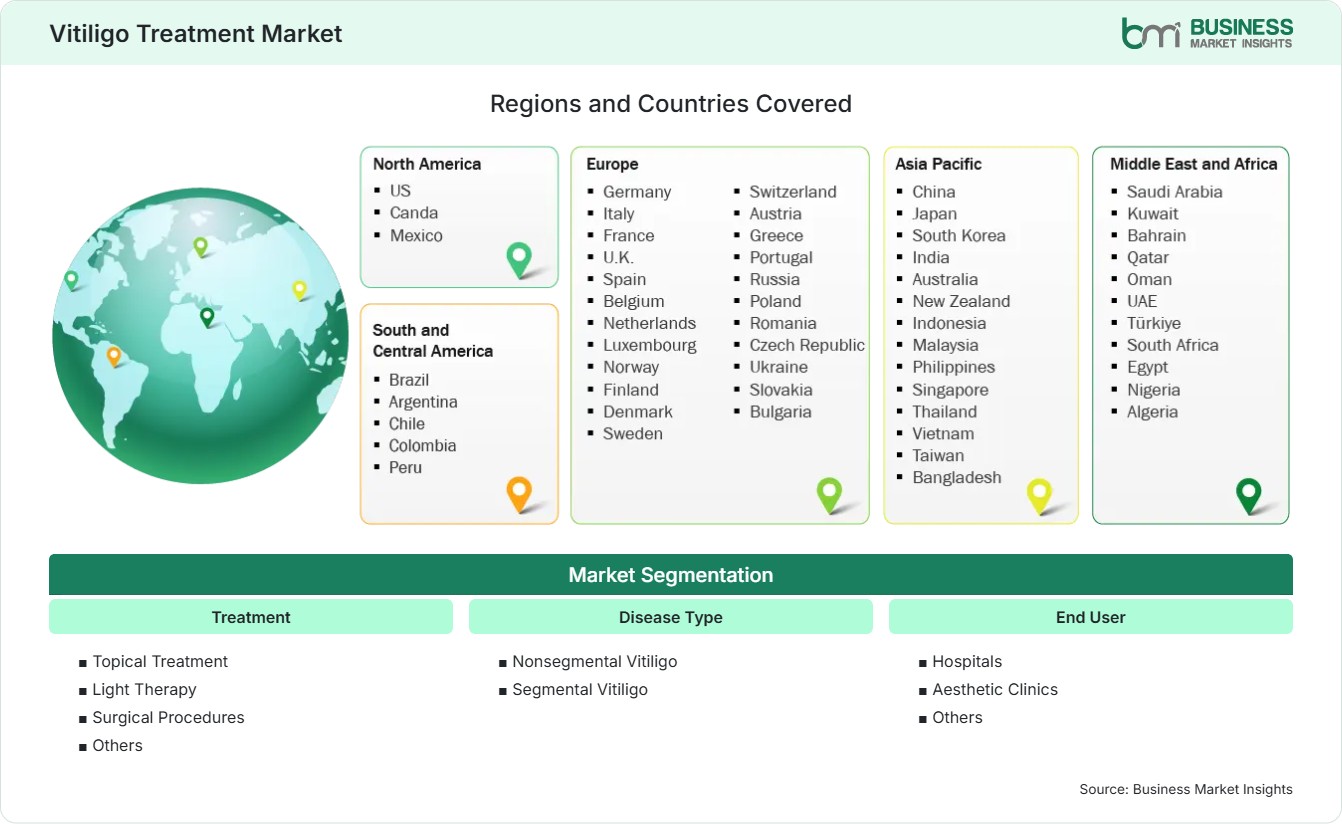
Europe accounts for 27%–31% of global demand in 2025 and is projected to grow at a 3.8%–4.8% CAGR through 2033. Germany, the United Kingdom, France, Italy, and Spain remain important markets due to established dermatology services and specialist treatment access. Growing patient awareness and demand for noninvasive care are supporting regional expansion.
- Dermatology clinics are expanding access to phototherapy and topical treatment pathways for patients requiring long-term management.
- European healthcare systems are emphasizing evidence-based treatment selection and structured specialist care.
- Germany and France remain important markets, while Spain and Italy provide opportunities through expanding aesthetic and dermatological services.
- Research institutions continue exploring immune pathways, combination therapies, and improved repigmentation strategies.
Asia Pacific Vitiligo Treatment Market
Asia Pacific holds 24%–28% of global demand in 2025 and is projected to grow at a 5.5%–6.5% CAGR through 2033. China, India, Japan, South Korea, and Australia represent important markets as healthcare infrastructure expands and awareness of pigmentary disorders improves. Rising specialist availability and greater willingness to seek dermatological treatment are supporting regional opportunities.
- India and China provide significant opportunities through expanding dermatology networks and increasing awareness of treatment options.
- Japan and South Korea support demand for specialized dermatological and aesthetic treatment services.
- Improved healthcare access is encouraging more patients to seek professional diagnosis rather than relying exclusively on cosmetic concealment.
- Phototherapy availability is increasing across specialist facilities, supporting noninvasive treatment adoption.
Rest of World Vitiligo Treatment Market
Rest of World represents 10%–14% of global demand in 2025 and is projected to grow at a 3.5%–4.5% CAGR through 2033. Latin America, the Middle East, and Africa are gradually expanding dermatology services as healthcare infrastructure improves. Demand is supported by increasing awareness, urban healthcare development, and greater availability of specialist consultations.
Latin American markets are developing private dermatology and aesthetic care networks, while Middle Eastern markets provide opportunities through premium specialist services. African markets remain more access-constrained but can benefit from improved specialist availability and healthcare investment.
- Private dermatology clinics are expanding access to specialized consultations and noninvasive treatment services.
- Increasing awareness of pigmentary disorders is encouraging patients to seek professional evaluation and longer-term management.
- Specialist treatment centers can create opportunities for integrated medical, phototherapy, and aesthetic services.
- Wider treatment access will depend on affordability, physician availability, product distribution, and healthcare infrastructure.