
Mucopolysaccharidosis Treatment Market Outlook: Size, Share, Trends, Growth Analysis, Competitive Landscape & Forecast, 2026-2033

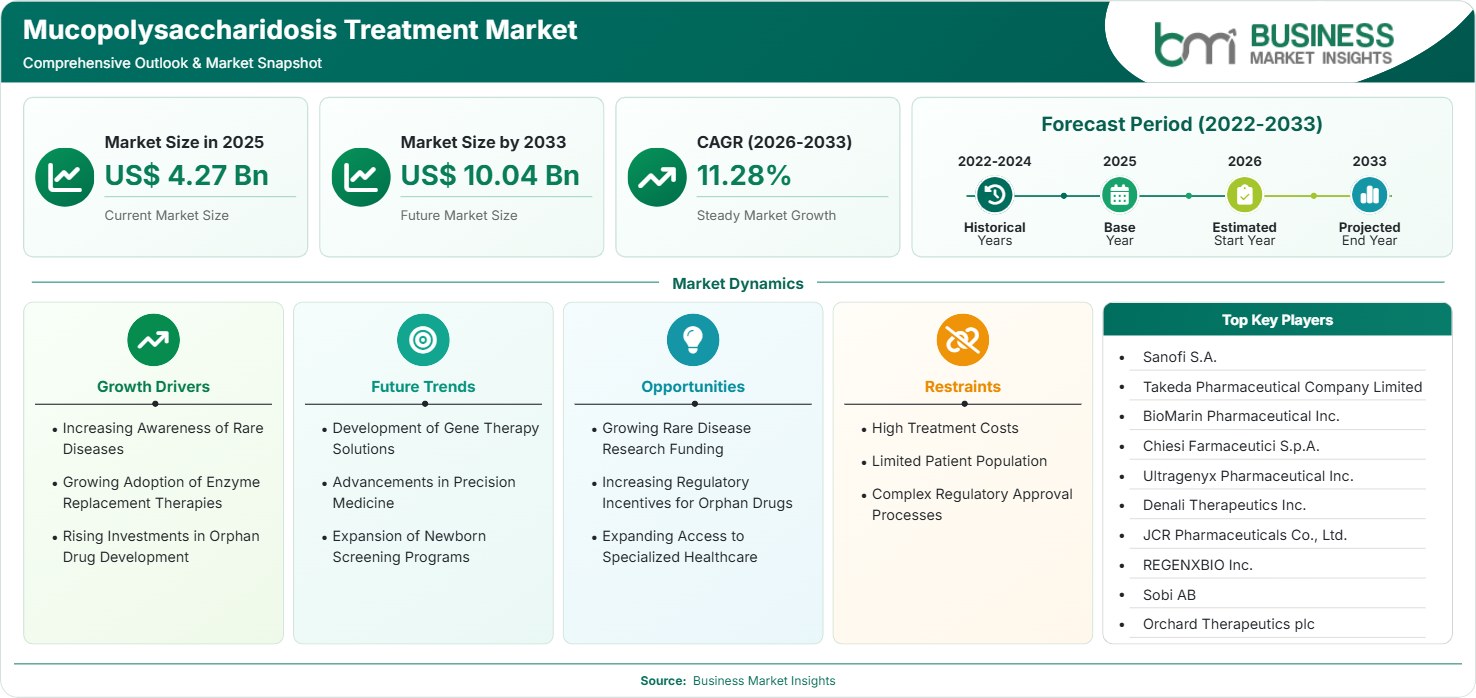
The Mucopolysaccharidosis Treatment Market size was valued at US$ 4.27 Billion in 2025 and is projected to reach US$ 10.04 Billion by 2033, growing at a CAGR of 11.28% during 2026–2033, driven by rising rare disease awareness, advancements in enzyme therapies, expanding orphan drug investments, and improved specialized healthcare access.

Report Coverage
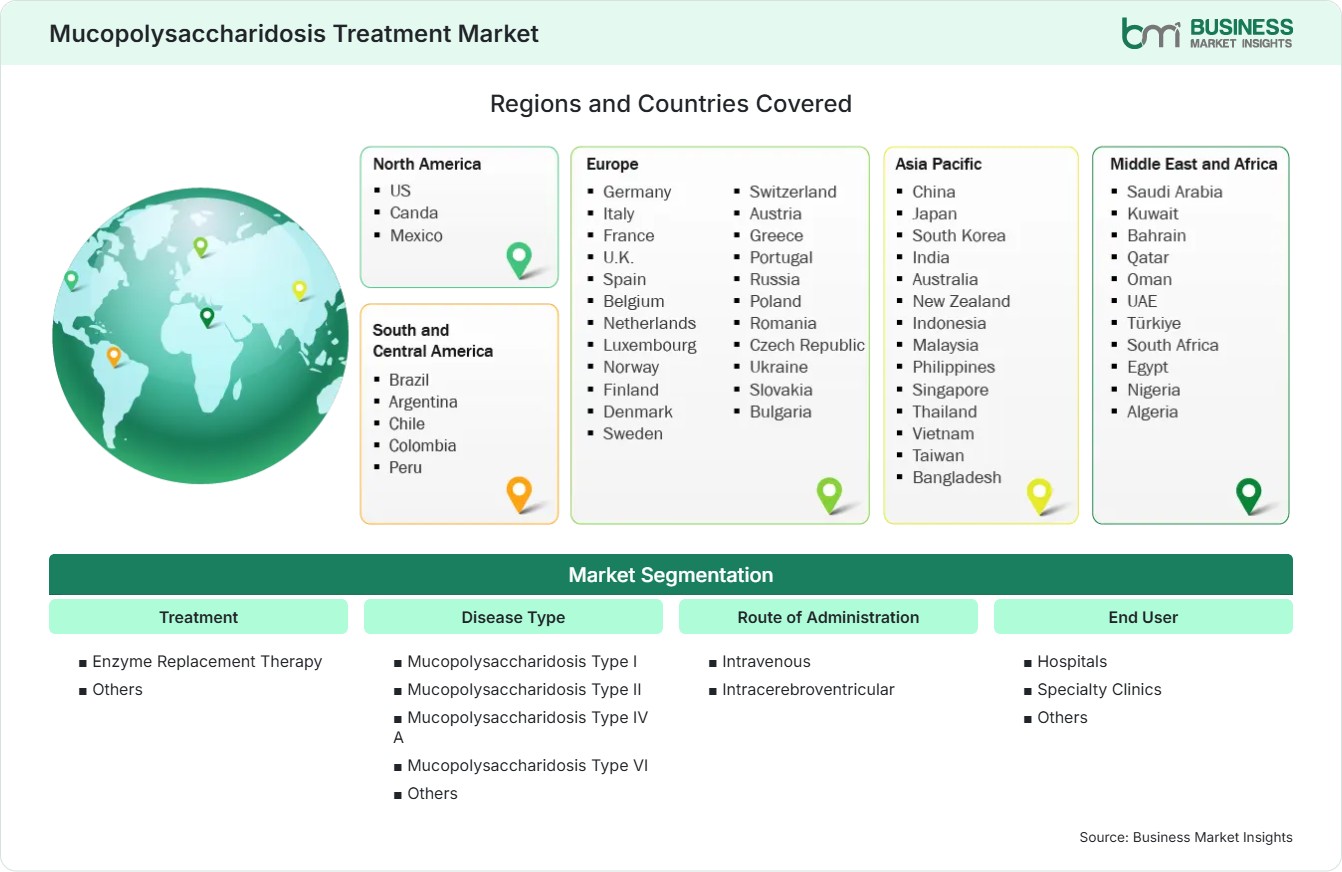
  • Treatment: Enzyme Replacement Therapy , Others
  • Disease Type: Mucopolysaccharidosis Type I, Mucopolysaccharidosis Type II, Mucopolysaccharidosis Type IV A, Mucopolysaccharidosis Type VI, Others
  • Route of Administration: Intravenous, Intracerebroventricular
  • End User: Hospitals, Specialty Clinics, Others
US$ 4.27 Bn Market size in 2025
US$ 10.04 Bn Market Size by 2033
11.28% CAGR, 2026 - 2033
2026-2033 Forecast Period

AI Overview

Mucopolysaccharidosis Treatment Market Summary

  • North America Region: North America holds 38%–42% share in 2025, growing with a CAGR of 10.50%–12.00% during 2026–2033, supported by advanced diagnostics, reimbursement frameworks, rare disease programs, clinical research infrastructure, and orphan drug innovation. The US market advances through specialized treatment centers and adoption of advanced therapies with a CAGR of 10.80%–12.20%.
  • Fastest Growing Region: Asia Pacific records 22%–26% share in 2025, expanding at a CAGR of 12.00%–13.50% during 2026–2033, supported by improving genetic screening, healthcare investments, rising diagnosis rates, government rare disease initiatives, and growing access to specialized treatment facilities.
  • Leading Segment: Enzyme Replacement Therapy (ERT) accounts for 55%–60% share in 2025, growing at a CAGR of 10.80%–12.00% during 2026–2033, driven by established clinical outcomes, regulatory approvals, long-term treatment adoption, and continued biotechnology advancements.
  • High Growth Segment: Intracerebroventricular (ICV) administration represents 8%–12% share in 2025, achieving a CAGR of 13.00%–15.00% during 2026–2033, supported by emerging neurological delivery approaches, improved central nervous system targeting, and innovation in advanced therapies.
  • Key Market Opportunity: Expanding gene therapy research, increasing rare disease funding, improving patient identification programs, and strengthening healthcare infrastructure create opportunities for companies developing next-generation treatments with improved therapeutic outcomes.
  • Major Market Players: Sanofi S.A., Takeda Pharmaceutical Company Limited, BioMarin Pharmaceutical Inc., Chiesi Farmaceutici S.p.A., Ultragenyx Pharmaceutical Inc., Denali Therapeutics Inc., JCR Pharmaceuticals Co., Ltd., REGENXBIO Inc., Sobi AB, Orchard Therapeutics plc.
Strategic Insights

Mucopolysaccharidosis Treatment Market: Strategic Insights

Mucopolysaccharidosis Treatment Market Strategic Framework
FREE PDF
Request your free sample
Request free sample
Stakeholder View

Key Takeaways

  • The supply chain structure is increasingly dependent on biotechnology manufacturers, specialized clinical networks, diagnostic providers, and pharmaceutical distributors that support long-term treatment continuity for rare disease patients.
  • Growth opportunities are concentrated around advanced enzyme replacement approaches, neurological delivery technologies, and emerging therapies designed to address limitations associated with conventional treatment methods.
  • Innovation strategies are shifting toward gene-based platforms, improved biologic formulations, and targeted delivery systems that aim to enhance therapeutic effectiveness and reduce treatment burden.
  • Asia Pacific presents a compelling investment opportunity due to improving rare disease awareness, expanding healthcare infrastructure, and increasing government support for genetic disorder management programs.
  • Investment activity is focusing on biotechnology partnerships, licensing agreements, and pipeline expansion as pharmaceutical companies seek stronger positions in specialized orphan disease treatment segments.
Geographic Outlook

Mucopolysaccharidosis Treatment Market Regional Highlights

North America Mucopolysaccharidosis Treatment Market

North America maintains a leading position with 38%–42% share in 2025 and grows at a CAGR of 10.50%–12.00% between 2026–2033. The region benefits from strong biotechnology ecosystems, advanced healthcare facilities, reimbursement support, and extensive clinical research capabilities. The Mucopolysaccharidosis Treatment Market share reflects strong adoption of enzyme replacement therapies across the US and Canada, while continued investment in rare disease innovation strengthens long-term expansion.

  • The United States dominates regional demand due to advanced diagnostic capabilities, established specialty clinics, and extensive access to approved orphan therapies through healthcare reimbursement programs.
  • Canada supports market expansion through rare disease initiatives, improving patient identification systems, and increasing collaboration between healthcare providers and biotechnology developers.
  • Research institutions across North America continue advancing clinical trials focused on gene therapy and neurological treatment approaches for inherited metabolic disorders.
  • Pharmaceutical companies are strengthening manufacturing capabilities for biologics to ensure reliable supply of complex enzyme-based therapies across specialized treatment networks.

US Mucopolysaccharidosis Treatment Market

The US accounts for 32%–36% share of the global market in 2025 and expands at a CAGR of 10.80%–12.20% during 2026–2033. Strong healthcare infrastructure, favorable regulatory pathways, and high adoption of advanced therapies support domestic growth. The country remains a major hub for clinical research, orphan drug development, and specialized treatment delivery, supported by collaboration between pharmaceutical companies, hospitals, and research organizations.

  • The US benefits from strong orphan drug incentives that encourage biotechnology companies to develop therapies for rare inherited metabolic disorders.
  • Increasing availability of genetic testing improves diagnosis rates and supports earlier treatment initiation among patients with mucopolysaccharidosis conditions.
  • Specialty healthcare centers are expanding multidisciplinary care models that combine diagnosis, treatment monitoring, and long-term patient management.

Europe Mucopolysaccharidosis Treatment Market

Europe represents 28%–32% share in 2025, growing at a CAGR of 10.20%–11.80% through 2026–2033. The region benefits from structured healthcare systems, rare disease frameworks, and regulatory support from European institutions. Germany, France, the United Kingdom, and Italy represent leading markets, while Eastern European countries provide emerging opportunities through improving diagnosis and healthcare access. The Mucopolysaccharidosis Treatment Market share is influenced by public healthcare adoption and research collaborations.

  • Germany demonstrates strong demand due to advanced metabolic disease centers and established reimbursement mechanisms for rare disease treatments.
  • France supports innovation through national rare disease strategies, specialized healthcare networks, and clinical research partnerships.
  • The United Kingdom continues expanding rare disease programs through improved genetic testing and patient registry development.
  • Italy contributes to regional growth through specialized treatment centers and increasing awareness among healthcare professionals.
  • European biotechnology collaborations are supporting development of advanced therapies targeting complex metabolic disorders.

Asia Pacific Mucopolysaccharidosis Treatment Market

Asia Pacific represents 22%–26% share in 2025 and expands at a CAGR of 12.00%–13.50% during 2026–2033, making it the fastest-growing regional market. Increasing healthcare expenditure, expanding genetic screening capabilities, and improving access to specialized therapies are supporting regional development. Japan, China, South Korea, and India are emerging as important contributors due to stronger rare disease policies, biotechnology investments, and growing awareness among healthcare providers and patients.

  • Japan leads regional adoption through advanced healthcare infrastructure, established reimbursement systems, and strong expertise in metabolic disorder diagnosis and treatment management.
  • China is expanding rapidly due to increasing investment in biotechnology research, improving rare disease recognition, and development of specialized healthcare centers.
  • India presents growth opportunities through rising healthcare investments, expanding genetic testing availability, and increasing government attention toward rare disease treatment accessibility.
  • South Korea is strengthening its position through biotechnology innovation, clinical research capabilities, and collaborations focused on advanced therapeutic development.
  • Regional pharmaceutical companies are increasing partnerships with global biotechnology firms to improve availability of specialized orphan disease therapies.

Rest of World Mucopolysaccharidosis Treatment Market

Rest of World represents 8%–12% share in 2025 and grows at a CAGR of 9.50%–11.00% during 2026–2033. South and Central America are improving rare disease treatment access through healthcare modernization, while Middle East and African countries are investing in specialized medical infrastructure. Brazil, Mexico, Saudi Arabia, and the UAE are emerging markets due to expanding healthcare capabilities, increasing awareness programs, and greater collaboration with international pharmaceutical companies.

  • Brazil supports regional development through improving healthcare networks, rare disease awareness initiatives, and increasing availability of specialized treatment centers.
  • Mexico is witnessing gradual adoption through better diagnostic infrastructure, increasing physician education, and growing collaborations with global healthcare organizations.
  • Saudi Arabia and the UAE are investing in advanced healthcare facilities and precision medicine programs to improve rare disease management capabilities.
  • African markets are progressing through international partnerships, patient support programs, and efforts to strengthen access to specialized therapies.
  • Latin American biotechnology initiatives are creating opportunities for improved treatment distribution and expanded patient identification systems.
Global Market Geography
FREE PDF
Request your free sample
Request free sample
Segment Analysis

Mucopolysaccharidosis Treatment Market Segmentation

Treatment

Treatment remains the dominant segment, accounting for 55%–60% share in 2025 and expanding at a CAGR of 10.80%–12.00% between 2026–2033. The segment benefits from established enzyme replacement therapy adoption, continuous clinical improvements, and increasing treatment accessibility. The Mucopolysaccharidosis Treatment Market scope is influenced by pharmaceutical innovation, regulatory approvals, and expansion of advanced therapeutic options.

  • Enzyme Replacement Therapy (ERT): Enzyme replacement therapy remains the primary treatment approach due to proven efficacy, regulatory approvals, and long-term clinical usage. Increasing availability of biologic therapies supports patient management.
  • Others: Emerging treatment approaches include gene therapy, substrate reduction strategies, and investigational therapies targeting disease mechanisms. Research advancements are expanding future therapeutic possibilities.

Disease Type

Disease Type segmentation reflects diverse treatment requirements across multiple mucopolysaccharidosis variants. The segment accounts for 35%–40% share in 2025 and grows at a CAGR of 11.00%–12.50% through 2026–2033. Increasing disease awareness, improved genetic diagnosis, and personalized treatment strategies are influencing adoption patterns. The segment highlights varied clinical needs requiring specialized therapeutic approaches.

  • Mucopolysaccharidosis Type I: Type I treatment demand is supported by established diagnostic pathways and availability of enzyme replacement therapies. Early intervention improves disease management outcomes.
  • Mucopolysaccharidosis Type II: Type II represents significant treatment demand due to its prevalence among identified mucopolysaccharidosis cases and continued development of targeted therapies.
  • Mucopolysaccharidosis Type IV A: Type IV A treatment development focuses on addressing skeletal and systemic complications through innovative therapeutic approaches and clinical research programs.
  • Mucopolysaccharidosis Type VI: Type VI management benefits from specialized enzyme therapies and increasing diagnosis rates through improved genetic testing capabilities.

Route of Administration

Route of Administration plays an important role in therapy effectiveness and patient outcomes, representing 15%–20% share in 2025 with a CAGR of 12.00%–13.50% between 2026–2033. Advancements in drug delivery technologies are supporting improved therapeutic targeting. The Mucopolysaccharidosis Treatment Market trends are shaped by innovations focused on reducing administration challenges and enhancing treatment convenience.

  • Intravenous: Intravenous administration remains widely adopted due to established clinical protocols, availability of approved therapies, and healthcare provider familiarity with infusion-based treatments.
  • Intracerebroventricular (ICV): ICV administration is gaining attention because of its ability to deliver therapies directly to the central nervous system and address neurological complications.

End User

End User segmentation reflects treatment delivery infrastructure and patient care models, accounting for 20%–25% share in 2025 with a CAGR of 10.50%–12.50% through 2026–2033. Hospitals and specialty centers remain central to treatment administration due to the complexity of rare disease management. Increasing specialized healthcare availability supports broader therapeutic adoption.

  • Hospitals: Hospitals represent key treatment locations due to advanced diagnostic facilities, trained specialists, and capability to manage long-term infusion therapies.
  • Specialty Clinics: Specialty clinics are expanding due to their focused expertise in metabolic disorders, personalized patient monitoring, and coordinated care services.
  • Others: Additional healthcare settings contribute through supportive care services, patient assistance programs, and community-based management initiatives.
Market Forces

Mucopolysaccharidosis Treatment Market Dynamics

Key Market Drivers

Increasing Awareness of Rare Diseases

Increased awareness of rare genetic diseases is contributing to more diagnoses as well as increased adoption of early treatment. Patient advocacy organizations, healthcare awareness campaigns, and genetic screening initiatives are helping raise awareness about these diseases among doctors and patients families. The Mucopolysaccharidosis Treatment Market growth is driven due to increasing awareness levels and referral mechanisms. The market trends reveal an increased emphasis on early diagnosis, personalized treatment strategies, and patient care models. Rare disease associations are constantly working together with the healthcare system to make things easier for patients.

Growing Adoption of Enzyme Replacement Therapies

Enzyme replacement therapies remain a major driver due to their established clinical benefits and regulatory approvals across multiple mucopolysaccharidosis types. Continuous advancements in the process of biologics development, administration of therapy, and patient monitoring have improved treatment results. The pharmaceutical companies are now spending more on development and introduction of new formulations to overcome limitations of the traditional methods. Growing awareness among physicians regarding the use of enzymes as treatments is aiding adoption of these treatments in healthcare facilities.

Rising Investments in Orphan Drug Development

Increasing pharmaceutical investment in orphan drug research is accelerating innovation for rare metabolic disorders. The factors of regulatory incentives, grant funding for research, and biotech alliances are driving the development of advanced therapies. Some companies are trying to develop gene therapies, novel biologics, and target-specific therapy platforms to meet the demands of patients. The Mucopolysaccharidosis Treatment Market is positively impacted by research and development activities and enhanced collaborations between universities and the industry. Rare disease programs supported by the government are also improving clinical trial opportunities and supporting development of innovative treatment solutions.

Key Market Opportunities

Growing Rare Disease Research Funding

Increasing investment in rare disease research is creating opportunities for biotechnology companies developing innovative mucopolysaccharidosis therapies. Various public-funded programs, university-level collaboration initiatives, and private sector partnerships are speeding up the discovery of novel treatment methods. Research grants and efficient clinical trial networks help in expanding the pipeline. Businesses working in gene therapy, advanced enzyme technology, and targeting delivery systems have opportunities due to increasing scientific interests. As per the Mucopolysaccharidosis Treatment Market Forecasts, continued investment in research will help in developing therapies for neurological and systemic diseases complications.

Increasing Regulatory Incentives for Orphan Drugs

Regulatory incentives for orphan drug development are creating favorable conditions for pharmaceutical innovation. The priority review system, market exclusivity incentives, and financial assistance have been created to ensure that companies focus their resources on research programs for rare diseases. These help eliminate barriers to development and make the commercial value proposition more favorable. Biotech companies are using the regulatory environment to expedite development and bolster their pipeline of products. Increased alignment in regulations around the world is ensuring that access to better treatments is facilitated through collaboration with pharma companies.

Expanding Access to Specialized Healthcare

Improving access to specialized healthcare facilities represents a major opportunity for market participants. The emerging economies have been building up genetic testing facilities, metabolic disorder clinics, and doctor training programs to enhance the diagnosis and availability of treatment. There have been international partnerships in the healthcare sector that are helping to develop patient assistance programs and therapeutic availability. The pharmaceutical firms can leverage this situation by designing distribution methods according to the needs of regional healthcare systems.

Market Restraints and Challenges

High Treatment Costs

Factor: High development expenses and complex biologic manufacturing requirements increase therapy pricing, creating affordability challenges for patients and healthcare systems. Impact: Elevated treatment costs can limit accessibility, particularly in regions with restricted reimbursement coverage and limited specialized healthcare funding. Manufacturing advanced enzyme replacement therapies requires significant investment in research, clinical validation, and production infrastructure, contributing to higher commercial pricing. Although reimbursement programs support access in developed markets, cost barriers remain a challenge for broader global adoption. Companies are focusing on manufacturing efficiencies, patient assistance initiatives, and alternative payment models to improve affordability and expand treatment availability.

Limited Patient Population

Factor: The rare occurrence of mucopolysaccharidosis conditions results in a small patient pool, limiting commercial scalability and increasing dependence on specialized treatment networks. Impact: A restricted patient population can increase clinical trial complexity, prolong development timelines, and affect investment decisions. Pharmaceutical companies must balance research expenditure with achievable market returns while maintaining sustainable therapy development programs. Improved genetic screening and international patient registries are helping identify more cases, but disease rarity continues creating operational challenges. Industry participants are addressing these limitations through collaborative research models, adaptive clinical trial designs, and global patient identification initiatives.

Company Analysis

Competitive Landscape

The Mucopolysaccharidosis Treatment Market analysis highlights a competitive environment driven by pharmaceutical innovation, rare disease expertise, biotechnology capabilities, and expansion of advanced therapeutic pipelines. Leading companies are focusing on enzyme replacement therapies, gene therapy platforms, clinical collaborations, and patient support programs to strengthen their market position.

Company Name

Overview

Products and Services relevant to this market

Sanofi S.A.

Global pharmaceutical company specializing in innovative healthcare solutions, with strong expertise in rare diseases and specialty therapies.

Provides enzyme replacement therapies for mucopolysaccharidosis conditions, including long-term treatment solutions and patient support services.

Takeda Pharmaceutical Company Limited

Global biopharmaceutical organization focused on rare diseases, gastrointestinal, oncology, and specialty healthcare markets.

Develops and commercializes rare disease therapies, including enzyme replacement treatments for metabolic disorders.

BioMarin Pharmaceutical Inc.

Biotechnology company focused on developing therapies for serious genetic and rare diseases.

Provides advanced enzyme replacement therapies and research programs targeting inherited metabolic disorders.

Chiesi Farmaceutici S.p.A.

Specialty pharmaceutical company with expertise in rare diseases and advanced therapeutic development.

Offers rare disease treatments and supports research programs addressing inherited metabolic conditions.

Ultragenyx Pharmaceutical Inc.

Biotechnology company developing therapies for rare and ultra-rare genetic disorders.

Focuses on gene therapies and innovative treatment platforms for metabolic and genetic diseases.

Denali Therapeutics Inc.

Biotechnology company specializing in neurological disease research and advanced therapeutic delivery technologies.

Develops targeted delivery platforms and genetic medicine approaches for neurological conditions.

JCR Pharmaceuticals Co., Ltd.

Japanese biotechnology company focused on innovative biologics and rare disease therapies.

Develops enzyme replacement and advanced biologic therapies for inherited metabolic disorders.

REGENXBIO Inc.

Gene therapy biotechnology company developing innovative genetic medicine platforms.

Provides gene therapy research programs targeting rare genetic disorders and metabolic diseases.

Sobi AB

Specialty pharmaceutical company focused on rare diseases and innovative treatment solutions.

Develops and commercializes therapies supporting patients with rare inherited disorders.

Orchard Therapeutics plc

Biotechnology company focused on gene therapies for rare diseases.

Develops gene-based treatments designed to address underlying genetic causes of rare disorders.

Trust & Transparency

Research Methodology

The market analysis combines proprietary research with secondary data from government agencies, company disclosures, regulatory filings, industry databases and expert interviews. Market estimates are validated through data triangulation, cross-market benchmarking and analyst review.

View Full Research Methodology

Questions Answered

Frequently Asked Questions

How are pharmaceutical companies strengthening rare disease pipelines?

Companies are investing in biotechnology partnerships, clinical research collaborations, licensing agreements, and advanced therapeutic platforms to expand rare disease treatment portfolios.

What does the Mucopolysaccharidosis Treatment Market Report cover?

The report evaluates treatment approaches, disease categories, administration routes, end-user adoption, competitive strategies, regional trends, and future opportunities influencing industry development.

Why are specialized treatment centers important for patients?

Specialized centers provide multidisciplinary care involving geneticists, metabolic specialists, and treatment monitoring teams, improving disease management and patient support.

How do advanced therapies influence future treatment approaches?

Gene therapies and next-generation biologics are being researched to address disease mechanisms more effectively and potentially reduce limitations associated with lifelong conventional therapies.

What factors are improving diagnosis rates for mucopolysaccharidosis conditions?

Improved genetic testing, newborn screening programs, physician awareness, and rare disease registries are helping identify patients earlier and enabling timely treatment decisions.

Access the Full Mucopolysaccharidosis Treatment Market Report

Get segment-level forecasts, regional estimates, competitive benchmarking, company profiles and downloadable Excel datasets.

Access the full Mucopolysaccharidosis Treatment Market Report
350 pages PDF & Excel | 2026-08-25