
GVHD Treatment Market Outlook: Size, Share, Trends, Growth Analysis, Competitive Landscape & Forecast, 2026-2033

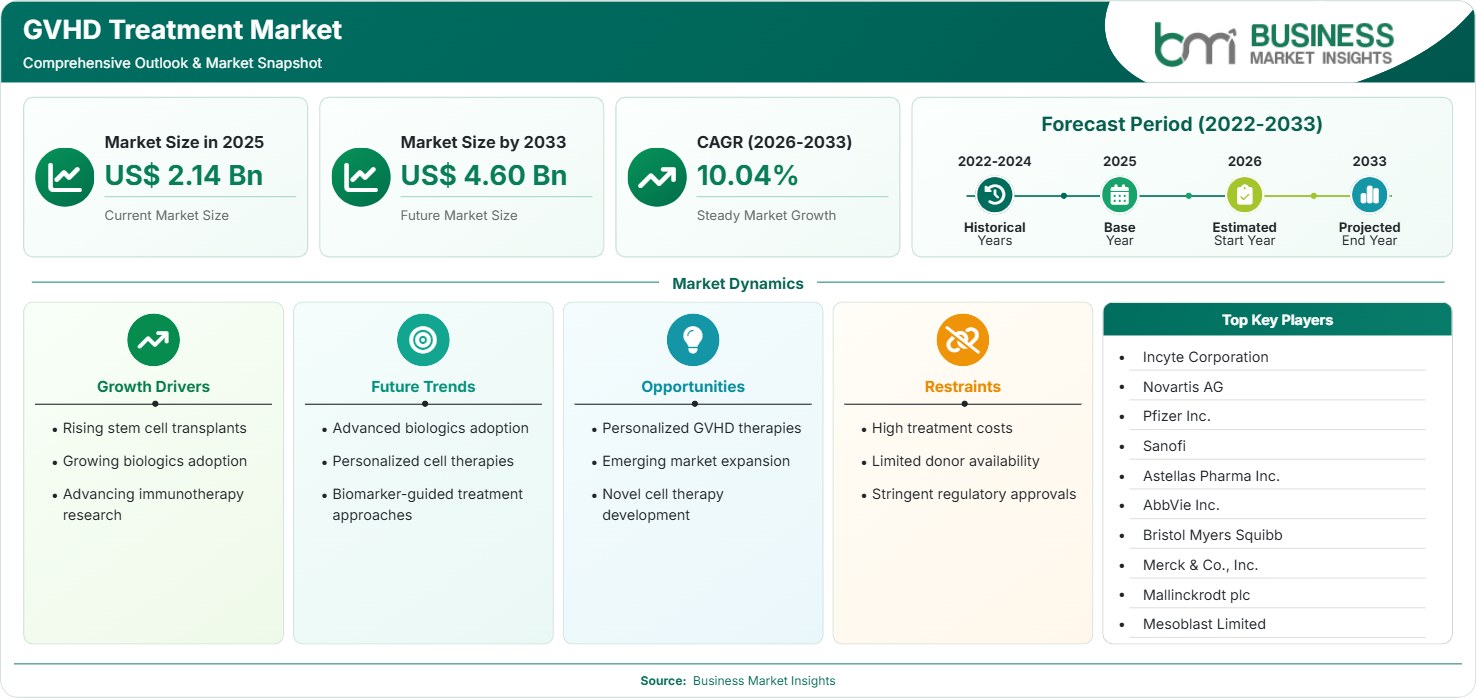
The GVHD Treatment Market size was valued at US$ 2.14 billion in 2025 and is projected to reach US$ 4.60 billion by 2033, growing at a CAGR of 10.04% during 2026–2033. Growth is driven by rising stem cell transplants, growing biologics adoption, and advancing immunotherapy research, while opportunities are emerging through personalized GVHD therapies, emerging market expansion, and novel cell therapy development.

Report Coverage
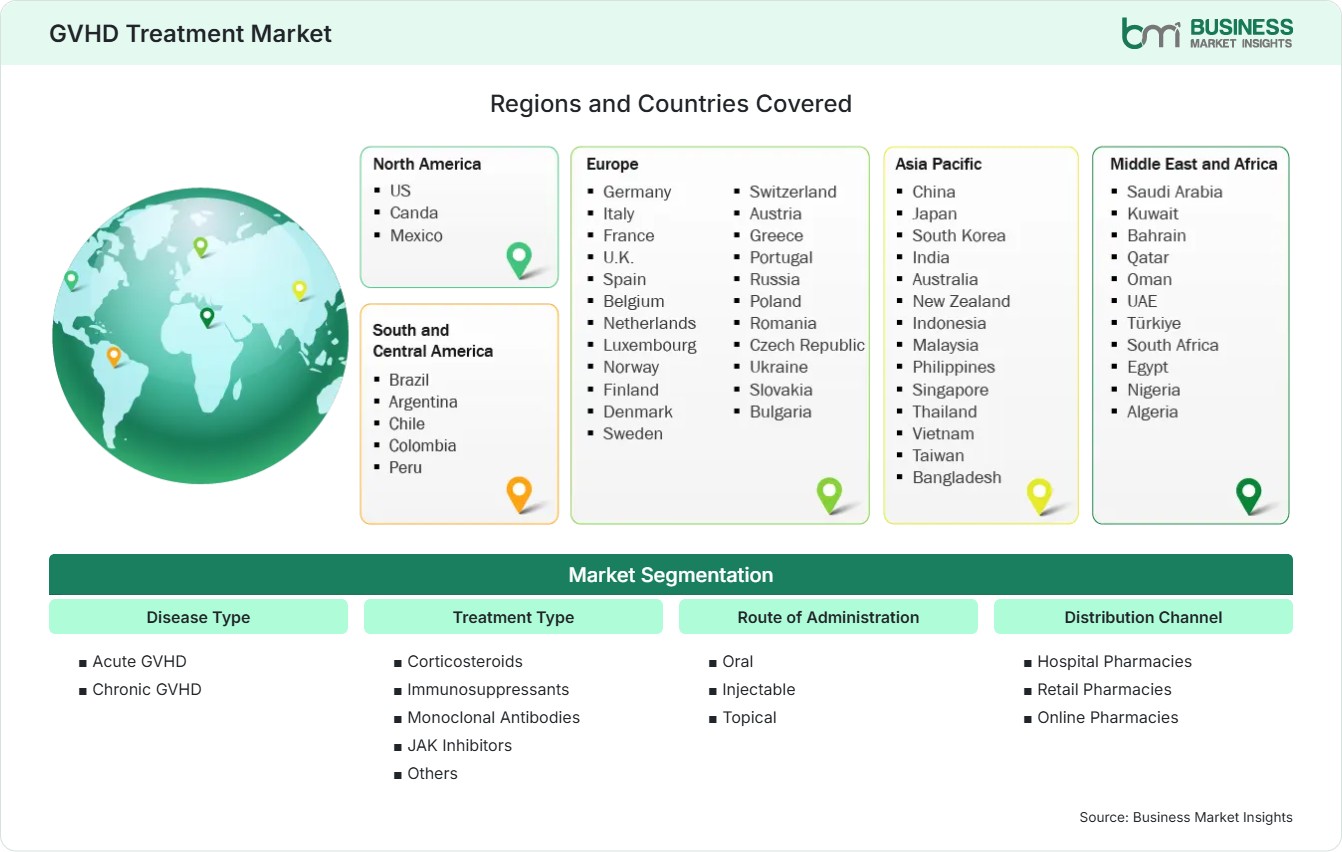
  • Disease Type: Acute GVHD, Chronic GVHD
  • Treatment Type: Corticosteroids, Immunosuppressants, Monoclonal Antibodies, JAK Inhibitors, Others
  • Route of Administration: Oral, Injectable, Topical
  • Distribution Channel: Hospital Pharmacies, Retail Pharmacies, Online Pharmacies
US$ 2.14 Bn Market size in 2025
US$ 4.60 Bn Market Size by 2033
10.04% CAGR, 2026 - 2033
2026-2033 Forecast Period

01 AI Overview

GVHD Treatment Market Summary

  • North America Region: North America accounts for approximately 42%–46% market share in 2025 and is projected to grow at a 9.5%–10.5% CAGR during 2026–2033. The region benefits from high hematopoietic stem cell transplantation volumes, advanced healthcare infrastructure, biologics adoption, and strong clinical research activity. The U.S. market is supported by transplant center networks and is estimated to grow at approximately 9.8%–10.8% CAGR.
  • Fastest Growing Region: Asia Pacific represents around 20%–24% of the global market in 2025 and is expected to expand at 11.0%–12.0% CAGR through 2033. Increasing transplant procedures, improving healthcare access, rising pharmaceutical investments, and expanding adoption of advanced immunotherapies are accelerating regional growth.
  • Leading Segment: Chronic GVHD holds approximately 55%–59% market share in 2025 and is expected to grow at a 9.8%–10.8% CAGR. Increasing diagnosis rates, long-term management requirements, and demand for targeted therapies are supporting treatment adoption for chronic disease cases.
  • High Growth Segment: JAK Inhibitors represent approximately 15%–19% market share in 2025 and are projected to grow at 12.0%–13.0% CAGR. Increasing clinical adoption, targeted immune pathway modulation, and expanding indications are driving demand for JAK-based GVHD therapies.
  • Key Market Opportunity: Personalized treatment approaches, advanced cellular therapies, biomarker-based patient selection, and expansion into emerging healthcare markets are creating opportunities for innovative GVHD treatment providers.
  • Major Market Players: Incyte Corporation, Novartis AG, Pfizer Inc., Sanofi, Astellas Pharma Inc., AbbVie Inc., Bristol Myers Squibb, Merck & Co., Inc., Mallinckrodt plc, and Mesoblast Limited.
02 Strategic Insights

GVHD Treatment Market: Strategic Insights

gvhd-treatment-market-market-strategic-framework
FREE PDF
Request your free sample
Request free sample
03 Stakeholder View

Key Takeaways

  • Increasing hematopoietic stem cell transplantation procedures are creating sustained demand for effective GVHD prevention and treatment solutions across healthcare systems.
  • Targeted therapies including JAK inhibitors and monoclonal antibodies provide significant growth opportunities by addressing limitations of conventional immunosuppressive treatments.
  • Advances in immunology, biomarkers, and cellular therapies are shaping the future development of personalized GVHD treatment approaches.
  • Asia Pacific offers strong expansion potential due to improving healthcare infrastructure, increasing transplant capabilities, and pharmaceutical market development.
  • Pharmaceutical companies are strengthening pipelines through clinical research, strategic collaborations, and development of next-generation immune-modulating therapies.
  • Treatment affordability and donor availability remain important considerations influencing access to advanced GVHD management solutions.
04 Geographic Outlook

GVHD Treatment Market Regional Highlights

North America GVHD Treatment Market

North America accounted for approximately 42%–46% of the global market in 2025 and is projected to grow at a 9.5%–10.5% CAGR during 2026–2033. The region maintains leadership due to advanced transplant centers, strong pharmaceutical research, and higher adoption of targeted therapies. The GVHD Treatment Market share is supported by increasing hematopoietic stem cell transplantation procedures, reimbursement availability, and growing clinical adoption of biologics and immune-modulating treatments.

  • The United States remains the primary contributor due to established transplant networks, oncology research capabilities, and advanced treatment accessibility.
  • Canada is expanding GVHD management capabilities through improved transplant infrastructure and specialized hematology care programs.
  • Pharmaceutical innovation is accelerating adoption of targeted therapies and biologic treatment approaches across healthcare facilities.
  • Clinical research investments are supporting development of improved therapies with enhanced efficacy and safety profiles.

US GVHD Treatment Market

The United States represented approximately 38%–42% of the global market revenue in 2025 and is expected to expand at a 9.8%–10.8% CAGR through 2033. The country benefits from high stem cell transplant volumes, advanced healthcare infrastructure, and a strong presence of leading pharmaceutical companies developing GVHD therapies. Increasing adoption of targeted treatments, clinical trials, and personalized medicine approaches is strengthening market expansion across specialized transplant and oncology centers.

  • Rising hematopoietic stem cell transplantation procedures are increasing demand for effective GVHD prevention and treatment solutions.
  • Advanced clinical trial activity is accelerating development of innovative immunotherapies and targeted treatment approaches.
  • Strong healthcare spending supports adoption of advanced biologics and specialty pharmaceutical products.

Europe GVHD Treatment Market

Europe accounted for approximately 25%–29% of the global market in 2025 and is expected to grow at a 9.2%–10.2% CAGR between 2026 and 2033. Germany, the United Kingdom, France, and Italy represent key markets due to established transplant programs and healthcare infrastructure. Germany is estimated to grow at 9.5%–10.5% CAGR, while the United Kingdom is expected to expand at 9.3%–10.3% CAGR, supported by research initiatives and increasing adoption of advanced therapies.

  • Germany leads regional development due to strong hematology infrastructure and specialized transplant treatment capabilities.
  • The United Kingdom is expanding access to innovative GVHD therapies through clinical research and healthcare modernization programs.
  • France is strengthening transplant care through pharmaceutical innovation and improved patient management approaches.
  • European research institutions are advancing immunotherapy studies and personalized treatment strategies.

Asia Pacific GVHD Treatment Market

Asia Pacific accounted for approximately 20%–24% of global revenue in 2025 and represents the fastest-growing region with a projected 11.0%–12.0% CAGR during 2026–2033. China, Japan, India, and South Korea are contributing to regional expansion through increasing transplant procedures, healthcare investments, and pharmaceutical development. China is projected to grow at 11.3%–12.3% CAGR, while India is expected to expand at 11.5%–12.5% CAGR due to improving specialty healthcare access.

  • China is increasing GVHD treatment adoption through expanding transplant centers and advanced oncology healthcare facilities.
  • Japan benefits from strong regenerative medicine research and established hematopoietic transplant capabilities.
  • India is developing advanced transplant infrastructure and improving access to specialty therapies.
  • South Korea is supporting market growth through biotechnology investments and innovative treatment research.
  • Rising healthcare expenditure across emerging economies is improving availability of advanced GVHD therapies.

Rest of World GVHD Treatment Market

Latin America, the Middle East, and Africa collectively represented approximately 4%–7% of global revenue in 2025 and are forecast to grow at a 10.0%–11.0% CAGR between 2026 and 2033. Brazil, Mexico, UAE, and South Africa are emerging markets due to improving healthcare systems, increasing awareness of transplantation procedures, and investments in specialty care. The GVHD Treatment Market growth in these regions is influenced by expanding oncology services and future demand for advanced therapies.

  • Latin American countries are improving access to transplant procedures through healthcare infrastructure development.
  • Brazil and Mexico are expanding specialized oncology and hematology treatment capabilities.
  • Middle Eastern countries are investing in advanced healthcare facilities and transplant service expansion.
  • UAE healthcare modernization initiatives are supporting adoption of innovative specialty treatments.
  • African markets are gradually improving access through international healthcare collaborations and medical infrastructure development.
global-market-geography
FREE PDF
Request your free sample
Request free sample
05 Segment Analysis

GVHD Treatment Market Segmentation

Disease Type

Disease Type segmentation represents a major component of the market, accounting for approximately 92%–95% of global revenue in 2025 and expanding at a 9.8%–10.5% CAGR between 2026 and 2034. Increasing hematopoietic stem cell transplantation procedures and improved disease monitoring are supporting demand across acute and chronic GVHD treatment categories. Chronic GVHD remains a dominant segment due to prolonged management requirements, while acute GVHD therapies continue advancing through immunomodulatory approaches and targeted treatment development.

  • Acute GVHD: Acute GVHD treatments address early complications following transplantation, with demand supported by improved diagnosis, prevention strategies, and immune response management approaches.
  • Chronic GVHD: Chronic GVHD represents a major treatment area due to long-term patient management needs, increasing survival rates, and adoption of targeted therapies.

Treatment Type

Treatment Type segmentation accounted for approximately 88%–92% of market demand in 2025 and is projected to grow at a 10.0%–10.8% CAGR through 2034. Increasing preference for targeted therapies, biologics, and advanced immunomodulators is reshaping treatment approaches. While corticosteroids remain widely used in the GVHD treatment market as first-line therapy, emerging treatments such as JAK inhibitors and monoclonal antibodies are gaining adoption due to improved specificity and potential reduction of treatment-related complications.

  • Corticosteroids: Corticosteroids remain widely used for GVHD management due to established clinical application, immune suppression capability, and accessibility across healthcare systems.
  • Immunosuppressants: Immunosuppressants continue supporting GVHD treatment through immune regulation strategies, particularly for patients requiring long-term disease management.
  • Monoclonal Antibodies: Monoclonal antibodies are gaining adoption through targeted immune pathway modulation and improved therapeutic precision in GVHD management.
  • JAK Inhibitors: JAK inhibitors are experiencing strong growth due to targeted mechanisms, clinical effectiveness, and increasing acceptance for steroid-refractory GVHD cases.

Route of Administration

The Route of Administration segment captured around 85% to 89% of the market’s income in 2025 and is predicted to increase at a CAGR of 9.9% to 10.7% from 2026 to 2034. The preferred treatment methods depend on disease severity, the type of treatment, the patient's health condition, and the accessibility of healthcare facilities. Injectable therapies remain important in hospital-based care settings, while oral treatments continue to expand due to their convenience and suitability for long-term disease management.

  • Oral: Oral therapies are widely adopted for chronic treatment management due to convenience, patient compliance advantages, and suitability for outpatient care.
  • Injectable: Injectable treatments remain important for severe GVHD cases requiring controlled administration, rapid therapeutic action, and specialist supervision.
  • Topical: Topical therapies support localized GVHD symptom management, particularly for skin-related manifestations requiring targeted treatment approaches.

Distribution Channel

The Distribution Channel segmentation makes up around 90% to 94% of the market demand in 2025 and is expected to expand at a CAGR of 10.0% to 10.8% from 2026 to 2034. The specialty drug needs, transplant requirements, and treatment complexities determine the distribution patterns. Hospital pharmacy is the leading segment in the GVHD treatment market because it specializes in administering medications, while retail and online pharmacies are expanding through improved access to supportive therapies and prescription fulfillment services.

  • Hospital Pharmacies: Hospital pharmacies represent a leading channel due to specialized transplant care, physician supervision, and availability of complex GVHD medications.
  • Retail Pharmacies: Retail pharmacies support continued access to maintenance medications, supportive treatments, and long-term disease management products.
  • Online Pharmacies: Online pharmacies are expanding due to improved prescription accessibility, convenience, and growing adoption of digital healthcare services.
06 Market Forces

GVHD Treatment Market Dynamics

Key Market Drivers

Increasing Stem Cell Transplantation Procedures

Rising numbers of hematopoietic stem cell transplantation procedures are a major factor driving demand for GVHD treatment solutions worldwide. Stem cell transplantation remains an important therapeutic approach for hematological malignancies and other severe disorders, increasing the need for effective GVHD prevention and management strategies. The GVHD Treatment Market growth is supported by improvements in transplant techniques, donor-matching capabilities, supportive care protocols, and survival outcomes. Healthcare providers are increasingly adopting advanced immunosuppressive therapies, biologics, and targeted treatments to manage complications following transplantation. Expansion of specialized transplant centers and increasing availability of advanced oncology care are further strengthening demand for innovative GVHD therapies across developed and emerging healthcare markets.

Growing Adoption of Biologic and Targeted Therapies

The increasing adoption of biologics and targeted immune-modulating therapies is transforming GVHD treatment approaches by improving therapeutic precision and addressing limitations associated with conventional immunosuppressants. Monoclonal antibodies, JAK inhibitors, and other targeted treatments are gaining attention for their ability to modulate specific immune pathways implicated in disease progression. The GVHD Treatment Market trends are influenced by pharmaceutical investments focused on developing safer and more effective therapies for steroid-refractory patients. Advancements in molecular understanding of immune responses are encouraging the development of personalized treatment strategies. Healthcare professionals are increasingly integrating targeted therapies into treatment pathways to improve patient outcomes and reduce long-term complications.

Advancements in Immunotherapy Research

Advances being made in immunotherapy are creating new avenues for innovation in GVHD treatments through a better comprehension of how immune cells interact with each other. New avenues for cellular therapy, immune tolerance, and biomarker-based therapies are all avenues that are under investigation to create more effective interventions. Clinical trials aimed at enhancing the efficacy of the treatment while reducing toxicity are being conducted by pharmaceutical companies and academic institutes. Advances being made in the fields of regenerative medicine and immune engineering are enabling the creation of the next generation of therapies.

Key Market Opportunities

Expansion of Personalized GVHD Therapies

GVHD treatments tailored to individuals provide a huge opportunity due to recent advancements in biomarkers, genomics, and immunophenotyping, which allow for greater customization of treatment. Individualized methods would help identify effective therapies for patients, improve efficiency, and minimize unnecessary use of immunosuppressants. Big pharmaceutical companies are working on developing precision medicine platforms, which will aid in more efficient patient stratification and optimal treatment. In addition, the development of companion diagnostics and biomarker strategies might positively affect clinical decision-making at different transplant centers.

Growth Opportunities in Emerging Healthcare Markets

Emerging markets present significant opportunities due to improving healthcare infrastructure, increasing transplant capabilities, and rising awareness of advanced therapeutic options. Countries across Asia Pacific, Latin America, and the Middle East are investing in specialty hospitals, oncology services, and transplantation programs. Expanding access to hematology care is increasing demand for GVHD prevention and treatment solutions. Pharmaceutical companies can capture growth by developing region-specific access strategies, strengthening distribution networks, and collaborating with healthcare providers. The GVHD Treatment Market Forecasts indicate increasing opportunities as emerging economies improve diagnostic capabilities, increase healthcare spending, and expand the availability of specialized transplant treatments.

Development of Novel Cell Therapy Approaches

Research into developing novel cell therapies is presenting new possibilities through advanced strategies for immune modulation and GVHD management. Scientists are studying the use of regulatory immune cells, cellular products, and regenerative medicine strategies to enhance therapeutic outcomes. They are seeking more specific immune modulation compared with conventional immunosuppression. Biotechnology firms have been stepping up their efforts in developing innovative cell therapies through their clinical trial programs. The commercial success of these innovative therapies can revolutionize the GVHD management field by providing alternative options for people who do not respond well to currently available drugs.

Market Restraints and Challenges

High Treatment Costs and Access Limitations

Factor: Advanced GVHD treatments, including biologics, targeted therapies, and emerging cellular approaches, often involve significant development and administration costs. Impact: Expensive treatments will limit patients' access to them, place a burden on healthcare services, and create reimbursement challenges across different healthcare settings. Specialized drugs require additional monitoring and supportive treatments alongside hospital-based administration, making them more expensive in the process in the GVHD treatment market. The pharmaceutical industry is currently working to enhance its affordability through cost reduction in manufacturing and increased market access. Innovation remains difficult to sustain amid the need for access to treatment.

Limited Donor Availability for Stem Cell Transplants

Factor: Successful hematopoietic stem cell transplantation depends on the availability of suitable donors, with donor matching challenges limiting access for some patients. Impact: A reduction in the availability of transplants could limit the number of possible patients who require treatment for GVHD. However, developments such as improvements in donor registries, haploidentical transplants, and alternative donors are making treatment more accessible, although the issue of compatibility cannot be overlooked. Continued investment in the recruitment and use of donors is being made in healthcare systems due to these constraints. Increased availability of donors will be key in the future.

07 Company Analysis

Competitive Landscape

The GVHD Treatment Market analysis highlights a competitive landscape shaped by pharmaceutical companies, biotechnology firms, and specialty therapy developers focused on immune modulation, biologics, and advanced cellular approaches. The pipeline for market participants is bolstered through their involvement in clinical trials, regulation, collaborations, and development of targeted treatments. Market players are developing JAK inhibitors, monoclonal antibodies, immunosuppressive treatments, and cell-based therapies to meet the needs of patients with acute and chronic GVHD.

Company Name

Overview

Products and Services relevant to this market

Incyte Corporation

Biopharmaceutical company developing innovative therapies for inflammatory and immune-related disorders.

JAK inhibitor therapies, GVHD treatments, immunology products, and targeted therapeutic solutions.

Novartis AG

Global pharmaceutical company with expertise in oncology and immunology therapies.

Immunosuppressants, biologics, targeted therapies, and transplant-related treatment solutions.

Pfizer Inc.

Pharmaceutical company developing medicines across oncology, immunology, and specialty care areas.

Immunomodulatory therapies, biologics, clinical research programs, and specialty medicines.

Sanofi

Global healthcare company focused on innovative medicines and immune-related conditions.

Immunology therapies, biologics, specialty pharmaceuticals, and advanced treatment solutions.

Astellas Pharma Inc.

Pharmaceutical company specializing in transplantation, oncology, and immunology.

Immunosuppressive therapies, transplant medicines, and GVHD management solutions.

AbbVie Inc.

Biopharmaceutical company developing therapies across immunology and oncology sectors.

Immune-modulating medicines, biologics, targeted therapies, and specialty pharmaceuticals.

Bristol Myers Squibb

Global pharmaceutical company focused on oncology, immunology, and innovative medicines.

Immunotherapy products, biologics, clinical development programs, and specialty treatments.

Merck & Co., Inc.

Healthcare company developing innovative medicines and research-based therapies.

Immunotherapy research, specialty medicines, and immune-related therapeutic solutions.

Mallinckrodt plc

Specialty pharmaceutical company providing therapies for complex medical conditions.

Immunomodulatory treatments, specialty pharmaceuticals, and supportive care products.

Mesoblast Limited

Biotechnology company developing regenerative medicine and cellular therapies.

Cell therapy platforms, regenerative treatments, and advanced GVHD therapeutic candidates.

08 Industry Activity

Recent Developments

July 2026

Orca Bio received U.S. FDA approval for Tregzi, the first regulatory T-cell therapy designed to reduce chronic graft-versus-host disease (GVHD) and improve survival in patients undergoing allogeneic blood stem cell transplantation, expanding treatment options for transplant-related complications.

June 2026

MaaT Pharma received a negative opinion from the European Medicines Agency's CHMP regarding the conditional marketing authorization application for MaaT013 (Xervyteg) for the treatment of acute graft-versus-host disease with gastrointestinal involvement. The company announced plans to seek a re-examination of the decision to support potential regulatory approval.

May 2026

Independent biopharmaceutical company Specialised Therapeutics is pleased to announce that NIKTIMVO® (axatilimab) has been approved for use in Australia by the Therapeutic Goods Administration (TGA) for the treatment of chronic graft-versus-host disease (cGVHD) after failure of at least two prior lines of systemic therapy in adult and paediatric patients 6 years and older weighing at least 40 kg.

April 2026

Sanofi received conditional marketing authorization from the European Commission for Rezurock (belumosudil) to treat chronic graft-versus-host disease in adults and adolescents aged 12 years and older weighing at least 40 kg, expanding treatment options for patients with limited or exhausted therapeutic alternatives.

10 Trust & Transparency

Research Methodology

The market analysis combines proprietary research with secondary data from government agencies, company disclosures, regulatory filings, industry databases and expert interviews. Market estimates are validated through data triangulation, cross-market benchmarking and analyst review.

View Full Research Methodology

11 Questions Answered

Frequently Asked Questions

What are the major challenges in GVHD treatment adoption?

High therapy costs, limited donor availability, complex treatment management, and unequal access to specialized transplant care remain key challenges.

Which regions offer growth opportunities for GVHD treatment providers?

In the GVHD treatment market report, Asia Pacific and emerging healthcare markets offer opportunities due to expanding transplant infrastructure, increasing healthcare investments, and improving access to specialty treatments.

Why is personalized medicine important in GVHD treatment?

Personalized therapies can improve treatment selection by using biomarkers and patient-specific characteristics to optimize outcomes and reduce unnecessary treatment exposure.

Which GVHD treatment segment is growing rapidly?

JAK inhibitors are experiencing strong growth due to targeted immune pathway modulation, clinical effectiveness, and increasing use in steroid-refractory GVHD management.

What factors are increasing demand for GVHD treatments?

Increasing stem cell transplantation procedures, improved diagnosis, biologics adoption, and advancements in immune-modulating therapies are driving demand for GVHD treatment solutions.

Access the Full GVHD Treatment Market Report

Get segment-level forecasts, regional estimates, competitive benchmarking, company profiles and downloadable Excel datasets.

Access the full GVHD Treatment Market Report
350 pages PDF & Excel | 2026-07-31