
Psoriatic Arthritis Treatment Market Outlook: Size, Share, Trends, Growth Analysis, Competitive Landscape & Forecast, 2026-2033

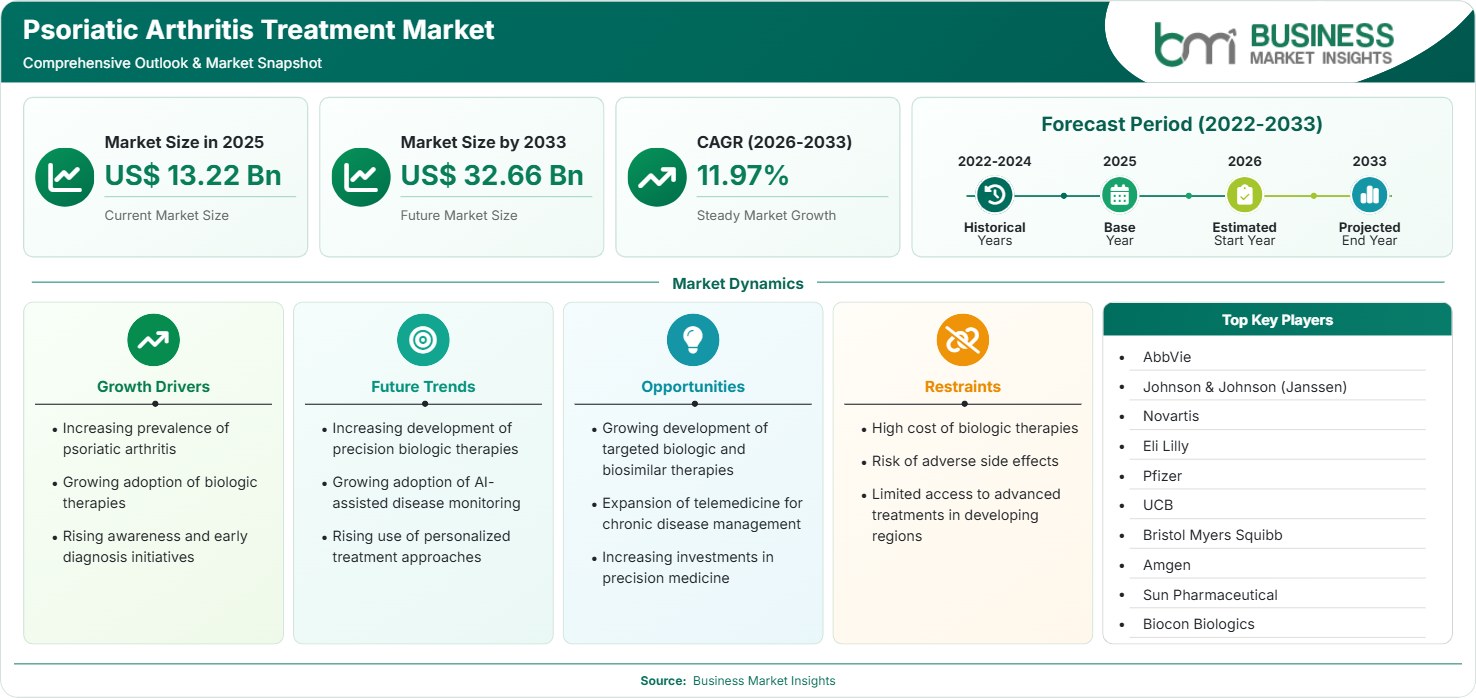
The Psoriatic Arthritis Treatment Market size was valued at US$ 13.22 Billion in 2025 and is projected to reach US$ 32.66 Billion by 2033, growing at a CAGR of 11.97% from 2026 to 2033, driven by rising disease prevalence, biologic therapy adoption, early diagnosis programs, targeted treatment innovation, and expanding chronic disease management solutions.

Report Coverage
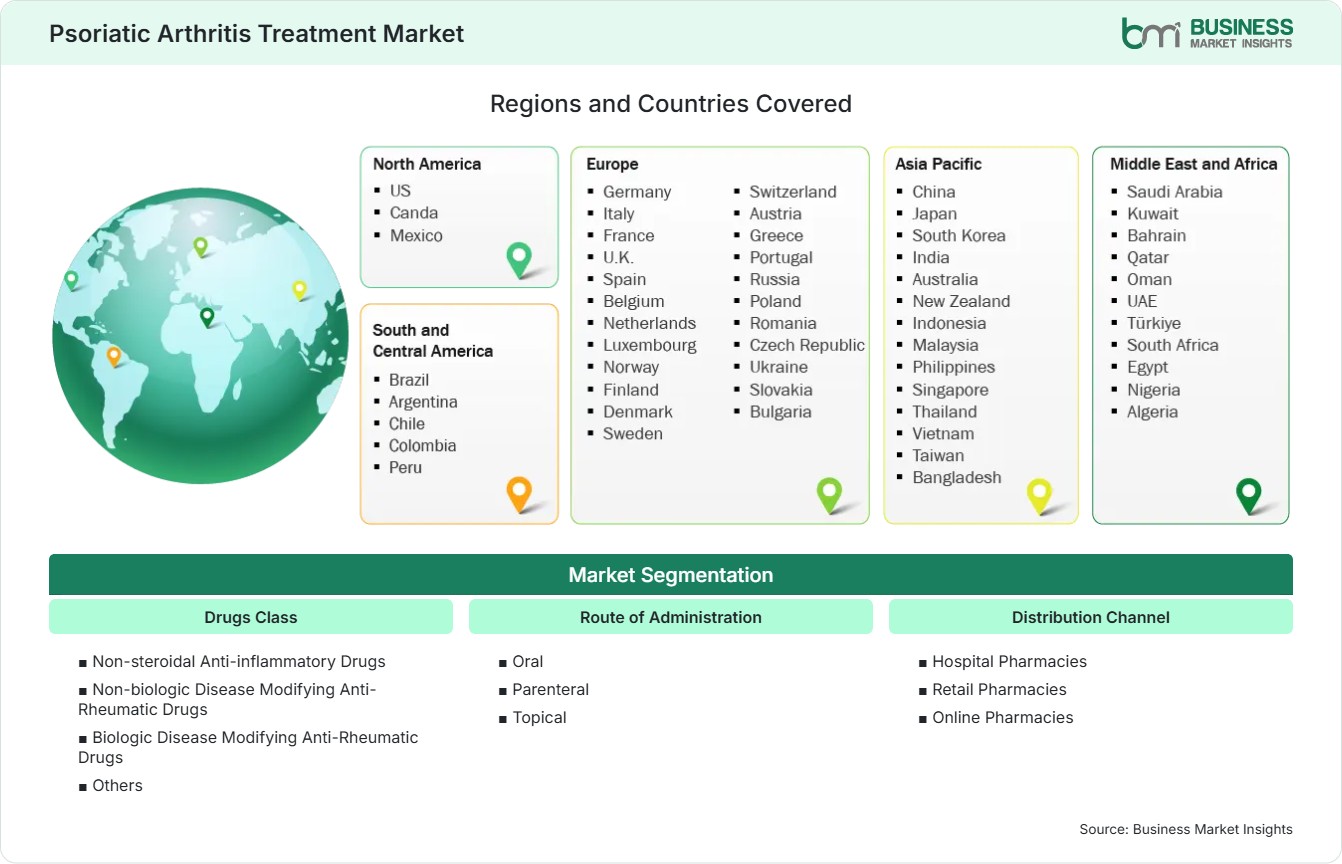
  • Drugs Class: Non-steroidal Anti-inflammatory Drugs, Non-biologic Disease Modifying Anti-Rheumatic Drugs, Biologic Disease Modifying Anti-Rheumatic Drugs, Others
  • Route of Administration: Oral, Parenteral, Topical
  • Distribution Channel: Hospital Pharmacies, Retail Pharmacies, Online Pharmacies
US$ 13.22 Bn Market size in 2025
US$ 32.66 Bn Market Size by 2033
11.97% CAGR, 2026 - 2033
2026-2033 Forecast Period

AI Overview

Psoriatic Arthritis Treatment Market Summary

  • North America Region: North America holds a market share of 38%–41% in 2025, growing with a CAGR of 11%–13% influenced by advanced healthcare infrastructure, high biologic therapy adoption, strong reimbursement systems, and increased rheumatology research. The US market demonstrates strong adoption with a CAGR of 11%–13% during 2026–2033, supported by specialty care networks, advanced therapeutics, and early diagnosis initiatives.
  • Fastest Growing Region: Asia Pacific holds a market share of 20%–23% in 2025, expanding with a CAGR of 13%–15% due to increasing autoimmune disease awareness, healthcare expansion, improving diagnosis rates, and rising access to advanced arthritis therapies across emerging economies.
  • Leading Segment: Biologic Disease Modifying Anti-Rheumatic Drugs (DMARDs) hold a market share of 55%–58% in 2025, growing with a CAGR of 12%–14% due to targeted mechanisms, superior disease control, increasing physician preference, and continuous biologic therapy innovation.
  • High Growth Segment: Online Pharmacies hold a market share of 10%–13% in 2025, advancing with a CAGR of 14%–16% due to digital healthcare adoption, prescription accessibility, telemedicine integration, and improved chronic disease medication delivery.
  • Key Market Opportunity: Development of targeted biologic and biosimilar therapies, precision medicine approaches, and telemedicine-based chronic care models are creating opportunities for improved patient outcomes and expanded treatment accessibility.
  • Major Market Players: AbbVie, Johnson & Johnson (Janssen), Novartis, Eli Lilly, Pfizer, UCB, Bristol Myers Squibb, Amgen, Sun Pharmaceutical, and Biocon Biologics.
Strategic Insights

Psoriatic Arthritis Treatment Market: Strategic Insights

Psoriatic Arthritis Treatment Market Strategic Framework
FREE PDF
Request your free sample
Request free sample
Stakeholder View

Key Takeaways

  • Treatment ecosystems are shifting toward targeted immune-modulating therapies, with biologics becoming central to long-term disease management strategies.
  • Biologic DMARDs represent the strongest growth opportunity, while biosimilars and precision therapies are creating additional expansion avenues for pharmaceutical companies.
  • Innovation priorities include pathway-specific therapies, biomarker-based treatment selection, improved delivery mechanisms, and patient-centric medication management.
  • Asia Pacific provides significant investment potential due to increasing diagnosis rates, healthcare modernization, and improving access to advanced therapies.
  • Pharmaceutical companies are strengthening market positions through research collaborations, biologic development programs, and strategic partnerships in immunology.
  • Digital healthcare adoption is improving patient monitoring, treatment adherence, and specialist access for individuals managing chronic inflammatory diseases.
Geographic Outlook

Psoriatic Arthritis Treatment Market Regional Highlights

North America Psoriatic Arthritis Treatment Market

North America accounted for a 38%–41% share in 2025 and is projected to register a CAGR of 11%–13% from 2026–2033. The region maintains leadership due to advanced healthcare systems, strong biologic adoption, established reimbursement structures, and high awareness of autoimmune disorders. The Psoriatic Arthritis Treatment Market share reflects strong demand from specialty clinics, hospitals, and rheumatology centers. The United States remains the dominant contributor.

  • The United States is expanding adoption through advanced biologic therapies, specialty care networks, and improved diagnosis programs.
  • Canada is increasing access to autoimmune treatments through healthcare improvements and specialist-driven disease management.
  • Pharmaceutical companies are investing in clinical trials focused on targeted inflammatory pathways and treatment effectiveness.
  • Healthcare providers are adopting personalized approaches to improve long-term patient outcomes.

US Psoriatic Arthritis Treatment Market

The United States represented a 32%–35% share in 2025 and is expected to achieve a CAGR of 11%–13% between 2026–2033. The country benefits from advanced pharmaceutical availability, strong healthcare expenditure, and extensive adoption of biologic therapies. The Psoriatic Arthritis Treatment Market growth is supported by increasing disease awareness, specialist care access, and continuous innovation in immunology-based treatments.

  • Biologic therapies continue gaining preference due to improved disease control and targeted treatment mechanisms.
  • Rheumatology centers are expanding diagnosis capabilities through advanced clinical assessment methods.
  • Pharmaceutical companies are increasing investment in autoimmune disease research and treatment innovation.

Europe Psoriatic Arthritis Treatment Market

Europe accounted for a 28%–31% share in 2025 and is forecast to grow at a CAGR of 10%–12% during 2026–2033. The region benefits from established healthcare systems, increasing autoimmune disease recognition, and broad access to advanced medicines. Germany, the United Kingdom, and France represent leading markets, while Italy and Spain demonstrate steady growth through improved rheumatology services and treatment adoption.

  • Germany is strengthening autoimmune care through advanced hospitals and specialist treatment centers.
  • The United Kingdom is expanding biologic therapy access through structured healthcare programs and clinical guidelines.
  • France is supporting innovative arthritis treatment through pharmaceutical research and healthcare initiatives.
  • European countries are increasing biosimilar adoption to improve treatment affordability.

Asia Pacific Psoriatic Arthritis Treatment Market

Asia Pacific represented a 20%–23% share in 2025 and is projected to grow at a CAGR of 13%–15% between 2026–2033. The region demonstrates strong growth potential due to improving healthcare infrastructure, rising autoimmune disease awareness, increasing diagnosis rates, and expanding access to advanced therapies. China, Japan, India, and South Korea are key contributors, with healthcare investments supporting market expansion.

  • China is improving access to autoimmune treatments through healthcare modernization and pharmaceutical development.
  • India is witnessing increased diagnosis and treatment adoption through expanding specialist networks.
  • Japan and South Korea continue adopting advanced biologic therapies through developed healthcare systems.
  • Southeast Asian countries are improving chronic disease management capabilities through healthcare investments.

Rest of World Psoriatic Arthritis Treatment Market

South and Central America accounted for a 6%–8% share in 2025, while the Middle East and Africa contributed a combined 4%–6% share. These regions are expected to grow at CAGRs of 10%–12% and 11%–13%, respectively, supported by increasing autoimmune disease awareness, improving healthcare access, expanding specialist networks, and rising pharmaceutical availability. Brazil, Mexico, UAE, and Saudi Arabia represent important markets due to healthcare modernization initiatives.

  • Brazil is expanding autoimmune treatment access through improved rheumatology services and increasing availability of advanced therapies.
  • Mexico is witnessing growing demand due to rising disease awareness and healthcare infrastructure improvements.
  • UAE is investing in specialized healthcare facilities supporting diagnosis and treatment of inflammatory disorders.
  • Saudi Arabia is strengthening chronic disease management through healthcare transformation programs and advanced medicine adoption.
Global Market Geography
FREE PDF
Request your free sample
Request free sample
Segment Analysis

Psoriatic Arthritis Treatment Market Segmentation

Drugs Class

Drugs Class segmentation is primarily driven by increasing adoption of targeted therapies and advanced immune-modulating treatments. Biologic Disease Modifying Anti-Rheumatic Drugs (DMARDs) dominated the segment with a 55%–58% share in 2025 and are projected to grow at a CAGR of 12%–14% between 2026–2033. The Psoriatic Arthritis Treatment Market scope continues expanding through biologic innovation, biosimilar development, and improved treatment strategies for chronic inflammatory conditions.

  • Non-steroidal Anti-inflammatory Drugs (NSAIDS): Provide symptomatic relief by reducing pain and inflammation. Adoption remains significant for early disease management and patients requiring short-term symptom control.
  • Non-biologic Disease Modifying Anti-Rheumatic Drugs (DMARDs): Include conventional therapies used to slow disease progression. Demand continues through established clinical use and affordability advantages.
  • Biologic Disease Modifying Anti-Rheumatic Drugs (DMARDs): Target specific immune pathways to control inflammation and prevent joint damage. Growth is supported by strong clinical outcomes and increasing physician preference.

Route of Administration

Route of Administration segmentation reflects patient preferences, therapeutic effectiveness, and treatment convenience. Parenteral administration accounted for a 60%–63% share in 2025 and is expected to grow at a CAGR of 12%–14% between 2026–2033. Injectable biologic therapies dominate due to targeted delivery mechanisms and widespread clinical adoption. Oral and topical options continue supporting patients requiring alternative treatment approaches.

  • Oral: Offers convenient administration through tablets and capsules. Adoption remains strong among patients preferring non-invasive treatment options and established medication formats.
  • Parenteral: Includes injectable therapies delivering targeted treatment through subcutaneous or intravenous routes. Growth is supported by biologic therapy adoption and clinical effectiveness.
  • Topical: Supports localized symptom management, particularly for associated skin manifestations. Adoption continues through patient preference for convenient supportive treatments.

Distribution Channel

Distribution Channel segmentation highlights the role of healthcare facilities, retail networks, and digital platforms in improving treatment accessibility. Hospital Pharmacies accounted for a 50%–53% share in 2025 and are projected to grow at a CAGR of 11%–13% between 2026–2033. Hospitals remain important due to specialist supervision, biologic therapy administration, and chronic disease management programs.

  • Hospital Pharmacies: Remain the leading channel due to specialist-prescribed therapies, biologic medication management, and controlled treatment distribution.
  • Retail Pharmacies: Provide accessibility for prescription medications and supportive therapies. Growth is supported by expanding pharmacy networks and patient convenience.
  • Online Pharmacies: Gain adoption through digital healthcare integration, prescription delivery services, and increasing acceptance of online medication purchasing.
Market Forces

Psoriatic Arthritis Treatment Market Dynamics

Key Market Drivers

Increasing Prevalence of Psoriatic Arthritis

The rising prevalence of psoriatic arthritis is a major factor driving demand for effective treatment solutions worldwide. Increasing recognition of autoimmune disorders, improved diagnostic capabilities, and growing awareness among healthcare professionals are contributing to higher patient identification. Psoriatic arthritis requires long-term management to control inflammation, reduce joint damage, and improve quality of life. According to the National Psoriasis Foundation, psoriatic arthritis affects a significant proportion of individuals with psoriasis, increasing the need for specialized therapies. The Psoriatic Arthritis Treatment Market trends indicate stronger adoption of disease-modifying therapies as healthcare systems prioritize early intervention and improved chronic disease management.

Growing Adoption of Biologic Therapies

Biologic therapies are increasingly adopted due to their ability to target specific inflammatory pathways associated with psoriatic arthritis progression. These therapies provide improved disease control for many patients compared with conventional treatment approaches and have become an important component of advanced rheumatology care. Pharmaceutical companies are developing biologics targeting pathways such as tumor necrosis factor and interleukin-related mechanisms. Growing clinical evidence, physician acceptance, and expanded reimbursement coverage are supporting adoption. Increasing biosimilar development is also improving treatment accessibility by introducing cost-efficient alternatives while maintaining therapeutic effectiveness.

Rising Awareness and Early Diagnosis Initiatives

Growing levels of awareness and diagnosis are helping detect more cases of psoriatic arthritis and provide early intervention treatment. A late diagnosis can lead to irreversible joint problems, underscoring the importance of early detection in healthcare. There are patient education programs, advanced screening techniques, and cooperation between dermatologists and rheumatologists to promote disease detection. There is increased interest among healthcare institutions in educating patients about the disease and possible treatments.

Key Market Opportunities

Growing Development of Targeted Biologic and Biosimilar Therapies

The development of targeted biologic and biosimilar therapies represents a significant opportunity as pharmaceutical companies focus on improving treatment precision, affordability, and patient outcomes. Advances in immunology research are enabling therapies designed to address specific inflammatory pathways involved in psoriatic arthritis progression. Biosimilars are gaining importance by providing cost-effective alternatives to established biologic medicines while expanding treatment accessibility. The Psoriatic Arthritis Treatment Market Forecasts indicate increasing opportunities for companies investing in next-generation biologics, improved delivery systems, and personalized treatment approaches. Expanding clinical pipelines and regulatory approvals are expected to support continued innovation across autoimmune disease therapies.

Expansion of Telemedicine for Chronic Disease Management

Telemedicine expansion is creating new opportunities by improving access to rheumatology consultations, treatment monitoring, and chronic disease management services. The patients suffering from psoriatic arthritis need ongoing assessments, medication, and follow-up, which makes digital healthcare platforms more relevant. Telemedicine allows patients residing in remote locations to consult experts and helps increase compliance and monitoring of disease conditions. The use of digital health platforms, electronic health records, and remote patient management services is enhancing the provision of care for chronic diseases. Companies involved in the development of connected healthcare platforms and virtual care technologies may capitalize on this trend.

Increasing Investments in Precision Medicine

Investment in precision medicine is creating opportunities for more personalized psoriatic arthritis treatment strategies. Researchers are focusing on biomarkers, genetic insights, and patient-specific disease characteristics to improve therapy selection and treatment outcomes. The precision strategies will enable healthcare experts to select the right treatment options for individual patients and minimize treatment wastage. Many pharmaceutical companies are conducting more research to develop medicines that target specific mechanisms in the body. There is more collaboration among biotech companies, research organizations, and health care organizations.

Market Restraints and Challenges

High Cost of Biologic Therapies

Factor: Biologic therapies involve complex research, advanced manufacturing processes, and specialized production technologies that contribute to high treatment costs. Impact: Expensive biologic medicines can limit patient access, increase healthcare expenditure, and create affordability challenges, particularly in developing healthcare markets. Although biosimilars are improving cost efficiency, pricing remains a major consideration for healthcare providers and reimbursement systems. For patients who need long-term treatment, lack of insurance coverage and healthcare assistance programs may pose financial challenges. The pharmaceutical industry is working towards the optimization of manufacturing processes and development of biosimilars.

Risk of Adverse Side Effects

Factor: Psoriatic arthritis therapies, particularly immune-modulating biologics, may involve risks including infections, immune-related reactions, and treatment-related complications. Impact: Safety concerns can influence physician prescribing decisions, require additional patient monitoring, and affect treatment adherence. Healthcare providers should carefully assess the condition of patients prior to choosing any treatment methods and should continue monitoring the patient during the entire period of treatment. Continuous research in the clinical field is directed towards enhancing safety and increasing tolerance of various treatment methods.

Company Analysis

Competitive Landscape

The competitive environment is driven by pharmaceutical innovation, biologic development capabilities, clinical research investments, and expanding autoimmune treatment portfolios. Psoriatic Arthritis Treatment Market analysis indicates that leading companies are focusing on targeted therapies, biosimilar development, patient support programs, and advanced immunology research. Market participants are strengthening positions through product launches, regulatory approvals, strategic collaborations, and investments in next-generation autoimmune treatments.

Company Name

Overview

Products and Services relevant to this market

AbbVie

Global pharmaceutical company specializing in immunology and specialty medicines.

Biologic therapies, autoimmune treatments, psoriatic arthritis medicines.

Johnson & Johnson (Janssen)

Healthcare company providing innovative pharmaceutical solutions.

Immunology therapies, biologic treatments, arthritis medications.

Novartis

Global pharmaceutical company focused on innovative therapies.

Immunology medicines, targeted biologics, arthritis treatments.

Eli Lilly

Pharmaceutical company developing advanced medicines across therapeutic areas.

Biologic therapies, autoimmune disease treatments, targeted medicines.

Pfizer

Global pharmaceutical company with specialty healthcare solutions.

Immunology therapies, anti-inflammatory medicines, treatment solutions.

UCB

Biotechnology company specializing in neurological and immunological disorders.

Psoriatic arthritis therapies, biologic medicines, immunology products.

Bristol Myers Squibb

Pharmaceutical company focused on innovative specialty medicines.

Immunology treatments, targeted therapies, autoimmune medicines.

Amgen

Biotechnology company developing biologic medicines.

Biologic DMARDs, inflammatory disease therapies, biosimilar solutions.

Sun Pharmaceutical

Pharmaceutical company providing specialty and generic medicines.

Dermatology and autoimmune therapies, specialty pharmaceutical products.

Biocon Biologics

Biotechnology company focused on affordable biologic medicines.

Biosimilars, biologic therapies, autoimmune treatment solutions.

Trust & Transparency

Research Methodology

The market analysis combines proprietary research with secondary data from government agencies, company disclosures, regulatory filings, industry databases and expert interviews. Market estimates are validated through data triangulation, cross-market benchmarking and analyst review.

View Full Research Methodology

Questions Answered

Frequently Asked Questions

Why is precision medicine important in psoriatic arthritis treatment?

Precision medicine supports personalized therapy selection by using biological insights and patient characteristics to improve treatment effectiveness and reduce unnecessary interventions.

What does the Psoriatic Arthritis Treatment Market Report cover?

The report covers market size, segmentation, regional trends, competitive landscape, growth factors, challenges, and future treatment opportunities.

How are biosimilars influencing market development?

Biosimilars are improving treatment accessibility by offering cost-effective alternatives to established biologic therapies while supporting broader patient access.

Which drug class dominates psoriatic arthritis treatment?

Biologic Disease Modifying Anti-Rheumatic Drugs (DMARDs) represent the leading drug class due to targeted mechanisms, strong clinical outcomes, and increasing physician preference.

What factors are driving the Psoriatic Arthritis Treatment Market growth?

The market is driven by increasing disease prevalence, biologic therapy adoption, early diagnosis initiatives, targeted treatment innovation, and expanding access to advanced autoimmune disease management solutions.

Access the Full Psoriatic Arthritis Treatment Market Report

Get segment-level forecasts, regional estimates, competitive benchmarking, company profiles and downloadable Excel datasets.

Access the full Psoriatic Arthritis Treatment Market Report
350 pages PDF & Excel | 2026-08-05